Photographing the Great Aletsch Glacier is less about finding one perfect camera setting and more about combining the right viewpoint, access window, weather, focal length, and exposure. Eggishorn in Switzerland’s Aletsch Arena is especially valuable because its high viewpoint reveals the glacier’s sweeping shape, Konkordiaplatz, and major Alpine peaks in a single panorama.
Quick Answer
For strong Aletsch Glacier photos, photograph from Eggishorn when visibility is clear, protect the bright ice from clipped highlights, and shoot both wide and telephoto compositions. Check cable-car hours before planning golden-hour photography, carry weather protection, and never enter the glacier without an authorized mountain guide.
Key Takeaways
- Eggishorn sits at 2,869 metres and provides a view across the approximately 20 km Great Aletsch Glacier.
- Check lift operating hours before planning sunrise, sunset, or late-afternoon photography.
- A wide-angle lens captures the glacier’s scale, while a telephoto lens isolates crevasses, ice bands, mountains, and compressed layers.
- Use the histogram and highlight warning instead of automatically underexposing bright snow and ice.
- Stay on approved paths and viewpoints. Going onto the glacier itself requires a mountain guide.
At a Glance
| Time Required | Allow roughly 2–4 hours for an unhurried viewpoint photography session, plus transport time. |
| Difficulty | Moderate planning; photography can be done from the viewpoint, but this is a high-Alpine environment with rapidly changing weather. |
| Tools Needed | Camera or smartphone, spare battery, wide or standard lens; optional telephoto lens, polarizer, tripod, lens cloth, and weather cover. |
| Cost | Photography itself requires no special equipment fee, but transport and cable-car ticket costs vary. Check current Aletsch Arena prices before travelling. |
Know the Aletsch Glacier Viewpoint Before You Shoot
The Great Aletsch Glacier is the largest and longest glacier in the Alps and forms a major feature of the Swiss Alps Jungfrau-Aletsch UNESCO World Heritage property. Because glaciers continuously gain and lose ice, dimensions quoted in older articles can become outdated. Current Aletsch Arena visitor information describes the glacier as approximately 20 km long.
For this photography guide, the most important viewpoint is Eggishorn. The official Eggishorn viewpoint is 2,869 m above sea level and overlooks the full sweep of the glacier, including Konkordiaplatz, with the Eiger, Mönch, and Jungfrau visible in the wider mountain panorama when conditions cooperate.
From Eggishorn at 2,869 m, photographers can look across the approximately 20 km Great Aletsch Glacier and use surrounding Alpine peaks to show its extraordinary scale.
Plan Access Before You Plan the Light
Good light is useful only if you can reach the viewpoint at the right time. For the 2026 summer season, the Fiescheralp–Eggishorn cable car is scheduled to operate from June 6 through October 25, normally from 8:55 to 16:55. Operating periods can change, so check the official Aletsch Arena timetable shortly before your visit.
Fiescheralp can be reached from the public-transport hub in Fiesch. From there, the final cable-car journey continues toward Eggishorn. Train and parking access are available at Fiesch, making this one of the simplest ways to build a photography trip around public transport.
Note: Standard lift times often do not include sunrise or sunset. Special Eggishorn sunrise rides are offered only on selected dates. As of August 17, 2026, the official Aletsch Arena page states that no additional sunrise rides are planned for the remainder of 2026.
Choose the Right Time for Aletsch Glacier Photography
Low-angle sunlight can reveal ridges, crevasses, moraine lines, and mountain contours more clearly than flat midday light. If access allows, earlier or later light can therefore produce stronger texture and more directional shadows. However, do not assume that sunrise or sunset is reachable by normal cable-car service.
During ordinary operating hours, concentrate on visibility and cloud structure rather than chasing a specific clock time. A clear morning can provide crisp distant peaks, while broken cloud can create alternating patches of light and shadow across the glacier. Thin clouds may soften contrast and make the ice easier to expose.
Check the forecast before travelling and check it again before going up. Mountain conditions can change quickly. The MeteoSwiss hazard service provides current warnings for thunderstorms, wind, snow, frost, and other weather hazards.
Warning: Do not remain on exposed Alpine terrain because approaching storms or dramatic clouds look photogenic. If official warnings, staff instructions, visibility, lightning, wind, snow, or trail conditions make the situation unsafe, leave the exposed area and follow local guidance.
Select the Best Equipment for the Viewpoint
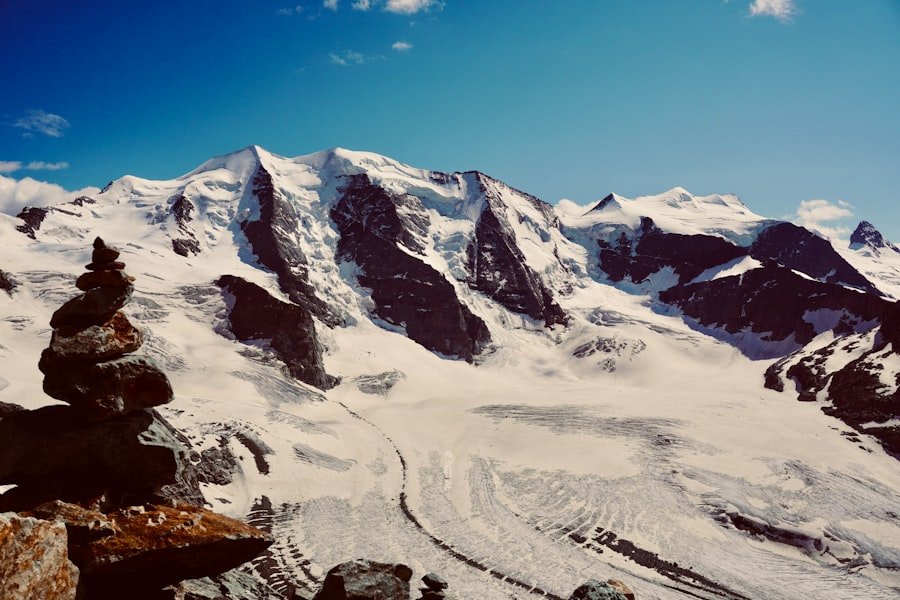
You do not need a professional camera to make a strong photograph here. A modern phone, compact camera, DSLR, or mirrorless camera can all work. What matters most is matching the lens or camera view to the scene.
Wide-angle lens
A focal length around 16–35 mm on a full-frame camera is useful when you want the glacier, surrounding peaks, and sky in a single frame. Avoid making the glacier too small, though. A very wide lens can reduce the visual impact of distant ice if there is no strong foreground.
Standard zoom
A standard zoom such as 24–70 mm is often the most flexible choice. It lets you move from broad landscapes to tighter compositions without changing lenses frequently in wind, cold, or blowing moisture.
Telephoto lens
A telephoto lens is especially useful at Eggishorn because the glacier is viewed from a distance. Longer focal lengths can isolate crevasses, medial moraines, compressed mountain layers, small figures for scale, and patterns in the ice that disappear in a very wide composition.
Tripod
A sturdy tripod is useful when shutter speeds become slow, when you bracket exposures, or when you want several precisely aligned frames for a panorama. In strong wind, keep the tripod low, retract the thinnest leg sections first, and make sure the setup does not obstruct paths or other visitors.
Polarizing filter
A circular polarizer can reduce reflections and increase color separation in some conditions. It is not an automatic improvement. Its effect depends on your angle to the sun, and with an ultra-wide lens it can sometimes make a blue sky look uneven. Rotate it while watching the viewfinder and stop when the result looks natural.
Spare batteries and protection
Cold temperatures can shorten practical battery life, so carry a charged spare. A lens cloth is valuable when mist, snow, or light rain reaches the front element. A simple weather cover or protected camera bag helps when conditions change.
Pro Tip: If you can carry only one lens, choose the zoom you know best. A carefully composed image at 24 or 35 mm will usually be more useful than carrying several heavy lenses that slow you down in a high-Alpine environment.
Find a Strong Composition
| Technique | How to Use It at Aletsch Glacier |
|---|---|
| Leading lines | Use the glacier’s curves, moraine bands, ridgelines, or trails to lead the eye deeper into the frame. |
| Rule of thirds | Place the glacier or horizon away from the center when the sky or foreground deserves extra space. |
| Foreground depth | Include rock, alpine vegetation, or a safe section of trail to create near-to-far depth. |
| Scale | Include a distant person, hut, cable-car structure, or mountain feature when appropriate to show the glacier’s size. |
| Telephoto layers | Compress ice, ridges, and distant peaks into simpler graphic layers. |
Begin with one establishing image that shows the whole scene. Then simplify. Look for a curve in the glacier, a meeting point between dark moraine and pale ice, or a mountain that balances the frame. A photograph does not have to contain every visible peak.
Foreground rocks or vegetation can create depth, but do not leave marked paths or approach an edge simply to improve a composition. Change focal length or camera height instead.
Handle Snow, Ice, and High-Contrast Exposure
Glacier scenes combine bright ice, dark rock, reflective snow, deep shadow, and sometimes a bright sky. That range can challenge a camera meter.
A common mistake is assuming that bright ice always needs negative exposure compensation. Reflective meters are designed around middle tones, and a frame dominated by bright snow can instead be rendered too dark. The correct adjustment depends on your camera, metering mode, light, and composition. Canon’s exposure-compensation guidance specifically notes that snow scenes can require positive compensation.
Use the histogram and highlight warning
Take a test frame and inspect the histogram. If important highlights are clipped on the right edge, reduce exposure. If the image is unnecessarily dark and the brightest important ice remains well below clipping, add exposure. Cameras with highlight warnings can make this check faster.
Start with base ISO when possible
In bright daylight, use your camera’s base or low native ISO when shutter speed allows. This generally gives you the greatest editing flexibility. Increase ISO only when you need a faster shutter speed to control camera movement, wind-blown subjects, or handheld shake.
Choose aperture for the composition
For a wide landscape with foreground and distant peaks, a middle aperture such as f/8 can be a practical starting point on many interchangeable-lens cameras. If everything is distant, you may not need to stop down as much. Check focus at high magnification rather than relying on one fixed aperture rule.
Bracket difficult scenes
If bright ice and dark mountains exceed what one exposure can comfortably capture, make a short bracket while keeping the camera still. You can later choose the best frame or carefully blend exposures if the scene demands it.
Pro Tip: If your camera supports RAW capture, use it for high-contrast glacier scenes. RAW files generally give you more room to recover highlight and shadow information than heavily processed camera JPEGs.
Capture Details and Textures Without Entering the Glacier
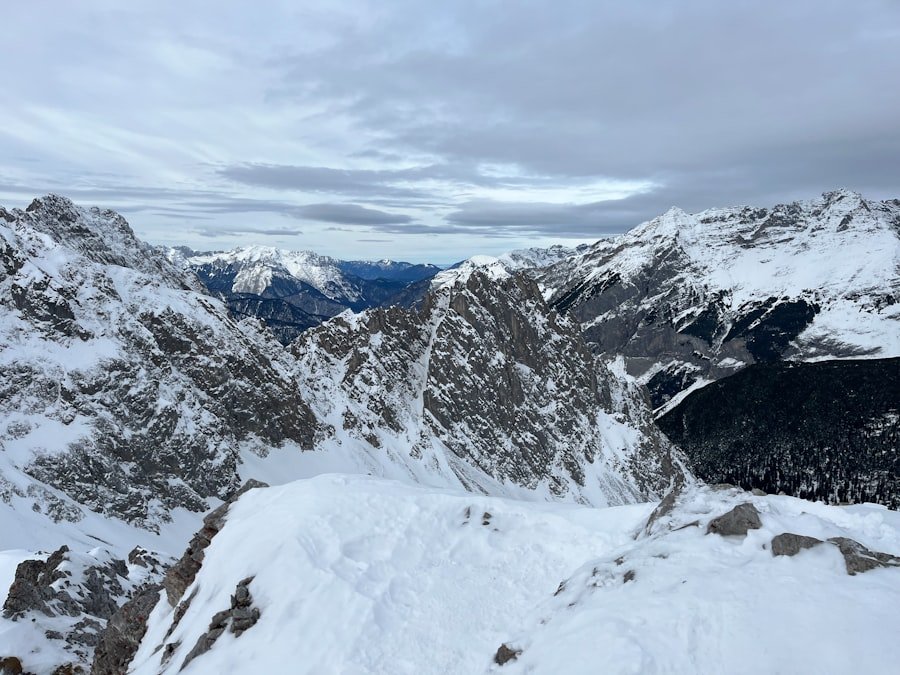
The Aletsch Glacier contains far more visual detail than one panoramic photograph can show. After making your wide shots, switch to a longer focal length and look for sections where cracks, moraine stripes, shadow, and reflected light create simpler patterns.
A telephoto lens is more useful than a macro lens for this job from Eggishorn because the glacier is distant. Look for S-shaped ice flows, dark moraine lines against pale ice, repeating crevasses, and the transition between glacier and exposed rock.
Light changes the appearance of these textures. Side lighting can reveal relief through shadow, while softer cloud-filtered light can reduce contrast and make subtle color differences easier to record.
Warning: Do not walk onto the Great Aletsch Glacier to get closer photographs on your own. Aletsch Arena states that going onto the glacier itself is permitted only when accompanied by a mountain guide. Crevasses and other glacier hazards may be difficult or impossible to identify without specialist knowledge.
Incorporate the Surrounding Landscape
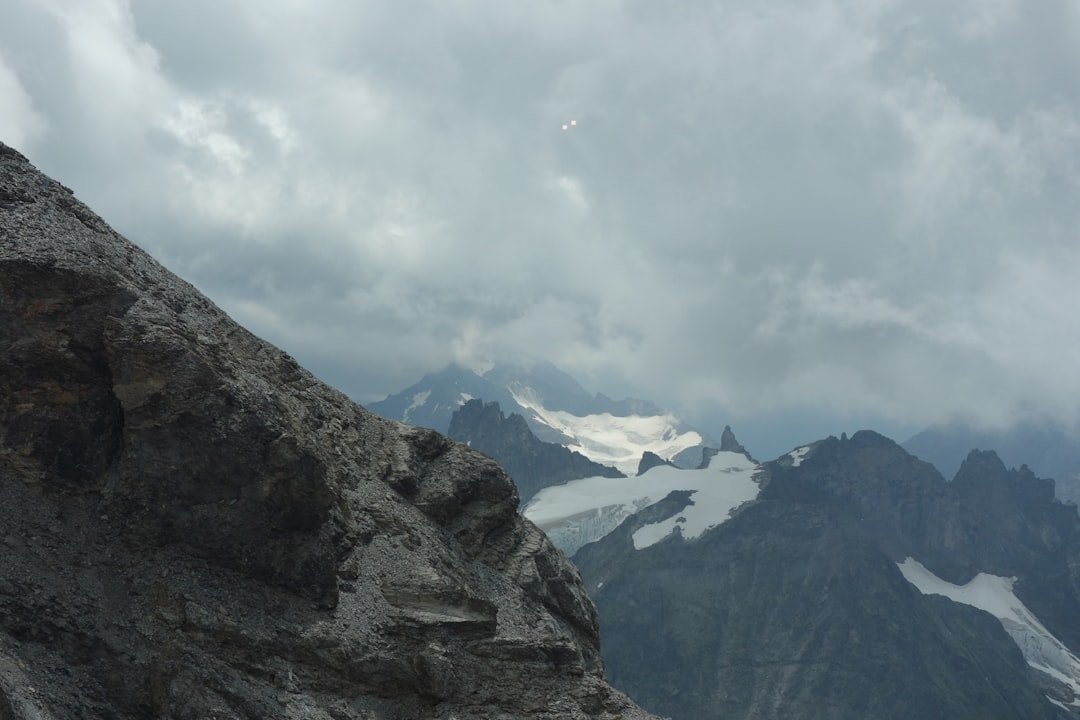
The glacier is only one part of the frame. Eggishorn also offers views toward major Alpine summits, dark ridges, rocky foregrounds, and changing cloud layers. These elements can give the photograph context and help viewers understand the glacier’s size.
Try several visual relationships:
- Glacier plus mountains: Use peaks as a backdrop while allowing the glacier to lead into them.
- Glacier plus foreground: Add a safe rock or trail element to create depth.
- Glacier plus sky: Give extra space to the sky only when cloud shape, color, or light is genuinely contributing to the image.
- Glacier plus human scale: A small person in a safe location can make the scene feel much larger.
- Compressed layers: Use a telephoto lens to stack glacier, ridges, and distant mountains.
Seasonal differences also matter. Fresh snow can simplify the landscape, while exposed rock and vegetation can provide stronger color contrast during warmer months. Conditions at this elevation can vary significantly even within the same season.
Use a Simple Shot List at Eggishorn
A short shot list prevents you from returning home with twenty versions of the same wide view. Once you arrive and confirm conditions are safe, work through several types of image:
- Establishing panorama: Photograph the glacier and surrounding mountain range.
- Vertical composition: Use ridges or foreground rocks to create depth from bottom to top.
- Medium view: Tighten the frame around the glacier’s strongest curve or moraine pattern.
- Telephoto detail: Isolate crevasses, ice textures, or mountain layers.
- Scale image: Include a person or recognizable landscape feature where appropriate.
- Cloud-and-light variation: Repeat your strongest composition when sunlight or shadow changes.
- Panorama sequence: If the scene is too wide for one frame, shoot overlapping images from a stable position for later stitching.
Before leaving, review a few frames at high magnification. Check the corners, focus, highlight clipping, lens spots, and unwanted objects near the edge of the composition while you still have a chance to reshoot.
Post-Process Aletsch Glacier Photos Naturally
Post-processing should reveal the information you captured rather than turn the glacier into something it was not. Applications such as Adobe Lightroom, Photoshop, Capture One, and other RAW processors can all handle the basic adjustments needed for this type of landscape.
Correct overall exposure first
Start with overall brightness, then inspect highlights and shadows. Recover bright ice only as much as needed to preserve visible texture. Avoid flattening every highlight and shadow into the same tone.
Control white balance
Glacial ice can naturally show cool blue tones, particularly in dense or shaded sections. Do not neutralize every blue area automatically. Adjust white balance using snow, cloud, rock, and the remembered lighting conditions as references.
Use local adjustments carefully
A subtle gradient over the sky or a small adjustment on the glacier can help balance the frame. Avoid extreme clarity, dehaze, or saturation because they can produce halos along mountain ridges and make ice look unnatural.
Sharpen at the end
Apply sharpening according to the final output size. Inspect rock edges, fine snow texture, and high-contrast ridges for halos or crunchy detail. Noise reduction should also be restrained so that natural ice texture is not smeared away.
Crop only when it improves the visual hierarchy
Crop distracting edges, strengthen alignment, or change the aspect ratio when it improves the photograph. Keep enough surrounding landscape to show scale unless the goal is an intentionally abstract detail.
Photography Safety and Responsible Visiting
Eggishorn is a high-Alpine environment, not a controlled city viewpoint. Wear footwear and clothing suited to the actual conditions, carry enough water, protect yourself from strong sun, and follow signs, barriers, staff instructions, and marked routes.
Do not move beyond safe areas to obtain an unobstructed foreground. A change of lens or camera position is never worth stepping onto unstable terrain. The glacier itself should be treated as technical terrain. Official Aletsch Arena guidance says glacier access is permitted only with a mountain guide.
The Great Aletsch Glacier is also an actively changing natural system. Glacier Monitoring Switzerland (GLAMOS) maintains long-term measurements of glacier length, mass balance, and volume change. Photographing the same landscape carefully over time can therefore document more than scenery; it can record visible environmental change.
Frequently Asked Questions
What is the Aletsch Glacier viewpoint?
Several viewpoints in the Aletsch Arena overlook the Great Aletsch Glacier, including Eggishorn, Bettmerhorn, Moosfluh, and Hohfluh. Eggishorn is especially useful for photography because the official viewpoint at 2,869 m provides a view across the glacier’s full approximately 20 km length.
What is the best time of day to photograph the Aletsch Glacier?
Lower-angle sunlight often gives the ice and mountains stronger texture, but access is the limiting factor. During the 2026 summer season, normal Fiescheralp–Eggishorn cable-car hours are 8:55 to 16:55. Check the current timetable and any special sunrise services before planning around golden hour.
Which lens is best for Aletsch Glacier photography?
A wide or standard zoom works well for the overall landscape. A telephoto lens is valuable for isolating glacier textures, moraine lines, crevasses, and distant mountain layers. If you carry only one lens, a versatile standard zoom is often the easiest choice.
Should I underexpose photos of the glacier?
Not automatically. Bright snow and ice can cause some camera meters to make the image too dark, while very bright highlights can still clip. Take a test photograph, inspect the histogram and highlight warning, then adjust exposure compensation or manual settings according to the actual scene.
Can I walk onto the Aletsch Glacier to take photographs?
Not independently. Aletsch Arena states that going onto the Great Aletsch Glacier itself is permitted only with a mountain guide. Guided glacier tours use appropriate supervision and equipment for terrain that can contain serious hidden hazards.
What is the best time of year to visit the Aletsch Glacier viewpoint?
Summer and early autumn generally provide the simplest hiking and viewpoint access, but exact lift schedules and mountain conditions change. In 2026, the Fiescheralp–Eggishorn summer operation is scheduled from June 6 through October 25. Always verify current operations and weather before travelling.
Can I photograph the Aletsch Glacier with a smartphone?
Yes. Modern smartphones can produce excellent wide landscapes in good light. Clean the lens, avoid excessive digital zoom, tap to control focus and exposure, and use the phone’s RAW mode if available when you want more editing flexibility.
Is the Eggishorn viewpoint wheelchair accessible?
The official Aletsch Arena listing currently states that the Eggishorn View Point itself is not wheelchair accessible and is not suitable for visitors with impaired mobility. Check the official accessibility information before planning the trip.
Sources
- Aletsch Arena: View Point Eggishorn — viewpoint elevation, glacier panorama, access, and accessibility.
- Aletsch Arena: Timetable and Operating Hours — current 2026 Eggishorn cable-car season and operating times.
- Aletsch Arena: Travel and Mobility — Fiesch/Fiescheralp access and mountain-guide requirement for entering the glacier.
- UNESCO World Heritage Centre: Swiss Alps Jungfrau-Aletsch — World Heritage status, glacial landscape, and climate-change context.
- Glacier Monitoring Switzerland (GLAMOS) — official glacier length, mass-balance, and volume-change monitoring datasets.
- Canon Europe: Exposure Compensation — exposure-meter behavior, snow scenes, histogram use, and highlight control.