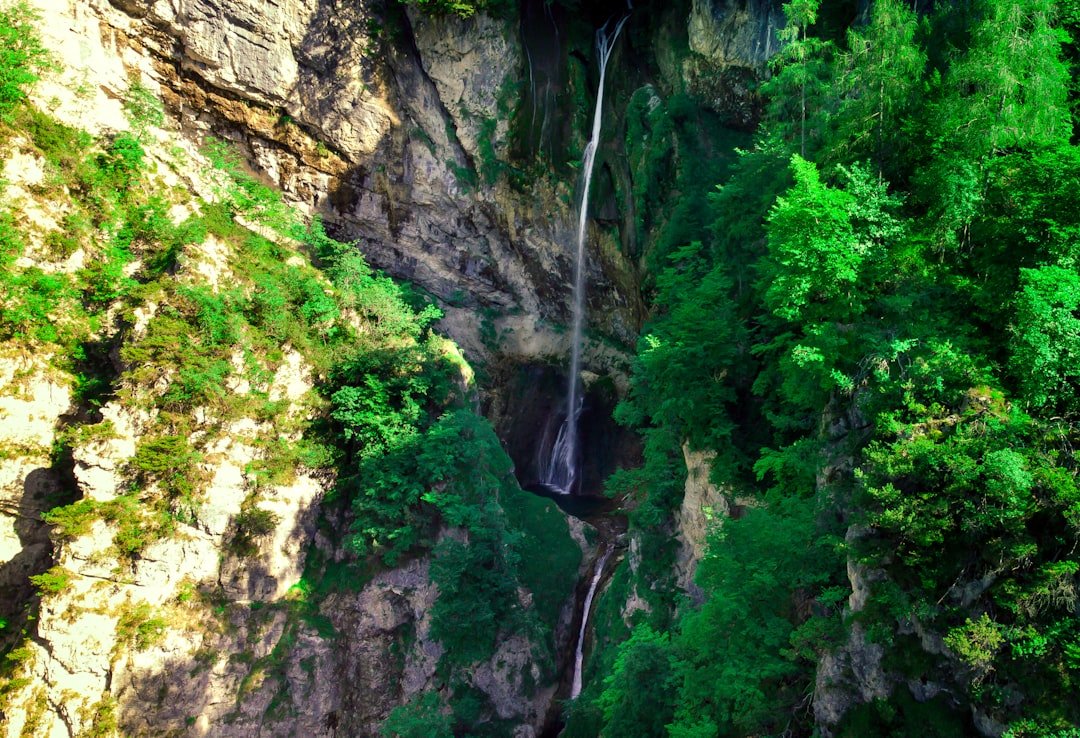
Staubbach Falls rises almost directly above Lauterbrunnen, sending water 297 meters down a sheer cliff before much of the cascade breaks into fine spray. The waterfall is easy to include in a visit to the Lauterbrunnen Valley, costs nothing to view, and looks different throughout the year. For the closest experience, visitors can also use the seasonal Staubbach Gallery path, which climbs into the rock beside the falls.
Quick Answer
Staubbach Falls is a 297-meter free-falling waterfall in Lauterbrunnen, Switzerland. Viewing the falls is free and possible throughout the year. Early summer usually brings the strongest flow, while the Staubbach Gallery path beside the waterfall is generally accessible from May through October.
Key Takeaways
- Staubbach Falls drops 297 meters and is described by Lauterbrunnen Tourism as Switzerland’s highest free-falling waterfall.
- There is no admission charge to view the falls.
- The waterfall itself can be admired year-round, but the Staubbach Gallery is normally open from May to October.
- Early summer is a particularly good time for stronger water flow.
- Lauterbrunnen is reached by rail from Interlaken Ost, and parking is also available in the village for drivers.
- Nearby attractions include Trümmelbach Falls, Mürren, Wengen, and Schilthorn.
Why Staubbach Falls Is Special
Staubbach Falls is one of the defining sights of the Lauterbrunnen Valley. According to Switzerland Tourism, the water drops 297 meters over the vertical rock face, making it one of Europe’s highest free-falling waterfalls.
The character of the waterfall comes partly from the way its water separates into spray during the long descent. In windy conditions, the stream can appear to drift away from the cliff rather than fall in one solid column. The spray is also connected with the name Staubbach, and visitors who climb the gallery can experience that mist at much closer range.
Staubbach Falls plunges 297 meters from the cliff above Lauterbrunnen, yet much of the falling water can turn into fine spray before reaching the valley floor.
History and Significance of Staubbach Falls
The falls have long been part of Lauterbrunnen’s identity, but their cultural history is especially associated with German poet Johann Wolfgang von Goethe. Lauterbrunnen Tourism records that Goethe was inspired by Staubbach Falls and wrote Gesang der Geister über den Wassern, or Song of the Spirits over the Waters, in 1779.
That connection helps explain why the waterfall is more than a scenic stop. It became part of the Romantic-era image of the Alps as a place of dramatic cliffs, water, weather, and overwhelming scale. Today it remains one of the best-known natural landmarks in the Lauterbrunnen Valley.
The surrounding valley also shapes the experience. Lauterbrunnen lies between steep mountain walls with numerous waterfalls descending from the plateaus above. Staubbach is especially conspicuous because it drops close to the village and can be seen from streets, meadows, trains, and higher viewpoints around the valley.
Best Time to Visit Staubbach Falls
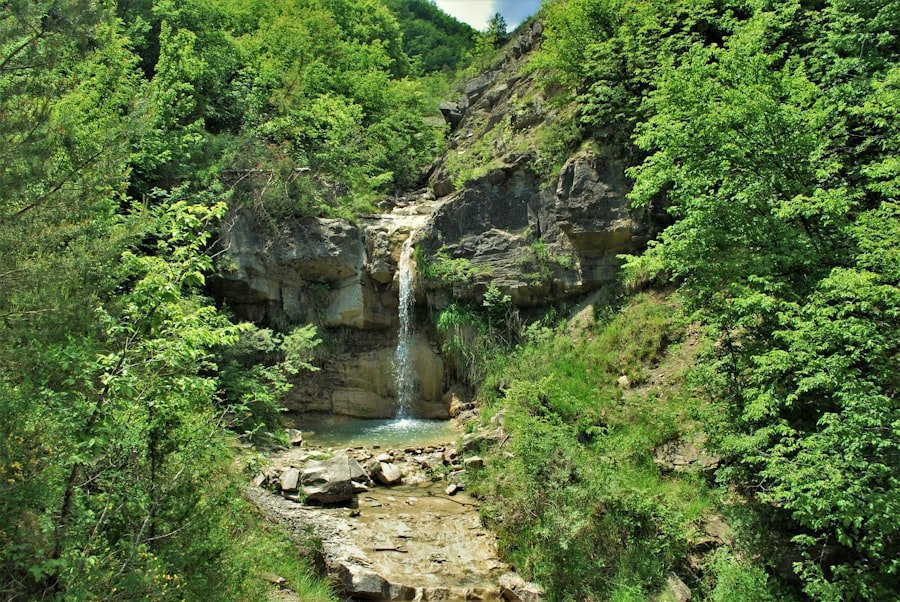
Staubbach Falls can be viewed throughout the year, but the best season depends on what you want to experience. Switzerland Tourism notes that the waterfall carries the most water in early summer, making late spring and early summer especially attractive for visitors who want to see a fuller cascade.
Spring and Early Summer
This is generally the strongest period for water flow as mountain snowmelt adds to the stream. Meadows around the valley also become greener and alpine vegetation begins to fill out. If seeing a powerful waterfall is your priority, this is usually the best period to consider.
Summer
Summer brings comfortable conditions for combining the falls with walking, hiking, Mürren, Wengen, and other Jungfrau Region attractions. It is also part of the operating season for the Staubbach Gallery. The tradeoff is heavier visitor traffic, particularly in the middle of the day.
Autumn
Autumn can be quieter than midsummer, but waterfall flow varies with rainfall and recent weather. The gallery normally remains available through October, according to Jungfrau.
Winter
The waterfall remains visible in winter, and official Jungfrau information notes that it can become partly iced over. The close-up gallery should not be treated as a winter attraction because its normal season runs from May to October.
Note: Waterfall flow is naturally variable. Recent rain, snowmelt, wind, freezing temperatures, and dry weather can make Staubbach look very different from one visit to another.
How to Get to Staubbach Falls
Staubbach Falls is beside Lauterbrunnen village in Switzerland’s Bernese Oberland. You do not need a special mountain railway or cable-car ticket simply to see it.
| Starting point | Best option | What to know |
| Interlaken Ost | Train | Take the Bernese Oberland Railway to Lauterbrunnen and continue through the village on foot. |
| Lauterbrunnen station | Walk | The falls are reached by a short walk through Lauterbrunnen. Follow local signs rather than relying on a fixed walking-time estimate. |
| Arriving by car | Park in Lauterbrunnen | Use an official village parking facility and continue on foot. Parking can be busy during peak periods. |
By Train
Jungfrau’s official Lauterbrunnen information directs rail travelers through Interlaken Ost, where they change to the Bernese Oberland Railway for Lauterbrunnen. Once you arrive, the waterfall is visible from several parts of the village and can be reached on foot.
By Car
Drivers can park in Lauterbrunnen and continue on foot. The railway station has an adjacent parking facility, and Jungfrau also publishes parking information for the region. During busy summer weekends and holiday periods, public transport can reduce the need to search for a space.
Staubbach Gallery, Access, and Safety
Seeing Staubbach Falls from the village is different from climbing toward the waterfall itself. From near the foot of the falls, a path enters the rock face and leads through a tunnel and up secured stairs toward the Staubbach Gallery. The route provides a much closer view of the spray and the Lauterbrunnen Valley.
Jungfrau lists the gallery season as May through October, while Switzerland Tourism describes the attraction as only partially accessible. Anyone with limited mobility should therefore plan on enjoying the main waterfall views from the village rather than assuming the gallery path will be suitable.
Warning: The gallery route includes stairs, rock passages, spray, and potentially wet surfaces. Wear shoes with secure traction, use the handrails, supervise children closely, and obey any closure signs or local restrictions.
A light rain jacket can also be useful even on a dry day because wind can carry spray toward the gallery and nearby paths.
Hiking and Walking Trails Near Staubbach Falls
You do not need to complete a major hike to enjoy Staubbach Falls. A simple walk through Lauterbrunnen, a visit to the base area, and the seasonal gallery can provide a satisfying short visit. Travelers with more time can combine it with other walks around the valley or use mountain transport to reach higher trails.
Walk Through the Lauterbrunnen Valley
The valley floor is one of the easiest ways to keep Staubbach Falls in view while exploring the area. Walking farther south also takes you in the direction of additional waterfalls and the approach to Trümmelbach Falls.
Staubbach Gallery Walk
This is the most direct option for getting closer to the waterfall. Allow extra time for the stairs and tunnel rather than treating it as only a photo stop. Switzerland Tourism suggests roughly 30 minutes for experiencing the gallery itself, although individual pace will vary.
Mountain View Trail Near Mürren
For a higher alpine walk, the official Mountain View Trail near Winteregg and Mürren is a more clearly defined option than an unspecified Lauterbrunnen-to-Mürren hike. Jungfrau lists the route at about two hours and highlights views toward the Eiger, Mönch, and Jungfrau.
Trail conditions in the mountains can change quickly. Treat posted operating information and local trail closures as more important than a fixed itinerary prepared in advance.
Things to Do Near Staubbach Falls
Visit Trümmelbach Falls
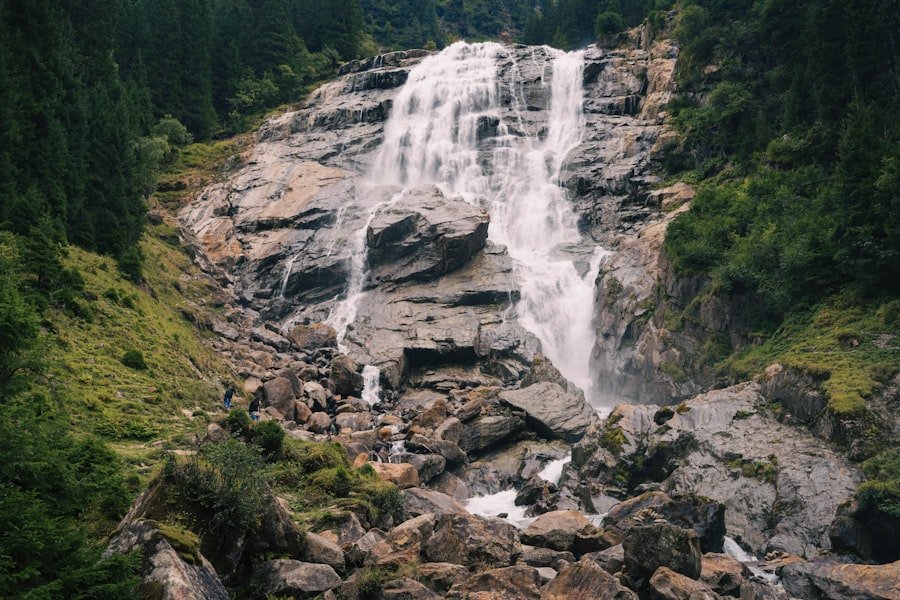
Trümmelbach Falls is one of the most distinctive nearby attractions. Its ten glacier-fed waterfalls run through the interior of the mountain, carrying water from the glacier-covered slopes associated with the Eiger, Mönch, and Jungfrau. The site is farther into the Lauterbrunnen Valley and can be reached by bus or other local transport.
Unlike Staubbach Falls, Trümmelbach is a ticketed and seasonal attraction. The official Trümmelbach Falls information advises visitors to check operating conditions, especially near the beginning and end of its season. Babies and children under four, as well as dogs, are not permitted inside the attraction for safety reasons.
Explore Mürren
Mürren is a car-free mountain village above the Lauterbrunnen Valley and a useful base for walks, viewpoints, and onward travel toward Schilthorn. It offers a very different perspective from the valley floor, with broad views toward the major Bernese Alps peaks.
Ride to Schilthorn
Schilthorn is one of the region’s major high-mountain excursions. The cableway system connects the Lauterbrunnen Valley with Mürren, Birg, and the 2,970-meter Schilthorn summit.
The trip received a major infrastructure update recently. Schilthorn Cableway Ltd. confirmed that the final new cableway in the SCHILTHORNBAHN 20XX project entered service between Birg and Schilthorn on April 2, 2026. The summit experience includes the Piz Gloria revolving restaurant and extensive mountain views.
See Staubbach Falls From Wengen
Wengen sits above the opposite side of the valley and offers a wider perspective on Lauterbrunnen’s cliffs and waterfalls. Switzerland Tourism identifies the Wengen side of the valley as one of the good areas for photographing Staubbach Falls from a distance.
Tips for Visiting Staubbach Falls
- Visit early or later in the day: You may find quieter conditions and softer light than around the busiest part of midday.
- Choose footwear for wet ground: Spray and rain can leave surfaces damp, especially near the gallery.
- Bring a light waterproof layer: This is useful if you plan to climb toward the gallery.
- Protect your camera: Fine spray can reach phones and lenses when the wind shifts.
- Do not judge the waterfall only by photographs: Flow changes naturally with snowmelt, rainfall, freezing conditions, and dry periods.
- Check current transport and trail information: Mountain railways, cableways, galleries, and hiking routes can have seasonal or weather-related changes.
- Combine nearby sights selectively: Staubbach Falls and Lauterbrunnen work well as a short visit, while Trümmelbach, Mürren, or Schilthorn can turn the outing into most of a day.
Pro Tip: If photography is important, first view Staubbach Falls from the village and then change your angle rather than immediately walking underneath it. The waterfall’s long drop is often easier to appreciate when you include the cliff and surrounding valley in the frame.
Conclusion and Final Thoughts
Staubbach Falls is easy to reach, free to view, and dramatic enough to justify a stop even on a short visit to Lauterbrunnen. Its 297-meter drop is the headline feature, but the experience changes with weather, water flow, season, and viewing position.
Early summer is a strong choice if you want a fuller cascade, while May through October is the key period for visitors who also want to use the Staubbach Gallery. Winter provides a completely different view when cold conditions can leave portions of the waterfall iced over.
The falls also work well as a starting point for a wider Lauterbrunnen itinerary. Trümmelbach Falls adds a contrasting waterfall experience inside the mountain, while Mürren, Wengen, and Schilthorn provide elevated views of the valley and surrounding Alps.
If your schedule is limited, concentrate on the village views, the foot of the waterfall, and the gallery when it is open. With more time, use Lauterbrunnen as the base for one or two nearby attractions rather than rushing through every sight in a single visit.
Frequently Asked Questions
What are Staubbach Falls?
Staubbach Falls is a 297-meter free-falling waterfall beside Lauterbrunnen in Switzerland’s Bernese Oberland. Lauterbrunnen Tourism describes it as the highest free-falling waterfall in Switzerland, while Switzerland Tourism lists it among the highest free-falling waterfalls in Europe.
How do I get to Staubbach Falls?
Travel by train to Lauterbrunnen, usually via Interlaken Ost, and continue through the village on foot. Drivers can park in Lauterbrunnen and walk from there. The falls are prominent from the village and locally signposted.
Is there an entrance fee to visit Staubbach Falls?
No. Lauterbrunnen Tourism states that entry to Staubbach Falls is free. Nearby paid attractions, such as Trümmelbach Falls or mountain cableways, have their own separate tickets.
When is the Staubbach Gallery open?
Jungfrau lists the Staubbach Gallery as open from May through October. The waterfall itself can still be viewed from Lauterbrunnen outside that period. Seasonal conditions or maintenance can affect access, so follow local signs.
Are there hiking and walking trails near Staubbach Falls?
Yes. You can walk through the Lauterbrunnen Valley, climb the seasonal path toward Staubbach Gallery, or travel higher into the Mürren area for mountain trails. One verified option is Jungfrau’s roughly two-hour Mountain View Trail near Winteregg and Mürren.
What is the best time of year to visit Staubbach Falls?
Early summer is particularly good for water flow because Switzerland Tourism says the falls carry the most water then. May through October is also the most practical period if you want access to the Staubbach Gallery. Winter can provide striking views when parts of the waterfall freeze.
How long should I allow for Staubbach Falls?
A short stop is enough for village viewpoints and the foot of the falls. If the gallery is open and you want to climb it at a relaxed pace, allow additional time. Switzerland Tourism suggests about 30 minutes for the gallery experience itself.
Is Staubbach Falls accessible for visitors with limited mobility?
The main waterfall can be enjoyed from viewpoints around Lauterbrunnen, but Switzerland Tourism classifies the attraction as only partially accessible. The Staubbach Gallery involves stairs and a rock passage, so it may not be suitable for visitors with limited mobility.
Sources
- Lauterbrunnen Tourism: Staubbachfall Waterfall — height, free entry, local significance, and Goethe connection.
- Switzerland Tourism: Staubbach Falls — 297-meter drop, seasonal flow, gallery experience, accessibility, and photography information.
- Jungfrau: Staubbach Falls — year-round viewing and May-to-October Staubbach Gallery season.
- Jungfrau: Lauterbrunnen — rail access through Interlaken Ost and regional visitor information.
- Trümmelbach Falls Official Information — access, seasonal operation, and visitor information for the nearby glacier waterfalls.
- Schilthorn Cableway Ltd. — April 2, 2026 completion of the final new cableway in the SCHILTHORNBAHN 20XX project.