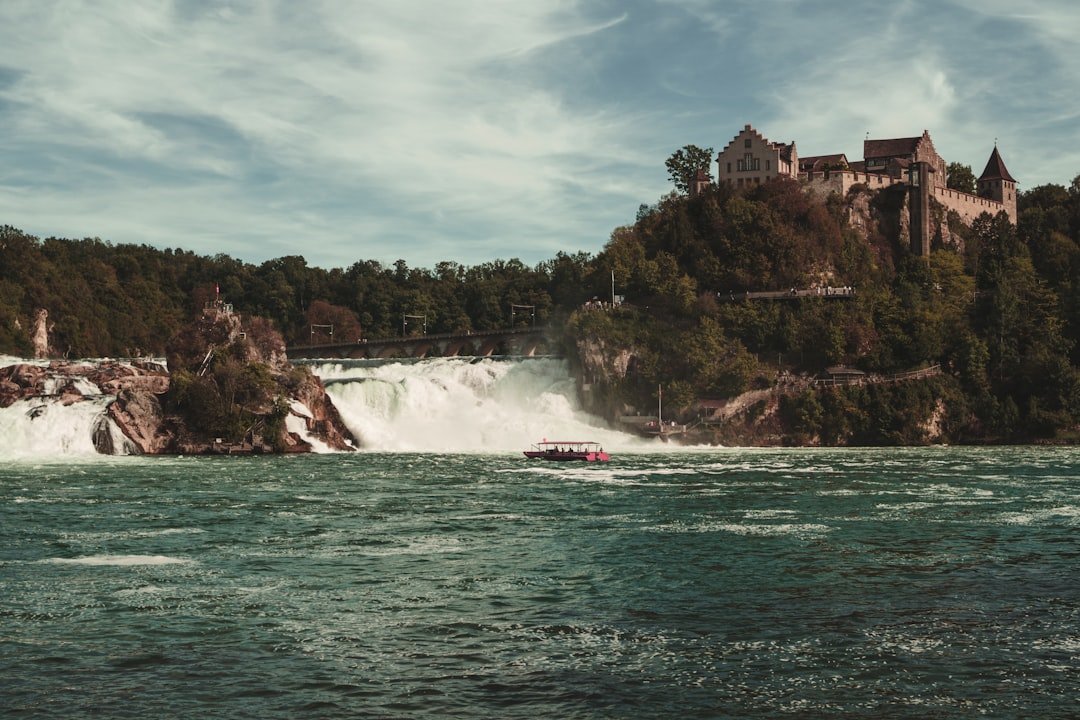
Rhine Falls is an easy and rewarding day trip from Zurich, but choosing the right train stop makes the visit much simpler. The waterfall near Neuhausen am Rheinfall is approximately 150 meters wide and drops 23 meters, making it Europe’s largest waterfall. You can see it from both banks, walk around the basin, take seasonal boat trips, visit Schloss Laufen, and still have time to add Schaffhausen if you start early.
Quick Answer
For a Zurich to Rhine Falls day trip, travel by train to Neuhausen Rheinfall for the northern bank or Schloss Laufen am Rheinfall for the southern bank. Allow roughly an hour each way from Zurich and at least three hours at the falls. A half-day works, but a full day lets you add Schaffhausen.
Key Takeaways
- Neuhausen Rheinfall and Schloss Laufen am Rheinfall are the most useful train stops for visiting the waterfall directly.
- The natural Rhine Falls site is accessible around the clock, 365 days a year, although boats, restaurants, shops, and other attractions have their own hours.
- There is no general Rhine Falls admission charge on the Neuhausen/Schlössli Wörth side. Access to Historama and the Schloss Laufen viewing-platform experience currently costs CHF 5 for adults and CHF 3 for children ages 6 to 15.
- Boat trips give you the closest views, while walking routes and platforms provide good alternatives if you prefer to stay on land.
- The small Rhine Falls circular walk is about 3.5 km and takes around one hour. A longer 7 km circuit takes about 1 hour 50 minutes.
- A half-day from Zurich is possible. Choose a full day if you also want to explore Schaffhausen, Munot Fortress, or spend more time walking and dining.
At a Glance
| Time Required | About 5 to 6 hours for a focused half-day trip; 7 to 9 hours for a relaxed full-day visit with Schaffhausen |
| Difficulty | Easy to moderate; stairs, slopes, wet surfaces, and boat boarding may add difficulty |
| Tools Needed | Train ticket or pass, comfortable walking shoes, weather protection, and a phone or camera |
| Cost | Rail fare varies. Northern-bank general access is free. Schloss Laufen’s Historama/viewing-platform ticket is currently CHF 5 per adult and CHF 3 for ages 6 to 15. Boat trips and other attractions cost extra. |
How to Get to Rhine Falls from Zurich
Traveling from Zurich to Rhine Falls is straightforward by public transportation, car, or organized tour. For most independent visitors, the train is the easiest option because there are railway stops on both sides of the attraction.
By Train
Instead of automatically traveling all the way to Schaffhausen station, choose your destination according to which side of Rhine Falls you want to visit first.
- Neuhausen Rheinfall: Best for the northern bank, Schlössli Wörth, boat-trip departure points, and free general access to the falls.
- Schloss Laufen am Rheinfall: Best if you want to begin at Schloss Laufen, Historama, and the southern-bank viewing platforms.
- Schaffhausen: Useful if you plan to combine the waterfall with Schaffhausen Old Town and Munot Fortress, but it is not necessary for a falls-only visit.
SBB’s excursion information shows the S9 taking 57 minutes from Zurich to Schaffhausen, with Neuhausen Rheinfall reached shortly before Schaffhausen. Services and connections can vary by departure time, so use the current SBB timetable when choosing your exact train.
Pro Tip: If you want to experience both banks, arrive at one Rhine Falls station and leave from the other. This avoids unnecessary backtracking and works well with the signed walking route around the basin.
By Car
Driving from Zurich generally takes about 45 to 60 minutes depending on your starting point and traffic. For the southern bank, the official destination is Areal Schloss Laufen, 8447 Dachsen. Parking is available at Schloss Laufen. The current published rate for cars is CHF 5 for the first hour and CHF 2 for each additional started hour, with free parking from 18:00 to 09:00.
Drivers using Swiss motorways need the required motorway vignette. If you already have one, driving provides useful flexibility for combining Rhine Falls with Schaffhausen or other places in the region.
By Organized Tour
Guided excursions from Zurich can be useful if you prefer transportation and sightseeing to be arranged for you. Compare the itinerary carefully because some tours only allow a short stop at the waterfall, while others include boat experiences, Schloss Laufen, or Schaffhausen.
Note: There is no regular boat service from Schaffhausen city to Rhine Falls. The official Rhine Falls site recommends train, bus, walking routes, or the Rhyfall Express for that connection.
Which Side of Rhine Falls Should You Visit?
Rhine Falls can be experienced from two main sides. Neither is universally better, and visiting both gives you the widest range of views.
Northern Bank: Neuhausen am Rheinfall and Schlössli Wörth
- General access to Rhine Falls is free.
- Convenient access from Neuhausen Rheinfall station.
- Boat-trip departure points are nearby.
- Good broad views across the waterfall toward Schloss Laufen.
- Restaurants, refreshments, tourist information, and souvenirs are available around the basin.
Southern Bank: Schloss Laufen
- Close-up viewing platforms descend alongside the waterfall.
- Historama explains the site’s history.
- Restaurant and self-service dining are available at the castle.
- The current combined admission for Historama and the viewing platforms is CHF 5 for adults and CHF 3 for children ages 6 to 15.
- Schloss Laufen am Rheinfall station provides direct rail access.
The natural waterfall can be experienced without buying a general entrance ticket on the northern side. Paying for Schloss Laufen is worthwhile if you want the dramatic southern-bank platform experience and Historama.
Activities at Rhine Falls
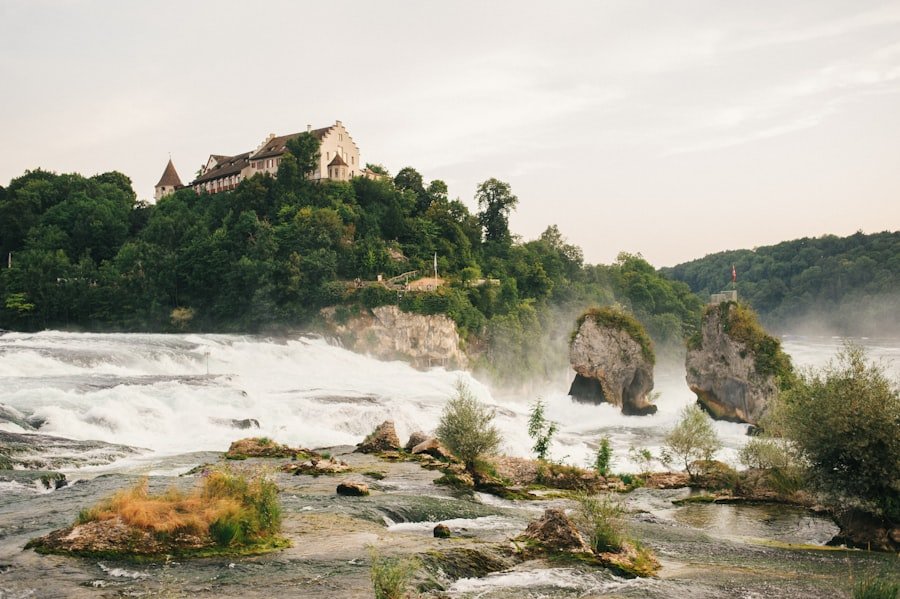
Once you reach Rhine Falls, you can experience it from boats, viewing platforms, walking paths, and the two banks of the river. The best combination depends on how much time you have and how close you want to get to the water.
Take a Boat Trip
Boat trips are one of the most memorable ways to experience the waterfall. Several routes operate in the Rhine Falls basin, including sightseeing circuits, crossings between the banks, and the well-known trip toward the central rock. The central-rock experience involves getting off the boat and climbing steps to a viewpoint surrounded by the rushing river.
Boat schedules, routes, restrictions, and operating periods vary, so use the providers listed by the official Rhine Falls tourism site for current choices.
Warning: Surfaces around the falls can become wet and slippery from spray. Boat boarding and the central-rock climb also involve movement, steps, and changing water conditions. Wear shoes with good grip, follow staff instructions, and stay inside marked visitor areas.
Walk the Viewing Trails
You do not need a boat ride to appreciate Rhine Falls. Paths and observation areas provide wide and close-up perspectives of the waterfall.
The official Rhine Falls walking information lists two useful circuits:
- Small Rhine Falls circular trail: approximately 3.5 km, about 1 hour, with around 51 meters of ascent.
- Grand Rhine Falls circular trail: approximately 7 km, about 1 hour 50 minutes, with around 120 meters of ascent.
The shorter circuit works especially well for a day trip because it lets you experience both sides without spending most of your visit hiking.
Visit Schloss Laufen and Historama
Schloss Laufen sits above the southern bank and has watched over the Rhine Falls area for centuries. The castle complex includes Historama, a visitor center, restaurants, and viewing platforms that descend close to the rushing water.
Enjoy the Viewpoints and Photography
The broad northern-bank views work well for photographing the entire waterfall, while the Schloss Laufen side provides dramatic close-range angles. Spray is common near the water, so protect phones, cameras, and lenses when conditions are wet.
The History and Significance of Rhine Falls
| Aspect | Details |
| Location | Neuhausen am Rheinfall / Schaffhausen side and Dachsen / Canton Zurich side, Switzerland |
| Height | Approximately 23 meters |
| Width | Approximately 150 meters |
| Water flow | Highly variable by season and hydrological conditions; several hundred cubic meters per second can pass over the falls |
| Significance | Europe’s largest waterfall and one of Switzerland’s best-known natural attractions |
| Formation | Formed roughly 15,000 years ago near the end of the last ice age |
Rhine Falls formed roughly 15,000 years ago as glacial processes changed the course of the Rhine. The river encountered resistant limestone beside more easily eroded material, creating the natural drop that visitors see today. Research on the Upper Rhine also identifies the waterfall as a long-standing natural barrier affecting fish movement.
Across a width of about 150 meters, the Rhine drops approximately 23 meters at Europe’s largest waterfall.
The waterfall also shaped human settlement and industry. Because Rhine Falls and the rapids interrupted river transport, goods moving along the Rhine had to be transferred around this section. Neuhausen developed near these transport routes and later grew rapidly during industrialization.
Water power in the Rhine Falls area attracted major industries. Neuhausen’s municipal history records the arrival of the Swiss Industrial Company, SIG, in 1853 and the Aluminium Industrie Aktien Gesellschaft in 1888. This connection between water power and industry is more accurate than describing Rhine Falls itself as a conventional hydroelectric power station.
Schloss Laufen is another major part of the landscape’s history. The castle complex has medieval origins and remains one of the best-known viewpoints over the falls.
Best Times to Visit Rhine Falls
Rhine Falls can be visited throughout the year, but the experience changes substantially with water levels, weather, daylight, and attraction schedules.
Late Spring and Summer
Late spring and summer are popular because of warmer weather, long daylight hours, seasonal boat operations, and often stronger water flow. Switzerland Tourism notes that very large volumes can pass over the falls during summer.
That does not mean every summer visit will have peak flow. River conditions vary from year to year, so the official Rhine Falls website is useful for checking live discharge before your trip.
Autumn
Autumn can offer cooler walking weather and colorful foliage around the river. Crowds may also be lighter than during the busiest summer periods. Check boat schedules if a particular boat experience is important to you.
Winter
Winter brings a quieter atmosphere and fewer visitors. Rhine Falls itself remains accessible, but some tourism activities have reduced seasonal schedules. Do not plan specifically around seeing a frozen waterfall; ice conditions are weather-dependent and a completely frozen Rhine Falls is not a normal winter feature.
Pro Tip: In busy months, arrive early in the morning or later in the afternoon if you want quieter viewing platforms. Midday is generally the easiest time for tour groups to overlap.
Dining and Shopping Options at Rhine Falls

You do not need to return to Zurich for lunch. Food, refreshments, and souvenir options are available around the Rhine Falls area.
On the southern side, Schloss Laufen currently operates both a restaurant and a self-service restaurant. Its official site publishes seasonal opening hours, and the visitor center also includes a souvenir shop. You can review the current schedule on the Schloss Laufen website.
On the Neuhausen side, tourist facilities around the basin include refreshments and the Rhine Falls Info-Shop, where visitors can obtain information and buy souvenirs. If dining at a specific restaurant is important to your itinerary, check its current opening hours before building your day around it.
Sample Zurich to Rhine Falls Day Trip Itinerary
A full-day schedule gives you enough time to enjoy Rhine Falls without rushing and still add Schaffhausen.
Morning: Zurich to Rhine Falls
- 8:00 to 8:30: Leave Zurich HB.
- Around 9:00 to 9:30: Arrive at Neuhausen Rheinfall or Schloss Laufen am Rheinfall, depending on your chosen starting side.
- 9:30 to 10:30: Explore your first viewpoints and walk along the basin.
Late Morning: Boat or Walking Route
- 10:30 to 11:30: Take a boat trip if your preferred route is operating, or continue along the circular walking trail.
- 11:30 to 12:30: Cross to the opposite side using the signed walking route and visit additional viewpoints.
Lunch and Schloss Laufen
- 12:30 to 14:00: Have lunch and visit Schloss Laufen, Historama, and the southern-bank platforms if they are part of your plan.
Afternoon: Add Schaffhausen
- 14:00 to 14:30: Travel to Schaffhausen.
- 14:30 to 16:30: Walk through the historic center and visit the Munot area.
- Late afternoon: Return to Zurich.
If you only have half a day, skip Schaffhausen and concentrate on the waterfall, one boat experience or walking circuit, and both banks.
Accessibility and Family Visits
Rhine Falls is accessible to many visitors with limited mobility, but the two sides do not provide identical access.
On the northern side, Neuhausen Rheinfall station is designed for barrier-free access to the Rhine Falls basin. The official site also lists accessible routes toward the boat pier, although individual equipment and temporary maintenance conditions can change.
At Schloss Laufen, visitors can use step-free areas around the castle, the panorama lift, the Panorama Trail, Belvedere viewing platform, visitor center, restaurant, and accessible toilets. However, the route all the way down to the Rhine Falls basin and boat landing is not fully accessible from the southern side.
Families with strollers should expect some stairs and slopes if attempting the complete experience. The castle’s visitor information provides specific ticket and step-free-access guidance for wheelchairs and prams.
Note: Accessibility infrastructure can occasionally be affected by maintenance. The official Rhine Falls and Schloss Laufen accessibility pages are the best sources for temporary restrictions on your travel date.
Nearby Attractions and Day Trip Ideas
Rhine Falls is close enough to several worthwhile destinations that you can expand a full-day trip if you plan your transportation efficiently.
Schaffhausen
Schaffhausen is the easiest addition. SBB’s route information places it only a short train ride beyond Neuhausen Rheinfall. The historic center is known for its decorated buildings and oriel windows, while Munot Fortress provides an elevated view over the town and surrounding landscape.
Stein am Rhein
Stein am Rhein is farther away but makes an attractive extension for travelers interested in medieval architecture and painted facades. The town is not on Lake Zurich. It sits near the western end of Lake Constance, on Lake Untersee and the Rhine.
Combining Zurich, Rhine Falls, Schaffhausen, and Stein am Rhein in one day is possible for energetic travelers, but it creates a much faster itinerary. For most visitors, Rhine Falls plus Schaffhausen is the better-balanced day trip.
Rhine River Cruises
Regular regional cruises operate seasonally between Schaffhausen, Stein am Rhein, and Lake Constance. These should not be confused with boat trips in the Rhine Falls basin. There is no regular boat connection from Schaffhausen city directly to Rhine Falls.
Walking and Nature
The Schaffhausen region also has riverside walks, vineyards, wooded hills, and longer hiking routes. If nature is your priority, spending more time along the Rhine or on the longer Rhine Falls circuit is usually more practical than trying to add several towns to the same day.
Tips for a Memorable Visit to Rhine Falls
- Use the closest railway station: Neuhausen Rheinfall and Schloss Laufen am Rheinfall are more convenient than traveling to Schaffhausen first unless the city is part of your itinerary.
- Check the timetable: Rail schedules and connections can change, so use SBB for your travel date.
- Check boat operations: Boat routes have their own schedules and restrictions and are not guaranteed year-round.
- Wear shoes with grip: Spray can make paths, platforms, and steps wet.
- Protect electronics: A small waterproof pouch is useful if you plan to take a close-up boat trip.
- Allow enough time: Three hours at Rhine Falls is a comfortable minimum if you want both banks rather than a quick photo stop.
- Arrive outside the midday peak: Early morning and later afternoon can feel calmer during busy periods.
- Check live water conditions: Rhine discharge varies considerably, so seasonal averages cannot predict the exact appearance of the falls on your visit.
- Plan for accessibility needs: Review the official access information if you use a wheelchair, have limited mobility, or are traveling with a stroller.
- Bring a camera: Wide views from the northern bank and close-up perspectives around Schloss Laufen offer very different photographs.
A Zurich to Rhine Falls day trip is easiest when you treat the waterfall as the main destination rather than routing automatically through Schaffhausen. Start at one of the two stations beside the falls, explore both banks, add a boat ride or walking circuit, and include Schaffhausen only if your schedule leaves enough time to enjoy it rather than rush through it.
Frequently Asked Questions
What is the best way to travel from Zurich to Rhine Falls for a day trip?
Train is usually the easiest option. Travel from Zurich toward Neuhausen Rheinfall for the northern bank or Schloss Laufen am Rheinfall for the southern bank. Both put you much closer to the attraction than traveling to Schaffhausen station first.
How long does it take to get from Zurich to Rhine Falls?
Allow roughly one hour each way by public transportation as a practical planning estimate. The exact journey depends on your departure time, connection, and whether you use Neuhausen Rheinfall or Schloss Laufen am Rheinfall.
What are the opening hours of Rhine Falls?
The natural Rhine Falls site is accessible around the clock, 365 days a year. Boat operators, visitor centers, restaurants, shops, Historama, and other attractions have their own operating hours, which can vary by season.
What activities can be done at Rhine Falls?
Popular activities include boat trips in the Rhine Falls basin, viewing platforms, the central-rock experience when operating, the 3.5 km and 7 km walking circuits, Schloss Laufen, Historama, photography, dining, and exploring both riverbanks.
Is it possible to visit Rhine Falls in a half-day trip from Zurich?
Yes. A focused half-day is realistic if you travel directly to one of the Rhine Falls stations and spend about three hours at the waterfall. A full day is better if you want a relaxed meal, a longer walk, multiple activities, or time in Schaffhausen.
Which train station is closest to Rhine Falls?
Neuhausen Rheinfall is convenient for the northern bank and boat area, while Schloss Laufen am Rheinfall serves the southern bank and castle. Choose according to the side where you want to begin.
Do you have to pay to see Rhine Falls?
No general entrance fee is charged for the Neuhausen am Rheinfall/Schlössli Wörth side. On the Schloss Laufen side, the current ticket covering Historama and the viewing platforms costs CHF 5 for adults and CHF 3 for children ages 6 to 15. Boat trips and other attractions are separately priced.
Are Rhine Falls boat trips available all year?
Do not assume that every boat route operates year-round. Boat schedules and routes are seasonal and can also depend on conditions. Check the current operators listed on the official Rhine Falls website for your travel date.
Sources
- Official Rhine Falls Tourism — Rhine Falls dimensions, experiences, current water information, and visitor planning.
- Rhine Falls Opening Hours and Prices — 24-hour site access, northern-bank free access, Schloss Laufen admission, and accessibility information.
- SBB: Zurich to Schaffhausen and Rhine Falls — rail route and Neuhausen Rheinfall station information.
- Switzerland Tourism: Rhine Falls — official tourism information on the waterfall’s approximately 150-meter width and 23-meter drop.
- Rhine Falls Walking Trails — official distances, walking times, and elevation figures for the small and grand circular routes.
- Municipality of Neuhausen am Rheinfall: Settlement History — historical trade, industrial development, and use of water power around Rhine Falls.