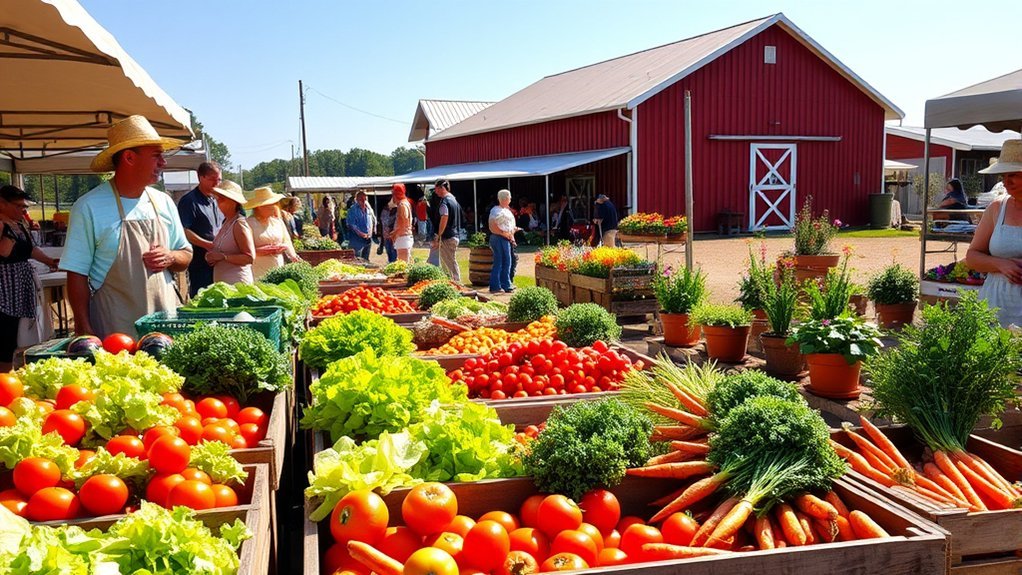
If you’re planning to shop at Alabama farmers markets in 2026, you can choose from year-round markets, seasonal community markets, farm stands, and U-pick operations across the state. The best produce, vendors, hours, and payment options vary by location and season, so a little planning can make your visit much more useful. This guide explains where to look, what may be in season, how to verify organic claims, and what to know before you go.
Quick Answer
Alabama farmers markets in 2026 range from year-round urban markets to seasonal community markets. Start with the state’s official market directory, then confirm current hours before driving. Shop early for selection, ask vendors how products were grown, verify organic claims, and check payment or nutrition-benefit acceptance before your visit.
Key Takeaways
- Use the Alabama Farmers Market Authority directory to find current farmers markets, farm stands, U-pick locations, and FMNP redemption sites.
- Market schedules can change with seasons, weather, holidays, and vendor availability, so check the individual market before traveling.
- Local food is not automatically organic. Look for USDA organic information or ask the grower about production practices.
- Produce availability differs between north, central, and south Alabama and can shift from year to year.
- Payment options and SNAP or farmers-market nutrition benefits vary by market and sometimes by vendor.
Note: Market schedules and program information in this guide were checked on August 17, 2026. Farmers markets are seasonal businesses, so confirm the latest hours and vendor information before making a special trip.
Overview of Alabama Farmers Markets
Alabama has farmers markets, farm stands, and U-pick operations in communities throughout the state. The Alabama Department of Agriculture and Industries Farmers Market Authority helps connect consumers with these direct-market outlets and administers the Alabama Certified Farmers Market Program.
A farmers market may include fruits and vegetables along with eggs, honey, meat, baked goods, preserves, flowers, plants, crafts, and other locally produced items, depending on the market’s rules. Product selection can change from one week to the next as crops mature and individual vendors attend.
An Alabama Certified Farmers Market follows state program requirements designed to support direct sales from qualifying producers. Certification can be useful when your priority is locally produced farm goods, but it should not be confused with USDA organic certification.
Benefits of Shopping at Farmers Markets
Shopping at farmers markets gives you an opportunity to purchase directly from farmers and food producers, ask questions about the food you are buying, and see what is being harvested locally at that point in the season. Produce may have traveled a shorter distance than products moving through a large distribution system, although freshness still depends on when an item was harvested, how it was stored, and how quickly you use it.
Farmers markets also keep more of the shopping experience local. You may meet growers from your area, discover varieties that are uncommon in supermarkets, find locally produced honey or preserves, and learn how farmers recommend preparing unfamiliar vegetables.
Note: “Local” and “organic” do not mean the same thing. USDA states that foods marketed as organic must meet federal organic standards. If organic production matters to you, look for certification information and ask the vendor instead of assuming all farmers-market produce is organic.
Seasonal Crop Calendar for Alabama
Understanding Alabama’s growing seasons can help you shop when particular crops are most abundant. Because north Alabama experiences different temperatures and frost dates from the Gulf Coast, there is no single harvest date that applies everywhere. Weather, planting dates, protected growing systems, and individual farms also affect availability.
The Sweet Grown Alabama Harvest Calendar provides a useful statewide reference, while Alabama Cooperative Extension publishes detailed crop-season guidance.
| Season | Common Alabama Market Finds |
| Spring | Strawberries, leafy greens, radishes, onions, cabbage, broccoli, and other cool-season vegetables, depending on location and weather. |
| Summer | Tomatoes, sweet corn, peaches, blueberries, blackberries, melons, squash, peppers, cucumbers, beans, and okra. |
| Fall | Sweet potatoes, pumpkins and winter squash, collards, turnips, cabbage, greens, and other cool-season crops. |
| Winter | Availability is more limited, but some markets and growers may offer greens, cabbage-family crops, root vegetables, stored produce, greenhouse products, meat, eggs, honey, baked goods, and preserves. |
Pro Tip: Treat a harvest calendar as a guide rather than a guarantee. If you are making a trip for one specific crop, check the market’s current vendor list or contact the farmer first.
Verified Farmers Markets in Northern Alabama
Northern Alabama has both seasonal and longer-running markets. These examples had identifiable 2026 information when this guide was updated:
- Madison County Farmers Market, Huntsville – Located at 1022 Cook Avenue. The county’s 2026 market page lists Saturday hours from 8 a.m. to 2 p.m. through November 21, 2026. Vendor mix can vary by week.
- Madison City Farmers Market, Madison – Located at 1088 Hughes Road. Its official site identifies the 2026 season, which began April 11. The City of Madison listed opening-day hours as 8 a.m. to noon.
- Athens Farmers Market, Athens – The 2026 Athens Main Street schedule lists Tuesday markets from May 5 through August 25, 3 to 6 p.m., and Saturday markets from June 6 through September 26, 8 a.m. to noon, at 409 W. Green Street.
- Limestone County Farmers Market, Athens – This long-running market is another option for local farm products. Because Athens-area market schedules can differ by organizer and season, check the state market directory before traveling.
These markets support direct connections with growers, but inventory changes throughout the season. One Saturday may have abundant tomatoes and corn, while another may feature greens, honey, eggs, preserves, meat, flowers, or handmade products.
Farmers Markets to Explore in Central Alabama
Central Alabama offers several established markets with different schedules and formats. Rather than assuming every market operates on Saturday morning, choose one that fits the type of shopping you want to do.
Current Market Picks
- Pepper Place Farmers Market, Birmingham – Pepper Place is an Alabama Certified Farmers Market at 2829 2nd Avenue South. Its 2026 information lists Saturday hours from 7 a.m. to noon, rain or shine, with the main 2026 season running January 31 through December 12.
- Tuscaloosa Farmers Market – Located at the Tuscaloosa River Market, 1900 Jack Warner Parkway. The official market site lists Saturday markets from 7 a.m. to noon year-round. Additional Tuesday markets operated from 3 to 7 p.m. during June and July 2026.
- Montgomery Curb Market – This established Montgomery market sells farm products and other local goods. The City of Montgomery market page lists Tuesday, Thursday, and Saturday operations. Because the city’s schedule page is older than some other sources, verify current opening and closing times before a special trip.
- Birmingham Central Market – This weekday option operates in partnership with local organizations and provides another way to buy seasonal products from area farmers. MAX Transit lists Monday, Wednesday, and Friday afternoon operations along with multiple payment options.
Seasonal Produce Highlights
Central Alabama markets change noticeably through the year. Spring may bring strawberries and cool-season vegetables. Summer is a strong period for tomatoes, peaches, sweet corn, melons, squash, peppers, beans, cucumbers, and okra. As temperatures cool, sweet potatoes, greens, turnips, cabbage, pumpkins, and winter squash become more prominent.
Availability is never identical from farm to farm. Heavy rain, drought, extreme heat, frost, crop disease, and harvest timing can all affect what reaches a market in a particular week.
Local Vendor Spotlight
One advantage of a farmers market is the ability to speak directly with the person selling a product. At markets such as Pepper Place, Tuscaloosa Farmers Market, Birmingham Central Market, and Montgomery Curb Market, vendor selections can include farmers alongside food producers and artisans.
Ask useful questions such as:
- Where was this grown or produced?
- When was it harvested?
- What variety is it?
- How should I store it?
- How long will it keep?
- What is the easiest way to prepare it?
- If it is advertised as organic, is it USDA certified or otherwise covered by USDA organic requirements?
Exploring Southern Alabama Farmers Markets
Southern Alabama’s longer warm season creates different growing conditions from northern parts of the state. Markets around Mobile and other southern communities may feature produce along with seafood, baked goods, meat, honey, preserves, plants, art, and handmade products.
Market in the Park in Mobile is a useful example of a seasonal city market. The City of Mobile’s 2026 spring/summer schedule ran Saturdays from April 25 through June 27, from 7:30 a.m. to noon at Cathedral Square. Since that session has ended, check the city’s events calendar for the next seasonal dates rather than relying on last season’s hours.
The City of Semmes Farmers Market also operated a 2026 seasonal session, while Sweet Grown Alabama’s 2026 market information listed additional southern options including markets in Greenville and Clio. Use the 2026 Sweet Grown Alabama market guide and the state Farmers Market Authority directory to identify markets near your route.
Tips for First-Time Farmers Market Visitors
Your first farmers-market visit is easier when you know what to expect. Unlike a supermarket, inventory, vendors, payment systems, and even market hours may change during the season.
Make the most of your first farmers market visit with a little planning and friendly vendor engagement.
- Confirm the market before leaving: Check the official website, social page, city calendar, or Alabama Farmers Market Authority listing for current dates, hours, weather notices, and holiday closures.
- Arrive early when selection matters: Popular produce can sell out. Arriving near opening time usually gives you a broader selection, although visiting later can be quieter.
- Bring more than one payment method: Cash remains useful, but some markets or vendors accept cards, mobile payments, SNAP, or nutrition-program benefits. Acceptance varies.
- Bring reusable bags: A sturdy tote or basket makes it easier to carry produce without crushing softer fruit.
- Carry an insulated bag or cooler for perishables: This is especially useful if you buy meat, dairy products, eggs, cut produce, or other foods requiring refrigeration and will not be going directly home.
- Walk the market before buying everything: Compare varieties, quality, quantity, and prices before deciding.
- Engage with vendors: Ask what was harvested recently, what is coming into season, and how the grower recommends storing or preparing an unfamiliar item.
Pro Tip: If your main goal is a popular seasonal item such as peaches, tomatoes, strawberries, or sweet corn, check the week’s vendor list or contact the market before you drive. Crop availability can change quickly.
Supporting Local Farmers and Artisans
Buying directly from a farmer or local producer can keep more of your food spending within the regional food system while giving you a direct connection to the people producing what you buy. Farmers markets can also provide sales opportunities for small farms that may not supply large grocery chains.
You may also encounter artisans, bakers, beekeepers, meat producers, flower growers, preserve makers, and other small businesses. The exact vendor rules differ by market, so not every product sold at a farmers market is necessarily grown at the market’s location or produced under the same certification program.
If supporting Alabama-grown food is your main goal, look for Alabama Certified Farmers Market information, read vendor signage, and ask the seller where the product came from.
Seasonal Recipes Featuring Local Produce
One of the easiest ways to use farmers-market produce is to build simple meals around whatever is abundant that week. You do not need a complicated recipe. Fresh vegetables can be roasted, grilled, sautéed, or added to salads, while ripe fruit works well in breakfast dishes, desserts, salsas, or simple fruit bowls.
Spring Vegetable Delights
Spring markets may feature leafy greens, radishes, onions, strawberries, cabbage-family vegetables, and other cool-season crops. Availability differs by location, so use what looks best at your local market.
- Roasted spring vegetables: Toss a mix of available vegetables with a little oil and your preferred seasoning, then roast until tender.
- Radish and greens salad: Slice radishes thinly and combine them with fresh greens and a simple vinaigrette.
- Sautéed spinach or other greens: Cook greens briefly with garlic for a quick side dish.
Buying in season encourages you to experiment with crops that may not normally appear on your shopping list.
Summer Fruit Medleys
Summer is an excellent time to look for Alabama peaches, blueberries, blackberries, watermelon, cantaloupe, and other warm-season fruit. The exact harvest window varies by farm and region.
For a simple fruit salad, combine diced watermelon with blueberries and fresh mint. Another option is sliced peaches with berries and a small splash of lime juice. When fruit is fully ripe, very little preparation is needed.
Fall Harvest Dishes
When cooler weather arrives, Alabama markets may feature sweet potatoes, pumpkins, winter squash, greens, turnips, cabbage, and other fall crops.
- Pumpkin or winter-squash soup: Roast the squash before blending it into a smooth soup with broth and your preferred seasonings.
- Fruit crisp: Use locally available fall fruit when you can find it, then top it with an oat mixture and bake until bubbling.
- Roasted root vegetables: Combine sweet potatoes, carrots, turnips, or other available roots for an easy seasonal side.
These dishes give you flexible ways to use whatever growers are harvesting instead of relying on a fixed ingredient list.
Payment, SNAP, and Farmers Market Benefits
Payment systems vary from one Alabama market to another. Some vendors operate on cash only, while others accept debit cards, credit cards, mobile payments, SNAP, or market-specific tokens and incentives. Never assume that every vendor at a market accepts the same method.
For example, Birmingham Central Market lists cash, Cash App, debit and credit cards, and EBT SNAP among its payment options. Pepper Place also identifies itself as SNAP certified and provides information about its nutrition-incentive program.
Alabama also participates in Farmers Market Nutrition Programs. According to the Alabama Farmers Market Authority, eligible Senior Farmers Market Nutrition Program participants can use benefits to purchase qualifying Alabama-grown fresh fruits, vegetables, honey, and fresh-cut herbs from approved sellers. The current state page lists $50 in SFMNP benefits and $30 in WIC FMNP benefits. Eligibility, funding, redemption dates, and approved locations are subject to program rules.
Alabama’s Farmers Market Authority advises benefit users to choose an approved redemption site and check local operating days and hours because each market is self-governing.
Events and Activities at Alabama Farmers Markets
Farmers markets can offer more than produce shopping. Depending on the market and date, you may find live music, chef demonstrations, children’s activities, seasonal celebrations, educational programs, nonprofit booths, or local artisans.
These activities are market-specific rather than guaranteed. Pepper Place, Athens, Tuscaloosa, Mobile, and other community markets have hosted special programming, but weekly schedules can change. Check the individual market’s current event calendar if an activity is important to your visit.
How to Find an Alabama Farmers Market Near You
The most reliable starting point is the Alabama Farmers Market Authority location directory. It allows shoppers to look for farmers markets, farmers stands, U-pick operations, and Farmers Market Nutrition Program redemption sites.
After finding a nearby market, verify the following before leaving:
- Current opening day and closing date
- Day of the week and operating hours
- Exact address
- Weather or holiday cancellations
- Current vendor list if available
- Accepted payment methods
- SNAP or FMNP participation if you plan to use benefits
- Parking and accessibility information
- Pet policy
Food Safety After Shopping
Farmers-market produce should receive the same careful handling as produce purchased elsewhere. The U.S. Food and Drug Administration recommends washing fresh fruits and vegetables thoroughly under running water before preparing or eating them. FDA does not recommend washing produce with soap, detergent, or commercial produce wash.
Warning: Keep foods that require refrigeration cold, particularly during Alabama’s hot weather. Do not leave perishable purchases sitting in a hot vehicle while you continue sightseeing or running errands.
At home, keep produce that will be eaten raw separate from raw meat, poultry, and seafood. Refrigerate produce that requires cold storage and discard items that are rotten or badly damaged.
Frequently Asked Questions
What are the operating hours for Alabama farmers markets?
There is no standard statewide schedule. Some markets operate early Saturday mornings, others run on weekdays or afternoons, and some are year-round while others last only a few months. Use the Alabama Farmers Market Authority directory and the individual market’s current website or calendar before visiting.
Are pets allowed at farmers markets in Alabama?
Pet policies vary by market and may also change during periods of extreme heat or crowded events. Check the individual market’s rules before bringing a pet. If pets are permitted, keep your animal under control and follow all posted market requirements.
How can I find organic produce at Alabama farmers markets?
Do not assume that locally grown produce is organic. Look for USDA organic information and ask vendors how their crops were grown. USDA organic products must comply with federal organic standards, although certain small operations may qualify for specific exemptions from certification while still being required to follow applicable organic rules when representing products as organic.
Do Alabama farmers markets accept credit cards?
Some do, but payment options vary by market and vendor. A market may accept cards or SNAP centrally while individual vendors use different payment systems. Carrying a backup payment method, including some cash, can prevent problems.
What safety measures are in place at farmers markets?
Market rules and vendor requirements vary. Alabama’s Produce Safety Program works with growers on applicable produce-safety requirements, while shoppers should still handle purchases safely at home. Wash fresh produce under running water, keep raw produce separated from raw animal products, and refrigerate foods that require cold storage.
Where can I find the latest list of Alabama farmers markets?
Use the Alabama Department of Agriculture and Industries Farmers Market Authority directory. It provides options for locating farmers markets, farmers stands, U-pick operations, and approved Farmers Market Nutrition Program redemption locations.
Can I use SNAP or farmers-market nutrition benefits in Alabama?
Some Alabama markets accept SNAP, but participation varies. Alabama also administers Farmers Market Nutrition Programs for eligible participants. Use the state redemption-site directory and confirm that the farmer or market accepts the specific benefit you plan to use before purchasing.
Conclusion
Exploring Alabama farmers markets can give you access to seasonal produce, locally produced foods, and direct conversations with farmers and other small producers. The key is to treat each market as its own destination rather than assuming every location has the same hours, products, payment methods, or rules.
Start with the state’s official directory, check the current schedule, and use Alabama’s harvest information to see what may be in season. Once you arrive, walk through the market, talk with vendors, and choose the products that fit your meals and budget. Whether you are looking for summer tomatoes, Alabama peaches, fall sweet potatoes, local honey, or something you have never cooked before, the best selection will change throughout the year.
Sources
- Alabama Department of Agriculture and Industries Farmers Market Authority – official directory for farmers markets, farm stands, U-pick locations, and FMNP redemption sites.
- Sweet Grown Alabama Harvest Calendar – statewide reference for seasonal Alabama-grown products.
- Alabama Cooperative Extension System: Vegetable Seasons in Alabama – crop-season and growing guidance for Alabama.
- Alabama Farmers Market Nutrition Program – current SFMNP/WIC FMNP eligibility, benefit, redemption, and usage information.
- USDA Agricultural Marketing Service: Organic Basics – explains what the USDA organic label means and how organic standards work.
- U.S. Food and Drug Administration: Selecting and Serving Produce Safely – consumer guidance for washing, storing, and preparing fresh produce safely.