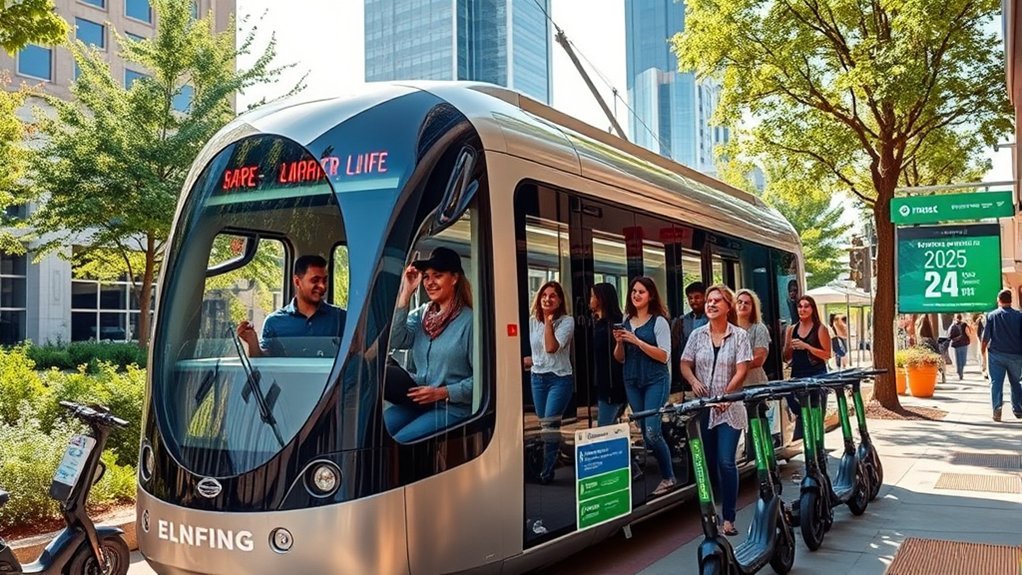
Public transportation in Alabama is changing, but the shift is happening through a mix of local bus networks, rural transportation programs, on-demand services, accessibility improvements, and passenger rail rather than through one statewide transit system. As of August 2026, riders can point to real changes in Birmingham, Huntsville, Mobile, and other communities instead of relying on predictions about what might happen.
Quick Answer
Public transportation in Alabama is expanding and modernizing unevenly across the state. Current developments include new hybrid-bus funding in Huntsville, Birmingham’s bus rapid transit and on-demand services, a redesigned Mobile transit network, rural transportation funding, and restored Amtrak passenger rail between Mobile and New Orleans.
Key Takeaways
- Alabama does not have one uniform statewide city-bus network; services vary by community and region.
- Federal and local investment continues to replace aging buses and improve transit service.
- Birmingham, Huntsville, and Mobile offer useful examples of bus rapid transit, mobile fare tools, real-time information, microtransit, and network redesign.
- ALDOT supports public transportation in nonurbanized areas through the federal Section 5311 Rural Transit Program.
- Passenger rail returned to Mobile in August 2025 through Amtrak’s Mardi Gras Service to New Orleans.
Where Public Transportation in Alabama Stands in 2026
Public transportation in Alabama is best understood as a collection of systems. Larger cities operate fixed-route buses and related services, while rural communities may depend on regional or county transportation providers. The Alabama Department of Transportation’s Section 5311 Rural Transit Program supports public transportation outside federally designated urbanized areas.
This matters because the transportation challenge in Birmingham or Huntsville is different from the challenge in a sparsely populated rural county. Urban agencies can concentrate passengers along regular routes, while rural providers often need more flexible service over much larger distances.
Note: Fares, routes, operating hours, eligibility rules, and reservation requirements differ by transit provider. Check the operator’s official website before relying on an older schedule or third-party trip-planning result.
The Future of Bus Transit in Alabama
Bus modernization is already happening in parts of Alabama. In the Federal Transit Administration’s FY2025 Bus and Low- and No-Emission Grant Awards, the City of Huntsville received $6,098,667 to purchase new hybrid buses that will replace older vehicles that have reached the end of their useful life.
The FTA awarded Huntsville more than $6 million in FY2025 to replace aging buses with new hybrid vehicles.
Birmingham has taken a different approach. MAX Transit operates traditional fixed routes as well as the Birmingham Xpress, Alabama’s first bus rapid transit system. The east-west BRT corridor connects the Woodlawn Transit Center and CrossPlex Transit Center. MAX also offers on-demand transportation in designated service areas.
Mobile is also updating its network. The Wave Transit System’s Mobile’s Transit Future initiative describes new routes, stops, and broader coverage being developed for summer 2026.
These examples show why Alabama’s transit future should not be reduced to a single statewide ridership prediction. Progress depends on whether individual communities can improve route frequency, reliability, vehicle condition, coverage, accessibility, and connections to jobs and essential services.
Passenger Rail Is Part of Alabama Transit Again
One of the largest recent changes occurred outside the bus network. On August 18, 2025, Amtrak began twice-daily Mardi Gras Service between Mobile and New Orleans, with stops along the Mississippi Gulf Coast.
The service restored passenger rail to Mobile after an absence of nearly two decades. Travelers can also use Amtrak’s broader network for longer-distance connections, while Birmingham remains served by the Crescent route.
The return of Gulf Coast rail gives southern Alabama another transportation option and demonstrates that future public transportation planning in the state involves more than local buses alone.
Embracing Sustainable Transportation Solutions
Sustainability is becoming part of transit planning, particularly as agencies replace aging vehicles. Hybrid and other lower-emission buses can reduce fuel use and vehicle emissions compared with the older buses they replace, although the exact environmental benefit depends on the vehicle, fuel, route, electricity source, and operating conditions.
Public transportation can also support lower-emission travel when reliable service allows more trips to be made without a private vehicle. The U.S. Environmental Protection Agency notes that public transit and other transportation choices can make it easier for people to drive less and can contribute to lower greenhouse-gas emissions.
Transit also works best as part of a wider transportation network. Safe sidewalks, bicycle connections, well-designed stops, and convenient transfers can make buses and trains more useful for everyday trips.
Smart Technology and Public Transit Integration
Technology is already changing the rider experience in several Alabama cities. Instead of treating mobile tracking and digital fares as future concepts, riders can find examples in systems operating today.
MAX Transit provides route information, service alerts, and trip-planning tools through its digital services. Huntsville’s Orbit system supports mobile fare purchases through Token Transit, while Mobile’s Wave Transit offers a bus tracker and MyWAVE fare tools.
For riders, the most useful technology is often simple: knowing when the next bus should arrive, receiving a service alert, finding the correct stop, or paying without needing exact cash.
For transit agencies, service and ridership data can help planners identify crowded routes, weak connections, schedule problems, or areas where demand is changing. Technology is most valuable when it improves reliability and access rather than existing only as an additional app.
Pro Tip: Check an agency’s official service-alert page or app shortly before leaving. Construction, events, weather, staffing, and road closures can change a bus trip even when the published timetable has not changed.
Expanding Accessibility for All Residents
Accessibility is a core requirement for useful public transportation. According to U.S. Census Bureau QuickFacts, 11.8% of Alabama residents under age 65 had a disability in the 2020-2024 data period. Older adults and other riders may also need accessible transportation even though they are not represented by that specific under-65 statistic.
Accessible transit can include vehicles with ramps or lifts, wheelchair securement areas, accessible stops and facilities, understandable passenger information, and paratransit for eligible riders who cannot use a fixed-route system for a qualifying disability-related reason.
Federal rules are important here. The Federal Transit Administration’s ADA guidance explains accessibility requirements that apply to public transportation. Public entities operating fixed-route systems generally must provide complementary paratransit for eligible individuals with disabilities.
Alabama also uses the federal Section 5310 Enhanced Mobility program to support transportation for seniors and individuals with disabilities. Accessibility therefore involves both legal compliance and practical questions such as whether a rider can reach a stop, board a vehicle, receive trip information, and complete a journey reliably.
Community Involvement in Transit Planning
Community involvement plays an important role in transportation planning because residents experience problems that may not be obvious from a map or spreadsheet. Riders can identify missing connections, unsafe stops, trips that end too early, difficult transfers, or destinations that existing routes do not serve well.
Mobile’s 2026 transit redesign, for example, includes a public survey asking riders to comment on their experience with The Wave and MoGo. Birmingham’s ongoing multimodal planning has also used community meetings and public feedback.
Public meetings, surveys, transportation-planning studies, and agency feedback forms give residents opportunities to influence route design, service hours, accessibility priorities, and future investments.
Useful participation is specific. Instead of simply requesting “better buses,” a rider can identify the route, stop, destination, day, and time when a problem occurs. That gives planners more actionable information.
How to Use Public Transportation in Alabama
Because Alabama transit is locally operated, there is no single fare or timetable that applies everywhere. Start by identifying the public transportation provider serving the city or county where your trip begins.
- Birmingham and parts of Jefferson County: Check MAX Transit for fixed routes, Birmingham Xpress, paratransit, and available on-demand services.
- Huntsville: Check Orbit route maps, schedules, fares, and Access paratransit information.
- Mobile: Use The Wave Transit System for routes, bus tracking, fares, and Mobility Assistance Program information.
- Montgomery: Check The M for routes, fares, passes, and paratransit information.
- Rural areas: Use ALDOT’s rural-transit information and local regional or county providers to identify available service.
- Intercity rail: Check Amtrak for Birmingham service and the Mobile-New Orleans Mardi Gras Service.
Always confirm the timetable for the specific day of travel. Weekend schedules, holidays, special events, and temporary detours can change service.
What Will Shape Alabama Public Transportation Next?
The next stage of public transportation in Alabama will depend less on flashy technology than on whether systems solve practical rider problems.
Reliability and frequency determine whether riders can depend on transit for work, school, medical appointments, and errands. Coverage determines whether buses reach growing neighborhoods and important destinations. Accessibility determines whether people with disabilities can use the service. Fleet investment affects reliability, operating costs, comfort, and emissions.
Rural transportation remains another major challenge because low population density makes frequent fixed-route service difficult to operate. Flexible demand-response transportation, regional coordination, and continued federal support can therefore play an important role outside Alabama’s larger cities.
Technology can support all of these goals, but an app cannot compensate for a route that does not reach a rider’s destination or a bus that does not run when the rider needs it. Service quality remains the foundation.
Frequently Asked Questions
What are the costs associated with using public transportation in Alabama?
There is no statewide fare. Prices depend on the operator and service. For example, Huntsville Orbit lists a $1 regular one-way fare, while Mobile’s Wave Transit lists a $1.25 regular fare. Birmingham Xpress is currently fare-free, and Birmingham On-Demand lists a $1.50 flat fare. Always check the operator’s current fare page because prices and promotions can change.
How can I find public transportation routes and schedules?
Use the official website or app for the local transit provider. Birmingham riders can check MAX Transit, Huntsville riders can use Orbit maps and schedules, and Mobile riders can use The Wave’s route pages and bus tracker. Confirm service alerts before traveling.
Are there discounts available for students or seniors?
Many Alabama transit providers offer reduced fares to qualifying riders, but eligibility differs. Huntsville lists reduced fares for seniors, riders with disabilities, qualifying Medicare or Medicaid cardholders, and students. Mobile and Montgomery also offer reduced-fare options. Check the agency’s identification and application requirements before traveling.
What safety measures are in place for public transit users?
Safety procedures vary by operator and vehicle. Follow posted rules, remain behind designated lines while a vehicle is moving, use handholds when standing, and follow the operator’s instructions. Check the local agency’s safety or customer-service page for system-specific policies and report urgent emergencies through appropriate emergency services.
How can I report issues or concerns with public transportation services?
Contact the transit provider through its official customer-service number, feedback form, or website. Include the route, stop, direction of travel, date, approximate time, vehicle number if available, and a clear description of the problem.
Does Alabama have public transportation in rural areas?
Yes, although service varies significantly by county and region. ALDOT administers the federal Section 5311 program, which supports public transportation in nonurbanized areas. Rural service may operate differently from a city bus system and can include demand-response or regional transportation.
Does Alabama have passenger train service?
Yes. Amtrak serves Birmingham through the Crescent route, and the Mardi Gras Service operates between Mobile and New Orleans with Gulf Coast stops. The Mobile service began on August 18, 2025, restoring passenger rail to the city after nearly two decades.
Conclusion
Alabama’s public transportation system is not undergoing one single statewide transformation. Instead, meaningful changes are occurring through individual transit agencies and regional programs. Huntsville is replacing aging buses with hybrid vehicles, Birmingham operates bus rapid transit and on-demand service, Mobile is redesigning its bus network, rural transportation continues through ALDOT-supported programs, and passenger rail has returned to Mobile.
The strongest future improvements will be the ones riders can feel directly: more reliable service, useful routes, reasonable fares, accessible vehicles and stops, clear passenger information, and better connections between communities. Technology and cleaner vehicles can support those goals, but dependable service remains the measure that matters most.
Sources
- Alabama Department of Transportation: Rural Transit Program — Alabama’s Section 5311 public transportation program for nonurbanized areas.
- Federal Transit Administration: FY2025 Bus and Low-No Awards — Huntsville hybrid-bus funding.
- MAX Transit — Birmingham-area fixed routes, Birmingham Xpress, trip information, and current transit services.
- The Wave Transit System: Mobile’s Transit Future — Mobile’s 2026 route, stop, and coverage redesign.
- Amtrak Mardi Gras Service — current passenger rail between Mobile and New Orleans.
- U.S. Census Bureau QuickFacts: Alabama — current Alabama demographic and disability statistics.