Alabama has paved rail-trails, short boardwalks, coastal paths, wildlife-viewing routes, and urban park loops that can work well for wheelchair users and scooter users. The best choice depends on more than distance. Check the surface, slope, parking route, restroom access, shade, current closures, and the exact portion described as accessible before you travel.
Quick Answer
Strong options for many wheelchair users in Alabama include paved sections of Chief Ladiga Trail, Little River Falls Boardwalk, Bald Rock Accessible Trail, Gulf State Park’s Hugh S. Branyon Backcountry Trail, Wheeler National Wildlife Refuge’s accessible visitor-center trails, and Bon Secour’s Gator Lake Trail. Confirm the exact accessible segment and current conditions before visiting.
Key Takeaways
- A paved, boardwalk, or firm and stable surface is usually easier to use than sand, loose gravel, grass, roots, or mud.
- An accessible overlook or short segment does not mean every trail, restroom, or facility in the park is accessible.
- Gulf State Park offers the longest clearly described paved and ADA-accessible trail network in this guide.
- For short scenic outings, Little River Falls Boardwalk and Bald Rock Accessible Trail are practical starting points.
- Check official closure notices, weather, parking, restrooms, shade, and mobility-device rules on the day of your visit.
Last updated: July 23, 2026
More than one in four U.S. adults has some type of disability, according to the Centers for Disease Control and Prevention. Clear trail information helps more people decide where they can safely and comfortably enjoy the outdoors.
Overview of Wheelchair Accessibility in Alabama’s Parks
Alabama’s state parks, federal preserves, wildlife refuges, city parks, and coastal recreation areas include a growing number of paved routes, boardwalks, accessible viewing areas, designated parking spaces, restrooms, and outdoor mobility devices. However, accessibility can vary within the same property.
A park may have an accessible visitor center and overlook while its hiking trails remain narrow, steep, rooted, or rocky. A long paved trail may be easy to roll on but have road crossings, limited shade, or trailheads without the facilities you need. A beach may provide an access mat that stops before the waterline.
Note: Terms such as wheelchair-friendly, accessible, and ADA-accessible are not always used in the same way. Federal outdoor trail provisions are explained by the U.S. Access Board, but those outdoor trail standards are part of the Architectural Barriers Act standards for covered federal facilities. A smooth trail at a state, city, or private site should not be assumed to meet every technical standard unless the managing agency says so.
Before choosing a route, focus on the details that affect your own mobility device and energy level: surface, grade, cross-slope, width, obstacles, distance, turning space, rest areas, weather exposure, parking, restrooms, and the return trip.
How to Use This Guide Before You Choose a Trail
Use this guide to build a shortlist, then confirm the current conditions with the agency that manages the trail. A route that works well for a manual wheelchair in dry weather may be harder after rain. A power wheelchair may handle the surface but need more battery range than expected because of slopes, heat, or detours.
| What to Check | Why It Matters | Best Action |
|---|---|---|
| Surface | Pavement and boardwalks usually roll more easily than sand, mud, roots, or loose gravel. | Look for official terms such as paved, asphalt, boardwalk, firm crushed stone, or hard-packed surface. |
| Slope and Cross-Slope | A short trail can still be demanding if it climbs sharply or tilts sideways. | Check posted grades, recent condition notes, or call the park office. |
| Accessible Distance | The accessible section may cover only a boardwalk, viewpoint, or visitor-center loop. | Confirm the accessible segment and whether the return route uses the same surface. |
| Parking and Restrooms | A suitable trail can still be difficult if the parking route or restroom is inaccessible or far away. | Check parking-surface details, curb cuts, restroom hours, and seasonal closures. |
| Shared Use and Crossings | Cyclists, road crossings, gates, and busy trailheads can affect comfort and safety. | Review the trail map, speed rules, crossings, and the quietest time to visit. |
Pro Tip: When you call a park, describe your exact device and needs. Ask about the narrowest point, steepest section, surface transitions, gate width, restroom route, accessible parking, benches, and whether staff have checked the route recently.
Best Wheelchair-Accessible Trails in Alabama at a Glance
At a Glance
| Best Long Paved Route | Chief Ladiga Trail, about 39.5 miles in Alabama, with trailhead amenities that vary by location. |
| Best Short Waterfall View | Little River Falls Boardwalk, an approximately 0.1-mile accessible boardwalk from the main falls parking area. |
| Best Mountain Overlook | Bald Rock Accessible Trail, about 0.3 mile one way on the boardwalk route. |
| Best Coastal Trail Network | Hugh S. Branyon Backcountry Trail, a 28-plus-mile paved, ADA-accessible multi-use network. |
| Best Accessible Wildlife Stops | Wheeler National Wildlife Refuge, including Flint Creek Trail and the Wildlife Observation Building Trail. |
| Best Coastal Refuge Loop | Gator Lake Trail at Bon Secour, a 0.78-mile loop listed as universally accessible and wheelchair friendly. |
| Best New Mobile-Area Loop | Bayfront Park, where a new boardwalk completed a continuous half-mile paved and boardwalked ADA-accessible loop in May 2026. |
Top Wheelchair-Accessible Trails in the Appalachian Foothills
Alabama’s Appalachian foothills offer long paved mileage, short waterfall access, and a mountain boardwalk. These routes give you very different experiences, so choose by distance, weather exposure, and trailhead facilities.
Chief Ladiga Trail
The Chief Ladiga Trail is Alabama’s longest paved rail-trail. The City of Anniston says its extension brought the Alabama trail to about 39.5 miles, connecting Anniston with the Georgia state line and the Silver Comet Trail.
The paved surface can suit many wheelchair users, scooters, handcycles, walkers, and families with strollers. However, accessibility is not identical along the full route. Trailhead parking, restrooms, water, shade, road crossings, and pavement condition can differ.
The Chief Ladiga Trail gives you the most paved mileage, but the best accessible outing may be a short out-and-back from a trailhead with reliable parking and restrooms.
For a first visit, choose a short segment near Anniston, Jacksonville, or another established trailhead. Set a turnaround point before you start, and remember that the return trip may feel harder in heat, wind, or rising grades.
Little River Falls Boardwalk
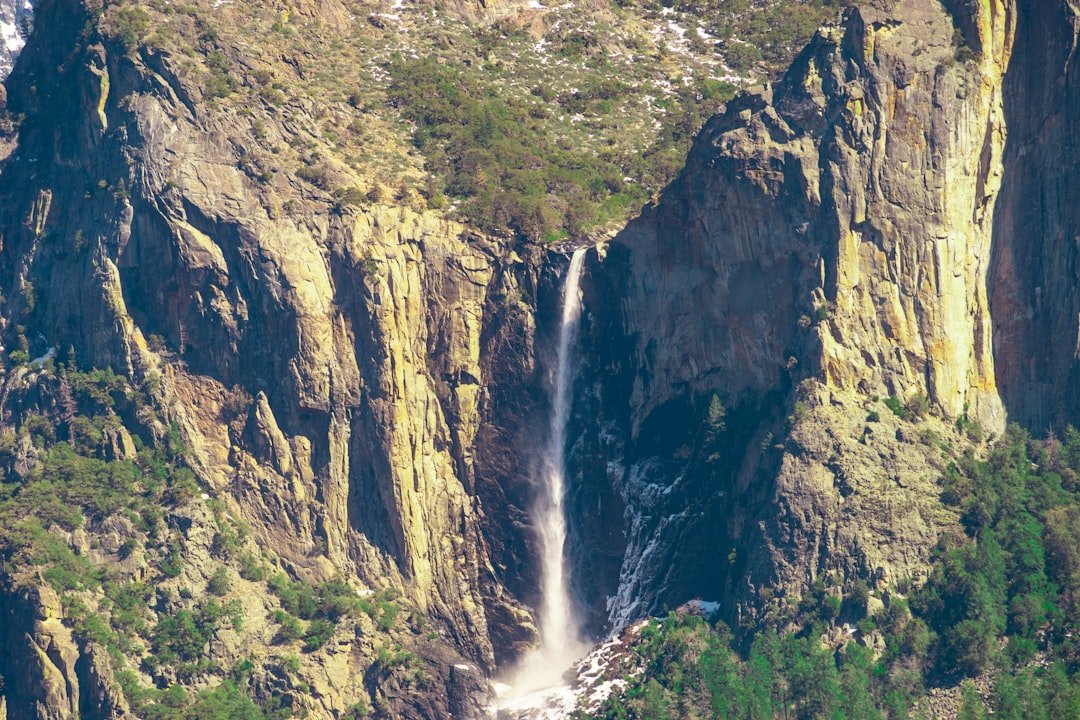
At Little River Canyon National Preserve, the National Park Service lists accessible parking and an ADA boardwalk to the main Little River Falls overlook. The current NPS trail listing describes the boardwalk as about 0.1 mile.
This is one of the strongest choices for a short, high-reward outing. The main falls area also lists an accessible restroom. However, the preserve’s natural hiking trails are not described as ADA accessible, and nearby routes can include stone steps, roots, or steep terrain.
Warning: Do not confuse Little River Falls Boardwalk with the trail to Little Falls. The Little Falls Trail is longer and ends with 137 stone steps. The NPS also warns that rocks near the water can be slippery and river flow can become dangerous.
Bald Rock Accessible Trail
Cheaha State Park lists the Bald Rock Trail as 0.3 mile one way and explains that two paths lead to the overlook: a boardwalk and a dirt trail beside it. The park’s current interpretive-center page calls the boardwalk route the Bald Rock Accessible Trail.
The boardwalk offers a mountain view without requiring the rocky dirt route. The full out-and-back distance is about 0.6 mile. Since mountain weather can change quickly, check for rain, fog, wind, ice, wet boards, or temporary closures before driving to the summit area.
Cheaha charges day-use admission, and current hours and fees can change. Review the Cheaha State Park page before leaving home.
Coastal Trails for Everyone: Exploring Alabama’s Gulf Coast
Alabama’s Gulf Coast has some of the state’s strongest accessible outdoor options because many routes use pavement, boardwalks, promenades, and maintained public access points. The main challenges are heat, humidity, limited shade, sand, storms, changing tides, and seasonal crowds.
Scenic Waterfront Pathways
The leading coastal trail option is the Hugh S. Branyon Backcountry Trail at Gulf State Park. Alabama State Parks describes it as a 28-plus-mile paved trail network through nine ecosystems. The trails are multi-use and listed as ADA accessible.
The network has several trailheads around Gulf State Park and connects areas of Gulf Shores and Orange Beach. This gives you flexibility to choose a short loop or out-and-back rather than attempting a long distance. Review the map for trailheads, road crossings, restrooms, water, and shaded rest areas.
| Coastal Area | What It Offers | Important Limit |
|---|---|---|
| Gulf State Park | Paved, ADA-accessible multi-use trails with several trailheads. | Long distances, cyclists, heat, and limited shade can affect comfort. |
| Bon Secour National Wildlife Refuge | Gator Lake Trail is listed as universally accessible and wheelchair friendly. | Other refuge trails include sand, wet ground, or harder terrain; Centennial boardwalk sections are currently closed. |
| Gulf Shores Public Beach | Concrete promenade and four beach access mats at Gulf Place and East Gulf Place. | The mats stop short of the water because of the lower beach slope. |
| Orange Beach Trail Connections | Several trailheads provide access to the paved Backcountry Trail network. | The trail is shared, has a 10 mph speed limit, and is open during daylight hours. |
Accessible Beach Access
Beach access requires more planning than a paved trail. The City of Gulf Shores currently lists four access mats: three at Gulf Place and one at East Gulf Place. The city states that the mats stop before the water because the lower beach incline is too steep for many wheelchair users to return easily.
- Beach mats: Confirm the exact location, current placement, and whether storms or maintenance have affected the mat.
- Beach wheelchairs: Ask who provides them, whether advance reservations are required, where pickup occurs, and whether staff assistance is available.
- Accessible restrooms: Check the exact beach access point rather than assuming every public beach entrance has the same facilities.
- Parking: Identify the closest accessible space and the route from the access aisle to the promenade or mat.
- Waterline access: A mat or beach wheelchair does not guarantee independent access to the surf.
Note: The U.S. Access Board explains that beach wheelchairs are helpful equipment but are not a substitute for a firm and stable beach access route. Availability, assistance, and local conditions still matter.
Nature Trails Overview
Coastal nature trails can change from pavement to boardwalk, packed ground, wet soil, or sand. For the lowest-risk first outing, start with a paved Gulf State Park segment or Bon Secour’s Gator Lake Trail.
At Bon Secour, the U.S. Fish and Wildlife Service lists the 0.78-mile Gator Lake Trail as universally accessible and wheelchair friendly. The refuge currently states that Centennial Trail boardwalk sections are closed for safety concerns. Check the official trail page before every visit because repair work, storms, flooding, and sand movement can change access.
Urban Parks With Accessible Pathways in Major Cities
Urban parks can be easier to use because they often sit near hospitals, restaurants, paved streets, parking, and other services. They also provide shorter backup plans when heat, fatigue, weather, or restroom needs change your day.
Birmingham’s Accessible Green Spaces
- Railroad Park: The downtown park has several walking paths, including the Rail Trail and shorter loops. Confirm event closures, parking, and the easiest entrance before visiting.
- Vulcan Park and Museum: The official visitor page says the site has free parking and is wheelchair accessible. Ask about the current route to the museum, grounds, and observation areas.
- Birmingham Botanical Gardens: The parking lot and Garden Center are barrier-free, complimentary wheelchairs are available on a first-come basis, and many paths have hard surfaces. The Gardens also warns that some areas are not barrier-free.
- Neighborhood parks: Short paved loops can be useful, but older curb ramps, restrooms, and playground routes may vary. Check the city listing and recent conditions.
Birmingham’s urban parks work best when you want flexibility. You can shorten the route, rest more often, or leave quickly if the surface or weather feels harder than expected.
Montgomery’s Urban Trail Network
Montgomery’s riverfront and neighborhood parks can provide paved outdoor time near downtown attractions and services. The city’s Riverfront Greenway planning page identifies universal access as a core goal for existing and future segments.
For a smaller neighborhood option, Washington Park lists a paved walking trail, benches, restrooms, a playground, and shelters. A paved surface is useful, but you should still confirm slope, curb ramps, parking, restroom access, and construction.
If you plan to connect several downtown attractions, review each street crossing and curb ramp. A route can look continuous on a map but include steep approaches, temporary barriers, broken pavement, or a crossing without enough time.
Mobile’s Scenic Waterfront Paths
Mobile County added an important accessible waterfront option in 2026. A new 900-foot boardwalk at Bayfront Park completed a continuous half-mile paved and boardwalked ADA-accessible loop around the park. The route includes marsh views and covered pavilions.
- Use the paved and boardwalk loop for a shorter waterfront outing.
- Check the park page for hours, storm impacts, event use, and restroom status.
- Expect sun, humidity, insects, and changing coastal weather.
- Ask whether the pocket beach route meets your needs before planning to enter the sand.
Temporary events can change accessibility even when the permanent route is suitable. Ask about barriers, temporary restrooms, parking controls, ramps, seating, and crowd levels.
Nature Reserves Featuring Wheelchair-Friendly Routes
Wildlife refuges offer quiet scenery and birding, but visitor-center hours, seasonal habitat closures, hunting seasons, storms, and maintenance can affect access. Always read the current refuge page rather than relying only on a trail app.
Wheeler National Wildlife Refuge
Wheeler National Wildlife Refuge lists two especially useful accessible routes near the visitor center:
- Flint Creek Trail: A 0.49-mile loop with boardwalk and hard-packed crushed stone. The refuge lists it as wheelchair accessible and notes that it is open during normal visitor-center hours.
- Wildlife Observation Building Trail: A 0.15-mile route with a hard-packed crushed-stone surface and a small wooden bridge. The trail and the first floor of the observation building are listed as wheelchair accessible.
Other Wheeler trails may include dirt, gravel, boardwalk, or mixed surfaces and are not all labeled wheelchair friendly. Confirm visitor-center hours because grounds connected to the center may be closed when the building is closed.
Bon Secour National Wildlife Refuge
Bon Secour National Wildlife Refuge protects dunes, wetlands, maritime forest, and coastal wildlife habitat. The Gator Lake Trail is the clearest wheelchair-friendly choice on the current trail page.
Other routes include sandy, wet, or more difficult sections. The refuge currently reports that Centennial Trail boardwalk sections are closed because of safety concerns. Service dogs are allowed, but pets are not permitted on the refuge.
For either refuge, bring water, sun protection, insect repellent, and a charged phone. If you use a powered device, calculate battery range for the trip from parking to the trail, viewing area, restroom, and back to the vehicle, not just the posted trail length.
Scenic Byways: Accessible Drives and Viewing Points
Accessible outdoor travel does not always require a long trail. Scenic drives and short overlook stops can provide mountain, river, forest, waterfall, or coastal views with less physical effort.
Accessible Scenic Routes
- Cheaha area drives: Combine the mountain drive with Bald Rock Accessible Trail. Use Alabama Highway 281 when possible because the park describes it as the better-maintained approach.
- Little River Canyon: Combine Little River Falls Boardwalk with selected roadside overlooks. Check each overlook because surfaces and routes vary.
- Gulf Coast routes: Combine paved trailheads, beach promenades, restaurants, and rest stops so you can adjust the day around heat and energy.
- Refuge and river routes: Use short viewing stops for birding and photography when a full trail is not practical.
- Historic routes: Confirm parking, curb ramps, restroom access, and sidewalk condition at each stop.
Viewing Point Accessibility
A useful accessible viewing point needs more than a beautiful view. Look for a firm parking surface, marked access aisle, curb cuts, a wide and stable route, enough turning space, guardrails that do not block the seated view, benches, shade, and nearby restrooms.
If the official page does not describe the route, call the site. Ask whether the path from parking includes steps, gravel, steep slopes, narrow gates, lips between surfaces, or uneven transitions. These details often matter more than the total distance.
Family-Friendly Parks With Inclusive Facilities
Families often need more than an accessible trail. A successful outing may also require shade, picnic tables, an accessible restroom, a stroller-friendly route, nearby parking, play areas, and space for caregivers or medical equipment.
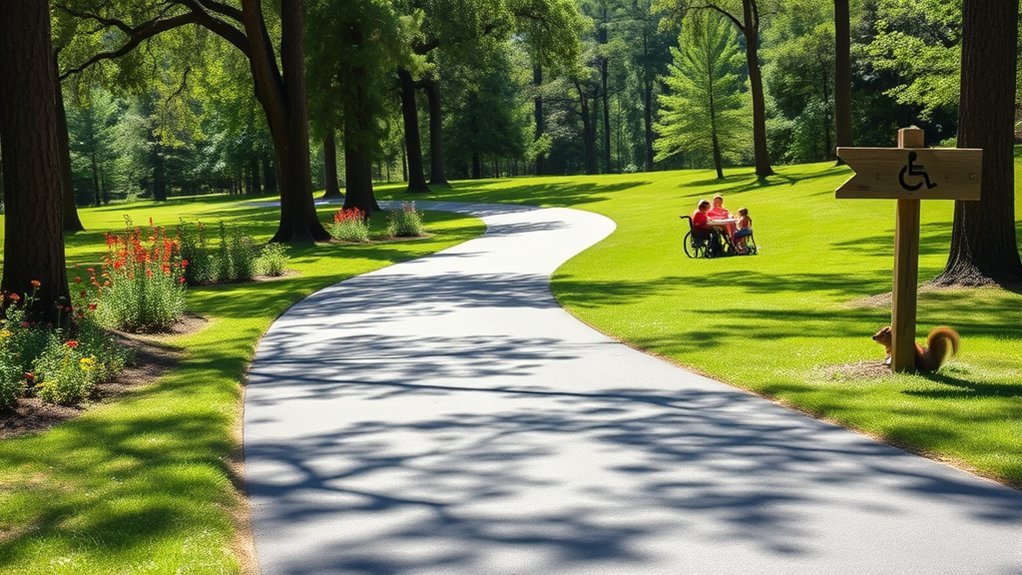
- Paved routes: Choose paths that support wheelchairs, scooters, walkers, and strollers.
- Picnic access: Check whether a firm route connects parking to an accessible table and shelter.
- Restroom space: Confirm stall size, transfer space, changing needs, and opening hours.
- Rest breaks: Look for benches, shade, pavilions, or short loops with easy exits.
- Mixed ability: Pick a base area where some family members can take a longer route while others remain near facilities.
The best accessible family park is not always the longest or most famous one. It is the place where everyone can move, rest, use the facilities, and enjoy the day without constant barriers.
Start with a shorter route. You can add another loop, boardwalk, or viewpoint if the first part works well.
Resources for Planning Your Accessible Adventure
Use official sources first. Then read recent visitor reports for real-world details such as damaged boards, mud, blocked curb cuts, crowded parking, broken elevators, or closed restrooms. Visitor reviews are useful clues, but they are not a substitute for current agency information.
| Resource Type | Example | Use It For |
|---|---|---|
| State Park Pages | Alabama State Parks | Park hours, admission, closures, maps, trails, and facility information. |
| Outdoor Mobility Devices | Alabama State Parks OMD Program | Device locations, recommended areas, phone numbers, and reservation guidance. |
| Federal Trail Pages | U.S. Fish and Wildlife Service | Trail length, surface, difficulty, suitability, opening limits, and closures. |
| Beach Access Information | City of Gulf Shores | Access mat locations, limits, beachfront assistance, and contact information. |
| Accessibility Standards | U.S. Access Board | Trail, viewing area, trailhead, and beach access design concepts. |
| Recent Visitor Reports | AccessNow, AllTrails, and Google Maps reviews | Recent photos and reports about barriers, mud, crowds, parking, and restrooms. Verify important details with the managing agency. |
Accessible Trail Planning Checklist
- Choose a trail from an official agency page.
- Confirm which segment is described as accessible.
- Check the surface, grade, cross-slope, width, gates, and obstacles.
- Measure the full distance from parking to the route, viewpoint, restroom, and back.
- Review closures, construction, storm damage, hunting notices, and visitor-center hours.
- Check accessible parking, curb cuts, restrooms, benches, shade, and water.
- Ask about shared-use traffic, bicycles, road crossings, and busy times.
- Confirm beach wheelchair or outdoor mobility device reservations before building the trip around the equipment.
- Save the park office number and share your route with someone.
- Plan a shorter first visit and set a turnaround point.
Safety, Weather, and Seasonal Planning
Alabama heat and humidity can make a short accessible route feel much longer. The Alabama Department of Public Health recommends drinking fluids, avoiding the hottest part of the day, using sun protection, and watching for signs of heat illness.
- Heat: Visit early, use shade, carry more water than you expect to need, and shorten the route when the heat index is high.
- Rain: Boardwalks can become slick, crushed stone can soften, and dirt or sand can become harder to cross.
- Coastal storms: Wind, flooding, debris, and mat removal can change beach and trail access quickly.
- Cold or ice: Mountain roads and boardwalks at Cheaha can become hazardous.
- Wildlife and insects: Stay on the route, do not feed wildlife, and carry insect repellent where appropriate.
- Battery range: Heat, grade, soft surfaces, and detours can reduce practical range. Start with a full charge and keep a reserve.
Warning: If anyone develops confusion, fainting, severe weakness, or other signs of heat stroke, call 911 and begin cooling the person. Do not continue the trail.
Community Impact of Accessible Trails
Wheelchair-accessible trails do more than help one visitor reach a viewpoint. They also support older adults, parents with strollers, people recovering from injuries, veterans, caregivers, and anyone who benefits from a smoother and more clearly described route.
- More participation: Accessible routes help more people join family and community outings.
- Local economic value: Better access can support nearby restaurants, lodging, transportation, and visitor services.
- Public awareness: Visible access improvements help communities recognize barriers that are easy to overlook.
- Health and well-being: Easier access to nature can support movement, stress relief, and social connection.
- Better design for everyone: Clear signs, stable surfaces, benches, shade, and reliable restrooms help many types of visitors.
High-value improvements are often practical rather than dramatic: smoother transitions, repaired curb cuts, accurate trail maps, clear closure notices, more benches, working restrooms, and current accessibility information online.
Future Developments in Alabama’s Accessible Outdoor Spaces
Alabama’s accessible outdoor spaces improve most when physical upgrades are matched with detailed visitor information. A new boardwalk is valuable, but visitors also need the surface, grade, width, parking route, restroom distance, closure status, and date of the latest inspection.
Mobile County’s new Bayfront Park boardwalk is a recent example of a physical project that expanded public accessibility. Alabama State Parks is also expanding access through its Outdoor Mobility Device program.
As of July 2026, the program lists devices at select parks, including Oak Mountain, Lakepoint, Gulf State Park, Monte Sano, and Joe Wheeler. The page encourages advance reservations, and several device listings request at least three days’ notice. Device type, meeting location, recommended route, waiver, and staff support vary by park.
Future improvements should focus on accessible trailhead maps, real surface photos, updated restroom details, beach wheelchair rules, shaded rest stops, charging options, repair alerts, and clear information about which portion of a route is accessible.
Frequently Asked Questions
Are service animals allowed on wheelchair-accessible trails in Alabama?
Generally, yes. ADA guidance requires state and local governments and most public businesses to allow trained service dogs in areas open to the public. Emotional support animals do not have the same federal public-access rights. Site-specific safety restrictions may still apply, so check the park or refuge rules.
What types of wheelchairs are best for outdoor trails?
A standard manual or power wheelchair may work well on smooth pavement, firm boardwalks, and stable crushed-stone routes. Grass, sand, mud, roots, loose gravel, and steeper slopes may require an all-terrain wheelchair or outdoor mobility device. Match the device to the route, transfer needs, turning space, weather, and battery range.
Are Alabama wheelchair-accessible trails always ADA compliant?
No. A site may use wheelchair-friendly or accessible to describe a smooth route without confirming every technical detail. Outdoor trail standards also differ by land manager and legal coverage. Check the managing agency’s wording and ask about surface, grade, cross-slope, width, parking, restrooms, and the exact accessible segment.
Are there fees for using wheelchair-accessible parks in Alabama?
Some parks charge day-use, parking, or admission fees, while many city trails and federal refuge areas are free. Fees, disability passes, age discounts, and parking rules vary. Check the official page for the specific park before you travel.
Which Alabama trail is best for a first wheelchair-accessible outing?
For a short scenic outing, start with Little River Falls Boardwalk or Bald Rock Accessible Trail. For wildlife viewing, consider Wheeler’s Wildlife Observation Building Trail. For a longer paved outing, choose a short section of Chief Ladiga Trail or the Hugh S. Branyon Backcountry Trail from a trailhead with suitable facilities.
How can I report an accessibility issue on a trail?
Contact the park office, city parks department, refuge office, National Park Service unit, or Alabama State Parks. Give the trail name, exact location, date, barrier type, and a photo when possible. Describe blocked curb cuts, loose gravel, damaged boards, steep transitions, missing signs, narrow gates, or inaccessible restrooms.
Can beach wheelchairs be used on Alabama’s Gulf Coast?
Beach wheelchairs may be available through selected parks, cities, hotels, or rental providers, but rules and availability change. Ask about reservations, pickup, hours, deposits, staff assistance, and whether the chair can reach the waterline. Gulf Shores access mats currently stop before the water because of the lower beach slope.
What should I check before visiting an accessible trail?
Check the surface, slope, cross-slope, width, distance, gates, steps, parking, restrooms, shade, benches, closures, weather, shared-use traffic, and emergency contact information. Confirm whether the accessible portion covers the entire route or only a short segment.
What is the process for suggesting a new accessible trail or improvement?
Start with the agency that manages the land. Explain the barrier, who it affects, and the practical improvement you are requesting. Useful suggestions include a firm route, repaired transition, accessible parking connection, passing space, bench, shade, restroom upgrade, clearer map, or current surface information.
Where can I find outdoor mobility devices in Alabama State Parks?
Use the official Alabama State Parks Outdoor Mobility Devices page. It lists available devices, parks, phone numbers, meeting locations, and recommended areas. Reserve early because the device must be available, charged, and prepared for your visit.
Sources
- City of Anniston: Chief Ladiga Trail — trail length, extension, connection, and general route description.
- National Park Service: Little River Canyon Accessibility — accessible parking, boardwalk access, and limits of natural trails.
- Alabama State Parks: Gulf State Park Trails — paved trail-network mileage and ADA-accessible multi-use designation.
- U.S. Fish and Wildlife Service: Wheeler Trails — accessible trail names, lengths, surfaces, and facility limits.
- U.S. Fish and Wildlife Service: Bon Secour Trails — Gator Lake Trail suitability and current Centennial boardwalk closure notice.
- City of Gulf Shores: Beach Accessibility — access mat locations, dimensions, limits, and beachfront assistance.
Conclusion
Alabama offers useful wheelchair-accessible outdoor choices, but they are not all the same. For long paved movement, begin with Chief Ladiga Trail or Gulf State Park’s Hugh S. Branyon Backcountry Trail. For short scenic rewards, consider Little River Falls Boardwalk or Bald Rock Accessible Trail. For wildlife, start with the specifically identified accessible routes at Wheeler or Gator Lake Trail at Bon Secour.
Choose one route, open its official page, and confirm the exact accessible segment, surface, parking, restrooms, closures, weather, and distance on the day you go. That extra check can turn an uncertain trip into a safer and more enjoyable outdoor visit.