The cherimoya tree (Annona cherimola) is a subtropical fruit tree prized for its creamy, aromatic fruit and attractive spreading canopy. Native to western South America, it grows best where winters are mild, drainage is excellent, and summers provide enough warmth for fruit development without prolonged extreme heat or dry wind. For home growers, the biggest challenges are usually climate, drainage, pruning, and reliable pollination.
Quick Answer
A cherimoya tree grows best in a sunny, relatively frost-free location with well-drained soil and consistent moisture. Mature trees can approach 30 feet but are commonly pruned smaller. Hand pollination often improves fruit set, and mature fruit should be picked while firm and allowed to soften after harvest.
Key Takeaways
- Cherimoya is semi-deciduous rather than truly evergreen and is best adapted to mild subtropical or highland-tropical conditions.
- Excellent drainage is essential. Standing water increases the risk of crown and root problems.
- Flowers contain both male and female structures, but the two phases mature at different times, so hand pollination can greatly improve fruit set.
- Harvest mature cherimoyas while they are still firm. Let them soften at room temperature before eating.
- Do not eat, chew, crush, or blend cherimoya seeds. The edible portion is the soft flesh surrounding them.
History and Origin of the Cherimoya Tree
The accepted botanical name is Annona cherimola Mill., a member of the Annonaceae family. According to the Royal Botanic Gardens, Kew, its native range includes Bolivia, Colombia, Ecuador, and Peru.
Cherimoya has been cultivated in the Americas for a long time and later spread to other suitable subtropical and highland regions. It is now grown in places such as Spain, Chile, Peru, New Zealand, Australia, Israel, and parts of the United States where local climate permits.
California cultivation also has a documented history. University of California Cooperative Extension records show that Albert Packard had 18 cherimoya trees growing in Santa Barbara in 1870–71, followed by additional plantings in the region during the late 19th century.
Today, cherimoya remains a specialty fruit rather than a universally adaptable backyard tree. Its climate requirements and unusual pollination biology make successful production much easier in some regions than others.
Characteristics and Appearance of Cherimoya Fruit
Cherimoya fruit varies considerably by cultivar. It may be heart-shaped, conical, oval, or irregular, with green skin ranging from relatively smooth to strongly bumpy or segmented. University of California guidance describes fruit commonly around 3 to 8 inches long, although size and weight vary widely.
The edible flesh is creamy white to pale cream with a soft, custard-like texture. Flavor descriptions vary by cultivar and ripeness, but people commonly notice combinations of banana, pineapple, pear, mango, citrus, or other tropical-fruit notes.
Numerous dark brown or black seeds may be embedded throughout the flesh. Remove them as you eat the fruit rather than chewing or processing them.
Warning: Cherimoya seeds are not edible. University of California Cooperative Extension describes toxic compounds in the seeds and other non-fruit plant parts, and laboratory research has identified cytotoxic annonaceous acetogenins in cherimoya seeds. Never chew, crush, grind, or blend the seeds into food or drinks.
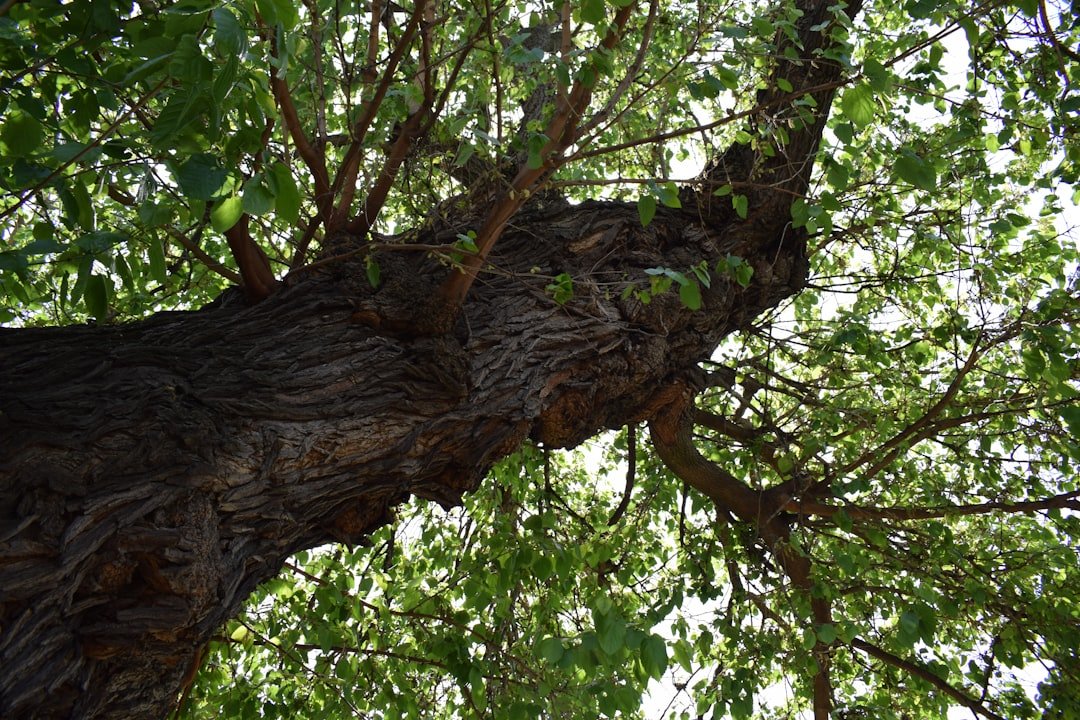
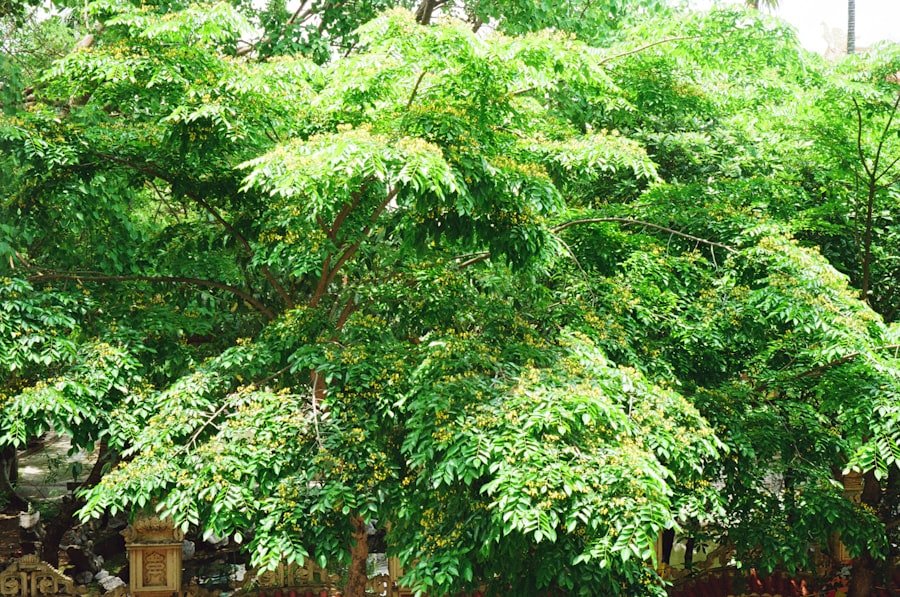
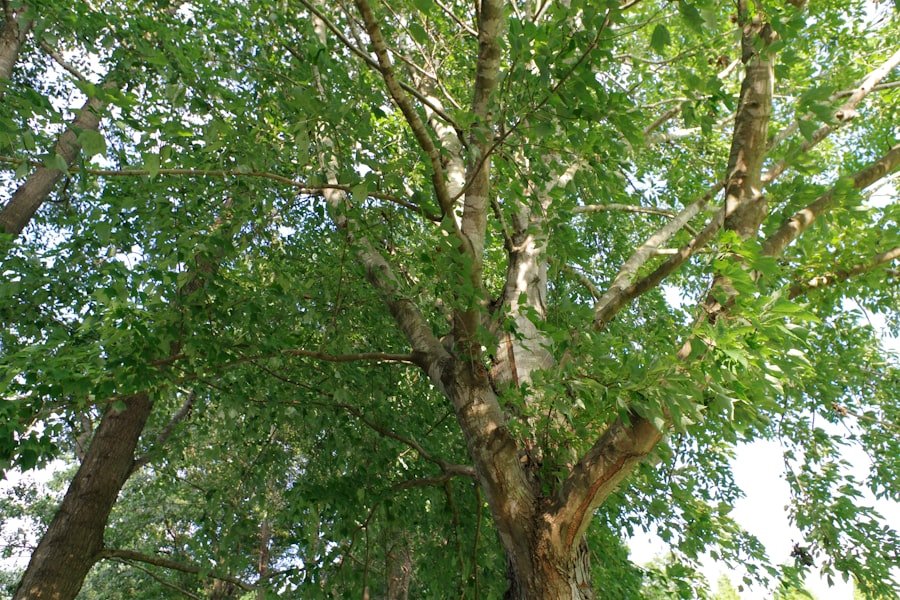
Cherimoya trees have a spreading, often low-branched form. They can reach about 30 feet if left unpruned, but growers commonly maintain them at a shorter height to simplify pruning, pollination, fruit protection, and harvesting. The tree is semi-deciduous and may shed many of its leaves before a new flush of growth and flowers.
Growing and Caring for a Cherimoya Tree in Your Garden
Cherimoya Care at a Glance
| Light | Sunny location; provide protection from severe inland heat and drying winds where necessary |
| Soil | Well-drained soil; sandy loam or loam is especially suitable |
| Soil pH | Adaptable; UC guidance reports successful growth on many soils from about pH 5 to 8 |
| Watering | Maintain reasonably even moisture while allowing excess water to drain freely |
| Spacing | About 20–25 feet in traditional orchard spacing; closer spacing requires stronger size control |
| Pollination | Natural fruit set can be inconsistent; hand pollination often improves yield and fruit shape |
| Pruning | Train young trees for strong scaffold branches and prune regularly to control height and open the canopy |
| Harvest | Pick mature fruit while firm as the skin lightens; ripen off the tree |
Choose the planting site carefully
Select a location with good sunlight and excellent drainage. Avoid low spots where water remains after rain or irrigation. Cherimoya roots tolerate short dry periods better than persistent waterlogging.
Where strong dry winds are common, give the tree some protection without completely blocking airflow. The fruit and branches can be damaged by rubbing, and hot, dry inland conditions can stress the tree.
Plant at the correct depth
Dig a hole wide enough to accommodate the root system without bending or circling major roots. Keep the tree at approximately the same soil depth it occupied in its nursery container. Do not bury the trunk or pile soil against the crown.
After planting, water thoroughly to settle the soil. A layer of organic mulch can reduce evaporation and moderate soil temperature, but keep the mulch several inches away from the trunk.
Water consistently without waterlogging the roots
Young trees need regular moisture while establishing. Mature cherimoya trees have some drought tolerance, but prolonged drought during active growth and fruit development can reduce performance.
There is no universal watering schedule because soil texture, rainfall, temperature, wind, tree age, and irrigation method all change water demand. Check the root zone instead of watering only by the calendar.
Fertilize according to tree and soil needs
Cherimoya responds to balanced nutrition, but more fertilizer is not automatically better. Soil testing is the safest way to identify deficiencies and avoid unnecessary applications. University extension recommendations commonly use periodic balanced fertilizer applications, with rates adjusted for tree age and local soil fertility.
Note: Yellow leaves do not automatically mean the tree needs fertilizer. UC Cooperative Extension notes that yellowing can also result from cold conditions or soil that is too wet or too dry.
Best Climate and Soil Conditions for Cherimoya Trees
Cherimoya comes from relatively mild highland environments and performs best in subtropical or Mediterranean-type climates rather than hot, humid lowland tropics.
University of California Cooperative Extension describes cherimoya as requiring a relatively frost-free environment. Mature trees of hardier varieties may survive brief temperatures around 26°F, but young trees and tender growth need greater protection. Repeated or prolonged freezing can cause severe injury.
Some cool winter exposure can be beneficial, while sufficient warmth and sunlight are needed later for good fruit development. Extremely hot inland weather and dry winds can also be damaging. Prolonged high humidity is another limitation, which is one reason true cherimoya is considerably better adapted to coastal Southern California than to humid subtropical areas such as much of Florida.
Soil requirements
Drainage matters more than having one perfect soil texture. Sandy loam and loam are excellent choices, but cherimoya can grow in several soil types if oxygen reaches the roots and excess water drains away.
UC guidance reports success on soils ranging roughly from pH 5 to 8. A soil test is still useful because nutrient availability changes with pH, and local recommendations may differ according to soil chemistry.
Choosing a Cherimoya Variety and Propagating Trees
Cultivar choice affects flavor, fruit size, skin texture, harvest timing, climate tolerance, and overall tree performance. California-grown cultivars include names such as ‘El Bumpo’, ‘Pierce’, ‘Booth’, ‘Chaffey’, ‘White’, and ‘Bays’. A cultivar that performs well near the coast may not be the best choice farther inland, so local nursery or Cooperative Extension experience is valuable.
Seed-grown versus grafted trees
You can raise cherimoya from seed, but seedlings do not reproduce a named cultivar exactly. Fruit quality and growth can therefore vary from the parent tree.
For more predictable characteristics, commercial and serious home growers commonly use grafted or budded trees. University of Hawai‘i Extension reports that both seedlings and grafted plants may begin bearing in roughly two to four years when growing conditions and nutrition are favorable, although actual timing varies.
Cuttings can be difficult to root reliably. For that reason, grafting onto suitable seedling rootstock is widely used when a particular cultivar needs to be preserved.
How Cherimoya Pollination Works
Pollination is one of the most important parts of successful cherimoya production. Each flower has both male and female structures, but it is protogynous: the female phase becomes receptive before the same flower releases pollen in its male phase.
This timing reduces effective self-pollination. Natural insects can move pollen between flowers, but fruit set may be inconsistent where suitable pollinators are scarce. Hand pollination is therefore common in major production areas.
How to hand-pollinate cherimoya flowers
- Find male-phase flowers. These are flowers releasing mature pollen, commonly later in the day.
- Collect the pollen. Tap or brush pollen into a small clean container.
- Use it promptly or keep it cool overnight. University extension guidance describes collecting pollen in the afternoon and using it either soon afterward or the following morning.
- Find receptive female-phase flowers. These flowers are open but have not yet reached the pollen-shedding male stage.
- Transfer pollen with a small soft brush. Gently place pollen onto the receptive stigmas in the center of the flower.
- Repeat during the flowering period. Different flowers enter receptive stages at different times.
Pro Tip: Hand pollination does more than increase the number of fruit. More complete pollination can also produce fuller, more symmetrical cherimoyas because more of the flower’s individual carpels develop successfully.
Harvesting and Storing Cherimoya Fruit
Harvest timing should be based on maturity cues rather than a single calendar date. In California, UC Cooperative Extension reports that fruit can ripen from approximately November through June, depending on cultivar and location.
Do not wait for cherimoya to become fully soft on the tree. Mature fruit is normally harvested while still firm. Depending on the variety, the skin usually changes from darker green toward lighter green or greenish tan, and the surface may appear smoother as the fruit matures.
How to ripen cherimoya after harvest
Handle fruit gently because it bruises easily. Place firm, mature cherimoya at room temperature and allow it to soften. It is ready to eat when the flesh yields noticeably to gentle pressure, similar to a ripe avocado.
Do not place unripe fruit straight into a very cold refrigerator for long-term storage. Cherimoya is chilling-sensitive, and UC guidance advises keeping firm stored fruit at about 50°F or warmer.
Once the fruit has fully ripened and softened, household refrigeration can be used for short-term holding. For the best texture and flavor, eat ripe fruit promptly.
Note: “Ready to harvest” and “ready to eat” are different stages. Harvest a mature cherimoya while it is firm; eat it after it softens off the tree.
Health and Nutrition Benefits of Cherimoya Fruit
Cherimoya is a sweet fruit that supplies carbohydrate, fiber, vitamin C, vitamin B6, potassium, and smaller amounts of several other vitamins and minerals.
According to the USDA National Nutrient Database for Standard Reference, 100 grams of raw edible cherimoya contains approximately:
- 75 calories
- 17.7 g carbohydrate
- 3.0 g dietary fiber
- 287 mg potassium
- 12.6 mg vitamin C
- 0.257 mg vitamin B6
A 100-gram portion of raw cherimoya provides about 3 grams of dietary fiber along with vitamin C, vitamin B6, and potassium.
Fiber contributes to normal digestive function, while vitamin C has antioxidant functions and supports normal collagen formation. Vitamin B6 participates in many metabolic processes, and potassium is an essential mineral involved in normal nerve, muscle, and cardiovascular function.
Cherimoya should still be viewed as a food rather than a treatment for any medical condition. Its nutritional value is best considered as part of an overall balanced diet.
Culinary Uses and Recipes for Cherimoya Fruit
The simplest way to enjoy cherimoya is chilled or at room temperature once the flesh has become soft. Cut the fruit open, scoop out the flesh with a spoon, and discard every seed.
Its creamy texture also works well in smoothies, yogurt bowls, frozen desserts, sorbets, and fruit salads. Because the fruit is naturally sweet, many preparations need little or no added sugar.
Simple cherimoya smoothie
- 1 cup ripe cherimoya flesh with all seeds removed
- 1 small banana
- 3/4 cup milk or an unsweetened milk alternative
- A squeeze of lime juice
- Ice as desired
Blend until smooth and serve immediately. Inspect the flesh carefully before blending so that no seed enters the blender.
Simple cherimoya sorbet
Puree seed-free ripe cherimoya flesh with a small amount of lime juice and enough coconut milk to create a smooth consistency. Sweeten only if needed, then freeze in a shallow container and stir several times during freezing for a softer texture.
Cherimoya can also add sweetness to fresh salsa. Diced seed-free flesh works with lime juice, cilantro, mild chile, and finely chopped onion alongside grilled fish or chicken.
Common Pests and Diseases Affecting Cherimoya Trees
The exact pest complex depends heavily on location. Some gardens may see common sap-feeding pests such as scale insects, mites, or mealybugs, while particular production regions have their own important pests.
University of California Cooperative Extension specifically notes problems including mealybugs encouraged by ants, Armillaria or oak root fungus, Verticillium wilt, and crown rot. Good drainage and careful irrigation are important preventive measures.
University of Hawai‘i Extension also reports anthracnose and annona seed wasp as important problems in Hawai‘i. Annona seed wasp larvae damage seeds inside developing fruit and leave emergence holes that encourage decay and secondary insect activity.
Reduce pest and disease pressure
- Keep fallen, damaged, or badly infected fruit out of the growing area.
- Avoid keeping the trunk and crown constantly wet.
- Maintain enough canopy space for air movement and light penetration.
- Control ants when they are protecting mealybug colonies.
- Inspect new growth, leaf undersides, stems, and developing fruit regularly.
- Use pest-control products only when they are labeled for the crop and pest in your location.
Pruning and Maintenance Tips for Cherimoya Trees
Pruning keeps cherimoya trees manageable and helps create branches strong enough to carry heavy fruit. An untrained tree can become tall, crowded, and difficult to hand-pollinate or harvest.
Train the young tree
Develop a sturdy framework of well-spaced scaffold branches rather than allowing many narrow, weak branches to compete near the trunk. University extension guidance commonly favors an open structure with major limbs positioned at strong angles.
Prune established trees regularly
Remove dead, damaged, crossing, and inward-growing wood. Thin crowded areas so sunlight and air can reach the interior canopy. Height control is especially useful because flowers may need hand pollination and every fruit is harvested by hand.
Pruning practices vary with climate and production system, but growers commonly perform the main structural pruning during the tree’s rest or leaf-drop period before vigorous new growth and flowering.
Do not remove excessive healthy wood without a reason. The goal is a strong, open, reachable tree rather than severe pruning simply for appearance.
Troubleshooting common cherimoya problems
| Yellow leaves | Check for overly wet soil, drought stress, cold exposure, or nutrient problems before automatically adding fertilizer. |
| Many flowers but little fruit | Poor pollination is a common cause. Learn the female and male flower stages and try hand pollination. |
| Misshapen fruit | Incomplete pollination can cause uneven development; more thorough hand pollination may improve fruit shape. |
| Weak growth in wet soil | Check drainage immediately. Persistent saturation can promote crown and root diseases. |
| Fruit bruises after harvest | Handle fruit individually and avoid stacking or squeezing it once ripening begins. |
Why You Should Consider Adding a Cherimoya Tree to Your Garden
For gardeners with the right climate, cherimoya offers an unusual combination of ornamental value and high-quality fruit. Its spreading canopy can provide shade, while the soft, fragrant fruit is unlike most common supermarket fruits.
The tree is particularly rewarding for gardeners who enjoy hands-on fruit growing. Training, pruning, watching flower stages, hand pollinating, and recognizing harvest maturity make cherimoya more interactive than many low-maintenance landscape trees.
It is not ideal for every garden, however. Areas with repeated hard freezes, prolonged hot and humid weather, persistent standing water, or very limited growing space can make successful production difficult. Choosing the tree because your site matches its needs is more important than choosing it simply because the fruit is exotic.
Frequently Asked Questions
What is a cherimoya tree?
A cherimoya tree is the fruiting species Annona cherimola in the Annonaceae family. It is native to western South America and is best described as a subtropical or highland-tropical, semi-deciduous tree.
How tall does a cherimoya tree grow?
An unpruned cherimoya can reach about 30 feet under favorable conditions. Fruit growers often maintain trees substantially shorter so flowers and fruit remain accessible for pollination, pruning, pest inspection, and harvesting.
What do cherimoya fruits look and taste like?
Cherimoya usually has green skin that may be smooth, segmented, or bumpy, with creamy white flesh inside. The flavor is sweet and aromatic and is commonly compared with combinations of banana, pineapple, pear, mango, and other tropical fruits.
How do you care for a cherimoya tree?
Grow it in a sunny, mild location with excellent drainage. Water deeply enough to maintain reasonable moisture without leaving the roots saturated, mulch without covering the trunk, provide balanced nutrition according to soil needs, train a strong branch structure, and prune to control height and canopy density.
When is the best time to harvest cherimoya fruit?
There is no universal harvest month. Timing depends on cultivar and climate. In California, fruit can ripen from roughly November through June. Harvest when the fruit is mature but still firm and the skin has begun to lighten, then allow it to soften off the tree.
Does a cherimoya tree need hand pollination?
Not every flower must be hand-pollinated, but natural fruit set can be poor or inconsistent. Because female and male flower phases occur at different times, transferring pollen by hand often produces more fruit and can improve fruit shape.
Are cherimoya seeds edible?
No. Eat only the soft flesh and discard the seeds. Do not chew, crush, grind, or blend cherimoya seeds because they contain biologically active compounds associated with toxicity.
Sources
- Royal Botanic Gardens, Kew — Plants of the World Online — botanical name and native distribution of Annona cherimola.
- University of California Cooperative Extension — Cherimoya — climate, soil, pollination, pruning, pests, harvesting, and storage guidance.
- University of Hawai‘i CTAHR — Twelve Fruits — tree size, spacing, propagation, pollination, and regional pest information.
- USDA Agricultural Research Service — National Nutrient Database — nutritional composition of raw cherimoya.
- PubMed — Genotoxic and cytotoxic effects of acetogenins from Annona cherimola seeds — evidence supporting caution around cherimoya seeds.
- University of California Cooperative Extension — Cherimoya Growers Handbook Available Online — documented history of early California cherimoya plantings.