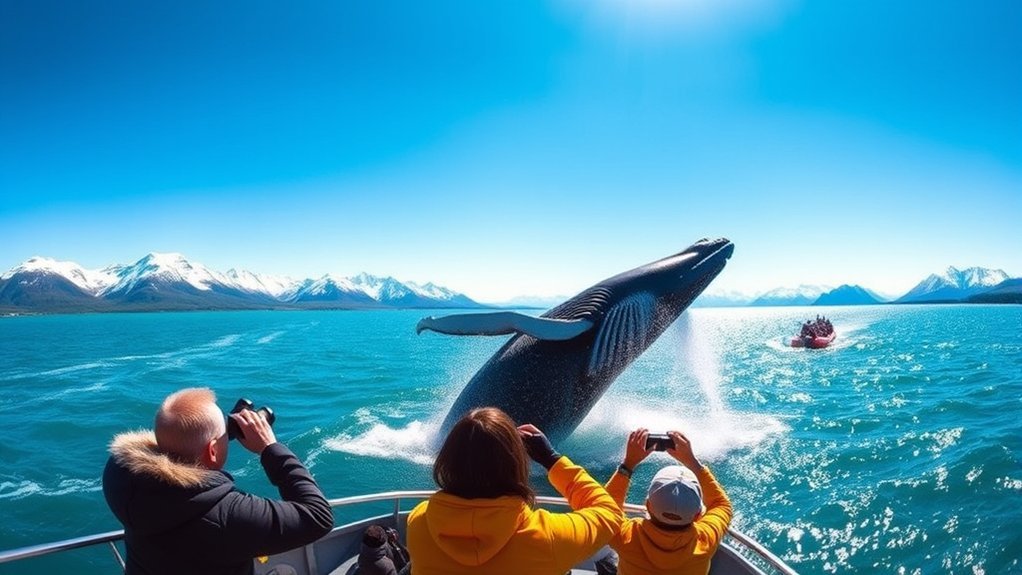
Whale watching in Alaska can mean watching humpbacks feed in Southeast Alaska, spotting a gray whale during its spring migration near Seward or Sitka, or catching an unexpected glimpse of killer whales moving through coastal waters. The best timing depends on the species and region, so a little planning can make a major difference in what you are likely to see.
Quick Answer
Alaska’s whale-watching season is broad, but the best timing depends on species and region. Humpback viewing is strongest from late spring into early fall, with Glacier Bay numbers typically peaking in July and August. Gray whales are a spring highlight near Seward, Sitka, and Kodiak, while killer whales can occur year-round.
Key Takeaways
- For classic humpback watching, late spring through early fall is the main window, with July and August especially strong in Glacier Bay.
- Gray-whale viewing is different: spring migration, particularly around March and April into early May depending on location, is often the more useful target.
- Juneau, Glacier Bay, Sitka, and Seward/Kenai Fjords offer some of Alaska’s best-known whale and marine-wildlife trips.
- Killer whales occur in Alaska year-round, but local sighting patterns and diets vary among different populations and ecotypes.
- Wildlife sightings are never guaranteed, and responsible viewing means following NOAA rules plus any stricter local regulations.
The Best Time of Year for Whale Watching in Alaska
There is no single perfect month for every whale species in Alaska. Instead, match your travel dates to the animals and region you most want to see.
Humpback whales return to productive Alaska feeding areas during the warmer part of the year. In Glacier Bay National Park, whale numbers typically begin rising in mid-June and peak in July and August, with lower numbers in April, May, and September.
For humpback-focused trips, July and August are especially dependable months in Glacier Bay, although whales can be present before and after that peak.
Gray whales follow a different schedule. Many eastern North Pacific gray whales migrate north toward feeding areas in the Bering and Chukchi seas during spring. Alaska’s official tourism guidance highlights mid-March through April for northbound gray-whale viewing around places such as Sitka, Seward, and Kodiak, with timing extending into early May in some areas.
Killer whales can occur in Alaska throughout the year. Local sighting opportunities vary with prey, location, and the particular killer-whale population. Around Seward, for example, May and June can be productive months, but that should not be treated as a statewide orca season.
Weather also matters. Wind, fog, rain, and sea conditions can affect visibility and whether a small-boat trip is comfortable or able to operate. Rather than assuming morning or afternoon is always better, choose a departure that fits your itinerary and check the marine forecast and operator guidance close to your trip.
Pro Tip: If whale watching is a priority, schedule it early in a multi-day stay. That leaves you another day to rebook if weather or sea conditions cancel your original departure.
Top Locations for Whale Watching Adventures
Alaska has thousands of miles of coastline, but several destinations stand out because they combine established boat tours with productive marine habitat and other wildlife viewing.
| Area | Whales to Watch For | Timing Highlights |
|---|---|---|
| Juneau / Inside Passage | Humpbacks are the main attraction; killer whales are possible. | Late spring through early fall for the main tour season. |
| Glacier Bay | Especially humpback whales, plus other marine wildlife. | Humpback numbers typically rise in mid-June and peak in July and August. |
| Seward / Kenai Fjords | Gray, humpback, killer, fin, and minke whales may occur. | Gray whales are a spring highlight; humpbacks and broader marine-wildlife viewing become important through summer. |
| Sitka | Humpbacks, killer whales, and migrating gray whales may be seen. | Spring can bring migrating gray whales; humpback trips continue into the warmer season. |
| Arctic and Western Alaska | Bowhead, beluga, gray, and other Arctic cetaceans occur depending on region. | Highly species- and location-specific; these are not interchangeable with Southeast Alaska tourist whale cruises. |
Best Viewing Destinations
Juneau is one of the easiest places to add a dedicated whale-watching excursion to an Alaska cruise or independent trip. Humpbacks feed throughout productive Southeast Alaska waters, and numerous trips depart from the Juneau area during the main visitor season.
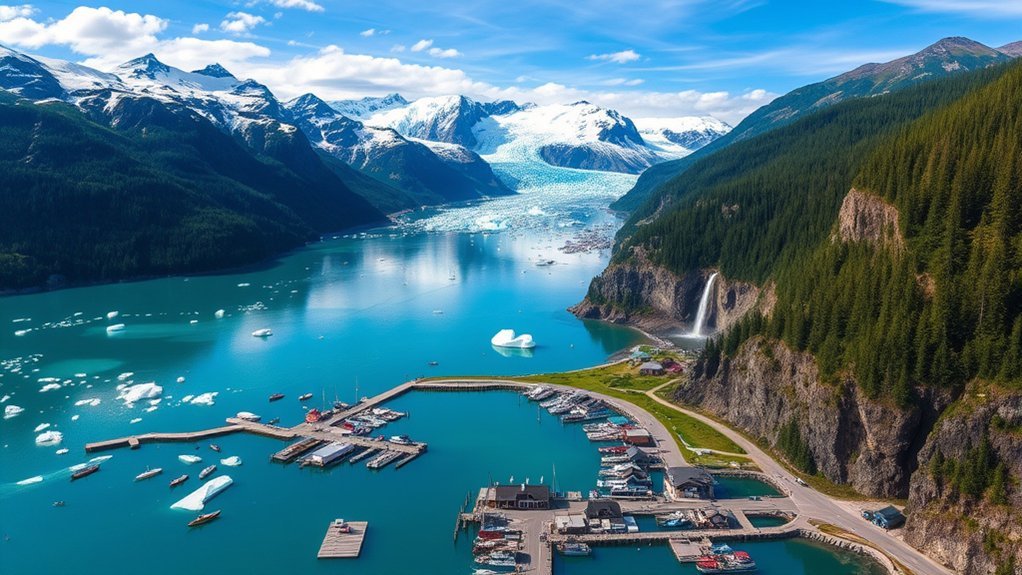
Glacier Bay National Park combines summer humpback watching with dramatic coastal scenery. It also has special vessel rules designed to protect whales, so private boaters need to understand park regulations rather than relying only on general Alaska viewing guidance.
Seward and Kenai Fjords National Park are particularly versatile. The National Park Service lists killer, fin, gray, humpback, minke, and sei whales among marine mammals found around the park, along with sea otters, harbor seals, Steller sea lions, and porpoises.
Sitka offers another strong Southeast Alaska option, particularly for travelers interested in combining marine wildlife with island and coastal scenery. Spring also brings the possibility of northbound gray whales.
Seasonal Migration Patterns
Whale movements differ by species. Many humpbacks that feed in Southeast Alaska spend the winter in lower-latitude breeding areas. The National Park Service notes that most humpbacks studied in Glacier Bay migrate to Hawaii during winter before returning north to feed.
Eastern North Pacific gray whales make a long seasonal migration between wintering areas off Mexico and northern feeding grounds. Their northbound migration makes spring especially interesting along parts of Alaska’s Gulf and Inside Passage coast. Many then spend the summer feeding in the northern Bering and Chukchi seas.
Killer whales require different expectations. They do not all follow one simple Alaska migration calendar, and different ecotypes use different prey. Resident killer whales in Alaska primarily eat fish, especially salmon, while transient or Bigg’s killer whales prey on marine mammals and other animals.
Types of Whales You Can Spot in Alaska
Alaska supports an unusually diverse collection of cetaceans, but the species you are likely to encounter depends heavily on whether you are traveling through Southeast Alaska, the Gulf of Alaska, Cook Inlet, the Bering Sea, or the Arctic.
Common Whales You Can See in Alaska
Humpback whales are one of Alaska’s signature whale-watching species. Their blows, arched backs, tail flukes, feeding behavior, and occasional breaches can make them easier to notice than less conspicuous whales. They are especially important to the Southeast Alaska whale-watching industry.
Killer whales, or orcas, also occur along Alaska’s coast. Their tall dorsal fins make them distinctive, but sightings are less predictable than many visitors expect. NOAA Fisheries recognizes several North Pacific killer-whale ecotypes with different diets and social behavior.
Gray whales are best known for their extraordinary migration. Spring travelers near Seward, Sitka, and Kodiak may have opportunities to see northbound animals before many continue toward Arctic feeding areas.
Minke whales occur in Alaska waters and can appear on wildlife cruises, including in the Kenai Fjords region. They are smaller and often less conspicuous at the surface than humpbacks.
Fin whales are also found in Alaska waters. Their long, streamlined bodies and relatively low surfacing profile can make them more difficult to identify at a distance.
Less Common and Rare Whale Sightings
Alaska also has whales that require very different expectations. Some occur regularly only in particular northern regions; others are so rare that a recreational traveler should never plan a trip around seeing one.
| Whale Species | What to Know |
|---|---|
| Bowhead Whale | An Arctic species associated with northern and western Alaska rather than standard Juneau or Seward whale tours. |
| Beluga Whale | Alaska has several beluga stocks, including the endangered Cook Inlet population. Viewing opportunities are highly regional. |
| Narwhal | An exceptional sighting in Alaska. NOAA reports only a small number of records in the Pacific sector of its Arctic range. |
| North Pacific Right Whale | One of the world’s rarest large whales. Sightings in Alaska are scientifically significant and should not be treated as a normal tour expectation. |
| Humpback Whale | Not a rare Alaska whale-watch species. Humpbacks are among the most important and frequently targeted whales on Southeast Alaska tours. |
NOAA’s narwhal information notes that narwhals occur mainly in the Atlantic side of the Arctic, with few Pacific-sector records. Likewise, North Pacific right whales are so scarce that a sighting in Alaska is exceptional rather than something a commercial whale tour can reasonably target.
Migration Patterns Explained
Humpback whales migrate between Alaska feeding areas and lower-latitude breeding grounds. In Glacier Bay, numbers usually rise during June and peak in July and August.
Gray whales move north along the Pacific coast during spring toward feeding grounds that include the Bering and Chukchi seas. Their southbound journey occurs later in the year as they return toward Mexico.
Killer whales are different because Alaska contains multiple populations and ecotypes rather than one simple seasonal migration. Some are encountered year-round, and local sightings can change with prey availability.
Minke and fin whales also occur in Alaska waters, although sightings are less predictable than humpbacks in established Southeast Alaska feeding areas.
Guided Tours vs. Independent Whale Watching
When planning a whale-watching trip in Alaska, one of your biggest choices is whether to join a commercial wildlife cruise, look from shore, or operate your own vessel.
A guided tour is the simplest option for most visitors. Experienced captains know local waters, guides can help identify species and behavior, and the operator handles navigation, safety equipment, and wildlife-viewing regulations. A tour does not guarantee whales, but local knowledge can improve the quality of your search.
Independent shore-based viewing gives you flexibility without requiring vessel-handling experience. Success depends heavily on location, season, visibility, patience, and luck.
Independent boating offers more freedom but carries much greater responsibility. You need suitable marine-navigation skills, safety equipment, current weather information, and a clear understanding of federal and local wildlife rules.
Warning: Do not assume Alaska has one universal whale-approach rule. Federal regulations prohibit approaching humpback whales within 100 yards in Alaska, while places such as Glacier Bay National Park impose additional and sometimes much larger separation, speed, and course requirements.
How to Choose a Whale-Watching Tour
When comparing operators, look beyond the promise of seeing whales. A good trip should also have clear safety procedures, realistic wildlife expectations, knowledgeable guides, and responsible viewing practices.
- Check the route: A dedicated whale trip may spend more time searching feeding areas, while a glacier-and-wildlife cruise covers a broader itinerary.
- Compare duration: Alaska wildlife cruises range from short excursions of a few hours to full-day trips.
- Ask about the vessel: Heated cabins, outdoor decks, restrooms, seating, and passenger capacity can make a major difference in cold or wet weather.
- Read the wildlife policy: Look for language showing that the operator follows NOAA viewing guidance rather than aggressively pursuing animals.
- Check accessibility and age policies: Boarding arrangements and minimum-age rules vary by boat and company.
- Read the no-sighting policy: Never assume a refund or free return trip is included. Check the operator’s written terms before paying.
Essential Gear for a Successful Whale Watching Trip
Alaska’s marine weather can feel colder on a moving boat than it did at the dock, so clothing matters as much as camera equipment.
- Dress in layers: A moisture-managing base layer, insulating layer, and windproof or waterproof outer shell give you flexibility.
- Bring waterproof protection: Rain and spray can arrive even when conditions looked good at departure.
- Wear secure footwear: Choose closed shoes or boots with good traction.
- Carry binoculars: An 8x or 10x pair can help you inspect distant blows, dorsal fins, flukes, and seabirds without needing to get closer.
- Protect your camera: Bring a zoom lens if available, spare batteries, adequate memory, and a simple rain cover or waterproof bag.
- Use sun protection: Sunglasses and sunscreen remain useful because UV exposure can occur on cloudy days and glare reflects from the water.
Note: If you are prone to motion sickness, plan before departure. Conditions can change offshore, and prevention options are generally more useful when considered before symptoms become severe. Ask a pharmacist or healthcare professional about an option appropriate for you if needed.
Safety Tips for Whale Watching Excursions
Whale watching is usually straightforward on a professionally operated tour, but you are still on a moving vessel in cold marine conditions. Follow the crew’s instructions and stay aware of your surroundings.
| Safety Tip | Why It Matters |
|---|---|
| Follow crew instructions | Captains and crew may restrict deck access or movement when seas become rough. |
| Keep one hand available | Use railings when moving instead of carrying loose gear in both hands. |
| Wear warm, weather-resistant layers | Wind, rain, and spray can rapidly change how cold conditions feel. |
| Secure phones and cameras | A sudden vessel movement can send loose equipment overboard or onto another passenger. |
| Give wildlife space | Safe separation protects both the animals and people aboard the vessel. |
Environmental Considerations and Responsible Viewing
Responsible whale watching is not simply a matter of courtesy. Marine mammals are protected under federal law, and Alaska has specific humpback-whale approach regulations.
According to NOAA Fisheries’ Alaska viewing guidance, it is illegal to approach a humpback whale within 100 yards in Alaska. Vessels also must not position themselves in the path of an oncoming humpback in a way that causes the whale to surface within 100 yards, and operators should avoid disrupting normal whale behavior.
NOAA recommends viewing large whales generally from at least 100 yards away, but specific legal requirements can vary by species and location. Never interpret 100 yards as permission to approach every whale to exactly that distance.
Glacier Bay National Park is a major exception requiring extra attention. The park maintains its own boating regulations, including greater humpback separation requirements and designated whale waters where vessel speed and course rules may apply. Private boaters should check current park notices before entering because temporary whale-water restrictions can change as whales move.
If a whale surfaces unexpectedly close to your boat, do not chase it or maneuver to maintain the close encounter. Follow the captain’s instructions or the applicable local regulations and allow the animal space to move away.
You can also reduce your impact by keeping trash secured, avoiding anything that could enter the water, limiting unnecessary noise, and choosing operators that make wildlife protection part of their normal operating practices.
Capturing the Perfect Whale Watching Photo
The best whale photos come from preparation and anticipation, not from getting closer to the animal. A telephoto or moderate zoom lens lets you fill more of the frame while the vessel maintains an appropriate viewing distance.
Watch the whale’s breathing and diving pattern. After several breaths, a humpback may arch its back and raise its flukes before a deeper dive. That pattern can help you anticipate a photograph without trying to predict exactly where a breach will happen.
For active behavior, use a relatively fast shutter speed and continuous or burst shooting if your camera supports it. Leave enough space around the whale in the frame so an unexpected splash, fluke, or breach is not cut off.
Keep camera settings ready before the action begins. Whale encounters can change in seconds, and spending too long adjusting equipment can mean missing the behavior you came to see.
Avoid leaning dangerously over rails or moving into restricted parts of a vessel for a photograph. Flash is generally ineffective at normal whale-viewing distances, so concentrate on available light, exposure, focus, and timing instead.
Other Marine Life to Look Out For During Your Trip
A whale trip in Alaska is often a broader wildlife trip. Depending on where you travel, you may also encounter Steller sea lions, harbor seals, sea otters, Dall’s porpoises, harbor porpoises, and large concentrations of seabirds.
In Kenai Fjords and other productive coastal areas, look for puffins, murres, kittiwakes, and other seabirds around cliffs and offshore islands. Sea otters may rest or feed at the surface, while Steller sea lions often gather near rocky haul-outs.
Killer whales are themselves whales, not separate “other marine life,” but they can add an entirely different dimension to a trip when encountered. Fish-eating resident killer whales and mammal-eating transient or Bigg’s killer whales can show very different hunting and social behavior.
Keep scanning the shoreline as well as the open water. On longer coastal cruises, it is sometimes possible to spot land mammals along beaches, cliffs, and mountain slopes in addition to marine wildlife.
Frequently Asked Questions
What should I wear for whale watching in Alaska?
Dress in layers and bring a windproof or waterproof outer layer even when the forecast looks mild. Closed, secure footwear with good traction is useful on a moving boat. A warm hat and light gloves can also make exposed viewing decks much more comfortable.
Are there age restrictions for whale-watching tours?
There is no single Alaska-wide minimum age for commercial whale-watching trips. Policies depend on the operator, vessel, route, and sea conditions. Check the specific company’s minimum-age, supervision, and child-safety requirements before booking.
Can I bring my pet on a whale-watching trip?
Pet policies are set by individual operators, so do not assume an animal can board. Contact the company before booking if you are traveling with a pet or service animal and ask about its current vessel policy and boarding requirements.
How long do whale-watching tours typically last?
Trip length varies widely. Dedicated whale watches may last only a few hours, while wildlife-and-glacier cruises can take much of the day. Check whether the advertised duration includes transportation from a cruise terminal or hotel as well as time on the vessel.
What happens if I don’t see any whales?
Whales are wild animals, so no responsible tour can guarantee a particular behavior or species on every departure. Some operators offer a sighting guarantee, return trip, credit, or other policy, while others do not. Read the operator’s written terms before booking rather than assuming a refund is included.
What is the best month for whale watching in Alaska?
There is no single best month for every species. July and August are especially strong for humpbacks in Glacier Bay, while spring is better for targeting migrating gray whales near places such as Seward and Sitka. Choose your month based on the region and species you most want to see.
How close can a boat get to a whale in Alaska?
Federal regulations prohibit approaching a humpback whale within 100 yards in Alaska, and NOAA recommends keeping at least 100 yards from large whales generally. Local rules can be stricter. Glacier Bay National Park, for example, has additional humpback-distance, speed, and whale-water requirements, so always follow the rule that applies to your exact location.
Sources
- NOAA Fisheries — Alaska Marine Mammal Viewing Guidelines and Regulations — humpback approach rules and responsible wildlife viewing.
- National Park Service — Humpback Whale Research & Monitoring in Glacier Bay — Glacier Bay humpback season and migration information.
- Travel Alaska — Alaska Whale Watching — regional whale-watching and gray-whale migration guidance.
- NOAA Fisheries — Gray Whale — eastern North Pacific migration and northern feeding grounds.
- NOAA Fisheries — Killer Whale — North Pacific killer-whale ecotypes, diets, and behavior.
- National Park Service — Animals of Kenai Fjords — marine mammals found around Kenai Fjords National Park.