If you’re planning a fishing trip in Alaska, the best approach is to choose your target species first, then match it with the right region, season, gear, and current regulations. The Kenai Peninsula, Bristol Bay, Kodiak Island, Southeast Alaska, and Interior each offer very different fishing experiences. Salmon, halibut, rainbow trout, lake trout, Arctic char, Dolly Varden, and Arctic grayling are all possibilities, but timing and rules can change from one drainage to the next.
Quick Answer
Alaska fishing is best planned by target species and region, not one statewide season. Salmon timing varies by run and watershed, halibut rules differ for guided and unguided anglers, and local emergency orders can change quickly. Start with ADF&G regulations, then match your gear, technique, timing, and destination to the fish you want.
Key Takeaways
- Choose an Alaska fishing destination based on your target species rather than looking for one statewide “best” location.
- Salmon run timing varies by species, watershed, and year, while halibut regulations depend partly on whether you fish guided or unguided.
- Check the regional regulation booklet and current Alaska Department of Fish and Game emergency orders immediately before fishing.
- Residents age 18 or older and nonresidents age 16 or older generally need an Alaska sport fishing license, subject to specific exemptions.
- Cold water, rapidly changing weather, strong currents, and bears around salmon streams make safety planning as important as tackle selection.
Best Fishing Locations in Alaska
Alaska is too large and varied for one river, bay, or island to be the best choice for every angler. Your ideal destination depends on whether you want river salmon, remote trout fishing, saltwater halibut, roadside access, or a fly-in wilderness trip.
| Region | Good For | Planning Notes |
| Kenai Peninsula | Salmon, rainbow trout, Dolly Varden, halibut | Combines famous river systems with saltwater ports such as Homer and Seward. The Chugach Mountains and coastal scenery add to the experience, but individual waters can have strict salmon rules. |
| Bristol Bay | Sockeye and coho salmon, rainbow trout, Arctic char, grayling | Excellent for remote river fishing, but many destinations require flights, lodges, or guides. Regulations can vary substantially among drainages. |
| Kodiak Island | Salmon, halibut, rockfish and other marine species | Offers both roadside freshwater opportunities and saltwater charters. Weather can quickly affect marine plans. |
| Southeast Alaska and the Tongass | Salmon, halibut, Dolly Varden, trout and marine species | Ketchikan, Sitka, Juneau, and surrounding waters provide a mix of freshwater and marine fishing, with detailed area-specific regulations. |
| Interior Alaska | Arctic grayling, lake trout, northern pike, stocked rainbow trout | A strong choice for freshwater anglers who do not need coastal salmon or halibut. Opportunities range from roadside lakes to remote river systems. |
Pro Tip: Pick the fish first and the destination second. A trip built around sockeye salmon needs different timing, water, tackle, and regulations than a halibut charter or an Interior grayling trip.
Target Species: Salmon, Halibut, Trout, Char, and Grayling
Salmon
Alaska supports five species of Pacific salmon: Chinook or king, sockeye or red, coho or silver, pink, and chum salmon. Their runs do not peak everywhere at the same time. For example, the Alaska Department of Fish and Game notes that most sockeye in Alaska return during June and July, while coho opportunities in some systems develop later in summer and into early fall.
Before building a trip around salmon, check both the normal regulations and current ADF&G emergency orders. An emergency order can close an area, change a bag limit, prohibit retention, or modify legal fishing methods.
Pacific Halibut
Pacific halibut is one of Alaska’s signature saltwater sport fish. Anglers commonly fish near the bottom using bait or jigs, but depth, current, tide, weather, and the amount of weight needed can change considerably by location.
Halibut regulation is more complicated than a single Alaska bag limit. Guided and unguided fishing may be regulated differently, and annual management measures apply. Review the current NOAA Fisheries Alaska halibut guidance before your trip.
2026 Note: Beginning in 2026, anglers age 18 or older fishing aboard a charter vessel in IPHC Areas 2C and 3A need a $20 charter halibut stamp for each day they intend to catch and retain halibut. The requirement does not apply to unguided halibut anglers. Confirm current details with NOAA and your charter operator before fishing.
Trout, Char, and Arctic Grayling
Alaska’s freshwater fishing extends well beyond salmon. Depending on the region, anglers can target rainbow trout, lake trout, Arctic char, Dolly Varden, and Arctic grayling. Arctic grayling is not a trout; it is a separate species, Thymallus arcticus. Lake trout keeps “trout” in its common name but belongs to the char genus Salvelinus.
Arctic grayling are widespread across much of Alaska, particularly in Interior and northern waters. ADF&G notes that they are naturally absent from Kodiak Island and Southeast Alaska except for a few stocked lakes. See the official Arctic grayling species profile when planning a grayling trip.
Essential Fishing Gear and Equipment
The right setup depends on the fish and water. A heavy saltwater outfit designed to lower bait into deep current is very different from a light spinning or fly-fishing setup for grayling.
- Rod and reel: Match the power, line capacity, drag, and corrosion resistance to the target species and whether you are fishing fresh or salt water.
- Fishing line and leader: Carry line appropriate for the fish, structure, current, and technique. Saltwater halibut fishing often requires a much heavier setup than trout fishing.
- Legal tackle: Pack hooks, weights, lures, flies, and bait only after checking the rules for the exact water you will fish.
- Landing equipment: A properly sized net, pliers, hook-removal tools, and fish-handling equipment make landing and releasing fish easier.
- Rain and insulation layers: Alaska weather can shift rapidly, even during summer. Dress in layers and protect yourself from wind and rain.
- Wading gear: If you use waders, wear a wading belt and use extra caution around cold, fast, or glacial water.
- Polarized sunglasses: They reduce glare and can make it easier to see structure, shallow fish, and footing.
- Safety equipment: Boat and kayak anglers should use an appropriate U.S. Coast Guard-approved life jacket and carry communication and emergency gear suited to the trip.
- License and records: Carry your current fishing license, required stamps, and any harvest record required for your fishery.
Warning: Alaska’s water can be dangerously cold even when the air feels comfortable. Wear an appropriate life jacket on boats and paddlecraft, avoid exceeding your skills in current or rough seas, and do not treat a calm morning forecast as a guarantee of calm conditions later in the day.
Techniques for Successful Fishing
Successful Alaska fishing depends less on one secret lure and more on putting a legal presentation in the right place at the right time. Water conditions, current, tide, salmon movement, depth, and food sources can all matter.
- Match the available food: For trout and grayling, observe insects, small fish, or salmon eggs in the system and choose a legal fly or lure that resembles what fish are feeding on.
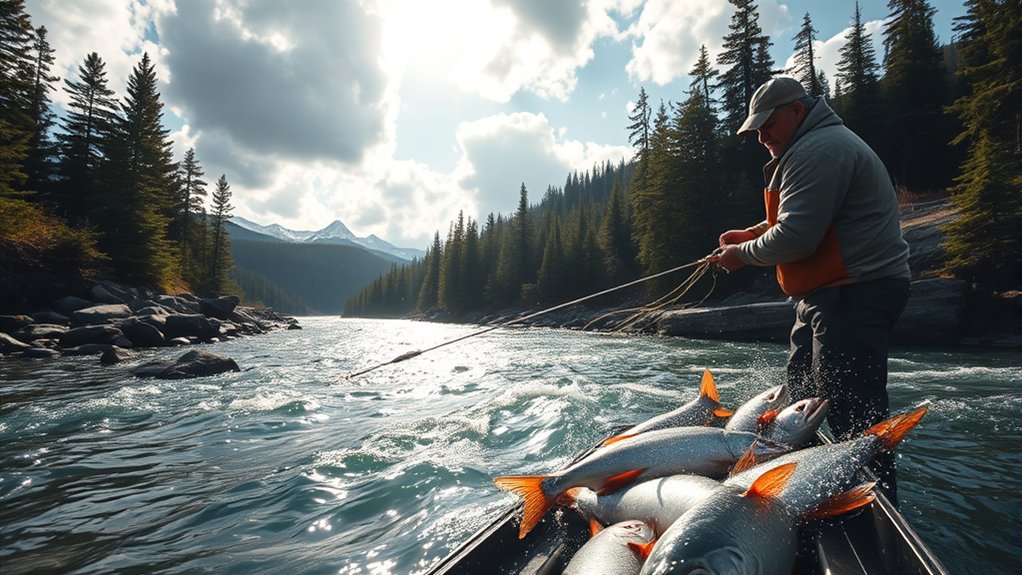
- Use the right presentation: River anglers may drift flies, lures, or permitted bait through holding water. Saltwater salmon anglers commonly troll, while halibut anglers usually work bait or jigs near the bottom.
- Adjust for current and tide: In salt water, tide and current affect boat position, depth, line angle, and the amount of weight required to reach the target zone.
- Change depth before changing locations: Fish are not always on the surface or directly on the bottom. Vary depth systematically when trolling or jigging.
- Fish quietly in clear water: Avoid unnecessary splashing, heavy footsteps along shallow banks, and repeated casts directly over visible fish.
- Follow bait and hook restrictions: Salmon eggs, herring, shrimp, and other baits can be productive where legal, but some Alaska waters require artificial lures, unbaited hooks, or other specific tackle.
- Handle released fish carefully: Minimize handling time, keep the fish in the water when possible, and support it horizontally if it must be lifted. ADF&G provides detailed fish-release guidance.
Seasonal Considerations and Regulations
There is no single “Alaska fishing season” that accurately describes every species and destination. Use broad seasonal patterns only to choose a possible travel window, then confirm the exact fishery.
| Period | General Planning Picture |
| May to June | Some salmon fisheries begin developing, saltwater halibut trips are popular, and freshwater opportunities improve as lakes and rivers open. Run timing varies widely. |
| June to July | A major travel period for salmon and freshwater fishing. ADF&G notes that most Alaska sockeye return during June and July, but individual runs can be earlier or later. |
| July to August | Broad fishing opportunities exist across many regions. Coho begin becoming important in numerous fisheries, and saltwater fishing remains a major draw. |
| August to September | Coho can be a key target in many systems, while trout, char, and grayling may feed around spawning salmon. Weather becomes increasingly important for remote and marine trips. |
Always use the current Alaska sport fishing regulations for the region you will visit. Then check current emergency orders and press releases. Emergency orders supersede the printed regulation summary when they apply.
Alaska Fishing License Requirements
Residents age 18 or older and nonresidents age 16 or older generally must purchase and possess an Alaska sport fishing license. A king salmon stamp is also generally required when fishing for king salmon, with specific exemptions described by ADF&G.
As of August 16, 2026, the standard ADF&G pricing list shows a $20 resident annual sport fishing license. Nonresident sport fishing licenses are $15 for 1 day, $30 for 3 days, $45 for 7 days, $75 for 14 days, and $100 annually. Verify prices before purchase because fees can change.
Residents age 60 or older who maintain Alaska residency and qualifying resident disabled veterans may participate without purchasing the standard sport fishing license if they obtain and possess the required ADF&G identification card. See the official sport fishing license and king salmon stamp rules.
Regulation Checklist Before You Cast
- Identify the exact river, lake, marine area, and species you plan to fish.
- Read the current regional sport fishing regulations.
- Check emergency orders for that area immediately before the trip.
- Confirm the legal season, open area, bag and possession limits, and any size restrictions.
- Check whether bait, multiple hooks, treble hooks, snagging, or specific tackle are prohibited.
- Confirm whether a king salmon stamp, harvest record, permit, or charter halibut stamp applies.
- If fishing with a guide, ask which current restrictions apply to guided anglers rather than assuming unguided rules are identical.
Guided Charter vs. DIY Fishing
A guided trip can make sense if you are new to Alaska, lack local boating experience, need specialized halibut gear, or are visiting a remote river. Guides commonly provide the boat, major tackle, local knowledge, and instruction, though exactly what is included varies by operator.
DIY fishing can work well on accessible rivers, lakes, shorelines, and roadside fisheries if you already understand the water and regulations. It gives you more scheduling freedom, but you are responsible for tackle, transportation, safety, legal compliance, fish handling, and changing conditions.
For remote fly-in destinations, ask about baggage limits, waders, rods, meals, fish processing, emergency communications, and whether the lodge or guide supplies tackle before packing.
Fishing Safety, Bears, and Trip Planning
Alaska fishing often puts anglers close to cold water and wildlife. Around salmon streams, fish, food, backpacks, and fish waste can attract bears. The Alaska Department of Fish and Game advises anglers to remain bear-aware and to stop fishing when a bear approaches rather than allowing splashing fish to attract it closer.
Review the official ADF&G bear-safety guidance for anglers before fishing in bear country.
- Keep food, garbage, and harvested fish under control and away from unattended gear.
- Stay alert near noisy rivers where bears and people may have difficulty hearing each other.
- Give bears space and never deliberately approach one for a photo.
- Wear an appropriate life jacket when boating or kayak fishing.
- Check marine forecasts, river conditions, and local weather before departure.
- Tell someone your route and expected return time when fishing remotely.
- Carry communication and emergency equipment appropriate to the level of remoteness.
Frequently Asked Questions
What are the best times of day for fishing in Alaska?
There is no universal best hour. Dawn and evening can be productive for some freshwater fish, but Alaska’s long summer daylight makes a simple dawn-and-dusk rule unreliable. Salmon movement, tides, current, water temperature, weather, and the specific fishery can matter more. Check local reports and adjust your timing to the species and water.
Do I need a fishing license to fish in Alaska?
Generally, yes. Alaska residents age 18 or older and nonresidents age 16 or older need a sport fishing license. Separate king salmon stamp or harvest-record requirements can also apply. Resident seniors and certain disabled veterans have special identification-card provisions, so check ADF&G’s current licensing rules for your situation.
What types of bait are effective for Alaskan fish?
It depends on the species and water. Herring is commonly used for saltwater species such as halibut, while salmon eggs and other natural baits may work in freshwater where their use is legal. Spinners, spoons, jigs, plugs, and flies are also common. Always check bait and hook restrictions before fishing because some waters require artificial or unbaited tackle.
Are guided fishing tours available in Alaska?
Yes. Guided river trips, saltwater charters, lodge-based trips, and fly-in fishing are available in many regions. Compare what the price includes, the target species, travel time, tackle, fish processing, cancellation policies, and current regulations before booking.
Can I fish from a kayak in Alaskan waters?
Yes, where access and regulations allow it, but cold water, wind, current, tides, boat traffic, and rapidly changing weather can make Alaska kayak fishing demanding. Wear an appropriate life jacket, use suitable cold-water clothing and safety gear, and choose protected water within your paddling ability.
What is the best month for an Alaska fishing trip?
There is no single best month. June and July can align with major sockeye runs, while coho opportunities often become stronger later in summer. Halibut, trout, char, and grayling have different patterns. Choose the fish and destination first, then select travel dates around that specific fishery.
How do I find the current Alaska bag and size limits?
Use the Alaska Department of Fish and Game regulation booklet for the exact region you will fish, then check current emergency orders for that area. For Pacific halibut, also review current NOAA and IPHC rules because guided and unguided regulations can differ.
Sources
- Alaska Department of Fish and Game — Sport Fishing Regulations — current statewide and regional sport fishing rules.
- Alaska Department of Fish and Game — Emergency Orders and Press Releases — current closures, openings, limits, and method changes.
- Alaska Department of Fish and Game — Sport Fishing Licenses and King Salmon Stamps — age requirements, licenses, stamps, and exemptions.
- Alaska Department of Fish and Game — License, Stamp, and Tag Pricing — current sport fishing and king salmon stamp prices.
- NOAA Fisheries — Halibut Sport Fishing in Alaska — current guided and unguided Pacific halibut regulatory information.
- Alaska Department of Fish and Game — Bear Safety for Anglers — fishing-specific bear safety guidance.