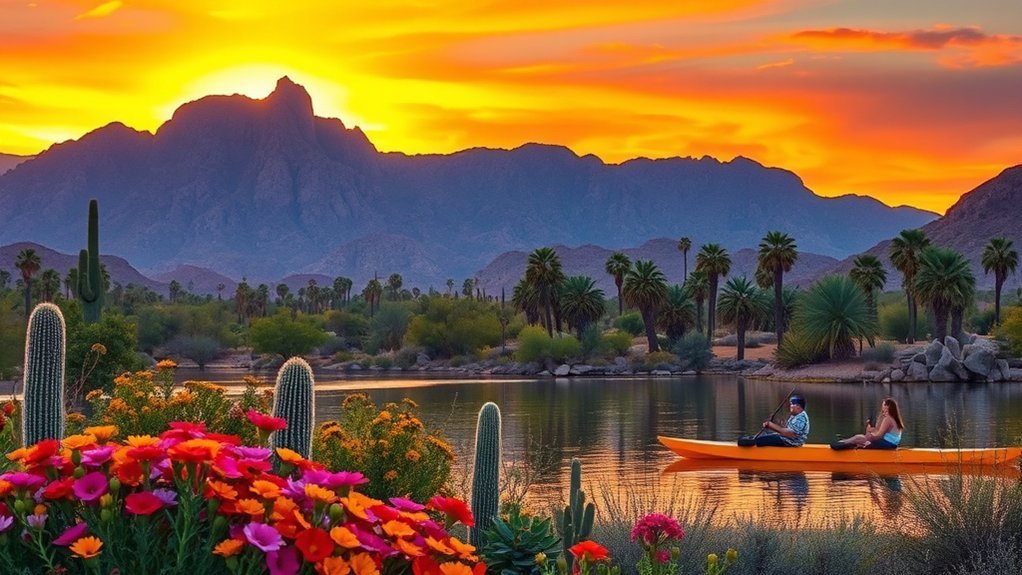
Phoenix mixes Sonoran Desert scenery, major museums, professional sports, destination dining, family attractions, and some of Arizona’s best-known urban hiking. This list covers 25 experiences, including a few worthwhile Greater Phoenix side trips in neighboring Scottsdale and along the Lower Salt River. Because summer heat can change what is safe or practical, plan outdoor activities early and check current conditions before you go.
Quick Answer
The best things to do in Phoenix include Desert Botanical Garden, Camelback Mountain, the Heard Museum, Phoenix Art Museum, Papago Park, Musical Instrument Museum, Phoenix Zoo, South Mountain Park, Roosevelt Row, Arizona Science Center, Chase Field, and local dining. Nearby Scottsdale and the Lower Salt River add easy day-trip options.
Key Takeaways
- For a first visit, combine one desert attraction, one museum, and an evening in downtown Phoenix or Roosevelt Row.
- Desert Botanical Garden, Phoenix Zoo, and Papago Park sit close together, making them easy to combine geographically.
- Camelback Mountain is a strenuous summit hike. It is not a casual beginner trail, and official heat-related restrictions can close access during the day.
- Taliesin West and Old Town Scottsdale are in Scottsdale, while Lower Salt River recreation is east of Phoenix in Tonto National Forest.
- Museum hours, event schedules, trail access, sports schedules, and ticket policies can change, so confirm details on the official website before leaving.
Warning: Phoenix desert heat can be dangerous. Under the City of Phoenix Trail Heat Safety Program, Camelback Mountain’s Echo Canyon and Cholla trails are restricted from 8 a.m. to 5 p.m. when the National Weather Service issues an Extreme Heat Warning. Check current trail status before hiking and turn around before heat, fatigue, or water supply becomes a problem.
1. Explore the Desert Botanical Garden
Desert Botanical Garden is one of the easiest places to understand what makes the Sonoran Desert special without committing to a strenuous hike. The Garden’s collection includes more than 50,000 desert plants, with cactus, agave, wildflowers, trees, and other species displayed along themed trails.
Give yourself time to walk slowly rather than treating the Garden as a quick photo stop. Interpretive displays explain how desert plants conserve water, survive extreme temperatures, and support wildlife. Seasonal blooms can add color, but the shapes, textures, and adaptations of the plants make the Garden worthwhile throughout the year.
Pro Tip: Desert Botanical Garden, Papago Park, and Phoenix Zoo are all in the same general area. Grouping two of them on one day can reduce cross-city driving.
2. Hike Camelback Mountain
Camelback Mountain is one of Phoenix’s signature landmarks, but reaching the summit is a serious workout rather than a casual sightseeing walk. Echo Canyon and Cholla are the two principal summit routes, and both involve steep, exposed desert terrain. The reward is a broad view across Phoenix and the surrounding mountains.
Trail Difficulty Levels
Do not treat Cholla as a beginner alternative to Echo Canyon. Both summit routes are difficult. Echo Canyon is especially steep and includes sections where hikers use rails and scramble over rock. Cholla approaches the summit differently but still involves substantial elevation gain, rocky footing, exposure, and steep upper sections.
Check the City of Phoenix Camelback Mountain trail page before leaving because construction, weather, maintenance, and heat restrictions can affect access.
Scenic Viewpoints Overview
The changing views are a major part of the hike. As you gain elevation, Phoenix’s street grid, nearby mountain preserves, and the wider Valley come into view. The summit provides a 360-degree panorama, but you do not need to reach the top to enjoy desert scenery. If conditions become uncomfortable, turning around early is the right decision.
Safety Tips Essentials
Check the weather, trail status, and official heat restrictions before starting. Begin during the coolest practical part of the day, wear footwear with reliable traction, protect yourself from the sun, and carry more water than you expect to need. Hiking alone adds risk, especially for visitors unfamiliar with desert conditions.
| Essential | Why It Matters | Planning Tip |
|---|---|---|
| Water | Desert heat and climbing increase fluid needs. | Turn around before you have used half your available supply. |
| Sun protection | Much of the route is exposed. | Use sunscreen, a hat, and suitable clothing. |
| Proper footwear | Rocky and steep surfaces require traction. | Wear broken-in hiking or trail shoes. |
| Trail information | Closures and restrictions can change. | Check the City of Phoenix trail page before departure. |
| Turnaround plan | Reaching the summit is optional. | Turn back for heat, fatigue, dizziness, or worsening conditions. |
3. Visit the Heard Museum
The Heard Museum is one of Phoenix’s most important cultural institutions. Its collections and exhibitions center American Indian art and the histories, experiences, and contemporary creativity of Indigenous peoples, particularly cultures connected to the Southwest.
The museum’s art collection includes more than 45,000 objects. Rather than rushing through every gallery, leave time for exhibitions that provide cultural and historical context alongside contemporary work. The museum shop also works directly with Indigenous artists and is useful if you want to purchase authentic art or jewelry.
One of the museum’s most significant subjects is the history of American Indian boarding schools. Approach those galleries with time to read the interpretation rather than treating the museum only as a decorative-art stop.
4. Discover Phoenix Art Museum
Phoenix Art Museum provides an indoor break from the desert heat and a broad collection for visitors interested in visual art, fashion, photography, and design. Its holdings now include more than 20,000 objects across multiple collecting areas.
Diverse Art Collections
The collection spans American and Western American art, Asian art, European art, Latin American art, modern and contemporary art, fashion design, photography, and other areas. This range makes the museum useful for mixed-interest groups because you can move from historical galleries to contemporary installations without visiting separate institutions.
Special Exhibitions and Events
Temporary exhibitions change throughout the year, so a current exhibition can materially change the experience from one visit to another. Check the museum’s official exhibition calendar rather than relying on a static list of annual events.
| What to Check | Why It Helps |
|---|---|
| Current exhibitions | Major temporary shows rotate throughout the year. |
| Daily hours | Opening times vary by day. |
| Pay-what-you-wish periods | The museum currently offers designated pay-what-you-wish Wednesday hours. |
| Programs and talks | Lectures, films, tours, and programs vary by date. |
| Family information | Family-oriented offerings can help structure a visit with children. |
Educational Programs Offered
Guided experiences, lectures, workshops, and family programs can add context that is easy to miss on a self-guided walk. If you are visiting for a specific artist, exhibition, or educational program, confirm that program’s date and ticket requirements before arriving.
5. Walk Through Papago Park and Hole-in-the-Rock
Papago Park offers an easier desert outing than Phoenix’s steep summit hikes. Its sandstone buttes, open desert landscape, picnic areas, and generally easy trail network make it a practical choice for visitors who want desert scenery without climbing Camelback Mountain.
Hole-in-the-Rock is the best-known short walk in the park. The City of Phoenix lists the trail at about 0.2 mile with roughly 200 feet of elevation change. It climbs around the butte to a large natural opening overlooking the surrounding area.
| Activity | Best For | Planning Note |
|---|---|---|
| Hole-in-the-Rock | Short scenic walk | Includes dirt, steps, and uneven terrain. |
| Park trails | Easy desert walking | Still exposed to Phoenix heat and sun. |
| Photography | Buttes and desert landscapes | Morning and late-day light can be more comfortable. |
| Picnic | Relaxed family outing | Check park hours and facility rules. |
| Attraction pairing | Efficient sightseeing | Phoenix Zoo and Desert Botanical Garden are nearby. |
6. Experience the Musical Instrument Museum
The Musical Instrument Museum, commonly called MIM, is one of Phoenix’s most distinctive museums. Its collection includes more than 7,500 instruments representing more than 200 countries and territories, allowing visitors to explore music as both sound and cultural history.
Unique Instrument Collection
Geographic galleries connect instruments with video and audio so you can see and hear how music functions in different communities. Displays range from ancient instruments to pieces associated with major modern performers. The experience works particularly well for visitors who normally find object-only museums too static.
Interactive Exhibits Experience
MIM’s Experience Gallery is specifically designed for hands-on music making. Visitors can try instruments such as gongs, harps, drums, marimbas, and a theremin rather than touching collection objects in the main galleries.
| Gallery Experience | What You Do | Best For |
|---|---|---|
| Geographic Galleries | See and hear musical traditions | Global culture and music |
| Experience Gallery | Play selected instruments | Families and hands-on visitors |
| Artist Gallery | Explore instruments linked to performers | Popular-music fans |
| Mechanical Music Gallery | See self-playing musical devices | Technology and history |
| Concerts | Attend live performances | Visitors planning an evening activity |
7. Experience the Arizona Biltmore
The Arizona Biltmore is a historic Phoenix resort dating to 1929. Today it combines its architectural history with seven pools, dining, golf, a spa, and organized resort activities.
- Book a history experience: If the property’s architecture interests you, look for the resort’s current history-tour offerings.
- Reserve a spa or dining experience: These can provide a taste of the property without structuring an entire Phoenix trip around a resort stay.
- Stay for the resort amenities: Pool and amenity access can depend on guest, membership, or reservation rules, so verify access before arriving solely to use the facilities.
The Biltmore is best treated as a destination resort or planned dining/spa/history stop rather than a public park where every facility is automatically open to day visitors.
8. Tour the Arizona Capitol Museum
The Arizona Capitol Museum occupies Arizona’s historic Capitol building in Phoenix and provides context for the territory’s path to statehood, government, and civic history.
Exhibits, historical objects, and interpretive materials help explain Arizona’s political and social development. A self-guided visit works well for travelers interested in state history, architecture, or government, and it pairs naturally with other downtown and central Phoenix stops.
Because government-related access, museum schedules, and programs can change, check the official Arizona State Library information before visiting.
9. Enjoy the Phoenix Zoo
The Phoenix Zoo currently cares for more than 3,000 animals with nearly 400 species represented, including threatened and endangered species. The zoo’s size makes it worth planning your route rather than trying to cover every path randomly.
- Stingray Bay: This interactive attraction allows visitors to touch cownose stingrays and, when available, purchase feeding experiences.
- Major animal habitats: Use the current zoo map to prioritize the animals and trails your group most wants to see.
- Daily encounters: Animal encounters and other activities vary with season, weather, and operations, so check the day’s schedule before arrival.
Phoenix Zoo adjusts operating hours seasonally, especially during hot months. An early visit can make both walking and animal viewing more comfortable.
10. Explore South Mountain Park and Preserve
At more than 16,000 acres, South Mountain Park/Preserve is one of the largest municipally managed parks in the United States. The City of Phoenix lists more than 100 miles of trails for hiking, mountain biking, and horseback riding.
The park’s size means you do not need to approach it as one enormous hike. Choose a trail suited to your experience, or make a scenic outing around viewpoints such as Dobbins Lookout when road and access conditions permit.
Heat restrictions under the City’s Trail Heat Safety Program can also affect selected South Mountain trails during Extreme Heat Warnings. Check current restrictions before setting out.
11. Walk Through Roosevelt Row
Roosevelt Row is one of the best areas to experience downtown Phoenix’s contemporary arts scene on foot. Murals, galleries, restaurants, bars, shops, studios, and events give the district a different feel from Phoenix’s desert attractions.
- Murals and public art: Walk slowly and look beyond the main intersections because artwork changes as walls and projects evolve.
- Independent businesses: Pair the art walk with local food, coffee, shopping, or a gallery stop.
- Events: First Friday brings much larger crowds and extra activity, while an ordinary weekday or weekend can be easier for a relaxed walk.
Roosevelt Row is especially useful as an evening activity after spending the hotter part of the day inside a museum.
12. Explore the Hands-On Galleries at Arizona Science Center
The correct name is Arizona Science Center, located in downtown Phoenix. The center features hundreds of hands-on exhibits, live demonstrations, rotating experiences, and programs built around science, engineering, technology, the natural world, and space.
Interactive Exhibits for All
This is not a museum where children are expected to look without touching. Interactive stations encourage visitors to test ideas, experiment, build, observe, and solve problems. Families can comfortably make the hands-on galleries the main reason for visiting rather than treating them as a supplement to another attraction.
- Try interactive exhibits that demonstrate physical and natural-science concepts.
- Check the daily schedule for live demonstrations and temporary programs.
- Allow children enough time to repeat experiments instead of rushing through every gallery.
Giant Screen Theater and Dorrance DOME
The center’s large-format film venue is the Irene P. Flinn Giant Screen Theater rather than an attraction that should simply be labeled “IMAX.” Arizona Science Center also operates the Dorrance DOME, a 60-foot LED dome used for immersive astronomy, science, art, and special programs.
Note: As of August 16, 2026, Arizona Science Center lists the Irene P. Flinn Giant Screen Theater as temporarily closed because of technical issues. Check the official daily schedule before building your visit around a film.
13. Catch a Diamondbacks Game at Chase Field
Chase Field is the downtown home of Major League Baseball’s Arizona Diamondbacks. A home game gives you a built-in evening activity within walking distance of other downtown attractions and restaurants.
- Catch a game: Check the official Diamondbacks schedule for home dates and ticket availability.
- Explore the food: Concession offerings vary around the ballpark, so walk beyond the nearest stand before choosing.
- Consider a tour: Chase Field offers scheduled ballpark tours, although availability and formats vary by date and group size.
If baseball is not in season or your dates do not match a home game, check the stadium’s current event calendar because Chase Field also hosts selected concerts and special events.
14. Explore Taliesin West
Taliesin West is in Scottsdale rather than Phoenix proper, but it is one of Greater Phoenix’s most significant architectural attractions. Frank Lloyd Wright used the site as his winter home and desert laboratory, and it forms part of the UNESCO World Heritage listing for major Wright works.
Visitors can choose among experiences such as self-guided audio tours and other scheduled tours. The historic core shows how Wright adapted architecture to desert light, landscape, materials, and indoor-outdoor living.
Expect gravel, concrete paths, steps, and uneven surfaces in parts of the property. Reservations are strongly recommended by the Frank Lloyd Wright Foundation.
15. Spend an Evening at Desert Ridge Marketplace
Desert Ridge Marketplace is a large outdoor shopping, dining, and entertainment complex in north Phoenix with more than 100 brands and a continuing calendar of community events.
Desert Ridge works best as an easy evening stop when your group wants food, shopping, and entertainment in one place rather than another museum or hike.
- Shop: Browse national retailers alongside specialty businesses.
- Dine: Choose from casual food, sit-down restaurants, and dessert options without relocating to another district.
- Check the events calendar: The marketplace regularly schedules live music, fitness activities, festivals, and other free community events.
16. Plan Around a Special Exhibition or Event at the Heard Museum
A second Heard Museum experience can make sense if you treat it differently from a standard collection visit. Instead of repeating the permanent galleries, build this stop around a temporary exhibition, artist program, market, performance, lecture, or other cultural event on the current Heard Museum calendar.
Explore the Collection in Greater Depth
The Heard’s holdings include cultural collections from the Greater Southwest and contemporary Native fine art from North America. Pottery, jewelry, textiles, baskets, paintings, sculpture, photography, and other works are presented within broader cultural and historical narratives.
- Pottery and ceramics: Look for the relationship between form, materials, place, and community traditions.
- Textiles: Spend time with weaving techniques and the cultural context supplied by the museum.
- Jewelry and contemporary art: Compare historical work with pieces by living Indigenous artists.
Cultural Events and Exhibits
Rotating exhibitions mean the museum is not static. Major markets, artist events, performances, and educational programs can create a very different experience from an ordinary gallery day. Check the official calendar before your Phoenix trip if the Heard Museum is a priority.
17. Try Pizzeria Bianco
Pizzeria Bianco is closely associated with Phoenix’s modern food identity. Chef Chris Bianco began making pizza in Phoenix in the late 1980s and later became an influential figure in the American artisanal-pizza movement.
If you are already sightseeing downtown, the Heritage Square location pairs especially well with Arizona Science Center, Children’s Museum of Phoenix, Chase Field, and other central attractions.
- Choose the right location: Pizzeria Bianco operates Phoenix locations at Heritage Square downtown and Town & Country.
- Check the current menu: Menus, reservation options, and operating days differ by location.
- Plan around demand: If this restaurant is a must-do, check current reservation and walk-in information rather than assuming immediate seating.
The appeal is not a giant menu. It is a focused approach to dough, wood-fired cooking, produce, cheese, and balanced toppings.
18. Attend a Game or Concert at Mortgage Matchup Center
The downtown arena formerly known as Footprint Center is now Mortgage Matchup Center. The current name took effect in October 2025. The arena is home to the NBA’s Phoenix Suns and WNBA’s Phoenix Mercury and also hosts concerts and other live events.
Major Sporting Events
- Phoenix Suns: NBA home games bring major crowds downtown during the basketball season.
- Phoenix Mercury: WNBA games provide another professional basketball option during their season.
- Special events: The arena calendar can also include family entertainment and other sporting events.
The Arizona Coyotes should not be listed as a current tenant of this arena.
Concerts and Performances
Large touring acts regularly use the arena. If your Phoenix dates are fixed, checking the event calendar before building your itinerary may reveal a concert or show that would be difficult to add at the last minute.
Venue Amenities and Experience
Mobile ticketing, food and beverage service, accessible seating, premium spaces, and event-specific policies are available, but details can vary by event. Review the arena’s current bag, ticket, parking, and entry rules before leaving for the venue.
19. Visit the Children’s Museum of Phoenix
The Children’s Museum of Phoenix is designed around hands-on learning through play, with exhibits aimed primarily at children from birth through age 10.
Instead of moving through traditional display cases, children can climb, build, create art, role-play, experiment, and use large-motor and fine-motor skills. Areas such as the Art Studio and imaginative-play exhibits make the museum particularly useful for families who need an indoor activity during the hottest part of the day.
Let children spend time repeating favorite activities. Trying to force a complete museum circuit can work against the open-ended style of play that makes the museum useful.
20. Take a Hot Air Balloon Ride
A hot air balloon flight over the Sonoran Desert provides a very different perspective from hiking. Operators in the Greater Phoenix area commonly schedule flights around favorable morning conditions, when winds and temperatures can be more suitable for ballooning.
- Desert views: Depending on the launch location, expect broad views of desert plains, mountain ranges, washes, and development around the Valley.
- Wildlife is a bonus, not a guarantee: You may see desert wildlife, but no responsible operator can promise specific animals from the air.
- Weather controls the schedule: Balloon flights can be postponed or canceled when conditions are unsuitable, so avoid making a nonrefundable onward plan immediately afterward.
Choose an established operator, read its passenger requirements, and disclose mobility or health concerns directly to the operator before booking.
21. Explore Old Town Scottsdale
Old Town Scottsdale is outside Phoenix city limits, but it is close enough to work as a half-day or evening Greater Phoenix outing. The district combines galleries, shops, restaurants, nightlife, public art, historic areas, and the Scottsdale Waterfront.
You can build a visit around art galleries and museums, browse shops for Southwestern and contemporary goods, walk near the Arizona Canal, or stay into the evening for dinner and nightlife.
If you are also visiting Taliesin West, grouping your Scottsdale attractions on the same day can reduce unnecessary driving across the Valley.
22. Visit S’edav Va’aki Museum
The attraction formerly known as Pueblo Grande Museum and Archaeological Park has been called S’edav Va’aki Museum since March 23, 2023. The O’Odham name better reflects the significance of the ancestral site and its relationship to Indigenous communities.
The site preserves evidence of an ancestral village and irrigation landscape with roots extending back more than 1,500 years. Exhibits and outdoor archaeological features help explain life in the Salt River Valley, including the sophisticated canal systems developed by Ancestral O’Odham communities.
- Archaeological site: Walk through the preserved outdoor area and interpretive trail.
- Artifacts and exhibits: Use museum displays to place archaeological objects in cultural context.
- Living cultural connections: Treat the site as part of an ongoing Indigenous history rather than a vanished civilization disconnected from present-day communities.
The museum currently operates on a limited weekly schedule, so checking its official hours is particularly important before making the trip.
23. Spend a Day on the Lower Salt River
The Lower Salt River in Tonto National Forest, east of Phoenix, provides opportunities for tubing, paddling, picnicking, fishing, birding, and riverside recreation. It is a day trip rather than a downtown Phoenix attraction, so allow for driving and seasonal conditions.
Depending on the site, you can launch a non-motorized boat, float designated stretches of river, walk through riparian habitat, or use developed day-use areas. Some sites require recreation fees or passes.
Do not rely on promised wildlife sightings. The river corridor supports birdlife and other animals, but what you see varies by season, location, time of day, and chance.
Warning: River conditions, water temperature, current, weather, recreation-site rules, and seasonal restrictions can change. Check Tonto National Forest information before launching, floating, or swimming, and use an appropriate personal flotation device for your activity.
24. Experience First Fridays Art Walk
First Friday turns downtown Phoenix and Roosevelt Row into a much busier arts destination. The monthly event brings together galleries, artists, vendors, music, food, pop-up activities, and large crowds.
The Roosevelt Row First Friday A.R.T.S. Market can feature more than 150 vendors and draws thousands of attendees, so the atmosphere is substantially different from walking the district on a normal evening.
- Local artists: Browse locally made artwork, crafts, vintage goods, and other creative work.
- Performances: Music and other live programming vary each month.
- Food: Combine the art walk with downtown restaurants and event vendors.
Public transit can be easier than driving into the center of the event. Check Valley Metro service and the current event footprint before departure.
25. See a Dorrance DOME Show at Arizona Science Center
A second Arizona Science Center entry earns its place when treated as a separate experience: book a program in the Dorrance DOME rather than repeating the hands-on galleries.
Opened in 2025, the Dorrance DOME uses a 60-foot LED dome with 8K-plus resolution for immersive astronomy, science, art, and special-event programming. Shows have separate schedules and may require an additional ticket beyond general admission.
This is especially useful for visitors interested in astronomy or immersive media. Check the day’s program before buying general-admission tickets so you can coordinate gallery time with the specific dome presentation you want to see.
Frequently Asked Questions
What is the best time of year to visit Phoenix?
Late fall through early spring is generally the easiest period for outdoor sightseeing because daytime conditions are usually more comfortable than summer. Summer can still work for museums, resorts, dining, and early-morning activities, but midday hiking may be unsafe and official heat-related trail restrictions can apply.
Are there free things to do in Phoenix?
Yes. Options include walking Roosevelt Row, visiting many city parks, exploring appropriate trails at Papago Park or South Mountain Park/Preserve, and attending selected community events. Parking, special programs, recreation fees, or transportation may still cost extra.
How do I get around Phoenix without a car?
Valley Metro operates buses and 35 miles of light rail across Phoenix, Tempe, and Mesa. Rail is particularly useful for downtown attractions and events. Airport passengers can connect between light rail and the PHX Sky Train at 44th St/Washington. Rideshare can fill gaps for attractions far from rail stations.
What are the most important hiking safety tips in Phoenix?
Check weather and trail restrictions, hike during the coolest practical part of the day, carry ample water, use sun protection, wear footwear with good traction, and turn around before fatigue or heat symptoms become serious. Camelback Mountain should not be treated as a beginner hike.
Can I find vegan or vegetarian restaurants in Phoenix?
Yes. Phoenix has dedicated plant-based restaurants as well as restaurants with vegetarian and vegan dishes across downtown, Midtown, Uptown, Roosevelt Row, and other neighborhoods. Check current menus if you have strict dietary requirements because ingredients and preparation methods can change.
How many days do I need in Phoenix?
Three days is enough for a useful first visit: one day for Papago Park, Desert Botanical Garden, and a nearby attraction; one for central Phoenix museums and downtown; and one for a hike, Scottsdale, or another day trip. Four or five days gives you more room for the Salt River, Taliesin West, sports, and resort time.
Which Phoenix attractions should I reserve in advance?
Advance planning is most useful for hot air balloon flights, Taliesin West tours, major sports games, concerts, special museum programs, popular restaurants, and limited-capacity experiences. General park visits usually require less advance planning, but trail restrictions and recreation-site rules should still be checked.
Conclusion
Phoenix is easiest to appreciate when you mix its different sides rather than spending the entire trip on one type of attraction. Start with the Sonoran Desert at Desert Botanical Garden, Papago Park, Camelback Mountain, or South Mountain. Add cultural stops such as the Heard Museum, Phoenix Art Museum, MIM, or S’edav Va’aki Museum, then finish with downtown dining, Roosevelt Row, a Diamondbacks game, or an event at Mortgage Matchup Center.
If you have extra time, expand into Greater Phoenix with Taliesin West and Old Town Scottsdale or spend a day along the Lower Salt River. Whatever season you visit, let weather and heat conditions shape the outdoor portion of your itinerary rather than forcing a hike simply because it was on your original plan.
Sources
- City of Phoenix Trail Heat Safety Program — Camelback Mountain and South Mountain heat-related trail restrictions.
- Desert Botanical Garden — official garden information and plant collection.
- Heard Museum — current Indigenous art exhibitions, collections, programs, and visitor information.
- Musical Instrument Museum — collection size, galleries, hands-on experiences, and current visitor information.
- Phoenix Zoo — current animal figures, exhibits, encounters, schedules, and visitor information.
- Arizona Science Center — current exhibits, Dorrance DOME programming, theater status, and visitor information.