Cheesecloth has long been a staple in kitchens for tasks like straining broth, wrapping herbs, and pressing cheese. Its lightweight, loosely woven cotton fabric lets liquids pass through smoothly while trapping solid particles. However, cheesecloth isn’t always on hand when you need it.
The good news is that several common kitchen tools can deliver equal—or even superior—results. The ideal replacement depends on what you are filtering, how fine the mesh needs to be, and whether you prefer a disposable or reusable option.
Quick Selection Guide
- Best Overall Reusable: Fine Mesh Strainer / Sieve
- Best for Ultra-Fine Straining: Muslin Cloth or Paper Coffee Filters
- Best for Nut Milks & Large Batches: Nut Milk Bag
- Best for Silky Sauces & Soups: Chinois Strainer
- Best Quick Emergency Options: Flour-Sack Kitchen Towel or Plain Paper Towels
Key Takeaways
- Fine mesh strainers and sieves are durable, reusable, and handle most everyday kitchen straining tasks.
- Paper coffee filters provide ultra-fine filtration for small batches, clear broths, and labneh-style yogurt cheese.
- Muslin (or butter muslin) features a tighter cotton weave than standard cheesecloth, making it ideal for cheese making and fine straining.
- A chinois is a cone-shaped specialty strainer designed for creating silky sauces, stocks, and seedless purées.
- Nut milk bags are tear-resistant, synthetic or cotton straining bags built for pulp-heavy liquids like almond milk and cold brew.
Comparison of Cheesecloth Alternatives
| Alternative | Filter Density | Reusability | Best For | Action |
|---|---|---|---|---|
| Fine Mesh Strainer / Sieve | Medium to Fine | Reusable | Stocks, gravies, rinsing grains | Check Price |
| Coffee Filters | Ultra-Fine | Disposable | Small batches, clear tea/broth, labneh | Check Price |
| Muslin Cloth | Fine to Extra-Fine | Reusable | Cheese making, yogurt straining, herbs | Check Price |
| Chinois Strainer | Extra-Fine Mesh | Reusable | Smooth soups, French sauces, purées | Check Price |
| Nut Milk Bag | Fine Synthetic Mesh | Reusable | Nut milks, cold brew, fruit juices | Check Price |
| Kitchen Towel (Flour-Sack) | Medium | Reusable | Draining veggies, straining broth, bundling | Check Price |
| Paper Towels | Fine | Disposable | Quick, single-use straining of small solids | Check Price |
Products Worth Considering

TRIPLE CULINARY ESSENTIAL: Embrace kitchen versatility with this impressive trio of fine mesh strainers. The set includes three distinct sizes: 8 cm, 12 cm, and 18 cm (or 3.1", 4.7", and 7"). From pasta perfection to crisp produce, these colanders and strainers are your kitchen heroes!
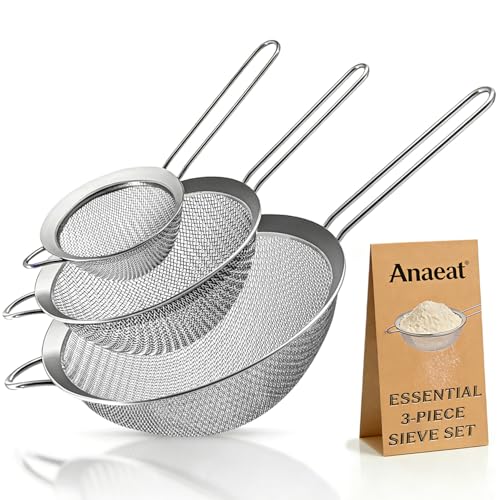
【SEAL STEEL RING & LONG SIZE HANDLE】Made from durable, sturdy polished, food-grade premium high performance stainless steel fine mesh round . Our handles attach to strainer using a superior double-riveted design that is more secure. Extra Long handle protect from scalding when fishing out the pasta noodle from boiling water.

3-Piece Set for Every Kitchen Task: This Cuisinart kitchen strainer set includes three sizes— 3⅛″, 5½″, and 7⅞″. Perfect as a small strainer, large strainer, or everyday colander set for all your cooking needs, from rinsing to draining.
1. Fine Mesh Strainer & Sieve
Best Overall Reusable Substitute
A fine mesh metal strainer or sieve is the most versatile alternative to cheesecloth. Its tightly woven wire grid easily captures solids such as herbs, bones, seeds, and sediment while allowing liquids to pass through quickly.
Unlike cloth options, a fine stainless steel strainer will not stain, degrade over time, or absorb odor. It cleans up quickly in the dishwasher and is sturdy enough for hot liquids and heavy ingredients.
- Why You’ll Like It: Durable, dishwasher safe, and requires no ongoing replacement costs.
- Who Should Avoid This: Anyone making soft cheeses or labneh where fine sediment must be completely trapped.
- Pro Tip: For extra-fine filtration, line your mesh strainer with a coffee filter or a clean cotton towel.
Check Fine Mesh Strainers on Amazon
Products Worth Considering

Food Grade Stainless Steel 18/8 Construction: Our kitchen strainer is made of first class Stainless Steel 18/8 that is BPA free, Lead and Cadmium free. It is rust free and will never affect the taste of your food!

【USING】It can get rid from the frill water and oils of your pasta in a few seconds or clean your potatoes, tomatoes, berries, and every other vegetable and fruit effortlessly. We can use it in family gatherings, outings, and picnics, also a perfect idea kitchen decorations.
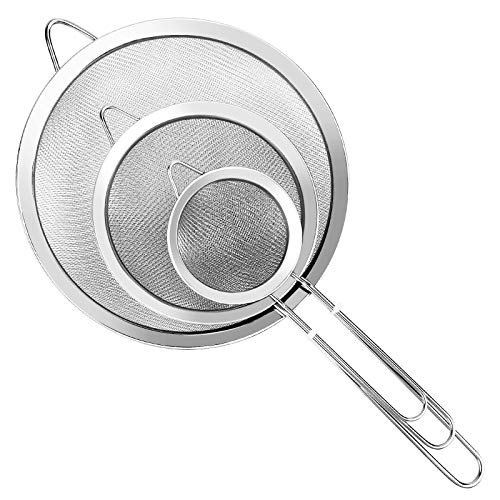
Three Graduated Sizes: This colander set includes three strainers in multiple sizes, a 3.15 inch mini strainer fine mesh, a 5.5 inch small strainer and a 7.87 inch large strainer with a deep bowl
2. Paper Coffee Filters
Best for Ultra-Fine Small Batches

Paper coffee filters are designed specifically to catch microscopic coffee grounds while yielding clean liquid. This makes them surprisingly effective for kitchen straining jobs like removing sediment from homemade infusions, clarifying rendered fats, or thickening plain yogurt into thick labneh-style yogurt cheese.
Because paper filters tear easily when wet, avoid forcing liquids through with a spoon. Set the filter inside a colander or funnel and let gravity work naturally.
- Why You’ll Like It: Inexpensive, disposable, and removes fine particles that pass through standard strainers.
- Who Should Avoid This: Those straining large volumes of liquid or thick, heavy pulp.
Safety Note: Use plain, unbleached, or white paper filters. Avoid using paper filters with boiling oils or extremely heavy liquids that can break the seam.
Check Coffee Filters on Amazon
3. Muslin Cloth (Butter Muslin)
Best Direct Fabric Upgrade
| Product Material | Weave Density | Available Colors |
|---|---|---|
| 100% Food-Grade Cotton | Tight / Fine (Grade 90) | Natural Unbleached, White |
Muslin—often labeled as “butter muslin”—is a soft, finely woven cotton fabric. It features a significantly tighter weave than standard Grade 10 or Grade 50 cheesecloth, making it superior for trapping small curds, herbs, and grounds without spilling pulp into the liquid.
It is washable and reusable for months. Muslin excels at draining fresh cottage cheese, making ricotta, bundling bouquet garni herbs, and steaming delicate foods.
- Why You’ll Like It: Tighter weave than cheesecloth, reusable, and very durable.
- Who Should Avoid This: Anyone looking for quick disposable cleanup without washing fabric afterwards.
4. Chinois Strainer
Best for Professional Sauces & Silky Stocks
A chinois (pronounced shen-wah) is a professional, cone-shaped metal strainer fitted with an extremely fine mesh wire screen. Its conical shape allows liquids to drain efficiently while concentrating food pulp at the point of the cone.
Chinois strainers are essential tools in fine dining kitchens for producing velvety soups, stocks, fruit purées, and smooth French sauces by filtering out tiny seeds, skin fragments, and fibrous strands.
- Why You’ll Like It: Delivers professional-grade filtration for silky, seedless results.
- Who Should Avoid This: Casual cooks on a tight budget who rarely make clarified stocks or refined sauces.
Check Chinois Strainers on Amazon
Products Worth Considering
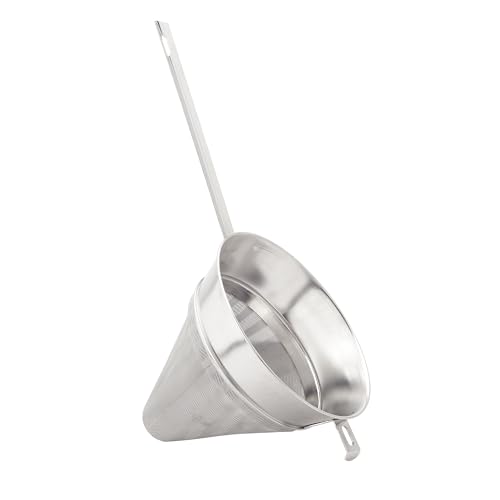
HIC Kitchen Chinois Fine-Mesh Cone Sieve: Creates smooth, lump-free sauces, soups, and purees with professional-grade precision; ideal for everyday food prep and holiday meal cooking

8-Inch Reinforced – Designed with reinforced mesh and structure to help handle repeated commercial kitchen use while delivering consistent straining performance.

China Cap Design – Perfect for straining sauces, soups, and stocks
5. Nut Milk Bag
Best for High-Pulp Liquids & Cold Brew

Nut milk bags are reusable pouch-style filters typically made from durable food-grade nylon or organic cotton mesh. Designed to endure firm squeezing, they are engineered specifically to separate heavy pulp from liquids like almond milk, oat milk, fresh fruit juices, and cold brew coffee.
Their pouch shape makes handling large batches effortless—simply pour in your mixture, pull the drawstring, and squeeze out the liquid without spilling curds or pulp over the sides.
- Why You’ll Like It: Reinforced double-stitched seams handle heavy squeezing without tearing.
- Who Should Avoid This: People using boiling liquids beyond the heat threshold of nylon synthetic fibers.
6. Tightly Woven Kitchen Towel (Flour-Sack Towel)
Best Household Emergency Cloth Option
A clean, lint-free flour-sack towel or tightly woven cotton dish towel is a practical stand-in for cheesecloth. Flour-sack towels have a thin, breathable weave that permits liquid flow while keeping solid material enclosed.
This option works wonderfully for squeezing excess moisture out of grated potatoes or shredded zucchini, as well as straining bone broth or bundling whole spices.
- Why You’ll Like It: Available in almost every kitchen with zero extra cost.
- Who Should Avoid This: Anyone using dark berries or spices that leave permanent fabric stains.
Care Tip: Wash food-contact kitchen towels using fragrance-free, dye-free detergent and skip fabric softeners to prevent off-flavors in your food.
Check Flour-Sack Towels on Amazon
7. Paper Towels
Best Single-Use Quick Fix
When you have no cloth or specialty strainers available, a layer or two of plain paper towels can work for quick straining tasks. They capture solid particles while letting liquids slowly drip through into a catch container below.
Because wet paper towels weaken under pressure, let gravity strain the mixture naturally rather than squeezing or pressing the paper.
- Why You’ll Like It: Immediate availability and easy single-use cleanup.
- Who Should Avoid This: Tasks requiring vigorous squeezing or straining large batches.
How to Choose the Best Cheesecloth Substitute
Selecting the correct alternative comes down to three key criteria:
- Liquid Density & Particle Size: For thick purées or soft cheeses, choose Muslin Cloth or a Nut Milk Bag. For clear broth or infused oil, a Coffee Filter or Fine Mesh Strainer works best.
- Batch Size & Volume: Small batches (like straining tea or a single cup of yogurt) suit paper coffee filters. Large pots of stock require a Chinois, Fine Mesh Strainer, or Flour-Sack Towel.
- Reusability vs. Convenience: If you want quick disposal, opt for coffee filters or paper towels. If you want sustainable kitchen tools, invest in a fine mesh strainer, chinois, or butter muslin.
Frequently Asked Questions
What is cheesecloth used for in cooking?
Cheesecloth is a breathable cotton fabric used for straining liquids, separating curds from whey in cheese making, clarifying stocks, bundling herbs (bouquet garni), and basting poultry.
What is the single best alternative to cheesecloth?
A fine mesh stainless steel strainer is the best overall substitute for general kitchen tasks. For tasks requiring tighter filtration like cheese making or straining yogurt, muslin cloth or a nut milk bag is the top choice.
Can I use a regular dish towel as a substitute for cheesecloth?
Yes, provided it is a clean, tightly woven, lint-free cotton towel (such as a flour-sack towel). Avoid terry cloth or thick fluffy towels, as they absorb too much liquid and drop lint into food.
Are coffee filters better than paper towels for straining?
Yes. Coffee filters are specifically designed to retain structural integrity when wet and have smaller pores, making them better suited for clarifying liquids and straining yogurt without tearing.
Can I use a nut milk bag to strain stock or make cheese?
Yes. Nut milk bags feature fine mesh and double-stitched seams designed for squeezing liquids, making them an excellent alternative for straining yogurt, fresh cheeses, and room-temperature broth.