A 30-gallon pot gives a large plant more root space and holds moisture longer than a small container, but pot size alone does not guarantee a heavy harvest. The best results come from matching the plant to the container, using a draining potting mix, supplying steady moisture and nutrition, and managing light, support, pests, and temperature throughout the season.
Quick Answer
A 30-gallon pot can support a productive tomato, pepper, cucumber, compact squash, herb group, or suitable dwarf perennial. To maximize yield, use a container with open drainage holes, plant an appropriate number of plants, maintain even moisture, fertilize according to the label, provide enough light, and use crop-specific support and pruning.
Key Takeaways
- A 30-gallon pot provides useful root volume, but the plant variety, light, watering, nutrition, and weather still determine the final yield.
- Use a lightweight commercial potting mix and a container with unobstructed drainage holes. Do not fill the pot with dense garden soil.
- Check moisture instead of following a fixed calendar. Water thoroughly when the upper layer begins to dry, and never leave the pot standing in water.
- Install stakes, cages, or a trellis at planting time and prune only when the crop and variety benefit from it.
- Use fertilizers and pest-control products only as directed on their labels. More product does not mean more growth or a larger harvest.
At a Glance
| Time Required | About 45–90 minutes for initial setup, followed by short moisture and health checks on most days |
| Difficulty | Easy to moderate, depending on the plant and support system |
| Tools Needed | 30-gallon container, commercial potting mix, trowel, watering can or hose, plant support, mulch, and a suitable fertilizer |
| Cost | Varies by container material, plant, potting mix, fertilizer, and support; no specialized equipment is required |
How a 30-Gallon Pot Can Support a Better Yield
Container volume affects root space, moisture storage, stability, and the amount of nutrition available to a plant. A 30-gallon container gives a large vegetable, flowering plant, shrub, or dwarf fruiting plant more room than a small patio pot. It can also reduce how quickly the root zone dries during warm weather.
However, more soil does not automatically mean more fruit or flowers. Yield is limited by the plant’s genetics, mature size, light exposure, temperature, pollination, watering consistency, nutrition, and pest or disease pressure. A small plant placed in a much larger pot may also sit in wet mix for too long if drainage is poor.
Illinois Extension’s container-size guidance recommends matching the container to the mature plant, its water needs, and the stability required for its above-ground growth.
A 30-gallon pot creates capacity for a productive plant. Good drainage, steady care, and the right crop determine whether that capacity becomes a strong harvest.
Choose the Right 30-Gallon Container and Drainage
A usable 30-gallon pot must hold enough potting mix, remain stable in wind, and release excess water freely. Check the manufacturer’s dimensions and stated capacity because rigid pots, fabric grow bags, tapered nursery containers, and square planters can all have different measurements.
- Plastic: Lightweight and slower to dry, but dark plastic can become hot in full sun.
- Fabric: Offers strong drainage and air exchange but may require more frequent watering during hot or windy weather.
- Glazed ceramic: Holds moisture well but is heavy and may crack in freezing conditions.
- Unglazed clay: Breathable but dries faster than plastic or glazed containers.
- Metal: Durable in some settings but can heat the root zone quickly and may rust unless designed for outdoor planting.
The container needs several open drainage holes. Do not depend on a decorative outer pot, a single tiny opening, or a layer of gravel to correct poor drainage. Water must be able to move through the potting mix and leave the container.
Warning: A filled 30-gallon pot becomes extremely heavy. Place it on a stable surface before filling it. For a balcony, rooftop, shelf, or raised structure, confirm that the surface can safely support the loaded container and retained water.
If you use a saucer, pot feet, or decorative cachepot, make sure the drainage holes remain above standing water. Empty collected water before it keeps the root zone saturated.
How Many Plants Fit in a 30-Gallon Pot?
The correct number depends on the mature width, root system, support needs, and recommended spacing of the crop. Crowding several large plants together usually reduces airflow, light penetration, and the amount of water and nutrition available to each root system.
| Plant Type | Practical Starting Point | Important Note |
|---|---|---|
| Tomato or eggplant | One plant | Use a cage, stake, or trellis suited to the mature variety. |
| Pepper | One large plant or two compact plants | Follow the spacing on the plant label or seed packet. |
| Cucumber | One vigorous plant with support | Choose a container-friendly variety and provide a secure trellis. |
| Compact squash or zucchini | One plant | Allow room for broad leaves and good airflow. |
| Leafy greens or herbs | Several plants at label spacing | Group only plants with similar light and moisture needs. |
| Dwarf shrub or small tree | One plant | Confirm that the species is suitable for long-term container growth. |
Choosing the Right Soil and Fertilizer for a 30-Gallon Pot
Use a commercial potting mix designed for containers. Unlike dense garden soil, a quality potting mix is formulated to hold useful moisture while leaving air spaces around the roots and allowing excess water to drain.
Common ingredients include peat moss or coconut coir for moisture retention, perlite for drainage and aeration, vermiculite for water and nutrient holding, and aged bark for structure. The exact formula matters less than choosing a clean, lightweight product intended for the plant you are growing.
Penn State Extension explains that soilless mixes help reduce soilborne disease risk and can combine water-holding ingredients with perlite, vermiculite, compost, or organic fertilizer.
Compost may be included as part of a container mix, but it should not replace the entire potting medium. Too much fine compost or garden soil can reduce drainage. Do not use fresh manure in a container growing edible crops. If manure is included, it should be properly composted and used as part of a balanced mix.
How to Fertilize Without Burning the Plant
First, check whether the potting mix already contains fertilizer. Some mixes feed plants for a limited period, while others contain no added nutrients. Repeated watering can carry nutrients out through the drainage holes, so actively growing container plants often need additional feeding later in the season.
- Begin with a complete, all-purpose fertilizer that is labeled for container plants or the crop you are growing.
- Measure the product exactly. Do not add extra fertilizer in an attempt to force faster growth.
- Use either a slow-release product, a soluble fertilizer, or a label-approved combination.
- Reduce or delay feeding if the mix already contains fertilizer.
- Watch for unusually dark, soft, leafy growth with few flowers or fruits, which can indicate excess nitrogen.
- Do not assume that every flowering plant needs extra phosphorus.
University of Minnesota Extension recommends starting with an all-purpose fertilizer, following the label, and accounting for nutrients lost through repeated watering.
Pro Tip: Keep the fertilizer package or photograph its label. The correct dose and interval depend on the product’s concentration, the plant, and whether the potting mix was pre-fertilized.
How to Set Up and Plant a 30-Gallon Pot
- Choose the final location. Place the empty container where the plant will receive the required light and where runoff can drain safely.
- Inspect the drainage holes. Remove plugs, packaging, or compacted material that could block water.
- Add potting mix. Fill most of the container while leaving enough room for the root ball and a watering space below the rim.
- Moisten very dry mix. Lightly wet and blend dusty potting mix so it accepts water evenly after planting.
- Position the plant. Set it at the depth recommended for that crop. Tomatoes may be planted deeper than they grew in the nursery pot, but many other plants should remain at their original depth.
- Install support immediately. Add a cage, stake, or trellis before the root system expands and makes installation difficult.
- Firm the mix gently. Remove large air pockets without compressing the potting mix into a dense mass.
- Water thoroughly. Apply water slowly until it begins to drain from the bottom.
- Add optional mulch. A thin layer of clean straw, coir, or another suitable material can reduce evaporation and soil splash while leaving space around the stem.
Implementing Proper Watering Techniques for Maximum Yield
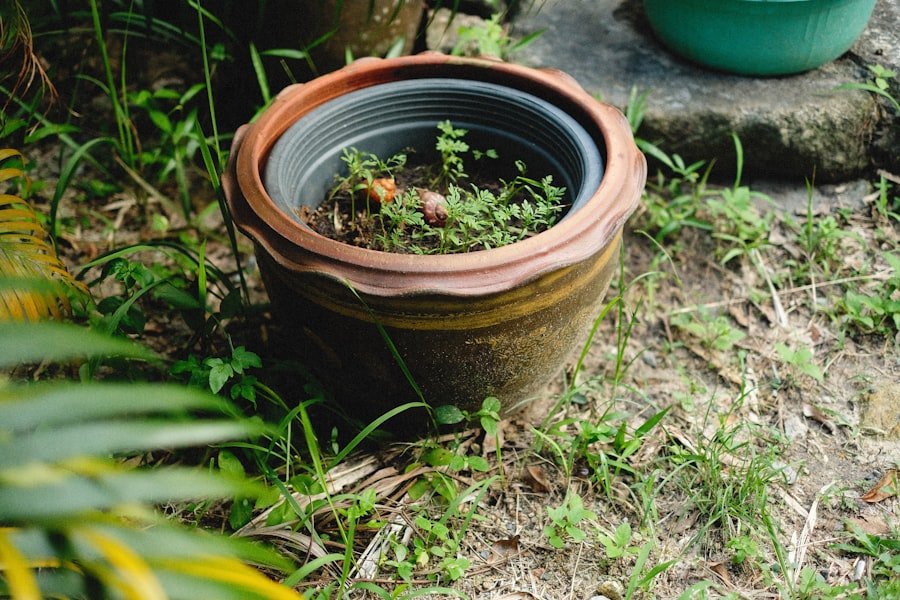
Watering has a direct effect on nutrient uptake, flowering, fruit development, and disease risk. A 30-gallon pot holds more mix than a small container, but a mature plant can still use water quickly during hot, sunny, or windy weather.
Do not water only because a set number of days has passed. Check the container instead:
- Push a finger into the upper inch of potting mix.
- Notice whether the container feels lighter than it did after watering.
- Look for early-morning wilting, dull leaves, or dry mix pulling away from the container wall.
- Check more frequently during flowering, fruit development, heat, or strong wind.
When the upper layer begins to dry and the plant needs water, apply it slowly over the root zone until excess water exits the drainage holes. This wets more of the root ball and helps prevent dry pockets. A drip emitter can make watering more consistent, but its output and placement still need to be checked.
Watering at the base keeps foliage drier and reduces soil splash. Morning is convenient because leaves that become wet can dry during the day, although a thirsty plant should not be left stressed merely because it is not morning.
After watering, empty any tray or outer container that holds the pot in standing water. Most container plants grow best in evenly moist rather than continuously saturated mix.
Note: A moisture meter can be a secondary tool, but confirm its reading by checking the mix with your finger and observing the pot’s weight. A single probe reading may not represent the entire root zone.
Utilizing Training and Pruning Methods to Optimize Growth
| Training or Pruning Method | Likely Effect on Growth |
|---|---|
| Staking or caging | Keeps stems upright, improves access to light, and holds fruit away from wet surfaces. |
| Trellising and gentle tying | Guides vining growth without sharply bending or damaging stems. |
| Removing dead or diseased growth | Improves sanitation and airflow while preventing damaged material from remaining against healthy foliage. |
| Selective lower-leaf pruning | May reduce soil contact and improve airflow when performed conservatively. |
| Fruit or flower thinning | May improve the size or quality of remaining fruit on selected crops, but reduces the number left on the plant. |
| Heavy or high-stress pruning | Can remove productive leaves and branches, delay recovery, expose fruit to sunscald, and reduce yield. It is not a universal yield-boosting method. |
Training and pruning must match the plant. A cucumber may need a trellis, a pepper may need a short stake, and a vigorous indeterminate tomato may need a tall cage or vertical support. Install these supports early so you do not damage established roots later.
Tomatoes require special attention because their growth habits differ. Determinate or bush-type tomatoes stop growing after reaching their programmed size and produce much of their crop within a shorter period. Heavy sucker removal can remove productive branches. Indeterminate tomatoes continue growing and fruiting through the season and may benefit from selective training when space is limited.
University of Minnesota Extension’s tomato guide explains the differences between determinate and indeterminate plants and their support needs.
Remove dead, broken, or clearly diseased growth with clean tools. Make cuts when foliage is dry, avoid removing a large percentage of healthy leaves at once, and disinfect tools when disease may be present.
Selecting the Ideal Plant and Variety for a 30-Gallon Pot
Select a species and variety whose mature size, season length, climate needs, and growth habit fit the container and location. In general gardening, “variety” or “cultivar” is clearer than the word “strain.”
One vigorous indeterminate tomato can use the volume of a 30-gallon pot and continue producing throughout a long growing season if it has strong support. A determinate tomato can also perform well and may be easier to manage where height is limited. The better choice depends on whether you want a concentrated harvest or production over a longer period.
Other practical choices include peppers, eggplants, trellised cucumbers, compact squash, potatoes, mixed herbs, leafy greens, and suitable dwarf fruiting plants. Check the seed packet or plant label for mature width, days to harvest, sun needs, disease-resistance codes, and recommended spacing.
Disease resistance can be especially valuable in a container that cannot be moved easily once filled. Climate-adapted varieties are also more likely to flower and set fruit under local heat, humidity, or short-season conditions.
Maintaining Suitable Temperature and Humidity
There is no single ideal temperature or humidity range for every plant. Lettuce, spinach, tomatoes, peppers, herbs, shrubs, and dwarf trees respond differently to heat and cold. Use crop-specific guidance instead of assuming that one range suits all vegetables.
Place warm-season fruiting crops where they receive strong light, but watch for containers heating excessively against reflective walls, pavement, metal railings, or dark surfaces. Fabric pots and unglazed clay may lose water faster in heat, while dark rigid pots may warm the root zone more quickly.
During extreme heat, protect roots by maintaining moisture, using a light mulch, and shading the container itself. Temporary afternoon shade may help a heat-stressed plant, but continuous shade can reduce flowering and fruiting in sun-loving crops.
High humidity and crowded foliage can keep leaves wet and support fungal disease. Improve airflow with correct spacing, appropriate support, and conservative removal of damaged lower foliage. Very low humidity combined with heat and wind increases water loss, so inspect the pot more frequently.
Managing Pests and Diseases in a 30-Gallon Pot
Inspect the plant at least several times each week. Look beneath leaves, along stems, around flowers, and on the surface of the potting mix. Early signs may include holes, sticky residue, webbing, distorted new growth, spots, yellowing, wilting, or insects flying from the soil.
Use an integrated approach:
- Identify the problem. Damage caused by drought, fertilizer, heat, insects, and disease can look similar.
- Remove simple causes. Correct standing water, blocked drainage, crowding, or repeated overhead watering.
- Use physical controls. Hand-pick large insects, wash off small aphid colonies, remove badly affected leaves, or use a crop-appropriate barrier.
- Protect natural enemies. Avoid unnecessary broad-spectrum spraying that may kill beneficial insects.
- Choose a labeled product only when needed. Confirm that the label lists the crop, target pest, application rate, precautions, and required waiting period before harvest.
Root aphids, fungus gnats, and root diseases are more likely to become serious when the potting mix remains continuously wet or contaminated material is introduced. Start with clean potting mix, clean containers, and healthy transplants.
Warning: “Natural” or “organic” does not mean risk-free. Neem oil and other pesticides must be used exactly as their labels direct. Do not spray an unidentified problem or apply a product to an edible crop unless that crop appears on the label.
The U.S. Environmental Protection Agency advises gardeners to read pesticide labels first to understand approved uses, protective measures, storage, first aid, and safe application.
Understanding the Role of Nutrient Supplements
A good potting mix provides the physical root environment, but it may not supply enough nutrition for an entire season. Fast-growing and fruiting plants remove nutrients from the mix, and repeated watering may carry soluble nutrients out of the drainage holes.
Use plant appearance as one clue, not as the only diagnosis. Yellow lower leaves can result from nitrogen shortage, excess water, root damage, natural aging, low light, or disease. Purple coloring, pale new leaves, brown margins, and poor flowering can also have several causes.
Products such as fish emulsion, seaweed extract, compost-based fertilizer, and synthetic soluble fertilizer vary widely. Some are complete fertilizers; others supply only small amounts of selected nutrients. Read the guaranteed analysis and application directions instead of assuming that an organic supplement contains everything the plant needs.
If a problem continues despite correct watering and label-directed feeding, check drainage, root health, potting-mix condition, and irrigation-water quality. A local extension office or laboratory can help diagnose recurring nutrient or pH problems.
Implementing Lighting Strategies for Better Growth
Light drives photosynthesis, but the correct amount depends on the crop. Many fruiting vegetables and flowering plants perform best with at least six hours of direct outdoor sun, while some leafy greens and herbs tolerate less. Observe the location before planting because a bright area may receive only a short period of direct light.
For an outdoor pot:
- Track when direct sun reaches and leaves the location.
- Rotate the container only if doing so is safe and practical.
- Prevent nearby walls, fences, or larger plants from shading the crop unexpectedly.
- Use support to spread foliage without crowding.
- Watch for leaf scorch or flower drop during extreme heat rather than assuming that every symptom means the plant needs less light.
For indoor growing, hours of operation cannot be separated from light intensity. Use a fixture designed for plants, follow its distance and coverage instructions, and adjust the timer to the crop and growth stage. A weak lamp operated for a long period may still provide less usable light than the plant needs, while a powerful fixture placed too close may bleach or burn foliage.
Harvesting and Curing Plants Grown in a 30-Gallon Pot
Harvest timing depends on the crop. Picking at the correct stage protects quality and may encourage continued production in crops that repeatedly flower or produce new leaves.
- Tomatoes: Pick when the fruit has developed the expected color and releases easily, or harvest at the breaker stage if weather or pests threaten it.
- Peppers: Harvest green at full size or leave them to develop their mature color, depending on the variety and desired flavor.
- Cucumbers and summer squash: Pick while tender and before oversized fruit slows continued production.
- Leafy herbs: Harvest healthy growth before flowering when leaf flavor is the priority, unless flowers are also wanted.
- Root crops: Check the expected maturity period and sample one plant rather than leaving the entire crop until it becomes woody or overgrown.
Post-harvest handling should also match the crop. Herbs intended for drying should be spread or hung in a clean, dark, dry, well-ventilated place until they are fully dry before storage. Unripe tomatoes can finish ripening at room temperature. Ripe produce should be stored according to its crop-specific food-safety and quality guidance.
“Curing” is not a universal requirement. Potatoes, sweet potatoes, onions, garlic, winter squash, herbs, and some other crops have different curing or drying procedures, while many fruits and leafy vegetables should simply be cooled, eaten, or preserved promptly.
Troubleshooting Common Yield Problems
| Symptom | Possible Causes | What to Check First |
|---|---|---|
| Plant wilts every afternoon | Heat, dry mix, restricted roots, or temporary midday stress | Check moisture below the surface and see whether the plant recovers by evening. |
| Plant remains wilted in the morning | Severe dryness, root damage, saturated mix, stem injury, or disease | Inspect drainage, stem condition, root-zone moisture, and signs of disease. |
| Many leaves but few flowers or fruits | Too much nitrogen, insufficient light, heat stress, unsuitable variety, or poor pollination | Review fertilizer use, direct-sun hours, temperatures, and pollinator access. |
| Lower leaves turn yellow | Natural aging, nitrogen shortage, overwatering, low light, root stress, or disease | Check moisture and drainage before adding fertilizer. |
| White crust appears on the mix or pot | Fertilizer salts or mineral-rich irrigation water | Review fertilizer concentration, ensure thorough runoff, and avoid repeated light watering. |
| Flowers fall without setting fruit | Temperature stress, dry roots, excess nitrogen, low light, or poor pollination | Check recent weather, soil moisture, fertilizer history, and flower activity. |
| Small flies rise from the potting mix | Fungus gnats associated with moist organic mix | Improve watering practices, remove decaying material, and identify the insect before treating. |
| Roots smell sour or appear dark and soft | Prolonged saturation and root decay | Stop leaving the pot in standing water, open blocked drainage, and remove dead root material when practical. |
Frequently Asked Questions
What is a 30-gallon pot?
A 30-gallon pot is a large gardening container sold with a nominal capacity of about 30 gallons. It is commonly used for large vegetables, shrubs, dwarf fruiting plants, potatoes, mixed herbs, and other plants that need more root space than a small patio pot provides.
What are the dimensions of a 30-gallon pot?
There is no universal set of dimensions. A rigid cylindrical pot, tapered nursery container, square planter, and fabric grow bag may all be sold as 30-gallon containers while having different widths and heights. Check the manufacturer’s measurements and stated volume before buying.
What materials are 30-gallon pots made from?
Common materials include plastic, fabric, glazed ceramic, unglazed clay, wood, and metal. Plastic retains moisture well, fabric drains quickly, ceramic is heavy, clay dries faster, and metal can become hot. Choose according to climate, plant needs, durability, and how often you can water.
What can be grown in a 30-gallon pot?
Suitable choices include tomatoes, peppers, eggplants, trellised cucumbers, compact squash, potatoes, herbs, leafy greens, flowers, shrubs, and selected dwarf fruiting plants. Match the plant’s mature size and climate needs to the container and location.
How many large plants should go in one 30-gallon pot?
One large fruiting plant is usually the safest starting point for tomatoes, eggplants, cucumbers, and compact squash. Two compact peppers may fit if their recommended spacing allows it. Smaller herbs or greens can be planted in greater numbers according to their labels.
Does a 30-gallon pot need drainage holes?
Yes. Open drainage holes allow excess water to escape and help air remain in the root zone. A container without working drainage holes is likely to stay saturated after rain or watering, which can damage roots and encourage disease.
How often should a 30-gallon pot be watered?
There is no fixed interval. Check the upper inch of potting mix and the container’s weight. Water thoroughly when the upper layer begins to dry. A large mature plant may need daily watering during hot or windy weather, while a small plant in cool conditions may need less.
How should a 30-gallon pot be maintained?
Keep drainage holes open, maintain even moisture, fertilize according to the product label, secure plant supports, remove damaged material, inspect for pests, harvest at the proper stage, and clean the container before starting a new crop.
Sources
- Illinois Extension: Container Size — container volume, stability, watering frequency, plant fit, and the risk of an oversized pot remaining wet.
- Penn State Extension: Container Vegetable Gardening — drainage holes, potting mix, watering, and container nutrition.
- Penn State Extension: Potting Media and Plant Propagation — soilless potting-mix ingredients, aeration, drainage, and moisture retention.
- University of Minnesota Extension: Fertilizing and Watering Container Plants — fertilizer selection, label use, moisture management, mulch, and standing-water prevention.
- University of Minnesota Extension: Growing Tomatoes — variety selection, determinate and indeterminate growth, support, watering, harvest, and disease prevention.
- U.S. Environmental Protection Agency: Keep Safe, Read the Label First — safe selection, application, handling, and storage of pesticide products.