Most people don’t realize you can reach the Grand Canyon, Sedona’s red rocks, and the Lower Salt River (home to well-known wild horses) on a day trip from Glendale. You’ll find short hikes, scenic drives, and cool swimming spots that don’t require frantic packing. If you want fresh air, big views, and simple logistics, keep going—there’s a trip here that’ll match the pace you want.
Key takeaways
- For water + wildlife, the Lower Salt River is a classic warm-weather pick. Go early for cooler temps and easier parking.
- For big views with minimal hiking, use rim viewpoints at Tonto Natural Bridge, Sedona pullouts, or Grand Canyon overlooks.
- Check conditions before you go: river flows, park hours/fees, and road closures (especially the Apache Trail).
Paddle Board the Salt River and See Wild Mustangs
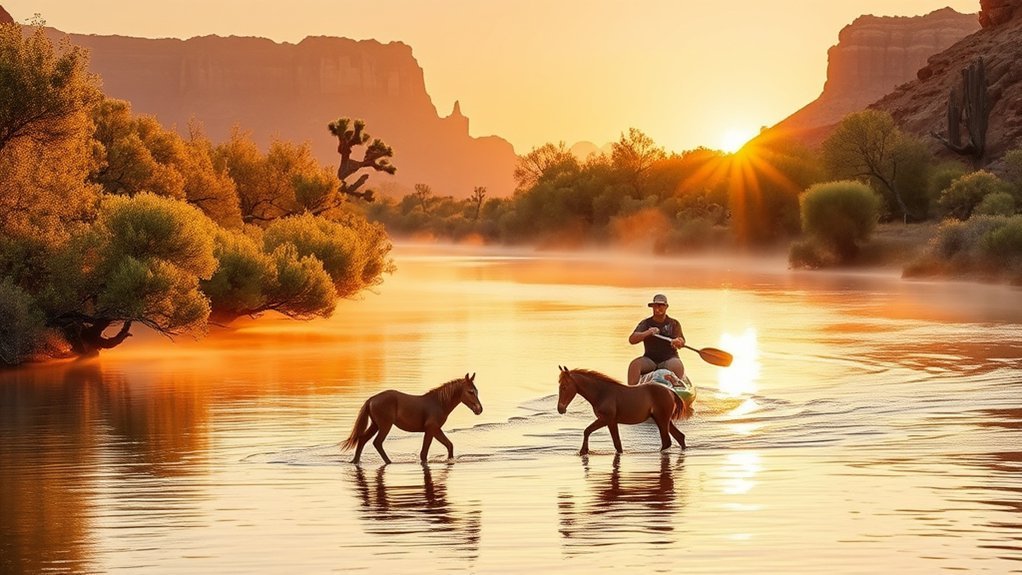
Head to the Lower Salt River (near Mesa in the Tonto National Forest) for a refreshing stand-up paddleboarding float. In warm months, you may spot desert wildlife—including the area’s famous wild horses—along the banks. Keep your distance, never feed or approach wildlife, and let animals choose the space.
Trip timing depends on the route you pick and the river’s flow. Plan for extra time beyond what you expect to spend paddling. Local outfitters can rent boards, provide life jackets, and offer shuttle options. Bring plenty of water and sun protection. Use a waterproof dry bag for keys and a phone. If it’s hot, go early or late in the day.
Explore Tonto Natural Bridge State Park
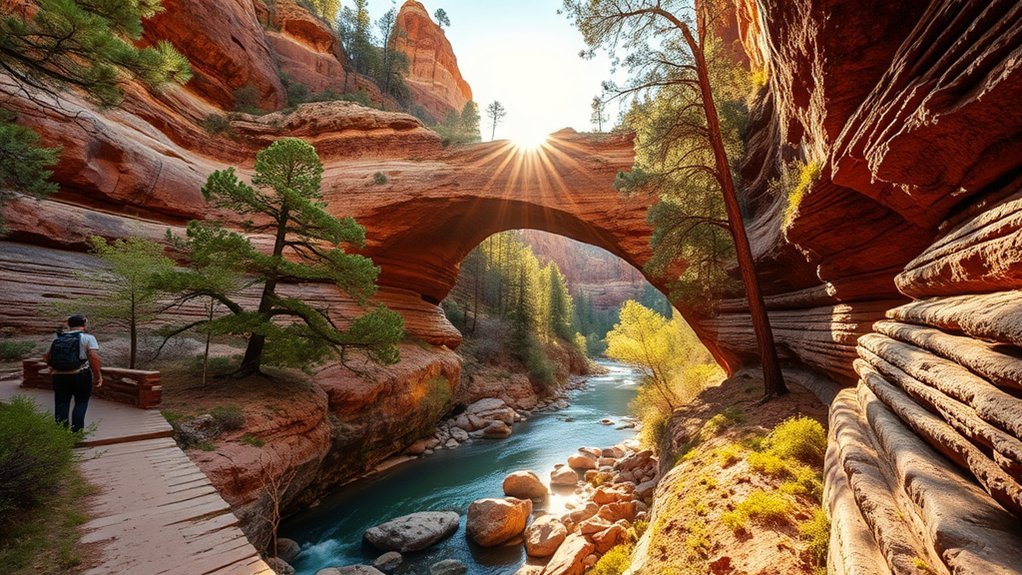
Tonto Natural Bridge State Park is a shady escape near Payson where a huge travertine bridge spans a forested canyon. Many visitors start with easy rim viewpoints. Then they decide whether to hike down into the canyon. The trails are short but steep, with uneven rock that can be slick—wear sturdy shoes and move slowly.
Tonto Natural Bridge Facts
At Tonto Natural Bridge State Park, a natural travertine bridge arches over a deep canyon, and it can feel noticeably cooler below the rim.
- The bridge is believed to be the largest natural travertine bridge in the world.
- There are three hiking trails into the canyon; the longest of the three is about 2,200 feet round trip and all are steep.
- No pets or glass containers are allowed on the park’s trails.
- Bring water; the climb back out is the hard part.
Trail Tips and Safety
Wear sturdy closed-toe shoes, carry plenty of water, and use sunscreen and a hat for exposed stretches. Take your time on loose rock and slick travertine, keep kids close, and avoid rushing on the way back up. If you’re traveling with a dog, note that pets aren’t allowed on the park trails (choose another stop from this list).
Day Trip to Sedona’s Red Rocks
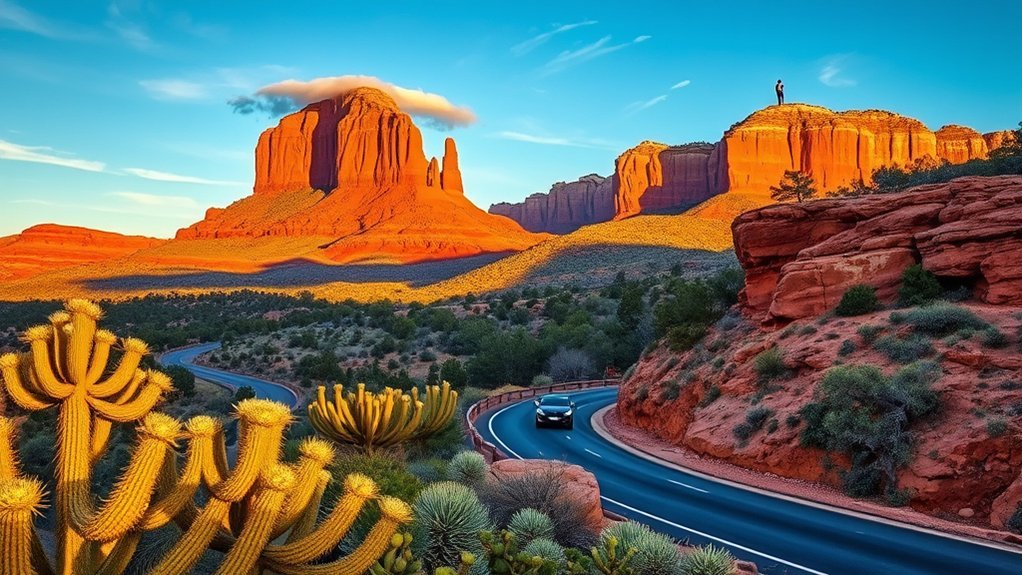
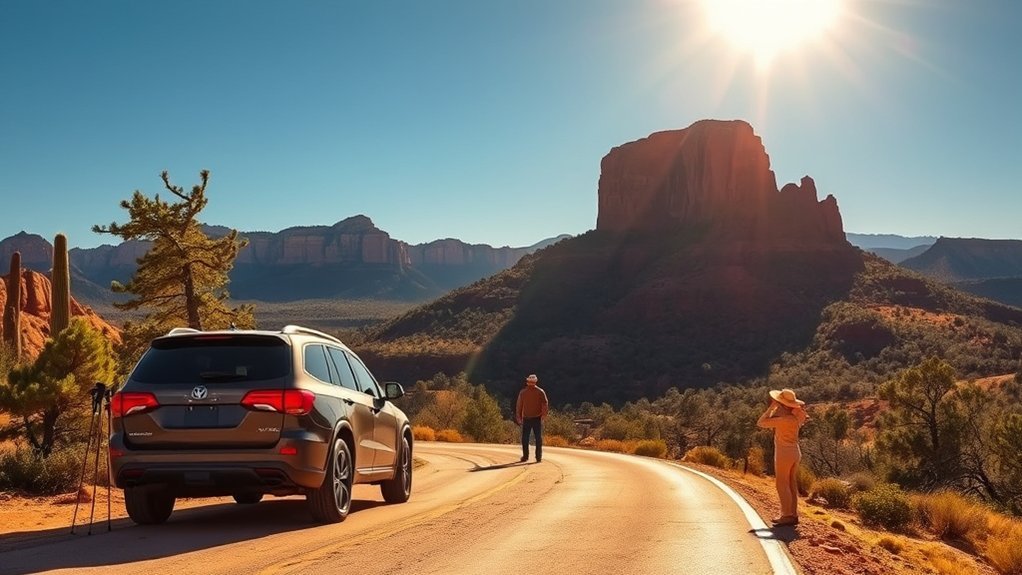
The drive from Glendale to Sedona is typically around two hours. Once the red sandstone and Oak Creek Canyon come into view, it feels like a different world. Plan to spend 4–6 hours mixing scenic overlooks, short hikes like Bell Rock, and a relaxed stroll through Tlaquepaque’s galleries before heading back. Arrive early or late to dodge heat and crowds—sunrise and sunset light can make the rocks glow.
- Hike short trails (Bell Rock, Cathedral Rock) for big views and quick photo stops.
- Take a Pink Jeep Tour to reach remote red-rock viewpoints with less planning.
- Stroll Tlaquepaque for art, lunch, and a shaded break near downtown.
Sedona stays easy: you can combine a scenic drive, a short hike, and relaxed shopping in one day, then head home refreshed.
Cool Off at Water Wheel Falls
For a greener, cooler-feeling escape, head toward the Payson area where Water Wheel Falls on Houston Mesa Road offers cascades, boulders, and swimming holes when water is running. Expect a short hike on rocky ground. Be careful around slick rock, strong current, and sudden storms.
Restrooms and picnic tables are available at the Water Wheel / Crossings area, but potable water isn’t—pack what you need. Many nearby sites use the Tonto Pass day-use fee system, so look for posted signs at the trailhead. Cell service can be limited.
Tube Down the Salt River
In warm weather, floating the Lower Salt River is one of the simplest ways to cool off. A local outfitter can provide tubes and shuttle service. Float time depends on the section you choose and the river’s flow. Bring sun protection, plenty of water, and a waterproof bag for essentials. Follow posted rules, and watch wildlife from a distance.
Visit the Grand Canyon South Rim
You can usually reach the Grand Canyon South Rim in roughly 3.5–4 hours from Glendale, so it’s a long day trip that works best with an early start. Once there, walk short sections of the Rim Trail and hit classic viewpoints like Mather Point, Yavapai Point, and Desert View. Use the village parking and shuttle system to move between overlooks without constantly hunting for a spot.
Driving Routes and Times
For speed, most drivers go north on I-17 to Flagstaff and then take US-180/AZ-64 into the park. A scenic alternate is US-89 to Cameron and AZ-64 along the east entrance. In winter or storm seasons, build in extra buffer. Check official road status before you leave.
- Fastest route (often): I-17 → Flagstaff → US-180/AZ-64
- Scenic detour: US-89 → AZ-64 via Cameron
- Car-free option: Grand Canyon Railway from Williams
Park Highlights and Viewpoints
After the drive, keep your walking easy but scenic: start at Mather Point, then stroll paved Rim Trail sections near Grand Canyon Village. Pop into the Grand Canyon Visitor Center and Yavapai Geology Museum for exhibits and context.
If you head west, note that Hermit Road is closed to private vehicles between March 1 and November 30. During that period, access is by free shuttle, bike, or on foot.
Practical Tips and Timing
Plan on a full day: several hours of driving each way plus a few hours on the rim. Pack water, layers (it can be cooler than the Valley), snacks, and a charged phone. If you’ll do anything beyond rim viewpoints, check current trail alerts and closures before you commit.
Drive Oak Creek Canyon and Stop in Sedona
Take the winding State Route 89A through Oak Creek Canyon for a tree-lined gorge, hanging cliffs, and creekside pullouts. Stop at viewpoints and short trails, then continue into Sedona for galleries, lunch, and quick trailhead access. In summer, aim for early or late stops and bring plenty of water.
Scenic Drive Along the Apache Trail
The Apache Trail is famous for desert lakes and canyon views, but it’s also a route that changes with storms, repairs, and closures. As of 2026-01-31, Arizona road updates report the highway is closed between Tortilla Flat and Roosevelt Lake. A separate unpaved segment that reopened is treated as a primitive roadway with limits on vehicles. Check official road status before you go, and don’t assume you can drive the full route end-to-end.
- Bring water, fuel, and supplies—services are sparse.
- If you enter unpaved/primitive sections, use a suitable vehicle and drive carefully.
- Verify conditions and closures the morning you go.
More Easy Day Trips Within About 2 Hours
If you want one more quick option without a long drive, these are common favorites from the West Valley. Pick one, keep the plan simple, and you’ll still be home for dinner.
- Prescott for cooler air, lakes, and an easy downtown walk.
- Jerome for hillside views, history, and quirky shops.
- Flagstaff for pine forests, breweries, and higher-elevation weather.
- Lake Pleasant for shoreline views and a low-effort nature reset.
Historic Small-Town Stops: Williams, Tombstone, Bisbee, and Yuma
Venture beyond Glendale and you’ll find small Arizona towns with big character. Williams leans into Route 66 nostalgia and is also the home base for the Grand Canyon Railway. Tombstone offers Wild West shows, museums, and saloons. Bisbee mixes mining history with an artsy, walkable downtown. Yuma highlights Colorado River history and the Territorial Prison State Historic Park.
Antelope Canyon and Nearby Navajo Landmarks
If you’re chasing striking light beams and carved sandstone, Antelope Canyon near Page can be amazing—but you’ll need a Navajo-guided tour to enter. Guides are required for Antelope Canyon locations, and Navajo Nation fees apply. Take flash-flood warnings seriously, especially during monsoon season.
- Pack water, sun protection, and sturdy shoes; tour rules and photography policies vary.
- Book ahead for peak seasons and popular time slots.
- Combine your trip with Horseshoe Bend for a short hike to a Colorado River overlook.
Frequently Asked Questions
Where to Go From Glendale for a Day Trip?
Pick one main stop: Sedona for red rocks, the Lower Salt River for a float, Tonto Natural Bridge for shade and viewpoints, or the Grand Canyon South Rim for famous rim scenery. Match your choice to your driving tolerance and the temperatures you’ll face.
Are There Good Day Trips From Phoenix?
Yes — you can escape the Valley to Sedona, Prescott, Payson-area creeks and waterfalls, the Tonto Natural Bridge, or river days on the Lower Salt River. Many options offer an easy drive and a big change of scenery.
What Is the Number One Thing to Do in Arizona?
Visit the Grand Canyon. Even a short rim walk and a few viewpoints can show why it’s Arizona’s best-known natural wonder.
What Is Within 2 Hours of Phoenix?
Within about two hours you can reach Sedona’s red rocks and Oak Creek Canyon, Prescott’s Whiskey Row, the Mogollon Rim pines around Payson, Camp Verde wineries and river access, and more depending on where you start in the metro.
Conclusion
One day can flip from desert hush to rushing water, red cliffs to ghost-town stories. Choose the trip that fits your pace, pack smart, and go get your reset.