Saguaro National Park surrounds Tucson with two very different Sonoran Desert landscapes filled with giant saguaros, mountain views, historic sites, wildlife, scenic roads, and trails ranging from paved nature walks to remote wilderness routes. A good visit starts with choosing the right district, timing outdoor activity around desert heat, and understanding where water, parking, pets, camping, and scenic drives are actually available.
Quick Answer
Saguaro National Park is split into two districts on opposite sides of Tucson. Visit the Tucson Mountain District for dense cactus scenery, petroglyphs, and the unpaved Bajada Loop, or the Rincon Mountain District for the paved Cactus Forest Scenic Loop, accessible trails, and mountain backcountry. Fall through spring offers the most comfortable weather.
Key Takeaways
- The park has two separate districts: Rincon Mountain District east of Tucson and Tucson Mountain District west of Tucson.
- A standard private-vehicle entrance pass is $25 and is valid for seven days in both districts; the park uses cashless payment.
- Late fall through spring is generally most comfortable, while summer requires strict heat and monsoon precautions.
- There are no restaurants, concession stands, hotels, car campgrounds, or RV campgrounds inside the park.
- Pets are allowed only in specific developed areas, roads, and selected trails, not throughout the trail system.
- Check current NPS conditions before your visit because road, parking, weather, and construction conditions can change.
About Saguaro National Park and Its History
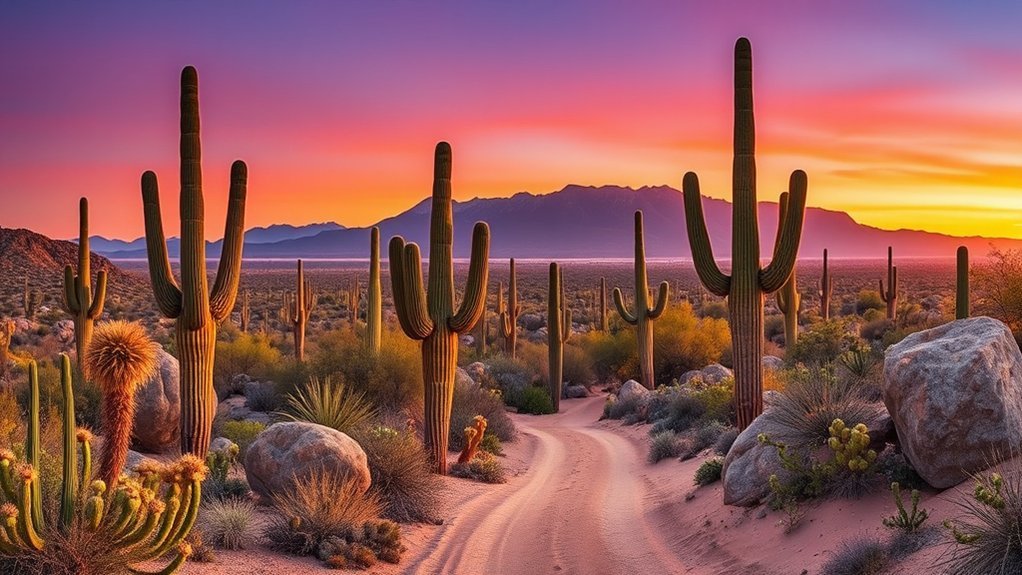
Saguaro National Park protects more than 94,000 acres of Sonoran Desert habitat around Tucson, Arizona. President Herbert Hoover established Saguaro National Monument on March 1, 1933, and the area was redesignated as Saguaro National Park in 1994. Today, the park consists of the Rincon Mountain District east of Tucson and the Tucson Mountain District west of the city. You can read more about its development on the National Park Service history page.
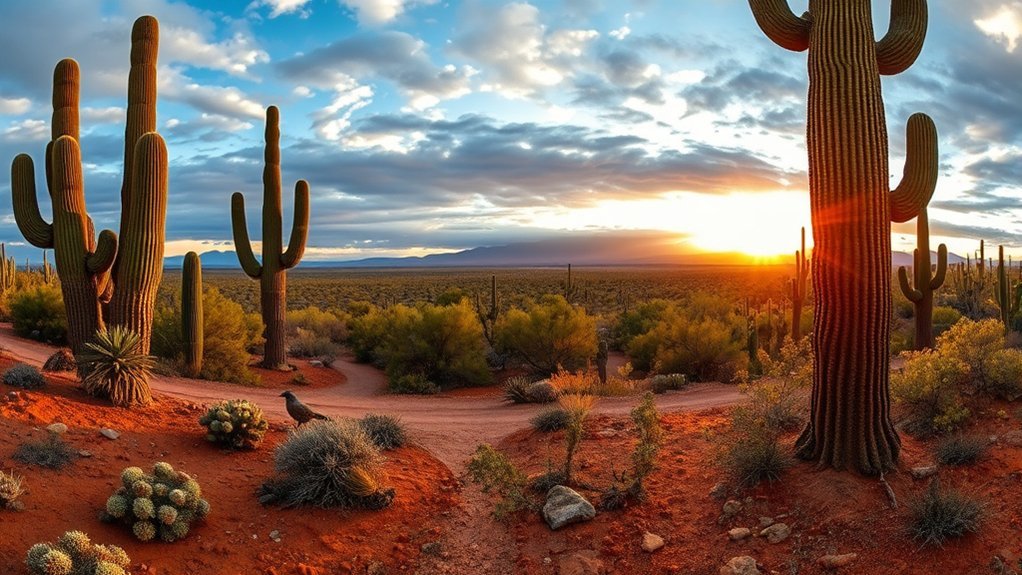
The park’s signature plant is the saguaro cactus (Carnegiea gigantea), which naturally grows in the Sonoran Desert. According to the National Park Service, a mature saguaro can reach about 50 feet tall, an adult plant may weigh two tons or more, and some individuals can live for more than 200 years. Saguaros also provide food, nesting cavities, and perches for birds and other desert wildlife.
The park’s 2020 Saguaro Census estimated roughly 2 million saguaros within Saguaro National Park, showing just how extensive these cactus forests are.
The landscape also has deep human history. The park protects archeological sites, petroglyphs, historic ranching features, Civilian Conservation Corps work, and places connected to Indigenous peoples of the Sonoran Desert. At Signal Hill and other rock-art areas, look without touching because oils from your hands can damage petroglyph surfaces.
Choosing Between the East and West Districts
The two park districts are separated by Tucson, so choosing the right side can save significant driving time.
| Feature | Rincon Mountain District (East) | Tucson Mountain District (West) |
| Scenic drive | 8-mile paved Cactus Forest Scenic Loop | 6-mile unpaved Bajada Loop |
| Best for | Paved drive, accessible trails, mountain scenery, longer wilderness hikes | Dense low-desert cactus scenery, sunsets, Signal Hill petroglyphs, short hikes |
| Visitor center | Rincon Mountain Visitor Center | Red Hills Visitor Center |
Pro Tip: If you have only a few hours, choose one district instead of rushing between both. With a full day, you can visit both, but allow extra time for Tucson traffic and the drive across the city.
Getting There and Park Access
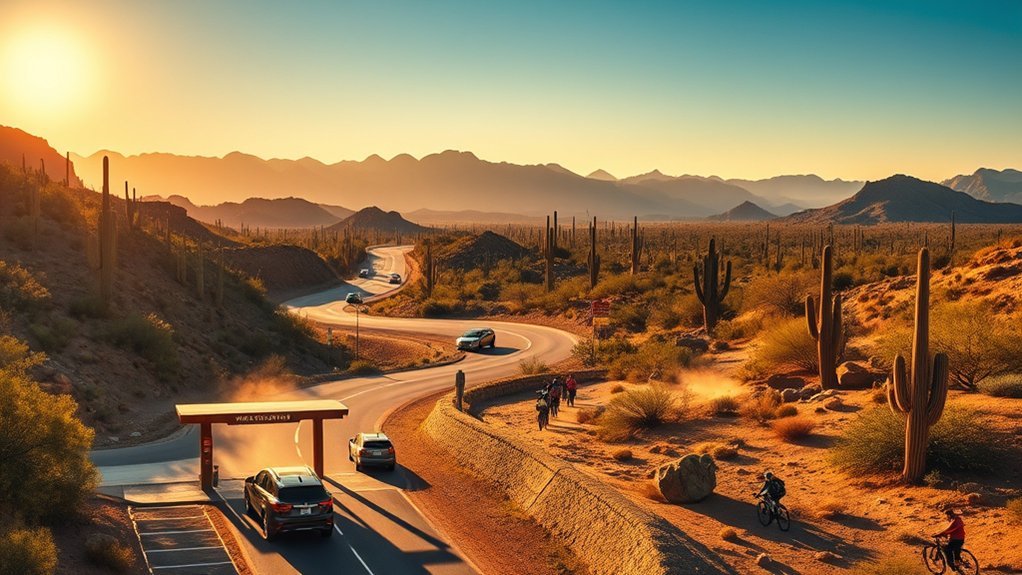
Tucson is the main gateway to Saguaro National Park. The two districts have separate visitor centers, so enter the correct destination before you begin driving:
- Rincon Mountain Visitor Center: 3693 S. Old Spanish Trail, Tucson, AZ.
- Red Hills Visitor Center: 2700 N. Kinney Road, Tucson, AZ.
Both visitor centers provide maps, park information, drinking water, restrooms, interpretive information, and staff assistance. Current National Park Service hours are generally 8:00 a.m.–4:00 p.m. from June 1 through September 30 and 9:00 a.m.–5:00 p.m. from October 1 through May 31. Check the official current conditions page before leaving because construction, road access, weather, and facility conditions can change.
You do not normally need an advance reservation for an ordinary day visit. However, everyone entering must have the appropriate entrance pass. The current seven-day standard fees are $25 for a private vehicle, $20 for a motorcycle, and $15 per person for visitors entering without a motor vehicle. One seven-day pass covers both districts. Saguaro National Park is cashless, so review payment details on the official fees and passes page.
Note: The Rincon Mountain District entrance and visitor-center parking area has been undergoing a major reconfiguration project scheduled into 2026. Visitor services have remained available, but traffic patterns and parking arrangements may change during construction. Check current NPS alerts before arrival.
The 8-mile Cactus Forest Scenic Loop in the east district is paved. The 6-mile Bajada Loop in the west district is an unpaved, graded road that normally does not require four-wheel drive or high clearance. Oversize vehicles and vehicles towing long combinations face restrictions on both scenic loops, and RV parking is limited, so check the NPS Getting Around guidance before driving a large vehicle.
Best Time to Visit and Seasonal Tips
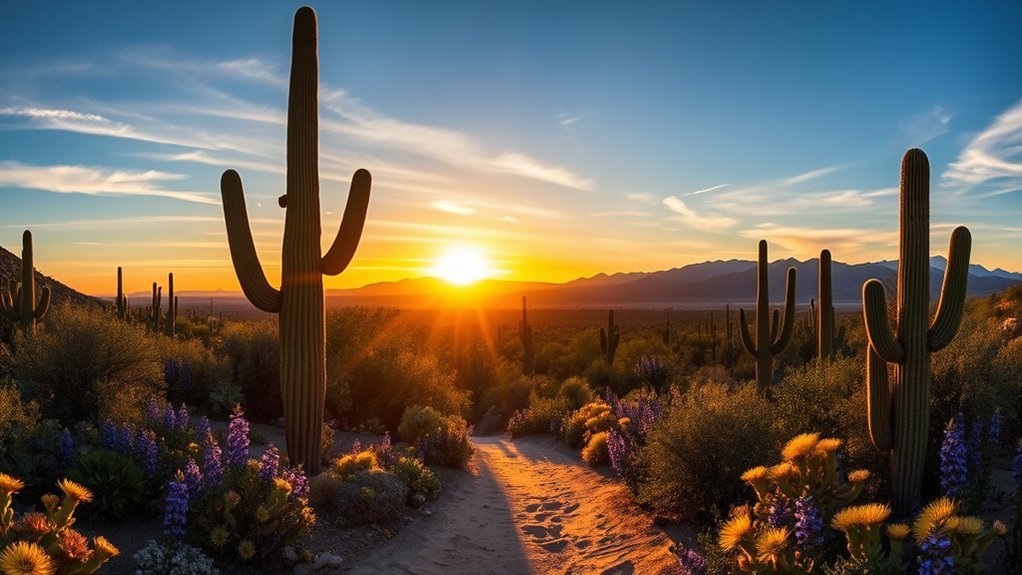
For most visitors, the most comfortable time to visit is from late fall through spring. November through March is the park’s busiest period because daytime temperatures are much cooler than in summer. Spring adds wildflowers and cactus blooms, while fall often combines warm days with lighter crowds than the winter peak.
Spring
February and March can bring desert wildflowers, depending on winter rain. The iconic saguaro generally begins blooming in late April, with its large creamy-white flowers continuing into early June. Bloom timing varies with temperature and rainfall, so do not plan around a guaranteed peak date.
Summer and Monsoon Season
Summer is the most demanding season. Daytime temperatures regularly rise above 100°F, and the National Park Service advises visitors to finish hiking by 10 a.m. when the forecast high is between 95°F and 110°F. If the forecast high exceeds 110°F, NPS advises against attempting a hike. Review the latest official weather and heat guidance before setting out.
Warning: Extreme heat, dehydration, lightning, and flash flooding can become life-threatening quickly. During the June 15–September 30 monsoon period, storms often develop in the afternoon. Never enter a wash or canyon when storms threaten, move to higher ground if flooding begins, carry more water than you expect to use, and turn around before half of your water supply is gone.
Winter
Winter brings mild desert-floor days but much colder conditions at higher elevations in the Rincon Mountains. Snow can occur in the high country and may make remote trails difficult or temporarily impassable. Pack layers even when Tucson’s forecast looks comfortable.
Top Activities and Recommended Hikes
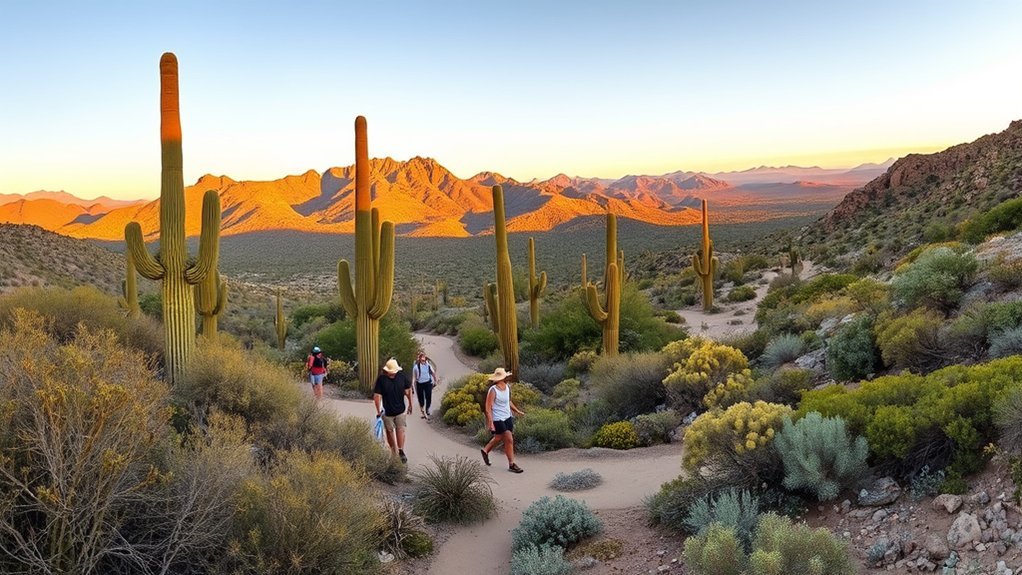
You can experience the Sonoran Desert without committing to a difficult backcountry hike. Both districts offer scenic roads, picnic areas, short nature trails, overlooks, ranger programs, and longer routes.
Easy and Short Hikes
- Valley View Overlook Nature Trail: an easy 0.8-mile round trip in the Tucson Mountain District with broad desert views.
- Signal Hill: a short walk to a major collection of prehistoric petroglyphs. Do not touch or climb on rock-art surfaces.
- Desert Discovery Trail: a 0.5-mile paved trail in the west district with interpretive displays and accessible features.
- Desert Ecology Trail: a 0.25-mile paved nature trail in the east district with benches and interpretive signs.
- Mica View Trail: approximately 0.7 mile between Mica View Picnic Area and Broadway Trailhead, with an accessible hardened surface.
Longer Trails and Bicycling
The Cactus Forest Trail includes a 2.5-mile one-way multi-use section through the east district’s cactus forest. It passes near historic lime-kiln remains and can have rocky or eroded sections. Bicycles are permitted only on designated roads and specific multi-use trails, not throughout the park’s trail system.
Scenic Drives
- Cactus Forest Scenic Loop Drive: an 8-mile paved route in the Rincon Mountain District with trailheads, pullouts, cactus forest views, and access to Javelina Rocks.
- Bajada Loop Drive: a 6-mile unpaved scenic loop in the Tucson Mountain District with picnic areas, trailheads, and dense saguaro scenery.
- Sunset: look for designated overlooks and pullouts rather than stopping in the roadway. Javelina Rocks is a popular east-district viewpoint, while the west district offers broad sunset views across the Tucson Mountains.
Ranger-led programs change by season. Winter has the broadest schedule, while late-spring and summer programs may be limited because of extreme heat. Check the official NPS calendar rather than assuming a specific program will run during your visit.
Accessibility and Easier Ways to Explore
Both visitor centers provide accessible parking, restrooms, drinking fountains, paved cactus-garden paths, and accessible interpretive features. Visitors using wheelchairs, walkers, or other mobility devices have several good trail options.
- Rincon Mountain District: Desert Ecology Trail and Mica View Trail.
- Tucson Mountain District: Desert Discovery Trail.
- Scenic driving: both districts offer roadside overlooks and pullouts that allow you to experience the cactus forest without a long hike.
Accessibility conditions can change after storms, construction, or trail maintenance, so review the official Saguaro National Park accessibility information before your visit.
Where to Stay, Eat, and Practical Visitor Info
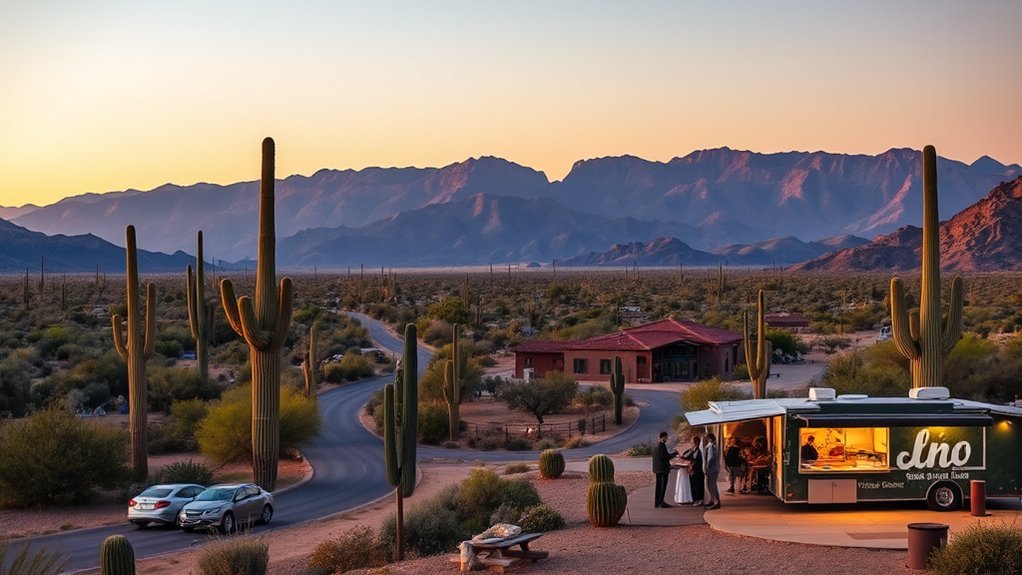
There are no hotels, restaurants, concession stands, car campgrounds, or RV campgrounds inside Saguaro National Park. Tucson is the easiest base for hotels, vacation rentals, restaurants, groceries, and fuel.
| Option | Location | What to Know |
| Backcountry camping | Rincon Mountain District | Six designated hike-in campgrounds; permit and reservation required; no vehicle access |
| Gilbert Ray Campground | Pima County, near the west district | Outside the national park; seasonal and reservation-only; check current Pima County dates and availability |
| Dude ranches | Tucson area | Tanque Verde Ranch and White Stallion Ranch are established Tucson-area ranch stays |
| Hotels and rentals | Tucson | Best selection of lodging, restaurants, groceries, and other services |
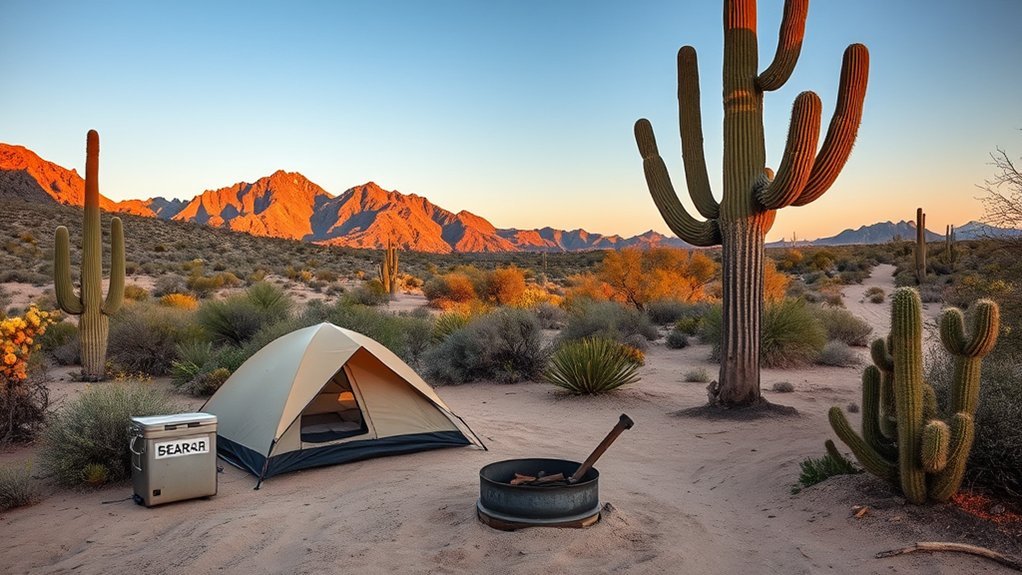
If you want to camp inside the national park, all campsites are hike-in wilderness sites in the Rincon Mountain District. Reservations and permits are required, and you must carry your supplies to camp. Review the official backcountry camping requirements before planning an overnight trip.
Gilbert Ray Campground is operated by Pima County near the Tucson Mountain District rather than by Saguaro National Park. It is seasonal and reservation-only, so confirm current dates, availability, campsite rules, and facilities directly with Pima County before relying on it.
Food, Water, and Cell Service
Bring your own meals and snacks because there are no restaurants, snack machines, or concession stands inside either district. Drinking-water access is concentrated at the visitor-center areas, so fill bottles before starting a drive or hike. Do not expect reliable natural water sources in the desert or backcountry.
Cell coverage can also be inconsistent. Download maps, save directions, and arrange transportation before leaving Tucson if you will depend on a ride service.
Frequently Asked Questions
Are there guided night programs or stargazing events in the park?
Yes. Saguaro National Park offers programs such as star parties, night hikes, and other dark-sky events at selected times of year. Program dates change, so check the official park calendar before your visit rather than assuming a night program will be available.
Can I bring my dog on park trails or in visitor centers?
Pets are allowed only in specific areas and must be leashed. Dog-friendly options include Mica View Trail, Desert Ecology Trail, Desert Discovery Trail, the scenic loop roads, and certain multi-use roads. Most hiking trails do not allow pets, and pets should not be taken inside visitor-center buildings. Check the current NPS pet rules before arriving.
Are there restrictions on drone use within park boundaries?
Yes. Launching, landing, or operating drones is prohibited within Saguaro National Park under park regulations. Leave recreational drones outside the park.
Where can I report injured or vandalized saguaros?
Report vandalism, damaged park resources, or urgent concerns to a park ranger or visitor-center staff member. Do not attempt to cut, move, repair, or remove a damaged cactus yourself.
Is hunting or fishing allowed in Saguaro National Park?
Recreational hunting is not an ordinary permitted visitor activity within Saguaro National Park, and the park is not a fishing destination. Follow current National Park Service regulations and use legal hunting or fishing areas outside park boundaries where applicable.
Which side of Saguaro National Park is best for a first visit?
Choose the west district if you want dense low-desert cactus scenery, Signal Hill petroglyphs, and shorter hikes. Choose the east district if you prefer a paved scenic loop, accessible nature trails, bicycling options, and access to longer mountain hikes.
Do I need a reservation to visit Saguaro National Park?
An advance reservation is not normally required for an ordinary day visit, but you need an entrance pass. Backcountry overnight camping is different: designated wilderness campsites require a reservation and permit.
How much time should I spend at Saguaro National Park?
Allow at least three to four hours for one district if you want to drive the scenic loop, stop at overlooks, visit the visitor center, and take a short hike. A full day works better if you want to see both districts without rushing.
Conclusion
A visit to Saguaro National Park is easiest when you treat the two districts as separate destinations and plan around the desert rather than the clock. Choose the district that matches your interests, carry plenty of water, avoid strenuous hiking during dangerous heat, stay out of washes when storms threaten, and use designated roads and trails. With those basics covered, you can slow down and appreciate what makes the park remarkable: towering saguaros, wildlife, mountain views, ancient cultural sites, and a Sonoran Desert landscape that is far more alive than it first appears.
Sources
- National Park Service: Fees & Passes — current entrance fees, pass validity, and cashless payment.
- National Park Service: Getting Around — scenic-drive distances, surfaces, bicycling, and vehicle restrictions.
- National Park Service: Weather — summer heat, monsoon timing, hiking safety, and seasonal conditions.
- National Park Service: Pets — current pet-friendly roads, trails, and restrictions.
- National Park Service: Camping — backcountry campgrounds, reservations, and permits.
- Pima County: Gilbert Ray Campground — seasonal operation, reservations, and campground information near Saguaro West.