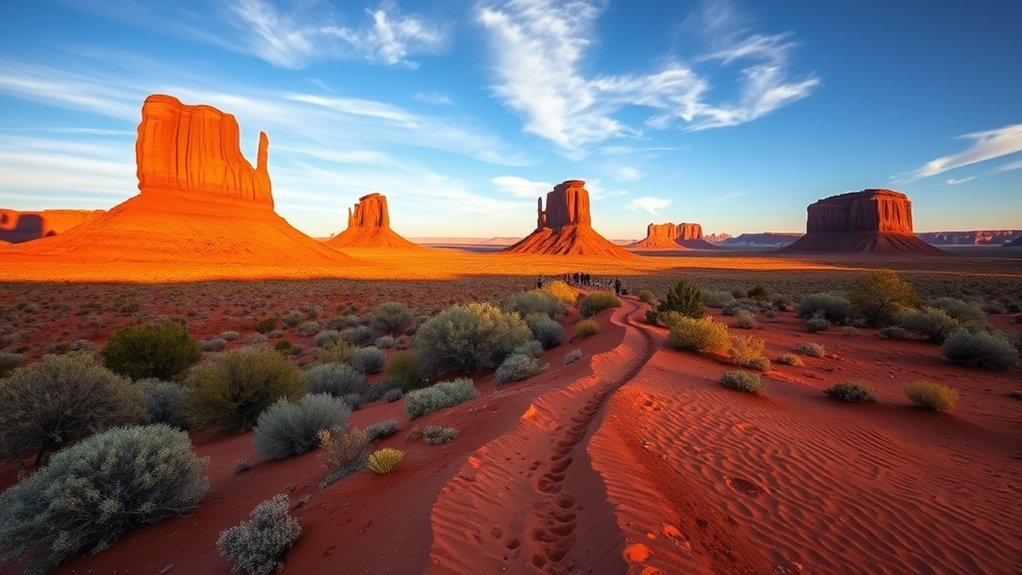
You’ll find Monument Valley feels like walking through a living postcard, where red sandstone buttes rise from an endless plain and the air smells of dust and sun. Hikes here mix easy, picture-perfect loops with tougher scrambles that reward you with sweeping ridgeline views and quiet alcoves few people reach. Stick around and I’ll point out the trails that match your skill, time, and appetite for solitude.
Key takeaways
- Wildcat Trail is the best-known self-guided hike in Monument Valley Navajo Tribal Park; sign in/out and expect full sun.
- The 17-mile Valley Drive (Scenic Drive) is a rough dirt-and-sand loop with about 11 main stops; conditions change with weather.
- As of 2026-02-01, dogs are prohibited at Navajo Tribal Park locations; drones and rock climbing are also prohibited.
- For more solitude, look at Lee Cly / Mesa Rim viewpoints (when open), or book a Navajo-led tour for areas off-limits to self-guided visitors.
Monument Valley at a Glance
Monument Valley Navajo Tribal Park sits on the Arizona–Utah border and greets you with towering sandstone buttes, sweeping desert vistas, and a deep sense of Navajo history; it’s a photographer’s and hiker’s dream. Most visitors explore by driving the 17-mile Valley Drive (often called the Scenic Drive) to a series of marked pullouts and viewpoints. For hiking, the Wildcat Trail is the classic self-guided option; beyond that, many routes and backcountry areas require a Navajo guide and/or permit, so plan accordingly and follow posted rules.
Wildcat Trail: The Classic Loop Around Left Mitten
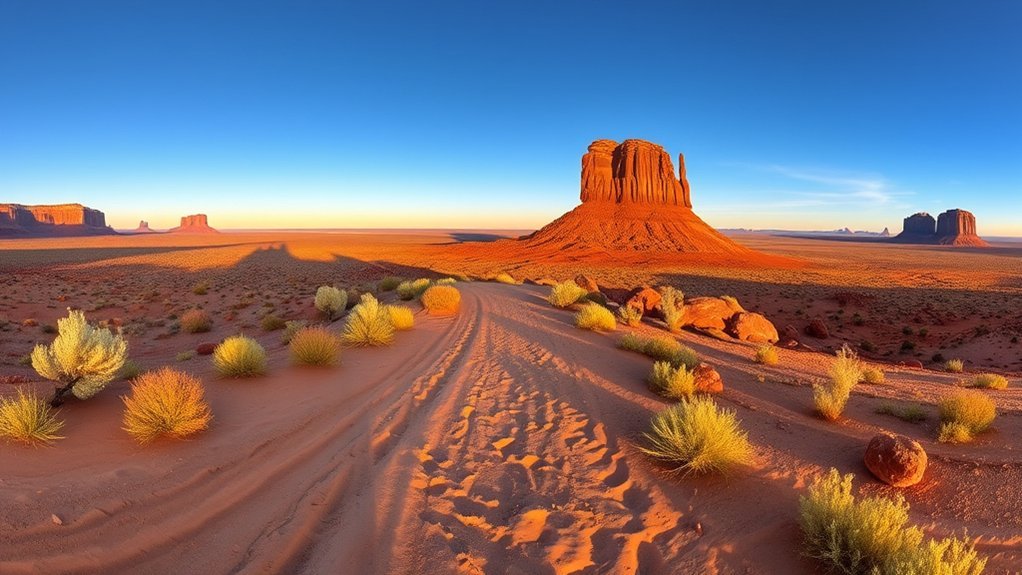
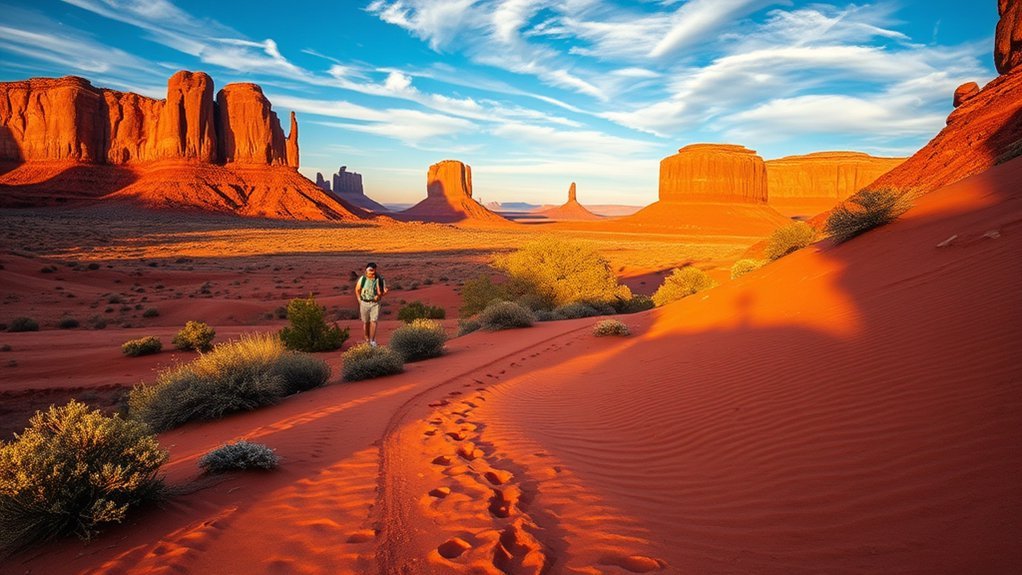
Step onto the Wildcat Trail and you’ll circle the West Mitten (often called the “Left Mitten” from the visitor center view), tracing sandy and rocky terrain that reveals close-up views of the Mitten Buttes and Merrick Butte while offering a self-guided, moderately challenging hike. Depending on the map source and where you start/finish, the loop is typically described as about 3.2–4.0 miles. Many hikers take roughly 1.5–3 hours with photo stops and heat breaks.
Tempo yourself: the moderate difficulty rewards steady pacing and short stops to drink in vast colors. In summer months, start early to dodge heat and watch sunrise wash the buttes in gold. Your camera and boots will both get their fill here.
Circle the Left Mitten on a sandy loop—red sand, towering buttes, golden sunrises, and steady, rewarding pace.
- Red sand dusting your shoes
- Towering sandstone walls at arm’s reach
- A horizon of endless sky
- Quiet moments between wind and light
Monument Valley Scenic Drive: Viewpoints and Photo Stops
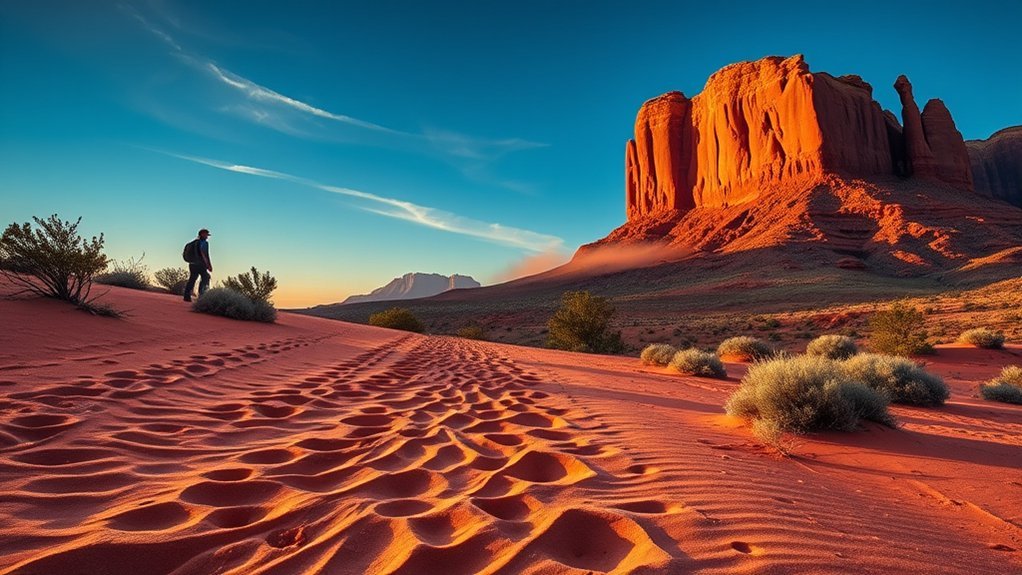
You’ll follow the 17-mile scenic drive loop with about 11 main stops that put landmarks like Three Sisters, Elephant Butte, John Ford’s Point, Artist’s Point, and the Totem Pole / Yei Bi Chei formations within reach. Stop at the designated pullouts to frame shots—use low angles for towering buttes, wide lenses for sweeping vistas, and golden hours to make silhouettes pop.
Because the road is natural dirt with deep sand in places—and can get rough after rain or during monsoon season—plan for slow speeds and extra time. Many visitors make it in standard cars when conditions are dry and graded, but a high-clearance SUV or truck is the safer bet when the road is churned up.
Iconic Viewpoint Stops
Wondering where to stop for the best photos on the Valley Drive? You’ll find a set of main scenic stops that showcase Monument Valley’s iconic scenery without long hikes. From the visitor center parking area you’ll head out, pausing at famous turnouts that feel cinematic. Each pullout offers clear lines for photography and moments to breathe in the desert silence.
- Three Sisters rising like sentinels at golden hour
- Elephant Butte’s broad silhouette against endless sky
- John Ford’s Point with sweeping mesa panoramas
- Artist’s Point for layered buttes and shadow lines
- Totem Pole and Yei Bi Chei formations etched against the horizon
Follow the loop, stop often, and let each viewpoint frame a lasting memory.
Best Photo Angles
After you’ve soaked in the view at each turnout, start thinking about how to frame the valley—angles make the difference between a snapshot and a photograph that stops people in their tracks. Crouch low to emphasize foreground textures or climb a slight rise to layer buttes against sky. Early morning and late afternoon light brings vibrant colors and long shadows—Three Sisters can glow at sunrise on clear days.
Lee Cly and Mesa Rim Trails: Elevated Vistas and a Short, Steep Climb
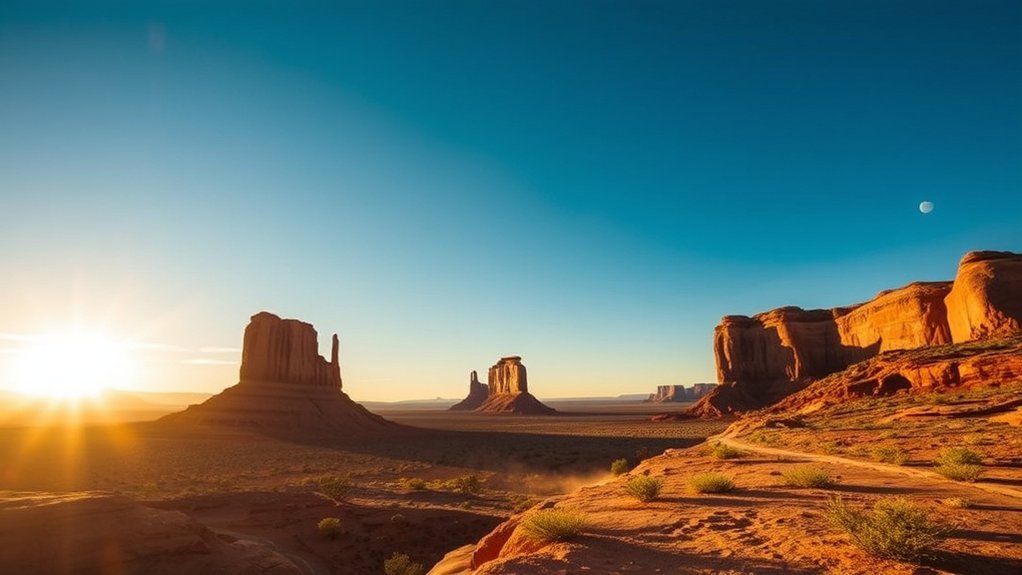
Though the route can test your stamina on the steeper sections, the Lee Cly / Mesa Rim area (when open and permitted) rewards hikers with elevated views across the valley. A commonly used loop is about 2.7 miles and many hikers finish in 1–1.5 hours; the short rim approach can feel steep and rocky, so careful footing helps. The lighter crowds in this area can make the views feel especially peaceful.
- Wind-carved ledges under your palms
- Distant buttes etched against a wide sky
- Short rocky pitches that test balance
- Sunlight slicing mesas into gold and shadow
Goulding Arch Trail: Short Walk to a Hidden Arch
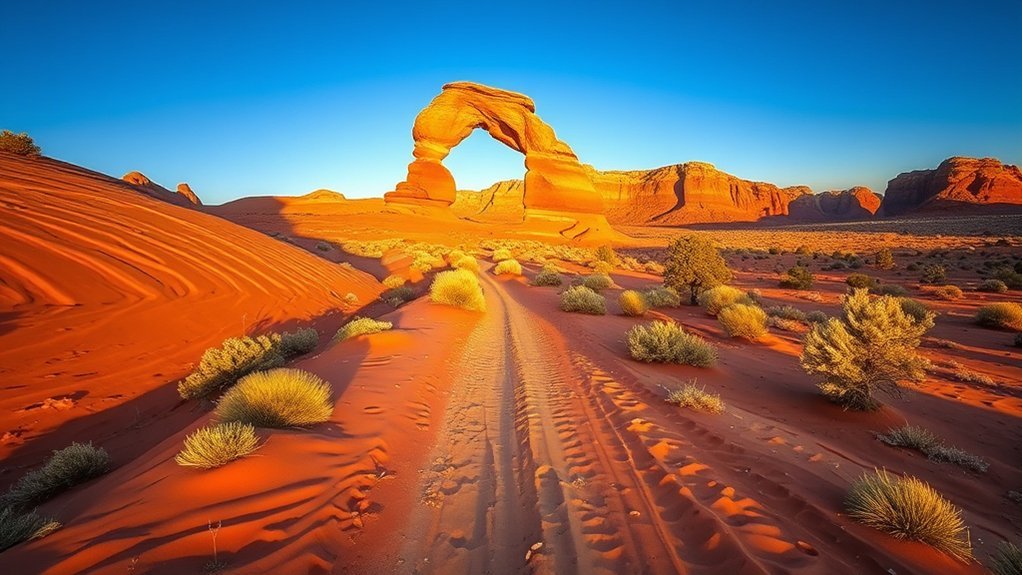
From the rugged rim viewpoints you can head back toward the valley floor and find a different kind of reward: the Goulding Arch Trail is a short, easy walk that takes about 30–60 minutes. Access is on private property associated with Goulding’s Resort/RV Campground and may be limited to guests, so confirm access rules on-site and respect posted signs.
Best Times and Seasons to Hike
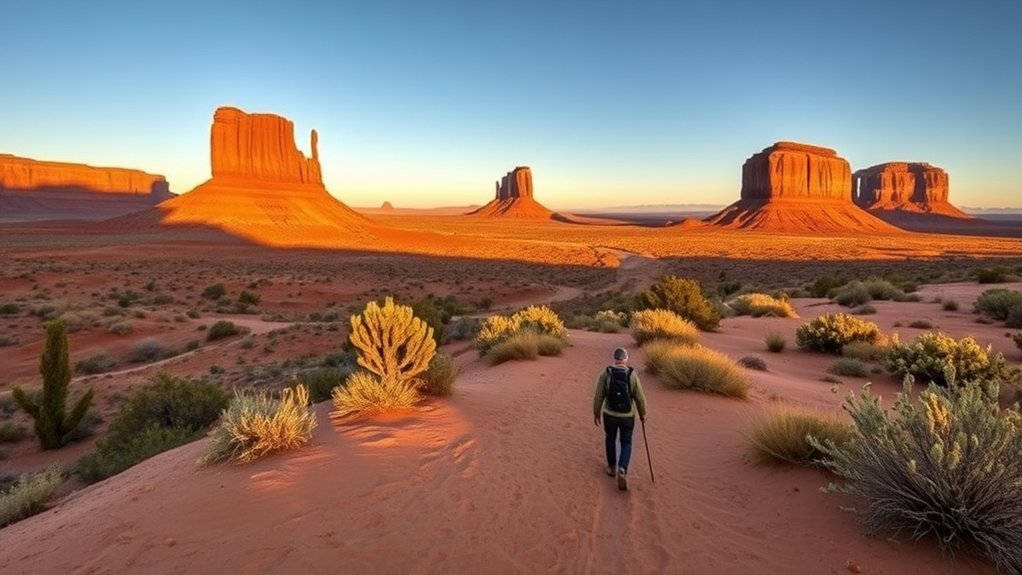
You’ll want to plan your Monument Valley hikes for spring or fall when temperatures are milder and the landscape feels alive. If you’re hiking in summer, start at first light on trails like Wildcat to beat the heat, and expect higher foot traffic during peak travel months. Always check weather and park advisories before you go so you’re not surprised by changing road or trail conditions.
Best Seasons to Go
If you want the most comfortable hikes and the best light for photos, plan your visit in spring or fall when temperatures are milder and the mesas glow at sunrise and sunset. Summer hikes are possible but expect higher temperatures—use care on exposed stretches like the Wildcat Trail and aim to beat midday heat. Winter can offer solitude and stark beauty, though access and hours can change, so confirm current operations when you arrive.
- Red-rock spires warmed by golden morning light
- Cool breezes in spring and crisp air in fall
- Long shadows that sharpen butte silhouettes
- Quiet winter mornings when conditions allow
Daily Timing Tips
Plan your days around light and temperature so each hike feels easier and looks its best. In warm months, hit the Wildcat Trail at first light and aim to be done before midday. For the drive and photography, early morning and late afternoon often bring the most dramatic light and cooler conditions.
Trail Conditions, Terrain, and Difficulty Levels
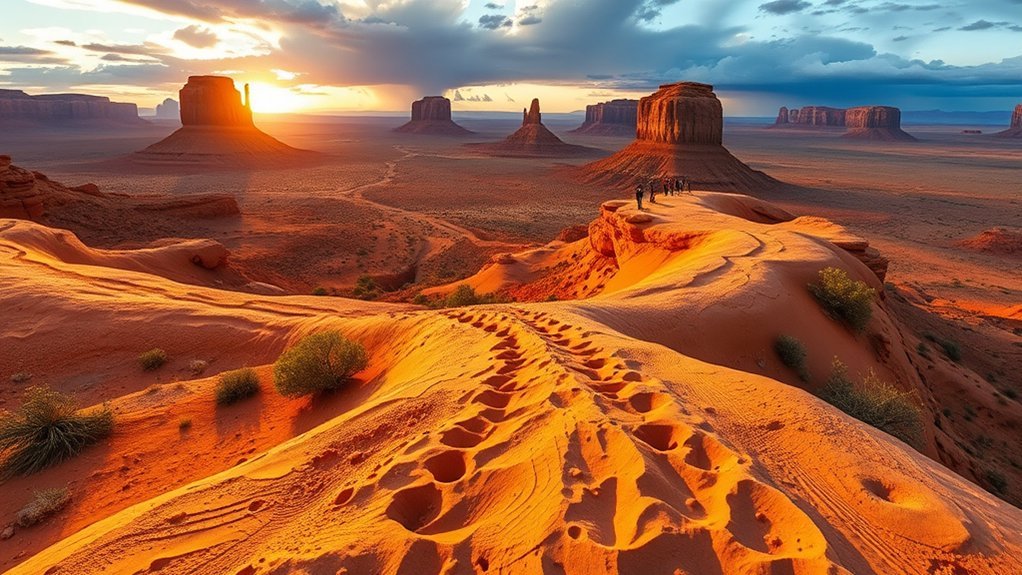
While trails in Monument Valley vary from short walks to longer sandy loops, they share the valley’s dry, dusty terrain and exposure to sun and wind—so plan your pace, water, and timing accordingly. You’ll encounter loose sand underfoot and uneven footing on rocky sections. If you’re driving the Valley Drive, budget extra time for ruts, sand, and photo stops.
- Wind-swept ridgelines and loose sand underfoot
- Red sandstone spires looming close
- Flat washes that hide soft patches
- Sun-baked ground stretching wide
Practical Gear, Safety, and Permits
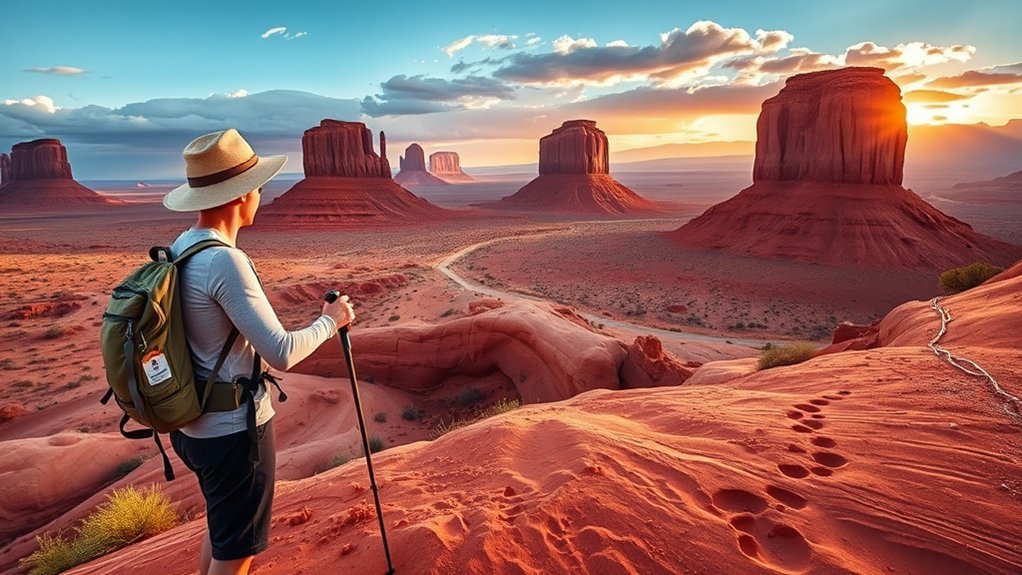
Bring plenty of water, a sunhat and sunscreen, and sturdy shoes so you’ll stay safe and comfortable under Monument Valley’s sun and on its sandy, rocky trails. Carry a map, a charged phone (offline maps help), and tell someone your route so you can navigate and communicate if conditions change.
Essential Water and Clothing
For most short hikes, plan on at least 2 liters of water per person and dress for sun and shifting ground—lightweight, sun-protective layers, a wide-brimmed hat, sunglasses, and sturdy hiking shoes with good traction will keep you comfortable on dusty stretches. Pack snacks and a small first-aid kit, and add more water in hot weather or for longer outings.
- Wide-brimmed hat and sunglasses for glare
- Dusty boot prints on sandy trail
- Light layers that breathe in the heat
- Extra water for exposed terrain
Navigation and Communication
How will you find your way when cell service drops out on Monument Valley’s wide, quiet stretches? Rely on a downloaded trail map or a reliable paper map, set a clear plan, and mark your meeting point before you go. Keep communication consistent with your group; agree on checkpoints in case someone gets separated.
| Gear | Purpose |
|---|---|
| Map | Navigation |
| Extra water | Hydration |
| Whistle | Communication |
| Hat | Sun protection |
| Trash bag | Leave no trace |
Permits and Park Rules
Because Monument Valley sits on Navajo Nation land, you’ll need to pay the park entry fee and follow tribal rules that protect this landscape and its people. As of 2026-02-01, Navajo Nation Parks lists the Monument Valley entry fee as $8 per person, per day, per location (subject to change). Some areas require a Navajo guide and/or a backcountry permit; check at the visitor center before you set out. For the latest regulations and operational updates, refer to the official Monument Valley park page.
Also as of 2026-02-01: dogs are prohibited at Navajo Tribal Park locations, drones are prohibited on Navajo land, and rock climbing is prohibited on the monuments.
- Stay on designated routes and sign in/out where required
- Pack out every scrap of trash
- Keep a respectful distance from wildlife and cultural sites
- Ask before photographing people or private property
Where to Stay and Camp Near the Trails
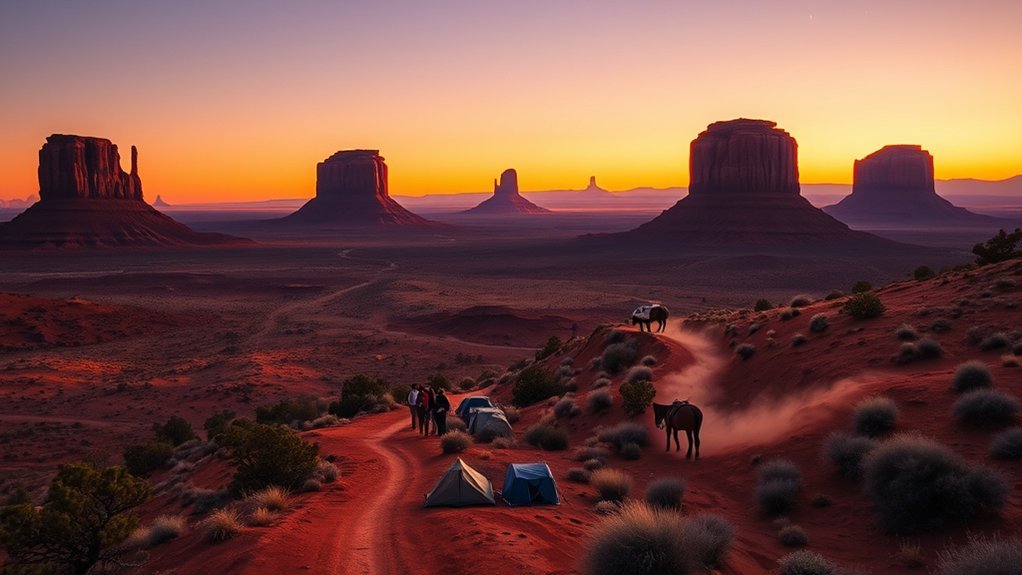
Looking for a place to sleep under those towering buttes? You’ll find Monument Valley options that match your pace: Monument Valley Campground delivers a raw camping experience close to the visitor center panorama, while Goulding’s Lodge offers comfortable accommodations just outside the park. The View Hotel gives panoramic rooms for sunrise over the Mittens. Reservations are essential in peak seasons.
| Option | Highlight |
|---|---|
| Monument Valley Campground | Iconic views; close to visitor center |
| Goulding’s Lodge / RV Campground | Comfort and tours; access to Goulding Arch area |
| The View Hotel / guided tours | Panoramic rooms; Navajo-led tours available |
Respecting Navajo Culture and Land Etiquette
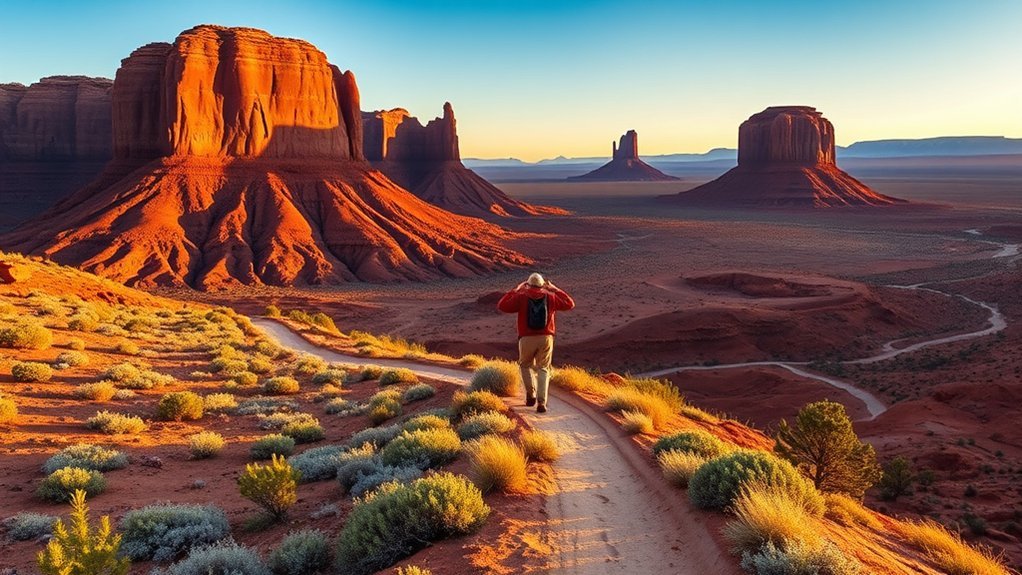
While walking among those towering buttes, remember that Monument Valley isn’t just a dramatic landscape—it’s sacred Navajo land, so move with mindfulness and respect. Honor local customs by staying on marked routes, packing out everything you bring, and seeking permission before photographing people or private property. Engage a Navajo guide to deepen your understanding and avoid unintentionally disturbing culturally sensitive areas.
- Wind-carved sandstone spires framing a silent horizon, footsteps careful on packed earth
- A guide’s quiet story beside a fire, voices weaving history into dusk
- Sunlight slicing mesas while you pause, camera lowered out of courtesy
- Empty campsites cleaned to dust, leaving the land as you found it
Respecting community values makes your visit meaningful.
Frequently Asked Questions
What Is the Best Trail in Monument Valley?
The Wildcat Trail is the best-known self-guided trail in Monument Valley Navajo Tribal Park, offering close-up views of the Mittens and a classic desert loop hike.
What Not to Miss in Monument Valley?
Don’t miss sunrise and sunset from the main viewpoint area, plus at least part of the 17-mile Valley Drive loop for iconic butte-and-mesa scenery.
How Long Does It Take to Hike the Wildcat Trail in Monument Valley?
Many hikers finish the Wildcat Trail in about 1.5–3 hours, depending on heat, fitness, and photo stops.
What Is the Most Scenic Route in Monument Valley?
The 17-mile Valley Drive is the classic scenic route: you’ll hit major pullouts and viewpoints that frame Monument Valley’s most iconic rock formations.
Conclusion
You’ve seen the trails and know the rules, but don’t leave yet — one last walk waits as the sun dips behind the Mittens. You’ll feel the sand cool underfoot, hear a distant coyote, and realize the view changes with every step. Pack water, respect the land, and let the valley teach you its names. Stay curious, move slowly, and when night falls, you’ll understand why people return.