Planning accessible travel in Arizona works best when you focus on the details that affect your day-to-day comfort. This guide covers the Grand Canyon, mobility-friendly parks, city transit in Phoenix, Tucson, and Flagstaff, rentals and tours, health planning, and how to book barrier-free stays.
Key takeaways
- Start with official “access” pages, then call ahead for slopes, surfaces, restrooms, and closures.
- At Grand Canyon, use accessible shuttles and check the size rules for wheelchairs and scooters.
- Keep days simple: one main outing, lots of shade/water breaks, and a backup plan.
Planning Your Accessible Arizona Itinerary
Write down your must-sees. Then check what each place offers so it matches your needs.
- Arrival: parking, drop-off, ramps, and step-free entrances.
- Paths: paved vs. loose gravel, steep spots, curb cuts, and narrow points.
- On-site basics: accessible restrooms, shade, benches, and water.
- Sensory support: captions, audio, quiet areas, tactile maps, and staff help.
- Trip basics: shuttles, device charging, meds storage, and companion rules.
Build a realistic pace. Cut back on transfers, add buffer time, and save any access details you’re relying on (screenshots or emails). When you’re unsure, contact the visitor center or the site’s access contact.
Accessible Grand Canyon Experiences
At Grand Canyon National Park, many South Rim viewpoints have paved approaches and marked viewing areas. Many buildings are historic, and the rim terrain can be uneven, so plan for short segments and rest stops.
Rim Wheelchair Access
The easiest routes are in developed areas near Grand Canyon Village. Expect a mix of smooth pavement and older walkways. Wind and crowds can also slow you down, so pick a short route and take breaks.
Good default pick: the Trail of Time is a paved, relatively flat rim walk that the park describes as fully accessible.
Accessible Shuttle Services
Grand Canyon’s park shuttle buses are wheelchair accessible and use ramps. Very large wheelchairs may not fit, and most motorized scooters are not supported—confirm your device size before you rely on the shuttle.
If shuttles don’t work for your setup, ask about the Scenic Drive Accessibility Permit. It may let you drive certain roads that are closed to general traffic. It does not replace a state-issued accessible parking placard/plate.
For the latest official details, see the Grand Canyon access page.
Mobility-Friendly Trails and Parks
Arizona has many outdoor spots with paved paths and short loops. Look for firm surfaces, clear signs, and nearby accessible restrooms. Always confirm current conditions, since weather and repairs can change access.
Wheelchair-Accessible Trails
These are solid starting points that are described as accessible by the agencies that manage them:
- Grand Canyon (South Rim): Trail of Time (paved, fully accessible).
- Saguaro National Park (west of Tucson): Desert Discovery Trail (paved, accessible loop).
- Tucson (Pima County): Feliz Paseos Park has an accessible trail system plus ADA-accessible restrooms.
- Petrified Forest National Park: many front-country stops have paved, step-free paths; ask staff which routes best fit your chair and energy.
- Phoenix: the city posts a list of wheelchair-accessible trails in its parks.
Smooth Paved Pathways
Paved routes are easier to plan. Before you go, look for notes on slope and surface. Bring water and sun protection. Carry a simple map that marks restrooms and shade.
| Feature | Why it matters |
|---|---|
| Surface | Changes how hard you push |
| Slope | Affects fatigue and control |
| Maintenance | Helps you avoid hazards |
| Amenities | Restrooms, benches, and shade help pacing |
Scenic Overlooks With Ramps
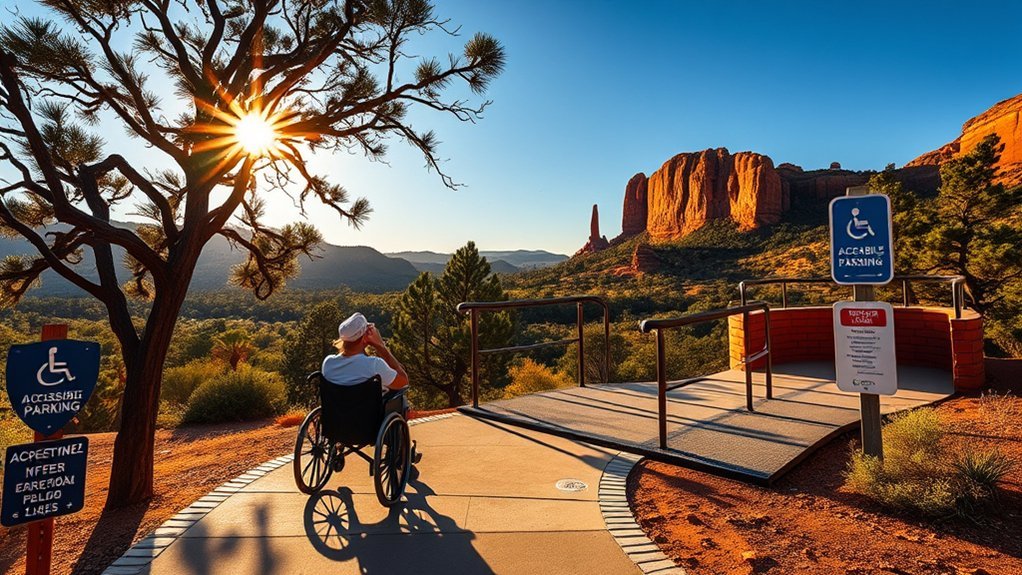
Many overlooks have ramps or graded paths, but slopes can still be tiring. Ask how far the accessible parking is from the viewpoint and whether there’s a level spot to stop and rest. In warm months, go early or late in the day.
Accessible Cities: Phoenix, Tucson, and Flagstaff
All three cities can work well. The trick is to plan around transit and pick areas where you can do more without long distances.
- Phoenix: Valley Metro buses/light rail are accessible. ADA paratransit in the region is often called Dial-a-Ride.
- Tucson: Sun Tran buses and Sun Link streetcar are accessible. ADA paratransit is Sun Van.
- Flagstaff: Mountain Line buses are accessible. ADA paratransit is Mountain Lift.
Adaptive Tours, Equipment Rentals, and Medical Needs
For accessible adventures, choose tours and rentals that fit your gear and the terrain you want. Ask for exact specs (seat width, max weight, transfer steps) and a clear backup plan for bad weather.
Arizona can mean heat, strong sun, dust, and (in some places) altitude. Bring a list of meds and key prescriptions. Plan device charging. If heat or altitude affects you, talk with a clinician before you go and build extra rest time into your days.
Accessible Transportation Options Across the State
Across Arizona, you’ll often choose between fixed-route transit, ADA van service, rideshare, and private tours. City buses/light rail use ramps or level boarding and have tie-down spots for mobility devices. ADA van service can offer curb-to-curb or door-to-door trips if you qualify. It usually needs advance signup and has pickup windows.
For parks and rural areas, an accessible rental vehicle (or a tour that confirms lift/ramp access in writing) is often the most reliable choice.
Finding and Booking Barrier-Free Accommodations
Access room labels can be vague, so verify the parts that matter for your routine. Make a checklist, call, and ask for photos and sizes.
- Door width and any thresholds
- Roll-in shower vs. tub, plus grab bar placement
- Bed height and space to transfer
- Clear space under the sink
- Accessible parking and the step-free route to the room
- Visual alarms/captioning options, if you need them
Ask the property to put your must-have features in writing in your booking notes (as requirements, not preferences).
Frequently Asked Questions
Are Service Animals Allowed on All Arizona Trails and Parks?
In the U.S., trained service dogs are generally allowed in public areas. If it’s not clear what the dog does, staff may ask only two questions and can’t require documents. In National Park Service units, service dogs are allowed wherever visitors are allowed. Review ADA service animal rules and check any site-specific safety guidance before you go.
What Accessibility Resources Exist for Visually Impaired Visitors?
Many big attractions offer some mix of audio tours, touch-friendly exhibits, and staff support. Options vary by site and by day, so contact the visitor center and ask what’s available for your visit dates.
Are Companion Assistance Programs Available at Arizona Attractions?
Some attractions offer caregiver/companion tickets or can add an access note to your reservation. It isn’t universal, so ask in advance about the policy and what help is available on-site.
Can I Get Accessible Beach or Sand Wheelchairs for Lake Shorelines?
In some areas, adaptive programs and vendors offer all-terrain wheelchairs for sand and uneven paths. Supply varies, so call the specific lake or park office well before you arrive.
Do Arizona Travel Discounts Exist for Travelers With Disabilities?
Discounts vary. A solid starting point on federal lands is the America the Beautiful Access Pass (for U.S. citizens and permanent residents with permanent disabilities). Some state/local discounts apply to specific groups, and many attractions offer companion discounts—confirm with each provider.
A few accessible route ideas
- Grand Canyon focus (3–4 days): Base near the South Rim, use accessible shuttles or an access permit for viewpoints, and do a short paved rim walk.
- City + desert nature (4–6 days): Phoenix and/or Tucson for museums and food, plus short accessible outdoor outings (like Saguaro’s Desert Discovery Trail).
- Cooler-weather loop (5–7 days): Flagstaff as a base for higher elevation day trips, then onward to the Grand Canyon—keeping buffer time for snow, wind, or trail work.
Conclusion
With verified access details, realistic pacing, and a backup plan, Arizona can be a great place to explore on your terms. Check the essentials, plan around heat and elevation, and keep your days simple so the scenery—not the logistics—stays center stage.