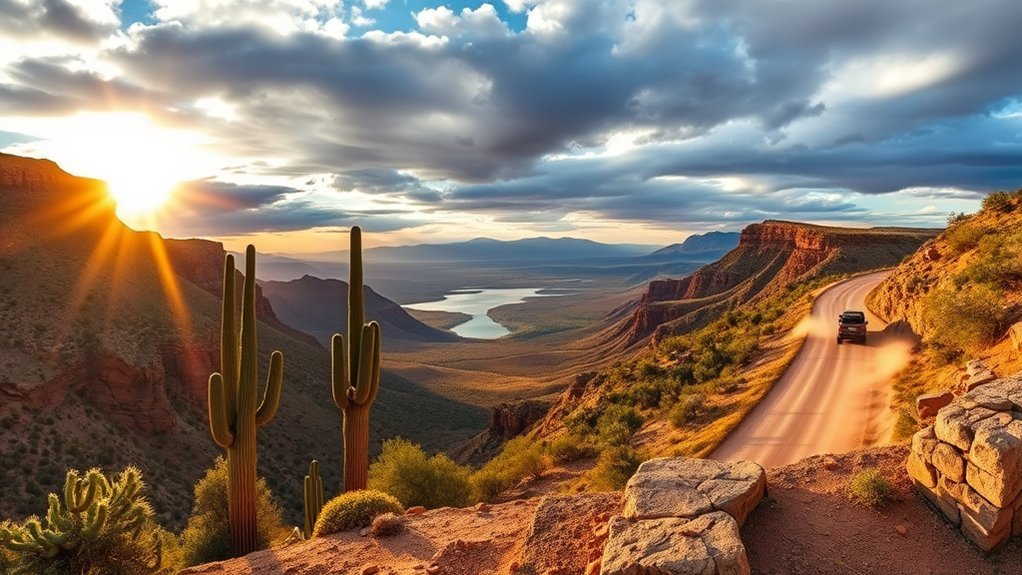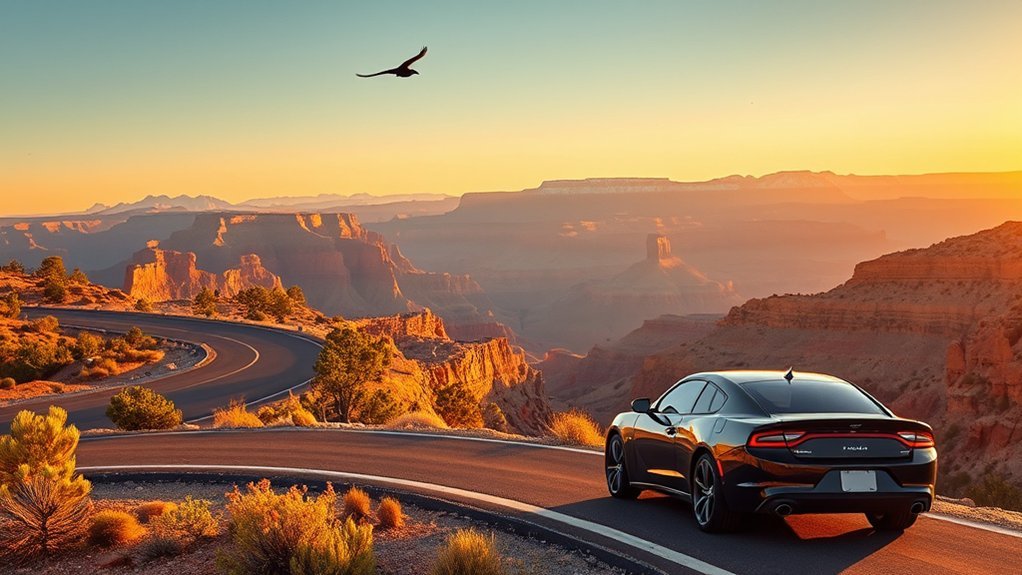
A Grand Canyon day trip from Flagstaff is one of the easiest ways to see the South Rim without changing hotels. The park is roughly 81 miles from Flagstaff by the most direct approaches, so you can leave early, spend most of the day at viewpoints and along the Rim Trail, and return after sunset if you want to stay for the evening light or stars.
Quick Answer
For a Flagstaff to Grand Canyon day trip, leave early and visit the South Rim. Drive US-180 to Valle and AZ-64 north for a direct approach, or use US-89 and AZ-64 through Cameron if you want to enter at Desert View. Allow a full day for viewpoints, easy rim walks, shuttles, meals, and the return drive.
Key Takeaways
- The National Park Service lists three main routes from Flagstaff to the South Rim, including US-180 through Valle and a longer approach through Cameron and Desert View.
- You do not need a timed-entry reservation for ordinary Grand Canyon National Park entry.
- For a simple first visit, combine Mather Point, Yavapai Geology Museum, part of the Rim Trail, Grand Canyon Village, and one shuttle or Desert View segment.
- Oak Creek Canyon is south of Flagstaff toward Sedona, not a normal stop on the drive north to Grand Canyon.
- Park once when practical and use the free South Rim shuttle system instead of repeatedly hunting for parking.
- Check NPS alerts, weather, road conditions, shuttle schedules, and drinking-water status before leaving Flagstaff.
At a Glance
| Time Required | Full day; roughly 3 hours of total driving plus your time at the South Rim |
| Difficulty | Easy to moderate if you stay on the rim; below-rim hiking is much more strenuous |
| Tools Needed | Vehicle or reserved transportation, water, food, layers, sun protection, comfortable shoes, and offline maps |
| Cost | Standard private-vehicle entrance pass is $35 for seven days, plus fuel and food; separate 2026 non-U.S.-resident fees may apply |
Planning Your Day: Timing, Weather, and Entry
For a one-day visit, an early departure gives you the most flexibility. Sunrise is especially attractive at Mather Point or Yaki Point, while late afternoon and sunset bring softer light across the canyon. If sunrise is not important to you, arriving before the busiest part of the morning can still make parking and shuttle travel easier.
The South Rim is open year-round, but conditions can change quickly. Summer brings strong sun, high temperatures below the rim, and monsoon thunderstorms. Winter can bring snow, ice, freezing temperatures, and temporary road problems. Spring and fall often provide comfortable rim temperatures, but cold mornings and strong wind are still possible.
Grand Canyon National Park currently does not require a reservation or timed-entry booking for ordinary park entry. According to the National Park Service fee information, the standard private-vehicle entrance pass is $35 and is valid for seven days. Entrance stations are cashless. In 2026, additional entrance charges may apply to non-U.S. residents age 16 and older depending on the pass used, so international visitors should check the current fee page before traveling.
Note: Lodging, campgrounds, commercial tours, transportation, and some special activities can require reservations even though ordinary park entry does not.
Getting There: Driving Routes and Transit Options
The National Park Service lists Flagstaff at approximately 81 miles from the South Rim and identifies three main approaches. Do not combine I-40 and US-180 into one route unless your navigation specifically sends you that way because of road conditions.
Direct Route via US-180 and Valle
From Flagstaff, take US-180 northwest to Valle, then turn north on Arizona State Route 64 toward Tusayan and the South Entrance. This is a straightforward option for travelers whose first stop will be the Visitor Center, Mather Point, Grand Canyon Village, or the central South Rim.
Route via Williams
Another NPS-listed option is to take I-40 west to Williams and then AZ-64 north to the South Entrance. This can be convenient if you are already on the west side of Flagstaff or want to stop in Williams.
Scenic East Entrance Route via Cameron
For a different style of day trip, take US-89 north from Flagstaff to Cameron, then turn west on AZ-64 toward the park’s East Entrance at Desert View. This route places Desert View Watchtower near the beginning of your canyon visit and lets you travel west along Desert View Drive toward Grand Canyon Village.
The NPS South Rim directions page lists all three Flagstaff approaches and should be checked along with Arizona road conditions before departure.
Pro Tip: If this is your first visit and you want the simplest day, enter through the South Entrance and use the Visitor Center as your hub. If Desert View is a priority, consider entering through Cameron and the East Entrance, then continuing west through the park.
Transportation From Flagstaff Without a Car
The company formerly known as Arizona Shuttle now operates as Groome Transportation and offers transportation between Flagstaff and the Grand Canyon. This is different from the National Park Service shuttle system inside the park. Reserve intercity transportation in advance and confirm your departure and return times before building a day-trip schedule around it.
Once you reach the South Rim, the free NPS shuttle buses connect major visitor areas, viewpoints, trailheads, lodging areas, and other services according to the season.
Best Viewpoints and Photo Stops
You do not need to visit every overlook. For one day, choosing several viewpoints with different angles is usually more rewarding than spending the entire visit getting in and out of a car. Mather Point, Yavapai Point, Yaki Point, viewpoints along Hermit Road, and Desert View each offer a different experience.
Oak Creek Canyon Overlooks
Oak Creek Canyon is beautiful, but it needs an important geographic clarification: it is not on the normal Flagstaff-to-Grand-Canyon route. Oak Creek Vista lies south of Flagstaff on SR 89A toward Sedona. Driving there before heading north to the Grand Canyon adds a substantial detour to an already full day.
If Oak Creek Canyon is high on your list, consider visiting it on a separate Sedona day. That gives you time to enjoy the overlook, red-rock scenery, creek corridor, and short trails without sacrificing several hours at the Grand Canyon.
Mather Point and Yavapai Point
Mather Point is only a short walk from the main Visitor Center parking area and is one of the easiest first views for a new visitor. From there, you can walk roughly 0.7 mile along the Rim Trail toward Yavapai Point and the Yavapai Geology Museum. This short section gives you changing canyon angles without committing to a strenuous hike.
Yavapai Geology Museum adds useful context to the view, with geology exhibits and large windows facing the canyon. It is a good stop for families, first-time visitors, and anyone who wants to understand what they are looking at rather than simply photograph it.
Desert View Watchtower Vista
Desert View lies about 23 miles east of Grand Canyon Village and provides broad views of the canyon and Colorado River. The Watchtower is one of the South Rim’s most recognizable structures and makes this area especially worthwhile for photography.
Do not assume that upper-floor access is guaranteed. The National Park Service states that upper levels are opened when staffing permits and use a free timed-ticket system with capacity limits. If climbing the tower matters to you, check current operations when you arrive.
2026 Update: As of August 15, 2026, Lipan Point and Lipan Point Road on Desert View Drive are temporarily closed for rehabilitation. The National Park Service expects the closure to continue through December 23, 2026. Other Desert View Drive overlooks remain alternatives, but check current park alerts before your trip.
A Practical One-Day Grand Canyon Itinerary From Flagstaff
A day trip works best when you limit unnecessary backtracking. The following sequence is flexible enough for different seasons and energy levels.
Early Morning: Flagstaff to the South Rim
Leave Flagstaff early with a full tank, drinking water, snacks, layers, and your park information saved offline. If you are using the South Entrance, drive to the Visitor Center parking complex and make Mather Point your first canyon view.
Morning: Mather Point and Yavapai
Walk to Mather Point, then continue along the Rim Trail toward Yavapai Point if everyone in your group is comfortable walking. Visit Yavapai Geology Museum and decide whether you want more walking or a shuttle-based sightseeing segment.
Late Morning: Trail of Time and Grand Canyon Village
The Trail of Time follows the rim between the Yavapai area and Grand Canyon Village. The core interpretive section uses distance to represent geologic time, so the walk combines canyon views with an easy-to-understand explanation of the rock layers and the canyon’s history.
You do not have to walk the entire route. Because shuttle stops are available around the South Rim, you can walk a comfortable section and use transit to continue your day.
Afternoon: Choose a Shuttle Route or Desert View
If you want to avoid additional driving, use a park shuttle to reach more viewpoints. The Kaibab Rim Route serves destinations including Yaki Point, South Kaibab Trailhead, Mather Point, and Yavapai Geology Museum depending on direction. The Hermits Rest Route provides access to multiple western viewpoints when it is operating.
If you have your own vehicle and Desert View is a priority, use the afternoon for Desert View Drive instead. Allow enough time for scenic stops and for the return journey rather than trying to visit every turnout.
Sunset and Return to Flagstaff
For sunset, choose one viewpoint and arrive early enough to settle in rather than racing between overlooks. Mather, Yaki, Hopi, Mohave, and other rim viewpoints can all be rewarding depending on access, season, clouds, and crowds.
If you stay after sunset, carry a warm layer and a flashlight or headlamp. Night temperatures can be much colder than afternoon temperatures, even in warmer months.
Short Hikes and Easy Rim Trails for Limited Time
For a short South Rim visit, above-rim walks make more sense than committing to a deep canyon hike. The easiest options let you turn around whenever your schedule or energy changes.
- Visitor Center to Mather Point: an easy, short approach to one of the park’s best-known viewpoints.
- Mather Point to Yavapai Point: about 0.7 mile one way along the Rim Trail, with frequent canyon views.
- Trail of Time: a paved, interpretive rim experience linking the Yavapai area and Grand Canyon Village. Walk only the portion that fits your schedule.
- Grand Canyon Village Rim Trail: combine viewpoints with historic buildings, visitor services, and shuttle stops.
- Hermit Road Greenway/Rim Trail sections: useful when you want to combine walking with shuttle transportation and western viewpoints.
Warning: A below-rim hike is not simply a longer version of a Rim Trail walk. You descend first and must climb back out. In summer, inner-canyon temperatures can exceed 110°F (43°C), and the South Kaibab Trail has little shade and no water along the trail. For a casual one-day sightseeing trip, staying on the rim is the safer and more time-predictable choice.
Guided Tours and Shuttle Choices From Flagstaff
If you would rather not manage the entire drive and parking plan yourself, you can use scheduled transportation or a commercial guided tour. The important distinction is whether you need a ride from Flagstaff or transportation inside Grand Canyon National Park.
| Type | What It Does | Best For |
|---|---|---|
| Groome Transportation | Scheduled transportation between Flagstaff and Grand Canyon | Travelers without a rental car |
| Commercial guided tour | Transportation plus a planned sightseeing itinerary and guide | Visitors who want someone else to manage timing and stops |
| NPS shuttle | Free transportation among South Rim visitor areas and seasonal routes | Getting around after you reach the park |
During the 2026 summer schedule, NPS routes serve major areas including the Visitor Center, Grand Canyon Village, Yaki Point, South Kaibab Trailhead, Hermit Road, and Tusayan. Route dates and operating hours change with the season, so confirm the schedule on the day of your trip.
What to Pack: Gear, Food, and Safety Essentials
The South Rim sits at roughly 7,000 feet of elevation, so the weather can feel very different from lower-elevation Arizona. Wind, strong sun, cold mornings, thunderstorms, snow, and rapid temperature changes are all possible depending on the season.
Layered Clothing Options
Bring clothing you can add or remove easily. A practical combination is a comfortable base layer, a fleece or light insulating layer, and a wind- or water-resistant outer shell. A compact puffer can be useful for sunrise, sunset, winter visits, and stargazing.
Comfortable walking shoes matter even if you are not planning a formal hike. Rim paths can include pavement, packed dirt, uneven surfaces, snow, or ice depending on where and when you walk.
Hydration and Snacks
Bring enough water for everyone in your group instead of assuming every water station will be available. If you plan to hike below the rim, check current drinking-water status before starting. Carry food that travels well, such as nuts, sandwiches, dried fruit, crackers, jerky, or energy bars.
| Item | Purpose |
|---|---|
| Refillable water bottle | Keeps water available between stops |
| Electrolyte option | Useful during longer or hotter walks |
| Salty snack | Adds calories and sodium during active days |
| Energy bar or sandwich | Portable meal or backup food |
| Dried fruit or nuts | Compact snack that travels well |
Emergency and Safety Kit
A small day-trip kit can include adhesive bandages, blister care, personal medications, sunscreen, a hat, a flashlight or headlamp, spare batteries or a power bank, a paper or offline map, and a whistle. Carrying these items is especially useful if you plan to remain through sunset or walk away from the busiest visitor areas.
The National Park Service’s Hike Smart guidance recommends checking current trail conditions, drinking-water availability, heat risk, and weather before hiking below the rim.
Warning: Summer monsoon thunderstorms can bring lightning, heavy rain, and rapidly changing conditions. If thunderstorms threaten, do not remain exposed at a rim overlook simply to finish a photo session. Move to appropriate shelter and follow current National Park Service weather guidance.
Tips to Avoid Crowds and Maximize Time at the Rim
Early arrival remains one of the simplest ways to improve a South Rim day trip. Mather Point becomes busy because it is close to the main Visitor Center, while shuttle-accessed and more distant viewpoints can spread visitors over a wider area.
- Arrive early: Visitor Center parking lots are easier to use before the late-morning rush.
- Park once: Use free buses and the Rim Trail instead of repeatedly relocating your car around Grand Canyon Village.
- Choose priorities: Two or three good viewpoints plus a meaningful walk are better than rushing through every overlook.
- Use the shuttle strategically: Walk one direction along the rim and use transit when a route allows it.
- Save offline information: Cell and Wi-Fi service can be limited, so download maps before leaving Flagstaff.
- Check sunset time: Give yourself time to reach the viewpoint before the best light begins.
The best one-day Grand Canyon plan is not the one with the most stops. It is the one that gives you enough time to actually look at the canyon.
Accessibility, Parking, and Visitor Center Information
The main Visitor Center area is a useful starting point because parking, restrooms, information, Mather Point access, and shuttle connections are concentrated nearby. During busy periods, the four Visitor Center lots can fill by late morning, so arriving earlier reduces the time you may spend looking for a space.
There is no need to prepare exact change for a separate Visitor Center parking fee. Instead, make sure you have a valid park entrance pass. Park entrance stations operate cashlessly.
All NPS South Rim shuttle buses are wheelchair accessible, although the park lists maximum wheelchair dimensions for bus accommodation. Visitors with mobility limitations can also request a Scenic Drive Accessibility Permit, which provides vehicle access to some scenic roads that are otherwise closed to ordinary public traffic. A state-issued accessible-parking placard or plate is still required for designated accessible parking spaces.
For the latest accessibility details, ask at an entrance station or visitor center when you arrive.
Frequently Asked Questions
Are there bicycle-friendly routes from Flagstaff to the Grand Canyon?
Experienced road cyclists can travel in the region, but the roughly 81-mile trip should not be described casually as an easy bicycle route. Traffic, distance, weather, elevation, limited shoulders in some areas, and water logistics require advance planning. Inside the park, bicycles are allowed on designated roads and Greenway routes, including portions of Hermit Road. Check current NPS bicycle rules before riding.
Can I see the Milky Way from the South Rim on a day trip?
Yes, the Grand Canyon has exceptionally dark night skies, and the Milky Way can be visible under suitable conditions. Visibility depends on the season, moonlight, clouds, wildfire smoke, and how long you stay after sunset. Bring warm layers, a flashlight or headlamp, and allow enough time for the drive back to Flagstaff.
Are dogs allowed on the shuttle buses and rim trails?
Pets are not allowed on Grand Canyon National Park shuttle buses or on trails below the rim. On the South Rim, leashed pets are allowed on trails above the rim and in many developed areas. ADA-qualified service animals are subject to different rules. A South Rim kennel is also available, with reservations recommended during busy periods.
Is there cellphone service or Wi-Fi at major viewpoints?
Cellular service and Wi-Fi are limited and inconsistent in parts of Grand Canyon National Park. Download the NPS app, park map, driving directions, and any tickets or reservations before leaving reliable service. GPS can often continue showing your location on an offline map even when data service disappears.
Can I bring a drone to photograph the canyon?
You may transport a drone through the area, but launching, landing, or operating an unmanned or remote-controlled aircraft inside Grand Canyon National Park is prohibited. Use a handheld camera or phone for photography from legal public viewpoints instead.
Do I need a reservation to enter Grand Canyon National Park?
No. The National Park Service currently states that ordinary park entry does not require a reservation or timed-entry booking. You still need an entrance pass, and separate reservations may be needed for lodging, camping, commercial transportation, or other specific activities.
What is the best route from Flagstaff to the South Rim?
For a straightforward South Entrance trip, US-180 from Flagstaff to Valle followed by AZ-64 north is a practical choice. I-40 to Williams and then AZ-64 is another official route. If you want Desert View first, travel north on US-89 to Cameron and then west on AZ-64 to the East Entrance.
Conclusion
A Flagstaff to Grand Canyon day trip is very manageable when you keep the plan simple. Leave early, choose the South Rim route that matches what you want to see, park once when practical, and combine a few strong viewpoints with an easy rim walk rather than racing between every stop.
Pack water, food, sun protection, comfortable shoes, and a warm layer. Check current weather, roads, shuttle schedules, closures, and hiking conditions before departure. If you stay for sunset or the night sky, give yourself enough energy and time for the drive back to Flagstaff after dark.
Sources
- National Park Service — South Rim Directions — Flagstaff distance and the three official driving approaches.
- National Park Service — Fees & Passes — current entrance fees, seven-day pass validity, cashless entry, and reservation information.
- National Park Service — South Rim Shuttle Buses — current routes, seasonal operations, destinations, and shuttle rules.
- National Park Service — South Rim Parking — Visitor Center parking, overflow lots, and parking strategy.
- National Park Service — Hike Smart — heat, hydration, equipment, water-status, and below-rim hiking safety.
- National Park Service — Pets — South Rim trail, shuttle, below-rim, service-animal, and kennel rules.