You do not need a large garden to grow crisp slicing cucumbers at home. Garden Bush Slicer is a compact F1 hybrid that works in garden beds, raised beds, and containers. With warm soil, full sun, steady moisture, pollination, and frequent harvesting, one or two plants can provide cucumbers for salads, snacks, sandwiches, and quick pickles.
Quick Answer
Garden Bush Slicer is a compact F1 slicing cucumber that usually matures in about 53 to 58 days. Grow it after frost in warm, well-drained soil with full sun and steady water. Its flowers normally need pollination, and the fruit tastes best when picked firm and green at around 6 to 7 inches long.
Key Takeaways
- Garden Bush Slicer has a compact bush habit that fits small gardens, raised beds, and containers.
- Direct-sow seeds after frost when the soil reaches about 70°F, planting them around 1/2 inch deep.
- Give each plant full sun, well-drained soil, and roughly 1 inch of water per week, with more frequent checks in containers.
- The cultivar is monoecious, so bees or hand pollination normally move pollen from male flowers to female flowers.
- Harvest firm, green fruit at around 6 to 7 inches before the skin yellows or the seeds become large.
At a Glance
| Time Required | About 15 to 30 minutes to sow and set up; approximately 53 to 58 days from seed to the first mature harvest under suitable conditions |
| Difficulty | Beginner-friendly, with regular watering and pest checks |
| Tools Needed | Trowel, watering can or soaker hose, mulch, garden shears, and an optional soil thermometer and small support |
| Cost | Low if you already have a bed and tools; higher when purchasing a large container, potting mix, mulch, and support |
What’s in This Article
- What Makes the Garden Bush Slicer a Hybrid Cucumber?
- How to Grow the Garden Bush Slicer in Your Garden
- Unique Characteristics of the Garden Bush Slicer Cucumber
- Best Ways to Enjoy Garden Bush Slicer Cucumbers
- Health Benefits of Garden Bush Slicer Cucumbers
- Tips for Harvesting and Storing Garden Bush Slicer Cucumbers
- Garden Bush Slicer vs Other Cucumber Varieties
- History and Origin of Bush Slicer Cucumbers
- Troubleshooting Common Garden Bush Slicer Growing Problems
- Future of Compact Cucumber Varieties
- Frequently Asked Questions
- Sources
What Makes the Garden Bush Slicer a Hybrid Cucumber?
Garden Bush Slicer is an F1 hybrid cucumber. Seed breeders create an F1 hybrid by crossing two selected parent lines. The first-generation seed can combine useful traits such as compact growth, uniform fruit, earlier maturity, and reliable garden performance.
Because it is an F1 hybrid, seed saved from your harvested cucumbers may produce plants that differ in size, growth habit, flavor, or productivity. Buy fresh Garden Bush Slicer seed when you want the traits described on the packet.
The current Ferry-Morse cultivar listing describes a compact bush cucumber for containers and small gardens. It lists full sun, 8 to 10 days for germination, 53 to 58 days to maturity, a typical height of 18 to 24 inches, and a 12-inch container size.
| Cultivar Detail | Typical Information |
|---|---|
| Botanical name | Cucumis sativus |
| Seed type | F1 hybrid |
| Growth habit | Compact bush or restricted-vine habit |
| Listed height | About 18 to 24 inches, although conditions can change final size |
| Days to maturity | About 53 to 58 days from seed under suitable conditions |
| Fruit size | Approximately 7 inches at full slicing size |
| Flower type | Monoecious, with separate male and female flowers on the same plant |
| Pollination | Normally requires bees or hand pollination for well-shaped fruit |
Note: Disease-resistance descriptions vary by seller. True Leaf Market lists resistance to powdery mildew, cucumber mosaic virus, and scab, while the current Ferry-Morse page does not show those resistance codes. Follow the information printed on the seed packet you purchased, and do not treat resistance as complete immunity.
How to Grow the Garden Bush Slicer in Your Garden
1. Choose a Sunny Growing Site
Choose a location that receives at least six hours of direct sunlight each day. Eight or more hours can support stronger growth and fruit production when temperatures and soil moisture remain suitable.
Use fertile soil that holds moisture but drains well. The University of Minnesota Extension cucumber guide recommends a soil pH of about 6.0 to 6.5. A soil test can show whether you need lime, phosphorus, potassium, or another amendment.
Mix finished compost into poor soil before planting. Do not use fresh manure near a crop that will be eaten raw, and never apply a lawn “weed and feed” product to a vegetable bed.
2. Wait for Warm Soil
Plant after the danger of frost has passed and the soil reaches about 70°F at a depth of 1 inch. Cold soil can delay germination and increase the chance that seeds will rot.
Direct sowing is usually the simplest method because cucumber roots dislike disturbance. When starting seeds indoors, begin no more than three or four weeks before transplanting and use a biodegradable pot that can go into the soil with minimal root handling.
3. Sow and Space the Seeds
- Plant seeds about 1/2 inch deep.
- Sow two or three seeds in each final planting spot.
- Keep the soil evenly moist while the seeds germinate.
- After the seedlings develop, cut weaker seedlings at soil level rather than pulling them.
- Leave one strong plant every 8 to 12 inches, unless your seed packet gives different directions.
- Allow about 2 to 3 feet between bush-type rows or hills so air can move through the foliage.
A row cover can protect young seedlings from cool nights and cucumber beetles. Remove the cover when flowers appear so bees can reach the blooms.
Warning: Do not leave insect netting or a sealed row cover over a flowering Garden Bush Slicer plant unless you plan to open it and hand-pollinate the flowers. This cultivar normally needs pollen moved from male flowers to female flowers.
4. Grow Garden Bush Slicer in a Container
Ferry-Morse lists a 12-inch container for this cultivar. A larger pot is easier to manage because it dries out more slowly. For one plant, a container holding roughly 5 to 10 gallons of potting mix gives the roots and moisture reserve more room.
- Use one plant per container.
- Choose a pot with several open drainage holes.
- Fill it with fresh container potting mix rather than dense garden soil.
- Leave space below the rim so water does not wash soil out of the pot.
- Place the container in full sun before the plant becomes difficult to move.
- Check moisture daily during hot or windy weather.
A small cage or short trellis is optional. The plant naturally stays more compact than a standard vining cucumber, but light support can lift foliage and fruit away from wet soil.
5. Water Consistently
Cucumbers need steady moisture, especially during flowering and fruit development. In the ground, aim for about 1 inch of water per week from rain and irrigation, adjusting for heat, wind, sandy soil, and local conditions. Containers may need water more often.
Water deeply at the soil surface with a watering wand, drip line, or soaker hose. Keeping the leaves drier reduces prolonged leaf wetness and lowers the risk of several foliar diseases.
Even moisture matters more than a rigid watering schedule. Check the soil and water before the plant repeatedly wilts.
Add straw, shredded leaves, or another clean mulch after the soil has warmed. Mulch slows moisture loss, blocks many weeds, and reduces soil splashing onto the leaves.
6. Feed Without Overfertilizing
Compost and a soil-test-based fertilizer plan are usually more reliable than feeding on a fixed weekly schedule. Excess nitrogen can produce thick foliage while delaying flowers and fruit.
If growth is pale or weak and your soil test supports additional fertilizer, apply a vegetable fertilizer according to its label. Keep concentrated fertilizer away from stems and water the soil after applying it.
7. Support Pollination
Garden Bush Slicer is listed as monoecious. Male flowers usually appear first and grow on thin stems. Female flowers have a tiny cucumber-shaped ovary behind the petals. Bees carry pollen between the two flower types.
If female flowers open but the tiny cucumbers yellow and fall, pollination may be incomplete. Hand-pollinate in the morning by touching a small artist’s brush to the center of a fresh male flower and then brushing the pollen onto the center of a fresh female flower.
Avoid spraying insecticides while flowers are open and bees are active. When treatment is necessary, identify the pest, follow the entire product label, and choose the least disruptive effective method.
Pro Tip: Check the plant every day or two after fruiting begins. Picking cucumbers before they become oversized encourages the plant to continue directing energy toward new flowers and fruit.
Unique Characteristics of the Garden Bush Slicer Cucumber
| Characteristic | What It Means for You |
|---|---|
| Growth habit | Compact bush growth takes less room than many long-vining cucumbers. |
| Best use | Crisp fruit for salads, sandwiches, snacks, and quick pickles. |
| Fruit size | Best picked firm and green at around 6 to 7 inches. |
| Garden fit | Works in garden beds, raised beds, greenhouses with pollinators, and larger containers. |
| Support | Does not require a tall trellis, although a short cage can keep fruit cleaner. |
| Care needs | Needs warm soil, full sun, even moisture, pollination, and regular harvesting. |
The compact plant is easier to manage in a tight garden than many full-length cucumber vines. You still need enough space around it for airflow, watering, pollinator access, and harvesting.
Pick the cucumbers while they are young, firm, glossy, and evenly green. Fruit left too long on the plant can turn dull or yellow, develop larger seeds, and lose its crisp texture.
The skin is usually suitable for fresh eating when the fruit is young and tender. Wash the cucumber under running water before use. Peel it only when you dislike the texture or notice bitterness near the skin or blossom end.
Best Ways to Enjoy Garden Bush Slicer Cucumbers
Garden Bush Slicer cucumbers work especially well in fresh dishes where their crisp texture stands out. Slice them into salads, add them to sandwiches, or serve them with a dip. They also make a cool side dish for warm meals.
For a quick cucumber salad, combine sliced cucumber with vinegar, olive oil, pepper, a small amount of salt, and fresh herbs. Add onion, tomato, yogurt, or lemon juice to change the flavor.
You can also use young fruit for refrigerator pickles. Mix a refrigerated brine from vinegar, water, salt, sugar, and spices, then chill the cucumber slices for several hours. Refrigerator pickles are not shelf-stable and must stay refrigerated.
- Use thin slices in green salads and pasta salads.
- Add thick slices to lunch plates and snack boards.
- Mix diced cucumber into yogurt sauces and cold dips.
- Make quick refrigerator pickles for burgers, wraps, and sandwiches.
- Add cucumber to chilled water with citrus or herbs for flavor.
Health Benefits of Garden Bush Slicer Cucumbers
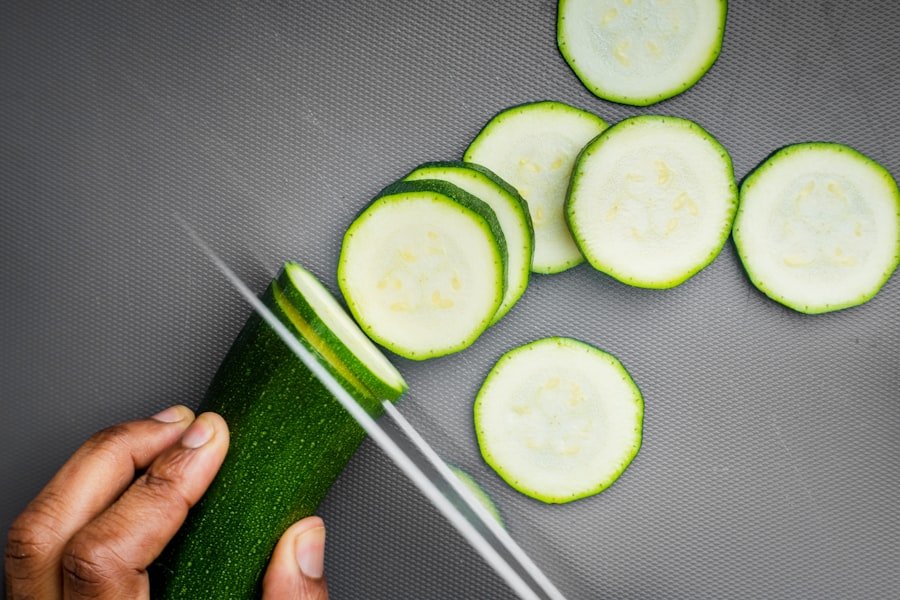
Cucumbers are mostly water and are low in calories. According to USDA FoodData Central, raw cucumber with its peel also supplies small amounts of fiber, vitamin K, potassium, and other nutrients.
Keeping the tender, washed peel adds texture and retains the nutrients found in the whole cucumber. However, cucumber is not a concentrated source of most nutrients, so it works best as one part of a varied diet containing many fruits, vegetables, whole grains, and protein foods.
Cucumber can add water, crunch, and freshness to a meal, but it does not replace drinking enough fluid or eating a balanced range of foods.
Add cucumber near serving time when you want it to stay crisp. Refrigerate cut cucumber promptly in a clean, covered container and use it soon.
Tips for Harvesting and Storing Garden Bush Slicer Cucumbers
Start checking for harvestable fruit as the plant approaches its listed maturity period. Weather, sunlight, soil, and plant stress can make the actual date earlier or later than the number printed on the packet.
How to Tell When the Cucumbers Are Ready
- The fruit is about 6 to 7 inches long.
- The skin is green, glossy, and evenly colored.
- The cucumber feels firm rather than soft or swollen.
- The fruit has not started turning yellow.
- The seeds are still tender when the fruit is cut.
Check the plant daily or every other day during peak production. Remove oversized or yellow fruit so the plant can direct more energy toward new cucumbers.
Use clean scissors or garden shears to cut the stem without pulling on the plant. A careful snap or twist can also work, but tugging hard may disturb the compact root system or damage a productive stem.
Harvest after dew or rain has dried from the leaves. Working among wet foliage can spread some plant diseases.
How to Store Fresh Cucumbers
Keep unwashed cucumbers dry until you are ready to use them. Place them in a perforated or loosely closed bag that limits moisture loss without trapping heavy condensation.
Cucumbers prefer storage around 50 to 55°F, which is warmer than many refrigerators. At home, keep them in a warmer refrigerator area away from the back wall and freezer vent. Use them within about one week for the best texture.
Note: Prolonged temperatures below about 45°F can cause chilling injury. Signs include sunken spots, watery areas, discoloration, and faster decay after the cucumber returns to room temperature.
Garden Bush Slicer vs Other Cucumber Varieties
Garden Bush Slicer differs most from traditional vining cucumbers in its plant shape. Many standard slicers spread several feet and often benefit from a tall trellis. Garden Bush Slicer stays more compact and suits spaces where a long vine would be difficult to manage.
Compared with pickling cucumbers, a slicing cucumber usually grows longer fruit intended for fresh eating. You can still pick Garden Bush Slicer fruit while small and use it in refrigerator pickles, but a dedicated pickling cultivar may give you more uniform small fruit for canning.
Compared with long greenhouse or English cucumbers, Garden Bush Slicer produces shorter fruit and normally depends on pollination. Some greenhouse cucumbers are parthenocarpic and can set nearly seedless fruit without pollination.
| Type | Best Fit | Main Difference |
|---|---|---|
| Garden Bush Slicer | Small gardens, raised beds, and containers | Compact F1 plant with approximately 7-inch slicing fruit |
| Standard vining slicer | Larger beds, fences, and trellises | Longer vines require more horizontal or vertical room |
| Pickling cucumber | Uniform small pickles and preserved products | Usually harvested smaller, with firm flesh suited to brining |
| Greenhouse or English cucumber | Protected growing systems and tall supports | Long, thin fruit; some cultivars set seedless fruit without pollination |
History and Origin of Bush Slicer Cucumbers
Cucumber has a much longer history than modern compact hybrids. Research on the USDA cucumber collection places the crop’s origin in India and South Asia and describes domestication beginning about 3,000 years ago. Cucumbers later spread east into Asia and west into Europe, Africa, and eventually the Americas.
You can read the supporting research in the published study on genetic diversity in the USDA cucumber collection.
Over many generations, farmers and breeders selected cucumbers for fresh eating, pickling, fruit shape, skin type, flavor, flowering pattern, disease resistance, and adaptation to different climates.
Garden Bush Slicer represents the more recent demand for compact vegetables. Its bush habit helps gardeners grow slicing cucumbers in patios, raised beds, and small plots without managing a full-length vine.
Troubleshooting Common Garden Bush Slicer Growing Problems
Garden Bush Slicer can experience many of the same problems as other cucumbers. Inspect the plant at least twice a week and look under the leaves as well as around flowers, stems, and developing fruit.
| Problem | Likely Cause | What to Do |
|---|---|---|
| Seeds do not sprout | Cold, saturated, dry, old, or deeply planted seed | Wait for soil near 70°F, sow about 1/2 inch deep, and keep the soil evenly moist but not waterlogged. |
| Flowers appear but no fruit forms | The first flowers are male, or female flowers are not being pollinated | Wait for female flowers, remove row covers during bloom, attract pollinators, or hand-pollinate in the morning. |
| Tiny cucumbers turn yellow and fall | Incomplete pollination, heat stress, cold rain, or moisture stress | Hand-pollinate fresh flowers and keep the root zone evenly moist. Fruit set often improves when extreme weather passes. |
| Misshapen fruit | Incomplete pollination or uneven water | Improve pollination and water deeply before the soil repeatedly dries out. |
| Bitter fruit | Variety response, heat, drought, root stress, or overmaturity | Maintain even moisture, mulch after the soil warms, and harvest promptly. Peel the skin and trim the blossom end if bitterness is mild. |
| Yellow, swollen cucumbers | Fruit remained on the plant too long | Remove the overripe fruit and check the plant every day or two. |
| Clusters of small insects or sticky leaves | Aphids | Rinse small colonies from the leaves or use insecticidal soap labeled for edible cucumber crops. Cover leaf undersides and follow the label. |
| Striped or spotted beetles and chewed leaves | Cucumber beetles | Protect young plants with row cover, hand-pick beetles when practical, and remove the cover at flowering. Use only a product labeled for cucumber beetles when damage requires treatment. |
| One leaf or vine suddenly wilts | Possible bacterial wilt spread by cucumber beetles | Remove severely affected plants. There is no cure after infection, so focus on early cucumber beetle control and garden sanitation. |
| White powdery coating on leaves | Powdery mildew | Improve spacing and sunlight, remove badly affected debris, avoid excess nitrogen, and use a labeled treatment early if disease continues to spread. |
| Large leaves but few flowers | Excess nitrogen, shade, or very high temperatures | Stop unnecessary feeding, provide full sun, and wait for temperatures to moderate. |
Striped cucumber beetles deserve special attention because they can carry the bacterium that causes wilt. The University of Maryland Extension guide to cucumber beetles and bacterial wilt explains how beetle feeding wounds allow the disease to enter susceptible cucumber plants.
Warning: Always read and follow the full label for any garden pesticide, including products marketed as natural or organic. Confirm that the product is labeled for cucumbers and the target pest, observe the harvest interval, and avoid exposing pollinators.
Future of Compact Cucumber Varieties
Compact cucumbers are likely to remain useful as more gardeners grow food in raised beds, patios, balconies, and small yards. A bush habit lets a plant produce full slicing fruit without occupying the space required by a long vine.
Likely breeding priorities include stronger resistance to locally important diseases, improved heat tolerance, reliable fruit set, smaller seed cavities, and better flavor. These are broad breeding goals rather than guaranteed changes to a future Garden Bush Slicer release.
Garden Bush Slicer already offers a practical route into homegrown cucumbers. Warm soil, full sun, thoughtful spacing, even moisture, successful pollination, and regular harvests remain the most important parts of its care.
Frequently Asked Questions
What is a Garden Bush Slicer hybrid cucumber?
Garden Bush Slicer is a compact F1 cucumber bred to produce slicing fruit on a shorter, bushier plant. It fits small gardens, raised beds, and containers better than many standard vining cucumbers.
How is Garden Bush Slicer different from other cucumber varieties?
Its main difference is its compact growth habit. It produces slicing cucumbers while taking less space than many traditional vines, although it still needs sunlight, airflow, water, and pollination.
What are the advantages of growing Garden Bush Slicer?
The advantages include compact growth, easier harvesting, suitability for containers, and crisp fruit for fresh eating. A short support can also keep the plant organized without requiring a tall trellis.
How do you care for a Garden Bush Slicer cucumber plant?
Give it full sun, warm and well-drained soil, even moisture, and enough room for air movement. Check for pests, make sure flowers are pollinated, avoid excessive nitrogen, and harvest firm green fruit regularly.
When is the best time to plant Garden Bush Slicer seeds?
Plant after the last frost when the soil is about 70°F. Direct sowing is usually easiest because cucumbers have sensitive roots and may stall when transplanted roughly.
Can Garden Bush Slicer cucumbers grow in containers?
Yes. The supplier lists a 12-inch container, but a larger 5- to 10-gallon pot is easier to keep evenly moist. Use one plant per container, fresh potting mix, full sun, and open drainage holes.
Does Garden Bush Slicer need a trellis?
No tall trellis is required because the plant has a compact bush habit. A small cage or short support is optional and can improve access, airflow, and fruit cleanliness.
Does Garden Bush Slicer need pollination?
Yes. The cultivar is listed as monoecious, so it produces separate male and female flowers on the same plant. Bees normally move the pollen, but you can hand-pollinate fresh flowers when pollinator activity is low.
How long does Garden Bush Slicer take to produce cucumbers?
Current supplier information lists approximately 53 to 58 days to maturity. Cool soil, drought, shade, transplant stress, or poor pollination can delay the first usable harvest.
Can you save seeds from a Garden Bush Slicer cucumber?
You can collect the seed, but it may not grow true because Garden Bush Slicer is an F1 hybrid. The next generation can differ from the original plant in growth habit, fruit quality, maturity, and disease response.
Garden Bush Slicer gives you a practical way to grow fresh slicing cucumbers in a limited space. Start with warm soil and one or two well-spaced plants. Keep the roots evenly moist, protect young seedlings, support pollination, and pick the fruit before it becomes oversized. Those basic habits give you the best chance of a crisp and dependable harvest.
Sources
- Ferry-Morse: Garden Bush Slicer Hybrid Seeds — cultivar growth habit, germination, maturity, height, container size, water, and planting information.
- True Leaf Market: Garden Bush Slicer F1 — fruit size, monoecious flowering, uses, and supplier-listed disease resistance.
- University of Minnesota Extension: Growing Cucumbers in Home Gardens — soil, temperature, spacing, water, pollination, harvesting, storage, pests, and diseases.
- University of Maryland Extension: Striped Cucumber Beetles and Bacterial Wilt — cucumber beetle behavior and bacterial-wilt transmission.
- USDA FoodData Central — current food-composition information for raw cucumber.
- The USDA Cucumber Collection: Genetic Diversity and Population Structure — cucumber origin, domestication, diversity, and global dispersal.