Disclosure: As an Amazon Associate, we earn from qualifying purchases. If you click a link on this page and make a purchase, we may receive a small commission at no extra cost to you.
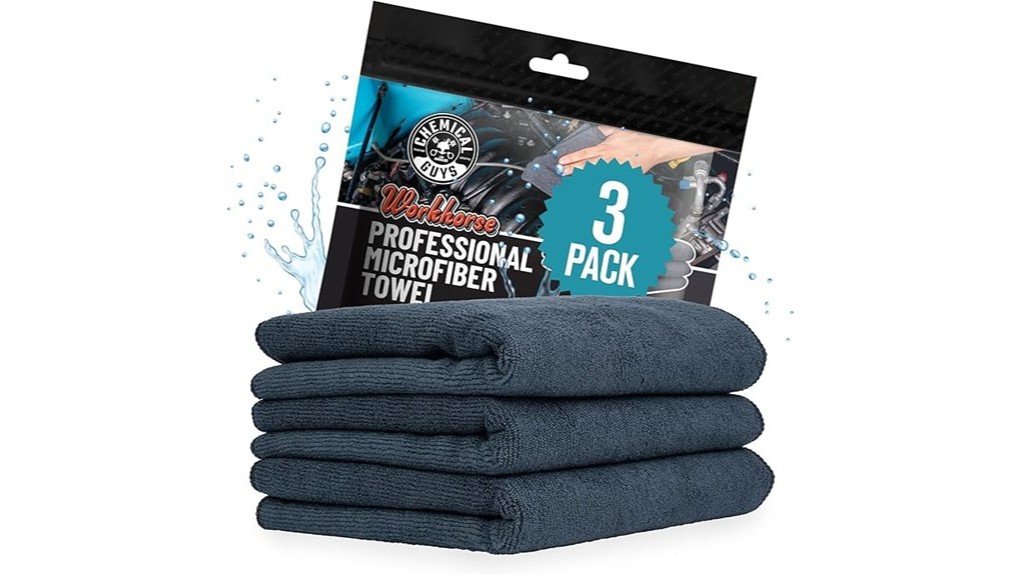
A dirty or poorly chosen towel can leave lint, streaks, or fine marks behind after an otherwise careful detail. The Chemical Guys Workhorse Professional Grade Microfiber Towels reviewed here are the black 16 x 16-inch three-pack, model MIC35303. Their 70/30 short-pile microfiber, overlock-stitched edges, and reusable design suit wiping, buffing, interior cleaning, and messy detailing jobs. The black color is useful for separating dirty-task towels, but it can hide grit, so you need extra care before using one on delicate paint.
Quick Verdict
Rating: 8.3/10
Best For: Car owners and detailers who want reusable short-pile towels for interiors, wheels, trim, polish removal, and general cleanup.
Bottom Line: These Workhorse towels offer a practical 70/30 microfiber blend, controlled 16 x 16-inch size, and durable stitched edges. The main tradeoff is the black fabric, which hides contamination and makes the towels less forgiving for high-gloss paint unless you keep them exceptionally clean.
| Specification | Detail |
|---|---|
| Brand | Chemical Guys |
| Product name | Workhorse Professional Grade Microfiber Towels |
| Model | MIC35303; Amazon model name MIC35303-3PK |
| ASIN | B0102GRAUY |
| Pack size | 3 towels |
| Towel size | 16 x 16 inches |
| Color | Black |
| Material | 70/30 blended microfiber |
| Pile and edge design | Versatile short-pile fabric with overlock-stitched edges |
| Common uses | Wiping grime, cleaning interiors, removing detail spray, wax, sealant, glaze, and handling general spills |
| Care | Wash microfiber separately; manufacturer recommends hot water and machine drying on low heat |
| Important restriction | Do not use fabric softener or dryer sheets; inspect carefully because black fabric can hide grit |
What Are Chemical Guys Workhorse Towels?
The Chemical Guys Workhorse Professional Grade Microfiber Towels are reusable detailing cloths designed for everyday wiping and cleaning. This listing is for three black towels, each measuring 16 x 16 inches, with model number MIC35303.
Chemical Guys describes the Workhorse line as premium 70/30 blended microfiber with a short pile. That design gives the fabric more wiping and light scrubbing ability than an ultra-plush finishing towel, while the square size remains easy to fold into quarters and control around trim, wheels, door jambs, and interior panels.
The black version deserves special attention. Chemical Guys uses color coding across the Workhorse range and associates black with the filthiest areas, including wheels and brakes. You can technically use a clean towel on several surfaces, but black cloth makes dirt harder to see, so it is smartest to dedicate this pack to dirty or utility work instead of switching it between wheels and paint.
Key Takeaways
- This ASIN is the black 16 x 16-inch three-pack, model MIC35303.
- The verified material is a 70/30 blended microfiber with a versatile short pile.
- Overlock-stitched edges improve durability, but the edge is not edgeless and should not be dragged across delicate paint.
- The black color works well for wheels, brakes, interiors, door jambs, and messy cleanup, but it can hide embedded grit.
- Proper sorting and washing matter more than any scratch-resistant marketing claim.
Who Should Buy It?
Best For
- Detailers who color-code black towels for wheels, brakes, door jambs, engine-bay plastics, and other dirty areas.
- Car owners who need compact reusable towels for interiors, trim, polish residue, and quick cleanup.
- Home users who want washable microfiber cloths for spills, counters, glass, tools, or pet drying.
Skip If
- You want a light-colored paint towel that makes dirt easy to spot before it causes marks.
- You need an edgeless finishing towel for delicate clear coat or a large dedicated towel for drying a full vehicle.
- You prefer one towel for every task and do not plan to separate wheel, interior, paint, and household loads.
Why These Towels Can Reduce Scratch Risk
Microfiber can trap small particles within its fibers instead of pushing every particle across the surface. The 70/30 blend also feels softer than many basic utility cloths, which can help you wipe with less pressure.
That does not make the towels scratch-proof. The short pile offers useful cleaning bite, but it provides less visual warning when black fabric picks up light-colored dust or grit. A clean towel and good wiping technique are still the main forms of paint protection.
Fold each towel into quarters, use one flat face at a time, and stop as soon as the face looks or feels contaminated. Never take a towel from wheels, tires, brakes, or the floor and return it to painted panels.
Before You Buy: This is the black Workhorse variant. Chemical Guys positions black towels for the dirtiest vehicle areas, and the dark fabric can hide grit. For delicate paint correction or final buffing, a clean light-colored or edgeless towel may be easier to inspect.
Top Features That Make Chemical Guys Workhorse Towels Stand Out
70/30 Blended Microfiber
The verified 70/30 blend combines polyester and polyamide fibers. In practical use, that gives the towels a soft hand while still providing enough bite to lift grime, interior residue, wax, sealant, glaze, and detail spray.
The blend is useful for general detailing, but it does not remove the need for lubrication. Use an appropriate cleaner or detail spray when the surface is dusty, and avoid dry wiping gritty paint.
Short-Pile Cleaning Surface
Chemical Guys describes the Workhorse fabric as short pile. A shorter pile gives you more direct control than a deep, fluffy drying towel and works well around textured plastic, rubber, door jambs, and tight interior areas.
The tradeoff is lower water capacity than a large twisted-loop or plush drying towel. These cloths can handle spot drying and follow-up droplets, but a three-pack may become saturated during a full-vehicle dry.
16 x 16-Inch Size
The square size is easy to fold into four sections, creating eight usable wiping faces when you count both sides. It also fits comfortably around mirrors, handles, badges, vents, wheels, dashboards, and center consoles.
For large panels, the compact size means more frequent folding and towel changes. That is safer than trying to finish the entire vehicle with one increasingly dirty cloth.
Overlock-Stitched Edges
The stitched border helps resist fraying through repeated wash cycles. This supports long-term reuse, especially when the towels are assigned to utility work.
The border is still firmer than the microfiber face. Keep the flat face against sensitive surfaces and avoid pressing or dragging the stitched edge across glossy black trim or soft clear coat.
Black Color for Task Separation
Black towels are easy to identify in a color-coded detailing system. You can reserve them for wheels, brakes, door jambs, greasy trim, engine-bay plastics, and other jobs that should stay separate from paint towels.
The drawback is visibility. Dust, pale grit, and dried product can blend into black fibers, so inspect the towel by touch and under strong light before each use.
Versatile Uses: From Car Detailing to Home Cleaning
Wheels, Brakes, and Door Jambs
This is the most natural role for the black version. Its color makes it easy to keep dirty-task towels separate, while the short pile gives you controlled wiping around spokes, calipers, jambs, and textured trim. Once a towel is used in these areas, retire it from paint duty permanently.
Interior Plastics, Rubber, and Vinyl
The 16 x 16-inch format works well on dashboards, door panels, pedals, rubber mats, and center consoles. Spray cleaner onto the towel when overspray could reach screens, buttons, or instrument clusters.
Wax, Sealant, and Detail-Spray Removal
The manufacturer lists wax, sealant, glaze, and detail-spray removal among the intended uses. Use a fresh towel, light pressure, and frequent flips. For a final pass on soft paint, compare a lighter-colored edgeless finishing towel that makes residue and contamination easier to see.
Household and Pet Cleanup
The towels can also handle counters, tools, windows, spills, and pet drying. Keep household towels in a separate wash group if your automotive set has touched brake dust, petroleum residue, strong cleaners, or greasy parts.
How It Performs in Real Use
For Routine Interior Cleaning
The towels are easy to control and offer enough texture to lift dust and cleaner residue from common cabin surfaces. One folded towel can cover several small sections, but you should switch faces before moving from dirty footwell areas to glossy trim.
For Wheel and Lower-Panel Work
The black color and short pile suit dirty jobs where staining is likely. The towels can wipe cleaner and loose grime effectively, but brake dust may remain trapped after washing. Keep a dedicated wheel set and inspect it before every reuse.
For Spot Drying and Buffing
The microfiber absorbs small water drops and can buff away light product residue. It is less efficient than a large drying towel for soaking up water from an entire car, so use it for mirrors, door jambs, trim edges, glass corners, and final touch-ups.
For Long-Term Use
Stitched edges and machine-washable microfiber support repeated use. Long-term value depends on retiring towels as their condition changes. Move a rough, stained, linting, or contaminated towel from paint or interior work to wheels, shop cleanup, or disposal.
How to Use the Towels Safely
- Assign each towel to one task group before first use, such as wheels, interior, paint products, or household cleaning.
- Fold the towel into quarters so you can rotate through clean faces without bunching the fabric.
- Use suitable lubrication or cleaner instead of dry wiping visible dust or grit.
- Wipe with light pressure and straight, controlled passes.
- Stop and replace the towel as soon as it feels gritty, becomes saturated, or starts smearing residue.
- Place used towels in a closed container or separate bag so they do not collect floor debris before washing.
Pro Tip: Label a small storage bin “black, dirty tasks” and keep this pack only for wheels, jambs, greasy trim, and shop cleanup. A fixed role reduces the chance of cross-contaminating paint towels.
Cleaning and Maintenance Tips
Chemical Guys recommends separating microfiber by type, washing it with hot water and a microfiber-safe cleaner, and machine drying on low heat. Do not use fabric softener or dryer sheets because they can coat the fibers and reduce absorbency.
Avoid washing these towels with cotton, bath towels, or lint-heavy clothing. Check the hook-and-loop fasteners, zippers, and hard debris in the wash load because they can snag or contaminate microfiber.
Common Mistakes to Avoid
- Using the same towel on wheels and paint.
- Dry wiping a dusty panel without lubrication.
- Using fabric softener, dryer sheets, or high dryer heat.
- Washing microfiber with lint-producing cotton items.
- Continuing to use a towel that feels rough, smears residue, or holds embedded grit.
- Leaving clean towels uncovered in a dusty garage.
Material Safety and Surface Compatibility
The Amazon listing names paint, glass, chrome, and interior surfaces among the uses for this product, while Chemical Guys also lists finishes such as plastic, rubber, stainless steel, metal, and aluminum. Compatibility still depends on the cleaner, the condition of the towel, and the finish you are touching.
Test a hidden area before cleaning soft plastics, piano-black trim, coated screens, polished metal, or delicate household finishes. The towel itself does not make a chemical safe for every surface, so follow the cleaner label as well as the towel-care directions.
Never assume a washed towel is automatically paint-safe. If you cannot remove brake dust, metal particles, hardened wax, grease, or sharp debris, downgrade or discard the cloth.
Pros and Cons
Pros
- Verified 70/30 microfiber blend balances softness with useful cleaning bite.
- Short-pile surface works well for interiors, trim, wheels, jambs, and product removal.
- Three 16 x 16-inch towels are easy to fold, control, and assign to separate jobs.
- Overlock-stitched edges help resist fraying during repeated washing.
- Black color makes dirty-task towels easy to identify in a color-coded system.
Cons
- Black fibers hide pale grit and make contamination harder to spot.
- Stitched edges are less forgiving than an edgeless towel on delicate clear coat and glossy trim.
- The compact short-pile design is not the best choice for drying an entire wet vehicle.
Is It Worth the Price?
This three-pack offers strong everyday value if you need reusable utility towels for interiors, wheels, door jambs, product removal, and home cleanup. The verified 70/30 blend, stitched edges, and washable construction make more sense for repeated work than disposable paper towels or rough household rags.
You get the most value by assigning the black towels to dirty tasks and keeping a separate light-colored or edgeless set for final paint work. They are not the best fit if your main goal is full-vehicle drying or the safest possible final buff on soft clear coat.
How It Compares to Alternatives
Compared with Chemical Guys Happy Ending Edgeless towels, the Workhorse towels have stitched edges and a more utility-focused short pile. The edgeless option is worth comparing for delicate finishing work, while the black Workhorse pack makes more sense for grimy surfaces and routine cleanup.
Compared with the Chemical Guys Waffle Weave Glass and Window towel or Miracle Dryer, this pack is more versatile but less specialized. Choose a waffle weave for dedicated glass work, a larger drying towel for full-vehicle water pickup, and the black Workhorse towels for controlled cleaning and task separation.
Frequently Asked Questions
How many towels come in this package?
The verified Amazon listing includes three black towels. Each towel measures 16 x 16 inches, and the product model is MIC35303.
What microfiber blend do the Workhorse towels use?
Chemical Guys identifies the Workhorse towels as a 70/30 polyester and polyamide microfiber blend. The manufacturer describes this model as short pile, which favors controlled wiping and general cleaning.
Can you use the black towels on car paint?
A clean towel can wipe paint, but the black fabric makes grit difficult to see. Chemical Guys also uses black in its color-coding system for the dirtiest areas, so a separate light-colored or edgeless towel is a safer practical choice for delicate final paint work.
Are these towels good for drying a whole car?
They can absorb water and handle spot drying, mirrors, jambs, trim edges, and final droplets. A larger dedicated drying towel will usually cover a full wet vehicle faster and with fewer towel changes.
How should you wash Chemical Guys Workhorse towels?
Separate microfiber by task and wash it away from cotton or lint-heavy items. Chemical Guys recommends hot water, a microfiber wash, low-heat machine drying, and no fabric softener or dryer sheets.
Can one towel be used for wheels and paint?
No. Brake dust, grit, and metal particles can remain in the fibers after wheel cleaning. Keep wheel towels permanently separate from paint, glass, and interior finishing towels.
When should you retire a microfiber towel?
Downgrade it when it feels rough, leaves lint, smears product, or holds stains and debris that washing cannot remove. Move it to less sensitive work, such as wheels or shop cleanup, and discard it if sharp contamination remains.
Who should skip this black Workhorse three-pack?
Skip it if you mainly need a large drying towel, a dedicated waffle-weave glass cloth, or an edgeless finishing towel for soft paint. It is best viewed as a reusable utility and dirty-task pack rather than one towel for every detailing step.
The Bottom Line
The Chemical Guys Workhorse black three-pack is a solid buy for wheels, interiors, door jambs, product removal, shop work, and household cleanup. Its 70/30 short-pile microfiber and stitched edges support repeat use, but buyers who focus on delicate paint or full-car drying should choose a lighter-colored, edgeless, or larger specialty towel.