Disclosure: As an Amazon Associate, we earn from qualifying purchases. If you click a link on this page and make a purchase, we may receive a small commission at no extra cost to you.
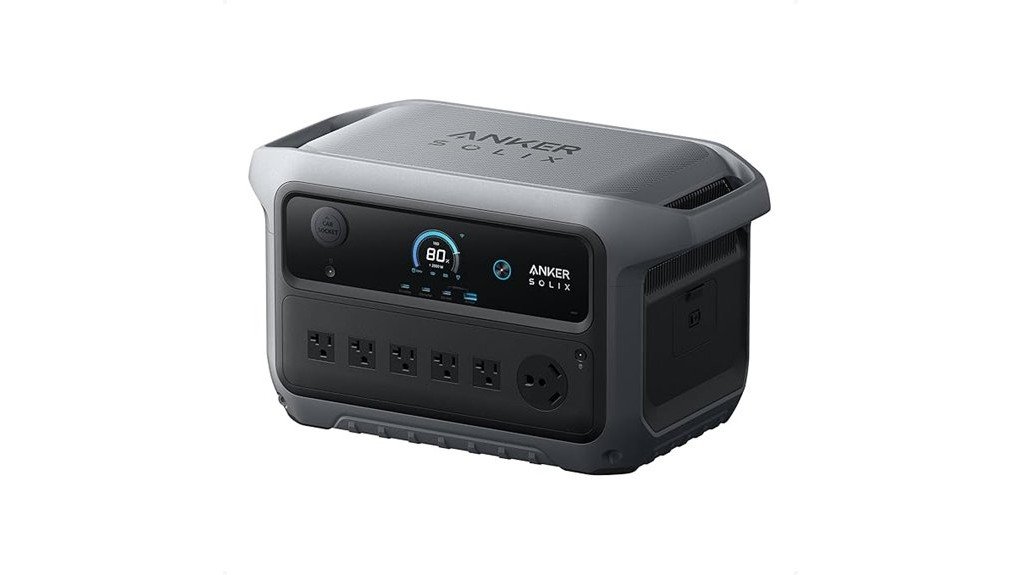
A 2kWh power station can cover far more than phones and laptops, but only when its output, ports, recharge speed, and weight match the way you plan to use it. The Anker SOLIX C2000 Gen 2 combines a 2,048Wh LFP battery with 2,400W continuous AC output, 4,000W peak power, and several charging options. This review explains what those numbers mean for home backup, camping, RV travel, and mobile work. Its main strengths are fast charging and high output in a relatively compact body, while its 41.7 lb weight and 800W solar limit may matter to some buyers.
Quick Verdict
Rating: 8.7/10, recommended with caveats
Best For: Home essentials, RV trips, camping setups, and mobile work that need up to 2,400W of continuous AC power.
Bottom Line: The C2000 Gen 2 offers a useful balance of 2,048Wh capacity, fast multi-source charging, and a TT-30 RV outlet. It is portable for its class, but 41.7 lb is still heavy for frequent carrying, and the base unit does not replace a whole-home backup system.
Anker SOLIX C2000 Gen 2 Specifications
| Specification | Detail |
|---|---|
| Brand | Anker SOLIX |
| Model | C2000 Gen 2, model A1783 |
| Product type | Portable LFP power station |
| Battery capacity | 2,048Wh |
| Battery chemistry | LiFePO4 / LFP |
| Cycle life | 4,000 cycles to 80% capacity |
| Rated AC output | 2,400W |
| Peak output | 4,000W for short startup surges |
| AC input | Up to 1,800W |
| Solar input | Up to 800W through XT60i input |
| AC plus solar input | Up to 2,600W, about 58 minutes to full under Anker test conditions |
| RV connection | TT-30 outlet |
| USB output | Two USB-C ports up to 140W each, one 15W USB-C port, and USB-A output |
| UPS transfer time | 10 ms |
| Expandable capacity | Up to 4,096Wh with one compatible BP2000 Gen 2 expansion battery |
| Dimensions | 18.1 × 9.8 × 10.1 inches |
| Weight | 41.7 lb / 18.9 kg |
| In the box | Power station, AC charging cable, quick-start or user guide, safety manual, and warranty card. Bundle contents can vary. |
What Is the Anker SOLIX C2000 Gen 2?
The Anker SOLIX C2000 Gen 2 is a rechargeable portable power station designed to supply AC and DC power when a wall outlet is unavailable or unreliable. Its 2,048Wh battery places it in the 2kWh class, above compact travel models but below large modular home systems.
It is made for buyers who want one unit for several jobs. You can use it to keep selected home essentials running, power camping equipment, support a compatible RV through the TT-30 outlet, or operate tools and electronics within the 2,400W continuous limit. The expansion port also lets you add the compatible BP2000 Gen 2 battery when you need more stored energy.
Key Features of the Anker SOLIX C2000 Gen 2
2,048Wh LFP Battery and Expandable Capacity
The 2,048Wh battery gives you enough stored energy for several smaller devices or a shorter run with high-wattage equipment. You can connect one Anker SOLIX BP2000 Gen 2 expansion battery to raise total capacity to 4,096Wh. The added battery increases runtime, but it does not turn the system into unlimited backup power.
Anker rates the LFP battery for 4,000 cycles to 80% capacity. That specification suits regular backup use better than a battery meant only for occasional emergencies. Actual battery aging still depends on heat, charging habits, storage level, and load.
2,400W Continuous Output and 4,000W Peak Power
The 2,400W AC rating is the number to use when planning normal loads. It can support many refrigerators, microwaves, coffee makers, power tools, and compact air conditioners, but you must check each device label. The 4,000W peak figure helps with short startup surges and should not be treated as continuous output.
Add the running watts of everything you plan to use at the same time. Keep the continuous total below 2,400W and account for startup surges from motors and compressors.
Ports for Home, RV, and Mobile Devices
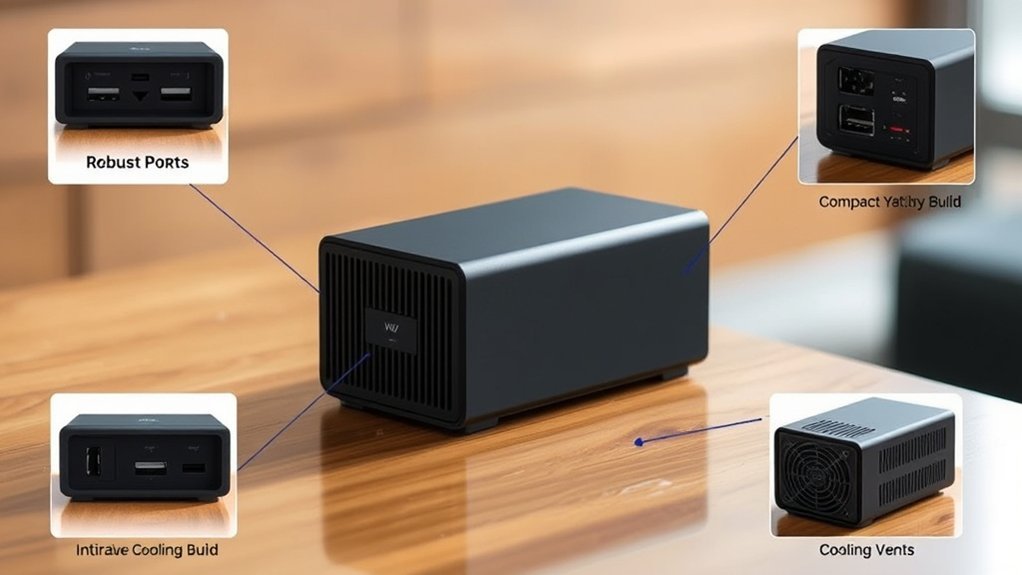
The front and side connections cover common power needs. You get standard AC output, a TT-30 outlet for compatible RV setups, a 12V car socket, USB-A, and three USB-C outputs. Two USB-C ports can deliver up to 140W each, which is useful for many laptops and higher-power USB-C devices.
The USB-C ports provide output only, so you cannot recharge the power station through them. Anker also notes that using the 15W USB-C port and 12W USB-A port together limits their combined output to 20W.
Fast Charging from AC, Solar, or a Vehicle
The fastest listed recharge method combines AC and solar input for up to 2,600W and a full recharge in about 58 minutes under Anker test conditions. Standard US AC input reaches up to 1,800W and takes about 88 minutes. Solar input reaches up to 800W, while the compatible 800W alternator charger can recharge the unit during a drive.
These times are useful planning figures, not guarantees. Temperature, input stability, panel angle, weather, cable choice, and power-station settings can change the result.
Compact Size for Its Capacity, but Not Lightweight
At 18.1 × 9.8 × 10.1 inches, the C2000 Gen 2 is easier to store than many larger backup systems. Its 41.7 lb weight is reasonable for a 2kWh unit, but carrying it across a campsite or up stairs can still be uncomfortable. Plan a stable storage spot and use two hands when moving it.
Before You Buy: The 4,000W figure is peak surge power, not continuous output. Also confirm that your solar panels, alternator charger, expansion battery, transfer equipment, and RV connection are specifically compatible before ordering accessories.
Who Should Buy It?
Best For
- Homeowners who want backup power for selected essentials during short outages.
- RV and camping users who need a TT-30 outlet, USB-C charging, and up to 2,400W of AC output.
- Mobile workers who need a rechargeable source for tools, laptops, lights, and other compatible equipment.
Skip If
- You only need to charge phones, tablets, or a laptop and would benefit from a lighter 500Wh to 1,000Wh model.
- You need to power most home circuits for several days without adding batteries or approved transfer equipment.
- You need a unit that one person can comfortably carry for long distances.
Pros and Cons
Pros
- 2,048Wh LFP battery with a 4,000-cycle rating to 80% capacity.
- 2,400W continuous output handles many household, RV, and work devices.
- Fast AC plus solar charging can reach full charge in about 58 minutes under test conditions.
- TT-30, high-output USB-C, AC, USB-A, and 12V connections cover varied setups.
- Capacity expands to 4,096Wh with the compatible BP2000 Gen 2 battery.
Cons
- At 41.7 lb, it is awkward for frequent carrying or long walks.
- The 800W solar input is lower than the charging ceiling on some larger alternatives.
- Solar panels, the expansion battery, alternator charging hardware, and transfer equipment may cost extra.
How It Performs in Real Use
During a Home Power Outage
The C2000 Gen 2 can run selected essentials such as a refrigerator, router, lights, fans, and chargers, provided the combined load stays within its limits. Anker’s refrigerator runtime claim is based on controlled testing, so your result will change with refrigerator size, compressor cycles, room temperature, and other connected devices.
For Camping and Outdoor Events
The mix of AC outlets, USB ports, and a 12V socket works well for lights, cameras, laptops, fans, coolers, and compatible cooking gear. The main limitation is transport. At 41.7 lb, it is better for car camping and event setups than backpack-style travel.
For RV Travel
The TT-30 outlet makes the unit easier to connect to a compatible RV than models that rely only on household AC receptacles. You still need to manage the RV’s total load. Air conditioners, water heaters, microwaves, and other high-draw devices can quickly exceed the 2,400W continuous rating when used together.
For Mobile Work and Tools
The unit can support many corded tools, charging systems, computers, and work lights. Check both running and startup wattage before use. Dust, moisture, unstable placement, and blocked ventilation can create problems at worksites, so keep the station protected and follow the manual.
Recharge Options and Expected Times
| Recharge Method | Listed Input | Approximate Full Recharge | Best Use |
|---|---|---|---|
| AC plus solar | Up to 2,600W | About 58 minutes | Fast preparation before an outage or trip |
| AC wall charging | Up to 1,800W | About 88 minutes | Routine charging at home |
| Solar charging | Up to 800W | About 3 hours in suitable conditions | Off-grid use with compatible panels |
| Alternator charger | Up to 800W | About 3 hours | Charging during road travel |
| Standard car input | About 100W | About 23 hours | Slow emergency charging |
| Gas generator | Up to 1,800W | About 88 minutes | Longer outages with outdoor generator use |
Pro Tip: Before a storm or trip, label the wattage of your priority devices and test the complete setup at home. A short test shows which loads can run together and gives you a more realistic runtime estimate.
Setup, Safety, and Common Mistakes
Place the power station on a dry, stable surface with open space around its vents. Use the supplied AC charging cable and compatible accessories. Do not operate or charge the main unit in standing water or exposed rain, and do not cover it while it is under load.
Check each appliance label for running watts and startup watts. Avoid connecting household circuits without approved transfer equipment and a qualified installation. For medical devices, confirm power quality, wattage, runtime, and backup requirements with the device manufacturer or care provider before relying on a portable power station.
- Do not plan loads around the 4,000W peak figure.
- Do not assume every XT60, solar, alternator, or expansion accessory is compatible.
- Do not store the unit in extreme heat, freezing charging conditions, or a damp location.
- Do not run a gas generator indoors when using it as a charging source.
- Follow the manual for operating temperature, storage, and battery maintenance.
Is It Worth the Price?
The C2000 Gen 2 sits in the premium portable-power category because it combines a 2,048Wh battery, 2,400W output, fast charging, high-output USB-C, UPS support, and an RV outlet. It offers the most value when you need several of those features in one unit instead of buying separate smaller batteries.
It is worth considering for home essentials, car camping, RV travel, and mobile work. It is less compelling when your needs stop at USB charging or occasional low-wattage use. Solar panels and expansion hardware also raise the total system cost. Check the current Amazon listing and bundle contents before comparing value.
How It Compares to Alternatives
A 1kWh model such as the Anker SOLIX C1000 Gen 2 is easier to carry and may be enough for electronics or shorter trips, but it stores about half as much energy. Anker’s older SOLIX F2000 also supplies 2,400W and supports expansion, yet Anker lists it as larger, heavier, and slower to recharge than the C2000 Gen 2.
Buyers comparing EcoFlow, Jackery, or Bluetti models should focus on usable battery capacity, continuous output, solar input, port layout, expansion rules, weight, and accessory cost. The C2000 Gen 2 makes the most sense when fast AC charging, a TT-30 outlet, and 140W USB-C outputs matter more than maximum solar input. You can review the exact Anker configuration on Amazon before ordering.
Frequently Asked Questions
Can the Anker SOLIX C2000 Gen 2 run a refrigerator?
It can run many refrigerators when their running and startup wattage stay within the power station’s limits. Runtime varies with refrigerator size, compressor cycles, room temperature, battery charge, and any other connected loads.
Is 4,000W the continuous output?
No. The continuous AC output is 2,400W. The 4,000W figure is peak power for brief startup surges from compatible appliances.
Can you charge it with AC and solar at the same time?
Yes. Anker lists combined AC and solar input up to 2,600W, with a full recharge in about 58 minutes under its test conditions. Actual time depends on available solar power and charging conditions.
Does it support an expansion battery?
Yes. One compatible Anker SOLIX BP2000 Gen 2 expansion battery raises total capacity to 4,096Wh. The BP2000 Gen 2 is a separate accessory unless it is included in the selected bundle.
Can the USB-C ports recharge the power station?
No. The USB-C ports are outputs for charging compatible devices. Recharge the power station through its supported AC, XT60i solar, car, alternator, or generator charging methods.
Can it power an RV air conditioner?
It may power compatible RV air conditioners when both startup and running demand fit the output limits. Check the air conditioner’s specifications and avoid running other high-draw RV appliances at the same time.
Is the C2000 Gen 2 weatherproof?
Do not assume the main power station is safe in exposed rain. Keep it dry, protect the ports, maintain airflow, and follow Anker’s manual and accessory instructions for outdoor use.
What should you check before ordering?
Confirm the selected bundle, included cables, accessory compatibility, required solar connectors, and the wattage of your planned loads. Also make sure 41.7 lb is manageable for your storage and travel setup.
The Bottom Line
The Anker SOLIX C2000 Gen 2 is a strong choice when you need 2,048Wh of portable energy, 2,400W of continuous AC output, fast charging, and a TT-30 outlet in one unit. Buy it for selected home backup, RV travel, car camping, or mobile work, but choose a smaller model for light charging or a larger installed system for extended whole-home coverage.
Its biggest strengths are output, recharge flexibility, and expansion support. Its main limits are the 41.7 lb carrying weight, extra accessory costs, and an 800W solar-input ceiling.
Ready to Buy?
Check the latest price, seller, bundle contents, and product details before you decide.