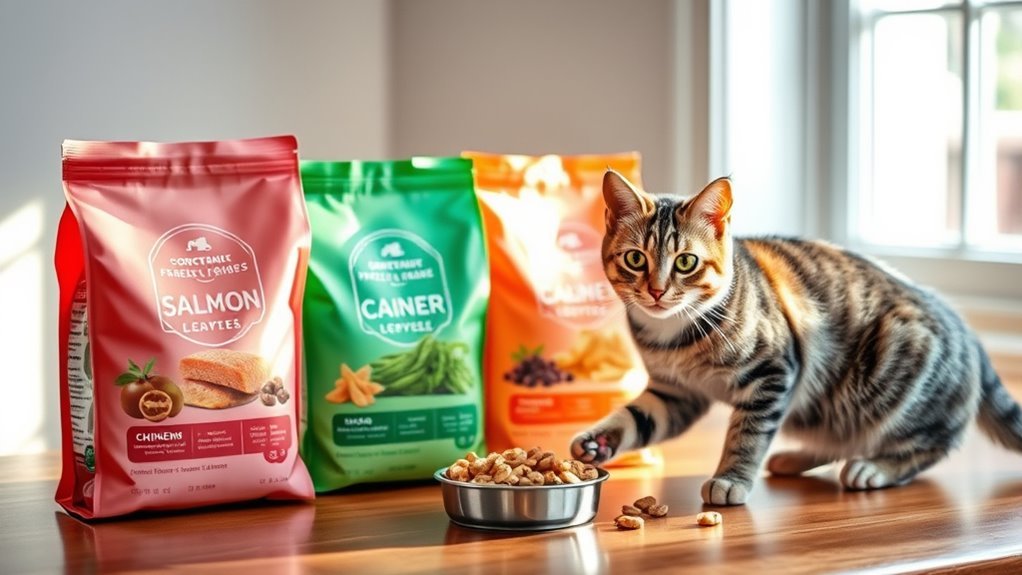
For 2026, these cat food picks cover several common needs, from everyday dry food to indoor, high-protein, weight-management, and hairball-care formulas. The list includes Nutrish Indoor Complete, Meow Mix Original Choice, Purina ONE with Salmon, Blue Buffalo Wilderness, and IAMS Proactive Health. The right choice depends on your cat’s life stage, body condition, health needs, and food preferences, so use the product label and your veterinarian’s guidance when a medical or weight concern is involved.
Affiliate disclosure: This article contains Amazon affiliate links. We may earn a commission from qualifying purchases at no extra cost to you.
| Nutrish Indoor Complete Cat Food (6 lb Bag) | 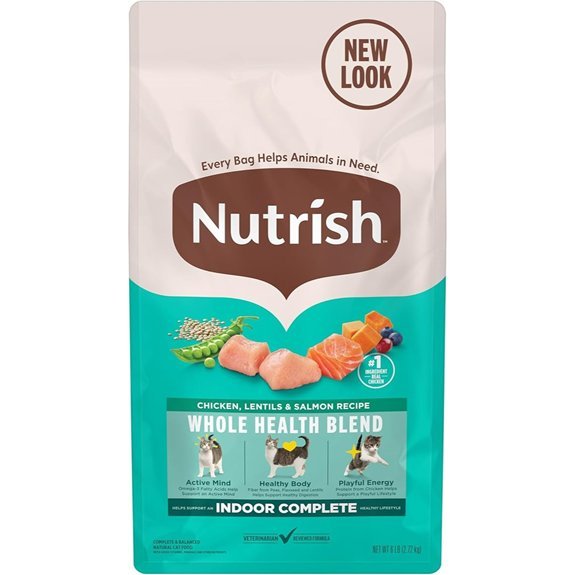 |
Indoor Formula | Packaging Size: 6 lb bag | Primary Ingredient: Chicken | Nutritional Focus: Whole Health Blend | Check Price on Amazon | Read Our Analysis |
| Meow Mix Original Choice Dry Cat Food 6.3 Pound Bag | 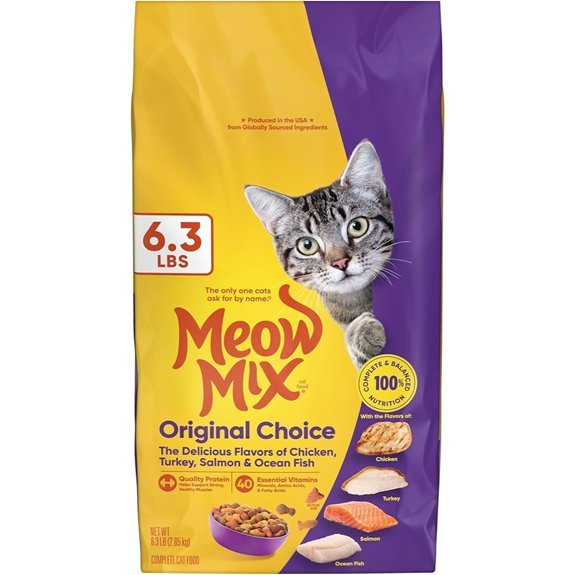 |
Flavorful Classic | Packaging Size: 6.3 lb bag | First Ingredient: Ground corn | Nutritional Focus: Complete and balanced nutrition | Check Price on Amazon | Read Our Analysis |
| Purina ONE Natural Dry Cat Food with Salmon | 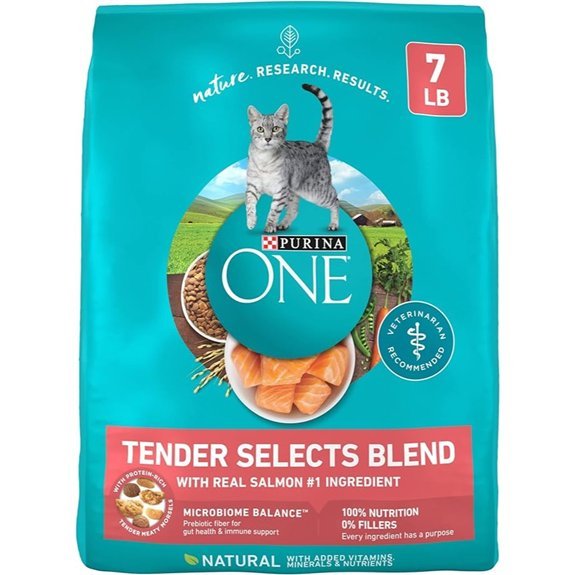 |
High-Protein Choice | Packaging Size: 7 lb bag | Primary Ingredient: Salmon | Nutritional Focus: Complete and balanced nutrition | Check Price on Amazon | Read Our Analysis |
| Blue Buffalo Wilderness Dry Cat Food for Indoor Cats | 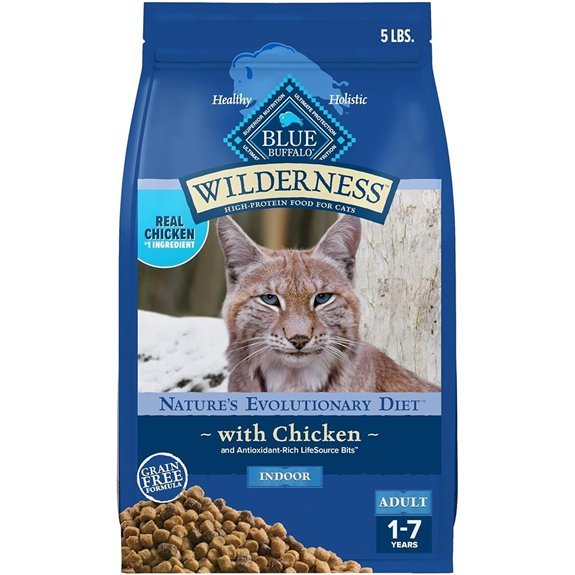 |
Grain-Free Indoor | Packaging Size: 5 lb bag | Primary Ingredient: Chicken | Nutritional Focus: High-protein & grain-free | Check Price on Amazon | Read Our Analysis |
| IAMS Proactive Health Indoor Weight Control Cat Food | 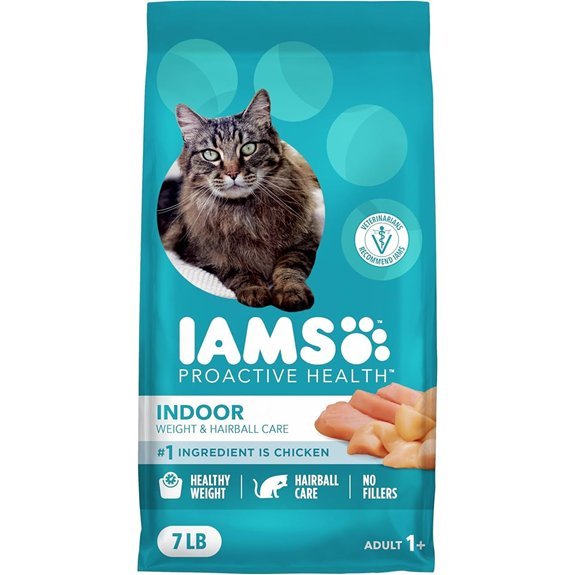 |
Weight & Hairball Care | Packaging Size: 7 lb bag | First Ingredient: Chicken | Nutritional Focus: Weight control & hairball care | Check Price on Amazon | Read Our Analysis |
More Details on Our Top Picks
-
Nutrish Indoor Complete Cat Food (6 lb Bag)
Nutrish Indoor Complete Cat Food is a practical option for indoor cats when you want a chicken-first dry recipe with added salmon, lentils, pumpkin, and omega-3 fatty acids. The current formula is sold in a 6 lb bag and is part of Nutrish’s Whole Health Blend line. Manufacturer information states that omega-3 fatty acids support an active mind, natural prebiotics from pumpkin support healthy digestion, and protein from chicken supports a playful lifestyle. Choose it for its indoor-focused positioning, but still match portions to your cat’s body condition and activity level.
- Packaging Size:6 lb bag
- Primary Ingredient:Chicken
- Nutritional Focus:Whole Health Blend
- Health Benefits:Supports active mind and digestion
- Production Origin:Not specified
- Best For:Indoor-cat everyday feeding
- Additional Feature:Supports playful lifestyle
- Additional Feature:Whole Health Blend formula
- Additional Feature:Pumpkin-derived natural prebiotics
-
Meow Mix Original Choice Dry Cat Food 6.3 Pound Bag
Meow Mix Original Choice is a 6.3 lb dry-food option with chicken, turkey, salmon, and ocean-fish flavors. Unlike an adult-only formula, the current product is formulated to meet AAFCO nutrient profiles for all life stages. Its ingredient list starts with ground corn, followed by chicken by-product meal and soybean meal, so buyers who specifically want meat as the first ingredient should compare other options on this list. It can make sense for households that want a widely available, complete-and-balanced dry food and do not need a specialized indoor or weight-control formula.
- Packaging Size:6.3 lb bag
- First Ingredient:Ground corn
- Nutritional Focus:Complete and balanced nutrition
- Life Stage:All life stages
- Protein Sources:Chicken, turkey, salmon & ocean fish flavors
- AAFCO Positioning:All life stages
- Additional Feature:Enhanced flavor formula
- Additional Feature:30% minimum crude protein
- Additional Feature:7–10 day transition guidance
-
Purina ONE Natural Dry Cat Food with Salmon
Purina ONE Tender Selects Blend With Real Salmon is formulated for adult cats and is available in a 7 lb bag. Real salmon is the first ingredient, and the formula includes prebiotic fiber for gut-health support plus added vitamins, minerals, and nutrients. Purina states that the recipe supports strong muscles, including a healthy heart, and is complete and balanced for adult maintenance. This is a strong fit for buyers who want a salmon-first adult dry food, but it is not the appropriate life-stage formula for kittens or pregnant or nursing cats.
- Packaging Size:7 lb bag
- Primary Ingredient:Salmon
- Nutritional Focus:Complete and balanced nutrition
- Health Benefits:Strong muscles and healthy heart
- Life Stage:Adult maintenance
- Brand Philosophy:Veterinarian-recommended
- Additional Feature:Real salmon as first ingredient
- Additional Feature:Natural prebiotic fiber included
- Additional Feature:Veterinarian-recommended formula
-
Blue Buffalo Wilderness Dry Cat Food for Indoor Cats
Blue Buffalo Wilderness is the high-protein, grain-free pick in this group for indoor adult cats. The 5 lb chicken recipe lists real chicken as the first ingredient and is made without chicken or poultry by-product meals, corn, wheat, or soy. Its LifeSource Bits are positioned as an antioxidant-rich component for immune-system support. Grain-free does not automatically mean a food is better for a sensitive stomach, so cats with recurring digestive or skin problems should be evaluated by a veterinarian rather than relying on a grain-free label alone.
- Packaging Size:5 lb bag
- Primary Ingredient:Chicken
- Nutritional Focus:High-protein & grain-free
- Best For:Indoor adult cats
- Life Stage:Adult
- Formula Positioning:High-protein, grain-free
- Additional Feature:Grain-free recipe
- Additional Feature:Antioxidant-rich LifeSource Bits
- Additional Feature:No chicken or poultry by-product meals
-
IAMS Proactive Health Indoor Weight Control Cat Food
IAMS Proactive Health Adult Indoor Weight & Hairball Care with Chicken & Turkey is the most specialized option in this list. The 7 lb formula is made for adult indoor cats, with chicken as the first ingredient, L-carnitine to support weight management, and a proprietary fiber blend with beet pulp for hairball care. IAMS also describes the formula as complete and balanced for adult maintenance. Because this is an adult formula, kittens and pregnant or nursing cats need a life-stage-appropriate food instead.
- Packaging Size:7 lb bag
- First Ingredient:Chicken
- Recipe:Chicken & Turkey
- Nutritional Focus:Weight control & hairball care
- Health Benefits:Whole-body health and immune support
- Production Origin:Not specified
- Life Stage:Adult maintenance
- Additional Feature:Proprietary fiber blend
- Additional Feature:L-carnitine for fat burning
- Additional Feature:Chicken as first ingredient
How We Compared These Cat Foods
We compared the current product positioning, life-stage statement, primary ingredients, stated nutritional purpose, package size, and the buyer problem each formula is designed to address. This is a label- and manufacturer-information comparison, not a claim of hands-on feeding tests. No single food is best for every cat, so the nutritional adequacy statement, your cat’s body condition, and any veterinarian-directed dietary needs should take priority.
Factors to Consider When Choosing Cat Food
When choosing cat food, start with the nutritional adequacy statement, your cat’s life stage, body condition, and any veterinarian-directed needs. Then compare formula purpose, calorie density, feeding guidance, ingredient information, storage, and how well the food fits your cat’s preferences and tolerance.
Nutritional Content Quality
For everyday feeding, look first for a food labeled complete and balanced for your cat’s life stage. Ingredient lists can be useful for identifying specific ingredients, but they do not by themselves prove overall food quality. Compare the nutritional adequacy statement, guaranteed analysis, calorie information, feeding directions, and the manufacturer’s quality-control information. If your cat needs weight control, hairball care, or another targeted diet, choose a formula designed for that purpose rather than assuming one ingredient or a grain-free label makes a food superior.
Ingredient Sourcing Transparency
Ingredient transparency can help you understand what is in the food and identify ingredients your cat must avoid. However, sourcing location alone does not establish nutritional quality. Give more weight to whether the manufacturer provides clear nutritional information, appropriate life-stage labeling, feeding guidance, quality-control practices, and a way to contact the company with product questions. For a suspected food allergy, do not diagnose the problem from an ingredient list alone; veterinary-guided diet trials are the standard approach.
Health Benefits Offered
Health-focused formulas can be useful when the product’s stated purpose matches your cat’s needs. Examples include prebiotic fiber for digestive support, omega fatty acids for skin and coat support, targeted fiber blends for hairball care, and controlled-calorie or L-carnitine formulas for weight management. These are not substitutes for veterinary treatment. If your cat has persistent vomiting, diarrhea, itching, unexpected weight change, urinary signs, or another health concern, get veterinary advice before choosing food based on a marketing benefit.
Flavor Variety Available
Palatability matters because a nutritionally appropriate food only helps if your cat reliably eats it. Chicken, turkey, and fish-based recipes give buyers different taste options, but frequent switching is not automatically better. If you change foods, transition gradually to reduce the chance of digestive upset. Cats with a diagnosed food allergy need a veterinarian-directed plan rather than casual protein rotation.
Special Dietary Needs
Special dietary needs should be matched carefully to the cat. Weight-management foods can help with calorie control, while some hairball formulas use targeted fiber blends such as beet pulp. Kittens, adults, seniors, pregnant or nursing cats, and cats with medical conditions can have different nutritional requirements. For suspected food allergies, chronic digestive problems, kidney disease, urinary disease, diabetes, or a structured weight-loss plan, ask your veterinarian for a diet recommendation instead of choosing only by front-of-bag claims.
Packaging and Storage
Choose a bag size you can use while the food remains fresh, and follow the manufacturer’s storage directions. Keep dry food in a cool, dry place, close the package tightly after feeding, and retain the original packaging or lot information in case you need to check a recall or contact the manufacturer. Check the best-by date before purchase and avoid damaged packaging.
Brand Reputation and Trust
Brand reputation is useful, but it should not rest on star ratings alone. Look for a company that provides complete nutritional information, clear life-stage guidance, quality-control details, and responsive customer support. Veterinarian input is especially valuable when your cat has a medical condition, is under- or overweight, has recurring gastrointestinal or skin signs, or needs a therapeutic diet.
Frequently Asked Questions
How Can I Tell if My Cat Is Allergic to Food?
Possible food-allergy signs can include persistent itching or skin problems and, in some cats, vomiting or diarrhea. These signs can have many other causes, so symptoms alone do not confirm a food allergy. A veterinarian may recommend a strict elimination-challenge diet trial to identify a food trigger.
What Are the Signs of a Healthy Cat Diet?
A suitable diet should help your cat maintain an appropriate body condition, normal stool, steady appetite, and a healthy skin and coat. More importantly, the food should be complete and balanced for the correct life stage and fed in an amount that maintains a healthy weight. Sudden changes in appetite, weight, stool, vomiting, or energy warrant veterinary attention.
Should I Feed My Cat Wet or Dry Food?
Either wet food, dry food, or a combination can work when the diet is complete and balanced and appropriate for your cat. Wet food provides more moisture, while dry food can be convenient to portion and store. The best format depends on your cat’s preferences, hydration needs, calorie needs, dental or medical considerations, and your veterinarian’s advice.
How Often Should I Change My Cat’s Food?
You do not need to change a cat’s food every few months simply for variety. If the current food is complete and balanced, appropriate for the life stage, well tolerated, and helping maintain a healthy body condition, it may remain suitable. When a change is needed, transition gradually according to the new food’s directions, commonly over several days, to reduce digestive upset.
Are Organic Cat Foods Worth the Investment?
An organic label does not by itself prove that a cat food is nutritionally better for your individual cat. Prioritize a complete-and-balanced nutritional adequacy statement, the correct life stage, manufacturer quality controls, calorie and feeding information, and your cat’s specific needs. Choose organic if that production standard matters to you, but do not treat it as a substitute for nutritional adequacy.
What Does “Complete and Balanced” Mean on Cat Food?
On a pet-food label, “complete and balanced” indicates that the food is intended to provide all required nutrients for the stated life stage when fed as directed and has met an accepted nutritional adequacy standard. Always check which life stage the statement covers because adult-maintenance food is not automatically appropriate for kittens, pregnancy, or nursing.
Conclusion
The best choice in this group depends on your cat rather than a universal ranking. Nutrish Indoor Complete and Blue Buffalo Wilderness are indoor-focused options with different formula approaches; Meow Mix Original Choice is formulated for all life stages; Purina ONE Tender Selects Blend with Real Salmon is an adult salmon-first formula; and IAMS Proactive Health Indoor Weight & Hairball Care is the most targeted option for adult indoor cats needing help with weight management and hairballs. Before buying, confirm the life-stage statement, feeding directions, calorie needs, and any veterinarian-directed restrictions, then transition foods gradually when you make a change.