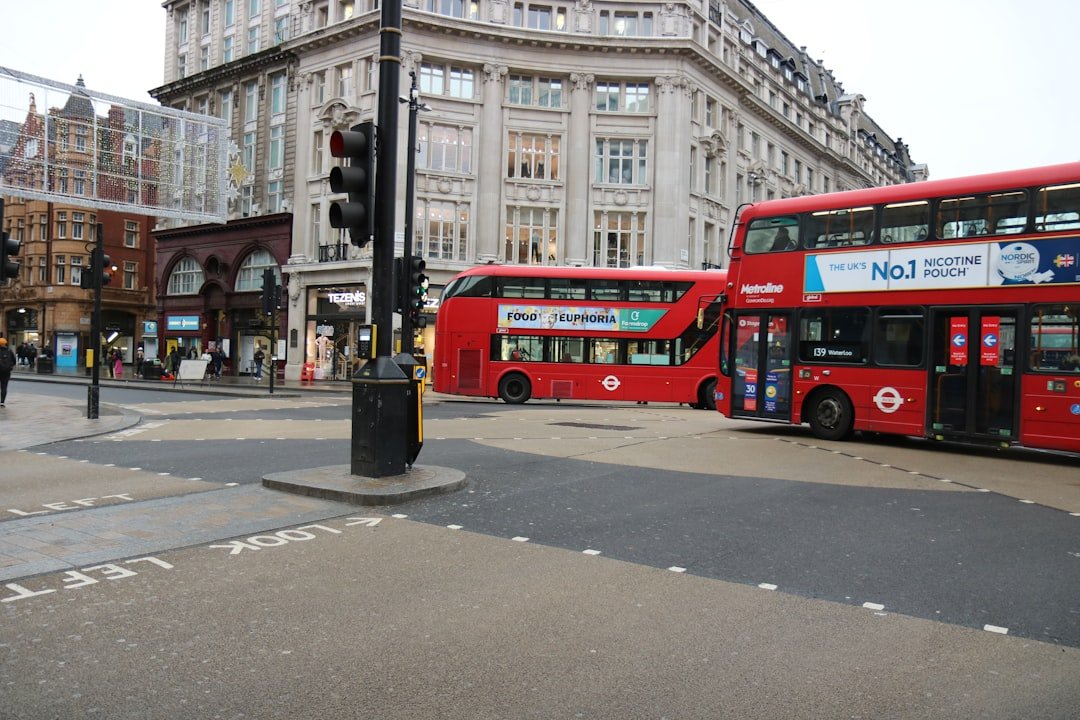
London’s red buses are one of the easiest ways to explore the capital, but the size of the network can make a first journey feel confusing. Transport for London (TfL) currently manages a fleet of around 9,000 buses operating across roughly 675 routes, with more than 19,000 bus stops across the city. Whether you are commuting or sightseeing, the key is knowing how to find the right route, check live arrivals and pay correctly.
Quick Answer
To use London buses, plan your route with TfL Go or Journey Planner, check the route number and destination at your stop, then touch in with the same contactless card, device or Oyster card. Do not touch out when leaving a bus. Check live arrivals and disruptions before longer journeys.
London’s bus history stretches back almost two centuries. According to the London Transport Museum, George Shillibeer started London’s first regular omnibus service on 4 July 1829, running between Paddington and the Bank. Horse-drawn omnibuses eventually gave way to motor buses, while London’s red double-deckers became an internationally recognized part of the city’s identity.
Modern buses are integrated with London’s wider public-transport system and provide useful connections to Underground, Elizabeth line, London Overground, DLR and National Rail stations. Live information, contactless payments, on-board stop announcements and accessible vehicles have also made the network much easier to use than its size might suggest.
Key Takeaways
- TfL currently operates around 675 bus routes with a fleet of roughly 9,000 buses.
- London bus fares are generally flat rather than based on the Tube’s fare zones.
- Use TfL Go, Journey Planner, route maps and live-arrival information to choose your bus and check disruptions.
- Touch in with Oyster or contactless when you board, but do not touch out when leaving a bus.
- Night buses and 24-hour services provide late-night connections, but operating times vary by route and day.
Understanding London’s Bus Network
The London bus network is managed by Transport for London. TfL plans routes, sets service levels and monitors the performance of services, while most individual routes are operated by private bus companies under contract.
Each route has a number or letter-and-number combination, and the front and side displays on the bus show its route number and destination. Bus stops also show the route numbers that serve that location and the general direction or destinations those buses travel toward.
One important difference between buses and rail travel is fares. You do not need to work out which London fare zone your bus journey crosses. Standard pay-as-you-go bus travel uses a flat fare, so a journey crossing several London zones does not automatically cost more than a short bus journey.
The bus system is also closely integrated with other public transport. A route may take you directly to an Underground, Elizabeth line, Overground, DLR or rail station, making buses especially useful for the first or last part of a journey.
Note: London bus routes, stops and timetables can change because of permanent network revisions, roadworks or major events. Check TfL’s live information rather than relying on an old printed route description.
Navigating the Bus System
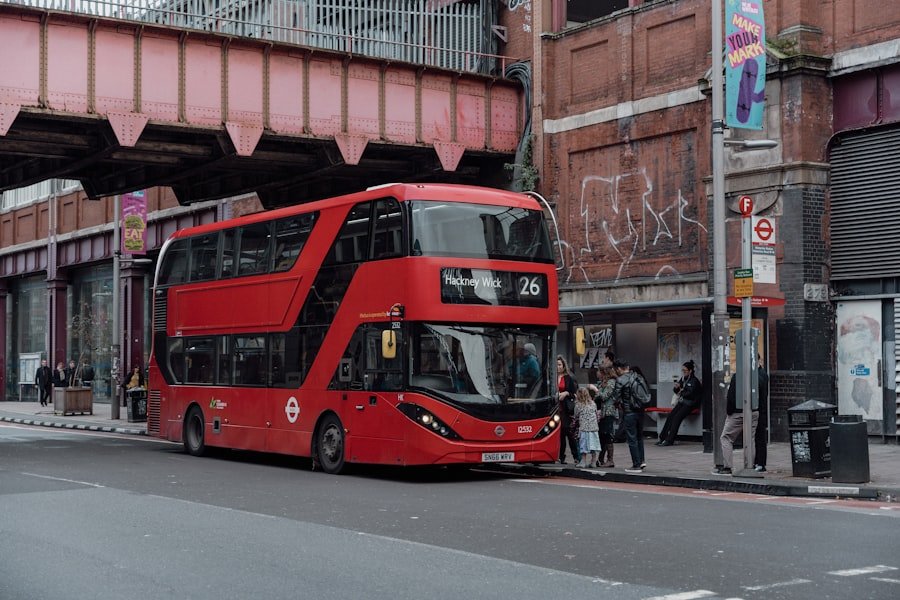
The easiest way to navigate London buses is to combine a route planner with live information. TfL’s Journey Planner can compare public-transport options, while the TfL Go app provides journey planning, maps and live travel information.
You can also use TfL’s bus maps to understand the wider network. This is useful when you know the neighborhood or major destination you want to reach but are not sure which route serves it.
At the bus stop, check the stop name, route number and direction carefully. London streets often have separate stops on opposite sides of the road, and the same route number may travel in either direction. Confirm the destination shown on the front of the approaching bus before boarding.
TfL provides printed route and timetable information at bus stops. Some stops also have digital Countdown signs showing live arrivals. However, electronic Countdown signs are not installed at every stop; TfL says they are available at about 2,500 locations. Live arrival information can also be checked online by searching for the stop or route.
Pro Tip: Check both the route number and final destination shown on the bus. This helps prevent boarding the correct route in the wrong direction.
How to Pay for London Buses
London buses are cashless. You can normally pay as you go using a contactless bank card, a compatible contactless payment device or an Oyster card. When boarding, touch your payment method on the yellow reader near the driver.
Do not touch out when you leave a London bus. Unlike many rail journeys, you only touch in at the start of a bus journey. If you use a contactless card or device, continue using the same card or device for journeys that you want TfL to treat as part of the same pay-as-you-go travel record.
As of September 2026, the adult pay-as-you-go bus and tram fare is £1.75. The Mayor of London’s July 2026 fares decision states that the fare is scheduled to rise to £1.85 from 1 November 2026, so travelers visiting after that date should check TfL’s current bus and tram fares.
The Hopper Fare is especially useful if you need to change buses. At the current adult rate, it allows unlimited bus and tram journeys made within one hour of your first touch-in for the price of one bus fare, provided you follow TfL’s payment rules and use the same card or device.
London buses use a flat pay-as-you-go fare, so you do not need to calculate Tube-style fare zones before choosing a bus route.
Many contactless cards issued outside the UK can work on TfL services, but your bank or card issuer may apply foreign-transaction or other charges. Check with your issuer before relying on an overseas card for several days of travel.
Popular Bus Routes and Destinations
Certain London bus routes are useful for visitors because they pass major sights while still operating as ordinary public buses. However, historic sightseeing lists often become outdated when TfL restructures routes, so it is important to use current route information.
Route 11: Fulham, Chelsea, Victoria and Westminster
Route 11 currently connects the Fulham Broadway area with Waterloo. Its central section serves places including Chelsea, Sloane Square, Victoria and Westminster. This makes it useful for travelers visiting areas around King’s Road, Victoria, Westminster Abbey and Parliament Square before continuing toward Waterloo.
Older London sightseeing guides often describe Route 11 as continuing through Trafalgar Square and the City to St Paul’s Cathedral. That is no longer the current Route 11 alignment, so use TfL’s live route page rather than following an old sightseeing itinerary.
Route 15: Trafalgar Square to Blackwall
Route 15 is a stronger choice for seeing parts of the historic City of London. It runs between the Trafalgar Square/Charing Cross area and Blackwall, with stops along the way near locations such as Aldwych, Fleet Street, St Paul’s Cathedral, Mansion House, Monument and the Tower of London.
The route does not run past the London Eye. Travelers wanting the London Eye should instead plan a route to the Waterloo or Westminster area and check the latest TfL options for their starting point.
Route 73: Stoke Newington to Oxford Circus
Route 73 currently links Stoke Newington Common with the Oxford Circus area. Along the way it serves important transport and neighborhood points including Newington Green, Islington, Angel, King’s Cross/St Pancras, the British Library, Euston and Tottenham Court Road.
This makes Route 73 useful for connecting north and central London without relying entirely on the Underground.
Note: Treat sightseeing route recommendations as examples, not permanent itineraries. TfL can change endpoints, stops and timetables, so verify the route on the day you travel.
Night Bus Services
London’s night buses are an important part of the transport network for people traveling after many daytime services have finished. Night routes include services with an “N” prefix as well as some routes that operate for 24 hours.
There is no single start and finish time that applies to every night bus. Frequencies and operating periods depend on the route, direction, day of the week and location along the route. Always check the specific timetable when planning an early-morning or late-night journey.
One useful example is the N15. The current night route runs from the Oxford Circus/central-London area through Trafalgar Square, the City and east London toward Romford Market. It serves central landmarks including St Paul’s and the Tower of London before continuing much farther east.
Other night routes provide links across north, south, east and west London. TfL publishes night-bus maps and individual timetables, so it is safer to plan your exact journey than to assume the daytime version of a route operates unchanged overnight.
Warning: Do not assume that a daytime bus route, stop or frequency will be identical overnight. Check the night-route number, destination and timetable before boarding.
Accessibility and Special Services
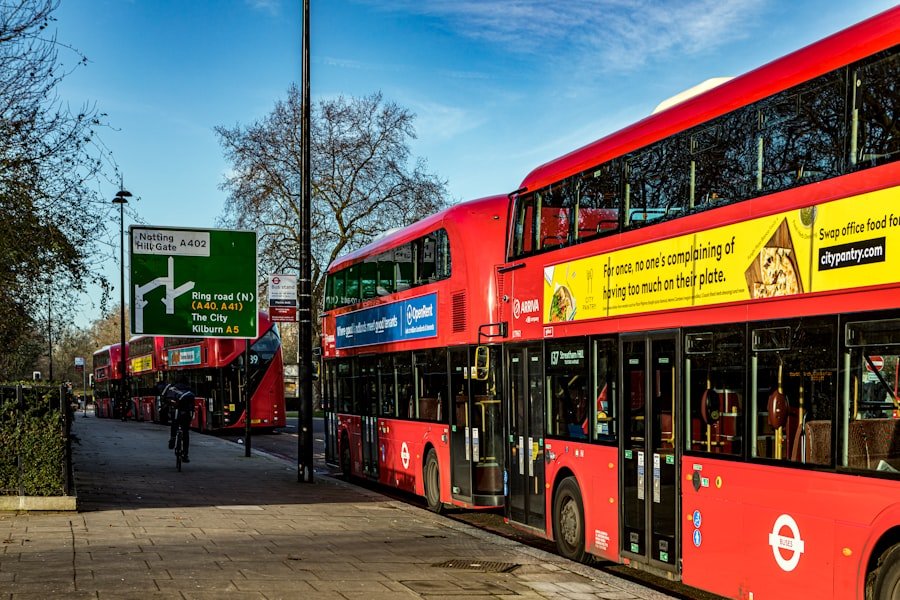
Accessibility is an important part of London’s bus network. TfL’s low-level buses are equipped with ramps for wheelchair and mobility-scooter users, and buses include a dedicated wheelchair space. Wheelchair and mobility-scooter users have priority for this space.
Priority seating is also provided for passengers who may need a seat more than others. Not every disability is visible, so passengers should be considerate when using these seats.
All London buses provide audible and visible next-stop information. TfL says on-board announcements identify the stop, route and bus destination, helping travelers who have visual or hearing impairments as well as visitors unfamiliar with London.
For people who cannot use conventional public transport because of a long-term disability, London Dial-a-Ride provides a free door-to-door service for eligible members. Eligibility rules apply, so travelers should review TfL’s requirements rather than assuming the service is available automatically.
Tips for Riding the Bus in London
A little preparation makes London bus travel much easier. Before leaving, use TfL Go or Journey Planner to find the route and check for disruptions. Roadworks, demonstrations, sporting events and other incidents can temporarily divert buses or close individual stops.
When you reach the stop, make yourself visible to the driver and signal clearly if necessary. Allow passengers to get off before you board. After boarding, touch in with your Oyster card, contactless card or payment device and move farther inside if space is available.
Watch the on-board screen and listen for the automated announcement as your stop approaches. Press the bell in good time to tell the driver you want to get off. When leaving the bus, look carefully for cyclists and pedestrians before stepping into the street or cycle lane.
If you are traveling at a busy time, allow extra time. Traffic congestion can make bus journey times less predictable than rail services, particularly in central London. Live arrival information is helpful, but road conditions can still affect the journey after you board.
If you are making several bus or tram journeys close together, the Hopper Fare may reduce your total cost. If you are using contactless, make sure you consistently use the same physical card or the same device rather than switching between a phone, watch and the underlying bank card.
Future Developments in London’s Bus Network
London’s bus fleet is becoming progressively cleaner. TfL’s network currently includes electric, hydrogen, hybrid and diesel vehicles, while new vehicles entering the fleet are increasingly zero-emission at the tailpipe.
The older claim that London will simply have a fully electric bus fleet by 2030 is no longer an accurate description of the published programme. In March 2026, the Mayor of London reported that more than 2,800 zero-emission buses were already in service. TfL’s latest business-plan direction is to reach around 6,000 zero-emission buses by 2030 and convert the remaining fleet as soon as possible afterward.
The transition involves more than replacing vehicles. Electric-bus deployment also requires charging equipment, upgrades at bus garages and sufficient electricity-grid capacity. TfL and operators therefore have to coordinate vehicles, depots, power infrastructure and route requirements.
Other improvements focus on bus priority, live travel data, customer information and vehicle safety. TfL makes live data available both through its own services and to third-party travel apps, helping passengers plan around changing traffic conditions and disruptions.
Autonomous buses should not currently be treated as a confirmed network-wide TfL rollout. The documented near-term priorities are cleaner vehicles, supporting infrastructure, reliable services, safety improvements and better customer information.
If you want a break from staying on the bus for an entire journey, combine bus travel with walking. For example, you can ride to Westminster, the City, Chelsea, Oxford Circus or another central area, then explore nearby attractions on foot before using TfL Journey Planner to find your next bus. This often provides a better view of London than staying on one route purely for sightseeing.
Sources
- Transport for London — What We Do — current London bus fleet, route and stop information.
- Transport for London — Using Buses in London — journey planning, bus-stop guidance, accessibility and boarding information.
- Transport for London — Bus and Tram Fares — current pay-as-you-go fares, caps and Hopper Fare rules.
- Transport for London — Live Bus Arrivals — online live arrivals and Countdown-sign information.
- Transport for London — Dial-a-Ride — accessible door-to-door transport information.
- Mayor of London — Zero-Emission Bus Fleet, March 2026 — current zero-emission fleet progress and 2030 plan.
Frequently Asked Questions
What is the London Bus Routes Guide?
Rather than one single official book covering every journey, TfL provides route pages, bus maps, Journey Planner, timetables, live arrivals and stop information. Together, these tools provide the most useful current guide to London’s bus routes.
How many bus routes are there in London?
TfL currently describes its London bus network as operating around 675 routes with a fleet of roughly 9,000 buses. The exact network can change as routes are introduced, withdrawn or restructured.
Where can I find London bus route maps and timetables?
Use TfL’s official Maps section, Journey Planner or individual bus-route pages. Bus stops also display route and timetable information, while live arrivals are available online and on digital Countdown signs at selected stops.
What information should I check before taking a London bus?
Check the route number, direction, destination, correct boarding stop, live arrival time and any disruption or diversion. For late-night journeys, also confirm whether you need a separate N-prefixed night route.
How can I use the London bus network to plan my journey?
Enter your starting point and destination into TfL Journey Planner or TfL Go. Compare the suggested routes, check the direction and destination of the bus, then review live arrivals and disruption information before leaving.
Is the London Bus Routes Guide available in multiple languages?
TfL’s main online bus information is primarily presented through its website, apps and maps rather than as one standardized printed guide in the six languages previously claimed. TfL Visitor Centres can provide travel assistance, and their teams include staff who speak a number of languages.
Can I pay cash on London buses?
No. London buses are cashless. Pay using an accepted Oyster card, contactless bank card or compatible contactless payment device.
Do I tap out when I get off a London bus?
No. Touch your Oyster card, contactless card or payment device on the yellow reader when you board. You do not touch out when leaving a London bus.
Do London bus fares depend on travel zones?
Standard London bus pay-as-you-go fares are flat rather than calculated from the Tube-style zones crossed during the journey. Check TfL’s current bus and tram fares before traveling because prices can change.