Disclosure: As an Amazon Associate, we earn from qualifying purchases. If you click a link on this page and make a purchase, we may receive a small commission at no extra cost to you.
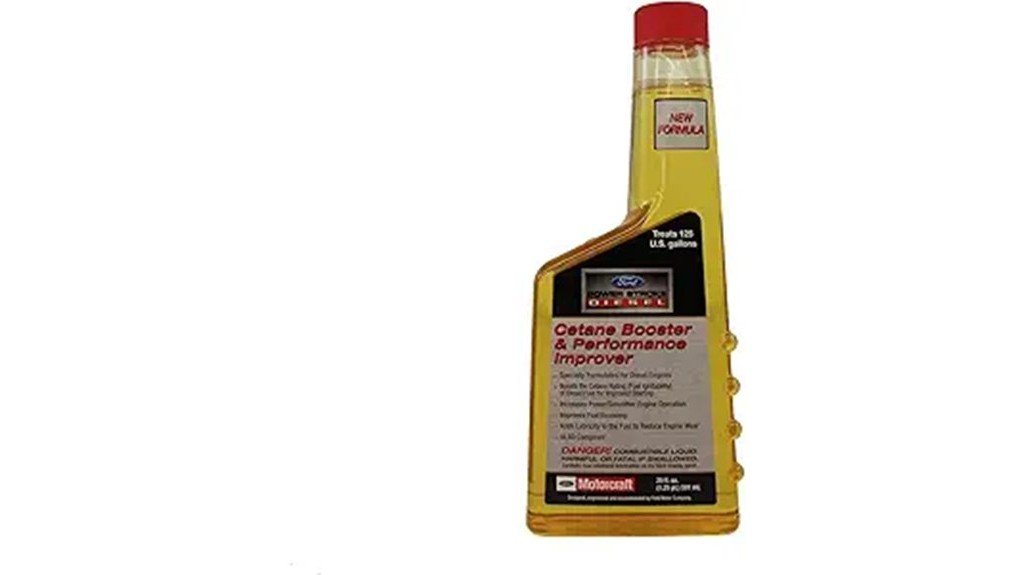
Poor-quality diesel can show up as harder starting, rougher operation, or weaker response, but a fuel additive is not always necessary. The Motorcraft PM-22-A Cetane Booster and Performance Improver is a 20-fluid-ounce, ULSD-compliant treatment made for drivers who suspect their diesel fuel has a low cetane level. It can support starting performance, smoother operation, power, and fuel lubricity, according to Ford’s product information. The main limitation is that you must follow the current bottle label and your owner’s manual, rather than assuming a universal dose or using it to mask a mechanical problem.
Quick Verdict
Rating: 8.1/10, recommended with caveats
Best For: Ford diesel owners who suspect low-cetane fuel and want a Motorcraft-branded treatment.
Bottom Line: PM-22-A has clear manufacturer-backed benefits for cetane, starting, smoothness, power, and lubricity. It is not an anti-gel product, and it should not replace good fuel, proper maintenance, or diagnosis of an ongoing engine problem.
| Specification | Detail |
|---|---|
| Brand | Motorcraft |
| Model | PM-22-A |
| Product type | Cetane booster and diesel performance improver |
| Container size | 20 fluid ounces |
| Fuel standard | ULSD compliant |
| Verified Ford engine examples | 6.4L and 6.7L diesel engines, with backward compatibility listed for 6.0L, 6.9L, and 7.3L engines |
| Manufacturer-stated functions | Boosts cetane, supports starting, increases power, smooths operation, adds lubricity, and contains an ingredient shown to improve fuel economy |
| Best use | When you suspect poor-quality or low-cetane diesel fuel |
| Dosage | Follow the directions on the current bottle and your vehicle owner’s manual |
Key Takeaways
- PM-22-A is a Motorcraft diesel additive, not a gasoline treatment.
- Ford lists it as ULSD compliant and suitable for several Ford diesel engine families.
- Its main purpose is to improve fuel ignitability when low cetane is suspected.
- It also adds lubricity and is intended to support smoother operation and power.
- It is not the correct product for diesel fuel gelling. Motorcraft PM-23-A is the anti-gel option.
- Do not rely on a fixed mileage gain or an old online dosage. Use the current label.
What Is the Motorcraft PM-22-A Cetane Booster?
Motorcraft PM-22-A is a liquid diesel fuel additive sold in a 20-fluid-ounce bottle. Ford describes it as a Cetane Booster and Performance Improver made to combat the effects of poor-quality diesel fuel. Its ULSD-compliant formula is listed for Ford 6.4L and 6.7L diesel engines and is also described as backward compatible with Ford 6.0L, 6.9L, and 7.3L diesel engines.
Cetane relates to how readily diesel fuel ignites under compression. Fuel with inadequate cetane quality can contribute to harder starting or rougher combustion. PM-22-A is intended to raise fuel ignitability, support easier starting, smooth engine operation, and help restore the response that poor fuel may reduce.
This product is best treated as a targeted fuel-quality tool. Ford’s owner guidance says a high-quality diesel fuel that meets the proper industry specification should not normally require an aftermarket additive. Ford recommends a Motorcraft cetane booster or equivalent when you suspect low cetane.
Who Should Buy It?
Best For
- Ford diesel owners who suspect a recent tank of fuel has low cetane quality.
- Drivers of supported 6.0L, 6.4L, 6.7L, 6.9L, or 7.3L Ford diesel engines who prefer a Motorcraft product.
- Buyers who want cetane support plus added fuel lubricity in one treatment.
Skip If
- You need an anti-gel treatment for freezing conditions.
- Your vehicle is gasoline-powered or your manual does not permit this type of additive.
- You expect a guaranteed fuel-economy increase or a repair for a mechanical fault.
Before You Buy: PM-22-A is a cetane and performance improver, not an anti-gel product. If diesel fuel is gelling in cold weather, use the vehicle manufacturer’s recommended winter fuel guidance and the correct anti-gel treatment.
Feature-by-Feature Review
Cetane Support and Starting Performance
The strongest reason to choose PM-22-A is its stated ability to boost the cetane rating of diesel fuel. Better fuel ignitability can support quicker, cleaner starting when a tank of poor-quality diesel is the cause of the problem. This makes the product most relevant after an unfamiliar fill-up or when the engine behaves differently with one fuel source than another.
It should not be used to explain away repeated hard starts. Weak batteries, glow-plug issues, fuel-pressure problems, injector faults, and cold-weather fuel problems can produce similar symptoms. If the issue continues after the suspect fuel is gone, the vehicle needs diagnosis rather than repeated additive use.
Engine Smoothness and Power
Ford states that PM-22-A can increase power and smooth engine operation. In practical terms, the benefit is more likely to feel like restored response or reduced roughness when poor fuel has lowered combustion quality. It is not a performance tune, and the product does not come with a verified horsepower figure.
This balanced expectation matters. A driver may notice a calmer idle or cleaner response under load, while another driver using good diesel may notice little change. The product makes more sense as a corrective aid for fuel quality than as a guaranteed power upgrade.
Lubricity and Fuel-System Support
PM-22-A adds lubricity to diesel fuel, which Ford says can help reduce engine wear. Lubricity is especially relevant to fuel-system parts that depend on the fuel for lubrication. The product’s value here is that it combines cetane support with a lubricity function instead of focusing on only one issue.
Still, an additive cannot reverse existing wear or repair a failing pump or injector. Use clean fuel, replace filters on schedule, drain water separators when required, and follow the service plan for your engine.
Fuel-Economy Claims
Ford says the formula contains an ingredient shown to improve fuel economy. That is more limited than promising a fixed percentage or a certain number of miles per gallon. Your result can change with fuel quality, load, speed, idling, tire pressure, weather, and engine condition.
The safest way to judge the effect is to compare several hand-calculated tanks under similar driving conditions. Do not treat a single dashboard reading as proof, and do not buy PM-22-A only for an expected mileage gain.
How It Performs in Real Use
After a Questionable Fill-Up
This is the clearest use case. If your diesel starts or runs differently after buying fuel from an unfamiliar station, a correctly measured cetane booster may help when low cetane is the cause. Add it according to the current label and monitor whether the engine returns to its normal behavior.
In Older Ford Diesel Engines
Ford lists backward compatibility for 6.0L, 6.9L, and 7.3L diesel engines. Owners of these engines may value the added lubricity and the Motorcraft branding. Engine age does not remove the need to check the owner’s manual, fuel system condition, and any modifications before use.
In 6.4L and 6.7L Ford Diesels
The official product information specifically mentions Ford’s 6.4L and 6.7L diesel engines, including engines designed around newer emissions requirements. This makes PM-22-A a more straightforward choice for Ford owners than a general additive with unclear compatibility.
During Cold Weather
Cetane support may help starting when fuel ignitability is part of the problem, but PM-22-A does not prevent fuel gelling. Ford separates these jobs: PM-22-A is the cetane booster, while PM-23-A is the anti-gel and performance improver. Choose the product that matches the actual cold-weather problem.
How to Use It Correctly
- Check your owner’s manual. Confirm that a cetane booster is allowed for your vehicle and note any fuel or biodiesel limits.
- Read the current bottle label. Product directions can change, so do not rely on an old article, forum post, or remembered ratio.
- Measure for the fuel you are adding. Base the treatment on the gallons going into the tank, unless the label gives different instructions.
- Add it before refueling when directed. Fuel entering the tank can help distribute the measured additive.
- Do not guess or double-dose. More additive does not guarantee more benefit.
- Track the result. If starting, roughness, or power loss continues, stop treating the symptom and have the vehicle inspected.
Pro Tip: Keep a small fuel log with the station, gallons added, treatment amount, weather, and hand-calculated mileage. This makes it easier to tell a real fuel-quality change from normal day-to-day variation.
Compatibility and Safety
Ford confirms ULSD compliance and lists compatibility examples for 6.0L, 6.4L, 6.7L, 6.9L, and 7.3L Ford diesel engines. That does not automatically prove compatibility with every diesel engine, every modified fuel system, or every biodiesel concentration. Check the additive label and the exact owner’s manual for your model year.
Ford’s fuel guidance warns that high-quality diesel meeting the correct industry standard should not normally need an aftermarket additive. It also warns against alcohol-based fuel additives and notes that repairs caused by an improper fuel or additive may not be covered. Follow the bottle instructions, avoid spills, keep the product away from children, and consult the current Safety Data Sheet for handling and storage details.
Pros and Cons
Pros
- Official Motorcraft product with clear Ford diesel compatibility examples.
- ULSD-compliant formula.
- Combines cetane support with added fuel lubricity.
- Designed to support starting, smoothness, and power when fuel quality is poor.
- Compact 20-fluid-ounce bottle is easier to store than a gallon container.
Cons
- No guaranteed horsepower or fuel-economy increase.
- Not an anti-gel treatment for winter fuel gelling.
- Correct dosing depends on the current label, so careful measuring is required.
Is It Worth the Price?
PM-22-A offers strong value for the price when you own a compatible Ford diesel, suspect low-cetane fuel, and want an official Motorcraft treatment. Its measured-dose format can be practical to keep in a garage or truck storage box for fuel-quality concerns.
It is less compelling as an automatic every-tank purchase when your engine already runs well on high-quality diesel. You get the most value when the product solves a specific fuel-quality concern, not when it becomes a substitute for buying good fuel or fixing a persistent fault.
How It Compares to Alternatives
Power Service Diesel Kleen +Cetane Boost is worth comparing if you want a product that also emphasizes injector cleaning alongside cetane and lubricity support. Motorcraft PM-23-A is the better match when your main concern is winter fuel gelling, because Ford identifies it as the anti-gel and performance improver.
PM-22-A makes the most sense when you prioritize Motorcraft branding, verified Ford engine examples, and a focused cetane-plus-lubricity formula. In many cases, the simplest alternative is to use high-quality diesel that meets the specification in your owner’s manual and skip an additive unless symptoms or fuel quality justify it.
Frequently Asked Questions
Is Motorcraft PM-22-A safe for every diesel engine?
No universal compatibility claim is verified. Ford specifically lists several Ford diesel engines and says the product is ULSD compliant, but you should check the label and the owner’s manual for your exact vehicle.
How often should you use PM-22-A?
Use it according to the current label and your vehicle guidance. Ford says a high-quality diesel fuel should not normally need an aftermarket additive, so routine use at every fill-up is not automatically necessary.
What is the correct PM-22-A dosage?
Follow the directions printed on the bottle you receive. Online dosage claims can reflect older labels or different container sizes, so measure the product based on the current package and the amount of fuel you add.
Can you use PM-22-A with biodiesel blends?
The official product page confirms ULSD compliance but does not provide a universal biodiesel-blend limit for every engine. Use only the biodiesel concentration permitted by your vehicle manual and confirm the additive label allows it.
Will PM-22-A prevent diesel fuel from gelling?
No. PM-22-A is the cetane booster and performance improver. Motorcraft PM-23-A is the separate anti-gel and performance improver intended for fuel-gelling concerns.
Does it guarantee better fuel economy?
No fixed gain is guaranteed. Ford says the formula contains an ingredient shown to improve fuel economy, but your result depends on fuel quality, driving conditions, load, maintenance, and engine condition.
Can a cetane booster affect your warranty?
Ford identifies Motorcraft cetane booster as an option when low cetane is suspected, but it also warns that damage from an improper fuel or additive may not be covered. Use the correct product as directed and follow the manual for your model year.
Can PM-22-A fix rough running or hard starting?
It may help when poor fuel ignitability is the cause. It cannot repair a weak battery, glow-plug fault, clogged filter, low fuel pressure, injector problem, or another mechanical issue.
The Bottom Line
Motorcraft PM-22-A is a sensible buy for compatible Ford diesel owners who suspect low-cetane fuel and want verified cetane, starting, smoothness, power, and lubricity benefits. Skip it when you need anti-gel protection, drive a gasoline vehicle, or expect a guaranteed mileage increase. Its main strength is its Ford-backed fit and purpose, while its main limitation is that correct use depends on your exact vehicle guidance and the current bottle label.
Ready to Buy?
Check the latest price, seller, and current product directions before you decide.