Disclosure: As an Amazon Associate, we earn from qualifying purchases. If you click a link on this page and make a purchase, we may receive a small commission at no extra cost to you.
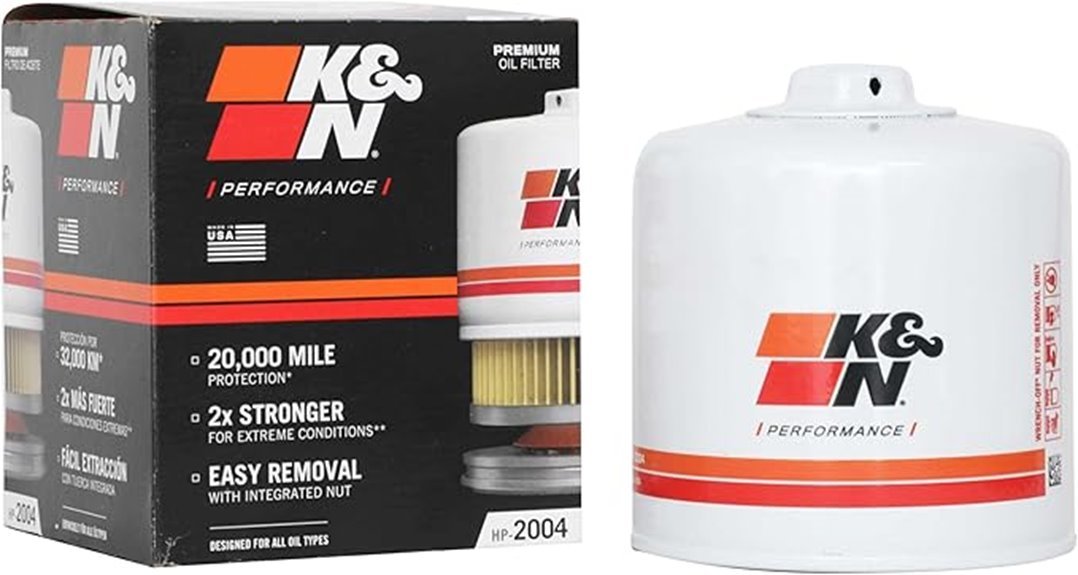
Choosing an oil filter is less about picking the most expensive option and more about confirming fit, oil flow, filtration, and service access. The K&N Premium Oil Filter HP-2004 combines synthetic-blend filter media, a heavy-duty spin-on canister, and a welded one-inch removal nut. It is a practical choice when your exact vehicle application calls for this part number and you value easier filter removal. The main limitation is fitment, because the HP-2004 is not universal and must match your vehicle’s year, model, and engine.
Quick Verdict
Rating: 8.5/10, recommended with caveats
Best For: Drivers whose vehicle specifically lists HP-2004 and who want durable construction with wrench-assisted removal.
Bottom Line: The HP-2004 offers high-flow premium media, an anti-drainback valve, a bypass valve, and a sturdy canister. Its value drops if your application does not match or you do not need the welded removal nut.
Key Specifications
| Specification | Detail |
|---|---|
| Brand | K&N |
| Model | HP-2004 |
| Product type | Spin-on automotive oil filter |
| Filter media | High-flow premium synthetic-blend media |
| Gasket material | High-temperature nitrile |
| Height | 4 in (102 mm) |
| Outside diameter | 3.656 in (93 mm) |
| Thread | 3/4 in – 16UNF-2B |
| Valves | Anti-drainback valve and bypass valve |
| Relief valve setting | 8 to 11 PSI |
| Removal feature | Welded one-inch hex nut |
| Motor oil compatibility | Synthetic, conventional, and blended motor oils |
| Weight | 1.2 lb (0.6 kg) |
| Package quantity | One oil filter |
| Warranty | K&N one-year limited warranty |
What Is the K&N HP-2004?
The K&N HP-2004 is a premium spin-on oil filter built for specific vehicle and equipment applications. K&N uses pleated synthetic-blend media to trap contaminants while supporting consistent oil flow. The filter also includes an anti-drainback valve, a bypass valve, and a high-temperature nitrile gasket.
Its most visible feature is the welded one-inch hex nut on the end of the canister. This nut is designed to help you remove the filter with a wrench when access is tight or the old filter is difficult to loosen. It is a removal aid, not a reason to tighten the new filter with excessive force.
Who Should Buy It?
Best For
- Your vehicle’s fitment guide or parts catalog lists HP-2004.
- You use synthetic, conventional, or blended motor oil and want one compatible filter design.
- You value a welded hex nut that can simplify filter removal during future oil changes.
Skip If
- You have not confirmed the exact filter for your year, model, and engine.
- You want the lowest-cost basic filter and do not need wrench-assisted removal.
- Your vehicle requires a different thread, gasket size, relief setting, or filter dimensions.
Before You Buy: Do not choose an oil filter by brand or vehicle make alone. Confirm the exact year, model, engine, and filter specification in your owner’s manual, K&N’s part finder, or a trusted parts catalog.
Fit and Compatibility
The HP-2004 is commonly listed for select Dodge, Chrysler, Jeep, and Mitsubishi applications, but it also appears in other vehicle and equipment cross-references. That broad list does not make it universal. Two vehicles with the same model name can use different filters because of engine, production year, or regional differences.
The filter uses a 3/4-inch, 16UNF-2B thread and measures 4 inches high with a 3.656-inch outside diameter. These physical details matter because a filter must seat correctly, seal against the mounting surface, clear nearby components, and use the proper bypass setting for the application.
Filtration and Oil Flow
K&N describes the HP-2004 as a high-flow filter with pleated synthetic-blend media. The media is designed to remove harmful contaminants while allowing a consistent supply of oil through the engine’s lubrication system. This balance is useful because filtration and flow both matter during cold starts, normal driving, and sustained operation.
The filter includes an anti-drainback valve to help limit oil draining out of the filter when the engine is off. It also includes a bypass valve with an 8 to 11 PSI relief setting. The bypass valve provides an alternate oil path if flow through the media becomes restricted, but the correct valve setting must match the intended application.
No oil filter can repair existing engine wear or make the wrong oil viscosity suitable for your vehicle. You should still use the oil grade and service interval specified by the vehicle manufacturer.
Build Quality and Materials
The HP-2004 uses a heavy-duty steel canister and a high-temperature nitrile gasket. K&N states that the filter is laboratory tested for capacity, efficiency, and mechanical strength. These features support durability under normal oil-system pressure and temperature when the filter is used in a listed application.
The welded one-inch nut is the feature that separates the HP line from many plain spin-on filters. It gives you another way to remove the old filter without crushing the canister with oversized pliers. The canister still needs normal care during installation, and the removal nut should not be used to over-tighten the filter.
Installation and Setup
Oil-filter access varies by vehicle, but the basic process is familiar if you already perform oil changes. Work on a stable surface, secure the vehicle correctly, wear appropriate protection, and follow the vehicle manufacturer’s lifting and oil-change instructions.
- Confirm that HP-2004 is the correct part number before draining the oil.
- Allow the engine to cool enough for safe service, then place a suitable drain pan under the drain plug and filter.
- Remove the old filter and make sure its gasket did not remain stuck to the engine’s mounting surface.
- Clean the mounting surface and apply a light film of fresh engine oil to the new filter gasket.
- Install the new filter according to the vehicle or filter instructions. Hand-tightening is normally used unless the instructions specify another method.
- Refill with the correct oil type and quantity, start the engine, and check the filter and drain plug for leaks.
- Shut the engine off, wait as directed by the owner’s manual, and recheck the oil level.
Pro Tip: Before installing the new filter, compare its gasket diameter, thread opening, height, and overall shape with the old filter. A quick side-by-side check can catch a parts-counter or ordering error before you add oil.
How It Performs in Real Use
For Routine Oil Changes
The welded nut is most useful during the next service, especially when the filter sits in a recessed or awkward location. You can place a one-inch wrench or socket on the nut to help break the old filter loose instead of relying only on a strap or cup-style filter wrench.
For Synthetic or Conventional Oil
You can use the HP-2004 with synthetic, conventional, or blended motor oil. This gives you flexibility to follow the oil requirement in your owner’s manual without changing filters solely because you changed oil type.
For Longer Manufacturer Service Intervals
K&N designs the filter with enough capacity to support service intervals recommended by vehicle manufacturers. That does not mean every vehicle should run the same mileage. Your engine, oil specification, driving pattern, and maintenance schedule still determine when the oil and filter should be replaced.
For Tight Service Areas
The removal nut can reduce frustration when a conventional filter wrench has limited space. It will not solve every access problem, and some vehicles still require removing shields or using a specific tool to reach the filter safely.
Maintenance and Replacement
Replace the HP-2004 at the interval listed for your vehicle and oil service, not at a generic mileage copied from another vehicle. Severe-service driving, frequent short trips, towing, dusty conditions, long idling, and extreme temperatures can affect the maintenance schedule.
After installation, check for leaks while the engine runs and inspect the oil level again after shutdown. During later maintenance, look for oil seepage around the gasket and verify that the canister has not been damaged by road debris or improper tool use.
Warranty Coverage
K&N’s one-year limited warranty covers defects in materials and workmanship for the original purchaser. The coverage lasts one year from the date of purchase and is non-transferable.
The warranty excludes damage caused by issues such as improper use, failure to follow instructions, modifications, unauthorized repair, normal wear, racing, off-road use, accidents, abuse, or other external causes. Keep your purchase record and follow the current warranty process if you need service.
Pros and Cons
Pros
- Pleated synthetic-blend media supports filtration with consistent oil flow.
- Works with synthetic, conventional, and blended motor oils.
- Includes anti-drainback and bypass valves.
- Heavy-duty canister and high-temperature nitrile gasket.
- Welded one-inch hex nut can make removal easier.
Cons
- Fitment is limited and must be confirmed for the exact engine.
- The premium construction may cost more than a basic filter without a removal nut.
- The hex nut helps with removal but does not replace correct installation technique.
Is It Worth the Price?
The HP-2004 sits in the premium part of the spin-on oil-filter market. You are paying for the heavy-duty canister, high-flow premium media, integrated valves, and the welded removal nut rather than a bare-bones filter design.
It offers strong value when access is difficult, you prefer K&N’s construction, and the part number matches your vehicle. It is less compelling if a lower-cost filter meets the same approved specifications and you do not need the wrench-off feature.
How It Compares to Alternatives
K&N’s SO-2004 is a simpler spin-on alternative for some of the same cross-reference applications, but it does not have the welded removal nut. WIX 51085 is another common cross-reference worth comparing for compatible vehicles. Cross-reference numbers are a starting point only, so verify your exact application before switching brands or filter lines.
The HP-2004 makes the most sense when you want the one-inch removal nut and K&N’s premium construction. A basic alternative may be the better buy when easy filter access makes the removal feature unnecessary.
Frequently Asked Questions
Is the K&N HP-2004 compatible with every Dodge, Chrysler, Jeep, or Mitsubishi?
No. Compatibility depends on the exact year, model, engine, and sometimes the market where the vehicle was sold. Confirm HP-2004 in a current fitment catalog or your vehicle’s service information before ordering.
Can I use the HP-2004 with full synthetic oil?
Yes. K&N states that the HP-2004 works with synthetic, conventional, and blended motor oils. Use the oil viscosity and specification required by your vehicle manufacturer.
How often should I replace this oil filter?
Replace it according to your vehicle manufacturer’s oil-change schedule and any severe-service guidance. Do not assume that one mileage interval applies to every engine or driving pattern.
What is the welded nut used for?
The one-inch welded hex nut is designed to help remove the used filter with a wrench or socket. It should not be used to over-tighten the new filter during installation.
Does the HP-2004 include an anti-drainback valve?
Yes. The filter includes an anti-drainback valve and a bypass valve. The official specification lists an 8 to 11 PSI relief setting.
Can I install it without a special oil-filter wrench?
A new spin-on filter is commonly installed by hand according to the product and vehicle instructions. The welded nut is mainly a removal aid for the next service, although access and tool needs vary by vehicle.
What does the one-year warranty cover?
The limited warranty covers defects in materials and workmanship for the original purchaser for one year from purchase. It does not cover normal wear, improper use, failure to follow instructions, racing, off-road use, or other listed exclusions.
Who should skip the HP-2004?
Skip it when your fitment source lists a different filter or when the thread, gasket, relief setting, or dimensions do not match. You may also prefer a less expensive filter if your approved application has easy access and you do not need the welded nut.
The Bottom Line
The K&N HP-2004 is a solid premium oil filter for drivers whose exact application calls for it. Its main strengths are durable construction, broad motor-oil compatibility, integrated valves, and easier wrench-assisted removal, while its main limitation is strict fitment. Skip it if you cannot verify compatibility or if a simpler approved filter gives you the features you need at a lower cost.
Ready to Buy?
Check the latest product details and confirm fitment before you decide.