Disclosure: As an Amazon Associate, we earn from qualifying purchases. If you click a link on this page and make a purchase, we may receive a small commission at no extra cost to you.
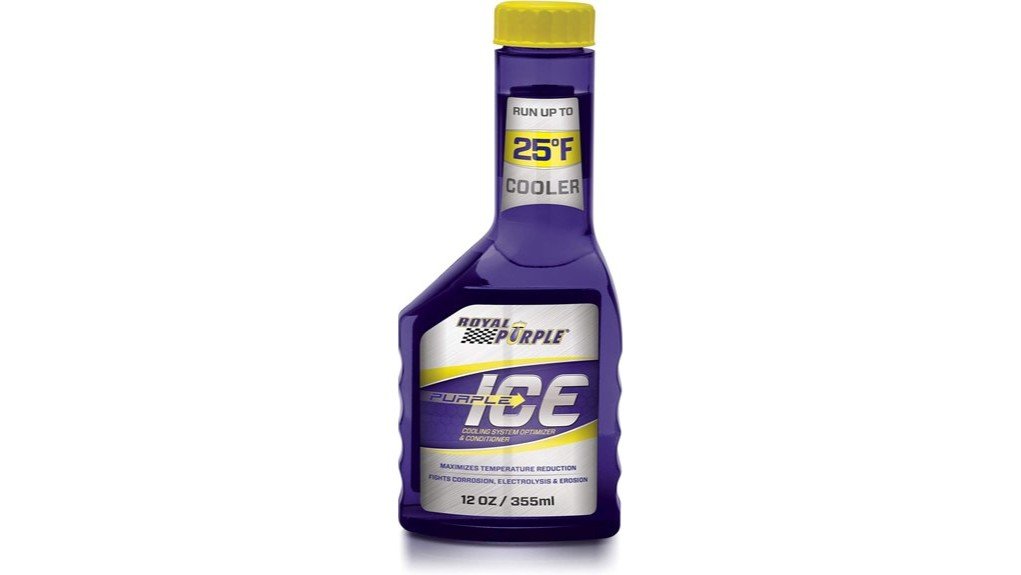
An engine that runs hotter than expected can make you consider a coolant additive before replacing expensive cooling-system parts. Royal Purple 01600 Purple Ice is a 12-ounce radiator conditioner designed to improve heat transfer while adding corrosion protection. It may help a properly functioning cooling system operate more consistently, especially in demanding conditions, but it cannot repair a leak, failed thermostat, weak fan, clogged radiator, or damaged water pump. This review explains its verified mixing ratios, compatibility, benefits, limitations, and the situations where it makes the most sense.
Quick Verdict
Rating: 8.4/10, Recommended with caveats
Best For: Drivers with a healthy cooling system who want improved heat transfer, added corrosion protection, or support during towing, track use, and hot-weather driving.
Bottom Line: Purple Ice offers clear mixing instructions, broad coolant compatibility, and a useful wetting-agent and corrosion-inhibitor formula. Its main limitation is that it provides no freeze protection and will not correct an underlying mechanical problem.
| Specification | Detail |
|---|---|
| Brand | Royal Purple |
| Model / Part Number | 01600 / ROY01600 |
| Product Type | Radiator conditioner and cooling-system optimizer |
| Bottle Size | 12 fl oz, pack of one |
| Formula | Water-based, glycol-free wetting agent and corrosion inhibitor |
| Main Function | Reduces coolant surface tension to support heat transfer and helps protect cooling-system metals |
| Coolant Compatibility | Compatible with current OEM and major-brand automotive antifreeze, including traditional green, OAT, and HOAT formulas |
| 50/50 Coolant Dose | 1 oz per quart of total cooling-system capacity |
| Straight-Water Dose | 2 oz per quart of total cooling-system capacity |
| Approximate Bottle Coverage | Up to 12 quarts at 1 oz per quart, or 6 quarts at 2 oz per quart |
| Engine Types | Gasoline and diesel engines with compatible pressurized cooling systems |
| Replacement Interval | Annually or every 30,000 miles with antifreeze; annually or every 15,000 miles with straight water |
| Freeze Protection | None; the correct antifreeze concentration is still required |
| Best Use | Street, towing, performance, racing, diesel, and hot-weather applications with a mechanically sound cooling system |
What Is Royal Purple Purple Ice?
Royal Purple 01600 Purple Ice is a synthetic coolant additive and radiator conditioner. It is not a complete coolant, antifreeze, stop-leak product, or mechanical repair. You add it to a compatible water and antifreeze mixture, or to a straight-water racing setup, using a dose based on the system’s total coolant capacity.
The formula combines a wetting agent with a corrosion inhibitor. The wetting agent lowers the coolant’s surface tension, which can help the fluid contact hot metal surfaces more effectively. The corrosion inhibitor adds protection for metals commonly found inside radiators, engines, heater cores, and water pumps.
Royal Purple also describes the formula as water-based and free from glycol. This makes it useful for some racing applications where glycol coolant is restricted, although you should always check the current rules for your track or racing organization.
Key Takeaways
- The manufacturer advertises a coolant-temperature reduction of up to 22°F, but the result depends on coolant concentration, vehicle design, airflow, load, and the condition of the cooling system.
- The largest cooling benefit is generally associated with higher water concentrations, while a normal 50/50 street mixture may produce a smaller change.
- Purple Ice is compatible with traditional green antifreeze and common OAT and HOAT coolant formulas.
- It does not provide freeze protection, boiling protection, or a repair for failed cooling-system parts.
- A single 12-ounce bottle may not be enough for a large system, especially when using the 2-ounce-per-quart treatment rate.
Who Should Buy It?
Best For
- Drivers who tow, drive in hot weather, or place sustained loads on a healthy cooling system.
- Performance and racing users who run a higher water concentration and need a glycol-free conditioner.
- Gasoline or diesel owners who want additional corrosion protection and improved coolant heat transfer.
Skip If
- Your vehicle has an unresolved leak, clogged radiator, failed fan, faulty thermostat, damaged head gasket, or weak water pump.
- You expect the additive to replace antifreeze or protect a straight-water system from freezing weather.
- Your cooling system already contains another heat-transfer additive and you do not plan to drain and flush it first.
Before You Buy: Purple Ice can support a cooling system that already works correctly, but it cannot repair the cause of chronic overheating. Diagnose leaks, airflow problems, coolant loss, blockages, fan faults, and thermostat problems before relying on an additive.
Cooling Performance and Temperature Reduction
Purple Ice reduces coolant surface tension so the fluid can transfer heat from engine surfaces more efficiently. Royal Purple’s marketing states that coolant temperature may drop by as much as 22°F under certain test conditions. You should treat that number as a best-case result rather than a guaranteed reduction in every vehicle.
The manufacturer’s technical data shows that results vary with the coolant mixture. Its dyno comparison shows a larger reduction with straight water than with a 50/50 antifreeze and water blend. This makes sense because water transfers heat more effectively than a high-glycol mixture, although straight water lacks the freeze, boiling, corrosion, and deposit protection needed for normal year-round street use.
In a street vehicle using a manufacturer-approved 50/50 coolant mixture, the practical benefit may be a smaller temperature change or more consistent temperatures during heavy use. A stable gauge reading under load can still be useful, but you should not expect the same result in every engine.
Corrosion Protection and Cooling-System Care
The second part of the formula is its corrosion inhibitor. Cooling systems can contain aluminum, cast iron, brass, copper, solder, and other materials. A properly maintained coolant mixture protects those materials, and Purple Ice is designed to add another layer of corrosion, electrolysis, and erosion protection.
Royal Purple also says the additive helps keep the system clean, reduces hot spots, protects water-pump seals, and supports water-pump life. These are preventive benefits. Purple Ice will not remove a severe blockage, restore a damaged seal, or reverse advanced corrosion in a neglected system.
You will get more value from the additive when the existing coolant is clean, the radiator has good airflow, and the thermostat, pressure cap, fans, hoses, and water pump are operating correctly.
Coolant and Engine Compatibility
Purple Ice works with current OEM and major-brand automotive antifreeze. Royal Purple specifically lists traditional green ethylene-glycol coolant as well as OAT and HOAT formulas, including many extended-life coolants used by American, European, and Asian manufacturers.
It can also be used in gasoline and diesel engines. Royal Purple notes that diesel applications may benefit from improved heat transfer and reduced cavitation. You should still follow your engine manufacturer’s coolant specification, especially in heavy-duty diesels that require a particular coolant chemistry or supplemental coolant additive program.
Do not combine Purple Ice with another water wetter or heat-transfer enhancer. Royal Purple recommends draining and flushing the cooling system if another competing cooling additive was previously used. Stop-leak products may be chemically compatible, but their internal coating can reduce the heat-transfer benefit.
How It Performs in Real Use
For Daily Street Driving
With a normal 50/50 coolant mixture, use 1 ounce of Purple Ice for every quart of total system capacity. In everyday driving, the most realistic result is improved temperature consistency rather than a dramatic gauge movement. A modern vehicle with a computer-controlled thermostat and fan system may continue displaying its normal regulated temperature even when heat transfer improves.
For Hot Weather and Towing
High outside temperatures, slow traffic, steep grades, and towing place more demand on the radiator and fans. Purple Ice may help a sound system transfer heat more effectively during these conditions. It cannot compensate for an undersized radiator, blocked fins, missing fan shrouds, low coolant, trapped air, or a failing fan clutch.
For Track and Straight-Water Applications
The 2-ounce-per-quart rate is intended for straight water or mixtures with a high water percentage. This setup may produce a greater cooling benefit, and the glycol-free formula can suit tracks that restrict glycol-based fluids. Straight water should not be left in a vehicle exposed to freezing temperatures, and local track rules should always take priority.
For Diesel Engines
Royal Purple approves Purple Ice for diesel engines. It may support heat transfer and help reduce cavitation, which can matter in some diesel cooling systems. Check the service manual before adding it to an engine that uses specialized extended-life coolant, coolant filters, or manufacturer-specific additive testing.
How to Mix and Use Purple Ice Correctly
- Let the engine cool completely. Never open a hot or pressurized radiator or expansion tank.
- Check the total cooling-system capacity. Use the capacity listed in the owner’s manual or service information, not an estimate based only on the visible reservoir.
- Inspect the cooling system. Correct leaks, blockages, fan problems, corrosion, and other mechanical faults before adding the product.
- Shake the bottle well. This helps distribute the formula before dosing.
- Make room for the additive. Remove enough coolant to avoid overfilling the system.
- Measure the correct dose. Use 1 ounce per quart with a 50/50 coolant mixture, or 2 ounces per quart with straight water or a high-water mixture.
- Refill and remove trapped air. Follow the vehicle manufacturer’s bleeding procedure because air pockets can cause unstable temperatures.
- Check the level again after a complete heat cycle. Inspect for leaks and confirm that the coolant level remains within the marked range.
Pro Tip: Calculate the dose before ordering. A 12-ounce bottle treats up to 12 quarts at the 1-ounce rate, but only 6 quarts at the 2-ounce rate. A large truck or performance cooling system may require more than one bottle.
Compatibility and Safety Notes
Purple Ice provides no freeze protection. It also does not replace the boiling-point protection supplied by the correct antifreeze concentration and a properly pressurized cooling system. Royal Purple recommends at least 20% antifreeze in street-driven vehicles, but your vehicle manufacturer and local winter temperatures may require a stronger mixture.
The product directions recommend bottled, filtered drinking water for water-based mixtures. They advise against using distilled water by itself in straight-water systems with aluminum radiators, although distilled water may be used as part of a 50/50 antifreeze mixture. Follow the instructions on your current bottle because product directions can change.
Coolant and cooling-system additives must be stored away from children and animals. Clean spills promptly and dispose of drained coolant according to local requirements. Wear suitable eye and skin protection when servicing a cooling system.
Common Mistakes to Avoid
- Adding a full bottle without checking capacity: The correct amount depends on the total number of quarts in the system.
- Treating the overflow reservoir as the full system: The dose is based on total capacity, including the engine, radiator, heater circuit, and connected hoses.
- Mixing it with another water wetter: Drain and flush the old additive before switching to Purple Ice.
- Using straight water on a street vehicle in cold weather: Purple Ice does not stop the coolant from freezing.
- Expecting it to fix overheating: An additive cannot repair a failed thermostat, blocked radiator, damaged pump, combustion leak, or airflow problem.
- Adding far more than recommended: Extra product offers no additional cooling benefit and may cause foaming.
- Skipping maintenance: Replenish it annually or at the recommended mileage interval to maintain its intended performance.
Pros and Cons
Pros
- Works as both a coolant wetting agent and corrosion inhibitor.
- Compatible with traditional green, OAT, HOAT, and many extended-life coolants.
- Approved by Royal Purple for gasoline and diesel cooling systems.
- Clear treatment rates for 50/50 coolant and straight-water applications.
- Water-based, glycol-free formula suits many track-use requirements.
Cons
- Provides no freeze protection and cannot replace antifreeze.
- Temperature reductions vary, and the advertised maximum is not guaranteed.
- A single bottle may not cover a large system at the 2-ounce-per-quart rate.
Is It Worth the Price?
Purple Ice sits in the specialty-additive category rather than the basic coolant category. Its value comes from combining a wetting agent, corrosion inhibitor, water-pump protection, broad coolant compatibility, and clear treatment instructions in one product.
It is worth considering when you regularly tow, race, drive in severe heat, operate a diesel engine, or want extra corrosion protection in a mixed-metal cooling system. Buyers with larger systems should account for the possibility of needing more than one bottle.
It is not good value when a vehicle already has a mechanical cooling fault. Money is better spent diagnosing and repairing the thermostat, radiator, fan, pressure cap, pump, head gasket, or coolant leak before adding a performance conditioner.
How It Compares to Alternatives
Red Line WaterWetter, DEI Radiator Relief, and Rislone Hy-per Cool are competing products in the coolant-additive category. Before choosing between them, compare bottle size, required treatment rate, antifreeze compatibility, service interval, and the rules for your intended street or track application.
Purple Ice makes the most sense when you value its broad OEM coolant compatibility, glycol-free formula, published 1-ounce and 2-ounce treatment rates, and combined wetting-agent and corrosion-inhibitor design. Another product may suit you better when its bottle size or dosage matches your cooling-system capacity more closely.
Frequently Asked Questions
Does Purple Ice replace antifreeze?
No. Purple Ice provides no freeze protection and does not replace the boiling, corrosion, and deposit protection supplied by the correct antifreeze mixture. Use the coolant concentration required by your vehicle manufacturer and climate.
Can Purple Ice be mixed with OAT, HOAT, or traditional green coolant?
Yes. Royal Purple lists compatibility with current OEM and major-brand antifreeze, including traditional green ethylene-glycol coolant and OAT or HOAT formulas. You should still use the coolant type specified for your vehicle.
How much Purple Ice should you add?
Use 1 ounce per quart of total cooling-system capacity with a 50/50 antifreeze mixture. Use 2 ounces per quart with straight water or a mixture containing a high percentage of water.
Will one 12-ounce bottle treat your whole cooling system?
One bottle covers up to 12 quarts at the 1-ounce-per-quart rate. It covers only 6 quarts at the 2-ounce rate, so a large truck, diesel, or racing system may require more than one bottle.
Can Purple Ice be used with another water wetter?
Royal Purple advises against combining it with another heat-transfer enhancer or water wetter. If another brand was previously used, drain and flush the system before adding Purple Ice.
How often should Purple Ice be replaced?
With antifreeze, add it annually or every 30,000 miles, whichever comes first. In a straight-water cooling system, add it annually or every 15,000 miles.
Is Purple Ice suitable for diesel engines?
Yes. Royal Purple approves it for diesel engines and states that it can improve heat transfer and reduce cavitation. Check the engine manufacturer’s coolant requirements before adding it to a specialized heavy-duty cooling system.
Can Purple Ice fix a vehicle that keeps overheating?
No. It may improve heat transfer in a healthy system, but it cannot repair coolant loss, trapped air, a failed thermostat, clogged radiator, weak fan, damaged water pump, or internal engine problem. Diagnose the cause of overheating before using an additive.
The Bottom Line
Royal Purple 01600 Purple Ice is a strong choice when you want a compatible wetting agent and corrosion inhibitor for a healthy street, diesel, towing, or performance cooling system. Its clear dosage instructions and glycol-free formula are useful strengths, but you should skip it when you need freeze protection or expect an additive to repair a mechanical fault.
The 8.4/10 verdict reflects a well-documented and versatile coolant conditioner with realistic limitations. Confirm your system capacity, coolant specification, and required bottle count before ordering.
Ready to Buy?
Check the latest price, bottle quantity, and product details before you decide.