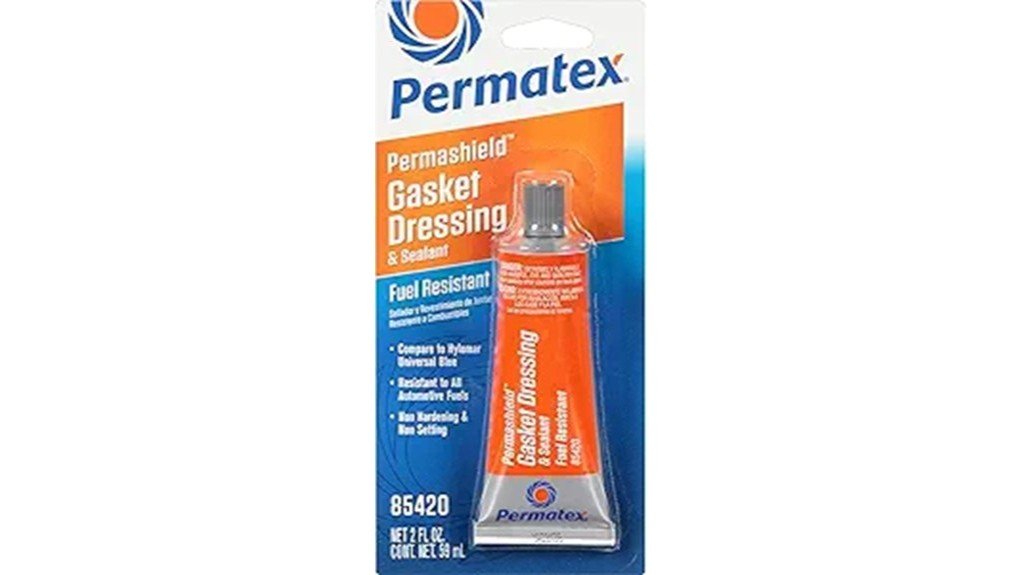
A small gasket leak can turn into repeat disassembly, fluid loss, and wasted repair time. Permatex 85420 is made for jobs where you need fuel resistance, a flexible seal, and more working time than a fast-curing RTV gives you. Its non-setting polyester urethane formula can work as a dressing on pre-cut gaskets or as a sealant on suitable machined metal flanges. This review explains where it works well, where it does not, and how to apply it safely.
Permatex 85420 Review: Fuel-Resistant Gasket Dressing and Flange Sealant
Quick Verdict
Rating: 8.5/10, recommended with application and safety caveats
Best For: DIY mechanics and technicians sealing compatible pre-cut gaskets or close-fitting machined metal flanges exposed to fuel, oil, coolant mixtures, or vibration.
Bottom Line: Permatex 85420 stands out for broad automotive-fluid resistance, a -60°F to 500°F service range, and a permanently flexible seal that supports later disassembly. Its main tradeoff is that correct surface preparation, solvent evaporation, material compatibility, and safe ventilation are essential.
Key Takeaways
- Permatex 85420 is a 2 fl oz, non-setting polyester urethane gasket dressing and flange sealant.
- It resists gasoline, diesel fuel, oils, water/glycol mixtures, gasoline/alcohol blends, and other listed automotive fluids.
- The verified operating temperature range is -60°F to 500°F (-50°C to 260°C).
- Its tacky, non-hardening formula gives you flexible assembly time and can support repeated disassembly of compatible metal parts.
- You must clean both surfaces, apply only a thin film or bead, let the solvent fully evaporate, and torque the fasteners to the equipment manufacturer’s specification.
- The product is highly flammable before use and requires good ventilation, eye protection, suitable gloves, and separation from heat or ignition sources.
Key Specifications
| Specification | Detail |
|---|---|
| Brand | Permatex |
| Model / Item Number | 85420 |
| Product Type | Fuel-resistant gasket dressing and flange sealant |
| Container Size | 2 fl oz tube |
| Chemical Type | Polyester urethane |
| Seal Character | Non-setting, non-hardening, permanently flexible, and tacky |
| Temperature Range | -60°F to 500°F (-50°C to 260°C) |
| Listed Fluid Resistance | Gasoline, diesel fuel, industrial fuels, petroleum and synthetic oils, water/glycol mixtures, gasoline/alcohol mixtures, and fluorocarbon refrigerants |
| Best Surface Type | Clean, dry pre-cut gaskets and compatible machined metal flanges |
| Application Method | Apply a thin film or bead to both surfaces, let the solvent evaporate, assemble, and torque to the manufacturer’s specification |
| Suggested Uses | Cast oil pans, differential covers, axle assemblies, gearboxes, water pumps, valve cover and intake gaskets, bearing caps, hydraulic covers, fuel injectors, and pumps |
| Service Timing | Seals on assembly after the solvent has evaporated; follow the current label and repair manual before returning equipment to service |
| Storage | Keep tightly capped in a cool, dry, well-ventilated place, away from heat and ignition sources |
| Key Safety Note | Highly flammable liquid and vapor before application; avoid breathing vapors and contact with skin or eyes |
What Is the Permatex 85420?
Permatex 85420, sold as PermaShield Fuel Resistant Gasket Dressing & Flange Sealant, is a non-running polyester urethane gel for automotive and equipment sealing work. You can use it as a thin dressing with a compatible pre-cut gasket or as a sealant on suitable machined metal joint faces.
The formula does not harden into a rigid rubber bead. It remains tacky and flexible through rapid temperature changes, which helps it tolerate vibration and makes later disassembly easier. Permatex also lists it as sensor safe and suitable for vertical or underside applications because the gel does not readily run.
This is a specialized sealing compound, not a universal leak repair. You still need sound parts, flat mating surfaces, the correct gasket or flange design, proper fastener torque, and a repair procedure that permits this type of sealant.
Who Should Buy It?
Best For
- DIY mechanics or technicians working on compatible metal flanges and pre-cut automotive gaskets.
- Repairs exposed to gasoline, diesel, oil, coolant mixtures, vibration, or wide temperature changes.
- Serviceable assemblies that may need to come apart again without scraping away a fully hardened RTV bead.
Skip If
- Your service manual specifies dry assembly, a different chemistry, or a model-specific RTV sealant.
- The part is cracked, warped, deeply pitted, badly corroded, or has a gap the product is not designed to bridge.
- You cannot provide ventilation or safely control sparks, flames, hot surfaces, and skin or eye exposure.
Before You Buy: Confirm the sealant type in your vehicle or equipment service manual. Fuel resistance does not make Permatex 85420 correct for every gasket, plastic component, thread, oxygen-rich system, or damaged flange.
Fuel and Fluid Resistance
The main reason to choose Permatex 85420 is its broad fluid resistance. The technical data sheet lists industrial fuels, gasoline, diesel, gasoline/alcohol mixtures, petroleum and synthetic lubricating oils, water/glycol mixtures, and fluorocarbon refrigerants.
That range makes it more appropriate than a general household sealant for many underhood, drivetrain, marine, and small-engine jobs. It does not remove the need to check the exact fluid, gasket material, operating pressure, and repair instructions for your application.
Flexible, Non-Hardening Seal
Permatex 85420 stays flexible from -60°F to 500°F. This matters when a joint sees engine heat, cold starts, vibration, or repeated thermal cycling. A rigid seal can become difficult to service, while this tacky compound is designed to support repeated assembly and disassembly of compatible metal parts.
The non-setting formula also gives you more positioning time than products that skin over quickly. You can align a gasket and start fasteners without rushing, but you still need to keep the film thin and let the acetone odor disappear before assembly.
Gasket Dressing or Flange Sealant?
As a gasket dressing, you apply a thin coating to both sides of a compatible pre-cut gasket. The tack can help hold the gasket in place and fill minor surface marks that remain after proper cleaning.
As a flange sealant, it can be used on suitable machined joint faces where the manufacturer allows a non-hardening sealant. It is not a substitute for every molded gasket, O-ring, RTV bead, anaerobic flange sealant, or large-gap gasket maker. Match the product to the joint design rather than choosing it only because fuel may be present.
Fit, Compatibility, and Common Applications
Permatex lists axle assemblies, hydraulic parts, differential covers, cast oil pans, water pumps, bearing caps and brackets, gearboxes, hydraulic equipment covers, intake manifold gaskets, and valve cover gaskets among the suggested applications. Its technical sheet also includes fuel injectors and pumps, marine engines, diesel engines, head gaskets, and torque converters.
These examples show the product’s range, but they are not blanket approval for every vehicle or engine. Modern powertrains often use specific molded gaskets, surface finishes, bead sizes, or factory sealants. Check the service information for your exact year, make, model, and component before applying anything.
How It Performs in Real Use
Cast Oil Pans and Differential Covers
The non-running gel is useful on vertical or underside work where a thin bead needs to stay where you place it. Its resistance to lubricating oils and wide temperature range suit many cast housing repairs, provided the flange is flat and the manual permits this chemistry.
Water Pumps, Intake Gaskets, and Valve Covers
When used as a dressing, the tacky film can keep a pre-cut gasket from shifting while you align the part and start the bolts. The benefit is installation control, not extra thickness. Too much product can interfere with gasket compression or squeeze into areas where it does not belong.
Fuel-System, Marine, and Diesel Work
Fuel and fluid resistance is the strongest advantage for compatible injector, pump, marine, and diesel applications. These repairs can have strict material and safety requirements, so you should follow the component manufacturer’s instructions rather than treating the application list as universal approval.
Assemblies You May Service Again
The flexible seal is useful when future access matters. Compared with a hard-setting compound, it may make the next disassembly cleaner and reduce the time spent scraping cured material from a serviceable metal flange.
How to Use Permatex 85420 Correctly
- Verify the application. Confirm that the repair manual allows a fuel-resistant, non-hardening gasket dressing or flange sealant.
- Work safely. Use the product outdoors or in a well-ventilated area. Keep it away from flames, sparks, hot surfaces, pilot lights, and smoking.
- Remove old material carefully. Clean away the old gasket and residue without gouging the metal or changing the flange surface.
- Degrease and dry both surfaces. Oil, fuel, coolant, dirt, and moisture can weaken the seal. Use a compatible cleaner and allow it to evaporate.
- Apply a thin film or bead to both surfaces. More product is not better. Keep the coating even and out of passages, bolt holes, and internal areas.
- Let the solvent fully evaporate. The technical directions state that the acetone or solvent odor should be gone before assembly.
- Assemble without excessive sliding. Align the parts, install the fasteners in the correct sequence, and torque them to the manufacturer’s specification.
- Follow the current label for final checks. The technical sheet advises rechecking torque after 10 minutes, but your equipment manual takes priority.
Pro Tip: Lay out the gasket, fasteners, torque sequence, and tools before opening the tube. The unlimited assembly time helps, but a clean, organized setup reduces the chance of contaminating the film or shifting the gasket.
Compatibility and Safety
Permatex 85420 is a chemical sealant with a highly flammable solvent system. The current safety data sheet warns that the liquid and vapor are highly flammable and may irritate eyes, skin, or the respiratory system. Wear suitable gloves and eye protection, avoid breathing vapors, wash exposed skin, and keep the product away from children.
Do not use it near open flames, sparks, hot surfaces, or other ignition sources. Store the capped tube in a cool, dry, well-ventilated place. The technical sheet also says it is not recommended for pure oxygen, oxygen-rich systems, chlorine, or other strong oxidizing materials.
Plastic compatibility is not broadly confirmed in the verified technical information. Do not apply it to plastic, composite, painted, or sensitive surfaces unless the current label or manufacturer specifically approves that material and application.
Pros and Cons
Pros
- Verified resistance to gasoline, diesel, oils, water/glycol mixtures, and other listed automotive fluids.
- Flexible operating range from -60°F to 500°F.
- Non-setting formula supports longer assembly time and later disassembly.
- Non-running gel can be useful on vertical and underside applications.
- Works as a dressing with compatible pre-cut gaskets or as a sealant on suitable machined flanges.
Cons
- Not correct for every gasket material, plastic part, flange design, or service-manual procedure.
- Surface cleaning and full solvent evaporation add preparation steps that you cannot skip.
- Highly flammable before application and requires ventilation, protective equipment, and careful storage.
Is It Worth the Price?
Permatex 85420 offers strong value when your repair specifically needs fuel resistance, flexibility, and a serviceable non-hardening seal. A 2 fl oz tube is practical for occasional repairs, and the product can cover several types of automotive and equipment joints when the application is approved.
You get the most value when a basic gasket adhesive lacks the required fluid resistance or when a hard-curing RTV would make future disassembly less convenient. It is not the best fit when your repair needs a structural filler, a large-gap gasket maker, a plastic-safe sealant, or a factory-specified anaerobic compound.
How It Compares to Alternatives
Permatex Aviation Form-A-Gasket No. 3 is another slow-drying, non-hardening option, but you should compare its fluid resistance and application directions with your repair. Permatex High Tack Gasket Sealant focuses more on gasket positioning and adhesion. Permatex Ultra Black RTV is a curing silicone gasket maker intended for different joints and oil-resistant applications.
Permatex 85420 makes the most sense when fuel and broad automotive-fluid resistance are central requirements and you want a flexible, serviceable seal. Choose the alternative specified by the repair manual when the joint requires RTV, anaerobic sealant, thread sealant, or dry assembly.
Frequently Asked Questions
Can Permatex 85420 replace a gasket?
It can be used as a gasket maker on suitable machined flanges and as a dressing with compatible pre-cut gaskets. It should not replace a molded gasket, O-ring, or factory-specified sealing system unless the service manual and current product directions allow it.
How long does Permatex 85420 take to cure?
It is a non-setting, non-hardening sealant, so it does not cure like RTV silicone. Let the solvent fully evaporate before assembly, then follow the current label and repair manual for torque checks and return-to-service timing.
Is Permatex 85420 safe for plastic parts?
The verified technical information focuses on pre-cut gaskets and machined metal flanges. Do not assume plastic compatibility. Use it on plastic only when the current Permatex label or a manufacturer-approved procedure confirms the exact material and application.
Does it resist brake fluid?
The verified technical sheet lists many automotive fluids but does not specifically name brake fluid. For direct brake-fluid exposure, use a sealant or component approved by the brake-system manufacturer rather than relying on a general fluid-resistance claim.
Can it handle extreme cold and engine heat?
Yes, the listed service range is -60°F to 500°F (-50°C to 260°C). Temperature rating alone does not confirm fit, so also check the joint design, fluid, pressure, and service-manual requirement.
Can you use it on threaded parts?
The technical sheet says it may seal threaded parts, but that does not make it a universal thread sealant. Confirm the thread material, fluid, pressure, and manufacturer requirement before using it instead of a dedicated thread sealant.
What is the most common application mistake?
Applying too much product or assembling while the solvent is still present can undermine a careful repair. Use a thin, even film, keep it out of passages and bolt holes, and wait until the solvent odor is gone.
How should you clean and store the tube?
Follow the current label and safety data sheet for cleanup. Replace the cap promptly, keep the container tightly closed, and store it in a cool, dry, well-ventilated area away from heat, sparks, flames, and children.
The Bottom Line
Permatex 85420 is a strong choice for compatible automotive, marine, diesel, and equipment gasket work that needs fuel resistance and a flexible, non-hardening seal. Buy it when your repair manual allows this chemistry and future disassembly matters, but skip it for damaged flanges, unverified plastic parts, or joints that require a different factory-specified sealant.
Ready to Buy?
Check the latest product details and confirm compatibility with your repair before you decide.