Disclosure: As an Amazon Associate, we earn from qualifying purchases. If you click a link on this page and make a purchase, we may receive a small commission at no extra cost to you.
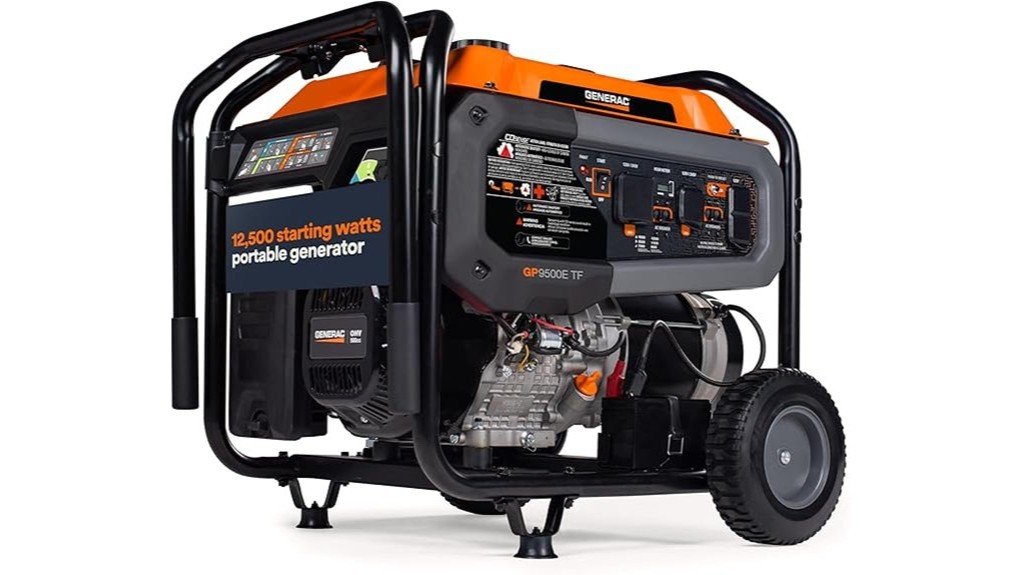
A large portable generator can keep key circuits running during an outage, but fuel access, installation, and real output matter more than the peak-watt number on the box. The Generac GP9500E TF Tri-Fuel Portable Generator, model 8063-0, gives you gasoline, propane, and natural gas operation with 120/240-volt output and electric start. Its strongest points are flexible fuel choices, useful home-backup outlets, and a rugged 500cc engine. Its main tradeoffs are its 219-pound weight, lower output on propane and natural gas, open-frame noise, and the need for safe transfer-switch and gas-line planning.
Quick Verdict
Rating: 8.4/10, Recommended with caveats
Best For: Home backup, jobsite power, and buyers who want three fuel choices in one open-frame generator
Bottom Line: The GP9500E TF gives you strong gasoline output, practical 30-amp and 50-amp connections, and the freedom to use stored fuel or a natural gas supply. You must still plan for reduced output on gaseous fuels, professional home connections, safe outdoor placement, and significant weight.
| Specification | Detail |
|---|---|
| Brand | Generac |
| Model | GP9500E TF, model 8063-0, 49-state configuration |
| Product type | Open-frame tri-fuel portable generator |
| Fuel options | Gasoline, liquid propane, and natural gas |
| Gasoline output | 9,500 running watts, 12,500 starting watts |
| Propane output | 8,550 running watts, 11,250 starting watts |
| Natural gas output | 7,000 running watts, 9,000 starting watts |
| Engine | 500cc Generac OHV engine with splash lubrication |
| Starting system | Electric start and recoil pull start, battery included |
| Fuel tank | 7.5 gallons |
| Rated runtime | Up to 8.5 hours on gasoline or 4.5 hours on a 20-pound propane tank at 50% load |
| Voltage and frequency | 120/240 VAC, 60 Hz |
| Outlets | 120V 20A GFCI duplex, 120/240V 30A L14-30R, and 120/240V 14-50R |
| Safety features | COsense carbon monoxide shutdown, low-oil shutdown, circuit breakers, and covered outlets |
| Dimensions | 27.5 x 27.1 x 27.6 inches, 44.9 inches long with handle extended |
| Weight | 219 pounds |
| Mobility | Folding handle and 9.5-inch never-flat wheels |
| Included items | Engine oil, battery, handle and wheel kit, owner’s manual, and LP supply hose |
| Warranty | 3-year limited residential warranty and 2-year limited commercial warranty |
Before You Buy: This listing corresponds to the 49-state model 8063-0. Confirm emissions compliance for your location before ordering. For whole-home or selected-circuit backup, use an approved transfer switch or interlock installed according to local code. Never connect a portable generator directly to household wiring without proper transfer equipment.
What Is the Generac GP9500E TF?
The GP9500E TF is a high-output portable generator built around a 500cc OHV engine. A fuel selector lets you run it on gasoline, a propane cylinder, or a properly sized natural gas supply. That flexibility can help during long outages because you are not tied to one fuel that may be difficult to find.
This model is aimed at buyers who need more than a small recreational generator. Its 120/240-volt connections support planned home backup and larger loads, but it is not an automatic standby unit. You must place it outdoors, start it, and manage fuel and loads manually.
Key Takeaways
- Gasoline provides the highest output at 9,500 running watts and 12,500 starting watts.
- Propane and natural gas improve fuel flexibility but reduce available wattage.
- The L14-30R and 14-50R outlets suit transfer equipment, larger loads, and compatible RV connections.
- COsense and low-oil shutdown add protection, but safe outdoor placement is still required.
- At 219 pounds, the wheel kit helps on firm ground, but loading the unit normally requires two people.
Who Should Buy It?
Best For
- Homeowners who want gasoline, propane, and natural gas backup options
- Jobsites that need 120/240-volt power and GFCI-protected household outlets
- Buyers who already plan to use a code-compliant manual transfer setup
Skip If
- You need quiet, lightweight power for camping or close neighbors
- You need automatic outage response without manual setup
- You need verified low-distortion output for highly sensitive electronics
Power Output by Fuel
The rated output changes with fuel type. Gasoline gives you the full 9,500 running watts and 12,500 starting watts. Propane drops to 8,550 running watts and 11,250 starting watts. Natural gas provides 7,000 running watts and 9,000 starting watts.
That difference affects what you can run at the same time. A load plan that works on gasoline may overload the generator on natural gas. Add the running watts of your connected devices, then allow extra capacity for motors in refrigerators, pumps, furnace blowers, and air conditioners that draw more power during startup.
Pro Tip: Make three load lists, one for each fuel. This prevents you from using the 9,500-watt gasoline rating when the generator is actually running on 7,000-watt natural gas.
Fuel Choice and Runtime
Gasoline
Gasoline gives you the highest output and uses the built-in 7.5-gallon tank. The model 8063-0 specification sheet rates it for up to 8.5 hours at 50% load. Gasoline is useful when you need maximum starting capacity, but it requires safe storage and can become stale during long periods without use.
Propane
Propane stores longer than gasoline and connects through the included LP hose. The rated output is lower, and the specification sheet lists up to 4.5 hours at 50% load on a 20-pound cylinder. Cold weather, cylinder size, fuel level, and load can affect vapor delivery and runtime.
Natural Gas
Natural gas is convenient when you have a properly sized supply because you do not need to refill a tank during a long outage. It also gives you the lowest rated output. Pipe size, pressure, fittings, and total line length matter, so have the connection planned and leak-tested according to local codes by a qualified professional.
Outlets and Home-Backup Compatibility
The control panel gives you a 120V 20A GFCI duplex outlet, a 120/240V 30A L14-30R twist-lock outlet, and a 120/240V 14-50R outlet. This combination is more useful for home backup than a generator limited to household receptacles. An hour meter helps you track service intervals, and the covered outlets add protection during storage and outdoor work.
Generac lists the unit as compatible with its HomeLink manual transfer switch. You can also use other approved equipment when it matches the generator, your electrical panel, local code, and the work performed by your electrician. Do not use a double-male cord, do not backfeed a panel, and disconnect loads before starting or stopping the generator.
Safety Features and Safe Placement
COsense monitors carbon monoxide buildup while the engine is running and can shut down the generator when it detects a hazard. A red indicator reports a CO shutdown, while a yellow indicator can signal a COsense fault. COsense reduces risk, but it does not make indoor or garage operation safe and does not replace indoor battery-powered carbon monoxide alarms.
Run the generator only outdoors, far from windows, doors, vents, and occupied buildings. Point the exhaust away from people and structures, keep at least 5 feet of clearance around the unit, and protect it from rain without blocking airflow. Low-oil shutdown helps protect the engine, while circuit breakers protect the outlets from overload.
Build Quality, Portability, and Noise
A 1.25-inch steel-tube cradle surrounds the engine and alternator. The folding handle and 9.5-inch never-flat wheels make the unit easier to roll across a driveway or firm jobsite. Covered outlets help keep debris away from the receptacles when the generator is stored or moved.
The 219-pound weight is still a major limitation. Generac advises using two people to lift the unit, and the wheels are not intended for road use. The open-frame design also means you should expect noticeable engine and exhaust noise. Generac does not publish a dBA figure for this exact model in the specification sheet, so claims that it is quiet are not well supported.
Setup and Controls
The package includes engine oil, a battery, the handle and wheel kit, an LP supply hose, and the owner’s manual. You will need to assemble the mobility parts, connect the battery, add the specified oil, and review the starting steps before first use. Electric start handles normal starts, while the recoil starter gives you a backup method.
Fuel connections need care. Check propane fittings for leaks as directed, and have natural gas piping correctly sized, purged, and leak-tested. Start and stop with loads disconnected, then add loads one at a time.
How It Performs in Real Use
During a Home Outage
With a transfer switch and a sensible load plan, it can cover several essential circuits. Refrigeration, lighting, a sump pump, a furnace blower, and selected outlets may fit, but check each appliance label and motor-start demand. Gasoline gives you the widest margin.
On a Jobsite
The steel frame, covered outlets, GFCI duplex receptacle, and 120/240-volt connections suit tool use. You still need to avoid overloading individual receptacles and keep the generator away from dust buildup, standing water, and enclosed work areas.
With an RV
The 14-50R outlet can work with compatible 50-amp RV equipment, while other setups may need the correct cord or adapter. This model does not list a dedicated TT-30R outlet. Check neutral and grounding requirements for your RV, surge protector, and campground-style connection before use.
For Long Outages
Tri-fuel operation is most valuable when an outage lasts longer than your stored gasoline. Propane gives you a stable stored fuel option, while a properly installed natural gas supply can reduce refueling work. The tradeoff is lower power on both gaseous fuels, so you may need to shed more loads.
How to Use It Correctly
- Place the generator outdoors on a level surface, with the exhaust pointed away from people and buildings.
- Check engine oil, fuel connections, outlet condition, and the surrounding area before every start.
- Select the fuel source and follow the matching starting procedure in the owner’s manual.
- Start the generator with all electrical loads disconnected.
- Let the engine stabilize, then connect loads one at a time, starting with the largest motor load.
- Stay below both the generator’s fuel-specific running-watt limit and each outlet’s amperage limit.
- Disconnect loads before shutdown and allow the unit to cool before storage or transport.
Maintenance and Storage
Check oil before each use. Generac calls for an oil change after the first 30 hours, then every 100 hours or each year, with more service under heavy load or high heat. Follow the manual for the air filter, spark plug, spark arrestor, and valve clearance.
Keep cooling openings clear and wipe the exterior with a damp cloth. Do not wash the generator with a garden hose because water can enter the engine or electrical windings. For gasoline storage, follow the manual’s fuel and carburetor instructions rather than leaving untreated fuel in the system for an extended period.
Pros and Cons
Pros
- Three fuel choices support better outage planning
- 9,500 running watts on gasoline handles substantial loads
- L14-30R and 14-50R outlets suit home-backup and larger-load connections
- Electric and recoil starting methods are both included
- COsense, low-oil shutdown, covered outlets, and a steel cradle add useful protection
Cons
- Output falls to 8,550 watts on propane and 7,000 watts on natural gas
- The 219-pound body is difficult to lift or load
- No published noise or total harmonic distortion figure for this exact model
Is It Worth the Price?
The GP9500E TF sits in the high-output portable-generator class. Its value comes from three fuel systems, a 500cc engine, 120/240-volt outlets, electric start, CO shutdown, and transfer-switch compatibility. It makes the most sense when you will prepare more than one fuel source.
It is less compelling when you only need occasional power for a few small devices. A smaller inverter generator will be easier to move, quieter, and often better suited to sensitive electronics. This Generac makes more sense when capacity and fuel flexibility matter more than low noise and light weight.
How It Compares to Alternatives
The Westinghouse WGen9500TFc offers similar gasoline output and tri-fuel operation, while adding remote start and a published noise figure. The DuroMax XP13000HXT is another 500cc tri-fuel option worth comparing when you want a nearby power class and different control features.
The Generac GP9500E TF is the better fit when you prefer Generac’s product ecosystem, HomeLink compatibility, and the exact outlet layout shown here. Compare local service access, warranty terms, fuel-specific output, noise data, included accessories, and transfer equipment before choosing.
Frequently Asked Questions
Can the Generac GP9500E TF power a house?
It can power selected household circuits when the combined running and starting loads stay within the fuel-specific capacity. Use an approved transfer switch or interlock installed by a qualified electrician, and never backfeed your electrical panel.
Does it produce 12,500 watts on every fuel?
No. The 12,500-watt figure is the starting output on gasoline. Starting and running output drop on propane and natural gas, so plan loads around the fuel you are using.
Can you switch fuels while the generator is running?
Follow the model-specific procedure in the owner’s manual rather than changing fuels by guesswork. Disconnect electrical loads before starting or stopping the unit, and confirm valves, hoses, and selector settings before each fuel change.
Is it safe for computers and sensitive electronics?
Generac lists automatic voltage regulation, but the exact specification sheet does not publish total harmonic distortion. Do not assume inverter-grade power. Check the requirements of your electronics and consider a suitable UPS, power conditioner, or inverter generator when clean power is a priority.
How long does it run at half load?
The model 8063-0 specification sheet lists up to 8.5 hours on gasoline and 4.5 hours on a 20-pound propane tank at 50% load. Actual runtime changes with load, temperature, fuel quality, and equipment condition.
Can you connect it to a natural gas line yourself?
Natural gas pressure, pipe size, total line length, valves, and fittings must meet the generator’s requirements and local code. Use a qualified gas professional to size, install, purge, and leak-test the supply.
Is the generator quiet?
It is an open-frame 500cc generator, and Generac does not publish a dBA rating for this exact model in the specification sheet. Expect more noise than a smaller enclosed inverter generator and place it safely with distance from occupied areas.
What maintenance does it need?
Check oil before each use and follow the manual for oil changes, air-filter service, spark-plug replacement, spark-arrestor inspection, and valve-clearance checks. Service it more often in dust, heavy load, or high temperatures.
The Bottom Line
The Generac GP9500E TF is a strong choice for buyers who need high gasoline output, three fuel options, and 120/240-volt connections for planned backup or jobsite use. Skip it when you need a light, quiet inverter generator or guaranteed low-distortion power. Its main strength is fuel flexibility, while its biggest limitations are weight, open-frame noise, and reduced output on propane and natural gas.
Ready to Buy?
Check the latest price and confirm the model, emissions configuration, and included accessories before you decide.