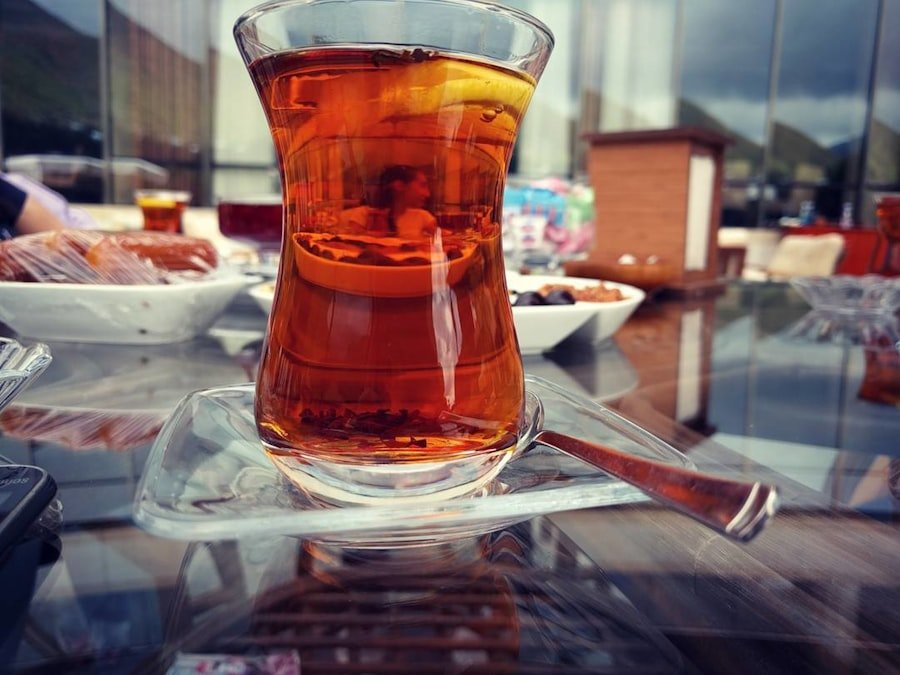
Turkish tea, or çay, is one of the easiest ways to experience everyday life in Istanbul. You will see small tulip-shaped glasses on breakfast tables, ferry trays, shop counters, tea gardens, offices, and café tables across the city. The classic drink is strong black tea, usually associated with Türkiye’s eastern Black Sea region, especially Rize, and brewed so each person can adjust the strength.
Although tea was known in the region before modern domestic cultivation began, the Turkish tea industry people recognize today developed mainly during the 20th century. That history, along with Istanbul’s tea gardens, markets, and daily hospitality rituals, helps explain why a simple glass of tea carries so much cultural meaning.
Quick Answer
Turkish tea in Istanbul usually means strong black tea brewed in a two-tier çaydanlık and served in a small tulip-shaped glass. For a classic experience, try a neighborhood tea garden, historic Çınaraltı in Çengelköy, or Pierre Loti in Eyüpsultan, then buy sealed Rize tea to brew at home.
Key Takeaways
- Traditional Turkish çay is primarily black tea, not apple tea.
- Rize is Türkiye’s most important tea-producing province and accounts for most of the country’s fresh-tea output.
- A çaydanlık uses strong tea concentrate in the upper pot and hot water in the lower pot so each glass can be adjusted to taste.
- Historic Çınaraltı is in Çengelköy, while Pierre Loti in Eyüpsultan is known for its Golden Horn view.
- For tea to take home, check whether you are buying packaged black tea or a fruit/herbal infusion marketed to visitors.
A Short History of Turkish Tea
Tea existed in Ottoman-era trade and drinking culture, but it is safer not to attach the modern Turkish tea tradition to a precise 16th- or 17th-century starting date. The major turning point came in the early 20th century, when Türkiye began developing its own Black Sea tea industry.
According to ÇAYKUR’s official history, an agricultural mission examined the potential for tea cultivation in 1917. In 1924, Law No. 407 supported the cultivation of tea and other crops in Rize and Borçka. This helped establish the eastern Black Sea region as the center of Turkish tea production.
Tea later became deeply embedded in everyday social life. In 2022, UNESCO inscribed the shared Culture of Çay of Türkiye and Azerbaijan on the Representative List of the Intangible Cultural Heritage of Humanity, recognizing tea’s role in hospitality, social interaction, and community life.
In Türkiye, tea is not simply a hot drink. Offering a fresh glass is a familiar way to welcome a guest, continue a conversation, or take a break together.
The Different Varieties of Turkish Tea
Rize Black Tea
When someone in Istanbul simply asks for çay, black tea is normally what they mean. Much of Türkiye’s tea comes from the humid eastern Black Sea coast, with Rize playing the largest role.
The Türkiye Ministry of Agriculture’s 2025 tea report shows that Rize accounted for about 67.7% of the country’s fresh-tea production in 2024. Trabzon, Artvin, and Giresun were the other major producing provinces.
Fruit and Herbal Infusions
Visitors will also see apple, pomegranate, rosehip, linden, sage, mint, and other fruit or herbal drinks in Istanbul. These can be enjoyable, but they should not be confused with the traditional black tea that dominates everyday Turkish tea culture.
Note: Sweet apple tea is especially visible in tourist-oriented shops and bazaars. If you want the everyday drink served in Turkish homes, workplaces, and tea gardens, ask for regular black çay.
Other True Teas
Türkiye also produces smaller quantities of green and white tea. These come from the same tea plant, Camellia sinensis, but are processed differently. They are alternatives worth trying, although they are not the standard glass of Turkish black tea most visitors associate with Istanbul.
Strength and Brewing Style
Turkish tea is commonly brewed as a concentrated infusion and then mixed with hot water. This means two people can drink from the same pot while choosing very different strengths. A lighter glass is called açık çay, while a stronger, darker glass may be described as demli çay.
The Best Places to Enjoy Turkish Tea in Istanbul
Istanbul does not have one objectively “best” glass of tea. Fresh brewing, atmosphere, and the people you share it with often matter as much as the brand of tea itself. Still, several places offer especially memorable settings.
Tarihi Çınaraltı in Çengelköy
Historic Çınaraltı is in Çengelköy on Istanbul’s Asian side, not Emirgan. The Istanbul Governorate’s guide to Çengelköy specifically highlights Tarihi Çınaraltı Aile Çay Bahçesi as a place to sit near the Bosphorus and enjoy tea or coffee.
The attraction is the setting as much as the drink: a traditional tea-garden atmosphere combined with one of Istanbul’s classic waterfront neighborhoods.
Pierre Loti in Eyüpsultan
Pierre Loti is another famous tea stop, this time above the Golden Horn in Eyüpsultan. The hilltop setting is associated with French writer Pierre Loti, who spent time in the area and admired the view. Tea here is best treated as part of the experience: sit down, look across the Golden Horn, and allow time rather than rushing through a glass.
Neighborhood Tea Gardens and Everyday Cafés
You do not need a famous address to drink good Turkish tea. A busy neighborhood çay bahçesi, a simple café in Kadıköy or Beşiktaş, or a tea served during a ferry ride can feel just as authentic. Look for places where tea is moving steadily from the pot to the tables; high turnover usually means you are less likely to receive a glass that has been sitting too long.
The Art of Making Turkish Tea
The defining feature of traditional Turkish tea is the çaydanlık, a pair of stacked kettles. The larger lower kettle holds hot water. The smaller upper pot contains the concentrated tea brew. When serving, you pour some concentrate into the glass and then add hot water from the lower kettle until the strength is right for you.
This two-pot system is also described in the official GoTürkiye guide to tea culture in Anatolia.
At a Glance
| Time Required | About 15–20 minutes, depending on the tea and preferred strength |
| Difficulty | Easy |
| Tools Needed | Çaydanlık, stove or heat source, teaspoon, and tea glasses |
| Cost | Low per pot; the main cost depends on the tea and whether you already own a çaydanlık |
| Step | What to Do |
|---|---|
| 1 | Fill the lower kettle with fresh water and bring it to a boil. |
| 2 | Place loose black tea in the smaller upper pot. |
| 3 | Pour enough boiling water from the lower kettle over the leaves to create the concentrated brew. |
| 4 | Refill the lower kettle if needed, stack the pots, and keep them over gentle heat while the upper tea develops. |
| 5 | Pour some tea concentrate into a tulip-shaped glass. |
| 6 | Top it up with hot water until the tea is as light or strong as you prefer. Add sugar only if you want it. |
Pro Tip: Do not try to make every glass the same strength. The advantage of a çaydanlık is that one pot can serve both someone who wants light açık çay and someone who prefers strong demli çay.
How to Choose the Best Turkish Tea in Istanbul
Choosing Turkish tea becomes easier once you know what you are looking for. If your goal is the classic drink served across Türkiye, look for packaged black tea rather than assuming every colorful tea mixture in a tourist market is traditional Turkish çay.
- Check the tea type: Look for black tea or siyah çay if you want the everyday Turkish style.
- Look at origin: Rize and the eastern Black Sea region are the heart of Turkish tea production.
- Check the package: A sealed package is easier to store and transport than an open tea mixture.
- Check freshness: Review the production or best-before information rather than choosing only by decorative packaging.
- Choose for your brewing method: Loose black tea works well in a çaydanlık, while tea bags are more convenient but give a different experience.
ÇAYKUR is one of the best-known Turkish tea producers and is closely connected to the development of the country’s tea industry. Other Turkish brands are also widely available, so there is no need to treat one package as the only authentic choice.
The Health Benefits of Turkish Tea

Turkish black tea contains caffeine and plant compounds including polyphenols. According to the U.S. National Center for Complementary and Integrative Health’s overview of tea research, limited evidence suggests that green and black tea may have beneficial effects on some cardiovascular risk factors, including blood pressure and cholesterol.
That does not mean Turkish tea prevents or treats heart disease, diabetes, or other chronic conditions. Human research is more nuanced than those claims suggest, and the amount of caffeine and other compounds in a glass also varies with the tea, brewing strength, serving size, and steeping method.
Note: Turkish tea is best viewed as a traditional beverage, not a medical treatment. If caffeine affects your sleep, heart rate, anxiety, pregnancy, medications, or another health concern, adjust your intake based on professional medical advice.
Sugar is optional. If you drink many glasses throughout the day, remember that repeatedly adding sugar cubes can change the nutritional impact of an otherwise unsweetened drink.
The Ritual of Drinking Turkish Tea
Drinking tea in Türkiye is closely tied to hospitality and social connection. UNESCO describes tea culture as a social practice that helps build and maintain relationships and is used to welcome people and mark important moments.
Tea is generally served freshly brewed and hot in small curved glasses. The clear glass also lets you see the color of the tea before drinking it. Sugar may be offered alongside it, while milk is not a standard part of the traditional serving style.
In a home, shop, office, or tea garden, receiving another glass is common. A refill is often less about thirst than about continuing the visit. This is why the pace of Turkish tea can feel different from grabbing a takeaway drink and leaving immediately.
Pairing Turkish Tea with Turkish Delights
Turkish tea works especially well with foods that contrast with its firm, slightly astringent black-tea flavor. Turkish delight, or lokum, is one classic sweet pairing. Rose, pistachio, citrus, and other varieties can soften the bitter edge of a strong glass.
Tea is not limited to dessert. It is also common with breakfast and snacks. Simit, börek, pastries, cheese, olives, and other breakfast foods all fit naturally beside a glass of tea.
If the tea itself is heavily sweetened, choose a less-sweet snack. If you drink it without sugar, richer desserts such as baklava or lokum provide more contrast.
Exploring Tea Culture in Istanbul
One reason Istanbul is such a good city for tea lovers is that tea is not limited to specialist tea shops. You can encounter it in cafés, restaurants, ferry terminals, markets, workplaces, hotel lobbies, small neighborhood tea houses, and traditional tea gardens.
You will also encounter herbal and fruit infusions, especially in tourist districts. They are part of Istanbul’s modern drink scene, but when locals simply say çay, black tea remains the default reference.
The most memorable tea experience may therefore come from an ordinary setting: watching ferries cross the Bosphorus, talking with a shopkeeper, sitting under trees in a neighborhood garden, or sharing several glasses during a long breakfast.
Where to Buy Authentic Turkish Tea in Istanbul
Turkish black tea is widely available, so you do not have to find a specialist boutique. Supermarkets and neighborhood grocery stores are useful when you want standard packaged brands and clear labeling.
The Spice Bazaar, or Mısır Çarşısı, is another popular place to browse tea alongside spices, sweets, dried fruit, and other food products. It is especially interesting if you want to compare black tea with fruit and herbal blends.
Pro Tip: For a practical souvenir, compare the actual tea type, origin, package size, and freshness before paying extra for an ornate tourist package. A simple sealed bag of Rize black tea can be more useful at home than a decorative mixed-fruit blend.
How to Order Turkish Tea Like a Local
You do not need fluent Turkish to order tea. A few short phrases make it easier to control the strength and sweetness of your drink.
| Turkish | Meaning |
|---|---|
| Bir çay, lütfen. | One tea, please. |
| Açık çay, lütfen. | A light/weaker tea, please. |
| Demli çay, lütfen. | A strong tea, please. |
| Şekersiz. | Without sugar. |
| Bir çay daha, lütfen. | Another tea, please. |
Common Mistakes to Avoid
- Assuming apple tea is the standard local tea: Everyday Turkish çay is normally black tea.
- Expecting milk automatically: Traditional Turkish tea is normally served without milk.
- Thinking stronger is always better: The concentrate is meant to be diluted to your preferred strength.
- Choosing only by souvenir packaging: Read what type of tea is actually inside.
- Rushing the experience: Tea is often part of conversation and social time rather than simply a drink to finish quickly.
Tips for Brewing the Perfect Cup of Turkish Tea
Good Turkish tea depends more on a few basic habits than on complicated equipment.
- Start with fresh water. Water with an unpleasant taste will affect the final tea.
- Use loose black tea suited to çaydanlık brewing.
- Make a concentrate rather than one fixed-strength pot. This is what lets you serve both light and strong tea.
- Keep the heat gentle once the tea is brewing. Aggressive boiling is not necessary.
- Serve the tea fresh. Tea left hot for too long can become increasingly harsh or bitter.
- Adjust before adding sugar. First change the concentrate-to-water ratio; then sweeten only if desired.
The goal is not to make one mathematically perfect glass. Traditional Turkish tea is flexible: the same pot can produce a light glass for one guest and a strong glass for another. Once you understand that concentrate-and-water system, brewing Turkish tea at home becomes straightforward.
Sources
- UNESCO — Culture of Çay — supports the cultural role of tea, hospitality, black-tea consumption, and the 2022 intangible-heritage inscription.
- ÇAYKUR — History of Tea Production in Türkiye — supports the 1917 agricultural work and 1924 Law No. 407.
- Türkiye Ministry of Agriculture — Tea Product Report 2025 — supports current production figures and Rize’s share of Turkish tea production.
- GoTürkiye — Tea as a Symbol of Common Life and Culture in Anatolia — supports traditional çaydanlık preparation and everyday tea culture.
- Istanbul Governorate — Çengelköy — confirms the location of Tarihi Çınaraltı Aile Çay Bahçesi.
- National Center for Complementary and Integrative Health — Tea — supports the discussion of tea compounds, caffeine, and the limits of health-benefit evidence.
Frequently Asked Questions
What is Turkish tea?
Turkish tea usually means black tea brewed as a concentrated infusion in the upper part of a two-tier çaydanlık. It is mixed with hot water to the drinker’s preferred strength and commonly served in small tulip-shaped glasses.
Where can I find the best Turkish tea in Istanbul?
Good Turkish tea is available throughout Istanbul. For memorable surroundings, try Tarihi Çınaraltı in Çengelköy or Pierre Loti in Eyüpsultan. A busy neighborhood tea garden, café, or ferry can also provide an excellent everyday tea experience.
What makes Turkish tea unique?
Its identity comes from both the brewing system and the serving culture. A çaydanlık keeps concentrated tea and hot water separate, allowing each glass to be adjusted, while the small clear glass and repeated servings are closely associated with Turkish hospitality.
Is Turkish tea strong or weak?
It can be either. The upper pot contains concentrated tea, and hot water from the lower kettle is added when serving. Ask for açık çay if you want it lighter or demli çay if you prefer a stronger glass.
Is apple tea traditional Turkish tea?
Apple tea is widely sold in Istanbul, particularly in tourist areas, but it is not the same as the everyday black çay associated with Turkish homes, workplaces, cafés, and tea gardens. It is better treated as a fruit or flavored infusion.
Can I buy Turkish tea to take home from Istanbul?
Yes. Packaged Turkish black tea is widely sold in supermarkets, grocery stores, the Spice Bazaar, and other food shops. Check the product type, origin, package condition, and freshness before buying.
Do Turkish people normally put milk in tea?
Milk is not part of the standard traditional serving style. Turkish black tea is normally served on its own, with sugar available for people who want it.