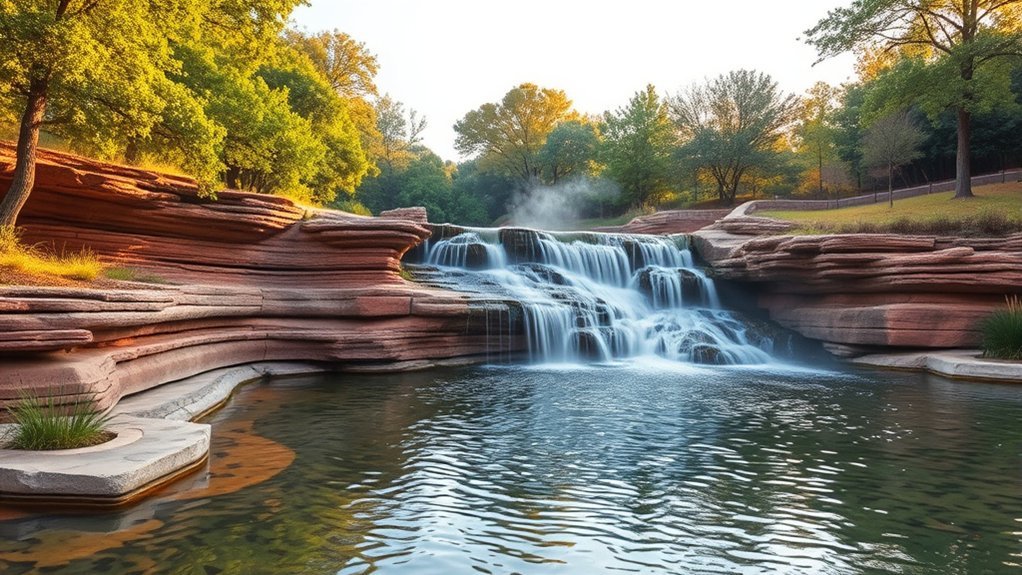
If you’re searching for waterfalls near Oklahoma City, several of Oklahoma’s best water-focused escapes are within reach. Turner Falls, Chickasaw National Recreation Area, and Wichita Mountains Wildlife Refuge make practical road-trip choices, while Natural Falls and Heavener Runestone Park are better suited to longer weekend adventures. Each offers a different mix of waterfalls, swimming, hiking, wildlife, and scenery.
Quick Answer
The best waterfall trips from Oklahoma City include Turner Falls for a 77-foot cascade and swimming, Chickasaw National Recreation Area for Little Niagara and creek swimming, and Wichita Mountains Wildlife Refuge for rugged cascades. Natural Falls and Heavener Runestone Park are farther drives but reward weekend travelers with dramatic scenery and quieter trails.
Key Takeaways
- Turner Falls is Oklahoma’s best-known 77-foot waterfall and offers swimming, hiking, caves, camping, and picnic areas.
- Natural Falls State Park also features a 77-foot waterfall, but swimming is currently prohibited throughout the park.
- Little Niagara at Chickasaw National Recreation Area combines small cascades with designated swimming areas, although conditions and closures can change.
- Wichita Mountains Wildlife Refuge offers rugged cascades around Cache Creek, Forty-Foot Hole, and Charon’s Garden rather than one easy waterfall trail.
- Heavener Runestone Park has a seasonal waterfall that is most impressive after good rainfall.
- Always check official park conditions before leaving because water flow, swimming access, fire restrictions, heat closures, and trail conditions can change.
Best Waterfall Trips From Oklahoma City at a Glance
| Destination | Water Feature | Swimming | Best For |
|---|---|---|---|
| Turner Falls Park | 77-foot waterfall and natural pools | Yes, subject to park rules | Swimming, families, camping |
| Natural Falls State Park | 77-foot waterfall | No | Photography, hiking, scenery |
| Chickasaw National Recreation Area | Little Niagara and Travertine Creek cascades | Yes, in permitted areas | Families, picnics, swimming |
| Wichita Mountains Wildlife Refuge | Creek cascades and seasonal falls | Not the main attraction | Hiking, wildlife, rugged scenery |
| Heavener Runestone Park | Seasonal waterfall | Not a swimming destination | Hiking, views, history |
Pro Tip: Oklahoma waterfall flow can change noticeably with rainfall. If seeing strong cascades is your priority, check recent weather and each park’s official conditions page before making a long drive.
Visit Turner Falls: Oklahoma’s Best-Known 77-Foot Waterfall
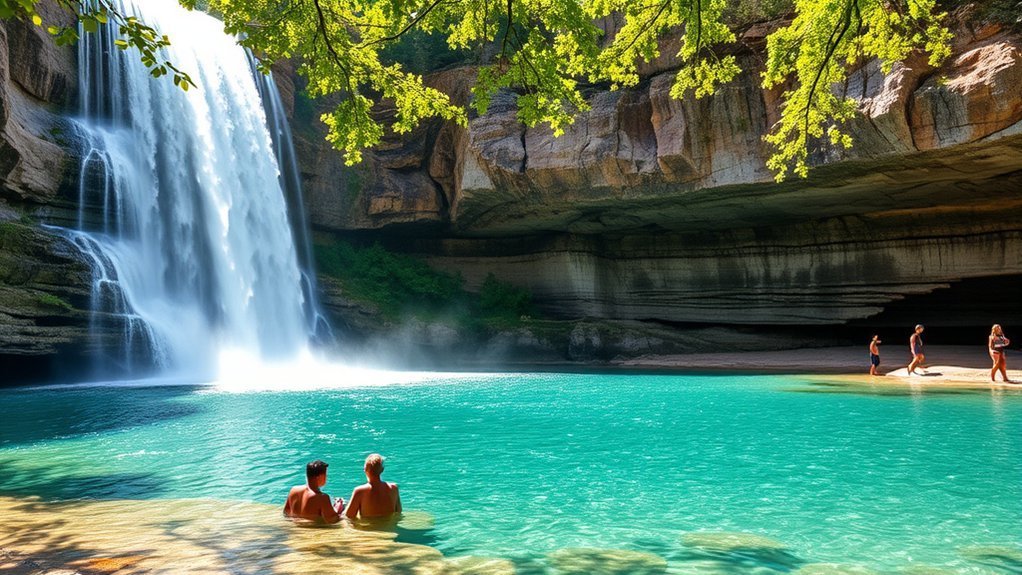
Turner Falls in Davis is one of Oklahoma’s signature waterfall destinations. Honey Creek drops approximately 77 feet into a natural swimming pool in the Arbuckle Mountains. The official Turner Falls Park history describes it as the largest waterfall in Oklahoma, while Natural Falls State Park is also listed at 77 feet. For that reason, it is safest to describe Turner Falls as one of the state’s tallest and best-known waterfalls.
The city-owned park covers roughly 1,500 acres and combines the main waterfall with natural swimming areas, caves, hiking, picnic areas, camping, RV sites, shelters, cabins, and the unusual stone Collings Castle. That range of activities makes Turner Falls one of the strongest choices for families who want more than a quick photo stop.
Swimming is allowed, but visitors should review the current park policies before entering the water. The park states that swimming is at your own risk and prohibits swimming after dark.
Warning: Turner Falls currently requires children under age 13 to wear a U.S. Coast Guard-certified life jacket before entering the water. Wet rocks and low-water crossings can also be slick, so follow posted signs and never assume calm-looking water is risk-free.
Admission is required, and rates vary by season, day, and age. Because pricing can change, check the park’s current admission and camping prices before your trip. Buying admission or making overnight arrangements ahead of a busy summer weekend can simplify your arrival.
Explore the Scenic Beauty of Natural Falls State Park
Natural Falls State Park near Colcord in northeastern Oklahoma centers on another dramatic 77-foot waterfall. Water drops through rock formations into a narrow, green valley where ferns, mosses, and other moisture-loving plants thrive. Observation areas give visitors a clear view without requiring them to enter the water.
The current Oklahoma State Parks listing for Natural Falls describes about four and a half miles of hiking and nature trails along with camping, yurts, picnic areas, catch-and-release fishing, disc golf, playgrounds, and other recreation.
Warning: Swimming is currently not allowed anywhere in Natural Falls State Park. Older travel information may mention a splashing area, but the current official state-park listing says swimming is prohibited.
That makes Natural Falls better for hiking, photography, camping, and quiet scenery than for a swimming trip. Use the official park map and marked routes rather than depending solely on crowdsourced trail apps, especially if rain has made paths muddy or slick.
Experience Waterfalls and Swimming at Chickasaw National Recreation Area
Chickasaw National Recreation Area in Sulphur offers a different experience from a single tall waterfall. Here, springs and Travertine Creek feed a series of small cascades and swimming holes, including the well-known Little Niagara. The combination of flowing water, shaded picnic areas, trails, lakes, and campgrounds makes it one of the most versatile nature trips in south-central Oklahoma.
The National Park Service maintains more than 20 miles of hiking and walking trails, ranging from short walks to longer rustic routes.
Scenic Hiking Trails
For a water-focused visit, explore paths around the historic Platt District and Travertine Creek, where shaded forest, springs, bridges, cascades, and picnic areas create an easy way to combine sightseeing with walking. Other trails around the recreation area extend into prairie, lakeside, and hill environments for visitors who want a longer outing.
Trail difficulty varies considerably. Some routes are short and relatively level, while others include uneven ground, steeper sections, or limited shade. Check the NPS trail descriptions before choosing a route for young children, strollers, or visitors with limited mobility.
Refreshing Swimming Holes
Little Niagara is both a cascade and a popular swimming area. However, swimming access is regulated. According to the National Park Service swimming guidance, areas upstream, or east, of Little Niagara are closed to swimming and wading, and swimming is also prohibited around docks and boat-launch areas.
Summer crowds can also affect parking around Travertine Creek. When designated parking fills, vehicle access may be temporarily restricted until spaces reopen.
Note: The National Park Service monitors bacteria levels at recreational swimming locations during the summer. Check the current swimming-water monitoring results and park conditions shortly before visiting.
Picnic areas and grills make Chickasaw a practical choice for a family day outside. Turner Falls near Davis can also be combined with the broader Arbuckle-area trip if you have enough time, but the two attractions operate independently and have different rules.
Discover Cascades at Wichita Mountains Wildlife Refuge
Wichita Mountains Wildlife Refuge provides a much more rugged waterfall experience. Instead of one large developed swimming fall, visitors can find creek cascades, rocky gorges, mountain scenery, and wildlife along the refuge’s trail system.
The U.S. Fish & Wildlife Service lists about 15 miles of designated hiking trails. The refuge is also home to American bison, Rocky Mountain elk, prairie dogs, deer, and hundreds of bird species.
- Forty-Foot Hole: Near Lost Lake, Cache Creek passes through a rocky gorge and creates several cascades over granite formations. This is rugged hiking country rather than a simple developed waterfall overlook.
- Charon’s Garden: This rocky trail crosses creek areas and boulder fields and can include a waterfall along the route when water is flowing. It is better suited to hikers comfortable with rough terrain than to visitors expecting an easy family stroll.
- Wildlife Watching: The refuge adds the possibility of seeing bison, elk, deer, prairie dogs, and numerous bird species while exploring the landscape.
- Flow Conditions: Smaller cascades may look very different depending on recent rainfall and creek levels.
Current Alert: As of August 15, 2026, Wichita Mountains Wildlife Refuge has a temporary extreme-heat restriction in effect. Hiking is permitted only from sunrise until 10 a.m., and all hikers must be off trails and the Mount Scott roadway by 10 a.m. The refuge says the restriction remains in effect until further notice, so verify the alert before traveling.
Bring more water than you think you will need, start early, and choose a route that fits your fitness and scrambling experience. The Wichita Mountains are an excellent choice when hiking and wildlife matter as much as the waterfall itself.
Relax at Heavener Runestone Park’s Seasonal Waterfall
Heavener Runestone Park in southeastern Oklahoma combines mountain views, short hiking trails, a mysterious stone inscription, and a seasonal waterfall. The park’s official website says it offers a little over two miles of trails and recommends seeing the waterfall after substantial rainfall.
Because the waterfall is seasonal, this is not a destination where visitors should assume strong flow year-round. It works best as part of a broader hiking or southeastern Oklahoma trip, especially when recent rain has improved the cascades.
Scenic Views and a Mysterious Runestone
The park occupies a scenic setting on Poteau Mountain near the Ouachita Mountains. A trail and stone staircase lead visitors toward the large boulder bearing the inscription for which the park is named.
The markings have long inspired theories about pre-Columbian Norse visitors, which explains the site’s Viking theme. However, the age and origin of the inscription are not established historical fact. The Oklahoma Historical Society’s discussion of Heavener Runestone Park documents the Viking theory and investigations surrounding it without proving that Vikings carved the stone.
The Heavener Runestone is fascinating because of the mystery surrounding it—not because a Viking origin has been proven.
Hiking and Exploration Opportunities
The park’s trails are relatively short, but some sections include steep grades. Along the way, visitors can explore wooded slopes, overlooks, rock formations, the runestone site, and the seasonal waterfall.
Photography can be especially rewarding after rainfall, when the waterfall is flowing more strongly. Even then, stay on established routes and avoid scrambling onto wet rock near the cascade.
Water Adventures at Blue River and Mountain Fork
Blue River and the Lower Mountain Fork River are worth considering if you enjoy moving water, fishing, and cascades, although neither should be confused with a single classic waterfall like Turner Falls.
- Blue River Fishing: The Oklahoma Department of Wildlife Conservation stocks trout in the designated Blue River trout area from November 1 through March 31. Other fish species are present, but the seasonal stocking program specifically applies to trout.
- Blue River Camping: Hunter and angler camping is permitted in designated areas. Some visitors may also need an Oklahoma fishing, hunting, combination license, or Wildlife Conservation Passport depending on their activity and exemptions.
- Lower Mountain Fork Paddling: The Lower Mountain Fork near Broken Bow is a popular canoe and kayak destination, particularly from spring through fall. Different stretches range from calm water to more active current and rocky features.
- Mountain Fork Fishing: The Lower Mountain Fork is also managed as a trout fishery, with camping, cabins, and hiking available in and around Beavers Bend State Park.
Before fishing Blue River, review the current Oklahoma trout-area regulations. For Mountain Fork, check the ODWC Lower Mountain Fork information and local water conditions before entering the river.
Note: Blue River is primarily promoted and managed as a public fishing and hunting area. Do not assume every stretch is an unrestricted recreational paddling route; verify access rules for the activity you plan to do.
Tips for Visiting Oklahoma’s Waterfalls Responsibly
A little preparation can make an Oklahoma waterfall trip safer and more enjoyable while protecting the places you came to see.
- Check official conditions before leaving. Water levels, swimming closures, heat restrictions, road access, fire rules, and water-quality advisories can change quickly.
- Stay away from the top of waterfalls. Moving water can sweep a person off their feet even when it looks shallow.
- Do not climb wet rocks beside cascades. Mist, algae, and polished rock can make surfaces slippery even when they do not look dangerous.
- Supervise children closely. Do not rely on swimming ability alone around natural water.
- Use a properly fitted life jacket where appropriate. Follow any park-specific flotation-device requirements.
- Pack out your trash. Keep food wrappers, fishing line, bottles, and other waste away from waterways and wildlife.
- Respect closed areas. Barriers and swimming restrictions protect both visitors and sensitive natural resources.
- Use official maps for access. Social-media posts may point to private property, unofficial paths, or areas where access rules have changed.
- Choose weekdays when possible. Popular swimming and waterfall destinations can become crowded on warm summer weekends.
The National Park Service’s river and stream safety guidance warns against walking or climbing on slippery rocks near moving water and advises visitors not to swim or wade upstream from a waterfall.
Warning: Never jump or dive into an unfamiliar natural pool. Submerged rocks, logs, sudden depth changes, and currents may be invisible from the surface.
Frequently Asked Questions
What Is the #1 Tourist Attraction in Oklahoma City?
There is no official single #1 attraction for every visitor, but the Oklahoma City National Memorial & Museum is one of the city’s signature destinations. For travelers specifically interested in nature and waterfalls, the places in this guide require driving outside central Oklahoma City.
What Are Some Hidden Gems in OKC?
Oklahoma City has quieter parks, trails, wildlife areas, gardens, and lakes, but major natural waterfalls are generally found outside the city. If waterfalls are your priority, Turner Falls, Chickasaw National Recreation Area, and the Wichita Mountains are stronger road-trip choices.
Is Grotto Falls Worth It?
Grotto Falls can be a worthwhile hike, but it is not in Oklahoma. The National Park Service’s Grotto Falls is in Great Smoky Mountains National Park in Tennessee. It is a 25-foot waterfall reached by a roughly 2.6-mile round-trip hike on Trillium Gap Trail, so it should not be confused with the Oklahoma destinations in this guide.
Where Is the Biggest Waterfall in Oklahoma?
Turner Falls in Davis is commonly promoted as Oklahoma’s largest or tallest waterfall and drops about 77 feet into a natural pool. Natural Falls State Park also has a waterfall officially listed at 77 feet, so Turner Falls is best described as one of Oklahoma’s tallest and most famous waterfalls rather than the only 77-foot cascade.
Can You Swim at Natural Falls State Park?
No. The current Oklahoma State Parks listing states that swimming is not allowed anywhere in Natural Falls State Park. Visit for the 77-foot waterfall, hiking trails, observation areas, camping, photography, and other land-based activities instead.
When Is the Best Time to See Waterfalls in Oklahoma?
It depends on the destination. Developed or spring-fed water features may remain visible for long periods, while smaller cascades and Heavener’s seasonal waterfall can be more impressive after adequate rainfall. Avoid visiting immediately after dangerous storms, and always check official park and trail conditions before traveling.
Conclusion
Oklahoma offers more waterfall variety than many travelers expect. Turner Falls is the standout choice for a classic waterfall-and-swimming trip, while Chickasaw National Recreation Area combines smaller cascades with swimming holes and miles of trails. The Wichita Mountains are better for rugged hiking and wildlife, and Natural Falls and Heavener reward travelers willing to venture farther from Oklahoma City.
The key is to choose the destination that matches the experience you want. Check current park rules and water conditions, respect swimming restrictions, and treat slippery rocks and moving water seriously. With a little planning, these waterfalls and cascades can turn an ordinary Oklahoma road trip into a memorable day outdoors.
Sources
- Turner Falls Park — official information on the 77-foot waterfall, park activities, admission, swimming policies, and camping.
- Oklahoma State Parks — Natural Falls State Park — current waterfall height, trails, amenities, and no-swimming rule.
- National Park Service — Chickasaw National Recreation Area Swimming — swimming locations, closures, parking, and visitor rules.
- U.S. Fish & Wildlife Service — Wichita Mountains Wildlife Refuge — current refuge alerts, hiking access, wildlife, and official visitor information.
- Oklahoma Historical Society — Heavener Runestone State Park — historical context surrounding the runestone and Viking theories.
- Oklahoma Department of Wildlife Conservation — Trout Area Information — Blue River trout season, access, camping, and fishing regulations.