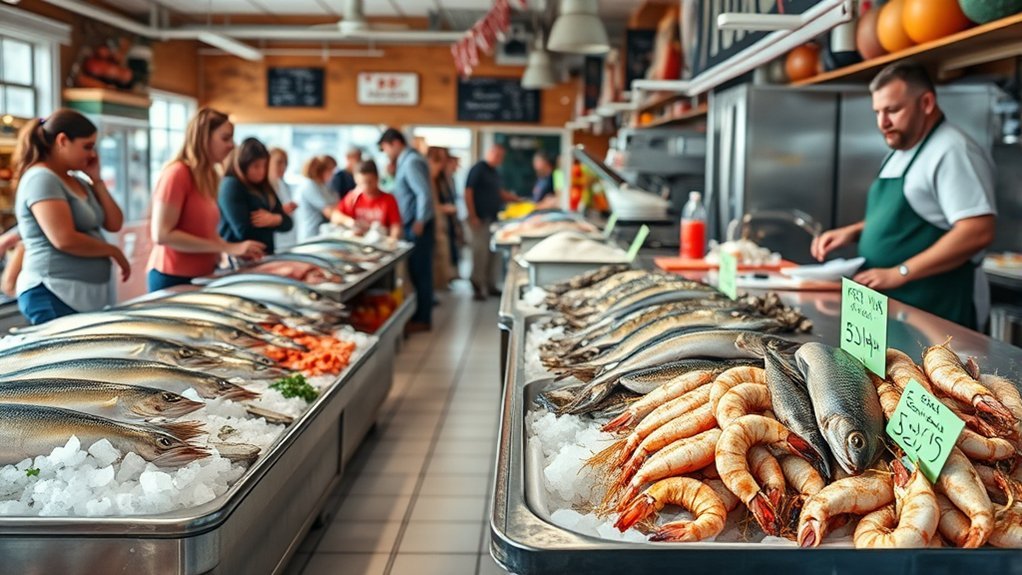
Finding good fish and seafood in Norman, Oklahoma, is less about discovering a hidden coastal-style fish market and more about knowing which local grocery and warehouse stores maintain seafood departments, how to check their current selection, and how to judge quality for yourself. Norman is inland, so marine seafood such as salmon, shrimp, oysters, snapper, and grouper reaches local stores through commercial supply chains rather than nearby ocean waters.
Quick Answer
For seafood in Norman, start with verified options such as Sprouts Farmers Market, Crest Foods, Natural Grocers, and Sam’s Club. Selection changes, so check the seafood case or call before making a special trip. Judge fish by proper refrigeration, a mild smell, firm flesh, clear labeling, and how recently it was packed or thawed.
Key Takeaways
- Norman has several verified grocery and warehouse stores with seafood departments, but current inventory can change from day to day.
- Do not assume seafood labeled “previously frozen” is automatically lower quality. Handling, temperature control, condition, and sourcing all matter.
- Oklahoma-caught catfish, crappie, trout, and other freshwater species are different from marine seafood shipped into Norman from coastal or international suppliers.
- For food safety, keep seafood cold, prevent cross-contamination, and cook most seafood to an internal temperature of 145°F.
Why Fresh Seafood Matters for Local Cooks
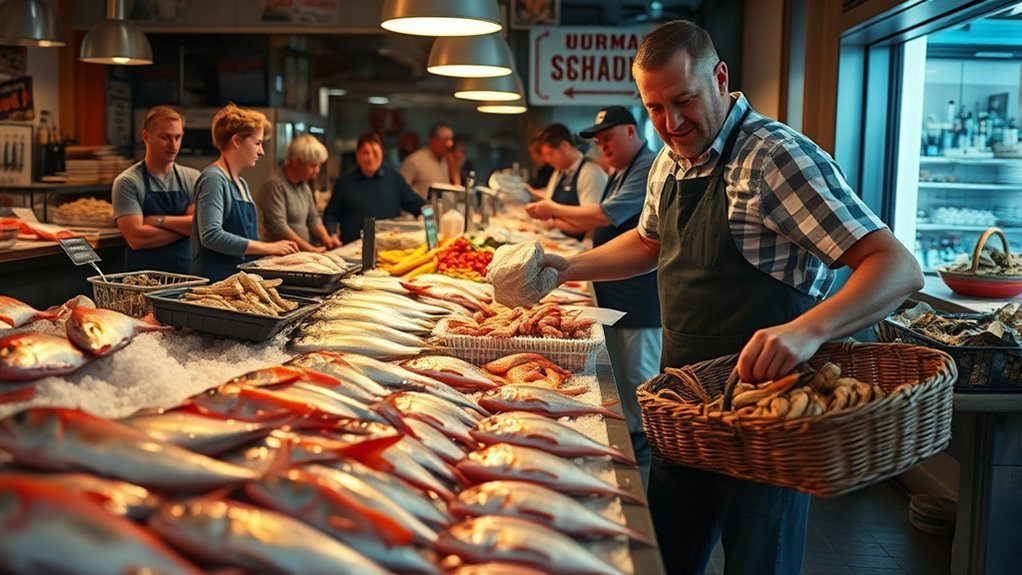
Good seafood can give home cooks delicate texture, clean flavor, and plenty of flexibility for grilling, baking, sautéing, steaming, or poaching. But “fresh” should not be treated as a magic label. A properly handled frozen or previously frozen fish can also be an excellent choice.
The U.S. Food and Drug Administration recommends buying fresh fish only when it is refrigerated or displayed on a thick bed of ice. Fish should smell fresh and mild rather than strongly fishy, sour, rancid, or ammonia-like. Fillets should look moist and firm without obvious drying or darkening around the edges. FDA seafood-selection guidance also specifically recognizes fish sold as previously frozen.
In Norman, supporting a local grocery store is different from supporting a local fishing fleet. Marine seafood is transported into this inland market, while Oklahoma itself supports freshwater species such as catfish, crappie, bass, trout, and walleye. When origin matters to you, ask the seafood counter where a fish was harvested or farmed instead of assuming that it came from nearby waters.
Top Fresh Fish Markets in Norman: Verified Local Options
Norman’s most easily verified seafood-shopping choices are primarily supermarkets and warehouse stores rather than stand-alone coastal-style fishmongers. That is not necessarily a disadvantage. A busy grocery seafood department may offer refrigerated, frozen, wild-caught, farmed, portioned, or bulk products depending on the day.
| Store | Norman Location | Best Reason to Check |
|---|---|---|
| Sprouts Farmers Market | 559 W. Main St. | A convenient first stop for shoppers looking for a grocery store with meat and seafood selections. Check the case or weekly offerings for current fish and shellfish. |
| Crest Foods | 2550 Mt. Williams Dr. | The official Norman store page specifically lists a Seafood department, making it a practical local option to compare with other supermarkets. |
| Natural Grocers | 1918 W Main St. | Useful for shoppers who place extra emphasis on published seafood sourcing and sustainability standards. |
| Sam’s Club | 3400 W Main St. | Worth checking when you need larger quantities or want to compare refrigerated and frozen seafood. Membership is required for normal club shopping. |
Note: A store having a seafood department does not guarantee that a particular species is available today. Seafood cases change with deliveries, demand, season, supplier availability, and promotions. Check the current case, app, weekly ad, or call the store before driving across town for one specific fish.
Key Features of a Quality Fish Market
A good seafood counter should make it easy to judge condition and ask questions. Instead of relying only on labels such as “fresh,” look for several signs of careful handling.
- Cold storage: Refrigerated seafood should be kept properly chilled, while unpackaged fresh fish should be displayed on sufficient ice.
- Mild odor: Fresh fish should smell mild rather than strongly fishy, sour, rancid, or ammonia-like.
- Firm appearance: Fresh fillets should look firm and moist without dried or badly discolored edges.
- Clear labeling: Look for the species name, whether the product is fresh or previously frozen when applicable, and any origin, harvest, or farming information provided.
- Helpful staff: A good counter should be able to answer practical questions about how a fish was stored, how to cook it, and whether another cut would work better for your recipe.
- Responsible sourcing information: If sustainability matters to you, ask about certifications, fishery origin, and farming method rather than relying on vague “sustainable” claims.
NOAA Fisheries provides science-based information about U.S. seafood and sustainable fisheries through its sustainable seafood resources.
Pro Tip: Ask, “When was this put in the case, and was it previously frozen?” That gives you more useful information than simply asking whether the fish is fresh.
What’s Fresh This Month?
There is no reliable single “fresh this month” list for every Norman seafood counter. Availability depends on the species, where it came from, whether it was farmed or wild-caught, how the supplier distributes it, and what the store ordered. A fish can also be harvested in one season, frozen near the source, and sold months later in excellent condition.
For the most accurate August 2026 answer, look at each store’s current seafood case and weekly offers. If you need a specific item such as salmon, shrimp, scallops, oysters, grouper, snapper, or whole fish, call before making a special trip.
Seasonal Seafood Highlights
Seafood seasonality is most useful when tied to a particular fishery or growing region. Norman itself does not have a marine harvest season. Products such as Gulf shrimp, Pacific salmon, Atlantic shellfish, or imported farmed fish may reach Oklahoma through very different supply chains.
Instead of assuming that October, August, or any other month guarantees a certain species, use the season as a reason to ask better questions: Where was it harvested? Is it wild or farmed? Was it previously frozen? When was the package prepared or the fish placed in the case?
Local Catches Available Now
“Local catch” needs a different definition in Oklahoma than it does on the Gulf Coast. Oklahoma waters support freshwater fish. The Oklahoma Department of Wildlife Conservation identifies species including blue and channel catfish, black and white crappie, rainbow and brown trout, several bass species, walleye, sauger, and saugeye among the state’s game fish.
That does not mean fish at a Norman retail counter were caught locally. Oklahoma also regulates commercial activity involving wild fish. ODWC states that selling, bartering, or trading fish generally requires a commercial license. For that reason, ask a retailer specifically about origin if buying Oklahoma-harvested fish matters to you.
- Catfish: A familiar Oklahoma choice with mild flesh that works well fried, baked, grilled, or blackened.
- Crappie: A popular Oklahoma sport fish with delicate white flesh, but do not assume grocery-counter crappie was caught locally.
- Trout: Rainbow and brown trout are among Oklahoma’s regulated game fish, while retail trout may also come from commercial farms elsewhere.
- Marine seafood: Shrimp, oysters, snapper, grouper, salmon, and similar ocean products sold in Norman have traveled through a commercial seafood supply chain rather than coming from nearby Norman waters.
Best Cooking Tips
The best cooking method depends on the fish. Firm fillets such as salmon usually tolerate grilling well, while delicate fish may be easier to bake, poach, or cook in a pan. Scallops and shrimp cook quickly and can become rubbery when left on high heat for too long.
The original discussion of the Arteflame Grill focused on its ability to generate very high heat. The manufacturer says the center grate can reach about 1,000°F, but that is a grill-surface capability, not a seafood safety requirement. For home cooking, control the heat so the exterior does not burn before the center is ready, and use a food thermometer when appropriate.
FDA guidance says most seafood should be cooked to an internal temperature of 145°F. Fish should become opaque and separate easily with a fork; shrimp, scallops, crab, and lobster become firm and opaque; and clams, mussels, and oysters should open during cooking. Discard shellfish that remain closed.
Why Support Local Fish Markets?
Buying seafood from Norman businesses keeps more of your grocery spending in the local retail economy and gives you access to people who may be able to explain current products, preparation methods, and promotions. Just distinguish between supporting a local store and buying seafood harvested by a local fisherman.
- Convenience: Local stores let you inspect fish in person rather than relying only on online descriptions.
- Comparison shopping: Several Norman stores make it practical to compare refrigerated, frozen, wild-caught, farmed, individual, and bulk options.
- Staff guidance: A staffed counter may be able to suggest cooking methods or alternative cuts.
- Sourcing choices: Stores with published standards can make it easier to compare certifications and production methods.
Natural Grocers, for example, publishes detailed fish and seafood standards covering its fresh and frozen selections, sustainability certifications, traceability, and farming requirements.
Unique Seafood Items to Try in Norman
Your choices in Norman can extend beyond basic salmon and frozen shrimp, but there is no reason to invent a “local catch” story around unusual seafood. Depending on current inventory, you may encounter whole fish, shell-on shrimp, scallops, mussels, oysters, crab products, trout, catfish, smoked seafood, or prepared seafood dishes.
If you are looking for something unusual, ask before visiting. A store may carry an item one week and not the next.
Unique Local Catches
Catfish and crappie are genuinely associated with Oklahoma freshwater fishing, and trout is stocked and regulated in parts of the state. Those are better examples of Oklahoma fishing culture than marine species such as channel mullet or Gulf seafood.
- Catfish: Mild and versatile for frying, grilling, blackening, and baking.
- Crappie: Delicate freshwater fish popular with Oklahoma anglers.
- Trout: A mild fish suited to pan-searing, baking, and grilling.
- Commercially sourced alternatives: If a local species is unavailable at retail, ask the seafood counter for a similarly textured fish suited to the same recipe.
Remember that an Oklahoma species is not automatically an Oklahoma-sourced retail product. Ask where the fish came from if local origin is important.
Seasonal Seafood Delicacies
Norman shoppers may see Gulf shrimp, flounder, redfish, oysters, crab, and other seasonal or specialty marine seafood at different times, but these should be treated as transported seafood rather than Norman’s own “marine bounty.” Availability depends on the retailer and supplier.
For environmentally focused shopping, look beyond broad marketing language. Ask whether the product has a recognized certification, whether it is wild-caught or farmed, and where it originated. NOAA Fisheries’ seafood resources can help you research U.S. species and fisheries before shopping.
Specialty Prepared Dishes
Prepared seafood can be convenient when you want something faster than starting with raw fish. Depending on the store or restaurant, options may include:
- Crab Cakes: Check the ingredient list if you want to know how much crab versus filler is used.
- Seafood Chowder: A convenient prepared option that can contain fish, shellfish, dairy, or multiple allergens.
- Fish Tacos: Often available from restaurants rather than raw seafood counters.
- Lobster Rolls: A specialty restaurant item rather than something you should expect from every Norman fish counter.
Smoked fish and seafood dips may also appear in refrigerated cases. Read labels carefully for storage instructions and allergens.
Preparing Fresh Seafood at Home
Once seafood gets home, temperature control matters more than elaborate equipment. The FDA advises putting seafood on ice or in the refrigerator or freezer soon after purchase. If you plan to use refrigerated seafood within two days, keep it at 40°F or below; otherwise, freeze it.
Warning: Keep raw seafood separate from ready-to-eat foods. Wash hands, knives, cutting boards, dishes, and counters after contact with raw fish or shellfish. People at greater risk of foodborne illness, including pregnant people, young children, older adults, and people with weakened immune systems, should avoid raw or undercooked seafood.
Thaw frozen seafood in the refrigerator when possible. For faster thawing, FDA guidance allows seafood sealed in a bag to be thawed in cold water, or thawed in a microwave when it will be cooked immediately afterward. Do not leave fish sitting at room temperature to thaw.
The original article recommended extremely high-heat grilling, including an Arteflame grill capable of very high center-grate temperatures. High heat can be useful for quickly browning certain seafood, but it is not necessary for every fish. Delicate fillets are often easier to control at moderate grill or pan temperatures.
Here’s a practical guide:
| Cooking Method | Good Seafood Choices | Key Tip |
|---|---|---|
| Grilling | Salmon, shrimp, firm fish | Oil the grate and avoid overcooking. |
| Baking | Cod, trout, sea bass | Useful for gentle, even cooking. |
| Sautéing | Scallops, shrimp, fillets | Pat the surface dry before cooking. |
| Poaching | Sole, trout, delicate fish | Keep the liquid at a gentle temperature. |
| Steaming | Mussels, clams, lobster | Discard unopened bivalve shellfish after cooking. |
The best seafood purchase is not simply the fish labeled “fresh.” It is seafood that has been properly chilled, clearly labeled, handled safely, and chosen for the way you plan to cook it.
What Locals Love: Favorite Dishes From Fish Markets
The original article singled out grilled shrimp, wild-caught salmon, clams, oysters, and chef specials as Norman favorites. Those remain useful ideas for seafood meals, but current inventory and local preference should not be presented as verified without sales data.
- Grilled Shrimp: Quick to cook and suitable for tacos, skewers, salads, or rice bowls.
- Salmon: Available in many grocery formats, including refrigerated and frozen portions depending on the retailer.
- Clams and Oysters: Check shellfish tags, condition, and current availability before planning a meal around them.
- Store or Chef Specials: Weekly seafood promotions can be a useful way to try a species you would not normally buy.
Sprouts operates its Norman store at 559 W. Main St., while Crest Foods, Natural Grocers, and Sam’s Club provide additional local seafood-shopping options. Comparing several stores can be more useful than assuming one market is always best.
Tips for Selecting the Best Seafood for Your Recipes
Choose seafood based on condition, recipe, sourcing, and budget rather than one marketing term. A frozen wild-caught salmon portion may be a better fit for one dinner, while a refrigerated fillet from the seafood case may be better for another.
Look for Freshness First
- Check temperature: Buy refrigerated fish from a cold case or properly iced display.
- Smell carefully: Fresh fish should smell mild, not sour, rancid, ammonia-like, or strongly fishy.
- Look at texture: Fresh fillets should appear firm and moist rather than dried around the edges.
- Inspect frozen packages: Avoid torn or damaged packages and products showing signs of excessive frost or thawing and refreezing.
- Read the label: “Previously frozen” is useful information, not an automatic reason to reject the product.
- Ask about timing: Ask when the product arrived, was thawed, or was placed in the display case.
Consider Local Sourcing Options
If local sourcing matters to you, ask a precise question: “Was this fish harvested in Oklahoma, and by what commercial source?” That is much more reliable than assuming that a fish sold in Norman was caught nearby.
For marine seafood, useful sourcing questions include:
- What country or U.S. region did it come from?
- Is it wild-caught or farmed?
- What species is it?
- Was it previously frozen?
- Does it carry a recognized sustainability certification?
Natural Grocers publishes standards for its seafood that include third-party sustainability certifications and traceability requirements. Other retailers may use different sourcing programs, so compare policies rather than assuming every seafood counter follows the same system.
How to Stay Updated on Local Seafood Events and Specials?
Seafood inventory can change quickly, so current store information is more valuable than a static list of supposedly “available now” species.
Check the current store, not an old seasonal list, when a specific fish is important to your meal.
- Check Weekly Ads: Sprouts and other grocery stores publish changing promotions that can reveal current seafood specials.
- Use Store Apps or Online Shopping: Online inventory can give you a starting point, although in-store availability may still change.
- Call the Seafood or Meat Department: This is the best approach when you need a specific fish, quantity, or whole-fish preparation.
- Ask About Upcoming Deliveries: Staff may be able to tell you when a requested item is expected back in stock.
- Compare More Than One Store: If one Norman location does not have the species or cut you need, another local seafood department may.
Frequently Asked Questions
Where can I buy fresh fish in Norman, Oklahoma?
Verified Norman options include Sprouts Farmers Market at 559 W. Main St., Crest Foods at 2550 Mt. Williams Dr., Natural Grocers at 1918 W Main St., and Sam’s Club at 3400 W Main St. Inventory varies, so check current stock before visiting for one specific species.
Where to buy fresh fish in Oklahoma?
Look for established supermarkets, seafood departments, specialty seafood markets, and properly licensed commercial sellers. In Norman, several grocery and warehouse stores have verified seafood departments. For Oklahoma-caught fish, ask specifically about commercial origin rather than assuming retail fish was recreationally caught.
Is Norman, Oklahoma conservative or liberal?
Norman contains residents with a range of political views, but its political profile does not help determine where to buy seafood. For this shopping decision, seafood selection, handling, sourcing transparency, current inventory, and price are more useful factors.
Which supermarket is best for fish in Norman?
There is no reliable single winner every day because seafood inventory changes. Sprouts, Crest Foods, Natural Grocers, and Sam’s Club are all worth comparing. Natural Grocers is especially transparent about published seafood standards, while Crest explicitly lists a Seafood department and Sam’s Club can be useful for larger quantities.
What is the best tasting fish in Oklahoma?
Taste is personal. Catfish is popular for its mild flavor and versatility, while crappie is known for delicate white flesh and trout works well with simple pan-searing or baking. The best choice depends on whether you prefer mild, rich, firm, or delicate fish.
Is previously frozen fish worse than fresh fish?
Not automatically. Properly handled frozen or previously frozen seafood can be a good choice. Check labeling, package condition, odor after thawing, storage temperature, and overall quality instead of rejecting it solely because it was frozen.
How long can fresh seafood stay in the refrigerator?
FDA guidance says seafood that will be used within two days of purchase should be kept in a clean refrigerator at 40°F or below. If you will not use it within that period, wrap it properly and freeze it.
What temperature should fish be cooked to?
FDA guidance recommends cooking most seafood to an internal temperature of 145°F. Fish should also become opaque and separate easily with a fork when properly cooked.
Conclusion
Shopping for seafood in Norman is easiest when you approach it as an informed buyer rather than expecting a coastal fish-market experience. Start with verified local choices such as Sprouts Farmers Market, Crest Foods, Natural Grocers, and Sam’s Club, then compare what is actually in stock that day.
Check refrigeration, odor, texture, labeling, origin, and whether the seafood was previously frozen. Ask questions when sourcing matters, and remember that Oklahoma freshwater fish and marine seafood sold in Norman are two different supply chains. Once you bring seafood home, keep it cold, prevent cross-contamination, and cook it safely. Those habits matter more than marketing phrases about “ocean-fresh” or “daily catch.”
Sources
- U.S. Food and Drug Administration: Selecting and Serving Fresh and Frozen Seafood Safely — seafood selection, storage, thawing, cooking, and food-safety guidance.
- NOAA Fisheries: Sustainable Seafood — science-based information about seafood sourcing and sustainable U.S. fisheries.
- Oklahoma Department of Wildlife Conservation: General Fishing Regulations — Oklahoma fish species and commercial-sale rules.
- Sprouts Farmers Market: Norman Store — verifies the Norman location and current store information.
- Crest Foods: Norman Store — verifies the Norman location and Seafood department.
- Natural Grocers: Fish & Seafood Standards — sourcing, traceability, fresh/frozen seafood, and sustainability standards.