
If you need a homeless shelter in Tulsa for yourself, a family member, or someone you are helping, start by checking current availability instead of assuming a bed is open. Tulsa has emergency shelters, a 24-hour day and night shelter, transitional living programs, food assistance, medical services, and housing-navigation programs. The right starting point depends on your age, household, safety needs, and whether you need a bed tonight or longer-term housing help.
Quick Answer
If you need homeless assistance in Tulsa, call 2-1-1 for 24/7 referrals or contact a shelter directly. Tulsa Day Center, Salvation Army, John 3:16 Mission, DVIS, and Youth Services serve different populations. Bed availability and admission rules can change, so call ahead whenever possible.
Key Takeaways
- Call 2-1-1 if you are unsure which Tulsa shelter or service fits your situation.
- Shelter availability and admission policies can change, so contact the provider before traveling there when possible.
- Tulsa Day Center provides shelter, showers, clothing, medical care, case management, and housing assistance.
- Iron Gate is an important food resource, but it is not an overnight emergency shelter.
- For longer-term housing help, ask about an A Way Home for Tulsa Housing Assessment through 2-1-1 or a participating homeless-service provider.
Understanding the Need for Homeless Shelters in Tulsa
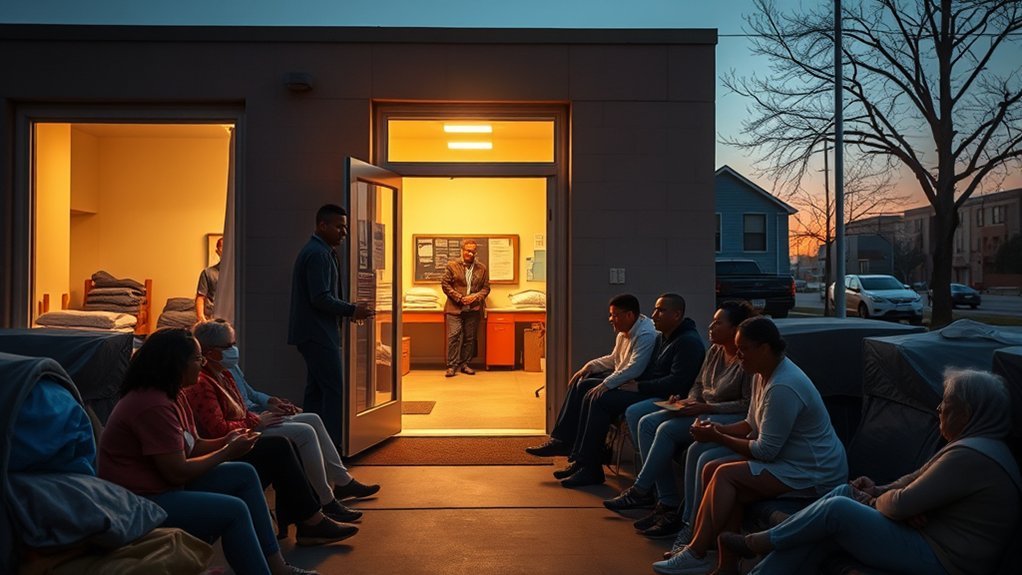
Homeless shelters in Tulsa are part of a larger system that includes emergency shelter, outreach, health care, food assistance, transitional living, coordinated housing assessments, rapid rehousing, and permanent supportive housing. The need remains substantial. According to Housing Solutions Tulsa’s 2026 Point-in-Time Count, 1,443 people were experiencing homelessness in Tulsa City and Tulsa County on the night of January 22, 2026. Of those counted, 77% were sheltered and 23% were unsheltered.
Tulsa’s 2026 Point-in-Time Count identified 1,443 people experiencing homelessness on a single January night. A Point-in-Time count is a snapshot, not a count of everyone who experiences homelessness during an entire year.
The Tulsa Day Center also shows how heavily local services are used. The organization reports serving roughly 200–400 clients each day and recording 119,921 client contacts in 2025. Its medical clinic had more than 4,494 visits in 2025.
The reasons people lose housing vary. They may include unaffordable housing, reduced income, job loss, health or mental-health challenges, domestic violence, family disruption, disability, or other crises. That is why emergency shelter alone is not enough. Case management, health care, documentation assistance, employment support, benefits navigation, and connections to permanent housing can all be important parts of a person’s path toward stability.
Homeless Shelters in Tulsa: Key Services Offered
Tulsa’s homeless-service organizations do not all perform the same job. Some provide overnight emergency beds, some serve particular populations, some provide transitional housing, and others focus on meals, health care, outreach, or permanent housing. Knowing the difference can save time when help is urgently needed.
Warning: Shelter capacity, intake times, eligibility rules, and available beds can change. Housing Solutions Tulsa recommends calling ahead to verify availability. If someone is in immediate physical danger or has a medical emergency, call 911.
Essential Shelter Services
Current Tulsa-area emergency and short-term options include the following. This is not a guarantee of admission or an available bed.
| Provider | Who / Type of Help | Contact |
| Tulsa Day Center | Day and night shelter plus showers, clothing, medical care, case management, and housing assistance. | 415 W. Archer St. 918-583-5588 |
| Salvation Army | Emergency shelter and related assistance. | 102 N. Denver Ave. 918-582-7201 |
| John 3:16 Mission Downtown Shelter | Emergency shelter listed by Housing Solutions for men. | 506 N. Cheyenne Ave. 918-587-1187 |
| John 3:16 Mission The Refuge | Emergency shelter listed for men and women. | 575 N. 39th W. Ave. 918-587-1186 |
| DVIS | Domestic-violence shelter services. Housing Solutions lists this emergency shelter for women. | 3124 E. Apache St. 918-743-5763 |
| Youth Services Adolescent Emergency Shelter | Emergency shelter for youths ages 12–17. | 311 S. Madison Ave. 918-582-0061 |
| Tulsa County Transitional Living Center | Structured transitional living for eligible singles, couples, and families. This is not the same as a walk-in emergency bed. | Phone screening: 918-596-5591 |
The Housing Solutions Tulsa service directory is useful for checking current contacts and finding additional resources. If you do not know which program applies to you, call 2-1-1.
Basic shelter services can include a safe place indoors, meals or food referrals, clothing, showers, hygiene items, identification assistance, case management, health referrals, and connections to housing. What is available depends on the organization and program.
Medical Support Availability
Medical support is an important part of Tulsa’s homelessness-response system. The Tulsa Day Center Clinic provides on-site services that include medical case management, follow-up after hospital or emergency-room discharge, wound care, health education, tuberculosis testing, medication and prescription assistance, primary-care referrals, and connections to mental-health care.
The Day Center reported more than 4,494 clinic visits in 2025. These services can help people manage immediate health needs while also connecting them with ongoing providers.
The Tulsa County Transitional Living Center also states that its clients can access the Tulsa County Pharmacy for prescription and over-the-counter medication assistance. Because eligibility, inventory, and program requirements may vary, contact the program directly rather than assuming a particular medication will be available.
Outreach and Case Management
Emergency shelter solves an immediate problem, but many people also need help overcoming barriers to permanent housing. Case managers can help with identification documents, housing applications, benefits, health referrals, employment resources, transportation, and other needs.
- Personalized planning based on the person’s barriers and goals
- Connections to medical, behavioral-health, housing, and employment resources
- Help obtaining Oklahoma identification and birth certificates
- Housing navigation and referrals
- Homelessness-prevention help for some people at risk of losing housing
Tulsa Day Center provides individualized case management, while Tulsa’s broader homeless-response network uses Coordinated Entry to help assess people experiencing homelessness and connect eligible households with available housing programs.
The City of Tulsa also reports outcomes from its A Better Way initiative, which provides an alternative to panhandling while connecting participants with social services and employment opportunities. The City’s published cumulative results say 66 participants have secured full-time competitive employment through the program. This is a program-to-date figure, not a 2025-only statistic.
Spotlight on the Tulsa Day Center’s Impact
The Tulsa Day Center is one of Tulsa’s most comprehensive homelessness-service providers. It combines immediate shelter and basic-needs assistance with clinical services, case management, housing resources, homelessness prevention, rapid rehousing, and permanent supportive housing.
Comprehensive Support Services
The Day Center’s services extend beyond providing a place indoors. Its current program information includes:
- Day and night emergency shelter
- Clothing, showers, and other basic-needs assistance
- Individual case management
- Help obtaining identification documents
- Medical and mental-health referrals
- An on-site medical clinic
- Housing navigation
- Eviction-prevention and move-in assistance for eligible households
- Rapid rehousing
- Permanent supportive housing options
The organization reports serving approximately 200–400 clients per day, making it an important entry point for people experiencing or at risk of homelessness in Tulsa.
Daily Client Engagement
In 2025, the Tulsa Day Center reported 119,921 client contacts. That figure reflects the scale of day-to-day service use, but it should not be confused with 119,921 unique individuals. One person may have multiple contacts with the organization while receiving shelter, case management, medical care, or another service.
The Day Center also reported more than 4,494 medical-clinic visits in 2025. Its clinic is integrated with case management so health problems can be addressed alongside housing and other barriers.
Note: Service-contact totals, shelter visits, and Point-in-Time homelessness counts measure different things. They should not be compared as if each number represents a unique person experiencing homelessness.
Community Outreach Efforts
The Day Center works with other local organizations rather than operating as a stand-alone solution. Tulsa’s homelessness-response system includes shelters, street outreach, behavioral-health providers, food programs, veterans’ services, eviction prevention, transitional housing, and housing providers.
This coordination matters because one person may need several kinds of assistance at once. For example, someone may enter shelter, receive medical treatment, replace a lost ID, complete a Housing Assessment, work with a case manager, and eventually move into permanent housing.
Volunteers also support Tulsa Day Center’s work through meal service, clothing-room assistance, professional services, and other roles. Some positions have qualifications. For example, the Day Center states that volunteers serving in its clinic must be registered nurses.
Transitional Living Center Programs
The organization referred to in the original article is the Tulsa County Transitional Living Center (TLC), operated through Tulsa County Social Services. It is different from a basic overnight emergency shelter because residents participate in a structured program intended to help them move toward independent housing.
The County says the TLC has furnished rooms for singles, couples, and families and provides meals and structured support. Participants work on practical goals such as getting and keeping employment, managing money, paying down debt, saving, and locating affordable housing.
The program’s stated goal is to help participants move into stable housing within approximately 90 days. That timeline is a goal rather than a guarantee because housing availability and each household’s circumstances can affect how long the transition takes.
The program also offers classes covering money management, employment, and life skills. TLC clients can access Tulsa County Pharmacy services for prescription and over-the-counter medication assistance.
Pro Tip: TLC is a structured transitional program, so do not assume you can arrive and receive an emergency bed. Start with the program’s phone screening at 918-596-5591.
Family and Individual Support Services
People experiencing homelessness do not all need the same type of shelter. Tulsa’s system includes options for adults, families, minors, domestic-violence survivors, and other populations. Choosing a provider that serves your household can prevent unnecessary trips between facilities.
- Adults needing broad shelter and services: Tulsa Day Center provides shelter, showers, clothing, medical care, case management, and housing services.
- Emergency shelter: Salvation Army is listed by Housing Solutions as a Tulsa emergency-shelter provider.
- Men: John 3:16 Mission’s Downtown Shelter is listed for men.
- Men and women: John 3:16 Mission’s The Refuge is listed for both men and women.
- Domestic-violence survivors: DVIS provides specialized domestic-violence services and is listed in the local emergency-shelter directory.
- Youths ages 12–17: Youth Services operates an adolescent emergency shelter.
- Singles, couples, and families ready for structured transitional living: Tulsa County TLC offers furnished-room accommodations and a housing-focused program for eligible participants.
- Veterans: Housing Solutions lists the VA Homeless Program among Tulsa’s veteran resources. Veterans can also ask 2-1-1 for current veteran-specific housing and shelter referrals.
Other transitional programs may serve more specific groups. Housing Solutions currently lists Family Promise of Tulsa County for transitional living and Lindsey House as a transitional-living resource for women.
If you are still housed but facing eviction, do not wait until you lose your home to ask for help. Housing Solutions’ Landlord Tenant Resource Center and Social Services Hub connect eligible households with eviction information, legal referrals, and housing-supportive services.
Real Lives Changed: Success Stories From Tulsa Shelters
The most meaningful outcome of shelter is not the number of nights someone spends inside. It is whether the person can move toward safer, more stable housing and avoid returning to homelessness.
Tulsa’s shelter and housing programs address different parts of that process. Tulsa Day Center combines emergency services with rapid rehousing and permanent supportive housing. Tulsa County TLC focuses on employment, savings, life skills, and obtaining housing. A Better Way connects participants with work and social services.
The City of Tulsa reports that A Better Way has helped 66 participants obtain full-time competitive employment since the program began. It has also connected participants with housing, mental-health, addiction-treatment, and employment resources.
At the broader community level, Housing Solutions’ 2026 Point-in-Time report says Tulsa’s Continuum of Care completed more than 1,100 housing placements in 2025. The report also states that 86% of people placed into housing through the system do not return to homelessness. These are system-wide outcomes, not results attributable to one shelter.
That distinction matters. Shelter, outreach, case management, treatment, employment services, benefits assistance, and housing programs often work together. A person’s progress may involve several agencies rather than one organization doing everything.
Getting Help: Your Guide to Accessing Services
If you or someone you know needs homelessness assistance in Tulsa, use the following steps to avoid being sent to a program that cannot meet the person’s needs.
- Call 2-1-1 if you do not know where to start. Housing Solutions identifies 2-1-1 as a 24/7 information and referral service for local assistance.
- Call the shelter before traveling there when possible. Ask whether beds are currently available, who the program accepts, when intake occurs, and what identification or documents are needed.
- Use a population-specific provider when necessary. Youths, domestic-violence survivors, veterans, and some families may have specialized resources.
- Ask for a Housing Assessment if you are experiencing homelessness. Housing Solutions says assessments are available through 2-1-1 or participating A Way Home for Tulsa homeless-service providers. Eligibility and actual housing placement depend on available resources.
- Use food and medical resources even if you do not need an overnight bed. Shelter is only one part of the local support system.
Important Tulsa contacts include:
- Tulsa Day Center: 415 W. Archer St., 918-583-5588. The organization says it operates 24/7/365 and provides shelter, showers, clothing, medical care, case management, and housing assistance. Specific program or clinic hours may differ, so call for details.
- Salvation Army: 102 N. Denver Ave., 918-582-7201. Housing Solutions lists this location for emergency shelter.
- Iron Gate: 501 W. Archer St., 918-879-1702. Iron Gate is a food resource rather than an overnight shelter. Its current program information says the community meal is served every day from 8:30–10:30 a.m. The grocery pantry operates Monday, Wednesday, and Friday from 1–2:20 p.m. and requires registration.
- Coordinated Entry / Housing Assessment: Start with 2-1-1 or an A Way Home for Tulsa homeless-service provider.
- 2-1-1: Free 24/7 referral information for social services and assistance programs.
You can also call Tulsa Day Center’s help line at 918-836-HELP (4357) or dial 2-1-1. The Day Center’s current “Get Help” information says people may visit 415 W. Archer St. any day of the week.
Ways to Support Homeless Shelters in Your Community
Homeless shelters and service organizations rely on a mix of professional staff, volunteers, community partners, and donations. If you want to help, begin by checking the organization’s current needs instead of assuming that any donated item will be useful.
Ways to support Tulsa organizations include:
- Volunteer your time. Tulsa Day Center and Iron Gate both publish volunteer opportunities. Some specialized roles require qualifications.
- Check current needs lists before donating goods. Shelters may need specific clothing sizes, hygiene products, food, household supplies, or seasonal items at different times.
- Support food programs. Iron Gate accepts help through volunteering, food drives, and donations for its meal and grocery programs.
- Donate financially through official organization websites. Flexible financial support can help organizations purchase the exact goods or services clients need.
- Offer professional expertise through an approved program. Health care, employment support, legal assistance, and other specialized services can be valuable when coordinated with the organization.
- Learn about housing needs. Shelters are most effective when people also have realistic pathways into stable housing.
Tulsa Day Center recorded 119,921 client contacts in 2025, showing the volume of ongoing support provided by just one local organization. Community assistance can help shelters continue meeting basic needs while case managers and housing programs work on longer-term stability.
Frequently Asked Questions
Where Is the Best Place to Go if You’re Homeless in Tulsa?
There is no single best shelter for everyone. Call 2-1-1 if you are unsure where to go. Tulsa Day Center provides broad shelter and support services, while Salvation Army, John 3:16 Mission, DVIS, Youth Services, and other programs serve different needs and populations. Call ahead because admission requirements and bed availability can change.
Is Tulsa Offering $10,000 to Move There?
Tulsa Remote offers a $10,000 grant to accepted eligible remote workers who relocate to Tulsa under its program rules. It is not a general payment available to everyone who moves to Tulsa, and it is not a homelessness-assistance program. Current requirements include being at least 18, being authorized to work in the United States, having qualifying full-time remote employment, meeting residency requirements, and relocating within the program’s required period. Check Tulsa Remote’s current program details before applying.
Will I Lose My SSI if I’m Homeless?
Homelessness by itself does not make you ineligible for Supplemental Security Income. The Social Security Administration says people without permanent housing have the same rights to apply for SSI as people who are housed. You must still meet SSI’s normal eligibility rules, and your living arrangement can affect benefits. SSA also has specific rules for people living in public homeless shelters. See the SSA homelessness guidance for current information or contact Social Security about your individual situation.
What Are the Most Successful Homeless Programs?
There is no single program that fits every person experiencing homelessness. Effective local systems combine emergency shelter with housing assistance and services matched to individual needs. Tulsa’s Continuum of Care includes coordinated assessment, rapid rehousing, permanent supportive housing, transitional housing, outreach, health and behavioral-health services, employment support, and homelessness prevention. The goal is not simply to provide a temporary bed, but to help people reach and maintain stable housing.
Conclusion
Tulsa has several organizations that can help people experiencing homelessness, but they serve different purposes. Tulsa Day Center provides broad shelter and support services, Salvation Army and John 3:16 Mission provide emergency-shelter options, DVIS and Youth Services serve specific populations, and the Tulsa County Transitional Living Center offers a structured path toward independent housing. Iron Gate provides important meal and grocery assistance but is not an overnight shelter.
If you need help now and are unsure which organization fits your situation, call 2-1-1. If you are already connected with a shelter, ask about a Housing Assessment, case management, health services, identification assistance, benefits, and housing programs rather than focusing only on the immediate night’s bed. Because availability can change quickly, verify current admission information directly with the provider.
Sources
- Housing Solutions Tulsa: Get Help — current emergency-shelter contacts, specialized services, 2-1-1 referrals, and Housing Assessment guidance.
- Housing Solutions Tulsa: 2026 Point-in-Time Count — current Tulsa City/County homelessness statistics and system outcomes.
- Tulsa Day Center — shelter, case management, medical-clinic, rapid-rehousing, and housing-program information.
- Tulsa County Transitional Living Center — transitional-living eligibility, program structure, housing goal, and client services.
- Social Security Administration: SSI and Homelessness — official SSI guidance for people experiencing homelessness.
- Tulsa Remote Program Details — current eligibility requirements and terms for the $10,000 relocation grant.