Oklahoma City combines Western history, Native cultures, major museums, energetic entertainment districts, outdoor recreation, local food, professional sports, and a growing metropolitan economy. Whether you are planning a short visit or considering a move, understanding its neighborhoods, weather, transportation, attractions, and annual events will help you get much more from your time in Oklahoma’s capital.
Quick Answer
Oklahoma City is known for the Oklahoma City National Memorial, First Americans Museum, Western heritage, Bricktown, the Oklahoma City Thunder, Scissortail Park, and a growing food and arts scene. Visitors can combine museums and historic districts with river recreation, festivals, live sports, and easy downtown transportation.
Key Takeaways
- History is central to Oklahoma City, from the 1889 Land Run and Western heritage to the Oklahoma City National Memorial and First Americans Museum.
- Bricktown, Paseo, Plaza, Stockyards City, and 39th Street each offer a different mix of dining, arts, nightlife, and local character.
- Spring brings popular festivals but also the highest tornado risk, while summer can be very hot.
- Downtown is increasingly easy to explore without a car, and the OKC Streetcar became fare-free in August 2026.
- Oklahoma City’s economy includes aerospace and defense, energy, healthcare, education, government, logistics, and other professional services.
Discover Oklahoma City’s History and Culture
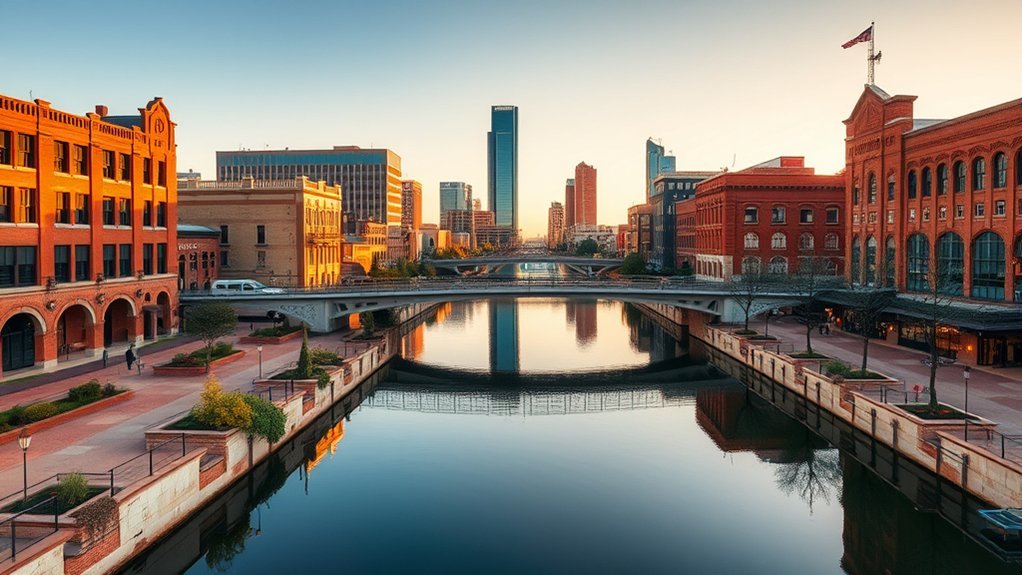
Modern Oklahoma City traces its rapid settlement to the Land Run of April 22, 1889. The community was formally incorporated as Oklahoma City in 1890, making the distinction between its settlement and incorporation dates useful when exploring local history.
One of the city’s most important sites is the Oklahoma City National Memorial & Museum. It remembers the 168 people killed in the April 19, 1995 bombing and tells the stories of victims, survivors, rescuers, families, and a community changed by the attack. The Outdoor Symbolic Memorial provides a quiet place for reflection, while the museum gives deeper historical context.
For a broader understanding of Oklahoma and the people who have shaped it, visit the First Americans Museum. The museum shares the histories, cultures, and experiences of the 39 distinctive First American Nations in Oklahoma today.
Oklahoma City’s more recent development is also part of its story. Voters approved the original Metropolitan Area Projects, or MAPS, in 1993. The program helped fund major civic projects and became the starting point for later MAPS initiatives that continued investing in public spaces, transportation, parks, and community facilities.
Best Oklahoma City Neighborhoods and Must-Visit Attractions
Oklahoma City is spread across a large area, so choosing districts based on what you want to do can save time. Bricktown works well for entertainment and sports, Paseo and Plaza emphasize arts and local businesses, Stockyards City highlights Western heritage, and the 39th Street District is better known for nightlife and an energetic evening atmosphere.
Districts to Explore
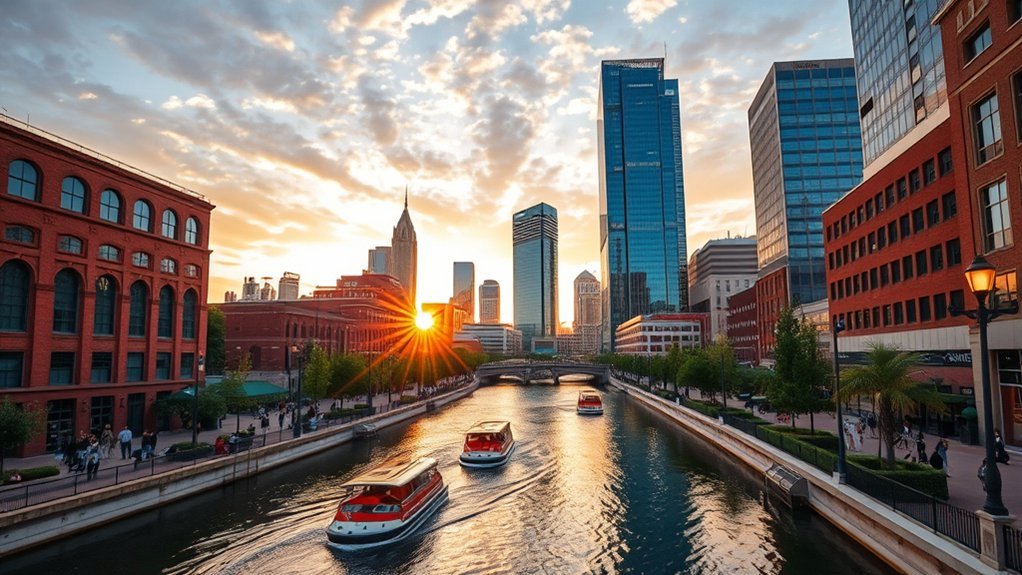
Bricktown Entertainment District is one of the easiest places for first-time visitors to recognize. Restaurants, entertainment venues, the Bricktown Canal, museums, and access to downtown attractions make it convenient for an afternoon or evening out. It is also close to Paycom Center and other central-city destinations.
The Paseo Arts District offers galleries, studios, restaurants, independent businesses, and regular arts programming. Its annual Paseo Arts Festival takes place over Memorial Day weekend and brings artists, performers, food vendors, and visitors into the district.
The Plaza District has its own concentration of independent shops, restaurants, murals, and community events. It can be a good choice if you want a smaller neighborhood atmosphere rather than a large entertainment complex.
For nightlife, the 39th Street District offers bars, restaurants, and entertainment. For Western history and working cattle-market roots, visit Stockyards City, where Western shops and the Oklahoma National Stockyards help preserve an important part of the city’s identity.
Pro Tip: Do not try to treat all of Oklahoma City as one walkable downtown. Group attractions by district, especially if you also want to visit Lake Hefner, the zoo, Stockyards City, or other locations outside the central core.
Iconic Landmarks to Visit
Start with the Oklahoma City National Memorial & Museum if you want to understand one of the defining events in the city’s modern history. Give yourself enough time for both the museum and the Outdoor Symbolic Memorial rather than treating it as a quick photo stop.
In Bricktown, the canal and converted warehouse district show another side of the city’s redevelopment. The district is especially convenient if you want dining, entertainment, sports, and several attractions within a relatively compact area.
The National Cowboy & Western Heritage Museum explores Western art, Native American material culture, rodeo history, ranching, and the development of the American West. It adds useful context to Oklahoma City’s continuing connection with cowboy culture.
Cultural Experiences to Enjoy
Oklahoma City’s cultural options extend well beyond a single museum. You can visit galleries in Paseo, learn about First American history and culture, explore Western art, attend live music, or see professional performing arts.
Sports are part of that cultural mix as well. An Oklahoma City Thunder home game can turn a downtown evening into a major event, while the Oklahoma City Philharmonic and Oklahoma City Ballet offer performing-arts options during their respective seasons.
If you prefer smaller local experiences, check gallery walks, neighborhood events, public art, and independent businesses in Paseo and Plaza. These districts make it easier to see the city’s creative side without limiting your visit to major institutions.
Outdoor Things to Do in Oklahoma City
Oklahoma City has more outdoor recreation than its downtown skyline may suggest. Scissortail Park covers 70 acres and includes lawns, gardens, walking areas, a lake, playground spaces, and event areas near downtown.
Along the Oklahoma River, trails and recreation facilities support cycling, running, paddling, rowing, and other activities. RIVERSPORT adds whitewater rafting, surfing, paddlesports, and adventure activities within the city, making it an unusual option for travelers who want something more active than museums and sightseeing.
Lake Hefner is another popular outdoor destination. Its shoreline attracts walkers, runners, cyclists, sailors, anglers, and people looking for open views and sunsets. It is a useful change of pace if your itinerary has been concentrated around downtown.
The Oklahoma City Zoo & Botanical Garden combines animal exhibits with landscaped grounds and can work particularly well for families. Check operating hours and attraction schedules before making a special trip because seasonal hours and programs can change.
Where to Eat in Oklahoma City
Oklahoma City’s food options are spread across the city rather than confined to downtown. You can find Southern comfort food, contemporary American cooking, coffee shops, food trucks, barbecue, international cuisines, and restaurants tied closely to individual neighborhoods.
For contemporary American comfort food, Cheever’s Cafe is a long-running Oklahoma City option. Mama E’s Wings & Waffles is known for the classic sweet-and-savory pairing of fried chicken or wings with waffles, while Cutie Pies Concession has appeared in Oklahoma tourism listings as a local food-truck and concession option.
Toby Keith’s I Love This Bar & Grill in Bricktown combines Southern-inspired food with country-themed surroundings, making it an option for visitors already spending time in the entertainment district.
Coffee drinkers can consider Elemental Coffee, an Oklahoma City roaster and cafe. Because restaurants can change hours, locations, menus, or ownership, check the establishment’s current website or social channels before traveling across town specifically for one meal.
Sports, Nightlife, and Entertainment in Oklahoma City
The Oklahoma City Thunder are the city’s major professional sports draw. For the current 2026–27 period, home games are scheduled at Paycom Center in downtown Oklahoma City, close to Bricktown restaurants and nightlife.
Note: Oklahoma City is developing a new downtown arena for the Thunder, so future visitors should confirm the team’s home venue when planning trips for later seasons. Paycom Center remains the relevant venue for the current period.
Bricktown is also one of the city’s main evening destinations, with bars, restaurants, entertainment venues, and live music. Paseo, Plaza, and 39th Street provide alternatives if you prefer neighborhood-scale nightlife or arts-focused events.
For performing arts, check schedules from the Oklahoma City Philharmonic, Oklahoma City Ballet, theater companies, and touring productions. If you would rather spend the evening outdoors, seasonal events at Scissortail Park and recreation along the Oklahoma River provide another option.
Oklahoma City Weather and Tornado Season
Oklahoma City has hot summers, cool to cold winters, rapidly changing spring weather, thunderstorms, occasional snow and ice, and periods of strong wind. Instead of relying on a single annual average, it is more useful to plan around the season and check the National Weather Service Norman climate information close to your trip.
- Spring: Temperatures can be comfortable, but severe thunderstorms, hail, strong winds, and tornadoes are important planning considerations.
- Summer: Expect frequent heat. Schedule long outdoor activities earlier or later in the day and stay hydrated.
- Fall: Often offers comfortable conditions for parks, festivals, and sightseeing, though weather can still change quickly.
- Winter: Cold periods, freezing rain, ice, and occasional snow can affect roads and flights.
Oklahoma City’s official temperature records include a low of −17°F and a high of 113°F. Those are extremes rather than typical daily conditions.
The National Weather Service’s tornado history for its defined “immediate OKC area” contains 194 documented tornado listings through the December 2025 update. That study area covers roughly 600 square miles and includes Oklahoma City plus several nearby communities, so the number should not be interpreted as 194 tornadoes confined strictly to today’s city limits. The NWS identifies May as the peak month, followed closely by April and June, with about two-thirds of the recorded tornadoes occurring during those three months.
The National Weather Service’s December 2025 compilation includes 194 tornado listings in its defined immediate Oklahoma City area since 1890.
Warning: Tornadoes and severe thunderstorms can develop quickly. During severe-weather days, use current National Weather Service forecasts and alerts, know where you would shelter, and do not rely on outdoor warning sirens as your only alert method. If a tornado warning is issued for your location, move to an interior room on the lowest level of a sturdy building and stay away from windows.
Key Industries and Job Opportunities in Oklahoma City
Oklahoma City’s economy includes energy, aerospace and defense, government, healthcare, education, logistics, professional services, technology, agriculture-related businesses, and other industries. Job conditions vary by occupation, so anyone considering a move should compare current openings, pay, commuting distance, housing costs, and benefits rather than relying only on broad claims about the city’s economy.
Major Economic Sectors
Several sectors have an especially visible role in the region:
- Energy: Oil and natural gas have long influenced Oklahoma City’s economy and corporate landscape.
- Aerospace and Defense: Tinker Air Force Base describes itself as Oklahoma’s largest single-site employer, with more than 25,000 personnel. Its Oklahoma City Air Logistics Complex is the largest of three depot repair complexes in Air Force Materiel Command.
- Healthcare and Education: Hospitals, medical organizations, colleges, universities, research organizations, and related employers support a substantial professional workforce.
- Government and Public Services: As the state capital, Oklahoma City has federal, state, county, municipal, and military employment.
- Distribution and Logistics: The city’s central location and major highway connections support warehousing, transportation, trade, and distribution.
The U.S. Census Bureau’s Vintage 2025 estimate places the Oklahoma City metropolitan area’s population at about 1.51 million, up from roughly 1.43 million at the start of the decade. That population growth helps explain continuing demand for housing, transportation, services, education, healthcare, and other employment.
Employment Opportunities Available
If you are looking for work in Oklahoma City, start with your specific occupation rather than assuming every industry is expanding at the same rate. Federal and defense jobs may be available through Tinker and USAJOBS, while hospitals, schools, energy companies, state agencies, logistics employers, technology companies, and professional-service firms provide other paths.
Before relocating, compare current labor-market information from the Bureau of Labor Statistics with actual job postings in your field. Salary alone does not tell the full story; commute, health insurance, retirement benefits, remote-work options, childcare, and housing costs can materially change whether an offer works for you.
Annual Oklahoma City Events and Festivals
Oklahoma City’s annual calendar includes major arts, community, running, and fair events. Exact dates change each year, so verify the current schedule before booking flights or hotels.
- Paseo Arts Festival: Held over Memorial Day weekend in the Paseo Arts District. The 2026 festival ran May 23–25 and featured juried artists, live performers, and food vendors.
- Oklahoma City Memorial Marathon: Typically held during the last weekend of April and connected to the mission of the Oklahoma City National Memorial & Museum.
- Festival of the Arts: A major downtown visual, culinary, and performing-arts event. The 2026 edition took place April 23–26 at Bicentennial Park.
- Oklahoma State Fair: A September tradition with rides, food, competitions, exhibits, entertainment, and agricultural programming. Check the current Oklahoma State Fair schedule before planning a trip around it.
Smaller neighborhood events, gallery walks, concerts, and seasonal programs run throughout the year as well. If a festival is a major reason for your trip, use the organizer’s own website rather than an older travel article for final dates and admission information.
Plan Your Visit to Oklahoma City
Best Time to Visit
There is no single best month for every traveler. Spring brings arts festivals, flowers, and comfortable days but also the city’s highest severe-weather risk. Summer offers long daylight hours but can be intensely hot. Fall often works well for outdoor sightseeing and major events. Winter usually brings smaller crowds, although occasional ice or snow can disrupt driving and flights.
If outdoor parks and walking are your priority, fall or milder spring days can be especially appealing. If your trip falls in April, May, or June, keep severe-weather awareness in your normal daily planning rather than treating it as an afterthought.
Getting to Oklahoma City
The city’s main commercial airport is now branded OKC Will Rogers International Airport. From the airport, travelers can use rental cars, taxis, rideshare services, and other ground transportation to reach central Oklahoma City.
Getting Around Oklahoma City
Downtown, Bricktown, Automobile Alley, Midtown, and several nearby destinations can be combined without driving every leg. The OKC Streetcar connects central districts, and streetcar service became fare-free on August 7, 2026.
A car is still useful if your plans include destinations spread across the wider city, such as Lake Hefner, the zoo, suburban areas, or several restaurants and attractions far from downtown. For a short central-city stay, however, walking, streetcar service, transit, and rideshare can reduce the amount of parking you need.
Note: Transportation fares, routes, construction, attraction hours, and festival dates can change. Check official sites shortly before your trip, especially if one service or event is essential to your itinerary.
Frequently Asked Questions
How many cities are in Oklahoma?
Oklahoma has roughly 600 incorporated municipalities, but they are not all legally classified as cities. The state uses both city and town classifications, so saying Oklahoma simply has “600 cities” is misleading. The exact municipal roster can also change as communities incorporate, dissolve, or change status.
What is the grass ordinance in Oklahoma City?
According to Oklahoma City Code Enforcement, grass is in violation when it reaches 12 inches in height. Property owners are also responsible for maintaining adjacent alleys and rights-of-way as described by the city. Check the current municipal rules if you are dealing with a specific property or enforcement notice.
Why should I move to Oklahoma City?
Oklahoma City may appeal to you if you want a large metropolitan area with jobs in aerospace, government, energy, healthcare, education, logistics, and professional services, plus major parks, sports, arts, and distinct neighborhoods. Affordability depends on your income, housing needs, commute, and current market prices, so compare real housing and salary data before deciding.
Is there much to do in Oklahoma City?
Yes. You can visit the Oklahoma City National Memorial, First Americans Museum, National Cowboy & Western Heritage Museum, Scissortail Park, Bricktown, local arts districts, the zoo, Lake Hefner, RIVERSPORT, restaurants, festivals, performing-arts venues, and Oklahoma City Thunder games.
What is the best time of year to visit Oklahoma City?
Spring and fall often provide comfortable sightseeing weather, but each season has tradeoffs. Spring also has the highest severe-weather risk, summer can be very hot, and winter can occasionally bring ice or snow. Choose your dates based on the activities and events that matter most to you.
Can you visit Oklahoma City without a car?
You can explore many downtown, Bricktown, Midtown, and nearby destinations using walking, rideshare, transit, and the fare-free OKC Streetcar. A car becomes more useful if you want to visit attractions spread across the wider city, including Lake Hefner and other destinations well outside the central districts.
Conclusion
Oklahoma City offers more variety than a quick drive through downtown might suggest. Its story stretches from the 1889 Land Run and Western heritage to First American cultures, the 1995 bombing and community response, major civic redevelopment, professional sports, and continued metropolitan growth.
For visitors, a balanced trip can include the Oklahoma City National Memorial, First Americans Museum, a neighborhood such as Paseo or Bricktown, an outdoor stop at Scissortail Park or the Oklahoma River, and time for local food. Check current weather, transportation, attraction hours, and event dates before you go, especially during spring severe-weather season.
Sources
- City of Oklahoma City — Founding of Oklahoma City — supports the April 22, 1889 settlement history.
- Oklahoma City National Memorial & Museum — supports information about the 168 people killed in the April 19, 1995 bombing.
- First Americans Museum — supports information about the 39 distinctive First American Nations in Oklahoma.
- National Weather Service Norman — Oklahoma City Tornado History — supports tornado totals, geographic scope, and seasonal tornado patterns.
- U.S. Census Bureau — Metropolitan Population Estimates — supports current Oklahoma City metropolitan population data.
- Tinker Air Force Base — supports current employment and Oklahoma City Air Logistics Complex information.