For big anglers, choosing a pedal fishing kayak in [2026] means balancing stability, comfort, and load capacity without giving up performance. Models like the Old Town Sportsman PDL 120 and BKC Brooklyn 13.5 Tandem stand out for different reasons, but not every option suits every body type or fishing style. The most capable kayaks often hide one key advantage that changes everything on the water.
Key Takeaways
- Prioritize pedal kayaks with 350+ lb capacity, wide hulls, and stable designs for big guys.
- Old Town Sportsman PDL 120 and BigWater PDL 132 offer strong capacity, comfort, and hands-free fishing performance.
- Brooklyn 12.0 Pro and BKC Brooklyn 13.5 Tandem provide angler-friendly storage, stability, and higher weight limits.
- Choose models with supportive seats, adjustable leg positions, and ample deck space to reduce fatigue on long trips.
- Look for efficient pedal drives, waterproof hatches, rod holders, and accessory rails for better fishing convenience.
Old Town Sportsman PDL 120 Solo Sit-on-Top Fishing Pedal Kayak, 12 ft
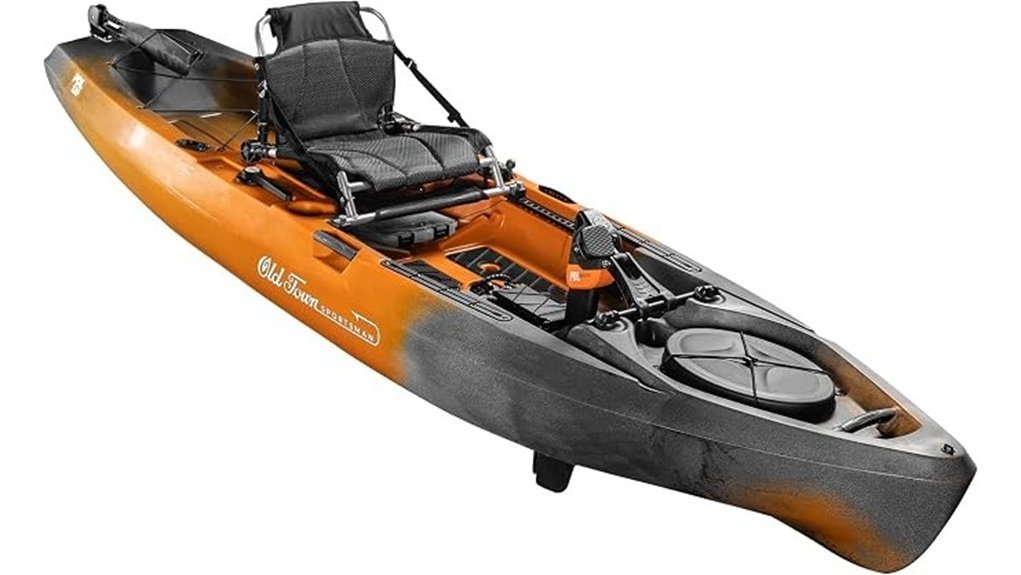
The Old Town Sportsman PDL 120 stands out as a strong choice for bigger anglers who want a stable, comfortable pedal kayak built for long days on the water. This 12-foot solo sit-on-top model supports up to 500 pounds, with 384 pounds usable for the paddler and gear. Its pontoon-style hull adds steadiness, while the mesh seat with lumbar support and adjustable leg position improves comfort. The forward and reverse pedal drive allows hands-free movement, and the easy-docking system simplifies launching. Accessory tracks, rod holders, and included tackle storage support fishing needs.
Best For: Bigger anglers and fishing enthusiasts who want a stable, comfortable 12-foot pedal kayak for hands-free, all-day use on the water.
Pros:
- Stable pontoon-style hull provides confidence and balance
- Forward/reverse pedal drive enables hands-free fishing and maneuvering
- Comfortable mesh seat with lumbar support and adjustable leg position
Cons:
- At 116 pounds, it may be difficult to transport alone
- Paddle is sold separately
- Fish finder transducer is supported, but the fish finder itself is sold separately
Albott Modular Fishing Kayak with Drive System
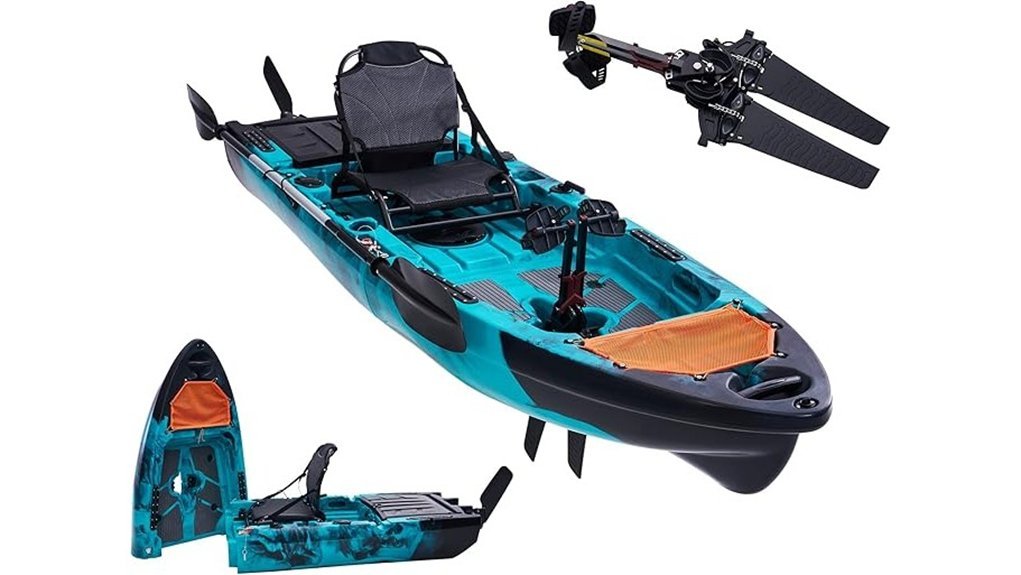
With a 420-pound capacity, the Albott Modular Fishing Kayak suits bigger anglers and a second rider. Its 102.4-pound HDPE build measures 113.04 by 34.68 inches, offering a stable sit-on-top platform for fishing. An 11-pound pedal fin drive, plus spare fins, delivers hands-free propulsion that stays smooth in shallow water and resists weeds. A cable-operated stern rudder and stainless steel lock screw improve control. The modular, four-step assembly makes transport and storage simpler, while adjustable seating and ample storage add flexibility for solo trips, family outings, or rental use.
Best For: Anglers, families, and rental users who want a stable, hands-free fishing kayak with modular portability and room for two riders.
Pros:
- 420-pound capacity and sit-on-top design make it stable and suitable for bigger anglers or a second passenger.
- Pedal fin drive offers smooth, weed-resistant, hands-free propulsion in shallow water.
- Modular 4-step assembly, adjustable seating, and ample storage improve transport, setup, and flexibility.
Cons:
- At 102.4 pounds, it may still be bulky for some users to carry or move alone.
- The 11-pound pedal drive and modular parts may add complexity compared with simpler kayaks.
- Best suited for calm or shallow-water fishing rather than high-performance paddling or rough conditions.
RC 10′ Single Pedal Kayak with Propeller Drive
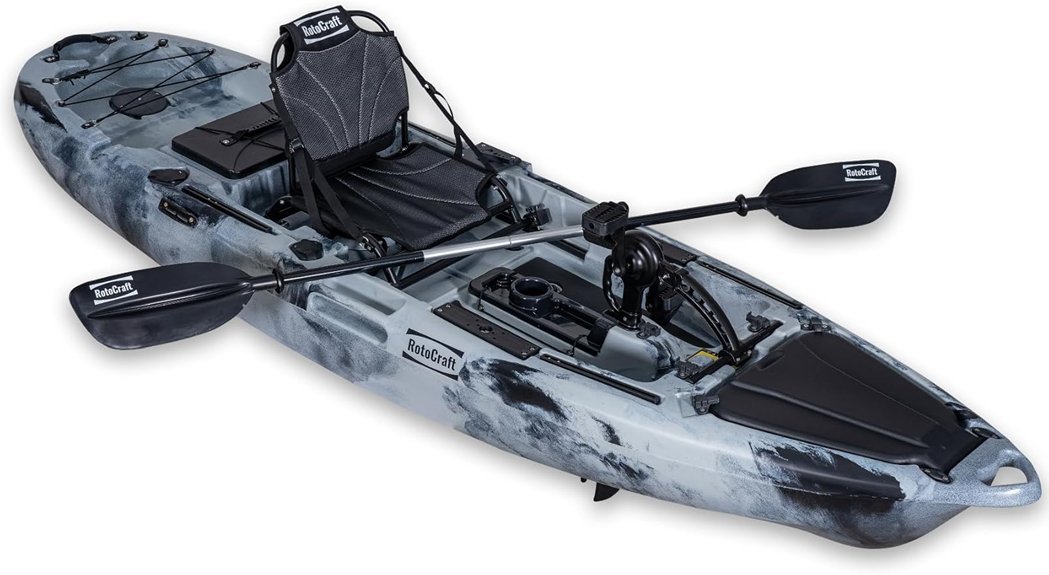
Built for larger paddlers, the RC 10 Single Pedal Kayak supports up to 310 pounds. This 10-foot-4-inch sit-on-top kayak measures 34 inches wide and weighs 78 pounds, giving it a stable platform for fishing and casual outings. Its propeller pedal drive allows hands-free propulsion, while the rudder improves control in rough water. An adjustable aluminum frame seat adds comfort and visibility. Storage is well planned, with bow, rear, and under-seat hatches, plus accessory rails, rod holders, bungee tie-downs, and scupper plugs. Durable HDPE construction rounds out the package.
Best For: Anglers and recreational paddlers who want a stable, hands-free fishing kayak with strong storage and accessory options.
Pros:
- Propeller pedal drive provides efficient hands-free propulsion and easy maneuverability.
- Stable 34-inch-wide sit-on-top design with a comfortable adjustable aluminum frame seat.
- Well-equipped for fishing with multiple hatches, rod holders, accessory rails, and tie-downs.
Cons:
- At 78 lbs, it may be cumbersome to transport and load alone.
- 310-lb capacity may be limiting for heavier paddlers with extra gear.
- Pedal-drive and accessory-rich design can make it more complex and expensive than simpler kayaks.
Brooklyn 12.0 Pro Single Pedal Kayak by BKC
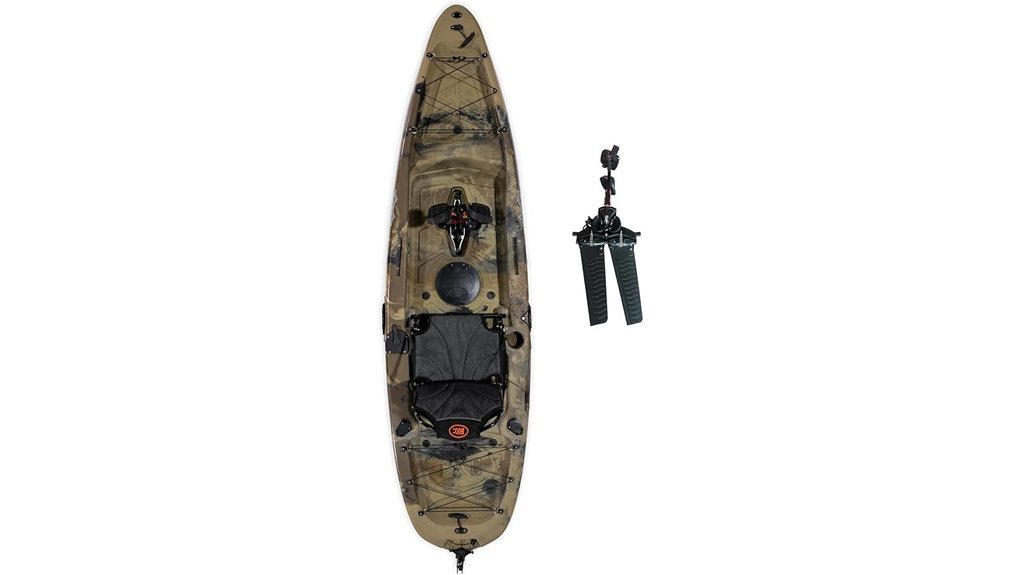
At 440 pounds of capacity, the Brooklyn 12.0 Pro fits bigger anglers well. The 12-foot HDPE hull measures 33.5 inches wide, giving the kayak a stable, balanced feel on varied water. Its high-efficiency propeller pedal drive provides hands-free propulsion, while the removable system allows traditional paddling or motor upgrades. A hand-operated rudder improves steering and tight turns. The ergonomic aluminum seat supports long outings, and two flush-mounted rod holders keep gear accessible. Dual watertight hatches, rear bungee storage, and scupper plugs aid organization and cleanup. A five-year warranty adds reassurance.
Best For: Anglers and recreational kayakers who want a stable, hands-free pedal kayak with strong capacity, fishing features, and room for long outings.
Pros:
- High-efficiency pedal drive offers smooth, hands-free propulsion for fishing and covering distance.
- Wide 12-foot HDPE hull and 440-pound capacity provide excellent stability and support larger users.
- Useful angler-friendly features include an ergonomic seat, two rod holders, and organized storage options.
Cons:
- At 75 pounds, it may be heavy to transport or load without help.
- Single-seat design limits it to solo use only.
- The pedal-drive setup may require extra maintenance compared with a simpler paddle kayak.
RC 12′ Pro Single Pedal Kayak
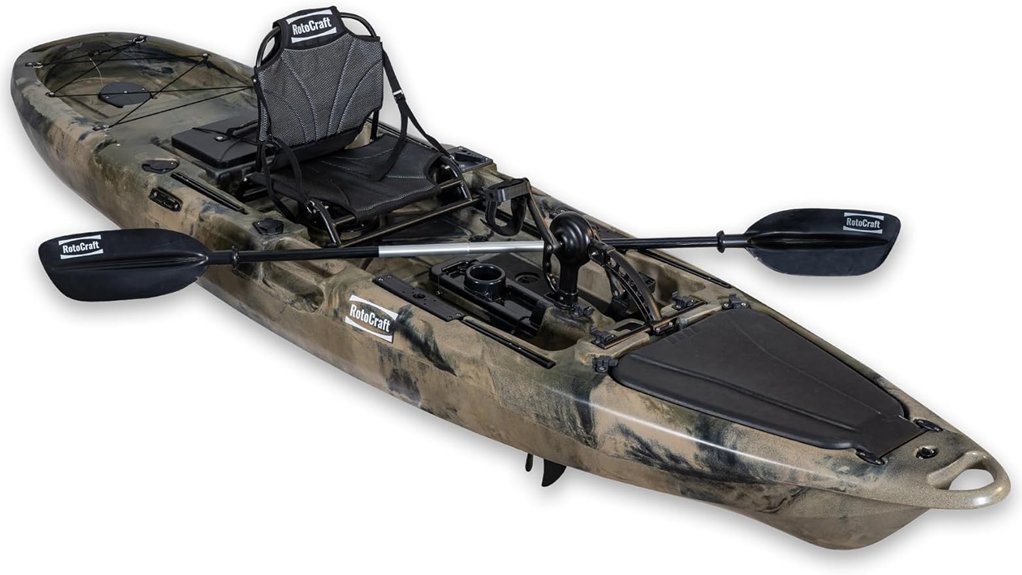
The RC 12′ Pro Single Pedal Kayak suits bigger anglers needing room and stability. At 12 feet long, 34 inches wide, and rated to 355 pounds, it offers a balanced platform for fishing or casual paddling. Its propeller pedal drive uses a bicycle-style motion for hands-free speed, while the responsive rudder supports tight steering. Three hatches, three flush mount rod holders, and four accessory tracks add useful storage and customization. The elevated aluminum frame seat improves visibility, and the HDPE hull, non-slip deck, and four carry handles round out a practical, durable package.
Best For: Bigger anglers and recreational fishers who want a stable, hands-free 12-foot kayak with plenty of storage and customization options.
Pros:
- Propeller pedal drive provides efficient, bicycle-style hands-free movement.
- Wide 34-inch hull and 355-pound capacity offer strong stability and room.
- Three hatches, rod holders, and accessory tracks add versatility for fishing.
Cons:
- At 77 lbs, it may be relatively heavy to transport solo.
- The 12-foot size may be less maneuverable in very tight waterways.
- Pedal-drive systems can be more complex and require more maintenance than simpler kayaks.
Pelican Catch HDII Fishing Kayak with HyDryve Pedal System
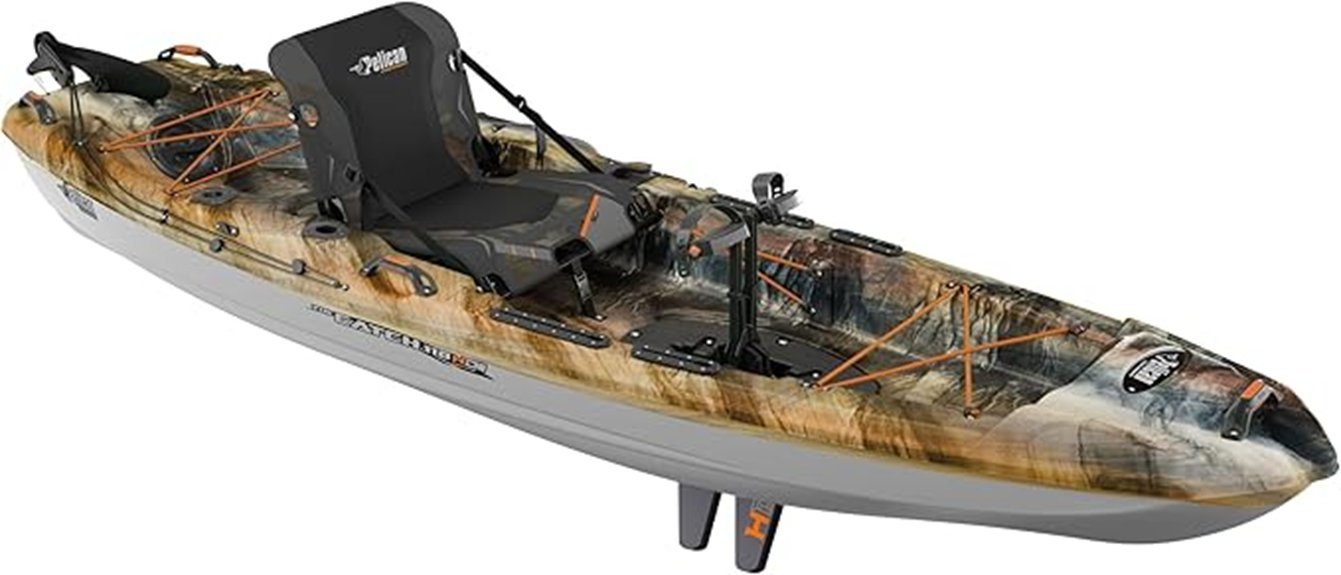
Pelican’s Catch HDII suits bigger anglers who want stable pedal-driven maneuvering. Its HyDryve II pedal system handles shallow water and thick vegetation with ease, helping anglers stay mobile where fin or prop drives may struggle. The Ergocast G2 seat adds comfort for long sessions on the water. Four accessory rails allow setup changes for cameras, tackle, or electronics. Three flush-mount rod holders keep gear organized and within reach. A hand-controlled rudder improves steering, while its skeg mode supports cleaner tracking.
Best For: Bigger anglers who want a stable, pedal-driven fishing kayak that performs well in shallow water and heavy vegetation.
Pros:
- HyDryve II pedal system makes it easy to maneuver in shallow water and around plants.
- Ergocast G2 seat provides added comfort for longer fishing sessions.
- Four accessory rails and three flush-mount rod holders support customization and organized gear storage.
Cons:
- Best suited to anglers who prioritize pedal drive, so it may be more than needed for casual paddling.
- Larger size may be less convenient for transport and storage.
- Hand-controlled rudder and added features can mean a more complex setup than simpler kayaks.
Old Town Sportsman BigWater PDL 132 Fishing Kayak
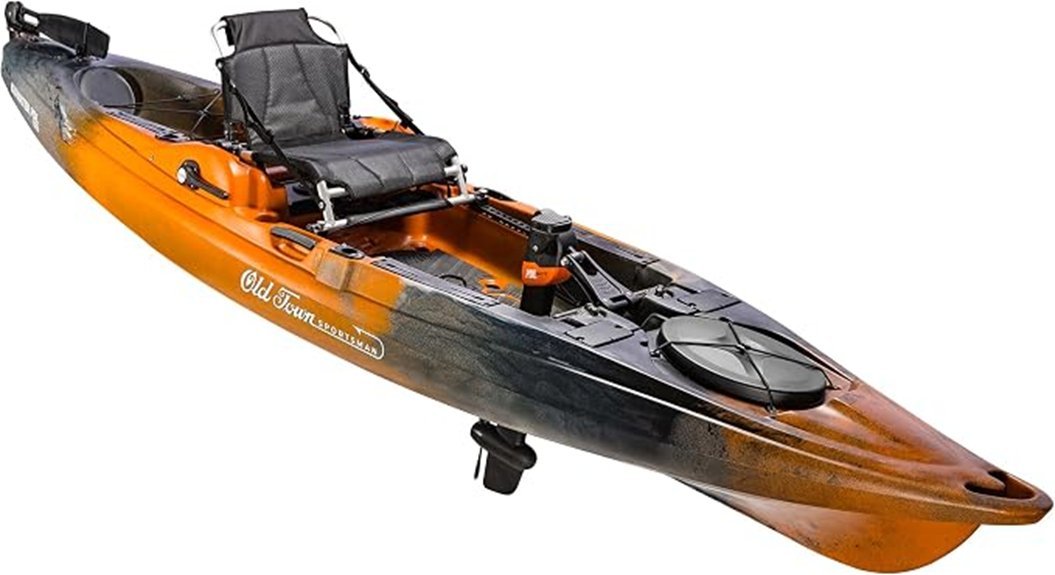
With a 500-pound max capacity, the Old Town Sportsman BigWater PDL 132 suits larger anglers and heavy gear loads. This 13-foot-2 solo sit-on-top pedal kayak offers 378 pounds of usable capacity, making it practical for substantial tackle and accessories. Its forward and reverse pedal drive supports hands-free movement, while the removable console simplifies transport. Multiple rod holders, accessory tracks, and a universal transducer mount help tailor the setup. The mesh seat provides lumbar support and ventilation, and cushioned floor pads improve comfort. It is aimed at open-water anglers and tournament fishermen.
Best For: Open-water anglers and tournament fishermen who want a stable, hands-free pedal kayak with plenty of capacity for heavy gear and customization.
Pros:
- Forward and reverse pedal drive enables efficient hands-free navigation and fishing.
- High 500-pound max capacity with 378 pounds of usable capacity suits larger anglers and substantial tackle loads.
- Comfortable mesh seat, lumbar support, and cushioned floor pads improve long-session comfort.
Cons:
- At 122 pounds plus a 21-pound pedal console, it may be difficult to transport and launch alone.
- Fishing-specific features and premium pedal system likely make it a higher-cost option than simpler kayaks.
- Best suited for open water, so it may be less ideal for tight creeks, shallow areas, or casual paddling.
Modular Fishing Kayak with Cart and Paddle
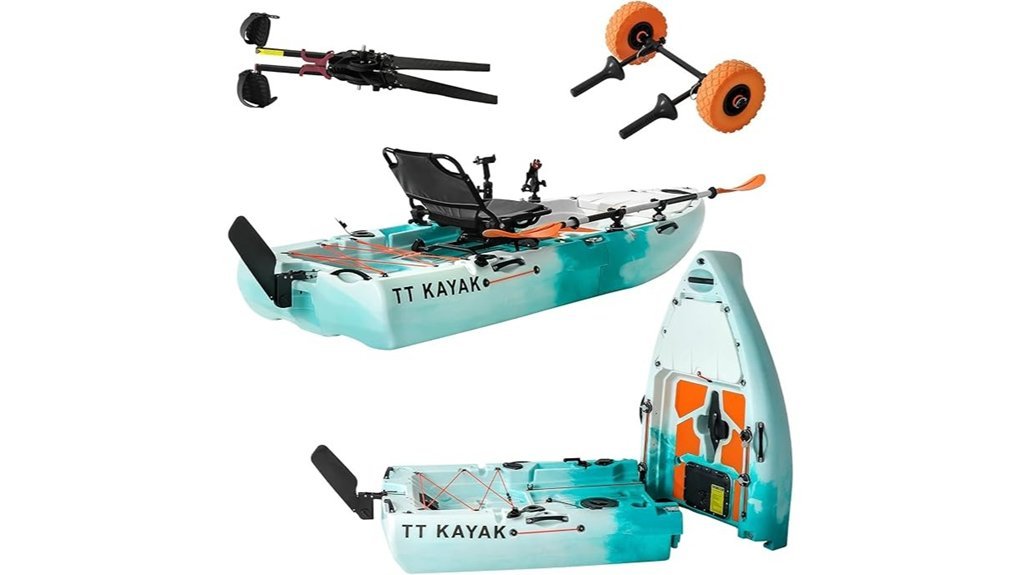
Ideal for bigger anglers needing portability, this modular fishing kayak supports 573 pounds. Its two-piece, 110-inch LDPE hull breaks into 57-inch and 53-inch sections, making transport easier in SUVs, pickups, vans, and even compact EVs. Weighing 86 pounds total, it balances strength with manageable handling. The package includes an 87-inch aluminum alloy paddle and a heavy-duty cart with maintenance-free polyurethane foam tires. A 360-degree swivel seat, sliding adjustment, and high back improve comfort. Storage includes a splash-proof bow compartment, livewell, hatch, and stern bungees for organized fishing trips.
Best For: Bigger anglers who want a stable, high-capacity fishing kayak that breaks into two pieces for easier transport and storage.
Pros:
- High 573 lb capacity makes it suitable for larger anglers and gear-heavy fishing trips.
- Two-piece modular design and included cart make transport much easier than a one-piece kayak.
- Comfortable fishing setup with 360° swivel seat, sliding adjustment, and multiple storage zones.
Cons:
- At 86 lbs total, it may still be heavy to lift and assemble for some users.
- The two-piece design adds setup and teardown steps compared with a traditional kayak.
- Large size may be less convenient for smaller storage spaces or solo handling.
Brooklyn 8.0 Foldable Pedal Fishing Kayak by BKC
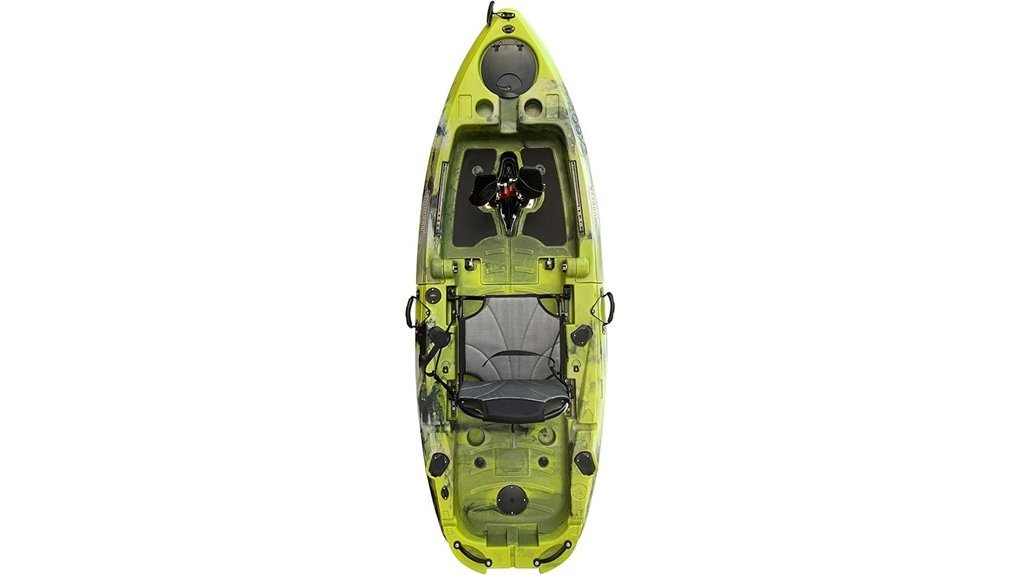
The Brooklyn 8.0 fits anglers who need big-capacity storage in a compact, foldable frame. Its collapsible build suits apartment storage, small vehicles, and quick transport, while setup remains straightforward before launch. The pedal drive with flipper fins supports efficient, hands-free movement, and the hand-controlled rudder improves turning. An 8-foot sit-on-top hull offers stable performance on lakes, rivers, and calm inshore water. With a 380-pound capacity, four rod holders, sealed hatch, rear bungees, cup holders, and an aluminum-frame seat, it arrives ready for fishing.
Best For: Anglers who need a compact, foldable fishing kayak with hands-free pedal propulsion, solid stability, and enough storage for gear in small spaces or tight vehicle setups.
Pros:
- Foldable design makes it easy to store in apartments, closets, or car trunks.
- Pedal drive with flipper fins and a hand-controlled rudder provide efficient, hands-free maneuverability.
- 380 lb capacity with multiple fishing-friendly features like rod holders, hatch storage, and cup holders.
Cons:
- 8-foot size may feel cramped for taller paddlers or those wanting more deck space.
- Best suited for calm waters, so it’s not ideal for rough conditions or open ocean use.
- Pedal kayaks can require more maintenance and may be heavier to transport than simpler models.
BKC Brooklyn 13.5 Tandem Pedal Fishing Kayak
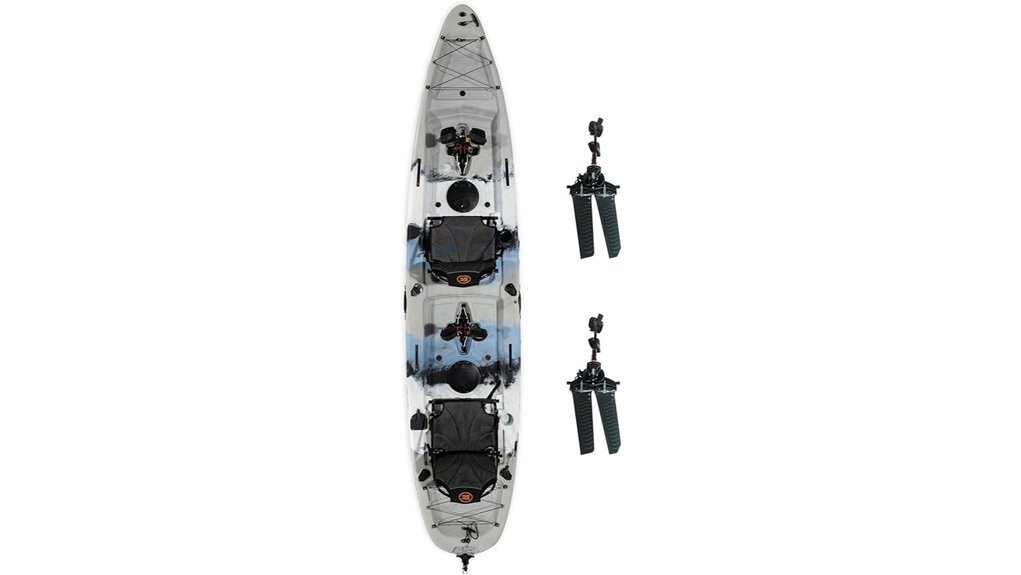
Built for bigger anglers, the BKC Brooklyn 13.5 Tandem Pedal Kayak supports up to 680 pounds. This 13.5-foot sit-on-top model uses a wide hull for stability, making it suitable for standing casts and relaxed fishing. Its dual flipper pedal drive enables hands-free movement, while a precision rudder delivers sharp, responsive steering. Two adults can ride with room for gear, including coolers and tackle. Three flush-mounted rod holders, watertight hatches, cargo areas with bungees, and accessory rails improve utility. Scupper holes help drain water, and multiple carry handles ease transport.
Best For: Anglers who want a stable, hands-free tandem fishing kayak with plenty of room for two adults, gear, and stand-up casting.
Pros:
- Supports up to 680 lbs, making it ideal for two people plus fishing or camping gear.
- Dual flipper pedal drive and precision rudder provide efficient propulsion and responsive steering.
- Loaded with fishing-friendly features like rod holders, cargo areas, watertight hatches, and accessory rails.
Cons:
- Its 13.5-foot size can make transport, storage, and launching more difficult than with smaller kayaks.
- Heavier tandem pedal kayaks are typically more expensive and less easy to carry alone.
- Best suited for calm to moderate water; not as nimble as a lighter solo kayak.
Factors to Consider When Choosing a Pedal Fishing Kayak for Big Guys
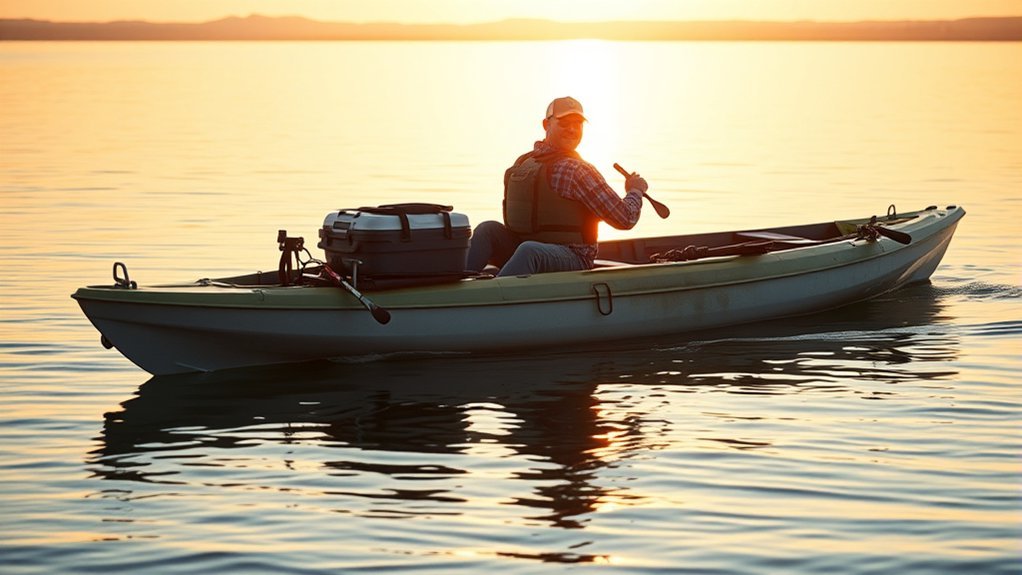
When choosing a pedal fishing kayak for big guys, weight capacity is a primary concern, since it must safely support the paddler plus gear. Seat comfort and stability also matter, as they affect endurance and confidence on the water. A smooth pedal drive and enough storage space round out the key features for a practical fishing setup.
Weight Capacity
Weight capacity is one of the most important factors in choosing a pedal fishing kayak for bigger anglers, since it directly affects both safety and on-water performance. Capacities vary widely, with some models supporting up to 680 lbs, but the usable load is often closer to 80–90% of the stated rating. That means the angler’s body weight, tackle, coolers, and other gear must all be included in the estimate. A kayak with adequate capacity tends to sit more securely on the water, improving balance and tracking. Construction also matters, because materials such as high-density polyethylene and well-designed hulls can increase strength and durability. Exceeding the limit can reduce maneuverability and compromise safety, so verifying the rating before purchase is essential.
Seat Comfort
Seat comfort plays a major role in how well a pedal fishing kayak performs on long trips for bigger anglers. A supportive seat helps reduce fatigue when hours pass on the water, especially in models built for extended fishing. Premium mesh seats with lumbar support and adjustability can better fit different leg lengths, while ergonomic aluminum frame designs add breathability and steady support. Adjustable seat height improves visibility and makes pedaling and casting more efficient. Cushioned floor pads also matter, since they improve grip and make it easier to shift position while reeling or changing posture. For larger users, the seat should match higher weight capacities so comfort is maintained throughout the outing. Quality seating is not a luxury; it is a practical requirement.
Stability
Stability is one of the most important factors for bigger anglers choosing a pedal fishing kayak, since a wider hull—typically around 34 inches or more—helps improve balance and reduce the risk of tipping in rough water. A pontoon-style hull can add further steadiness, especially for those who prefer to stand or cast with confidence. Weight capacity also matters, and models in the 310- to 680-pound range help guarantee the kayak can support the paddler plus gear without compromising control. Longer kayaks, generally 12 feet or more, tend to track better and resist sideways drift. Adjustable seats and cushioned floor pads can also improve security by creating a more stable, customized fit during long fishing sessions.
Pedal Drive
A pedal drive can be a major advantage for bigger anglers because it provides hands-free movement, letting them cast, reel, and manage gear while moving forward or in reverse. The system should match the angler’s needs, since pedal efficiency ranges from simple flipper fins to high-efficiency propellers. Better designs usually improve speed and maneuverability, which can matter when covering water or holding position in current. Weight capacity also remains important; models rated above 350 pounds typically offer the support larger users need for reliable performance. A practical pedal drive should remove easily for transport, with quick-release options adding convenience. In shallow or weedy water, weed-resistant pedal systems can help maintain smooth operation and reduce interruptions during fishing.
Storage Space
Storage space is a major consideration for bigger anglers, since a pedal fishing kayak should provide enough room for tackle, personal items, and extra gear without feeling cluttered. Many suitable models include multiple hatches and compartments, making it easier to organize fishing essentials and keep smaller items accessible. A large rear cargo area with bungee tie-downs is especially useful for securing coolers, camping gear, or other equipment during transport and on the water. Integrated accessory rails also add flexibility by supporting rod holders, tackle boxes, and similar add-ons. Waterproof hatches and specialized compartments help protect valuables from spray and splashes. It is also important to check total weight capacity, ensuring the kayak can support both the paddler and gear while maintaining stability and performance.
Adjustability
Adjustability matters just as much as storage when choosing a pedal fishing kayak for bigger anglers, because a well-fitted setup reduces fatigue and improves control on the water. Seat systems should offer enough range to match different leg lengths, supporting comfort during long sessions. Adjustable foot pedals are equally important, since they let the paddler maintain efficient propulsion without knee or hip strain. A higher weight capacity, ideally 500 pounds or more, helps preserve stability while carrying the angler and essential gear. Modular designs can add useful flexibility, allowing the kayak to be tailored to body size and fishing style. Responsive rudder and steering systems also matter, as they improve maneuverability and make handling easier for larger paddlers in changing conditions.
Frequently Asked Questions
How Do I Transport a Pedal Kayak on a Small Vehicle?
A pedal kayak can be transported on a small vehicle by using a sturdy roof rack, foam blocks, or a rear bed extender if available. The kayak should be centered, strapped at multiple points, and secured with bow and stern tie-downs to reduce movement. If the vehicle is too compact, a small trailer or roof-mounted loading assist can help. Weight limits, hatch clearance, and local transport rules should always be checked first.
Can I Use a Pedal Kayak in Shallow Water?
Yes, a pedal kayak can be used in shallow water—provided the water is shallow enough to invite trouble. Most pedal systems need sufficient clearance, so too little depth risks striking the bottom, damaging the drive, or making movement clumsy. A skegless or removable-drive model helps. The operator should check draft, avoid mud flats, and paddle if necessary. Shallow water is possible, but only with caution and moderation.
What Maintenance Do Pedal Drive Systems Need?
Pedal drive systems need regular rinsing, especially after saltwater use, to remove sand, mud, and salt buildup. They also benefit from periodic inspection of chains, belts, bearings, fins, and moving joints for wear, corrosion, or loose hardware. Lubrication should follow the manufacturer’s guidance, and damaged parts should be replaced promptly. After each trip, checking for tangled weeds or line helps prevent strain and maintains smooth, efficient operation.
Are Pedal Fishing Kayaks Safe in Rough Weather?
Are pedal fishing kayaks safe in rough weather? Only when conditions remain within the craft’s limits. Pedal kayaks can offer hands-free control, but waves, wind, and fast currents still raise risk; who would ignore a forecast before launching? Stability, flotation, and a competent paddler matter greatly. If storms build, a cautious operator should head ashore, wear a PFD, and avoid open water until conditions improve.
How Much Storage Space Does a Pedal Kayak Require?
A pedal kayak usually requires enough storage space for its length, width, and pedal drive clearance, often around 10 to 14 feet long and 3 to 4 feet wide. It should be stored in a dry, shaded area with room to protect the hull from warping. Vertical racks, wall mounts, or ceiling hoists can reduce floor use. Additional space is needed for accessories, paddles, and maintenance access.