Stand up kayaks under $1000 have become more capable in [2026], especially for paddlers who want stability without giving up versatility. The Perception Hi Life, Lifetime Manta Angler, Pelican Catch Mode 110, and ISLE 2-in-1 Bundle each take a different approach to comfort, storage, and performance. Yet the better choice is not always the most obvious one, and a few details separate a good deal from a smart one.
Key Takeaways
- Perception Hi Life offers a stable hybrid SUP-kayak design, elevated seat, and built-in cooler for casual paddlers under $1000.
- Lifetime Manta Angler is a wide, stable fishing stand-up kayak with six rod holders and practical storage for anglers.
- Pelican Catch Mode 110 provides strong stability, an anti-slip deck, and comfortable ERGOBOOST seating for stand-up fishing.
- ISLE 2-in-1 Bundle is a lightweight inflatable SUP-kayak hybrid with quick conversion and a generous accessory package.
- Choose wider hulls, higher weight capacity, and adjustable seating for the best balance of stability, comfort, and value.
Perception Hi Life Sit-on-Top Kayak Hybrid SUP
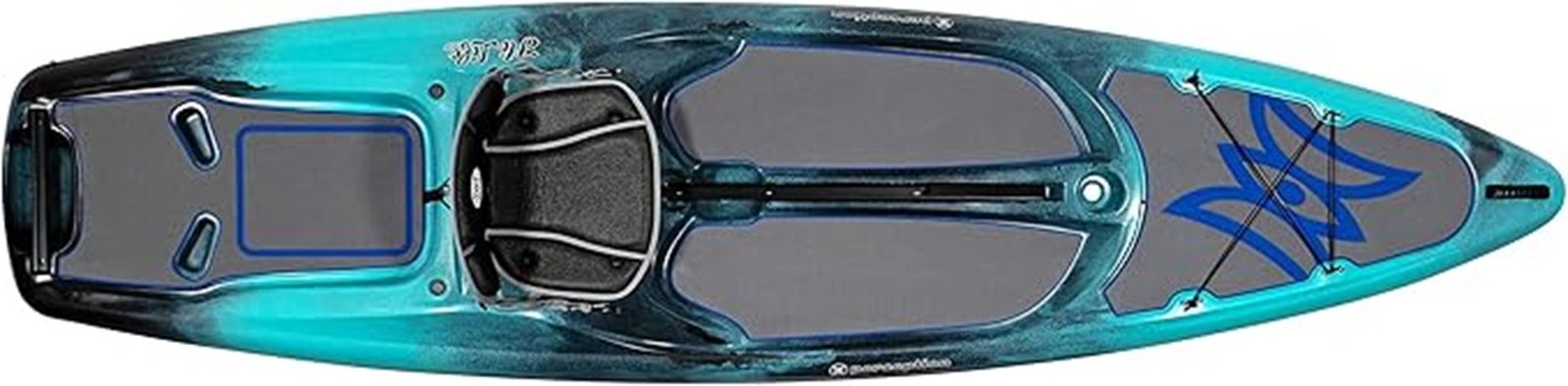
The Perception Hi Life is a strong pick for paddlers who want a true hybrid between a sit-on-top kayak and a stand-up paddle board. Made in the USA, it measures 11 feet long, 34 inches wide, and weighs 55 pounds. Its polyethylene hull supports up to 280 pounds. An elevated seat with thick padding and a fold-down backrest improves comfort. Front and rear swim decks with low sides and hand grabs make entry easy. A built-in cooler and drink holder add convenience. It also carries a 5-year hull warranty.
Best For: Paddlers who want a stable, USA-made hybrid that works like both a sit-on-top kayak and a stand-up paddle board for easy entry, comfort, and casual recreation.
Pros:
- Hybrid design offers the versatility of both kayak and SUP use.
- Wide 34-inch hull and elevated padded seat provide stability and comfort.
- Built-in cooler, drink holder, and easy-access swim decks add convenience.
Cons:
- At 55 lbs, it may be cumbersome to carry and transport for some users.
- 280-lb maximum capacity may be limiting for larger paddlers or extra gear.
- Paddle is sold separately, adding to the total cost.
Lifetime Manta Angler Fishing Kayak with 6 Rod Holders
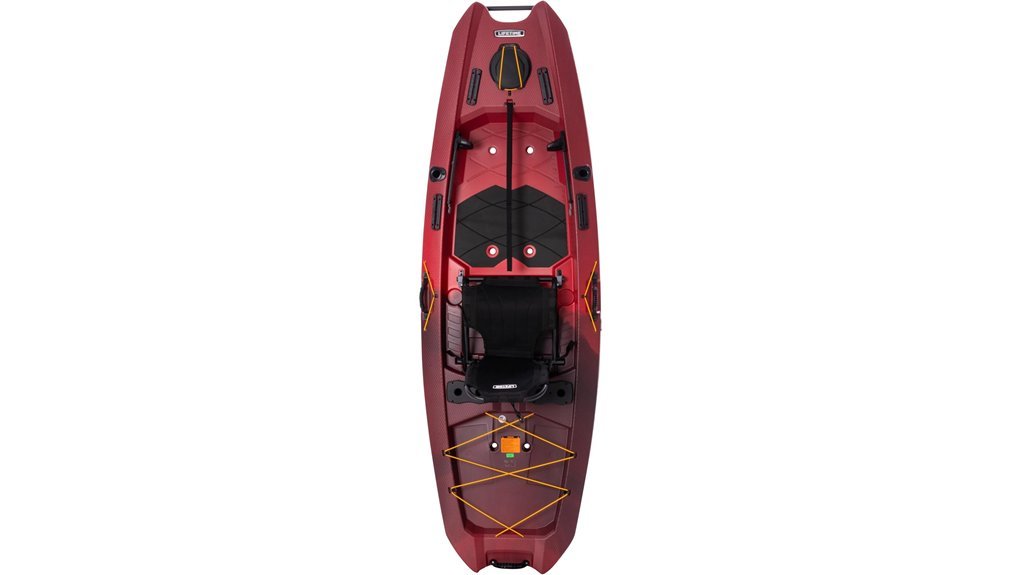
Built for anglers who value stability, the Lifetime Manta Angler suits standing casts and steady trolling. Its wide double-beam catamaran hull delivers strong balance for standing, sitting, or kneeling, while the included stability strap adds confidence. Six flush-mounted rod holders, plus universal accessory mounts, support flexible fishing setups. Storage is practical, with bow hatch space, a rear tankwell, and dual bottle holders. An adjustable framed seat, footrests, and EVA padding improve comfort. High-density polyethylene construction, UV resistance, impact resistance, scupper drainage, and chine rails round out a durable, well-tracking platform.
Best For: Anglers who want a highly stable fishing kayak for standing, sitting, or kneeling casts, with plenty of rod storage and customizable gear options.
Pros:
- Wide catamaran-style hull provides excellent stability for fishing and standing.
- Six flush-mounted rod holders and accessory mounts offer versatile rigging.
- Practical storage and comfort features, including a rear tankwell, bow hatch, adjustable seat, and EVA padding.
Cons:
- Paddle is not included, so you’ll need to buy one separately.
- Wide hull may feel less nimble than narrower kayaks in tight water.
- Best suited for fishing-focused use rather than speed or long-distance paddling.
Pelican Catch Mode 110 Kayak
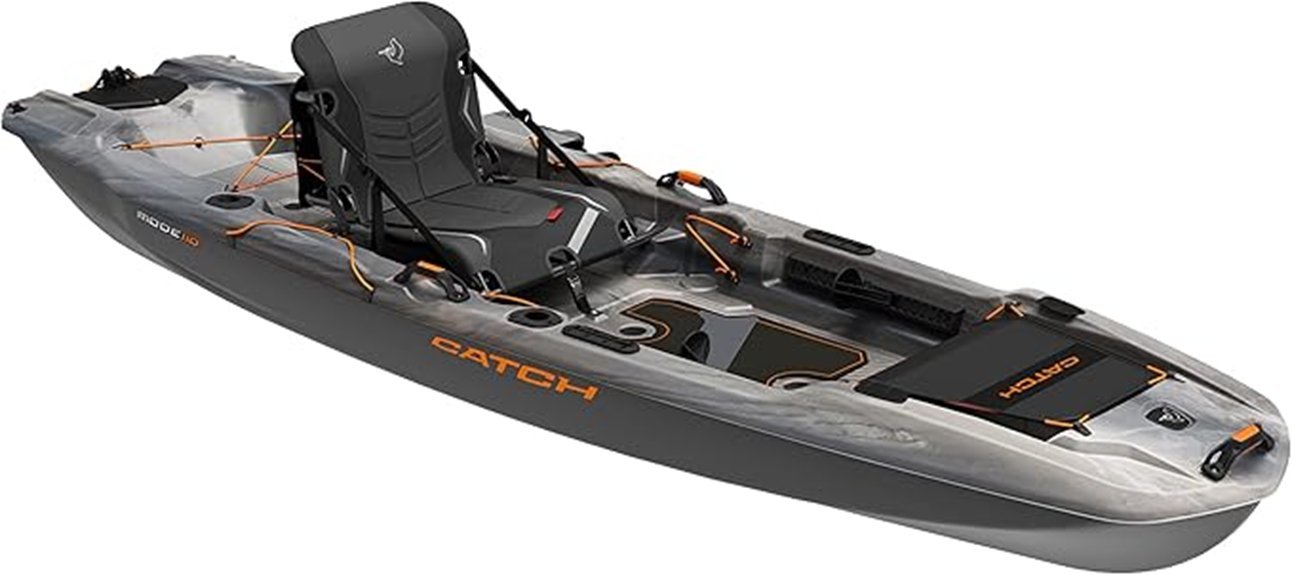
With its tunnel hull and wide deck, the Pelican Catch Mode 110 suits anglers who prioritize stability. The tunnel hull supports easy entry, exit, and steady standing, while anti-slip deck carpeting improves footing. ERGOBOOST seating raises the angler for better visibility, and the EVA seat pad adds comfort on long outings. Under-seat storage helps keep gear organized. For fishing setup, it offers two rigging tracks, three flush mount rod holders, paddle and rod tie-downs, tank wells, and bottle holders. At 63 pounds, it remains portable. Its 375-pound capacity and polyethylene construction enhance durability.
Best For: Anglers who want a highly stable, stand-friendly fishing kayak with comfortable seating and plenty of accessory-ready storage.
Pros:
- Tunnel hull and wide deck provide excellent stability and easy entry/exit.
- ERGOBOOST seat and EVA pad improve comfort and visibility on long fishing trips.
- Multiple fishing features, including rigging tracks, rod holders, tank wells, and bottle holders.
Cons:
- At 63 lb, it may still be somewhat heavy for solo carrying over longer distances.
- 10 ft 8 in length may limit speed and tracking compared with longer kayaks.
- Best suited for fishing, so it may be less versatile for general paddling use.
ISLE 2in1 Kayak and Paddle Board Bundle
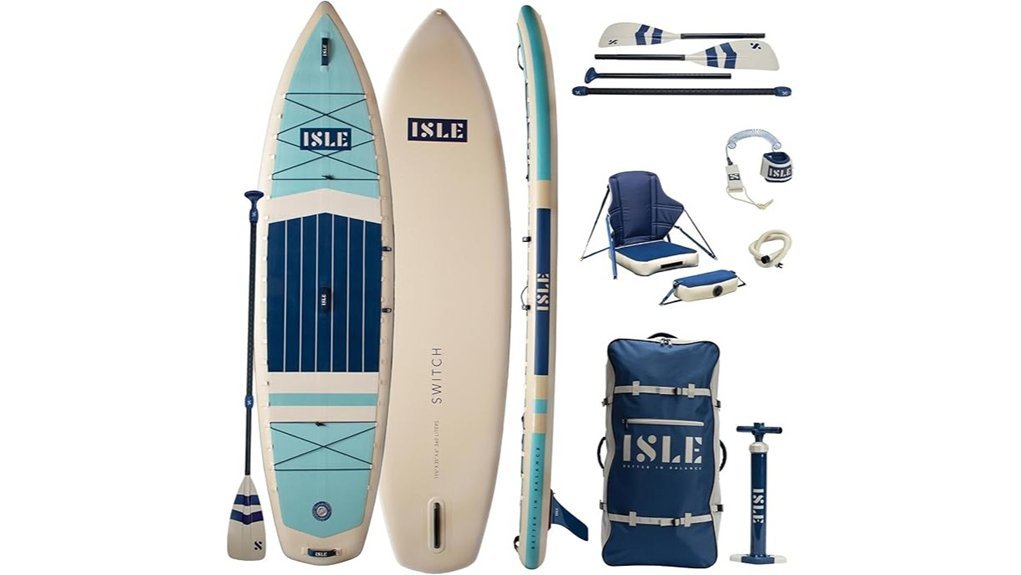
ISLE’s 2-in-1 bundle suits beginners wanting a versatile paddleboard-and-kayak setup. The 11.6-foot, 35.5-inch-wide inflatable uses PVC and Air-Tech Fusion Lite construction, making it 25% lighter than standard boards while weighing 23 pounds inflated. It supports up to 425 pounds and converts from SUP to kayak in seconds for one or more riders. A full-coverage traction pad supports standing, kneeling, or yoga. The package includes a high-back seat, foot brace, adjustable carbon paddle, extra blade, pump, backpack, and touring fin. A two-year warranty adds reassurance.
Best For: Beginners and casual paddlers who want a versatile, lightweight 2-in-1 inflatable that can switch between stand-up paddleboard and kayak use.
Pros:
- Converts from SUP to kayak in seconds for flexible use
- Lightweight Air-Tech Fusion Lite construction makes it easier to carry and transport
- High-capacity design with a full accessory bundle and two-year warranty
Cons:
- Inflatable build may feel less rigid than a hard board
- At 23 lbs inflated, it’s still a bit heavy for some solo users to handle comfortably
- Best suited for beginners, so advanced paddlers may want a more performance-focused option
Factors to Consider When Choosing a Stand up Kayak Under $1000

When choosing a stand up kayak under $1000, stability and hull design are often the first factors to assess, since they shape balance and handling on the water. Weight capacity, comfort and seating, storage and gear mounts, and overall portability also matter because they affect both performance and day-to-day use. A well-rounded model should match the paddler’s size, intended trips, and carrying needs without exceeding the budget.
Stability And Hull Design
Stability starts with the hull, and stand up kayaks under $1000 often rely on wider designs such as catamaran or tunnel hulls to improve balance for both sitting and standing. A flat deck platform expands usable space and gives a firmer stance for paddling or fishing. Chine rails can also sharpen tracking and add a more controlled feel on the water, helping the kayak stay predictable. Materials matter as well; high-density polyethylene is common because it combines impact resistance with manageable weight, supporting stable handling without excess fragility. Some models include extra flotation features that improve safety compliance and add buoyancy in rough conditions. Together, these elements shape how confidently a kayak performs, especially when the goal is dependable stability rather than speed alone.
Weight Capacity Limits
Weight capacity is a key specification in stand up kayaks under $1000, with many models falling in the 280 to 425 lb range to safely support the paddler plus gear. This limit should be matched to the combined load of the paddler, fishing equipment, dry bags, and other essentials. Choosing a kayak with extra reserve capacity can improve steadiness and broaden use for recreation or fishing. By contrast, exceeding the rating may reduce performance, increase drag, and create safety concerns on the water. Construction also matters, since high-density polyethylene and durable PVC designs often deliver stronger support and longer service life. A clear understanding of total load helps narrow options and guarantees the kayak performs as intended without unnecessary strain.
Comfort And Seating
Comfort and seating can make a major difference in how usable a stand up kayak feels on long outings. Buyers should look for adjustable seating systems, including designs like ERGOBOOST, since seat height can be tuned for better visibility and more relaxed paddling. Elevated seats with thick padding help reduce fatigue during long sessions, especially when time on the water stretches beyond a short trip. A wide, flat deck also improves stability and gives more room for standing and shifting position. Customizable footrests matter as well, because proper leg support can improve posture and reduce strain. EVA deck padding adds cushioning underfoot, while under-seat storage can help keep essentials within easy reach without cluttering the cockpit area.
Storage And Gear Mounts
Storage features can make a stand up kayak far more practical on the water. Adequate compartments, including bow hatches and rear tankwells, help keep personal items and essential gear secure and organized during use. Bungee cord systems add another layer of convenience, giving paddlers a simple way to lash down extra equipment while keeping it within reach. For anglers, integrated rod holders and universal accessory mounts increase versatility, allowing a kayak to be arranged for different fishing styles and tackle setups. The deck should also support safe movement with anti-slip surfaces, while comfortable seating helps during longer outings. Maximum weight capacity matters as well, since it affects how much gear can be carried and how the kayak performs and remains stable under load.
Portability And Weight
Portability is a major advantage when selecting a stand up kayak under $1000, especially for paddlers who need to move it frequently or store it in limited space. Weight should be a priority, since lighter models, including inflatable options near 23 pounds, are easier to carry, load, and launch. Compact kayaks under 12 feet also fit more easily in smaller vehicles and closets. Designs with convertible kayak-to-paddleboard setups add flexibility without sacrificing convenience. Carrying handles, shoulder straps, or included backpacks further reduce the effort needed to transport gear to the water. Construction material matters as well; PVC and polyethylene can provide durability while keeping overall weight manageable. A balanced combination of low weight, compact size, and simple carrying features improves everyday usability.
Frequently Asked Questions
How Do I Transport a Stand up Kayak Alone?
Transporting a stand up kayak alone usually means using roof racks, foam blocks, or a kayak cart, depending on distance and vehicle type. The kayak should be centered, strapped securely, and cushioned to prevent damage. A bow and stern line adds stability during travel. For loading, many use a lift-assist, roller, or practice the “one end at a time” method to reduce strain and avoid injury.
Can I Stand and Paddle in Windy Conditions?
Yes, standing and paddling in windy conditions is possible, but it becomes less stable and more tiring. A paddler should expect stronger drift, more effort to maintain direction, and a greater chance of losing balance. If winds are gusty, sitting or kneeling is usually safer and more efficient. Using a wider kayak, low stance, and proper edging can help, but caution remains the better choice in exposed water.
What Safety Gear Is Essential for Beginners?
Essential safety gear for beginners includes a properly fitted personal flotation device, a whistle, and a leash for the board or kayak. A quick-dry or thermal layer helps with cold water exposure, while a helmet is wise in rocky areas or surf. Beginners should also carry a waterproof phone case, sunlight protection, and a basic first-aid kit. Visibility gear, such as bright clothing or lights, improves safety further.
How Much Storage Space Do These Kayaks Need?
A modest nook is usually enough; these kayaks do not demand a grand residence. Most inflatable or modular models fit in a closet, garage corner, or under a bed, while rigid versions generally require a wall rack, ceiling hoist, or small shed. The true concern is length, not weight. A dry, shaded space protects materials and preserves shape, making storage simpler and safer over time.
Are Stand up Kayaks Suitable for Saltwater?
Yes, stand up kayaks can be suitable for saltwater if they are built with corrosion-resistant materials and rinsed after use. Saltwater is harsher than freshwater, so fittings, hardware, and hull surfaces should be checked regularly for damage or wear. Stability, drainage, and weather protection also matter. A kayak intended for coastal use will perform better and last longer than one used without proper maintenance in marine conditions.