Carbon mountain bike bars are becoming a serious choice for riders who want lighter weight without giving up control. The leading options for [2026] range from race-focused flat bars to wider risers built for rough descents and e-bike use. Each design brings a different feel on the trail, and the details matter more than many expect. The real question is which bar best matches the rider, the terrain, and the demands ahead.
Key Takeaways
- Top picks include OneUp, Renthal V3, PNW Components, Chromag BZA, and RXL SL for different rider needs and budgets.
- Lightweight leaders are RXL SL at about 140g and OneUp at 238g, balancing speed, comfort, and control.
- Best for aggressive trail, enduro, and downhill riders are Renthal V3, PNW Components, and Chromag BZA.
- Budget and comfort options include RXL SL and Yccyctrek, offering carbon vibration damping and ergonomic geometry.
- Check clamp size, rise, width, and torque limits before buying, especially for 31.8mm versus 35mm stem compatibility.
OneUp Components Carbon E-Bike Handlebar, 35mm Rise, 35mm Diameter

The OneUp Components Carbon E-Bike Handlebar is a strong fit for e-MTB riders who want comfort without sacrificing control, especially those dealing with wrist pain or arm fatigue. Its 800mm width, 35mm rise, and 35mm diameter create a stable cockpit, while the patented oval carbon shape helps reduce vibration, arm pump, and hand fatigue. Vertical compliance improves comfort without dulling steering response. Integrated ports simplify e-bike controller wire management. With 8° back sweep and 5° up sweep, it balances ergonomics and control. At 238 grams, it stays light, and the black finish keeps it understated.
Best For: e-MTB riders seeking a lightweight, comfortable carbon handlebar that helps reduce arm pump and wrist fatigue without sacrificing control.
Pros:
- Patented oval carbon shape and vertical compliance improve comfort by damping vibration and reducing arm pump.
- Integrated ports make e-bike controller wire routing cleaner and more convenient.
- 800mm width with 8° back sweep and 5° up sweep offers a stable, ergonomic riding position.
Cons:
- Premium carbon construction may be overkill for riders who don’t need the added comfort features.
- 35mm clamp diameter limits compatibility to stems designed for that size.
- 1-year manufacturer warranty is relatively short for a high-end component.
RXL SL Carbon Mountain Bike Handlebar 31.8mm
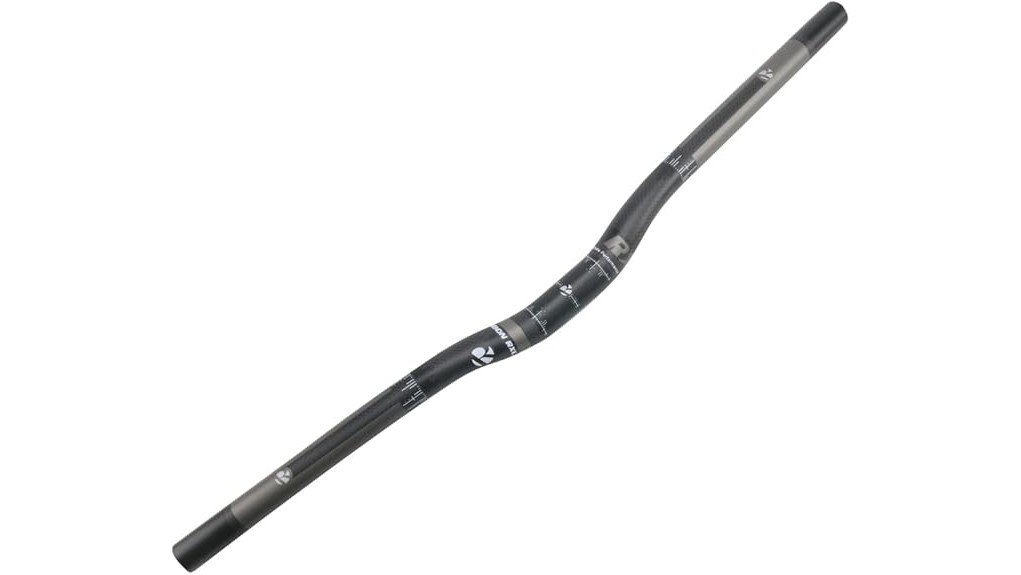
Riders seeking a lightweight, budget-friendly carbon upgrade may find the RXL SL a strong fit. The RXL SL Carbon Mountain Bike Handlebar uses carbon fiber construction and weighs about 140g, helping reduce cockpit mass without sacrificing a polished look. Offered in full black 3K glossy finish, it comes in 640mm, 660mm, 680mm, and 700mm lengths. The bar features easy installation, but torque should be limited to 4Nm and tightened by hand to avoid cracks. With 8-degree backsweep, 3-degree upsweep, and 18mm rise, it aims for comfort, shock damping, and improved ride feel.
Best For: Riders looking for a lightweight, budget-friendly carbon handlebar upgrade with a polished look and added vibration damping for mountain biking.
Pros:
- Very light at about 140g, helping reduce cockpit weight
- Carbon fiber construction with a full black 3K glossy finish for a sleek appearance
- Comfortable geometry with 8° backsweep, 3° upsweep, and 18mm rise
Cons:
- Requires careful installation and torque control at 4Nm to avoid cracking
- Carbon construction may feel less forgiving if overtightened or mishandled
- Limited to specific bar length options, so fit may not suit every rider
Renthal V3 Fatbar Carbon MTB Handlebar 31.8mm

With its 225-gram carbon build and 10mm rise, the Renthal V3 Fatbar suits aggressive trail, enduro, and downhill riders seeking precise control. The 31.8mm clamp, 800mm width, and 7-degree back sweep create a stable, ergonomic platform for technical terrain. Aerospace-grade carbon fiber gives it a strong balance of stiffness, shock absorption, and vibration damping, helping reduce fatigue on long descents. Its optimized flex supports accurate steering without feeling harsh. The matte black finish keeps the look understated, while multiple rise options allow riders to match fit and riding posture to preference.
Best For: Aggressive trail, enduro, and downhill riders who want a lightweight carbon handlebar with precise steering, vibration damping, and a stable ergonomic fit.
Pros:
- Lightweight 225g carbon construction offers an excellent strength-to-weight balance.
- 10mm rise, 800mm width, and 7-degree back sweep provide a comfortable, controlled riding position.
- Carbon fiber design helps absorb shock and reduce fatigue on rough or technical descents.
Cons:
- 31.8mm clamp diameter may not fit all stems without compatibility checks.
- Premium carbon construction can come at a higher price than aluminum alternatives.
- Limited rise options may still require careful fit selection for some riders.
MTB Carbon Fiber Riser Handlebar 780mm (31.8mm)
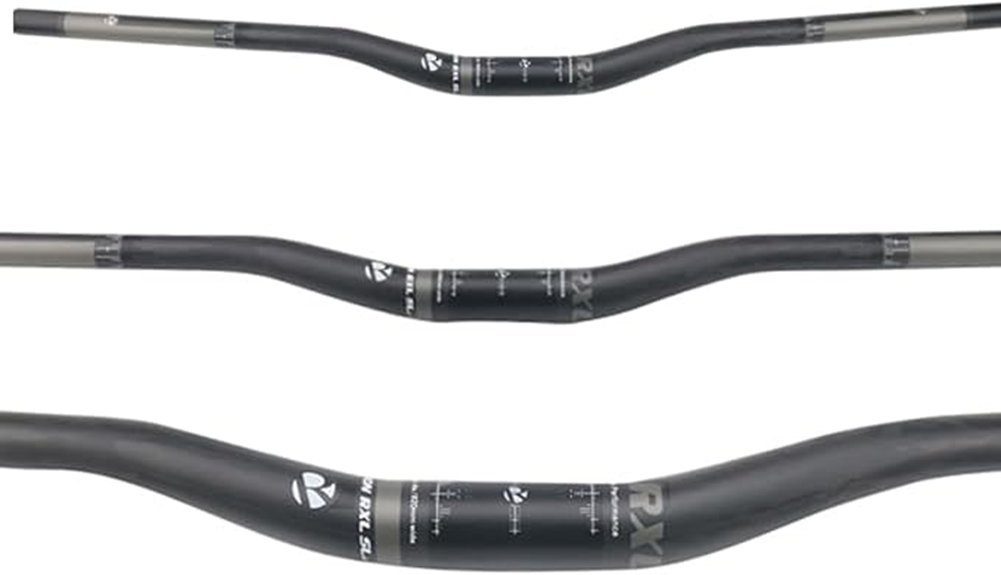
For riders wanting a lightweight, compliant 780mm riser bar, this MTB carbon option stands out. Built from T700 carbon fiber with a UD matte finish, it measures 31.8mm in diameter, 780mm long, and weighs about 220g. The 25mm rise, 9° back sweep, and 22.2mm bar-end diameter support a stable, comfortable cockpit. Compared with aluminum, it offers lower weight, stronger shock resistance, and better elasticity. Available in multiple lengths, it can be trimmed to fit. Installation should follow a 4Nm torque spec, ideally by a bike shop, and includes a one-year warranty.
Best For: Riders who want a lightweight, comfortable 780mm MTB riser handlebar with carbon fiber compliance and a stable 25mm rise.
Pros:
- T700 carbon fiber construction keeps weight low at about 220g.
- 9° back sweep and 25mm rise help create a comfortable riding position.
- UD matte finish offers a sleek look, with trim-to-fit length options available.
Cons:
- Carbon bars require careful installation and a 4Nm torque spec.
- Best installed and adjusted by a bike shop, which may add cost or inconvenience.
- Not as budget-friendly or impact-forgiving as many basic aluminum bars.
Carbon Fiber Mountain Bike Handlebar 780mm 90mm
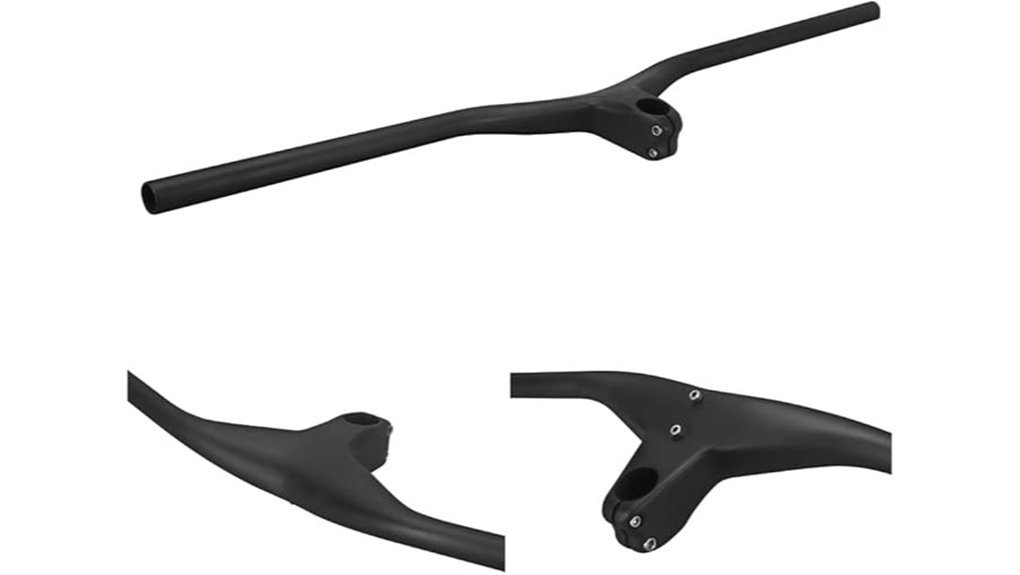
The RXL SL integrated carbon handlebar suits aggressive mountain bikers seeking stiffness and control. This 780mm, 90mm one-piece bar-stem unit uses T700 carbon fiber and weighs about 250g, pairing a UD matte finish with a clean, purposeful look. Its -17 degree stem angle, 5 degree back sweep, and 7 degree sweep support an ergonomic riding position on technical terrain. Shock absorption helps reduce trail vibration, while the integrated speedometer mount adds convenience. Available in multiple widths, it can be trimmed to preference. Installation should follow 4NM torque guidance at a bicycle shop.
Best For: Aggressive mountain bikers who want a lightweight, stiff, one-piece carbon handlebar and stem setup with good vibration damping and an ergonomic riding position.
Pros:
- One-piece T700 carbon construction improves stiffness and control on technical terrain.
- Lightweight at about 250g with a clean UD matte finish.
- Integrated speedometer mount and multiple size options add convenience and customization.
Cons:
- Installation should be done carefully at a bicycle shop with the correct 4NM torque.
- Handlebar length may need trimming to fit personal preferences.
- Integrated bar-stem design offers less adjustment than separate components.
Race Face Era 35Mm Handlebar Blue, 800Mm, 40Mm Rise | bike-handlebars

Race Face’s Era 35mm bar suits aggressive all-mountain and enduro riders seeking lightweight carbon control. At 800mm wide with a 40mm rise, it offers a stable, confidence-building cockpit for technical descents and full-power e-bikes. Nearly 100 hand-laid layers of UD carbon fiber and toughened epoxy keep weight to 215g while preserving a strong, responsive feel. The 35mm clamp, 8-degree backsweep, and 5-degree upsweep support precise steering and comfort. Vertical compliance helps reduce arm pump and fatigue, and the blue finish adds a distinctive look.
Best For: Aggressive all-mountain and enduro riders who want a lightweight, highly responsive carbon handlebar with extra comfort and control on technical terrain and e-bikes.
Pros:
- Lightweight 215g carbon construction with a strong, responsive feel
- 800mm width and 40mm rise provide stability and confidence on descents
- Vertical compliance helps reduce arm pump and rider fatigue
Cons:
- Carbon handlebar may be less forgiving of impacts than aluminum options
- 800mm width may feel too wide for riders who prefer a narrower cockpit
- Premium materials and design typically come at a higher price point
Yccyctrek Carbon Fiber MTB Riser Handlebar 31.8x740mm
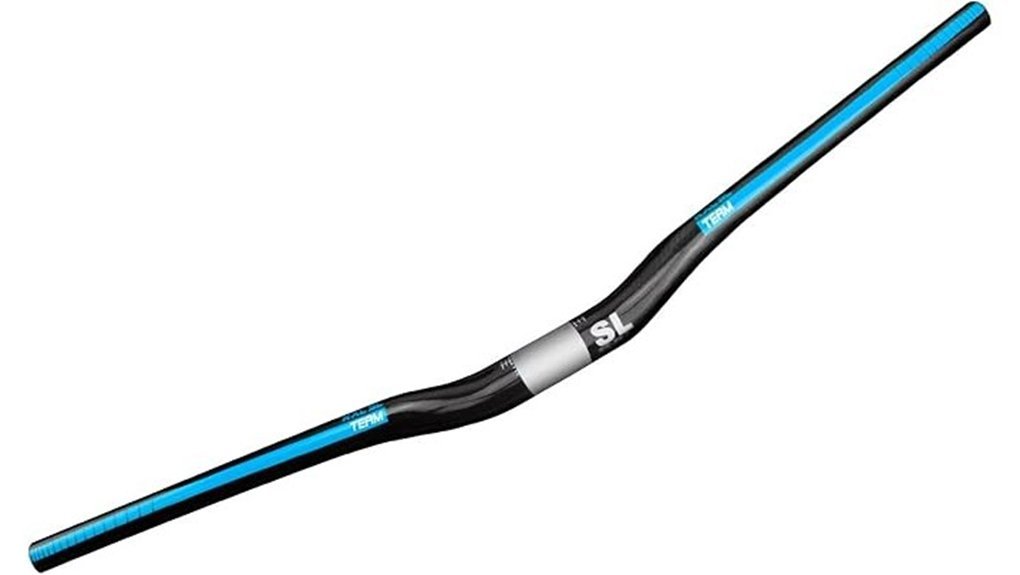
Yccyctrek’s 31.8x740mm carbon riser bar suits riders wanting extra comfort and stable control. Built from carbon fiber, it weighs 0.27 kg and offers a blend of lightness, strength, and forgiving flex. The 31.8 mm clamp and 22.2 mm ends fit standard setups, while the 18 mm rise, 8° backsweep, and 3° upsweep support a more relaxed position. Its wider 740 mm span improves leverage on rough trails. The bar also damps high-frequency vibration, helping reduce fatigue. Installation should use a torque wrench at 4Nm, with 5Nm as the maximum.
Best For: Riders who want a lightweight carbon riser handlebar with extra comfort, stable control, and better vibration damping for rough trail riding.
Pros:
- Carbon fiber construction offers a strong yet lightweight feel at just 0.27 kg.
- 18 mm rise with 8° backsweep and 3° upsweep encourages a relaxed, comfortable riding position.
- 740 mm width improves leverage, stability, and control on rough terrain.
Cons:
- Requires careful installation with a torque wrench, with only 4 Nm recommended and 5 Nm max.
- May be less suitable for riders who prefer the speed-focused feel of a flat handlebar.
- Carbon components can be more sensitive to over-tightening and improper setup than aluminum options.
31.8mm MTB Carbon Fiber Riser Handlebar 680mm Purple
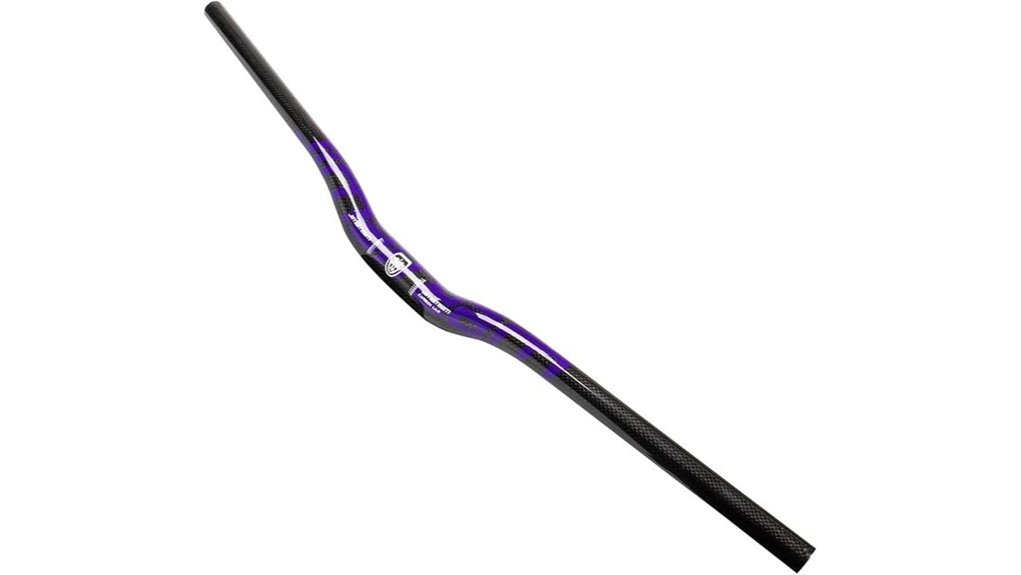
With a 31.8mm clamp and 680mm width, this purple carbon riser suits riders seeking balanced control. Made from 100% pure carbon fiber, it stays lighter than aluminum while offering strong pressure resistance and anti-shock performance. Its vibration-damping feel can improve comfort on rough trails, and the bright finish adds visual appeal. The 22.2mm bar-end diameter supports standard controls, while the 31.8mm bore requires a matching stem. Compatible with most mountain and folding bikes, it fits BMX, downhill, dirt, cross-country, freeride, and off-road setups. Wide enough for stability, yet not excessive.
Best For: Riders who want a lightweight, durable, and comfortable 680mm carbon riser handlebar for mountain biking, BMX, downhill, or off-road use with a balanced mix of control and stability.
Pros:
- 100% pure carbon fiber construction keeps it lighter than aluminum while improving shock resistance and vibration damping.
- 680mm width offers a balanced feel for control, making it versatile for many riding styles and bike types.
- Purple bright finish adds a distinctive look, and the 31.8mm bore fits standard compatible stems.
Cons:
- Requires a 31.8mm stem, so it will not fit bikes with different clamp sizes without replacement.
- 680mm width may feel too narrow for riders who prefer very wide downhill or enduro bars.
- Carbon fiber can be more expensive and may require more care than aluminum handlebars.
PNW Components Loam Carbon MTB Handlebar
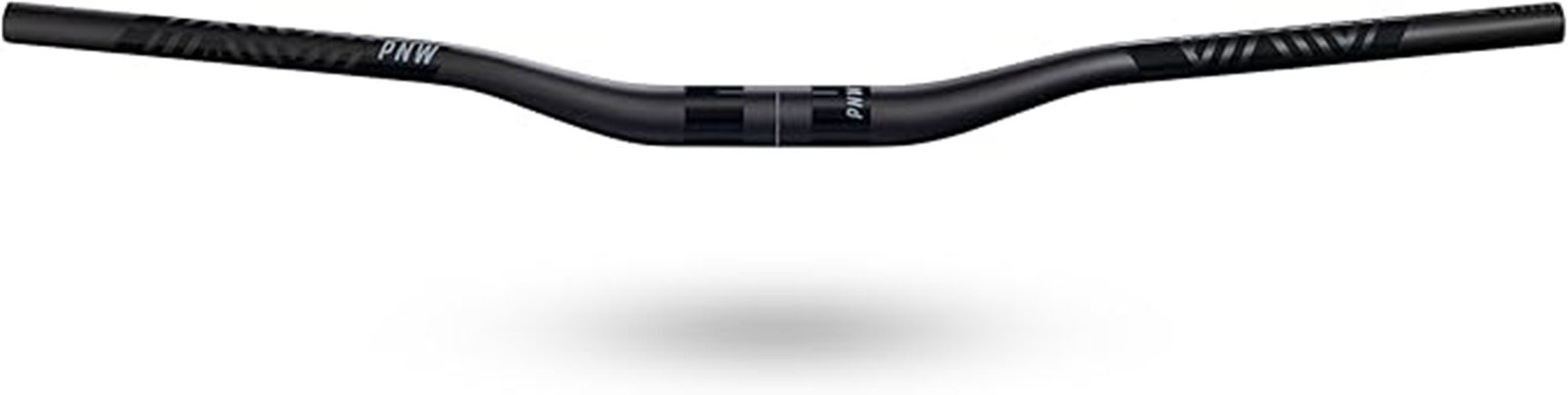
The PNW Components Loam Carbon MTB Handlebar suits riders who want comfort without sacrificing control. Its carbon fiber construction and patent-pending CBD layup are designed to absorb trail chatter while keeping steering feedback precise. At 800mm wide, it adds stability on descents and rough terrain. Available in 125mm, 38mm, and 50mm rise options, it accommodates varied fit preferences. The bar supports both 31.8mm and 35mm clamps, fitting many modern stems. Weighing 0.5 pounds and tested to MTB Gravity Category 5, it is also backed by a lifetime warranty.
Best For: Riders seeking a lightweight carbon mountain bike handlebar that balances comfort, control, and durability for aggressive trail, enduro, and downhill riding.
Pros:
- Carbon fiber with patent-pending CBD layup helps absorb trail chatter for a smoother ride.
- Wide 800mm design improves stability and confidence on descents and rough terrain.
- Compatible with both 31.8mm and 35mm clamps, with multiple rise options for a more custom fit.
Cons:
- 800mm width may feel too wide for riders who prefer a narrower cockpit.
- Carbon construction and premium testing can make it more expensive than alloy alternatives.
- Limited to the listed rise options, which may not suit every fit preference.
Carbon Fiber MTB Flat Handlebar 760mm 31.8mm
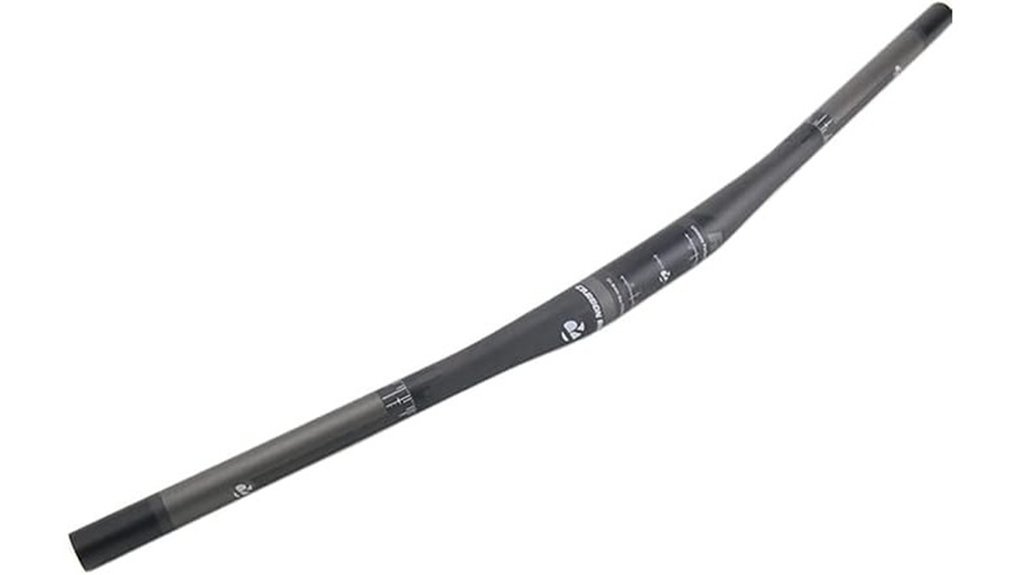
Built for riders wanting a lightweight, responsive 760mm cockpit, this bar suits aggressive MTB and downhill use. The T700 carbon fiber construction keeps weight low while improving shock absorption, elasticity, and pressure resistance compared with aluminum. Its UD matte finish gives a clean look, and the 31.8mm clamp fits standard MTB setups. Ergonomic shaping includes a 4° upsweep, 9° backsweep, and 5mm rise for balanced control. Available in multiple widths, it installs best with carbon paste, a hex wrench, and 4 Nm torque. Quality support helps address defects or fit concerns.
Best For: Mountain bikers and downhill riders who want a lightweight, responsive 760mm carbon handlebar with solid shock absorption and a standard 31.8mm clamp.
Pros:
- T700 carbon fiber construction keeps weight low while improving shock absorption, elasticity, and pressure resistance.
- Ergonomic 4° upsweep, 9° backsweep, and 5mm rise provide balanced comfort and control.
- UD matte finish and multiple width options offer a clean look and fit flexibility.
Cons:
- Requires careful installation with carbon paste and a precise 4 Nm torque setting.
- Carbon handlebars can be more sensitive to over-tightening than aluminum alternatives.
- Best suited to riders who specifically want a flat bar setup, not those seeking more rise or sweep.
CHROMAG BZA Mountain Bike Handlebar, Black-Red, 35mm Rise

Chromag’s BZA suits aggressive riders who want a light, rigid carbon bar for hardcharging terrain. Built from unidirectional carbon fiber and high-quality resin, it measures 800mm wide with a 35mm rise and 35mm diameter, weighing about 230g. The 5° up and 8° back geometry supports an assertive cockpit in enduro, DH race, and bike park use. Its stiffness helps preserve steering precision under load, while the black-red finish adds a distinctive look. Included is a flat/riser handlebar, and the model carries a limited manufacturer warranty.
Best For: Aggressive mountain bikers who want a lightweight, rigid carbon handlebar for enduro, downhill racing, and bike park riding.
Pros:
- Very light at about 230g while still feeling sturdy
- Carbon construction provides excellent rigidity and steering precision
- 35mm rise with 5° up / 8° back geometry supports an aggressive riding position
Cons:
- Premium carbon build likely comes at a higher price
- 800mm width may be too wide for some riders without trimming
- Best suited for aggressive riding, so it may be overkill for casual trail use
Alfa Pasca Carbon Riser Mountain Bike Handlebar
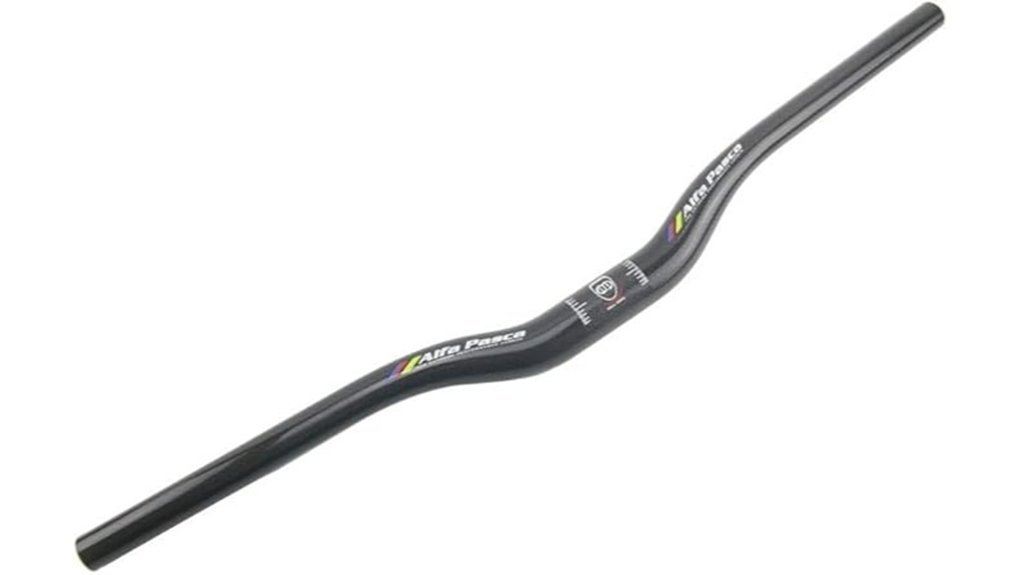
Alfa Pasca’s carbon riser bar suits riders wanting a lighter, more comfortable upgrade. Made from carbon fiber with strength and pressure resistance comparable to aluminum, it offers better vibration damping and enough elasticity for steadier handling. The 31.8mm clamp fits common stems, while the 18mm rise, 8° backsweep, and 3° upsweep support a relaxed position. Widths run from 640 to 740mm. Three finishes are available: 3K glossy, 3K matte, and UD matte. Installation calls for 4 Nm torque, a hex wrench, and careful tightening, preferably with carbon paste.
Best For: Mountain bikers looking for a lightweight carbon riser handlebar with better vibration damping, a comfortable riding position, and multiple width/finish options for XC, trail, enduro, or downhill setups.
Pros:
- Lighter than aluminum alloy while offering strong pressure resistance and good handling feel.
- Carbon construction helps absorb vibration for a more comfortable ride.
- Multiple widths and finishes make it easy to match different riding styles and bike aesthetics.
Cons:
- Requires careful installation and torque control to avoid cracking.
- Carbon paste may be needed for a secure fit.
- More expensive and less forgiving than basic aluminum bars if over-tightened or damaged.
Carbon Fiber MTB Handlebars 760mm Riser Bars
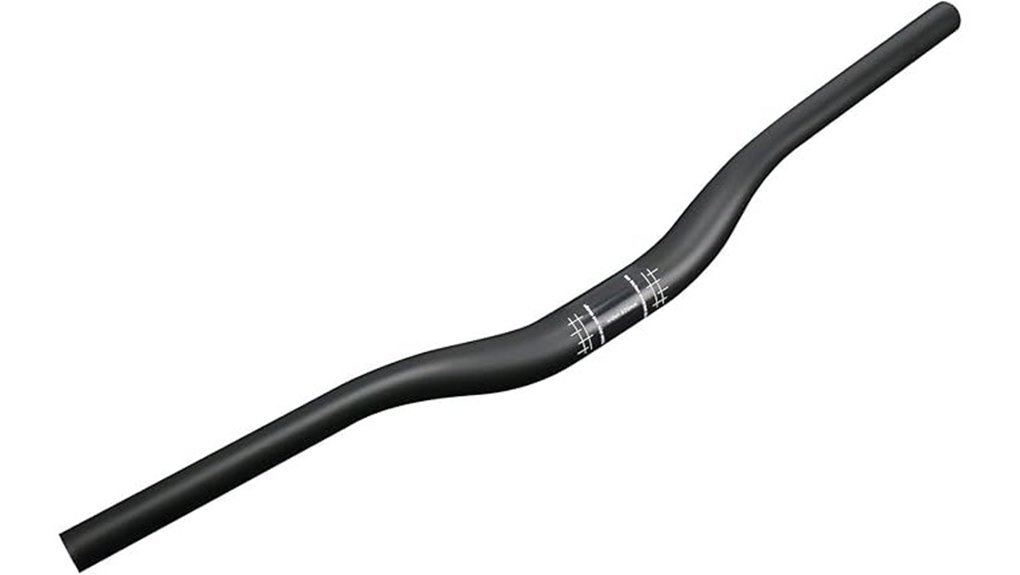
The Carbon Fiber MTB Handlebars 31.8 RXL SL suit riders wanting a 760mm carbon riser bar with precise control. Built from T800 carbon fiber, it offers lighter weight than aluminum, plus strong pressure resistance, anti-shock behavior, and useful elasticity. The UD matte finish gives a clean look, while the 31.8mm clamp and 22.2mm ends fit standard setups. Its riser shape uses 8-degree backsweep, 3-degree upsweep, and 18mm height for balanced leverage. Installation requires a hex wrench and 4Nm torque, with hand support during tightening to reduce crack risk.
Best For: Riders who want a lightweight 760mm carbon riser bar with solid control, comfort, and a clean UD matte finish for mountain or road setups.
Pros:
- T800 carbon fiber construction offers lighter weight than aluminum with strong pressure resistance and anti-shock performance.
- Riser geometry with 8-degree backsweep, 3-degree upsweep, and 18mm height provides balanced leverage and control.
- Standard 31.8mm clamp and 22.2mm bar ends make it compatible with common bike setups.
Cons:
- Carbon bars require careful installation and proper 4Nm torque to avoid cracking.
- Less forgiving than metal bars if over-tightened or improperly mounted.
- May not suit riders who prefer a flatter bar geometry with less sweep and rise.
Carbon Flat Handlebar 31.8mm for Mountain Bikes
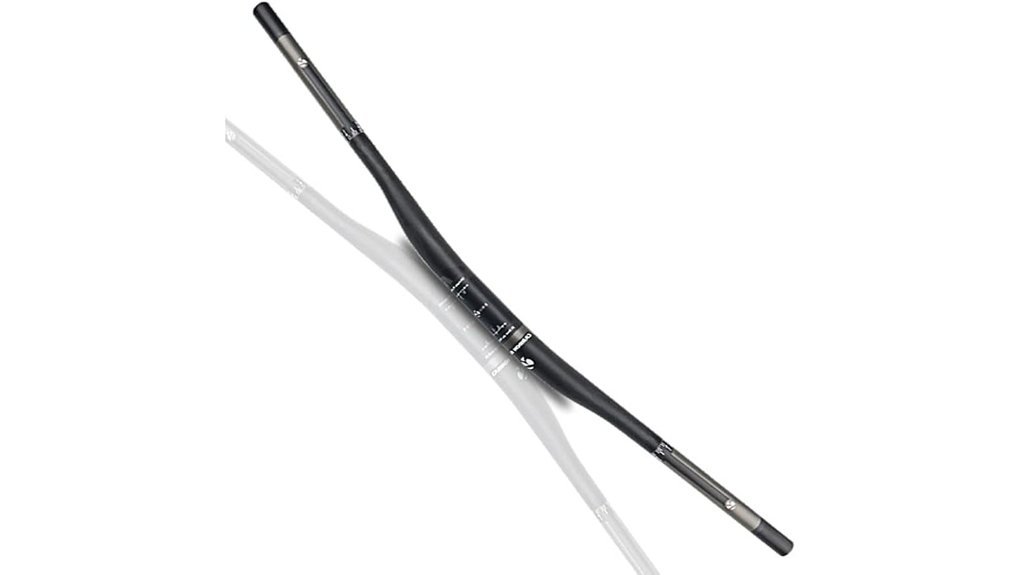
Built for riders who want a light, stiff cockpit, this 31.8mm carbon flat bar suits XC, trail, and enduro bikes. It is also compatible with downhill and gravel setups, with lengths from 760mm to 820mm. High-strength carbon fiber and an anodized finish provide low weight, durability, shock absorption, and a secure, non-slip feel. The flat profile encourages an upright position that can reduce strain on the back, arms, and neck, while ergonomic grips improve control. Installation requires a matching 31.8mm stem, carbon paste, and careful torque between 4Nm and 5Nm.
Best For: Riders looking for a lightweight, stiff carbon flat handlebar for XC, trail, enduro, downhill, or gravel bikes, especially those who want improved control and a more comfortable upright riding position.
Pros:
- Lightweight, durable carbon fiber construction with good shock absorption and a non-slip feel
- Flat design and ergonomic grip support can reduce strain on the back, arms, and neck
- Compatible with multiple riding styles and available in several lengths from 760mm to 820mm
Cons:
- Requires a 31.8mm stem, so compatibility must be checked before purchase
- Installation needs careful torque control and carbon paste to avoid damage
- Flat bar design may not suit riders who prefer a more aggressive or riser-style cockpit
RXL Carbon Fiber Bike Bar Ends (128mm)
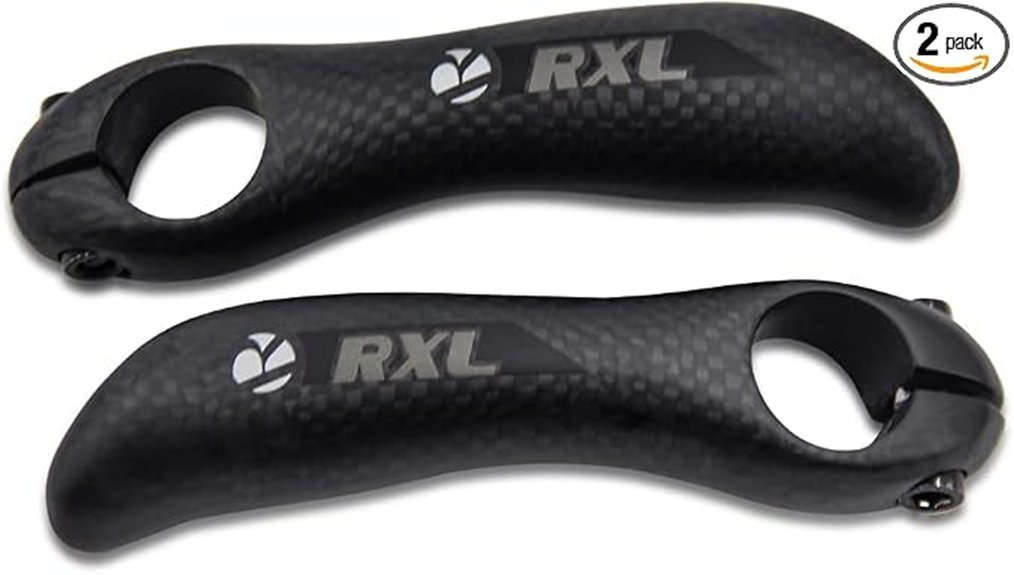
RXL’s 128mm carbon bar ends suit riders seeking lightweight control and extra hand positions. Designed for mountain bikes, they use 22.2mm diameter clamps and a stiff carbon fiber build for lasting durability. The lighter-than-aluminum construction can help improve performance while reducing hand and arm fatigue on long rides. Their ergonomic shape supports a comfortable grip, and the 3k matte or glossy finish adds a clean look with brighter visual appeal. Installation is straightforward, removal is easy, and a 4 Nm torque setting is recommended for secure fitting.
Best For: Mountain bikers who want lightweight carbon bar ends for added control, extra hand positions, and a comfortable grip on long rides.
Pros:
- Lightweight carbon fiber construction helps improve performance and reduce fatigue
- Ergonomic 128mm design offers extra hand positions and better riding comfort
- Easy to install and remove, with a sleek 3k matte or glossy finish
Cons:
- Only fits handlebars with a 22.2mm clamp diameter
- Carbon fiber may be less forgiving than some other materials in hard impacts
- Requires careful installation with a 4 Nm torque setting
Factors to Consider When Choosing Carbon Mountain Bike Bars
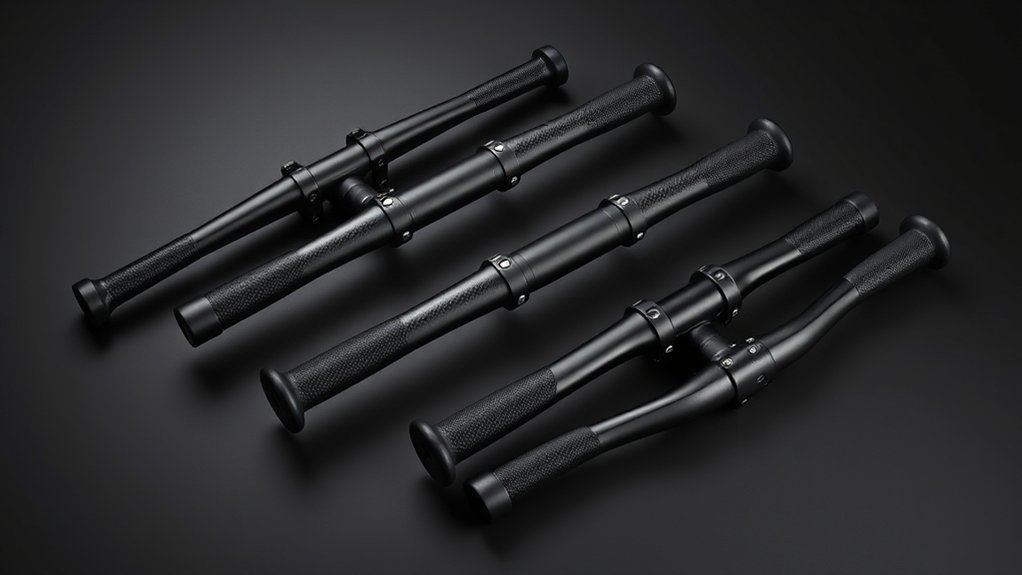
Choosing carbon mountain bike bars begins with checking clamp size compatibility, since the stem interface must match exactly for a safe fit. Width, rise, and sweep angle then shape rider position and control, while weight and compliance influence both responsiveness and trail comfort. Material quality and layup also matter, as they affect strength, durability, and the overall ride feel.
Clamp Size Compatibility
Clamp size compatibility is one of the most important factors when selecting carbon mountain bike bars, since the handlebar and stem must match exactly for a secure fit. Most bars are built around a specific clamp diameter, commonly 31.8 mm or 35 mm, and using the wrong size can create instability and increase the risk of damage. The manufacturer’s maximum clamp width should always be checked before purchase to avoid fit problems. Choosing a compatible clamp size also supports better adjustment across different stem options, allowing riders to match equipment to riding preferences. When the fit is correct, steering response remains stable, control improves, and overall safety is strengthened. This detail is small, but it has a direct effect on performance and reliability during every ride.
Width And Rise
Handlebar dimensions shape more than fit; they directly influence control, comfort, and fatigue on the trail. Width is usually chosen between 640mm and 800mm, with wider carbon bars offering greater stability and control on rough, technical descents. Narrower options can suit cross-country riders who value quicker steering and easier maneuvering in tight terrain. Rise matters as well, ranging from 0mm to 40mm. A higher rise encourages a more upright position, which can reduce strain and improve comfort on longer rides. The best setup balances handling and endurance, since width and rise together shape how a bike responds and how quickly a rider tires. Selecting dimensions that match terrain and riding style helps preserve efficiency and control over extended use.
Sweep Angle Preferences
Sweep angle is another key detail that shapes how carbon mountain bike bars feel on the trail. Back sweep, usually between 5° and 10°, affects wrist alignment, comfort, and steering control. A larger back sweep often suits aggressive riders because it can improve handling on technical terrain and support a more relaxed grip. Upsweep, generally 0° to 5°, also matters, since it can encourage a more upright posture and steadier hand placement. The best choice depends on riding style: cross-country riders often prefer less sweep for efficiency, while downhill riders may favor more sweep for added stability. Together, back sweep and upsweep determine the bar’s ergonomics, influencing comfort and fatigue over long rides without changing the rider’s core position.
Weight And Compliance
Weight and compliance play a major role in how carbon mountain bike bars feel once the rider leaves the trailhead. Carbon bars are generally lighter than aluminum, often landing between 140 and 250 grams, which can make steering feel quicker and less tiring on long climbs. Just as important, their compliance helps filter trail buzz and repeated impacts, reducing arm pump and hand fatigue over extended rides. Many designs add vertical compliance without sacrificing steering accuracy, so control remains dependable on rough terrain. A strong weight-to-strength balance further improves handling by absorbing shocks while preserving rigidity where it matters. Ergonomic back and upsweep angles can also support a more natural wrist position, increasing comfort and limiting strain as the miles add up.
Material And Layup
Carbon fiber construction is the foundation of most premium mountain bike bars, combining low weight with the strength needed for aggressive trail use. High-strength carbon gives these bars an excellent strength-to-weight ratio, allowing durability without unnecessary mass. Layup matters just as much as raw material, because fiber layers can be oriented to increase stiffness, limit unwanted flex, and sharpen steering response. Different grades, such as T700 and T800, bring distinct balances of elasticity, impact feel, and shock absorption, which affects comfort and handling. Manufacturing methods also influence quality; hand-laying and toughened epoxy resins can improve structural integrity and service life. A well-designed layup can further dampen high-frequency vibrations, helping reduce fatigue on rough terrain and sustaining control over long rides.
Installation Torque Limits
Installation torque limits are a critical consideration when choosing carbon mountain bike bars, since most manufacturers specify a narrow range of about 4Nm to 6Nm for safe clamping. That range can vary by bar design, so the printed specification should always guide installation. Exceeding the stated maximum can crack or weaken the carbon fiber, reducing structural integrity and increasing failure risk. A calibrated torque wrench is essential for achieving accurate tightening without over-compression. Many brands also recommend carbon fiber mounting paste, which improves grip and helps prevent bar slippage at lower clamping force. After installation, torque should be rechecked, particularly after the first few rides, because settling can slightly change clamp security and alignment over time.
Frequently Asked Questions
How Often Should Carbon Mountain Bike Bars Be Replaced?
Carbon mountain bike bars should be replaced immediately if cracks, deep scratches, dents, or delamination appear, and routinely inspected after crashes or hard impacts. In normal use, many last several years, but age, UV exposure, clamping damage, and repeated stress can shorten that span. Manufacturers often recommend replacement every three to five years for aggressive riding, though condition matters more than time. A professional inspection is wise if any doubt exists.
Do Carbon Bars Reduce Arm Fatigue on Rough Trails?
Carbon bars can reduce arm fatigue on rough trails by damping high-frequency vibrations better than many aluminum bars. That slightly softer feel may ease hand and forearm strain over long descents or repeated chatter. The benefit is modest, though, and depends on bar shape, width, tire pressure, suspension setup, and rider sensitivity. They do not replace proper technique, fit, or suspension tuning, which usually have larger effects.
Can Carbon Bars Be Cut to a Custom Width?
Yes, carbon bars can often be cut to a custom width, but only if the manufacturer allows it. Precision and caution matter: too much trimming can weaken the laminate or remove safe clamping area. A proper saw guide, fine-tooth blade, and taped cut line help reduce damage. After cutting, the rider should recheck brake and grip placement, then torque everything to spec. If uncertain, professional fitting is wiser.
Are Carbon Bars Compatible With All Stem Clamp Sizes?
No, carbon bars are not compatible with all stem clamp sizes. They must match the stem’s clamp diameter exactly, commonly 31.8 mm or 35 mm, because using the wrong size can damage the bar or create a dangerous fit. The bar’s specified clamping area should also be checked, since overtightening or mismatched hardware can cause failure. Compatibility depends on both diameter and the manufacturer’s torque limits.
How Do I Inspect Carbon Bars for Hidden Damage?
Like a lantern revealing cracks in a dark cave, hidden damage can be found by careful inspection. One should clean the bars, then examine them under bright light for whitening, splinters, dents, or soft spots. A coin tap test may expose dull areas. Flexing should never produce creaks or unusual movement. If impact occurred, professional inspection or retirement is safest. Any sign of delamination means immediate replacement.