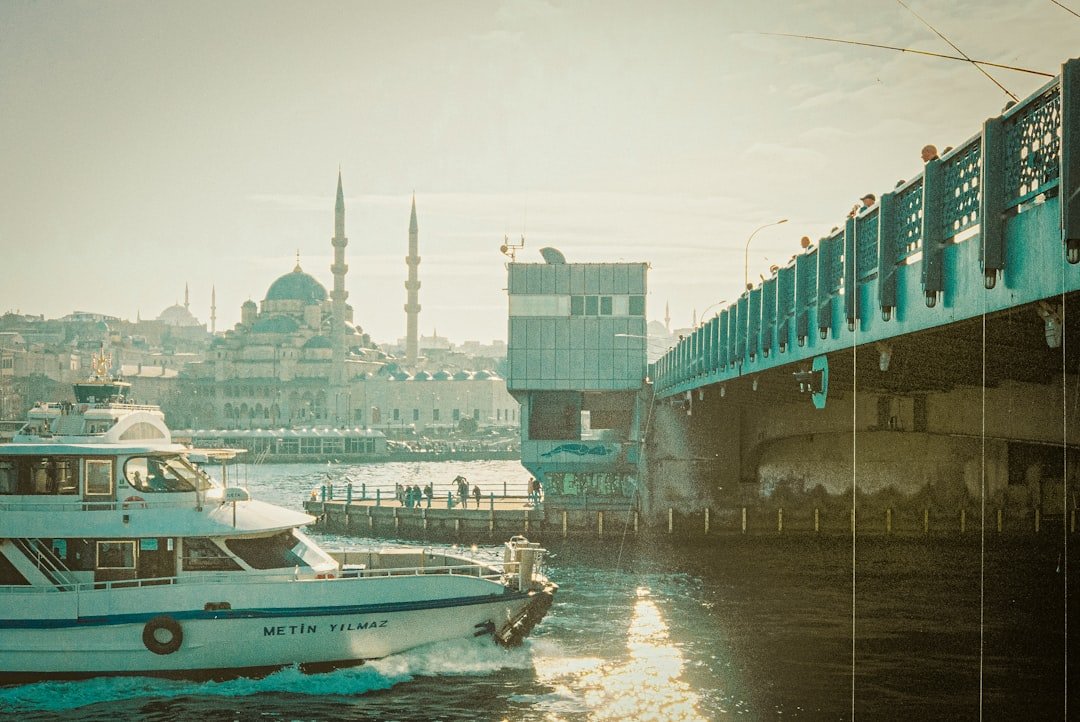
Eyüpsultan, on the European side of Istanbul and along the Golden Horn, has a history shaped by Byzantine religious sites, early Muslim traditions, the Ottoman conquest of Constantinople, imperial ceremonies, industrial development, and modern urban growth. The district is especially associated with Abu Ayyub al-Ansari, known in Turkey as Eyüp Sultan, whose traditional burial place became the center of one of Istanbul’s most important religious districts.
Quick Answer
Eyüpsultan grew from an area outside Byzantine Constantinople into a major Ottoman religious and ceremonial center after 1453. Its identity developed around the traditional tomb of Abu Ayyub al-Ansari and the Eyüp Sultan complex. The district was officially called Eyüp until its name was changed to Eyüpsultan in 2017.
Key Takeaways
- The Byzantine-era area around present-day Eyüp lay outside Constantinople’s main walls and included cemeteries, monasteries, and the nearby religious settlement known as Kosmidion.
- Abu Ayyub al-Ansari, a companion of the Prophet Muhammad, is commonly dated as having died during the Muslim campaign against Constantinople in 669, although historical sources preserve other dates.
- After the Ottoman conquest in 1453, the traditional burial place of Abu Ayyub became the focus of a mosque, tomb, religious complex, cemetery, and new settlement.
- The first Eyüp Sultan Mosque was a 15th-century foundation, but the present main mosque was rebuilt under Sultan Selim III between 1798 and 1800.
- Eyüp became closely connected with Ottoman state tradition, including the sword-girding ceremonies of newly enthroned sultans.
- The district’s official name changed from Eyüp to Eyüpsultan in November 2017.
Eyüpsultan History Timeline
| Period | What Happened |
|---|---|
| Byzantine era | The area outside Constantinople’s walls included burial grounds and religious establishments. Kosmidion, associated with churches and monasteries, was nearby. |
| 669 | Abu Ayyub al-Ansari is most commonly dated as dying during the Muslim campaign against Constantinople. Other dates appear in historical traditions. |
| 1453 | After Mehmed II conquered Constantinople, Ottoman tradition held that Akşemseddin identified Abu Ayyub’s burial place. A tomb and religious complex developed around the site. |
| 1450s | The first Eyüp Sultan Mosque and associated institutions helped establish Eyüp as an important Ottoman settlement outside the old city walls. |
| 1766 | A major earthquake badly damaged the mosque. |
| 1798–1800 | The deteriorated mosque was largely demolished and rebuilt under Sultan Selim III, creating the main structure seen today. |
| 19th century | Industrial activity expanded along the Golden Horn. Feshane, an important Ottoman textile enterprise, moved to Eyüp in 1833. |
| 1923 onward | Republican-era Istanbul expanded rapidly, changing transportation, housing, industry, and the urban landscape around historic Eyüp. |
| 2017 | The official district name changed from Eyüp to Eyüpsultan under Law No. 7039. |
From Byzantine-Era Eyüp to the Ottoman Conquest
The early history of Eyüpsultan is more complex than describing it as an important Byzantine city. According to the TDV İslâm Ansiklopedisi history of Eyüp, the area was outside Constantinople’s main defenses and included a relatively modest settlement and necropolis. The nearby district of Kosmidion contained churches and monasteries and formed part of the religious landscape around the Golden Horn.
Abu Ayyub al-Ansari, whose full name was Abu Ayyub Khalid ibn Zayd al-Ansari, was a companion of the Prophet Muhammad and is remembered for hosting the Prophet after his migration to Medina. He later joined a Muslim campaign against Constantinople and died during the expedition. The most commonly cited date is 669, although historical sources also give later dates.
Tradition holds that Abu Ayyub was buried near the walls of Constantinople. Stories about the location and preservation of the grave developed over many centuries. When Mehmed II’s Ottoman army conquered Constantinople in 1453, his spiritual adviser Akşemseddin was said to have identified the burial place. The Ottomans then established a tomb and religious complex at the site, transforming the surrounding area.
Note: Historical sources distinguish between documented events and later religious traditions surrounding the discovery of Abu Ayyub’s grave. The association of the site with Abu Ayyub became central to Ottoman Eyüp regardless of how individual elements of the tradition developed.
Eyüpsultan in the Ottoman Empire
Following the conquest of Constantinople, Eyüp became one of the first important Ottoman settlements to develop outside the former Byzantine city walls. The tomb and mosque complex gave the new settlement a powerful religious identity, attracting worshippers, scholars, officials, charitable institutions, and people who wished to live or be buried close to the shrine.
The first Eyüp Sultan Mosque was established shortly after the conquest and is commonly dated to 1458. However, that early mosque should not be confused with the present building. The original structure suffered repeated damage and repairs, including serious damage in the 1766 earthquake.
The 1798–1800 Reconstruction of Eyüp Sultan Mosque
By 1798, the old mosque was judged too badly deteriorated for ordinary repair. Under Sultan Selim III, most of it was demolished and rebuilt. The new mosque was completed in 1800. The detailed history recorded by the TDV İslâm Ansiklopedisi entry on the Eyüp Sultan Külliyesi explains that the reconstruction created a substantially different building while retaining connections with established Ottoman architectural traditions.
The present mosque therefore combines classical Ottoman planning ideas with architectural and decorative features belonging to the late Ottoman period, including Baroque-influenced details. The tomb itself preserves older architectural elements and decorative work from several periods.
Royal Ceremonies and the Ottoman Dynasty
Eyüp’s importance extended far beyond ordinary neighborhood life. The shrine became closely linked with Ottoman ideas of legitimate rule. After ascending the throne, Ottoman sultans participated in a ceremonial sword-girding at Eyüp Sultan. The ceremony functioned as one of the empire’s most important expressions of dynastic authority.
The wider district also attracted members of the imperial family, senior officials, scholars, religious figures, and charitable patrons. Mosques, tombs, fountains, schools, kitchens, Sufi lodges, and other institutions accumulated around the historic center, giving Eyüp an unusually dense religious and commemorative landscape.
Eyüp Cemetery and Funerary Heritage
The slopes above the mosque became one of Istanbul’s best-known Muslim burial grounds. High-ranking officials, scholars, members of prominent families, and many ordinary residents wished to be buried near Abu Ayyub’s traditional tomb. As a result, Eyüp Cemetery developed into an important record of Ottoman social history, calligraphy, stone carving, and funerary art.
Industry Along the Golden Horn
Eyüp was not only a sacred and residential district. During the 19th century, industrial activity increasingly changed the Golden Horn. One important example was Feshane-i Amire, an Ottoman textile enterprise founded in 1827 and moved to Eyüp in 1833. The facility later used steam-powered machinery and became a significant industrial complex.
Eyüpsultan in the Modern Era

Turkey’s transition into the republican era after 1923 brought major political, economic, and urban changes to Istanbul. Eyüp increasingly became part of a much larger metropolitan area. Roads, public transportation, housing, industry, and municipal services expanded as Istanbul’s population grew.
This growth changed the physical character of the Golden Horn and surrounding neighborhoods. Historic structures existed alongside factories, dense residential development, commercial streets, and later urban-renewal and conservation projects. The result is a district where different periods of Istanbul’s history remain visible within the same landscape.
Why the District Is Called Eyüpsultan Today
For most of its modern administrative history, the district’s official name was Eyüp. The present name is much more recent. According to the Eyüpsultan District Governorate, Law No. 7039 changed the district’s official name from Eyüp to Eyüpsultan. The law was published in the Official Gazette on November 3, 2017.
Note: “Eyüp” remains common when discussing the historic neighborhood and older documents, while “Eyüpsultan” is the official modern district name.
Religious Significance of Eyüpsultan
| Aspect | Details |
|---|---|
| Location | European side of Istanbul, near the Golden Horn |
| Central association | Traditional burial place of Abu Ayyub al-Ansari |
| First Ottoman complex | Established after the Ottoman conquest of Constantinople in 1453 |
| Present mosque | Main structure rebuilt between 1798 and 1800 under Sultan Selim III |
| Ottoman ceremonial role | Closely associated with the sword-girding ceremonies of Ottoman sultans |
| Present role | Active mosque, religious destination, historic monument, and visitor attraction |
Eyüpsultan holds profound religious significance for many Muslims because of its association with Abu Ayyub al-Ansari. His traditional tomb stands beside the Eyüp Sultan Mosque and has been an important destination for prayer, remembrance, and pilgrimage for centuries.
The mosque remains an active place of worship rather than simply a historical monument. Religious occasions, Ramadan, Friday prayers, and important nights in the Islamic calendar can draw large numbers of worshippers. Visitors should therefore remember that the complex continues to serve a living religious community.
Eyüpsultan’s historical importance comes from the combination of sacred memory, Ottoman state ceremony, architecture, burial traditions, and everyday urban life—not from a single monument alone.
Cultural and Architectural Heritage of Eyüpsultan
The cultural landscape of Eyüpsultan contains layers from several periods of Istanbul’s history. The Eyüp Sultan Mosque and tomb form its best-known center, but the surrounding district also includes cemeteries, fountains, tombs, religious complexes, historic streets, industrial heritage, and surviving examples of traditional architecture.
The mosque deserves particular care in architectural descriptions. Although the first mosque was a foundation of Mehmed II’s period, the present main building dates primarily from the reconstruction of 1798–1800. Its design retains strong links with the classical Ottoman tradition while incorporating decorative details from the late Ottoman period.
Other important monuments in the wider historic landscape include the late-18th-century Mihrişah Valide Sultan complex, the Zal Mahmud Paşa complex, numerous Ottoman tombs and fountains, and the extensive Eyüp Cemetery. Together, these sites show how religious patronage, charity, government, art, and burial customs shaped the district over many generations.
The cemetery is especially valuable for understanding Ottoman culture. Its gravestones preserve different styles of calligraphy, carved headgear, titles, occupations, family relationships, and changing artistic tastes. The landscape therefore functions not only as a cemetery but also as an open-air archive of Istanbul’s social history.
Eyüpsultan as a Tourist Destination

Eyüpsultan attracts visitors interested in Istanbul’s religious history, Ottoman architecture, urban heritage, and Golden Horn scenery. The Eyüp Sultan Mosque and tomb are usually the central stops, while the cemetery and surrounding historic streets reveal a quieter side of Istanbul’s past.
Another well-known destination is Pierre Loti Hill. The viewpoint is associated with the French writer Louis Marie Julien Viaud, better known by his pen name Pierre Loti, who spent time in Istanbul and became closely associated with Eyüp. The Turkish Culture Portal’s history of Pierre Loti Hill and Café explains how the café and viewpoint became linked with his name and later developed into a major visitor attraction.
From the hill, visitors can look across the Golden Horn and understand why Eyüp has long been connected with gardens, cemeteries, waterside life, and panoramic views. The mosque, cemetery, hill, waterfront, and surviving monuments can be explored together to give a more complete picture of the district.
Pro Tip: If you visit the Eyüp Sultan Mosque, remember that it is an active place of worship. Dress respectfully, keep noise low, and avoid blocking entrances or worshippers while taking photographs.
Eyüpsultan in Literature and Art
Eyüp’s religious atmosphere, cemeteries, Golden Horn scenery, and Ottoman monuments made it a recurring subject in chronicles, travel writing, painting, photography, and literature. Rather than being represented only as a monumental district, it was often portrayed as a place of reflection on death, faith, memory, and Istanbul’s changing urban life.
Pierre Loti became one of the best-known foreign writers associated with the area. During his stays in Istanbul, he spent time in neighborhoods such as Eyüp and became strongly identified with the Golden Horn viewpoint that later took his name. His connection helped make the district familiar to international readers and travelers.
Ottoman gravestones, calligraphy, mosque decoration, fountains, and historic streets also give Eyüpsultan an important place in visual culture. Photographers and artists have repeatedly used the contrast between the monumental mosque, steep cemetery slopes, water, and dense cityscape to represent both continuity and change in Istanbul.
The Future of Eyüpsultan
Eyüpsultan’s central challenge is maintaining a living urban district while protecting an unusually dense concentration of historical and religious heritage. The area is not a frozen museum: people worship, live, work, shop, travel, and gather there every day. That makes conservation more complicated than simply preserving individual monuments.
Historic cemeteries, religious buildings, industrial structures, traditional streets, public spaces, and views of the Golden Horn all contribute to the district’s identity. Protecting that wider setting is important because uncontrolled redevelopment can damage the relationship between monuments and the neighborhoods around them even when individual buildings survive.
Tourism also needs balance. Visitors support local businesses and increase awareness of Eyüpsultan’s heritage, but the mosque and tomb remain religious spaces first. Responsible tourism should respect worship, local residents, burial grounds, and the physical limits of historic sites.
Eyüpsultan has repeatedly changed while preserving parts of its past—from the Byzantine outskirts of Constantinople to an Ottoman sacred center, an industrial Golden Horn district, a modern metropolitan area, and finally a district officially renamed Eyüpsultan in 2017. Understanding those layers provides a more accurate picture than treating its history as one continuous, unchanged tradition.
For a detailed scholarly overview of Eyüpsultan’s historical development, monuments, Ottoman settlement, and religious importance, see the TDV İslâm Ansiklopedisi entry on Eyüp.
Frequently Asked Questions
What is the history of Eyüpsultan?
Eyüpsultan developed from an area outside Byzantine Constantinople that contained cemeteries and religious institutions. After the Ottoman conquest in 1453, the traditional burial place of Abu Ayyub al-Ansari became the center of a major religious complex and settlement. Eyüp later became important for Ottoman ceremonies, burial traditions, industry, and urban life.
What are some significant historical landmarks in Eyüpsultan?
Major landmarks include the Eyüp Sultan Mosque and Tomb, Eyüp Cemetery, the Mihrişah Valide Sultan complex, the Zal Mahmud Paşa complex, historic fountains and tombs, Feshane on the Golden Horn, and Pierre Loti Hill overlooking the district.
How has Eyüpsultan’s history influenced its culture and traditions?
Its association with Abu Ayyub al-Ansari made Eyüp an important place of worship, pilgrimage, burial, charity, and Ottoman ceremony. Mosques, tombs, cemeteries, fountains, religious institutions, crafts, and public gatherings helped create a distinctive local culture that remains visible today.
What role has Eyüpsultan played in the history of Istanbul?
Eyüp served as a major Ottoman religious center outside the historic city walls, a location for imperial sword-girding ceremonies, a prestigious burial area, a center of charitable and religious institutions, and later part of the industrial and residential development of the Golden Horn.
When did Eyüp become officially known as Eyüpsultan?
The district’s official name changed from Eyüp to Eyüpsultan under Law No. 7039. The change took effect when the law was published in the Official Gazette on November 3, 2017.
Is the present Eyüp Sultan Mosque the original 15th-century building?
No. A mosque was established there in the 15th century after the Ottoman conquest, but the older structure suffered serious damage and deterioration. The present main mosque was largely rebuilt between 1798 and 1800 during the reign of Sultan Selim III.
Sources
- TDV İslâm Ansiklopedisi — Eyüp — Byzantine background, Ottoman settlement, Abu Ayyub tradition, cemetery, and major monuments.
- TDV İslâm Ansiklopedisi — Eyüp Sultan Külliyesi — development of the religious complex and the mosque’s 1798–1800 reconstruction.
- Türkiye Kültür Portalı — Eyüp Sultan Camii — mosque history, 1458 foundation date, repairs, and architectural details.
- T.C. Eyüpsultan Kaymakamlığı — District Name Change — official 2017 change from Eyüp to Eyüpsultan.
- Eyüpsultan Belediyesi — Feshane — history of Feshane and its move to Eyüp in 1833.
- Türkiye Kültür Portalı — Pierre Loti Hill and Café — history of the viewpoint and its association with Pierre Loti.