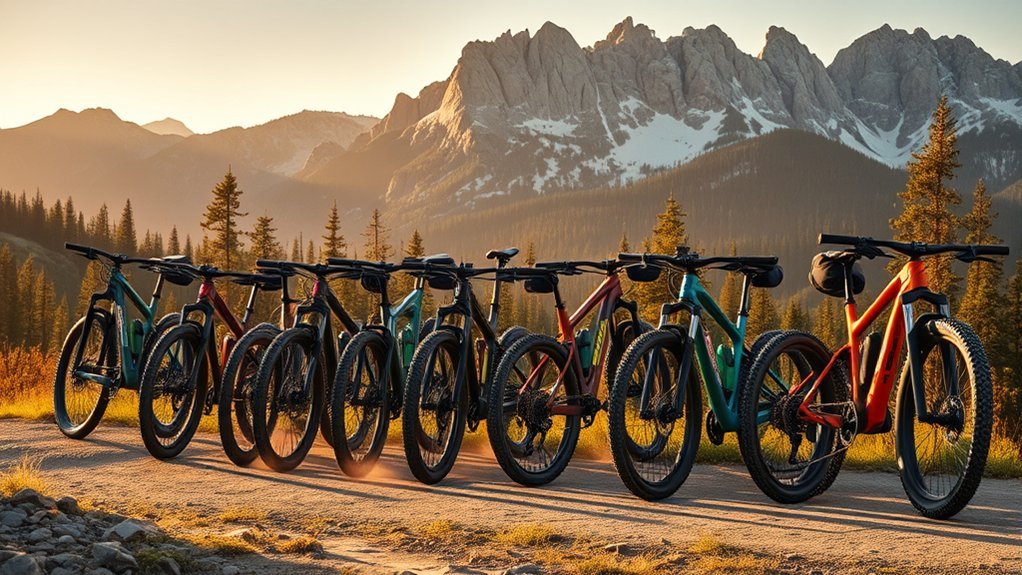
Electric mountain bikes under $2,500 are getting more capable in [2026], with stronger motors, longer range, and better suspension systems than many riders expect at this price. The six models below cover different needs, from trail-ready power to everyday versatility. Each one brings a different balance of speed, comfort, and control, which makes the comparisons more revealing than they first appear.
Key Takeaways
- ASKGO 1500W stands out with a 1500W peak motor, 25 MPH top speed, 65-mile range, and dual suspension for rugged trails.
- Electric Bike 1000W offers a 20 MPH top speed, 25–30 mile electric range, and front suspension for budget-friendly mountain riding.
- VARUN 500W is a lighter option with up to 40 miles range, dual disc brakes, and useful accessories like a lock and phone holder.
- Fat Tire 750W delivers 20×4.0-inch tires, triple suspension, a 60-mile pedal-assist range, and strong trail stability.
- Funhang 1000W includes a 1000W peak motor, 26×4.0-inch tires, dual disc brakes, and 55–60 miles of pedal-assist range.
ASKGO 1500W Electric Bike for Adults, 26″ Ebike
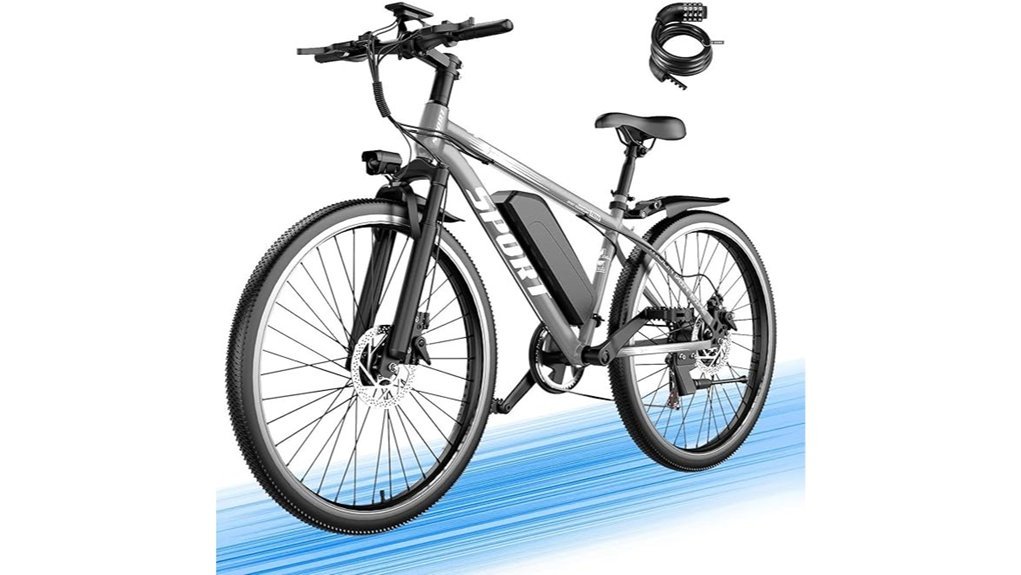
The ASKGO 1500W Electric Bike for Adults stands out for riders who want strong hill-climbing power and trail-ready comfort without exceeding a $2,500 budget. Its 1500W peak motor, rated at 750W, reaches up to 25 MPH, while the 48V 10.4Ah removable battery delivers as much as 65 miles per charge. Dual suspension helps smooth rough terrain, and dual disc brakes with anti-slip tires improve control. A 400-lumen LED headlight adds visibility. Black and Blue versions use seven speeds. 95% pre-assembly and a 36-month warranty strengthen its appeal.
Best For: Riders who want a powerful, comfortable 26″ electric bike for commuting, hills, and light trail use with long range and strong safety features.
Pros:
- 1500W peak motor delivers strong acceleration and hill-climbing ability, with speeds up to 25 MPH.
- 48V 10.4Ah removable battery offers up to 65 miles of range and recharges in about 4–5 hours.
- Dual suspension, disc brakes, anti-slip tires, and a 400-lumen headlight improve comfort and control.
Cons:
- Grey model has a single-speed setup, which limits gearing flexibility.
- 95% pre-assembled still requires some final setup before riding.
- At this power level, it may be more bike than casual riders or short-distance users need.
Electric Bike for Adults, 26″ 1000W Peak Motor
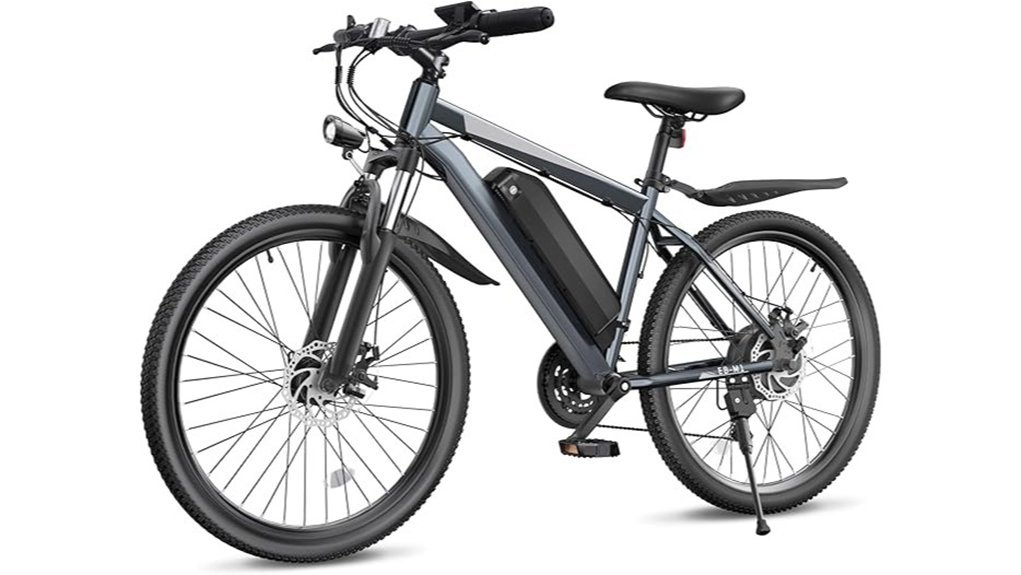
Built for riders tackling steep climbs, this 26-inch electric mountain bike suits adults wanting extra power and control. Its 500W brushless motor, peaking at 1000W, reaches 20mph and handles rough trails with steady acceleration. The removable 48V 374.4Wh battery is IPX5 waterproof and charges in about 4 to 5 hours, delivering 25 to 30 miles in electric mode or 40 to 50 with pedal assist. Front suspension, a 7-speed drivetrain, LCD display, soft seat, fenders, and bright headlight improve comfort. Five assist levels, cruise, and booster modes add flexibility.
Best For: Adults 5.3–6.1 ft tall who want a powerful 26″ electric mountain bike for steep climbs, rough trails, and longer commutes with both throttle and pedal-assist options.
Pros:
- Strong 500W motor with 1000W peak power for solid acceleration and hill climbing
- Removable IPX5 waterproof battery with decent range and relatively fast 4–5 hour charging
- Comfortable and practical setup with front suspension, 7-speed gearing, LCD display, fenders, and headlight
Cons:
- Top speed is limited to 20 mph, which may feel modest for a 1000W peak bike
- Actual range can vary significantly depending on rider weight and terrain
- 85% assembly still requires some final setup and adjustment
VARUN Electric Bike 500W 26″ All-Terrain E-Bike
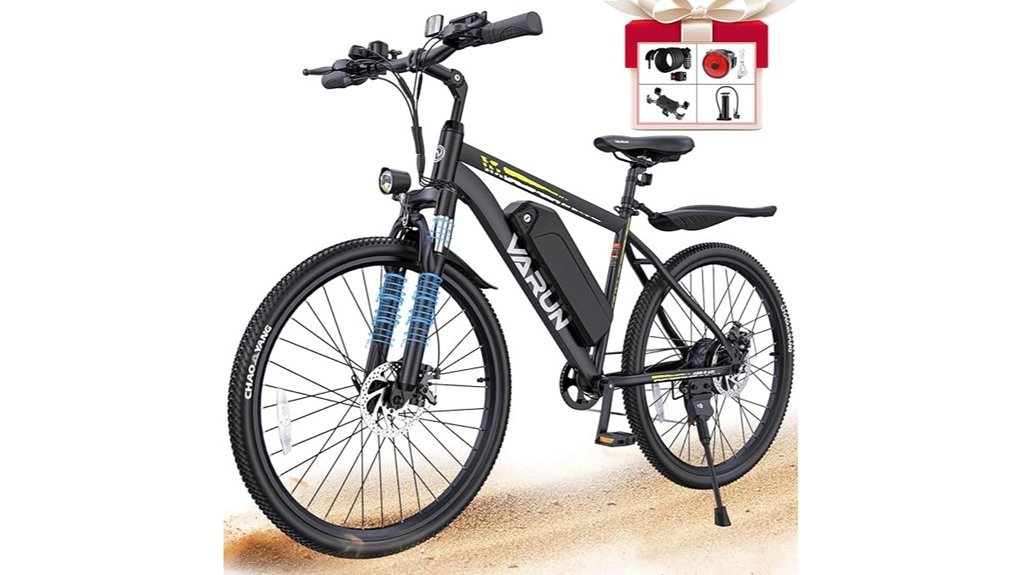
With a 500W peak motor and 30° climbing ability, the VARUN suits riders tackling hills and mixed terrain. Its 26-inch wheels help it reach 20 MPH, while three riding modes support cruising, assisted pedaling, or standard cycling. The removable 36V 7.8AH battery charges in 4–5 hours and delivers up to 40 miles, with key-lock security and IP54 water resistance. A front suspension fork, dual disc brakes, and bright lights improve control and visibility. Almost fully assembled, it includes a lock, phone holder, tail light, pump, warranty, and 24/7 support.
Best For: Riders who want a versatile all-terrain electric bike for commuting, hill climbing, and casual rides with solid range and useful included accessories.
Pros:
- 500W peak motor handles steep slopes up to 30° and offers quick acceleration.
- Removable battery provides up to 40 miles of range and charges in 4–5 hours.
- Includes useful extras like a lock, phone holder, tail light, and pump.
Cons:
- Top speed is capped at 20 MPH, which may feel modest for some riders.
- Battery range may vary significantly depending on terrain, rider weight, and assist mode.
- Almost fully assembled, but still requires some setup and adjustment out of the box.
Fat Tire Electric Bike for Adults 750W 48V
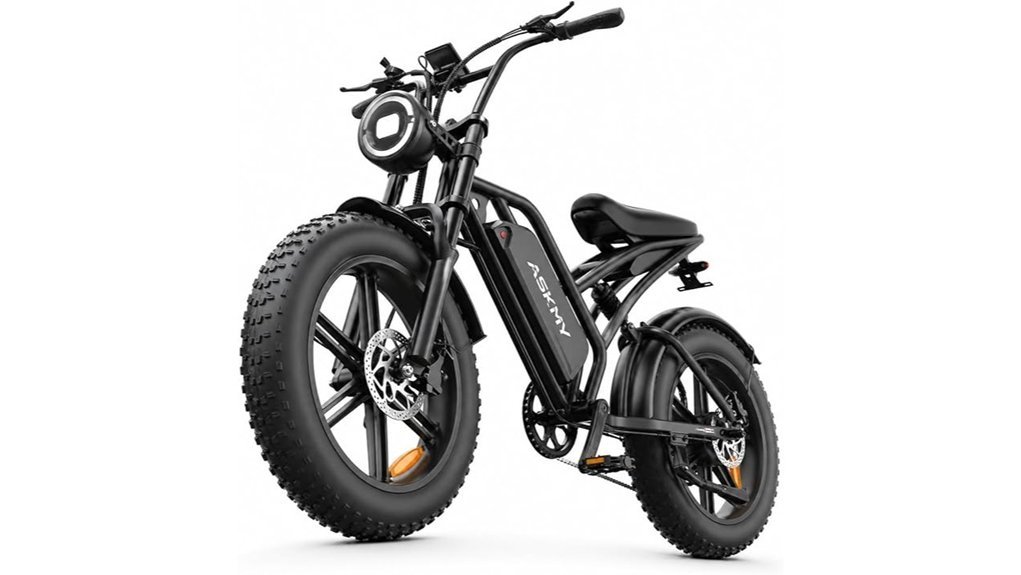
A 330-pound capacity makes this fat tire e-bike ideal for heavier riders and cargo hauling. Its 750W continuous motor, with 1000W peak output, delivers strong acceleration and dependable hill climbing. The removable 48V 15Ah battery provides about 30 miles in electric mode and up to 60 miles with pedal assist, then recharges in 5 to 6 hours. Twenty-inch by 4.0-inch tires add stability, while triple suspension improves comfort. UL 2849 certification and IPX4 resistance support safer, all-weather use. A 7-speed drivetrain, LCD display, cruise control, and reverse gear increase practicality.
Best For: Heavier adult riders, commuters, and cargo-hauling users who want a powerful, stable fat tire e-bike for mixed terrain and all-weather riding.
Pros:
- Strong 750W continuous motor with 1000W peak output for solid acceleration and hill climbing
- 48V 15Ah removable battery offers up to 30 miles in electric mode and up to 60 miles with pedal assist
- Triple suspension, 20″ x 4.0″ fat tires, UL 2849 certification, and IPX4 resistance improve comfort and safety
Cons:
- 20-inch fat tire design may feel bulky or less nimble than a standard commuter bike
- 30-mile electric-only range may be limiting for longer rides without pedaling
- Charging time of 5 to 6 hours may be inconvenient for frequent riders
Funhang Electric Bike for Adults, 1000W Peak Ebike
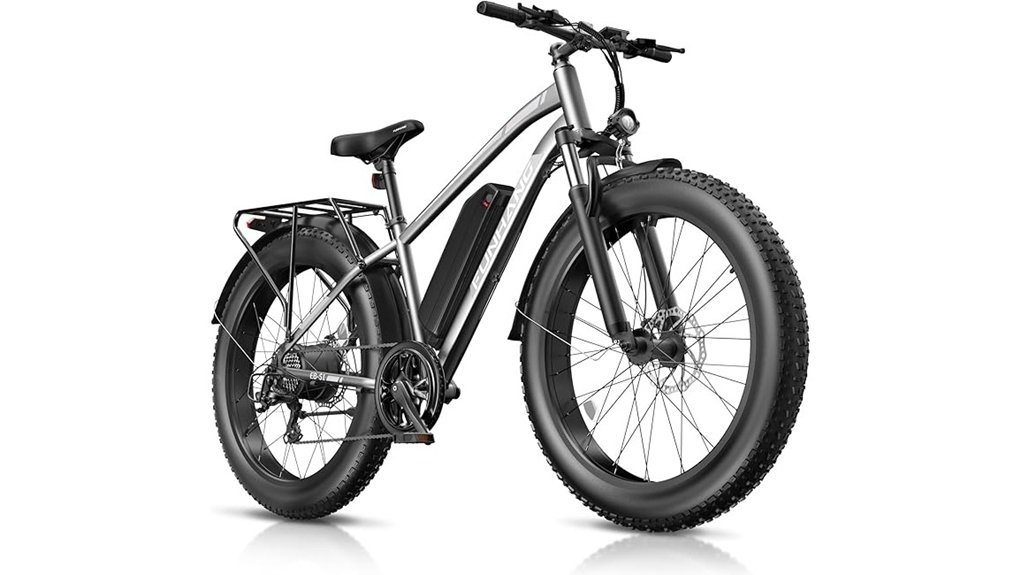
Funhang suits riders wanting a budget-friendly fat-tire ebike with strong all-terrain traction. Its 1000W peak setup pairs a 500W motor with 66.6 N·m of torque, reaching 20 mph across city streets, sand, snow, gravel, and light mountain trails. The 48V 13Ah removable battery delivers 30-35 miles in electric mode and up to 55-60 miles with pedal assist. Dual 180mm disc brakes, front suspension, and 26 x 4.0 tires improve control. A rear rack, lights, LCD, and five riding modes add practicality.
Best For: Budget-conscious adults who want a versatile fat-tire ebike for commuting, casual rides, and light off-road use on varied terrain.
Pros:
- Strong all-terrain traction from 26 x 4.0 fat tires and front suspension for better stability and comfort.
- Good range for the price with up to 30-35 miles in electric mode and 55-60 miles with pedal assist.
- Useful everyday features like dual disc brakes, lights, LCD display, rear rack, and multiple riding modes.
Cons:
- 20 mph top speed may feel modest for riders wanting a faster ebike.
- 85% pre-assembled still requires some setup, which may be inconvenient for beginners.
- Heavier fat-tire design can be less agile and harder to transport than lighter commuter ebikes.
TST 1500W Fat Tire Electric Bike with Battery
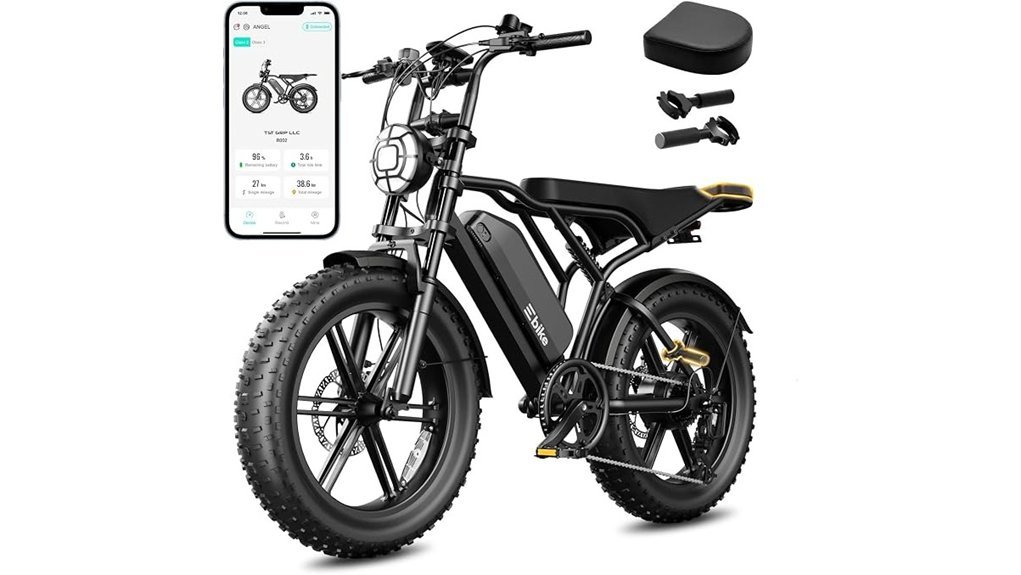
The TST 1500W Fat Tire Electric Bike suits riders seeking power, range, and stability on mixed terrain. Its 750W motor, with 1500W peak output, offers two to three speed modes for commuting and off-road use. The 48V 15Ah removable battery charges in 6 to 7 hours and delivers up to 60 miles in pedal-assist mode or 40 miles on throttle. Full suspension, 20×4 puncture-proof tires, and 7-speed gearing improve control. Mechanical disc brakes, bright lighting, and an LCD display support safer riding. It arrives 90% assembled and includes a 180-day warranty.
Best For: Riders who want a powerful, stable fat tire e-bike for commuting, trail riding, and mixed terrain, with long range and strong support features.
Pros:
- 750W motor with 1500W peak power and multiple speed modes for versatile riding
- Long-lasting 48V 15Ah removable battery with up to 60 miles of range in PAS mode
- Full suspension, puncture-proof fat tires, and 7-speed gearing improve comfort and control
Cons:
- Heavy at 66 lbs, which can make lifting and transport difficult
- 6–7 hour charging time may feel long for frequent riders
- Best suited for adults; riders under 16 need adult supervision
Factors to Consider When Choosing an Electric Mountain Bike Under 2500
When choosing an electric mountain bike under $2500, motor power and battery range often shape how well it handles climbs and longer rides. Suspension quality, brake safety, and tire traction also play a major role in control and comfort on rough terrain. A balanced setup across these factors usually leads to the most reliable performance.
Motor Power
Motor power plays a major role in how an electric mountain bike performs on steep climbs, rough trails, and quick acceleration. Typical motors range from 500W to 1500W, with peak outputs reaching 2000W for brief bursts. A 750W rated motor with a higher peak can suit moderate trails, while 1000W or 1500W models provide stronger torque for demanding inclines and rugged terrain. Peak wattage matters because it reflects short-term power delivery, not continuous output. Brushless motors are often preferred for their reliability and lower maintenance, while geared motors can offer responsive assistance in compact designs. The best choice depends on matching motor strength to riding conditions without sacrificing overall efficiency or creating unnecessary drain on the system.
Battery Range
Battery range can be just as important as power, since stronger motors often demand more energy from the system. For electric mountain bikes under $2,500, typical range falls between 25 and 65 miles, depending on motor output and whether the bike is used in full-electric or pedal-assist mode. Removable batteries, commonly rated from 10.4Ah to 15Ah, influence both distance and riding efficiency. A 48V system often offers better performance and can extend range compared with lower-voltage setups. Charging usually takes 4 to 7 hours, so recharge planning matters on longer outings. Real-world range also changes with rider weight, terrain, and riding style, meaning published numbers should be treated as estimates rather than guarantees on every ride.
Suspension Quality
Suspension quality can make a major difference in how an electric mountain bike under $2,500 handles rough trails. Quality dual or full suspension systems absorb shocks from rocks, roots, and ruts, helping reduce rider fatigue on longer rides. A well-designed setup also improves traction and control, which is especially useful on steep climbs and uneven surfaces. Suspension travel, measured in millimeters, should be examined closely because greater travel generally handles larger bumps and obstacles more effectively. Adjustability is another valuable feature, since it lets riders tailor firmness and responsiveness to different terrain and riding styles. When properly tuned, suspension keeps the wheels planted, supporting stability and contributing to confident handling across changing trail conditions without wasting energy.
Brake Safety
Brake safety is a critical consideration for any electric mountain bike under $2,500, especially on steep descents and uneven trails. Effective hydraulic or mechanical disc brakes offer stronger stopping power and more precise control, helping riders manage speed on rough terrain. A minimum rotor diameter of 160mm is generally advisable, since larger discs can deliver the force needed for quicker, more confident stops at higher speeds. Dual disc brakes further improve balance and consistency, particularly in wet or changing conditions, where stable braking can reduce the chance of losing control. Routine checks of pads, cables, and related components are also important, as wear can weaken performance over time. Safety certifications such as UL 2849 may also signal reliable brake system testing.
Tire Traction
Tire traction plays a major role in how confidently an electric mountain bike handles rough terrain, building on the need for strong control from the braking system. Tread design determines how well the tires bite into dirt, rocks, and loose ground, affecting safety and balance on varied trails. Wider tires, especially 4.0-inch models, generally improve stability and grip on sand, snow, and mud. Tire construction also matters, since puncture-resistant builds help preserve contact and reduce slippage on rugged paths. Pressure should be adjusted to match conditions: lower settings increase grip on soft surfaces, while higher settings can support speed on firmer ground. Tire compound influences performance too, with softer rubber offering stronger traction but faster wear than harder blends.
Ride Modes
Ride modes can shape how an electric mountain bike performs in different terrain, giving riders options that range from full motor power to traditional pedaling. A strong budget model usually includes pure electric mode for effortless cruising, pedal assist for balanced support, and classic pedal mode for unassisted riding. Throttle control adds immediate power, which can help on steep climbs or technical trails. Some bikes also include cruise mode, keeping speed steady on flatter routes for less fatigue. Higher-end options may offer booster mode, useful when extra help is needed uphill. Adjustable pedal assist levels, often five, let riders fine-tune output to match terrain, fitness, and battery priorities. The best choice depends on how much control and versatility the rider expects from each outing.
Assembly Ease
Assembly ease can make a major difference when choosing an electric mountain bike under 2500, especially for riders who want a quick setup with minimal hassle. Many models arrive 85% to 95% preassembled, which limits the number of tasks required before the first ride. Clear instructions, especially step-by-step videos, can help with the final adjustments and reduce confusion for less experienced users. Some bikes also include the needed tools and key components, saving time and avoiding extra purchases. Weight matters as well, since lighter frames are easier to manage during assembly, while heavier models may call for additional help. A well-engineered frame with parts that align cleanly can further simplify the process, cutting both effort and setup time considerably.
Frequently Asked Questions
How Long Does It Take to Fully Charge These E-Bikes?
It typically takes 4 to 8 hours to fully charge these e-bikes, depending on battery size and charger output. Smaller batteries may finish in about 3 to 5 hours, while larger packs can need closer to 6 to 8 hours. Fast chargers reduce waiting time, but most standard chargers prioritize battery health over speed. Charging is usually complete when the indicator light turns green or the display shows 100%.
Are These Mountain Bikes Suitable for Riders Over Six Feet Tall?
About 14% of adults in some markets are over six feet tall, so fit matters. These mountain bikes can suit taller riders if the frame size, seatpost range, and cockpit length are generous enough. A taller rider should look for larger frames, longer top tubes, and adjustable stems to avoid a cramped position. Without those features, comfort and handling may suffer on climbs, descents, and longer rides.
Can I Upgrade the Battery for Longer Trail Rides?
Yes, the battery can often be upgraded, but only if the bike’s frame, motor system, and controller support a larger compatible pack. A higher-capacity battery usually extends trail range, though weight and cost increase. Some riders also carry a spare battery or use power-saving modes for longer rides. Checking connector type, voltage, and mounting hardware is essential before buying, since incompatible upgrades can damage the bike or void the warranty.
Do These E-Bikes Require Special Maintenance After Wet Rides?
Yes, they usually need extra care after wet rides. The bike should be wiped down, especially the chain, drivetrain, brakes, and battery contacts. Mud and water can be rinsed off gently, avoiding high-pressure spray near the motor or battery. Afterward, the chain should be dried and lubricated, and the battery removed and stored indoors if possible. Regular checks help prevent corrosion, electrical issues, and premature wear.
Are Replacement Parts Easy to Find for These Models?
Replacement parts are usually easy to find, like stepping stones across a stream, though availability depends on the brand. Common items such as brake pads, chains, tires, and batteries are widely stocked, while proprietary motors, displays, and controllers may need dealer support. Models from established manufacturers tend to have stronger parts networks, faster shipping, and better compatibility. Checking parts catalogs before purchase can prevent future headaches and delays.