The [2026] EV mountain bike market brings a mix of compact, powerful, and range-focused models that suit different riders. Some prioritize fat tires and suspension for rough trails, while others focus on battery life, torque, or everyday versatility. A few stand out for their balance of price and performance, but the real differences emerge in the details that matter most on the trail.
Key Takeaways
- The 20-inch fat tire electric mountain bike offers a 500W motor, full suspension, and 40-60 mile pedal-assist range for trail riding.
- Vivi ACEPro stands out with a 750W motor, 90Nm torque, dual hydraulic disc brakes, and smart app-based riding features.
- Wooken’s 500W e-mountain bike is a practical commute option with a 21-speed drivetrain, lockable suspension, and waterproof battery.
- ZNH’s 750W mountain e-bike provides strong climbing power, a 624Wh battery, and up to 80 miles of range for mixed terrain.
- The 26-inch 1000W peak electric bike is a budget-friendly choice with front suspension, 7-speed gearing, and up to 50 miles pedal-assist range.
Electric Mountain Bike for Adults, 20 Inch Fat Tire
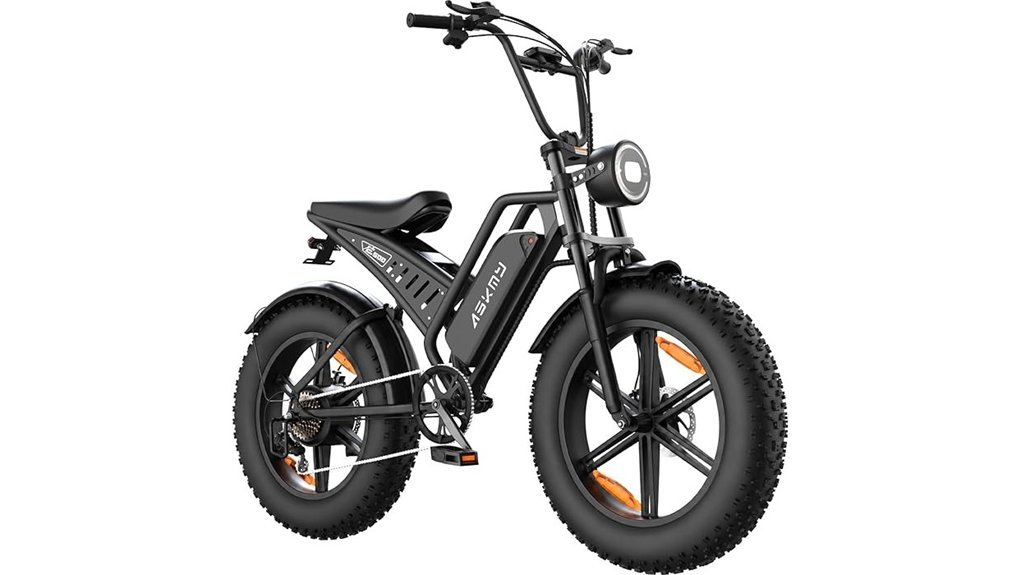
For riders who want a compact yet powerful trail companion, this 20-inch fat tire electric mountain bike stands out as a strong choice for 2026. Its 500W brushless motor, peaking at 1500W, delivers strong torque for climbs up to 35 degrees while staying quiet and efficient. A removable 48V 15Ah battery supports 40 to 60 miles in pedal assist mode and recharges in 5 to 6 hours. Twenty-by-four-inch tires, full suspension, and hydraulic shocks improve stability on rough ground. Three riding modes, a 7-speed system, disc brakes, and UL-certified safety complete the package.
Best For: Adults who want a compact, powerful 20-inch fat tire e-bike for trail riding, steep climbs, and versatile everyday off-road or mixed-surface use.
Pros:
- Strong 500W brushless motor with 1500W peak power for climbing and torque.
- Long-range removable 48V 15Ah battery with convenient off-bike charging.
- Fat tires, full suspension, and disc brakes improve comfort, stability, and control.
Cons:
- 20-inch frame may feel small for taller riders.
- Heavier fat-tire design can be less convenient to carry or transport.
- Pure electric range is lower than pedal-assist range, so frequent charging may be needed for longer rides.
Vivi ACEPro Electric Fat Tire Mountain E-Bike
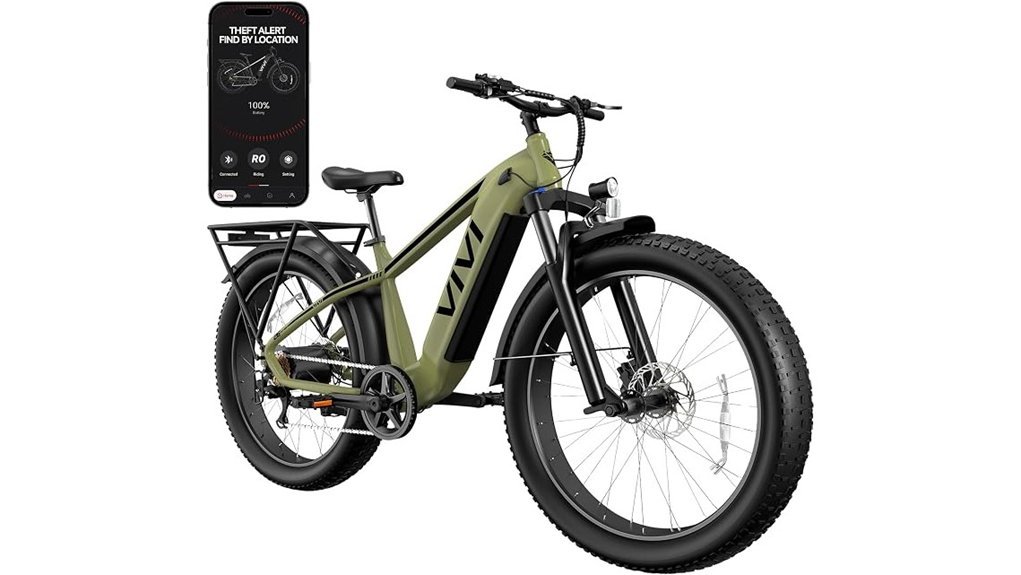
The Vivi ACEPro suits riders who want strong power, fat-tire stability, and everyday versatility. Its 750W brushless gear motor delivers 90Nm of torque, while the 48V 15Ah battery reaches a full charge in four to six hours and carries SGS certification to UL 2849. Real-time app tracking, speed, battery, and navigation add practical control. Seven riding modes, including cruise control and walking assist, widen use cases. Dual hydraulic disc brakes and a lightweight aluminum alloy frame support safe handling. With 26 x 4.0 tires, 85% pre-assembly, and support, it fits varied riders.
Best For: Riders who want a powerful, stable fat-tire e-bike with smart app features, versatile riding modes, and practical everyday commuting or trail use.
Pros:
- 750W motor with 90Nm torque provides strong acceleration and hill-climbing support.
- 26″ x 4.0″ fat tires and dual hydraulic disc brakes improve stability and stopping control.
- App connectivity, turn-by-turn navigation, and 85% pre-assembly add convenience and ease of use.
Cons:
- 20 mph top speed may feel limiting for riders wanting more speed.
- 48V 15Ah battery may require frequent charging for longer or more demanding rides.
- At 400 lbs max load, it is versatile, but the bike’s size and weight may still be cumbersome for some users.
Wooken 500W Electric Mountain Bike with Removable Battery
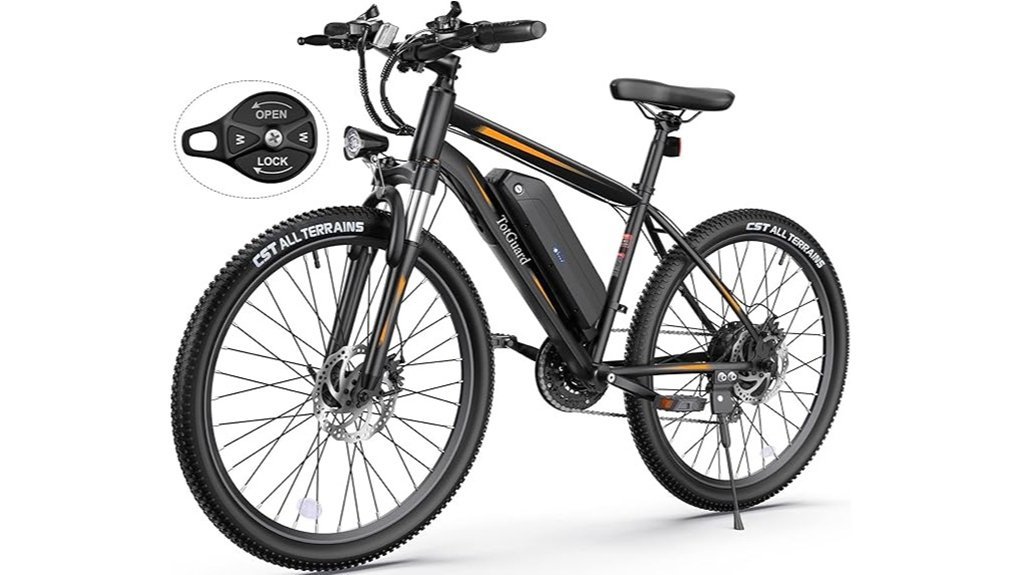
Wooken’s 500W motor and removable 48V battery suit commuters needing quick, flexible rides. The bike reaches up to 19.8 mph, supporting daily travel with enough pace to reduce commuting time. Its 499.2Wh lithium-ion battery fully charges in about five hours and carries an IPX5 waterproof rating. A lockable suspension fork and dual disc brakes improve control on steep routes. An LCD display, 21-speed drivetrain, and LED headlight add practicality. With electric, assisted, and normal modes, plus 85% pre-assembly and a one-year warranty, it offers balanced versatility.
Best For: Commuters and casual riders who want a versatile electric mountain bike with solid speed, removable battery convenience, and multiple riding modes.
Pros:
- 500W motor delivers up to 19.8 mph for quicker daily travel.
- Removable 48V battery with about 5-hour charging time adds convenience.
- Lockable suspension fork, dual disc brakes, and 21-speed drivetrain improve control and flexibility.
Cons:
- 85% pre-assembled, so some setup is still required.
- 19.8 mph top speed may be modest for riders wanting a faster e-bike.
- Best suited for commuting and light mountain use, not extreme off-road riding.
ZNH Electric Mountain Bike 750W 48V 624Wh Battery
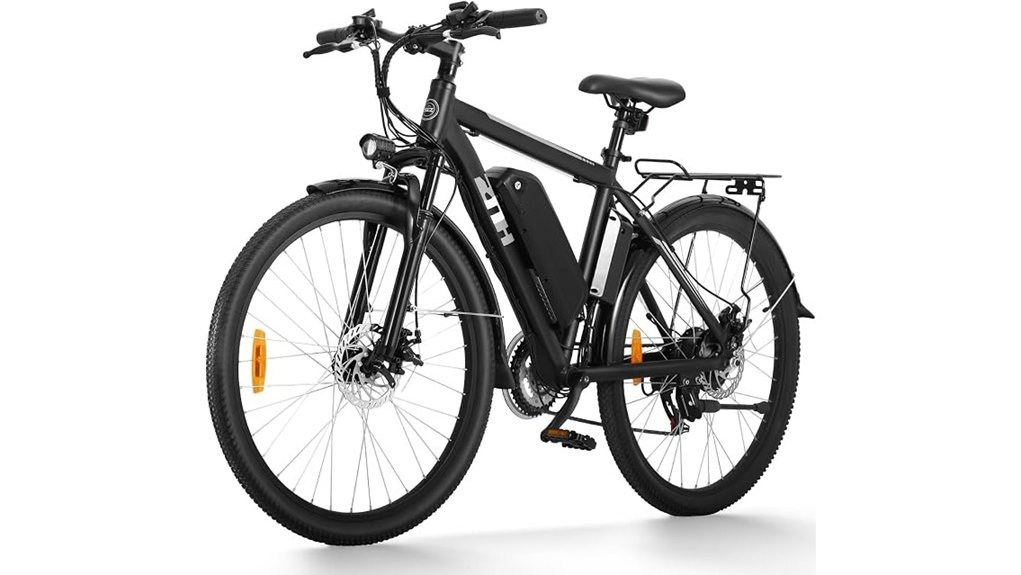
With 750W peak power and 60N.M torque, the ZNH suits riders wanting strong hill-climbing support. Its 48V 624Wh removable, lockable lithium-ion battery delivers an estimated 20 to 80 miles per charge, depending on terrain and assist level. A 21-speed transmission with a KMC chain adds range control, while the 26-inch wheels and aluminum frame keep handling stable. The shock-absorbing fork improves comfort, and modes include pedal assist, pure electric, regular biking, and booster. It reaches up to 26 mph, supports 330 lbs, and arrives 85% assembled with a 12-month parts warranty.
Best For: Riders who want a powerful, versatile electric mountain bike for commuting, hill climbing, and varied terrain, with multiple assist modes and a long-range removable battery.
Pros:
- Strong 750W peak motor with 60N.M torque for confident climbing and quick throttle response
- 48V 624Wh removable, lockable battery offers an estimated 20–80 miles per charge
- 21-speed drivetrain, shock-absorbing fork, and 26-inch wheels provide a stable, comfortable ride
Cons:
- At 67 lbs, it may be heavy for lifting or carrying
- Peak range can vary significantly based on terrain, rider weight, and assist level
- 85% assembly still requires some setup after delivery
Electric Bike for Adults, 26″ 1000W Peak Motor
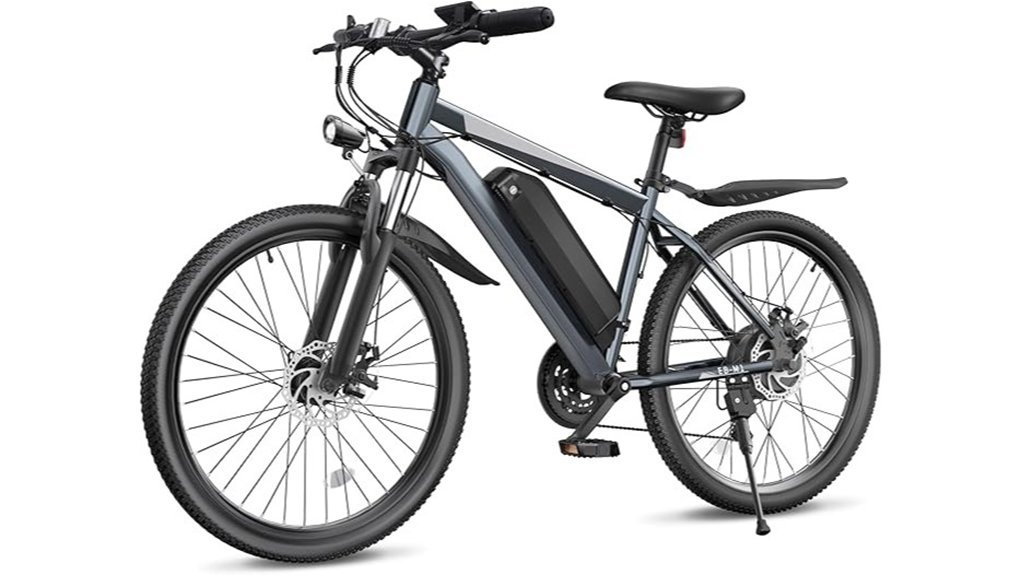
For riders craving stronger hill-climbing power, this 26-inch electric mountain bike stands out. Its 500W brushless motor reaches a 1000W peak, delivering brisk acceleration and a 20mph top speed on steep inclines and rough trails. The removable 48V 374.4Wh IPX5 battery offers 25-30 miles in electric mode or 40-50 miles with pedal assist, with charging in about 4-5 hours. Front suspension, a soft seat, 7-speed gearing, fenders, and an LCD display improve comfort and control. It also includes throttle, cruise, and booster modes, plus UL-certified safety and a 12-month warranty.
Best For: Adults who want a powerful, budget-friendly 26″ electric mountain bike for commuting, hill climbing, and light off-road riding.
Pros:
- Strong 500W motor with 1000W peak power for better hill-climbing and quick acceleration
- Removable battery with solid range and relatively fast 4-5 hour charging
- Comfortable and practical features like front suspension, 7-speed gearing, LCD display, and fenders
Cons:
- Top speed is limited to 20mph, which may feel modest for some riders
- Battery range can drop noticeably depending on rider weight and terrain
- Best suited for riders 5.3-6.1 ft tall, so fit may be limiting for others
Factors to Consider When Choosing Ev Mountain Bikes
Selecting an EV mountain bike begins with motor power and battery range, since both shape climbing ability and ride distance. Tire size and suspension system also matter, as they affect traction, stability, and comfort on rough terrain. Riding modes complete the picture by offering control over effort, speed, and efficiency.
Motor Power
Motor power is a key factor in EV mountain bikes because it directly influences acceleration, climbing ability, and control on steep terrain. It is commonly rated in watts, with models often ranging from 500W to 1500W. Lower wattage can suit moderate trails, while a 1500W motor offers stronger performance on steep inclines, sometimes up to 35 degrees. Torque, measured in Newton-meters, also matters; higher torque improves traction and steadiness on rugged paths. Motor type affects riding character as well. Brushless motors tend to be efficient and low maintenance, while geared motors may provide stronger low-speed assistance. Compatibility with the battery and frame design should also be checked, since these factors influence overall performance across demanding terrain.
Battery Range
Battery range is a key consideration because it determines how far an electric mountain bike can travel on a single charge, with many models covering about 25 to 60 miles depending on riding mode. Pedal assist usually conserves more energy than pure electric operation, so riders who want longer outings should compare how each mode affects distance. Battery capacity, measured in amp-hours, also matters; larger capacities such as 15Ah typically support longer rides and steadier performance. Most models use removable batteries, making charging simpler, and a full recharge often takes four to six hours. Actual range varies with terrain, rider weight, and cycling conditions, so published figures should be treated as estimates rather than guarantees when selecting a bike for real-world mountain use.
Tire Size
Tire size is another major factor that shapes how an EV mountain bike performs on different terrain, especially after battery range has been considered. Larger tires, including 26-inch options and 20-inch fat tires, usually deliver stronger traction and more stability on sand, mud, and snow. Fat tires, often 4 inches wide, add shock absorption and comfort on rough, uneven paths. Smaller 20-inch tires can improve maneuverability and reduce weight, which suits city riding or narrow trails. Tire diameter also influences speed and rolling resistance: bigger tires clear obstacles more easily, while smaller ones may feel quicker on smooth surfaces. Wider tires can support heavier loads and improve control during descents, making tire choice important for handling and carrying capacity overall.
Suspension System
Suspension is the backbone of comfort and control on an EV mountain bike. A full suspension system, with front and rear shock absorption, handles uneven terrain more effectively and suits rugged trails. Lockable suspension forks add practical value by allowing stiffness adjustments, which improves stability on steep roads and supports controlled climbing. Suspension travel, measured in millimeters, also matters: longer travel usually delivers better impact absorption on rougher routes. On loose sand or gravel, high-quality suspension can improve traction and handling by keeping the wheels in better contact with the ground. When properly tuned, the system reduces jolts, helping limit rider fatigue and making longer rides more manageable. Choosing the right setup consequently depends on terrain, comfort needs, and expected riding intensity.
Riding Modes
Riding modes shape how an EV mountain bike performs across different trails and rider preferences. Electric mountain bikes usually include Pure Electric Mode for effortless travel, Pedal Assist Mode for extending battery life while still adding support, and Manual Mode for a conventional cycling feel. Many models also use a 7-speed system, helping riders match gear choice to steep climbs, rough paths, or flatter sections. More advanced bikes may add Cruise Control, which holds speed without constant pedaling, and Walking Assist, which eases pushing the bike uphill. Some e-bikes allow adjustable assistance levels in Pedal Assist Mode, letting riders fine-tune output to fitness, route demands, and energy use. This versatility broadens usability across varied terrain and riding styles.
Safety Features
Safety should be a top priority when choosing an EV mountain bike, especially for riders tackling demanding trails or mixed terrain. Buyers should verify that the bike meets safety certifications such as UL 2271 and UL 2849, which indicate sound battery and electrical system performance. Dual hydraulic disc brakes are also important, since they deliver consistent stopping power across wet, steep, or rough surfaces. Visibility matters as well; bright LED headlights and taillights help riders remain seen during early morning or nighttime outings. Shock-absorbing tires and suspension systems reduce impact from bumps and uneven ground, improving stability. Ergonomic touches, including adjustable seats and grips, can further enhance control and comfort, lowering the chance of accidents.
Frequently Asked Questions
How Weatherproof Are EV Mountain Bike Batteries?
EV mountain bike batteries are usually weather-resistant, not fully weatherproof. Sealed cases and gaskets protect them from rain, mud, and splashes, yet constant soaking, pressure washing, or submersion can still cause damage. Dry trails and wet storms sit side by side in durability tests, but real-world care matters most. Regular inspection, proper charging after rides, and manufacturer-rated protection help preserve battery life and safety over time, especially in harsh conditions.
Can EV Mountain Bikes Handle Steep Technical Descents?
Yes, EV mountain bikes can handle steep technical descents when built with strong frames, quality suspension, and reliable brakes. Their weight can add stability on rough lines, but it also demands careful control in tight, slippery sections. A skilled rider and proper setup matter greatly. Poor geometry, weak braking, or overheating components can reduce confidence and safety on demanding downhill terrain.
What Maintenance Do Hub Motors Need After Muddy Rides?
Hub motors after muddy rides need gentle rinsing, drying, and inspection, not pressure washing. Sealed units tolerate grime, yet mud can hide around axle interfaces, connectors, and spokes. Studies of off-road bikes show drivetrain contamination can cut efficiency by 10–20% if neglected. Bearings, fasteners, and cable routes should be checked, then lubricated where applicable. Battery contacts and motor housing should be left clean, dry, and fully secure before the next ride.
Are EV Mountain Bikes Allowed on All Trail Systems?
No, EV mountain bikes are not allowed on all trail systems. Access depends on local rules, land ownership, and whether the bike is classified as an e-bike, motorized vehicle, or conventional bicycle. Some trails welcome certain classes, while others ban all motor assist. Rangers, park websites, and trail maps usually provide the latest restrictions. Riders should verify regulations before entering, since penalties and closures can apply.
How Long Does Battery Charging Take in Cold Weather?
Naturally, cold weather prefers to slow everything down, including charging. An EV mountain bike battery may take 20 to 50 percent longer to charge in low temperatures, especially below freezing. If the battery is cold-soaked, charging can begin slowly or pause until it warms. A warm indoor start helps. For best results, he or she should charge at room temperature and avoid plugging in an icy battery immediately.