Choosing a full suspension electric mountain bike under $4000 in [2026] means balancing power, range, and control. The Likebike, PASELEC, and FREESKY Warrior Pro each take a different approach, from practical trail use to far more aggressive performance. Their differences are not subtle, and the best option depends on how and where it will be ridden. The details behind each model make the comparison more revealing than it first appears.
Key Takeaways
- Likebike Electric Fat Tire Ebike offers a 750W motor, up to 100-mile range, and dual suspension for versatile off-road riding.
- PASELEC Electric Mountain Bike provides 1300W peak power, 70 N·m torque, 28 mph speed, and confident 30-degree climbing.
- FREESKY Warrior Pro delivers 4000W dual-motor performance, 120 N·m torque, up to 120-mile range, and 40 mph top speed.
- All three models include full suspension, hydraulic disc brakes, integrated lights, and removable 48V batteries for safer trail use.
- Choose based on motor power, range, weight, and load capacity, since these factors affect climbing, comfort, handling, and real-world performance.
Likebike Electric Fat Tire Ebike for Adults
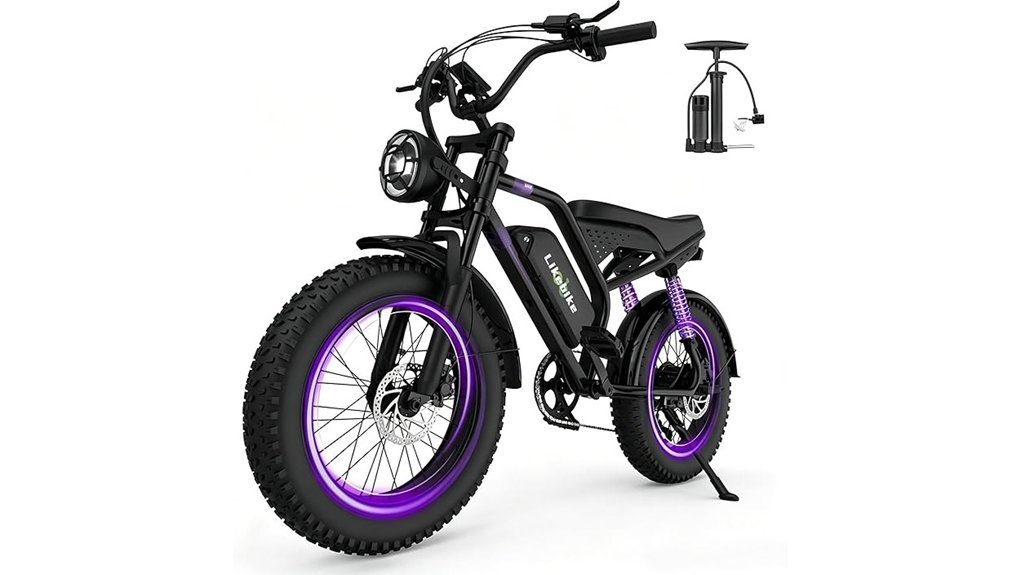
The Likebike Electric Fat Tire Ebike for Adults is a strong fit for riders who want a versatile full-suspension e-bike that can handle steep hills, rocky trails, and daily commuting without exceeding a $4,000 budget. Its 750W motor, 1500W peak output, and five speed settings provide useful power across varied terrain. A removable 48V battery offers up to 100 miles in assist mode. Dual suspension, 20×4.0 fat tires, and hydraulic disc brakes improve comfort and control. UL 2849 certification, bright lighting, turn signals, and a 330-pound capacity add practicality and safety.
Best For: Riders who want a versatile full-suspension fat tire e-bike for steep hills, rocky trails, and daily commuting with strong range, comfort, and safety features.
Pros:
- Powerful 750W motor with 1500W peak output and 5 speed settings for varied terrain
- Up to 100 miles of range in assist mode with a removable UL 2849-certified battery
- Dual suspension, hydraulic disc brakes, fat tires, and turn signals improve comfort and safety
Cons:
- Heavier at 84 lbs, which can make lifting and transport difficult
- Full charging takes 6–8 hours
- Large fat-tire design may feel bulky for riders looking for a lighter, more compact e-bike
PASELEC Electric Mountain Bike with Full Suspension
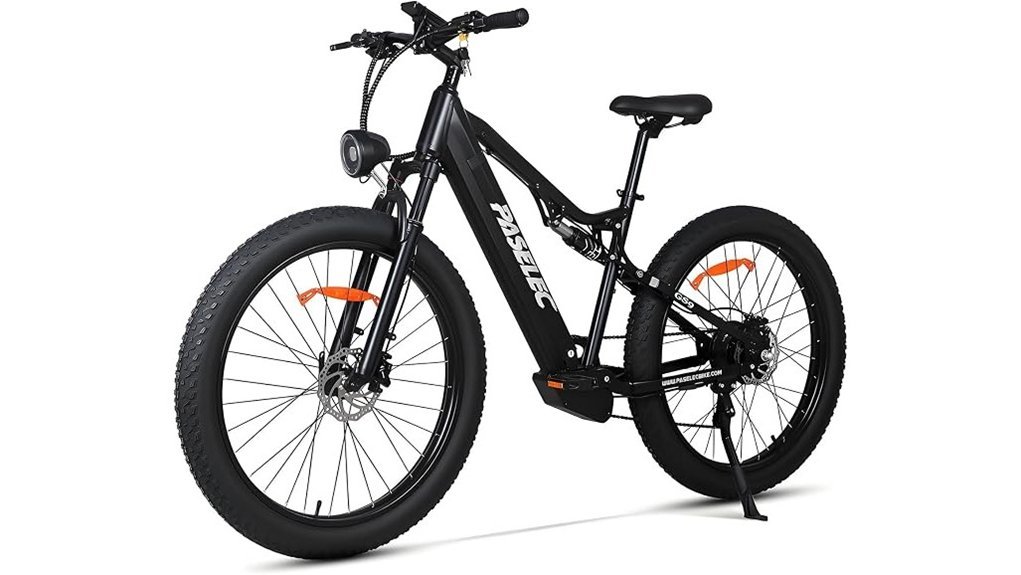
With 1300W peak power and dual suspension, PASELEC suits riders who want rugged versatility. Its brushless motor delivers up to 28 mph and 70 N.M of torque, helping it handle 30-degree climbs with confidence. The 48V 15.6Ah removable battery charges in 4-6 hours and offers a range up to 70 miles. Puncture-resistant 27.5″x3.0″ tires improve grip on roads, gravel, snow, and trails. Dual hydraulic disc brakes enhance wet-weather stopping, while the 8-speed Shimano system and LCD display support controlled, practical riding for commuting or trail use.
Best For: Riders who want a powerful, versatile electric mountain bike for commuting and off-road adventures on gravel, trails, snow, and hills.
Pros:
- Strong 1300W peak motor with 28 mph top speed and 70 N.M of torque for confident climbing.
- Long-lasting 48V 15.6Ah removable battery with up to 70-mile range and fast 4–6 hour charging.
- Dual suspension, fat puncture-resistant tires, and hydraulic disc brakes provide comfort, traction, and control.
Cons:
- At about 64 pounds, it may be heavy to carry or store.
- The 330-pound max load and 5.4-foot minimum height may not suit all riders.
- 90% pre-assembled still requires some setup after delivery.
FREESKY Warrior Pro 4000W Dual Motor Electric Bike
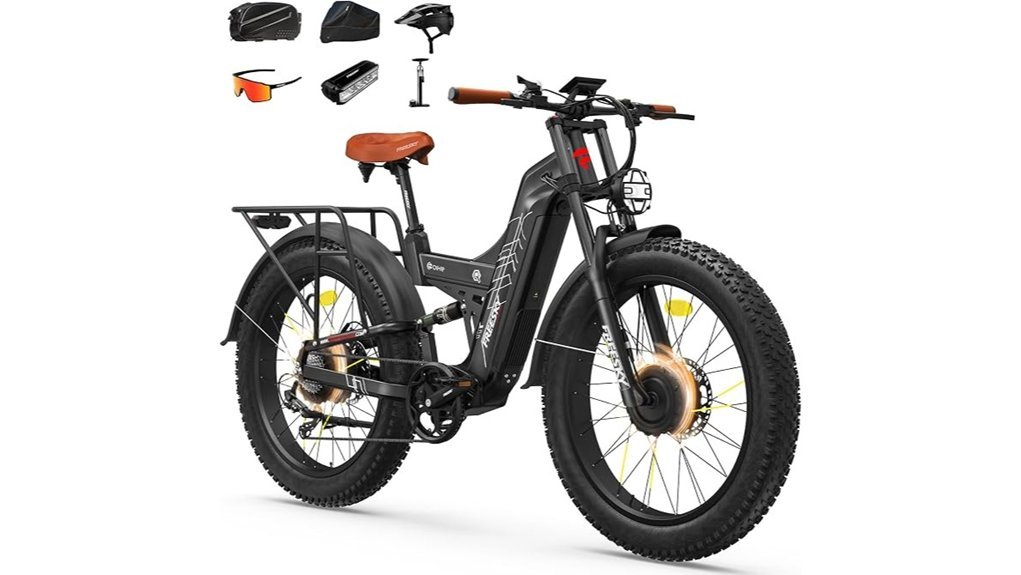
Built for riders who crave speed and range, the FREESKY Warrior Pro stands out immediately. Its dual-motor setup delivers 4000W of peak power, 120 N·m of torque, and a top speed of 40 MPH, while the 48V 30Ah Samsung battery supports up to 120 miles per charge. A full suspension system, aluminum double-triangle frame, and 26 x 4.0 fat tires help it handle roads, snow, mountains, and beaches with stability. Safety features include UL certification, integrated lighting, a smart HD display, and swipe-to-lock security.
Best For: Riders who want a high-powered, long-range electric bike for commuting and off-road adventures across varied terrain.
Pros:
- 4000W dual-motor system delivers strong acceleration, 120 N·m of torque, and up to 40 MPH top speed
- 48V 30Ah Samsung battery offers excellent range, up to 120 miles per charge
- Full suspension, fat tires, and integrated safety features improve comfort and confidence on rough or mixed surfaces
Cons:
- High-performance setup may be more expensive than standard e-bikes
- Heavy dual-motor fat-tire design can be harder to transport or maneuver manually
- Long-range claims can vary significantly depending on rider weight, terrain, and assist level
Factors to Consider When Choosing a Full Suspension Electric Mountain Bike Under $4000
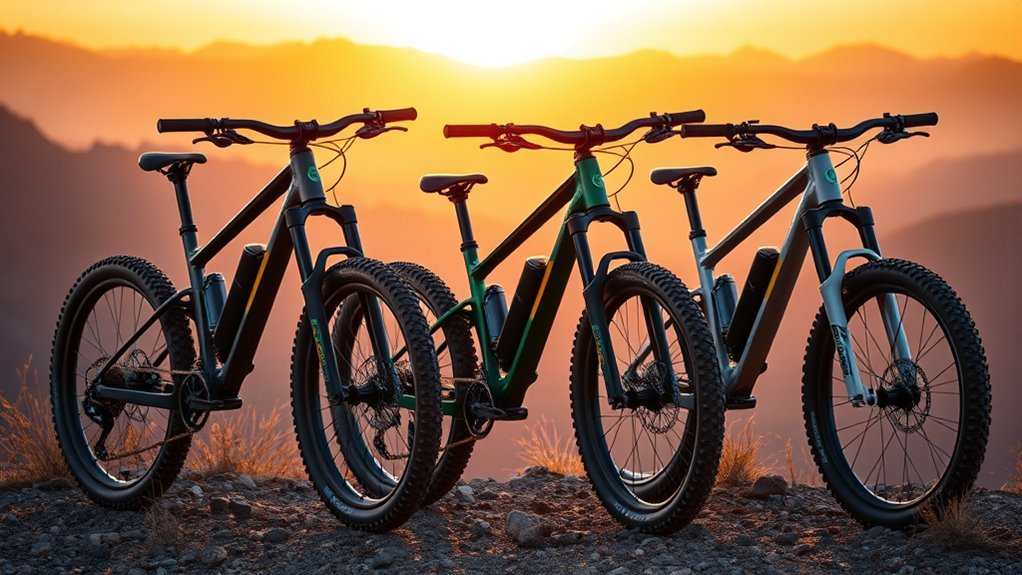
When selecting a full suspension electric mountain bike under $4000, motor power and battery range are often the first specifications to compare. Suspension quality and brake performance also play a major role in control, comfort, and safety on rough terrain. Weight capacity should be checked as well to guarantee the bike suits the rider and any gear carried.
Motor Power
Motor power is a key measure of how well a full suspension electric mountain bike performs on demanding terrain. In this category, output commonly ranges from 750W to 4000W, and that spread directly affects climbing ability, acceleration, and trail control. A 1300W or 4000W motor generally delivers stronger torque and faster response, which helps on steep inclines and loose, technical surfaces. By contrast, a 750W setup can still reach about 28 mph, making it suitable for riders who value balanced speed. Dual-motor systems may push top speeds near 40 mph, though they also place greater demand on the bike’s overall build. Torque, measured in Newton-meters, matters just as much; a 70N·m motor can handle 30-degree climbs with confidence.
Battery Range
Battery range is a major factor in choosing a full suspension electric mountain bike under $4000, since it determines how far the bike can go before needing a recharge. A higher-capacity battery, such as 48V 30Ah, can deliver up to 120 miles, which suits longer rides and reduces charging frequency. Range also depends on riding mode; pedal assist typically extends distance more than throttle use. Real-world performance is affected by terrain and rider weight, so published estimates should be viewed as approximate rather than fixed. Charging time matters as well, because some batteries recharge in 4 to 6 hours, limiting downtime between rides. Removable batteries add convenience, making charging and replacement easier for everyday use and travel.
Suspension Quality
Suspension quality plays a major role in how a full suspension electric mountain bike under $4000 handles rough terrain, because a well-designed system absorbs impacts, improves comfort, and helps keep the tires planted for better traction. Riders should look for front and rear shock absorbers that work together to smooth rough trails and reduce strain on the body. Adjustable components are especially valuable, since they let the bike be tuned for different terrain and rider preferences. The choice between air and coil suspension also matters: air systems are lighter and more adjustable, while coil systems offer steady performance under changing loads. A strong suspension setup supports control, stability, and confidence by keeping wheels in contact with uneven ground.
Brake Performance
Brake performance is a critical factor in any full suspension electric mountain bike under $4000, especially because these bikes are often ridden on steep descents and rough, technical terrain. Most models use dual hydraulic disc brakes, which deliver strong stopping power and dependable modulation in wet or dry conditions. On long downhill sections, larger rotors can help dissipate heat more effectively, reducing brake fade and maintaining consistent control. The bike’s overall weight and frame design also affect how quickly it can slow and how stable it feels under braking. Regular maintenance matters as well; checking pad wear and fluid levels helps preserve performance and safety. For riders who prioritize confidence on challenging trails, a well-tuned brake system is essential.
Weight Capacity
Weight capacity is an important consideration when choosing a full suspension electric mountain bike under $4000, with many models supporting roughly 330 to 400 lbs including the rider and gear. That range should match body weight plus accessories, cargo, or commuting supplies to preserve safe handling. Frame material and geometry affect how much load a bike can manage; aluminum frames often offer a practical mix of durability, low weight, and higher carrying capability. Lower limits can reduce stability on rough trails, especially during braking or cornering. Manufacturer specifications should always be checked before purchase, since exceeding the listed capacity can stress components, damage the frame, and weaken structural integrity over time. Proper sizing also helps maintain predictable suspension performance and overall ride quality.
Frequently Asked Questions
How Often Should Suspension Components Be Serviced?
Suspension components should be serviced regularly, typically every 30 to 50 hours of riding for basic maintenance, and every 100 to 200 hours for a full overhaul. Hard use, mud, water, and aggressive riding shorten these intervals. Fresh seals, lubricant, and torque checks help preserve performance and safety. Manufacturers’ service schedules should always be followed, since exact timing varies by fork, shock, model, and riding conditions.
Can I Upgrade the Battery Later?
Yes—battery upgrades are sometimes possible, but only when the frame, mounting system, controller, and firmware support a compatible pack. For example, a rider who later wants more range may be able to fit a higher-capacity version of the same battery family. However, many e-bikes use proprietary packs, making upgrades costly or impossible. Checking voltage, connector type, and manufacturer approval before purchase is essential.
Are These Bikes Legal on Bike Trails?
Not always; legality depends on local trail rules, motor class, and land manager policies. Class 1 e-bikes are often allowed on multi-use trails, while Class 2 and Class 3 may be restricted or banned. Some full suspension e-bikes are also excluded from mountain bike parks or wilderness areas. Riders should check posted regulations, park websites, and ranger guidance before riding, because enforcement and access can vary widely by region and trail system.
What’s the Best Tire Pressure for Mixed Terrain?
Mixed terrain usually works best at a moderate tire pressure that balances grip, comfort, and rolling efficiency. For many full suspension e-bikes, that means roughly 20–28 psi tubeless, or 25–35 psi with tubes, adjusted for rider weight and tire width. Lower pressure improves traction on dirt and roots; higher pressure helps on pavement. The ideal setting is found by testing small changes until cornering, braking, and support feel stable.
How Much Does a Full Suspension E-Bike Weigh?
A typical full suspension e-bike weighs about 50 to 70 pounds, though some lighter models may drop below 45 pounds. For example, a rider comparing a 54-pound trail bike with a 68-pound enduro model would notice easier climbing and handling differences immediately. Weight depends on frame material, battery size, motor, and suspension components. Heavier bikes usually offer more power and range, while lighter ones feel more agile on technical trails.