Class 2 electric mountain bikes are evolving quickly, and [2026] is already shaping up to be a competitive year. From 4000W dual motor setups to more balanced options with longer battery life and multiple ride modes, the lineup offers something for different trails and budgets. Yet not every model delivers the same mix of power, control, and durability. The details behind the top seven choices reveal which ones may stand apart.
Key Takeaways
- Class 2 electric mountain bikes for 2026 should balance 20 mph pedal assist, throttle support, and strong hill-climbing torque.
- Top picks vary by motor power, from 500W commuter-friendly models to 4000W dual-motor options for aggressive off-road riding.
- Battery range matters most, with leading models offering roughly 25 to 110 miles depending on capacity, terrain, and assist level.
- Full suspension, lockable forks, and wide tires improve comfort, traction, and control on rough trails.
- Hydraulic or quality disc brakes, plus UL-certified components, are important for safer, more reliable riding.
4000W Dual Motor Ebike with Removable Battery
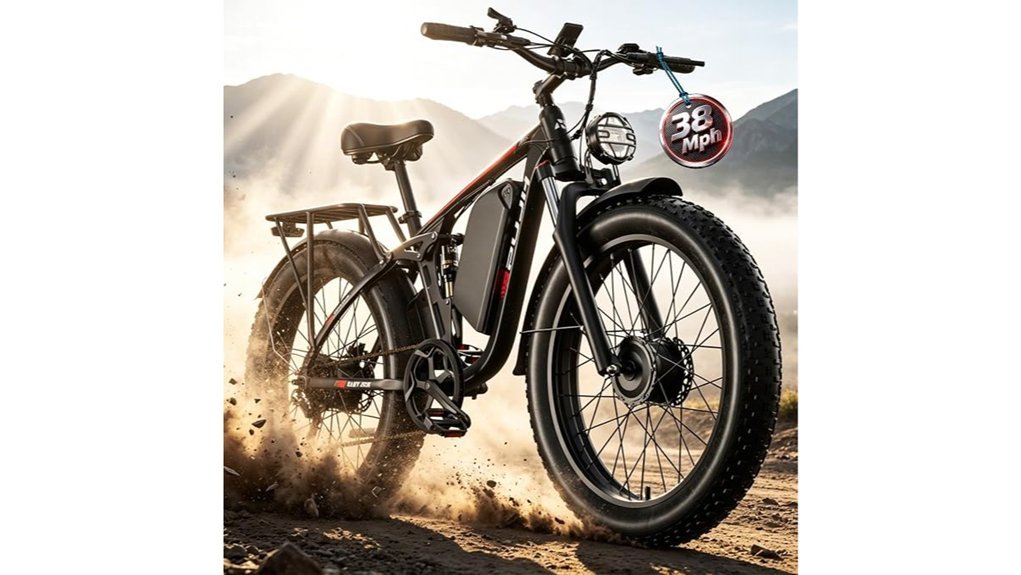
The 4000W Dual Motor Ebike with Removable Battery is best suited for riders who want serious off-road power and versatility in a Class 2-style package, thanks to its 160 Nm of torque, 24×4.0 fat tires, and dual hydraulic brakes. A 52V 25Ah removable battery supports an estimated 40 to 110 miles per charge. Six riding modes, including dual-motor throttle, pedal assist, and cruise, broaden its use. A 6061 aluminum frame, 7-level suspension, LED display, cargo rack, and bright lighting add durability, comfort, and practicality.
Best For: Riders who want a powerful dual-motor fat-tire ebike for off-road use, long-range riding, and all-weather versatility with strong braking and comfort features.
Pros:
- 160 Nm of torque and dual motors deliver strong acceleration and capable hill-climbing.
- 52V 25Ah removable battery offers an estimated 40–110 miles of range.
- 24×4.0 fat tires, 7-level suspension, and hydraulic brakes improve control, comfort, and safety.
Cons:
- The 4000W dual-motor setup may be overkill for casual commuters or beginners.
- Heavier build and fat tires can make it less nimble and harder to transport.
- Range can vary significantly depending on throttle use, terrain, rider weight, and assist level.
EDIKANI 2000W Electric Mountain Bike (19.2Ah Battery)
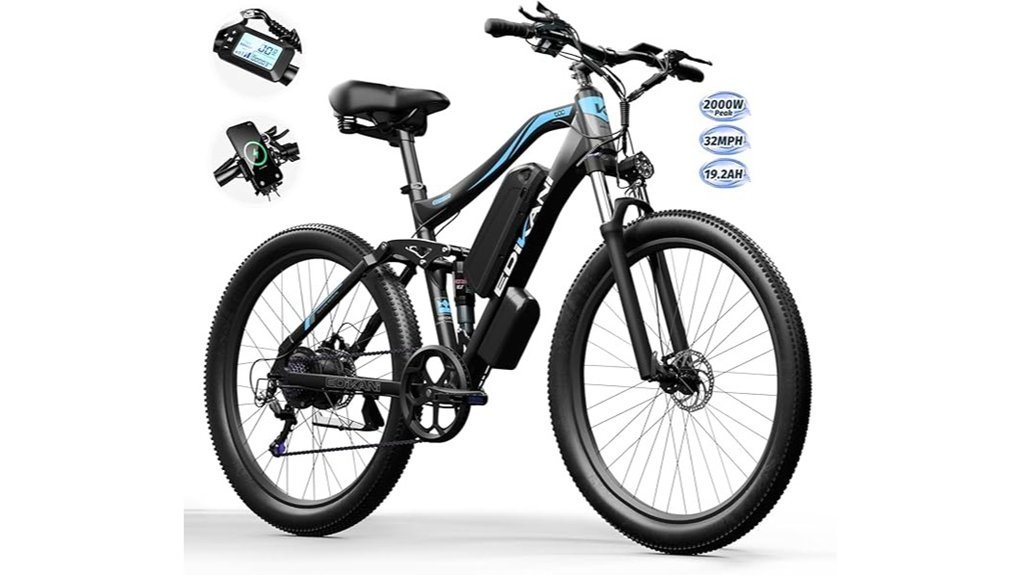
With its 2000W peak motor and 40–80-mile range, the EDIKANI suits power-focused riders. The brushless drivetrain reaches up to 32 mph and produces 55Nm of torque, giving it enough punch for climbs and mixed terrain. Five modes—Standard Bike, Pedal Assist, Full Throttle, Cruise, and Walking—add flexibility for commuting or trail use. Its aluminum frame, full suspension, and anti-slip 27.5 x 2.1 tires improve stability and comfort. Dual mechanical disc brakes support control, while the 330-lb capacity, digital display, and included accessories make it practical.
Best For: Power-focused riders who want a fast, full-suspension electric mountain bike for commuting, trail riding, and mixed terrain.
Pros:
- 2000W peak motor with up to 32 mph speed and 55Nm torque for strong hill-climbing and acceleration.
- 48V 19.2Ah battery offers an impressive 40–80 mile range for longer rides.
- Full suspension, anti-slip tires, and dual disc brakes improve comfort and control.
Cons:
- 2000W power and 32 mph capability may be more than some casual riders need.
- At 330 lbs capacity and a large battery, it may be relatively heavy and less nimble.
- Mechanical disc brakes are solid, but not as high-end as hydraulic brake systems.
ANCHEER Electric Mountain Bike for Adults (26″)
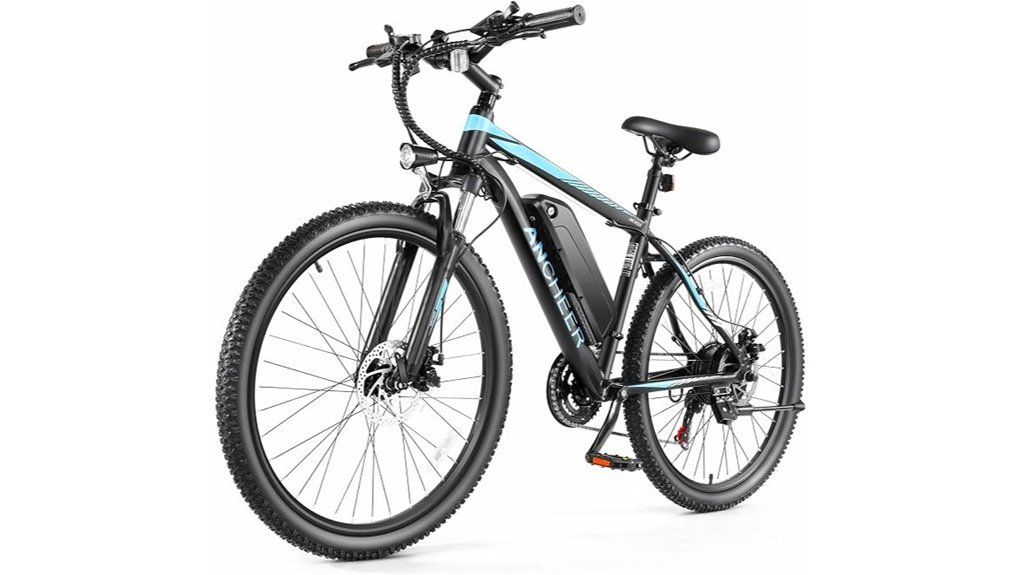
ANCHEER’s 26-inch Sunshine ebike suits riders wanting an affordable, versatile Class 2 option. It pairs a 500W brushless geared motor with a 48V/374Wh lithium battery, delivering up to 19.8 mph and as much as 55 miles on low assist. Five PAS levels, throttle, cruise, and pure pedal modes provide flexibility, while the 21-speed drivetrain helps on varied terrain. An aluminum alloy frame, lockable suspension fork, disc brakes, and double-walled rims support durability and control. It arrives 85% assembled, meets UL2849 standards, and includes one-year service with lifetime technical support.
Best For: Riders looking for an affordable, versatile 26-inch electric mountain bike for commuting, casual trail riding, and longer assisted rides with multiple riding modes.
Pros:
- 500W brushless geared motor and 48V/374Wh battery offer up to 19.8 mph and as much as 55 miles of range on low assist.
- 21-speed drivetrain, five PAS levels, throttle, cruise, and pure pedal modes provide flexible riding options.
- Aluminum alloy frame, lockable suspension fork, disc brakes, double-walled rims, and UL2849 compliance add durability and safety.
Cons:
- It arrives only 85% assembled, so some setup is still required.
- Range and speed can vary significantly depending on rider weight, terrain, and assist level.
- The cruise mode is fixed at 10 km/h, which may feel slow for some riders.
Jasion EB5 MAX Electric Mountain Bike (2000W, 48V)
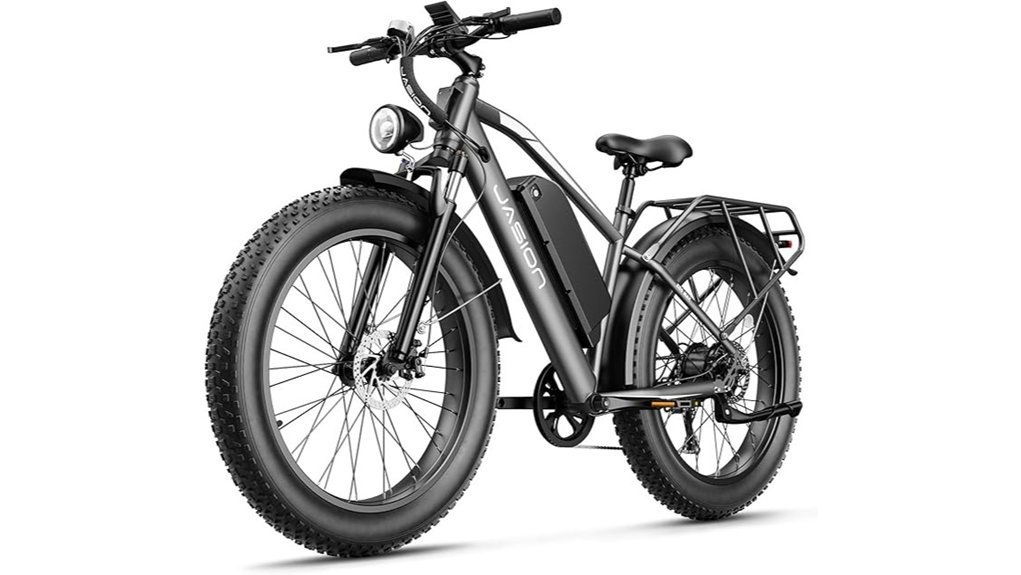
Delivering 2000W peak power and a 48V 15Ah battery, the Jasion EB5 MAX suits riders seeking speed and range. It reaches over 28 MPH and handles steep climbs with ease, while the removable, lockable 720Wh battery supports up to 65 miles in assist mode or 35 miles on throttle. A color LCD, password-protected dashboard, and brighter lights improve usability and visibility. Fat 26 x 4.0 puncture-resistant tires, a lockable suspension fork, and 180 mm dual disc brakes enhance control. A 7-speed drivetrain, rear rack, and included fenders add everyday practicality for trail riding or commuting.
Best For: Riders who want a powerful electric mountain bike for fast commuting, trail riding, and tackling steep hills with strong range and all-terrain capability.
Pros:
- 2000W peak motor delivers strong acceleration and climbing power.
- Removable 48V 15Ah battery offers solid range and convenient charging/security.
- Fat tires, suspension fork, and dual disc brakes improve stability and control.
Cons:
- High power and speed may be more than casual riders need.
- Fat tires and heavy-duty components can make the bike bulkier than standard e-bikes.
- Range can drop significantly when using throttle-only riding or on challenging terrain.
Electric Mountain Bike for Adults, 20 Inch Fat Tire
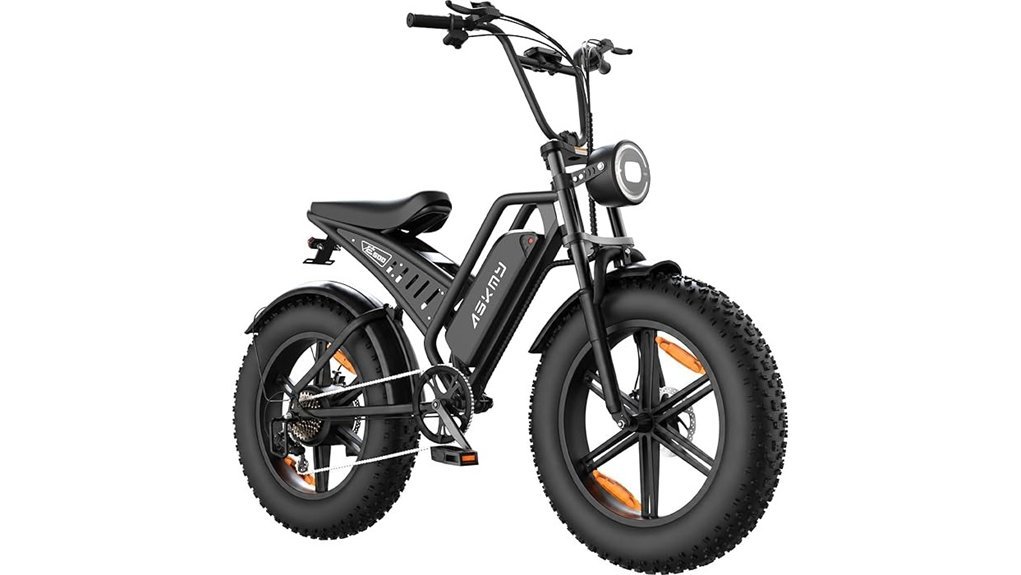
Built for adult riders needing compact off-road power, this 20-inch fat tire e-bike stands out. Its 500W brushless motor peaks at 1500W, producing strong torque for climbs up to 35 degrees while staying smooth and quiet. The 48V 15Ah removable battery supports 40 to 60 miles in pedal assist and 25 to 28 miles in pure electric mode, with a 5 to 6 hour recharge. 20×4-inch fat tires and full hydraulic suspension improve traction and comfort. Three riding modes, a 7-speed drivetrain, disc brakes, and UL-certified safety complete the package.
Best For: Adult riders who want a compact, powerful fat-tire e-bike for off-road trails, hills, and mixed-terrain commuting.
Pros:
- Strong 500W brushless motor with 1500W peak power for climbing and quick acceleration.
- Long-range 48V 15Ah removable battery with convenient charging and solid mileage in both assist and electric modes.
- Fat tires, full suspension, disc brakes, and UL-certified safety features improve comfort, control, and reliability.
Cons:
- 20-inch frame may feel compact or less comfortable for taller riders.
- Heavier fat-tire, full-suspension design may be harder to carry or transport.
- Battery range can drop significantly with aggressive riding, steep hills, or heavy loads.
Electric Bike for Adults with 1000W Peak Motor
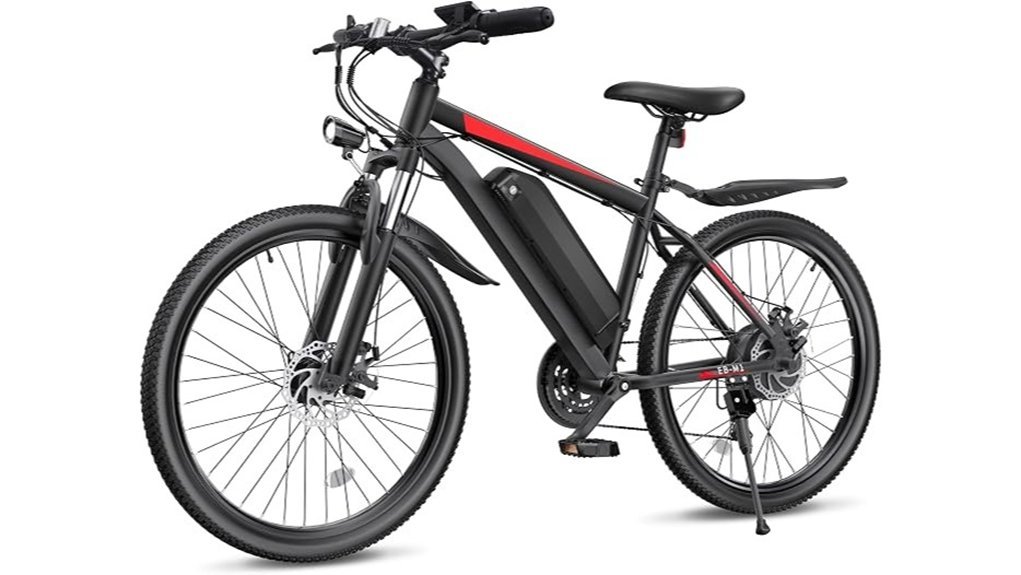
With a 1000W peak motor, this e-bike suits adults tackling steep hills and rough trails. Its 500W brushless motor reaches a 20 mph top speed, balancing control with strong climbing support. A 48V 374.4Wh removable battery is IPX5 waterproof, delivers 25-30 miles in electric mode or 40-50 miles with pedal assist, and recharges in 4-5 hours. Front suspension, a soft seat, fenders, and a bright headlight improve comfort and visibility. Five riding modes, an LCD display, and UL-certified safety support everyday commuting, workouts, and adventure riding.
Best For: Adults who want a versatile e-bike for commuting, workouts, and light off-road riding, especially on hills and rough trails.
Pros:
- Strong 500W brushless motor with 1000W peak power for good hill-climbing support
- Removable 48V battery offers solid range and relatively fast 4-5 hour charging
- Comfortable and practical features like front suspension, fenders, LCD display, and bright headlight
Cons:
- Top speed is capped at 20 mph, which may feel limited for some riders
- Range may be modest for longer rides, especially in full electric mode
- Best suited for riders 5.3-6.1 ft tall, so fit may be less ideal for others
Electric Fat Tire Ebike for Adults, 1500W Motor
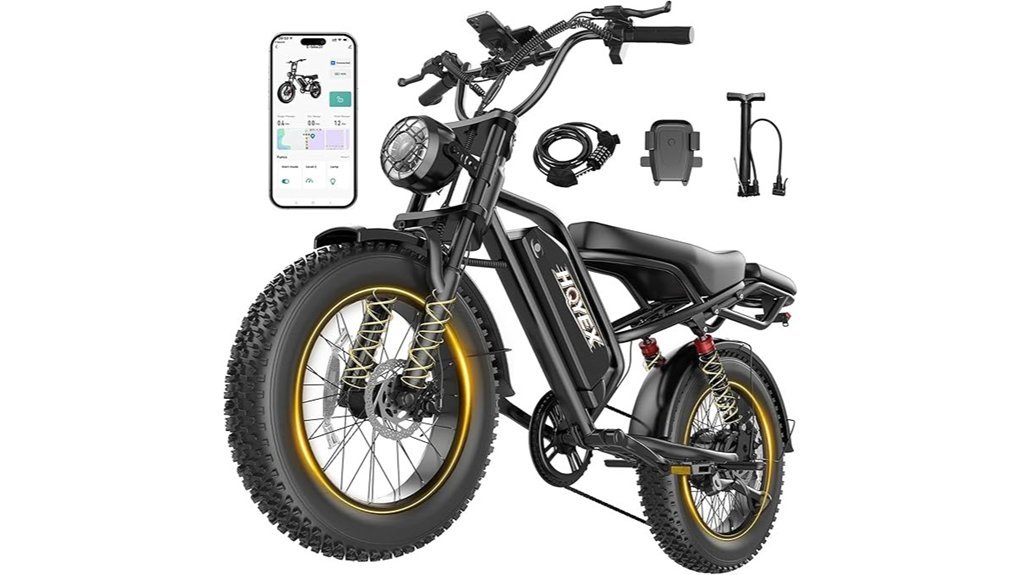
For riders craving brute strength, this electric fat tire ebike stands out. Its 1500W high-torque brushless motor reaches 31 mph and handles steep climbs and rough terrain with ease. A 48V 20Ah removable lithium battery supports long rides and convenient charging for commuting or exploration. Twenty-inch anti-slip fat tires, dual suspension, and responsive dual disc brakes improve grip, comfort, and control. The ergonomic adult frame adjusts to different heights, reducing fatigue on longer trips. Suitable for city streets and off-road use, it includes a 1-year warranty on the bike and core parts.
Best For: Riders who want a powerful all-terrain electric bike for commuting, off-road adventures, and longer rides with extra comfort and control.
Pros:
- 1500W motor delivers strong acceleration and handles steep hills and rough terrain well.
- 48V 20Ah removable battery supports extended riding and easier charging.
- Fat tires, dual suspension, and dual disc brakes improve stability, comfort, and safety.
Cons:
- Heavier, more powerful design may be less convenient for carrying or storing.
- Top speed and performance may be more than casual riders need.
- May require more maintenance than a standard commuter bike due to its rugged build.
Factors to Consider When Choosing a Class 2 Electric Mountain Bike
Selecting a Class 2 electric mountain bike begins with evaluating motor power and battery range, since both shape how well the bike handles climbs and longer rides. Brake system and suspension quality also matter, as they affect control, comfort, and safety on rough terrain. Tire traction should be reviewed last, because dependable grip can determine overall stability across loose or uneven surfaces.
Motor Power
Motor power is a key factor in determining how a Class 2 electric mountain bike performs on steep climbs and rough trails. Measured in watts, it affects torque and acceleration, both of which matter when a rider needs strong support on difficult terrain. Class 2 models typically use motors from 500W to 4000W, with some reaching speeds up to 32 mph depending on conditions and design. Brushless motors are common because they run more efficiently, last longer, and generate less heat than brushed alternatives. Torque, measured in Newton-meters, further reflects hill-climbing ability and quick starts; a 160 Nm motor can deliver particularly strong acceleration. The right power level should match intended use, from casual commuting to demanding off-road riding.
Battery Range
Battery range is a major consideration because it determines how far a Class 2 electric mountain bike can travel on a single charge, with typical ranges falling between 25 and 110 miles depending on battery capacity and riding conditions. Higher-capacity packs, such as a 52V 25Ah battery, can extend travel distance and may reach the upper end of that range in ideal conditions. Riding mode also matters: full-throttle use drains power faster than pedal assist, reducing mileage per charge. Terrain and rider weight further influence performance, since steep climbs and heavier loads consume energy more quickly than flat routes. Charging time should also be reviewed, as many e-bikes require four to six hours for a full recharge, depending on charger specifications and battery design.
Brake System
A reliable brake system is essential for any Class 2 electric mountain bike because it directly affects safety, control, and confidence on the trail. Mechanical disc brakes offer dependable stopping power, while hydraulic disc brakes typically deliver smoother, stronger, and more responsive braking with less hand effort. That advantage can matter on long rides or during repeated stops. Dual braking setups can improve stability and help maintain control across mixed terrain and changing weather. Rotor size and material also influence performance; larger rotors usually dissipate heat better and support stronger braking on steep descents or under heavy loads. Regular inspection of pad wear, alignment, and fluid or cable condition is important to preserve efficiency and extend component life.
Suspension Quality
Suspension quality plays a major role in how a Class 2 electric mountain bike handles rough terrain, building on the control provided by strong brakes. A well-tuned system absorbs impacts from roots, rocks, and uneven trail surfaces, helping preserve rider comfort and bike stability. Higher-end models often use dual suspension, which can absorb about 80 to 85 percent of impact forces for a noticeably smoother ride on bumpy sections. Lockable suspension forks add versatility by letting riders firm up the front end for climbs or open it for descents. Beyond comfort, effective suspension supports control and safety during fast descents and sharp turns, where precision matters most. It also works with wheel setup to maintain predictable handling across changing terrain.
Tire Traction
Tire traction is a critical factor in how a Class 2 electric mountain bike performs off-road, especially on loose, wet, or uneven terrain. Wider tires generally improve stability and control by increasing the contact area with the ground, helping the bike hold its line on rough paths. Fat tires, such as 24×4.0 or 20×4.0 sizes, can boost grip further by spreading weight more evenly. Tread design also matters: deeper or specialized patterns often perform better in sand, mud, and gravel. Tire pressure influences handling as well; lower pressure can increase grip on uneven surfaces, while higher pressure may suit firmer ground. Anti-slip rubber compounds are especially valuable in wet conditions, where they help reduce skidding and support safer riding.
Riding Modes
Riding modes play a major role in how a Class 2 electric mountain bike feels on the trail and during daily use. Full Throttle lets the motor do the work, while Pedal Assist adds support at different effort levels. Adjustable speed settings can suit relaxed neighborhood rides or harder off-road efforts, with many bikes reaching about 20 to 32 mph. Walking Assist is useful on steep climbs or when pushing the bike, since it provides help without full throttle use. Regular Biking mode preserves a standard cycling feel for riders who want no electric input. Some models also include Cruise Mode, which holds a steady pace without constant throttle pressure. Together, these options create flexibility for terrain, fitness goals, and ride duration.
Frequently Asked Questions
How Long Do Class 2 E-Bike Batteries Last Over Time?
Like a fading lantern on a long trail, a Class 2 e-bike battery typically lasts 3 to 5 years, or about 500 to 1,000 charge cycles, before noticeable capacity loss. With careful charging, moderate temperatures, and regular use, some may endure longer. Over time, range shortens gradually rather than failing all at once, and replacement becomes the practical answer when performance drops beyond comfortable riding needs.
Are Class 2 Mountain Bikes Allowed on All Bike Trails?
No, class 2 mountain bikes are not allowed on all bike trails. Access depends on local laws, land manager rules, and trail designations. Many multi-use paths permit them, while some singletrack, wilderness, and non-motorized trails prohibit throttle-equipped e-bikes. Riders should check posted regulations, ranger guidance, or park websites before entering a trail. Compliance helps avoid fines and protects access for others.
How Much Maintenance Do Class 2 Electric Mountain Bikes Need?
Class 2 electric mountain bikes typically need moderate maintenance, somewhat more than regular bikes because of the motor, battery, and controller. They benefit from frequent tire, brake, chain, and drivetrain checks, plus regular battery charging and proper storage. Cleaning should be careful, avoiding high-pressure water near electronics. Annual professional inspections help catch wear early. With consistent upkeep, these bikes usually remain reliable, safe, and efficient for everyday riding and trail use.
Can I Ride a Class 2 E-Bike in Heavy Rain?
Yes, a class 2 e-bike can usually be ridden in heavy rain, but the answer carries a warning. Its electrical parts are generally weather-resistant, not waterproof, so prolonged exposure may invite trouble. Brakes, tires, and visibility also become critical when the road turns slick. If the battery, display, or connectors seem vulnerable, caution should prevail. After the storm, the bike should be dried and inspected before the next ride.
What Safety Gear Is Recommended for Class 2 E-Mountain Biking?
Recommended safety gear for class 2 e-mountain biking includes a certified helmet, gloves, protective eyewear, knee and elbow pads, and sturdy shoes with good grip. A bright jersey or reflective details improve visibility. On rough or fast trails, a back protector and full-face helmet may be wise. Riders should also carry water, a phone, and a basic repair kit to handle minor mechanical issues or emergencies.