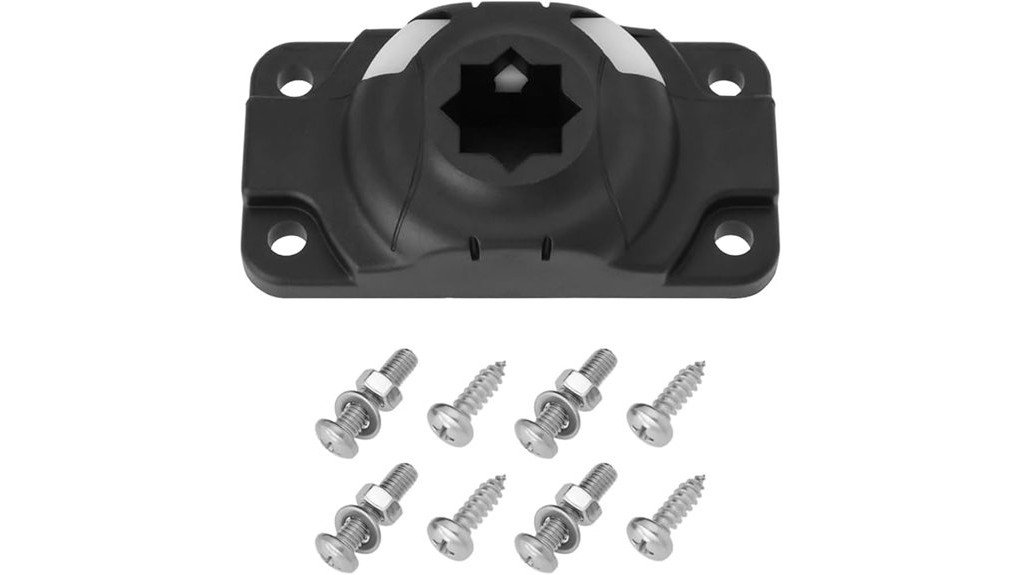
Choosing the right CO2 inflator for a mountain bike in [2026] is less about novelty and more about dependable performance when the trail gets unforgiving. Some riders will value cartridge capacity, while others will look for valve compatibility, control, and durability. The top options each solve a slightly different problem, and the differences are worth a closer look before a flat tire turns into a longer ride home.
Key Takeaways
- Check 3/8-24 threaded compatibility to ensure safe use with standard CO2 cartridges.
- Choose inflators with precise flow control to prevent wasted gas and overinflation.
- Select 16g cartridges for quick single fills or 25g cartridges for larger MTB tires.
- Prefer CNC-machined aluminum inflators with brass or stainless internals for durability.
- Look for Presta/Schrader compatibility and protective sleeves for safer, easier trail-side inflation.
CXWXC Threaded CO2 Cartridges for Bike Tires

CXWXC Threaded CO2 Cartridges are a strong choice for riders who need fast, reliable tire inflation on the trail or during races. Offered in 16g and 25g sizes, they use a 3/8-24 threaded connection compatible with standard inflators. A 16g cartridge can raise a 26 x 1.95 mountain tire to 40 psi or a road tire to 100 psi in one burst. Alloy steel construction adds durability, while the compact form fits pockets or saddle bags. Because CO2 cools sharply during release, gloves are advisable. The cartridges are single-use, recyclable, and manually operated.
Best For: Cyclists, especially mountain bikers and racers, who want a compact, fast, and reliable emergency tire inflation solution on the go.
Pros:
- Fast, high-pressure inflation for MTB and road tires
- Compact, lightweight, and easy to carry in pockets or saddle bags
- Durable alloy steel construction with threaded compatibility for standard inflators
Cons:
- Single-use cartridges require replacement after each use
- CO2 release gets very cold, so gloves are recommended
- Not ideal for long-term tire pressure retention compared with a pump or air compressor
CO2 Bike Tire Inflator with 4-6 Cartridges
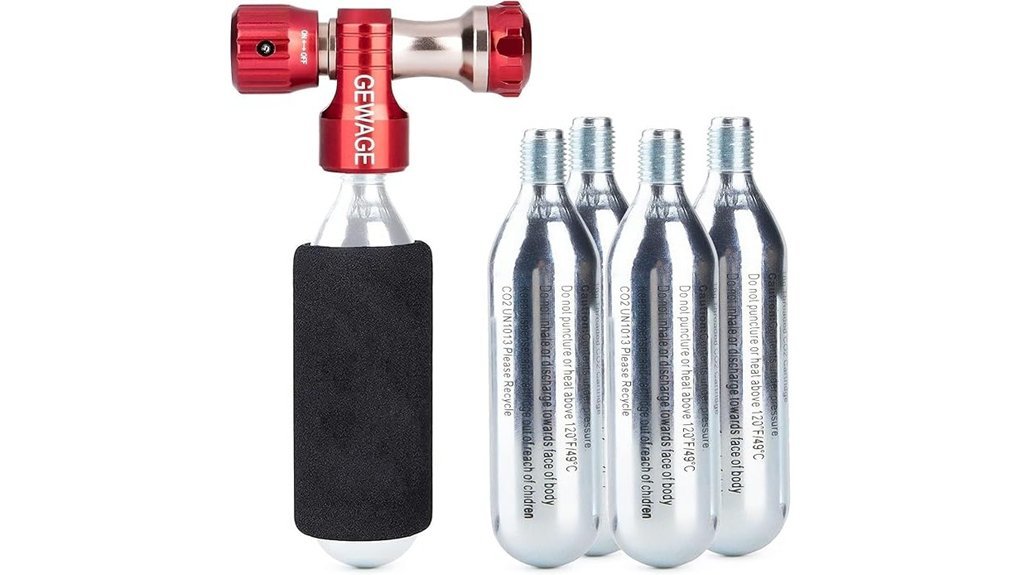
The CO2 bike tire inflator with 4-6 cartridges suits riders who need fast roadside repairs. Compact and lightweight, it fits easily into saddle bags, jersey pockets, or backpacks, making it practical for mountain, road, and race bikes. Compatible with Presta and Schrader valves, it accepts threaded 12g, 16g, 20g, and 25g cartridges, while the included 16g insulating sleeve improves hand safety. A CNC machined aluminum control knob allows precise CO2 release. It inflates flat tires in seconds, though pre-ride checks remain important because CO2 can leak faster than air. It also makes a useful gift for cyclists.
Best For: Cyclists who want a compact, fast, and easy-to-use emergency tire inflation solution for roadside repairs on mountain, road, or race bikes.
Pros:
- Inflates flat tires in seconds with minimal effort.
- Compact and lightweight, so it’s easy to carry in a saddle bag, jersey pocket, or backpack.
- Compatible with Presta and Schrader valves and multiple threaded CO2 cartridge sizes.
Cons:
- CO2 can leak faster than regular air, so tires may need pre-ride checks.
- Requires carrying replacement cartridges, which are single-use.
- Can get cold during use, though the insulating sleeve helps protect hands.
LEZYNE Control Drive CO2 Bike Tire Inflator
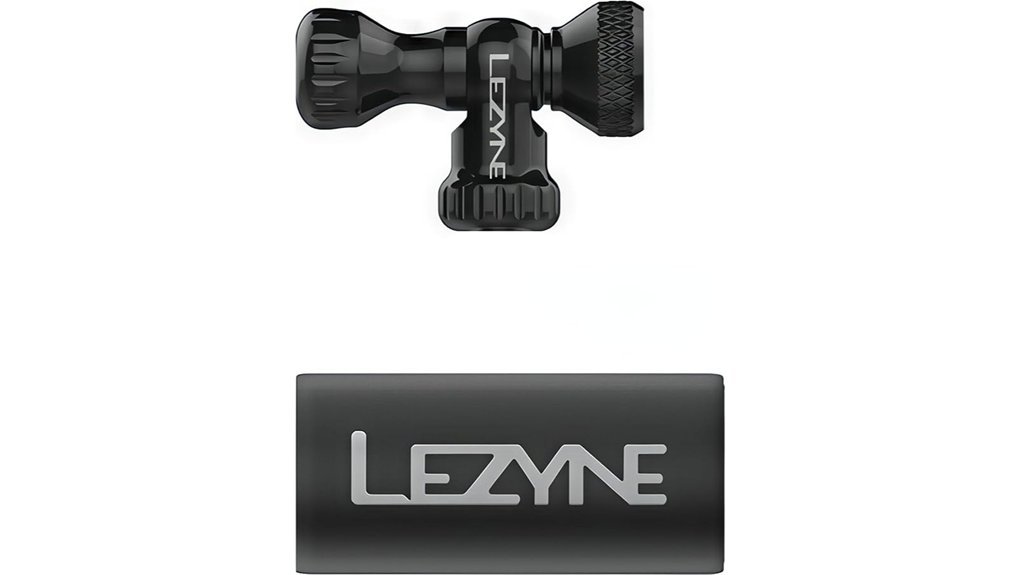
Lezyne Control Drive CO2 Bike Tire Inflator suits riders who want precise, on-trail inflation control. Its CNC-machined aluminum body and stainless steel internals create a compact, durable tool built for trail use. The twist-control valve lets riders regulate CO2 flow with accuracy, reducing cartridge waste and limiting overinflation risk. A twin slip chuck accepts both Presta and Schrader valves, adding versatility across bike types. The neoprene sleeve helps shield hands from cold during discharge. Lightweight and slim, it stores easily in a pack or pocket. Standard threaded cartridges are required and sold separately.
Best For: Riders who want a compact, durable CO2 inflator with precise on-trail inflation control for both Presta and Schrader valves.
Pros:
- Twist-control valve allows accurate CO2 flow and helps reduce waste.
- Twin slip chuck fits both Presta and Schrader valves for broad compatibility.
- CNC-machined aluminum construction with a neoprene sleeve improves durability and hand comfort.
Cons:
- Standard threaded CO2 cartridges are sold separately.
- CO2 inflation offers less adjustability than a traditional hand pump.
- Best suited for emergency or quick inflation, not repeated full-tire fills.
CO2 Bike Tire Inflator for Presta and Schrader Valves
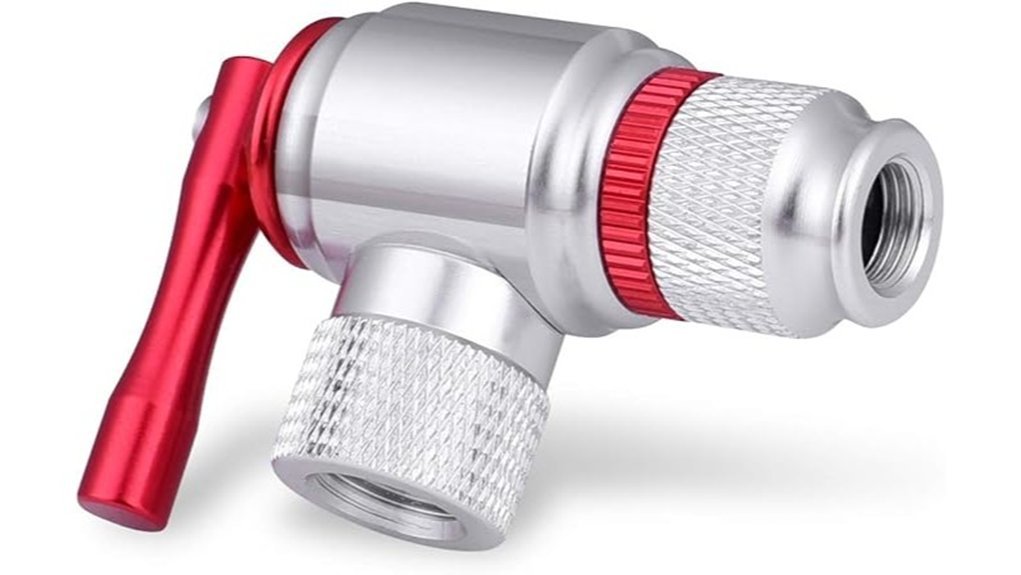
For riders needing a compact inflator that fits both Presta and Schrader valves, this model stands out. The CO2 Bike Tire Inflator uses CNC machined aluminum with brass internals, keeping weight to 24.99 g while remaining durable. It includes a sleeve and comes in red or silver, but cartridges are sold separately. A control lever supports precise inflation, while slow gas release helps reduce freezing. The secure connection limits leaks and enables fast, reliable tire fills for road or mountain bikes. Premium threaded cartridges are recommended, and a satisfaction guarantee adds support.
Best For: Riders who want a lightweight, compact CO2 inflator that works with both Presta and Schrader valves for fast, controlled tire inflation on road or mountain bikes.
Pros:
- Fits both Presta and Schrader valves for broad bike compatibility
- CNC machined aluminum with brass internals for durability and low weight
- Control lever and slow gas release help provide precise, safer inflation
Cons:
- CO2 cartridges are not included
- Requires premium threaded cartridges for best performance
- CO2 inflation can be less convenient than a traditional mini-pump for repeated use
CXWXC Threaded CO2 Cartridges for Bike Tires

CXWXC threaded CO2 cartridges suit riders who need fast, compact tire inflation. Available in 16g and 25g sizes, they work with mountain and road bikes and fit all threaded 3/8-24 inflators. A 16g cartridge can bring a road tire to 100 psi, while a 26″ x 1.95″ MTB tire can reach 40 psi in one shot. Their compressed air helps restore pressure in seconds with little effort. They are lightweight, recyclable, single-use canisters. Users should wear gloves, avoid heat and sunlight, and remove cartridges from inflator heads after use to prevent freezing or slow gas release.
Best For: Cyclists who want a fast, compact, and easy-to-carry solution for emergency tire inflation on mountain or road bikes.
Pros:
- Inflates tires very quickly with minimal effort, including a 16g cartridge reaching 100 psi on road tires.
- Compatible with all threaded 3/8-24 CO2 inflators and suitable for both MTB and road use.
- Compact, lightweight, and easy to stash in a saddle bag or jersey pocket.
Cons:
- Single-use cartridges must be replaced after each use, which adds recurring cost.
- CO2 gets extremely cold during release, so gloves are recommended to avoid injury.
- Must be handled carefully and kept away from heat, sunlight, and inflator heads when not in use.
Factors to Consider When Choosing co2 Inflator Mountain Bike
When selecting a CO2 inflator mountain bike setup, valve compatibility and cartridge threading should be checked first to guarantee a proper fit. Inflation control and cartridge size also matter, since they affect how much air can be released and how efficiently the system performs on the trail. Material durability is another key factor, as a sturdy inflator is more likely to handle repeated use and rough conditions.
Valve Compatibility
Valve compatibility is one of the first details to check in a CO2 inflator for mountain biking, since a good model should work with both Presta and Schrader valves. A universal chuck is often the simplest choice, because it can serve the two most common valve types found on mountain and road bikes. A secure connection matters as well, especially on rough trails where leaks can waste gas and delay repairs. Some inflators also include adjustable control systems, allowing riders to fine-tune pressure for different terrain and tire needs. It is also important to verify that the inflator is built for standard threaded CO2 cartridges, which supports reliable, efficient operation. Proper valve compatibility helps guarantee quick, dependable inflation when conditions are demanding.
Cartridge Threading
Cartridge threading is the next detail to verify after valve compatibility, since the inflator and cartridge must match for reliable use. Most CO2 inflators depend on threaded cartridges, commonly using a standard 3/8-24 connection. A proper thread match creates a secure seal between cartridge and inflator, which reduces leakage risk and supports consistent operation. Cartridge size also matters, with common options such as 16g and 25g offering different inflation capacities for various trail needs. Before purchase, both the inflator and cartridge specifications should be checked carefully to confirm compatibility. Mismatched threading can cause inefficient inflation or even damage the inflator, making correct pairing essential for dependable performance in mountain biking situations.
Inflation Control
Inflation control is one of the most important features to evaluate in a CO2 inflator, since precise gas delivery helps avoid wasted cartridges and overinflated tires. A twist-control valve system is valuable because it lets the rider regulate CO2 flow smoothly and stop inflation at the desired pressure. Adjustable control knobs add another layer of precision, making it easier to match tire pressure to dry climbs, wet trails, or technical descents. A slow gas release can further reduce freezing and help maintain a secure seal, limiting leaks during use. An insulating sleeve improves hand protection when the cartridge chills. Compatibility with both Presta and Schrader valves also supports reliable control across different mountain bikes.
Cartridge Size
Size matters when selecting a CO2 cartridge for a mountain bike inflator. Common choices are 16g and 25g cartridges. A 16g cartridge typically fills a 26” x 1.95” mountain bike tire to about 40psi, while also reaching roughly 100psi in a road tire, making it a flexible option for mixed riding. A 25g cartridge delivers more air, which suits larger tires and situations requiring multiple inflations. Cartridge size thus affects both pressure output and the number of uses available before replacement. Riders facing remote trails or urgent repairs may prefer the larger option for added reserve. Compatibility remains essential, since most threaded CO2 cartridges use the standard 3/8-24 thread size, and the inflator must match it exactly.
Material Durability
Material durability plays a major role in how well a CO2 inflator holds up on mountain bike trails. CNC-machined aluminum is often favored because it combines strength with low weight and resists damage from repeated use. Stainless steel internal components further improve reliability by limiting wear inside the mechanism, which helps the inflator perform consistently over time. A solid outer build also matters, since off-road riding exposes equipment to shocks, dirt, moisture, and vibration. Protective details such as insulating sleeves can reduce cold-related stress during rapid CO2 release, adding another layer of durability. High-quality materials give the inflator a better chance of enduring frequent trail use and harsh conditions without premature failure.
Portability
Portability is a key advantage of a CO2 inflator for mountain biking, since a compact, lightweight design fits easily into a saddle bag or jersey pocket without adding bulk. Many models are smaller and lighter than traditional hand pumps, making them well suited to trail use where space matters. Cartridge weights typically range from 16g to 25g, helping keep the overall setup minimal. This reduced size supports quick access when a tire needs attention far from home. Some inflators also include a protective sleeve, which can improve handling comfort without sacrificing compactness. In practice, a portable CO2 inflator can shorten inflation time and reduce effort compared with manual pumps, making it a practical choice for urgent repairs during rides.
Safety Features
Safety features are essential when choosing a CO2 inflator for mountain biking, especially one with a protective sleeve that helps insulate hands from the cold gas during discharge. A slow-release mechanism is also important, as it permits controlled inflation and lowers the chance of blowouts or wasted cartridges. Secure connections should be checked carefully because leaks can reduce efficiency and create unnecessary hazards during tire filling. Compatibility with both Presta and Schrader valves adds versatility and helps avoid mismatched equipment in the field. Easy, safe cartridge exchange is another key point; the design should minimize the chance of accidental discharge or awkward handling when replacing cartridges. Together, these features support reliable, efficient, and safer roadside inflation.
Frequently Asked Questions
How Long Does CO2 Stay in a Mountain Bike Tire?
CO2 in a mountain bike tire can leak noticeably within 24 hours, and many riders find a tire softer after a day or two. It generally stays usable for a short ride or emergency repair, but not as long as regular air. Warm temperatures, tire sealant, and valve quality all affect retention. For best performance, CO2 is usually a temporary solution before reinflating with regular air soon after.
Can CO2 Inflators Damage Tubeless Sealant?
Yes, CO2 inflators can affect tubeless sealant, but the risk is usually temporary rather than destructive. The cold gas can cause some sealants to thicken or coagulate faster, reducing sealing performance after inflation. A rider may notice less effective puncture sealing until the tire is later reinflated with regular air. Repeated CO2 use can also shorten sealant life, so it is best treated as an emergency solution, not a routine practice.
Are CO2 Cartridges Reusable After Partial Use?
No, CO2 cartridges are generally not reusable after partial use; the remaining gas is not meant to be saved like spare change. Once punctured, they can often be disconnected and later reused only if the cartridge still contains pressure and the valve seals properly. In practice, most riders treat them as one-time items. Storage after use is unreliable, and leakage or contamination can make reuse foolish rather than economical.
What Pressure Should I Use for Mountain Biking?
For mountain biking, pressure depends on tire width, rider weight, terrain, and whether tubes or tubeless setups are used. Many riders start around 18 to 25 psi for trail riding, with lighter riders or wider tires going lower and heavier riders or rocky terrain going higher. Tubeless tires can often run lower safely. The best pressure is found by testing, then adjusting for traction, comfort, and rim protection.
Do CO2 Inflators Work in Cold Weather?
Yes, CO2 inflators do work in cold weather, but performance can be less consistent. The gas inside the cartridge remains effective, yet the cartridge and valve may feel colder during use, which can reduce pressure slightly and make operation awkward with bare hands. In freezing conditions, a threaded inflator and insulated gloves help. For mountain biking, it is wise to test cartridges beforehand and carry a backup tube or mini pump.