Consumer direct mountain bikes in [2026] present a wide spread of options, from foldable budget models to full-suspension choices built for rougher trails. Brands like Ktaxon, WEIZE, Max4out, AVASTA, and Schwinn each target different riders with varying speeds, frame styles, and assembly needs. The real question is which of these offers the best balance of value, control, and durability for everyday use and harder terrain.
Key Takeaways
- Ktaxon 26-inch foldable bike is a budget-friendly, 21-speed option with dual-disc brakes and easy storage.
- WEIZE and Max4out suit beginners needing affordable dual-suspension mountain bikes with simple setup.
- QARSWA and AVASTA Earth offer lightweight aluminum frames, 21-speed drivetrains, and reliable disc brakes.
- Huffy North Peak and Schwinn High Timber provide versatile, durable riding with aluminum or steel frames and front suspension.
- Most models arrive 75% to 90% pre-assembled, making consumer-direct purchase convenient for quick setup.
Ktaxon 26 Inch Foldable Mountain Bike, 21 Speed
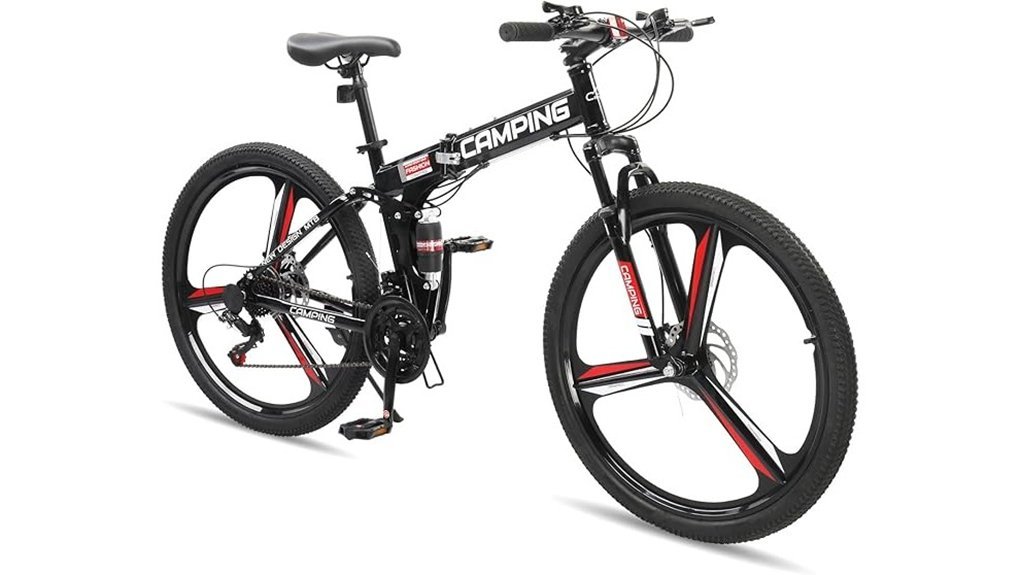
The Ktaxon 26 Inch Foldable Mountain Bike is a strong pick for riders who want a budget-friendly, versatile bike with easy storage and solid all-terrain performance. Its high-carbon steel frame, three-impeller styling, and ergonomic seat aim to balance durability with comfort. The quick-release folding mechanism and 85% pre-assembled setup make transport and assembly relatively simple. A 21-speed Shimano drivetrain supports responsive shifting, while all-terrain tires add grip. Thickened front suspension, dual shock absorption, and dual-disc brakes improve control. Lightweight alloy wheels and a lock-out fork help smooth varied surfaces.
Best For: Budget-conscious riders who want a foldable 26-inch mountain bike for easy storage, mixed-terrain use, and straightforward assembly.
Pros:
- 21-speed Shimano drivetrain offers smooth, responsive shifting.
- Foldable design with quick-release clip makes storage and transport convenient.
- Dual-disc brakes and front suspension improve control and comfort on rough surfaces.
Cons:
- High-carbon steel frame may feel heavier than aluminum alternatives.
- 85% pre-assembled still requires some setup before riding.
- Best suited for casual to moderate off-road use rather than aggressive mountain biking.
26″ 7-Speed Mountain Bike with Front Suspension
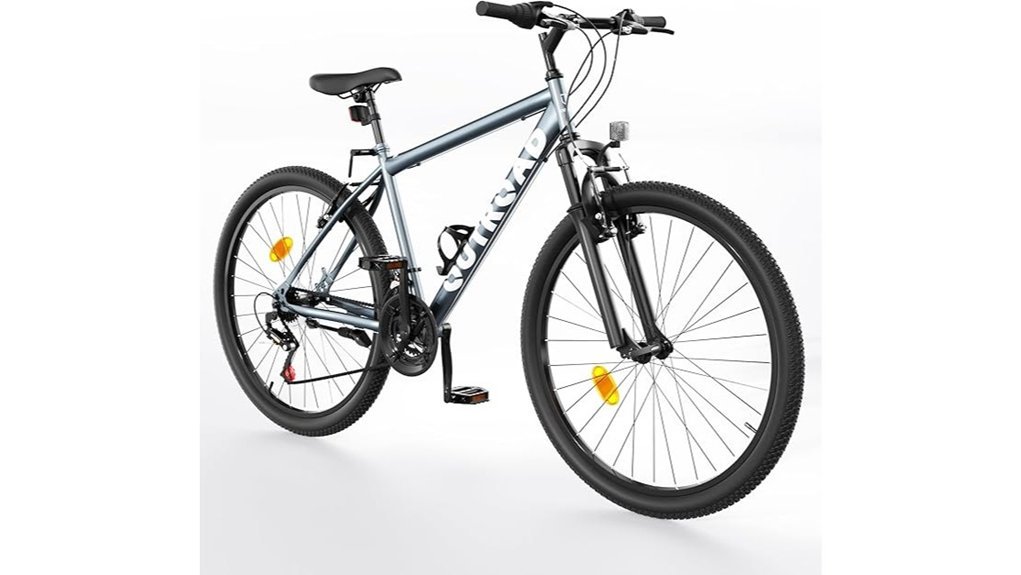
Built for riders 52 to 62 inches tall, this 26-inch 7-speed mountain bike offers a versatile trail-ready setup. Its high-carbon steel, aviation-grade frame supports up to 330 lbs while keeping a lightweight profile for easier handling. A front suspension fork helps absorb bumps, and V-brakes provide dependable stopping control on varied terrain. The quick-release ergonomic seat and shaped handlebars support a comfortable riding position during longer outings. Ninety percent pre-assembled, it can be ready in about 20 minutes with included tools. Waterproof paint, multiple colors, video guides, and 24/7 support add practical value.
Best For: Riders 52 to 62 inches tall who want an affordable, trail-ready 26-inch mountain bike with front suspension, 7 speeds, and easy assembly.
Pros:
- 90% pre-assembled and can be set up in about 20 minutes with included tools
- Front suspension and V-brakes offer a comfortable, controlled ride on varied terrain
- High-carbon steel frame supports up to 330 lbs and includes an ergonomic seat and handlebars
Cons:
- 7-speed drivetrain may feel limited for more advanced riders or steep climbs
- V-brakes are reliable, but not as strong as higher-end braking systems in wet conditions
- Best fit is limited to riders 52 to 62 inches tall, so it may not suit everyone
WEIZE Mountain Bike with Dual Full Suspension
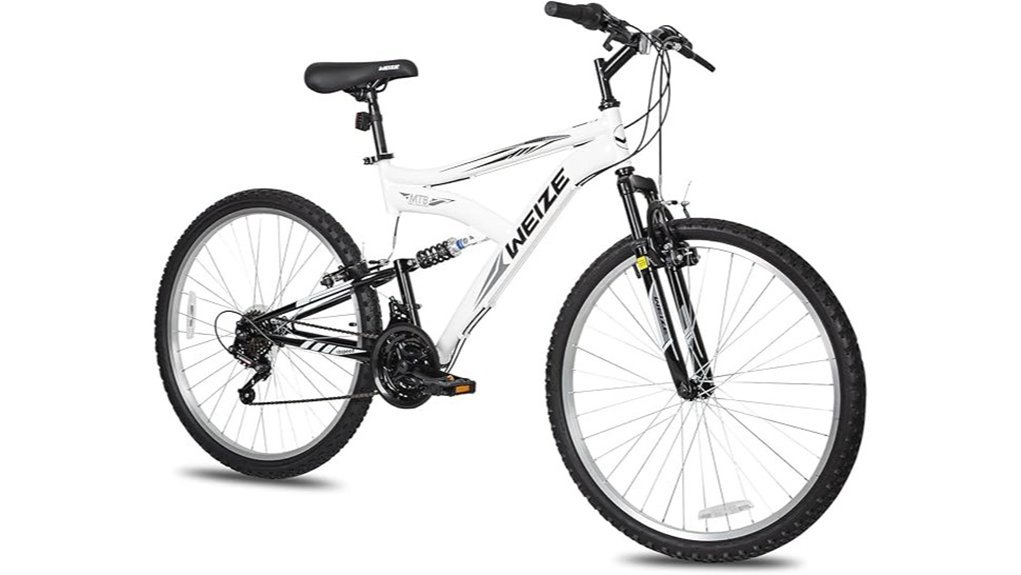
WEIZE’s dual suspension and 18-speed setup make it a practical pick for newer trail riders. The high-carbon steel frame, front fork, and rear coil shock help absorb rough ground, while 26-inch all-terrain tires add versatility on mixed surfaces. Twist shifters paired with front and rear derailleurs support smooth gear changes, and linear pull brakes deliver dependable stopping power. Sized for riders 52 to 62 inches tall, this bike suits ages 13 and up. It arrives partially assembled with tools and a setup video, making installation straightforward in about 20 minutes.
Best For: Beginner to intermediate riders ages 13+ who want an affordable dual-suspension mountain bike for mixed terrain and easy setup.
Pros:
- Dual full suspension helps absorb bumps for a smoother ride.
- 18-speed gearing with twist shifters makes gear changes simple.
- Arrives partially assembled with tools and a setup video for quick installation.
Cons:
- High-carbon steel frame can be heavier than aluminum alternatives.
- Linear pull brakes are effective but less advanced than disc brakes.
- Best fit is limited to riders 52 to 62 inches tall.
26/27.5 Inch Mountain Bike with 21-Speed Trigger Shifter
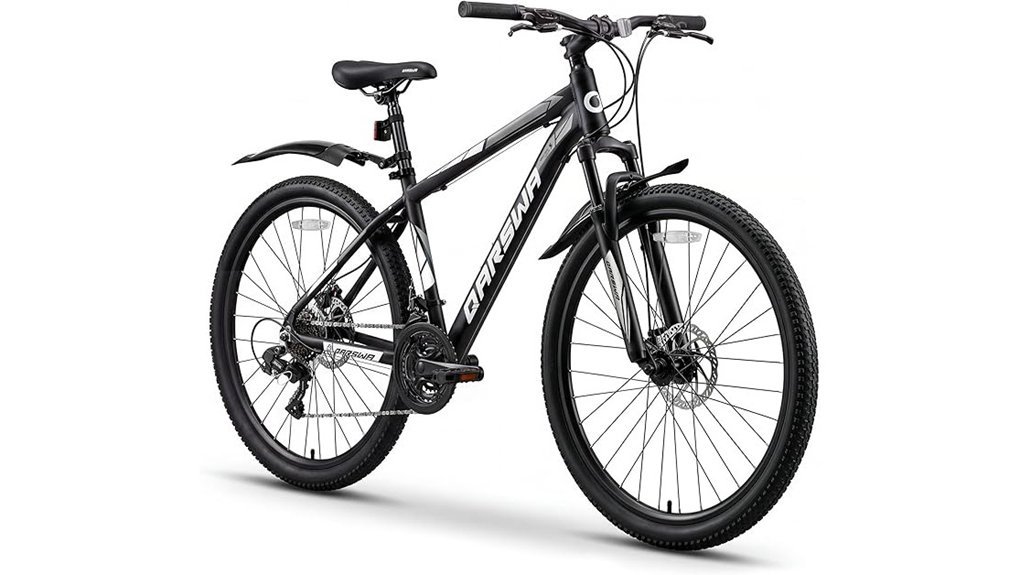
With 26- and 27.5-inch wheel options, this QARSWA mountain bike suits riders wanting a versatile fit. Its lightweight aluminum frame supports men and women up to 300 pounds while keeping handling nimble. A 21-speed drivetrain with trigger shifters delivers smooth, responsive gear changes for climbs and mixed terrain. Dual mechanical disc brakes provide dependable stopping power in wet or dry conditions. A front suspension fork helps absorb trail impacts, and the high-elastic foam saddle adds comfort. With 85% pre-assembly and included tools, it is ready for quick setup, commuting, and trail riding.
Best For: Men and women looking for a versatile, easy-to-assemble mountain bike for trail riding, commuting, and everyday outdoor use.
Pros:
- 21-speed drivetrain with trigger shifters for smooth, responsive gear changes
- Dual mechanical disc brakes for reliable stopping power in different weather conditions
- 85% pre-assembled with included tools for quicker setup
Cons:
- Mechanical disc brakes may require more frequent adjustment than hydraulic systems
- Front suspension is suitable for general trail use but not high-end aggressive riding
- May need final assembly and tuning before optimal performance
Max4out 26 Inch Full Suspension Mountain Bike
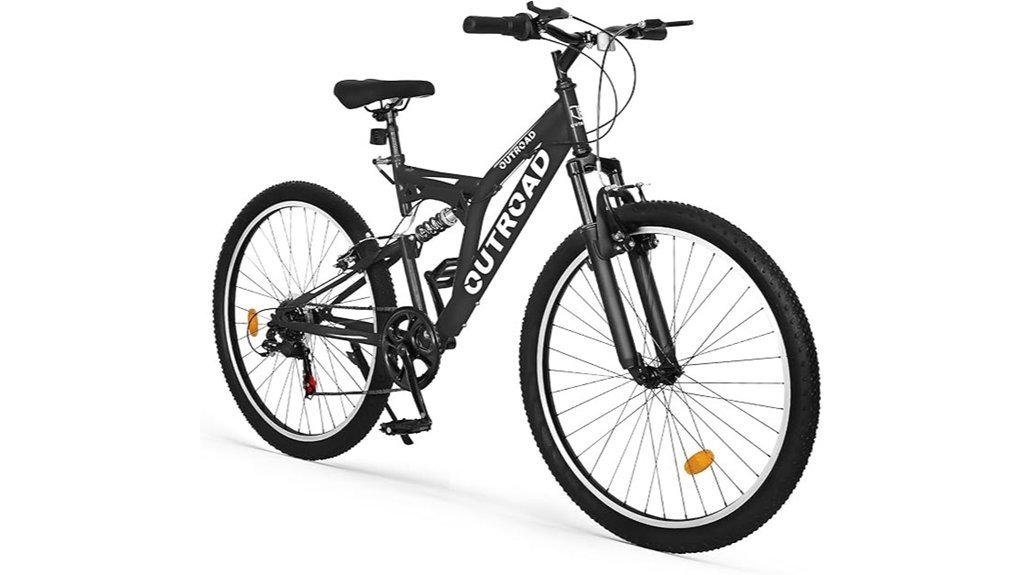
The Max4out 26 Inch Full Suspension Mountain Bike suits riders needing a budget-friendly, rugged ride. Its high-carbon steel frame and dual suspension, featuring a responsive front fork and rear coil shock, are designed to soften rough trails. A 7-speed drivetrain with twist shifters supports simple gear changes, while V-brakes provide dependable stopping power. The 26-inch all-terrain tires add traction, and the adjustable frame fits riders 52 to 62 inches tall. Weighing 39 pounds and rated to 330 pounds, it arrives nearly ready to ride in about 20 minutes, with tools, a video guide, and support for package issues.
Best For: Budget-conscious riders looking for a rugged 26-inch full suspension mountain bike with easy assembly, reliable control, and a wide fit range for casual trail and outdoor use.
Pros:
- Dual suspension with a responsive front fork and rear coil shock helps smooth out rough terrain.
- 7-speed drivetrain with twist shifters and V-brakes offers simple control and dependable stopping.
- Supports riders 52 to 62 inches tall and up to 330 lbs, with quick setup in about 20 minutes.
Cons:
- High-carbon steel frame and 39 lb weight may feel heavy compared with lighter bikes.
- V-brakes are reliable, but not as strong as disc brakes in wet or muddy conditions.
- Best suited for casual riding and light trails rather than advanced mountain biking.
Max4out 26 Inch Mountain Bike, 7/21 Speeds
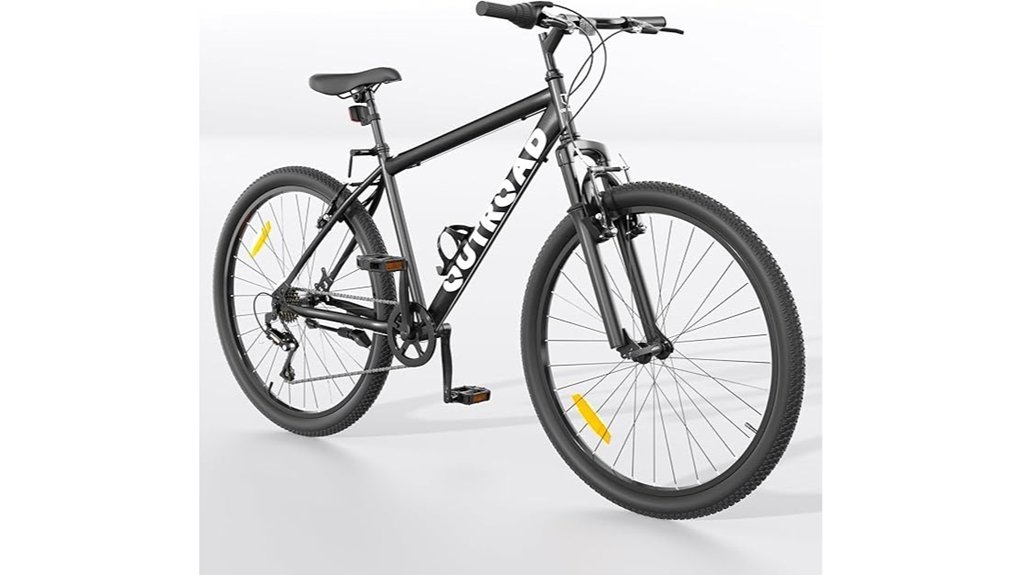
Max4out’s 26-inch frame suits riders 52 to 60 inches tall who want versatile trail performance. This 7/21-speed model pairs a solid iron frame with careful welding, giving it a sturdy feel without unnecessary bulk. Front suspension helps smooth rough climbs and uneven terrain, while front and rear double disc brakes add confident stopping power. The quick-release wheels simplify upkeep, and the bike arrives 90% assembled for a fast 15- to 20-minute setup. With a 330-pound capacity and capability across trails, roads, beaches, and snow, it offers practical range for casual or adventurous riding.
Best For: Riders 52 to 60 inches tall who want a sturdy, versatile mountain bike for trails, roads, beaches, snow, and casual or adventurous riding.
Pros:
- Solid iron frame with careful welding for a durable, sturdy ride
- Front suspension and double disc brakes improve comfort and stopping control on rough terrain
- Arrives 90% assembled, with quick-release wheels and a fast 15–20 minute setup
Cons:
- 26-inch wheel size may not suit taller riders or those wanting a larger bike
- Iron frame can feel less lightweight than bikes made with premium materials
- 7/21-speed setup may be more basic than higher-end drivetrains for serious mountain biking
Huffy North Peak 26-Inch Mountain Bike
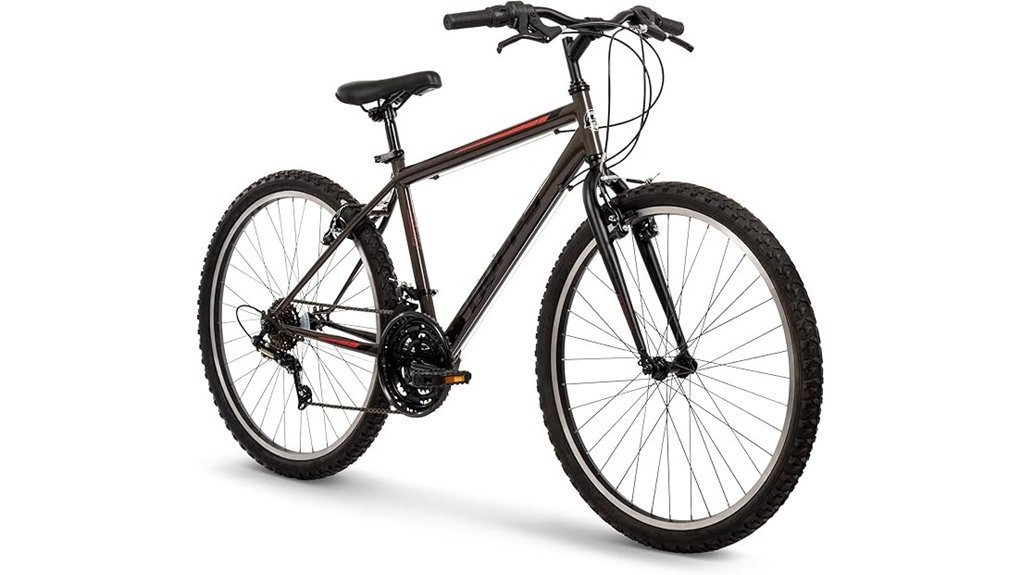
Built for budget-minded riders, the Huffy North Peak 26-inch mountain bike offers reliable versatility. Its durable Hi-Ten steel frame and 31.97-pound build provide a sturdy platform for mixed-use riding. A 15-speed twist shifter supports smooth gear changes on hills, streets, and trails, while front and rear linear-pull brakes add dependable control. The 26 x 1.95-inch knobby tires improve traction across dirt, gravel, and pavement. Comfort comes from a padded ATB saddle, soft grips, a raised handlebar, and quick-release seat adjustment. Front suspension and a rear derailleur round out a practical, limited-warranty package.
Best For: Budget-minded riders who want a versatile 26-inch mountain bike for casual trail, street, and mixed-terrain riding.
Pros:
- Durable Hi-Ten steel frame provides a sturdy, reliable feel.
- 15-speed twist shifter and front suspension make it adaptable to varied terrain.
- Knobby 26 x 1.95-inch tires and linear-pull brakes offer solid traction and control.
Cons:
- At 31.97 pounds, it may feel heavy for some riders.
- Hi-Ten steel is less lightweight than aluminum alternatives.
- Best suited for casual riding rather than advanced mountain biking.
AVASTA Earth Mountain Bike with 21-Speed, Dual Disc Brake
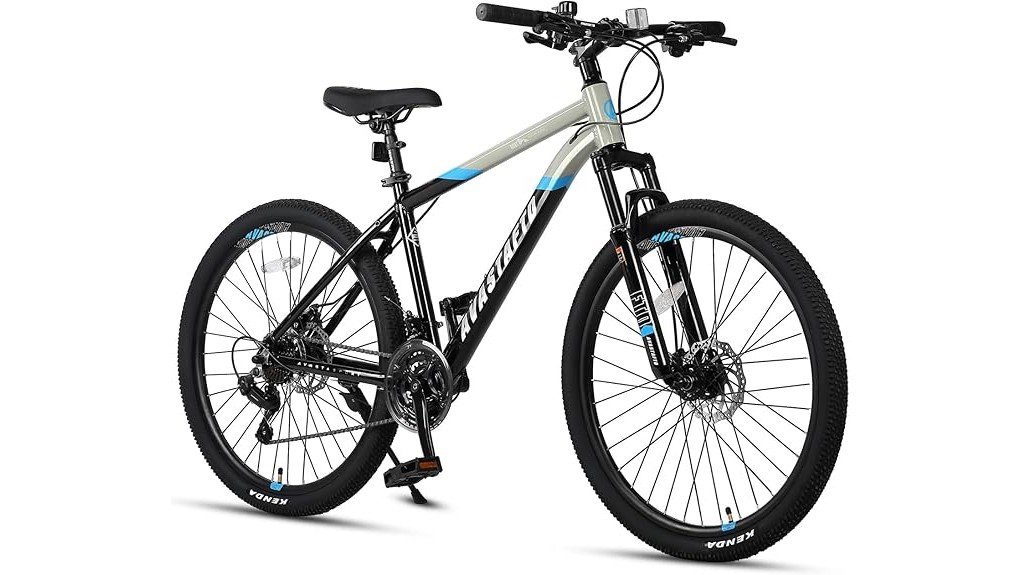
AVASTA Earth suits riders wanting an affordable, ready-to-build mountain bike with dependable trail control. The aluminum alloy frame and rims keep weight manageable while adding strength, and the model comes in 26-inch and 27.5-inch sizes. A 21-speed derailleur system supports smooth gear changes, while dual disc brakes deliver consistent stopping power. The switchable suspension fork helps match comfort to changing terrain. Optional 26×1.95 or 27.5×1.95 all-terrain tires improve versatility, and quick-release hardware aids handling. It arrives 75% assembled with an installation video, plus bell, reflectors, and a tool kit.
Best For: Riders looking for an affordable, easy-to-assemble mountain bike with dependable braking, smooth shifting, and versatile trail-ready performance.
Pros:
- 21-speed drivetrain provides smooth, precise gear changes for varied terrain.
- Dual disc brakes offer reliable stopping power and better control.
- 75% pre-assembled with an installation video, plus included bell, reflectors, and tool kit.
Cons:
- May require some assembly and basic bike setup before riding.
- Not as feature-rich as higher-end mountain bikes with advanced components.
- Best suited for casual to moderate trail use rather than aggressive downhill riding.
Schwinn High Timber Mountain Bike for Adults and Youth
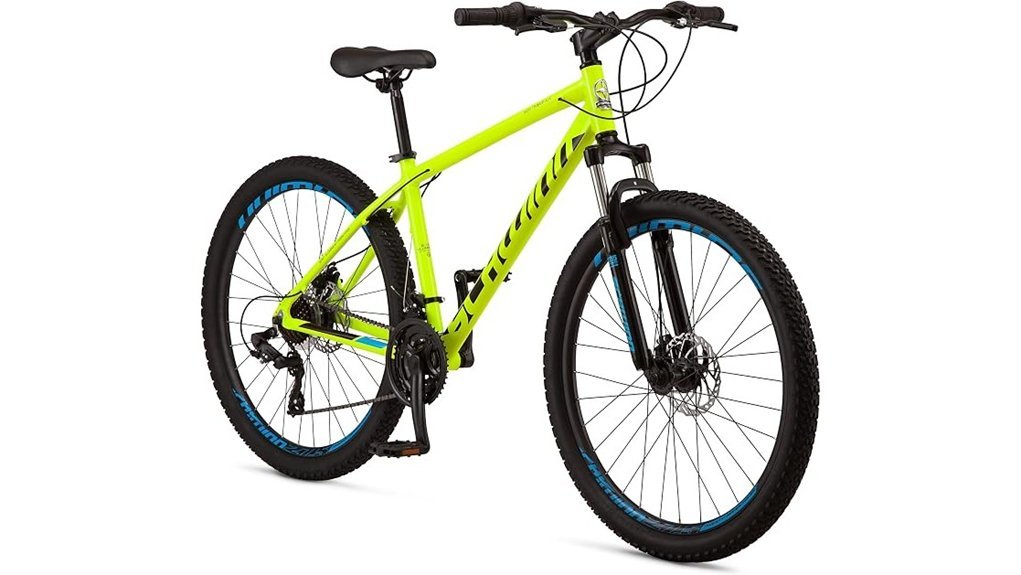
The Schwinn High Timber suits riders who want a versatile, budget-friendly mountain bike. Schwinn’s 2020 model S8220AZ uses a lightweight 17-inch aluminum frame and 27.5-inch wheels to balance control and efficiency. Its 21-speed derailleur drivetrain, twist shifters, and alloy crank support quick, smooth gear changes, while front suspension and disc brakes improve handling. Wide knobby tires add stability on varied terrain. It fits riders from 5’4″ to 6’2″ and supports up to 220 lbs. Arriving 80% assembled, it needs basic tools and offers minimal maintenance.
Best For: Riders who want a budget-friendly, versatile mountain bike for casual trail use, commuting, or recreational riding, especially adults and youth within the 5’4″ to 6’2″ range.
Pros:
- Lightweight 17-inch aluminum frame with 27.5-inch wheels for a balanced ride
- 21-speed drivetrain, twist shifters, and alloy crank for smooth gear changes
- Wide knobby tires, front suspension, and disc brakes improve stability and control
Cons:
- Arrives only 80% assembled, so some setup is required
- 220 lbs maximum weight limit may not suit all riders
- Front suspension only, so rough trails may feel less comfortable than on higher-end bikes
Ktaxon Mountain Bike with 21-Speed and Disc Brake
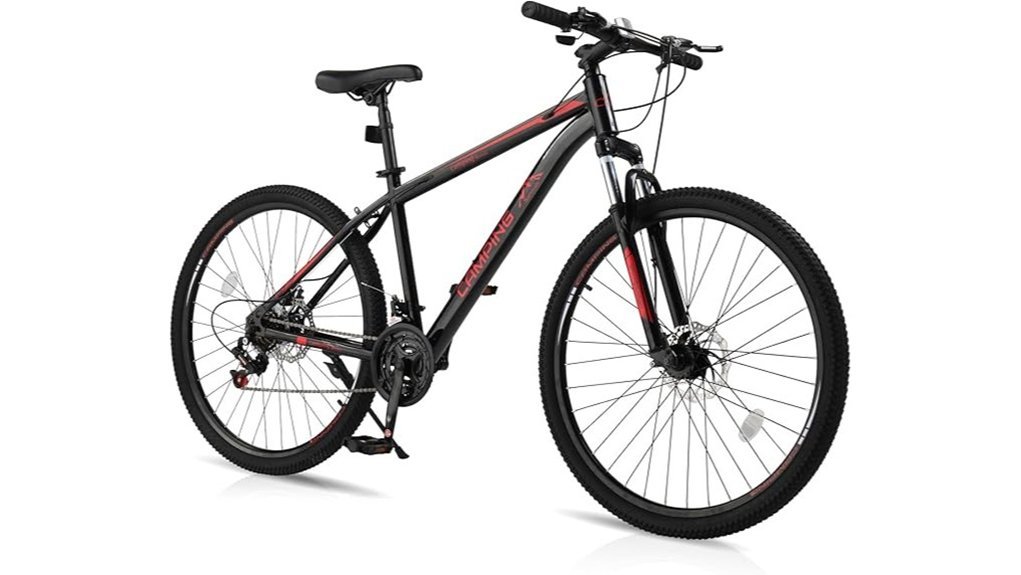
With 21 speeds and dual disc brakes, the Ktaxon suits riders tackling mixed terrain with confidence. Offered in 24, 26, and 27.5-inch sizes, it uses a high-carbon steel frame for durability and aluminum alloy wheels with streamlined spokes to help reduce wind resistance. The 21-speed drivetrain supports quick, precise shifts on gravel, dirt, and rocky trails. A thickened, lock-out suspension fork absorbs bumps and dips for a steadier ride. Mechanical dual disc brakes add responsive stopping power. Arriving 85% assembled, it needs only basic setup, while the quick-adjust seat clamp simplifies fit changes.
Best For: Riders who want an affordable, versatile mountain bike for mixed terrain, with reliable shifting, solid braking, and easy setup.
Pros:
- 21-speed drivetrain offers quick, precise gear changes for gravel, dirt, and rocky trails.
- Dual disc brakes and lock-out suspension fork improve control, comfort, and stopping power.
- Comes 85% assembled and includes a quick-adjust seat clamp for easier setup and fit changes.
Cons:
- High-carbon steel frame is durable but may be heavier than aluminum alternatives.
- Mechanical disc brakes are solid, but not as advanced as hydraulic systems.
- Basic assembly is still required, which may be inconvenient for some buyers.
Factors to Consider When Choosing Consumer Direct Mountain Bikes
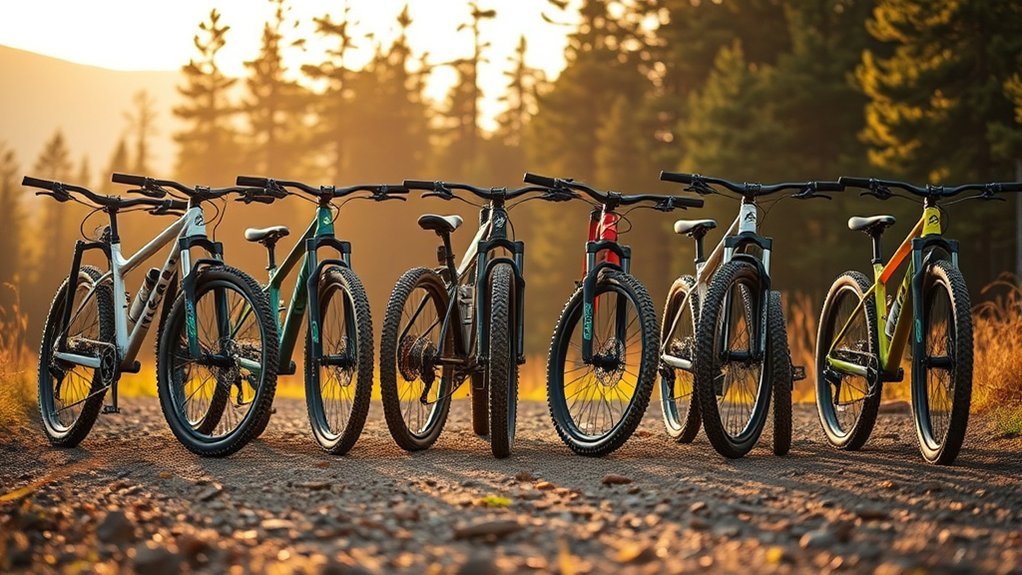
When choosing consumer direct mountain bikes, attention usually turns first to frame material, suspension type, gear system, brake performance, and wheel size. Each of these factors affects ride quality, control, durability, and overall value. A careful comparison of them helps narrow the field to models suited for different terrain and riding styles.
Frame Material
Frame material plays a major role in a mountain bike’s weight, durability, ride feel, and price. Aluminum frames are often chosen for their lighter weight, rust resistance, and lower cost, making them appealing to riders seeking easy handling and broad value. High-carbon steel frames deliver greater strength, durability, and natural shock absorption, which can improve comfort and confidence on rough terrain. A well-built frame also supports stability under off-road stress, helping the bike remain composed on rugged trails. Geometry matters as well: a slacker angle can enhance downhill control, while a steeper angle can improve climbing efficiency. Together, material and frame design shape performance, maintenance needs, and overall suitability for different budgets and riding priorities.
Suspension Type
Suspension type is a key factor in how a mountain bike handles different terrain, since hardtail models use front suspension only while full suspension bikes add rear shock absorption for rougher trails. Full suspension designs improve comfort and control on bumpy surfaces, helping riders stay composed on technical descents and aggressive routes. Hardtail bikes are typically lighter and simpler, which can make them efficient choices for cross-country riding and smoother paths. Suspension travel also matters: measured in millimeters, it determines how much impact the bike can absorb. Bikes with 120mm or more of travel usually suit demanding trails and downhill use, while shorter travel favors efficiency. The right suspension setup strongly affects stability, handling, and overall ride comfort.
Gear System
Gear systems shape how well a mountain bike adapts to changing terrain, with most consumer direct models offering 7 to 21 speeds. That range lets riders match cadence to climbs, flat sections, and descending trails without wasting effort. At the lower end, simpler drivetrains can suit casual use, while 21-speed setups add finer control for mixed terrain. Many of these systems pair with Shimano derailleurs, which support fast, dependable shifts under changing trail demands. Twist shifters are also common, giving riders an intuitive way to change gears without breaking rhythm. Proper gear ratios matter because they help maintain pedaling efficiency on steep grades and rough off-road sections. Higher-speed options generally increase versatility, making a bike more capable across varied riding conditions.
Brake Performance
Braking power is a key safety factor when choosing a consumer direct mountain bike, and disc brakes typically offer stronger, more responsive stopping than V-brakes, especially in wet or muddy conditions. Mechanical dual disc brakes add consistent force, which can improve control and stability on descents and rough trails. Brake choice also affects upkeep: disc systems often need more specialized service, while V-brakes are usually simpler to adjust and maintain. The best option depends on intended use, because rider weight, terrain, and speed all influence how much stopping power is required. A reliable brake system helps build confidence, reduces uncertainty on technical sections, and supports safer riding across varied conditions.
Wheel Size
Wheel size shapes how a mountain bike feels on the trail just as much as brake performance affects confidence and control. Mountain bikes commonly use 26, 27.5, or 29 inch wheels, and each size changes speed, stability, and maneuverability. Smaller 26 inch wheels accelerate quickly and feel nimble in tight corners and technical terrain, which suits skilled riders who value agility. The 27.5 inch option offers a middle ground, blending lively handling with better rollover over roots and rocks. By contrast, 29 inch wheels hold speed well, track smoothly over rough ground, and deliver stronger traction for cross-country and long-distance riding. Because wheel size affects handling, comfort, and overall ride feel, the best choice depends on terrain, riding style, and the rider’s priorities.
Assembly Ease
Assembly ease can make a big difference with consumer-direct mountain bikes, since many arrive 75% to 90% pre-assembled and only need about 15 to 30 minutes of final setup. Typical tasks include attaching handlebars, the front wheel, seat, and pedals, usually with basic tools such as Allen wrenches and screwdrivers. Models that include installation videos or step-by-step guides can simplify the process further, especially for first-time buyers. Quick-release hardware on the front wheel or seat post can also speed adjustments and routine maintenance. A careful setup matters because correct assembly supports safety, preserves performance, and helps the bike last longer. For many riders, that initial effort is modest compared with the comfort of starting with a properly prepared machine.
Rider Fit
Rider fit is one of the most important factors in choosing a consumer-direct mountain bike, since proper sizing affects comfort, control, and overall performance. Most mountain bikes are designed to suit riders between 52 and 62 inches tall, making frame selection a key starting point. The frame should match the rider’s height closely to support balance and stability across varied terrain. Adjustable seat height is also important because it lets the rider fine-tune position, reduce fatigue, and maintain efficient pedaling. Handlebar reach deserves equal attention; an ergonomic layout can limit strain in the back, shoulders, and arms. When fit is correct, the bike responds more predictably and the rider can maneuver with greater confidence on technical or rugged trails.
Frequently Asked Questions
Are Consumer Direct Mountain Bikes Harder to Assemble?
Consumer direct mountain bikes are not usually harder to assemble, but they often arrive partially disassembled and require more setup than bikes from a shop. The process typically includes installing the handlebars, front wheel, pedals, and checking bolts, brakes, and shifting. Most riders with basic tools can manage it, though first-time builders may find it more demanding. Clear instructions and online videos usually make the task much easier.
How Long Do Direct-To-Consumer Bike Warranties Usually Last?
Direct-to-consumer bike warranties usually last one to five years, depending on the brand and the specific frame or component. Many companies offer lifetime coverage on the frame, while forks, shocks, and parts often carry shorter terms, sometimes one year or less. Labor is commonly excluded. Buyers should read the policy carefully, since warranty length, coverage limits, and claim procedures can vary considerably between manufacturers and models.
Can These Bikes Be Upgraded With Better Components Later?
Yes—most direct-to-consumer bikes can be upgraded later with better components, and that flexibility often matters: roughly 70% of riders improve at least one part within two years. A detached view suggests frames, wheels, drivetrains, brakes, and suspension are usually replaceable, so the bike can evolve with skill and budget. Compatibility still matters, however, since proprietary parts or unusual standards can limit options and raise costs over time.
Do Consumer Direct Bikes Include Professional Fitting Support?
Consumer direct bikes usually do not include in-person professional fitting support as standard. Most sellers provide basic sizing charts, setup guides, and remote customer service instead. Some brands may offer virtual fitting advice, partner shop recommendations, or refundable return windows to help refine fit. Buyers who want a true professional fit often need to visit a local bike shop separately or pay extra for custom fitting services.
Are Replacement Parts Easy to Find for These Brands?
Yes—replacement parts are usually easy to find, but not always instantly. Most consumer-direct brands use common standards for drivetrains, brakes, wheels, and suspension, so many components come from well-known suppliers. The catch appears with proprietary frames, hangers, or small hardware, where availability can vary. A buyer should expect reasonable support, yet should verify spare-part policies before purchasing, because delays can surface when a specific brand controls unique items closely.