The 10 best cost-effective mountain bikes for [2026] show how much performance can still come from an affordable price range. From front suspension models to full suspension options, each bike offers a different balance of comfort, durability, and speed. Some are suited for casual riders, while others handle rougher trails with more confidence. A closer look reveals which features matter most, and which models offer more than their price suggests.
Key Takeaways
- Betterland 26 Inch Mountain Bike offers affordable 7-speed performance, front suspension, and a 330 lbs capacity for everyday trail use.
- WEIZE Mountain Bike adds dual full suspension and an 18-speed drivetrain, making it a comfortable budget option for rough terrain.
- 26″ 7-Speed Mountain Bike delivers strong value with 90% pre-assembly, waterproof paint, and dependable V-brakes for easy setup.
- Huffy Stone Mountain Bike suits growing riders with adjustable sizing, 21-speed Shimano shifting, and front suspension for added comfort.
- Full Suspension Bike provides mixed-terrain versatility with dual suspension, mechanical disc brakes, and 85% pre-assembly for quick riding readiness.
Betterland 26 Inch Mountain Bike with Front Suspension
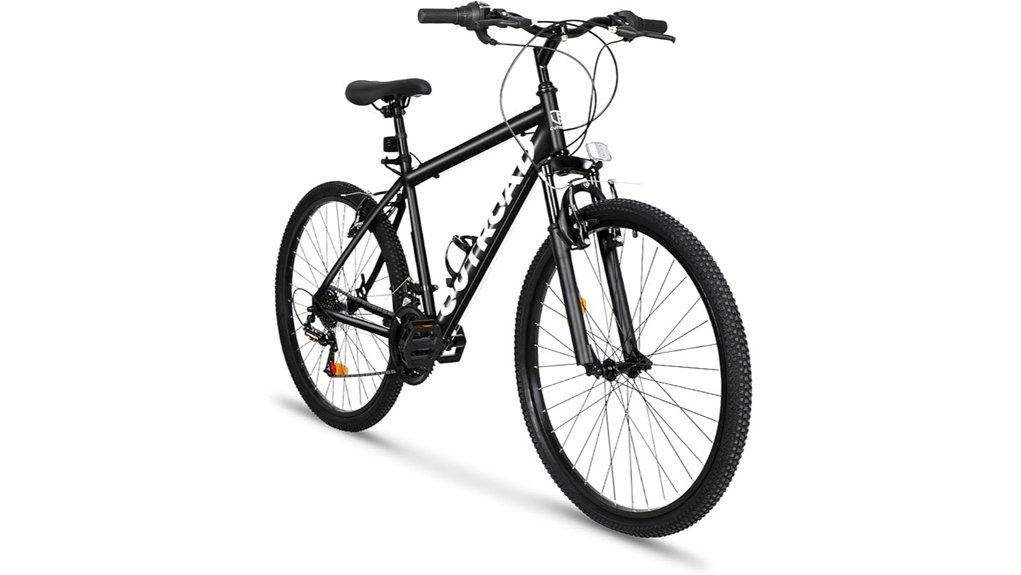
The Betterland 26 Inch Mountain Bike with Front Suspension is a practical choice for riders who want an affordable, reliable option for everyday trail use and casual outdoor riding. It uses a high carbon steel frame that balances lightweight handling with durability, while the 26-inch wheels support steady control. Weighing 37 pounds, it holds up to 330 pounds and suits riders from 5’2″ to 6′. A 7-speed gearbox offers smooth shifting, and front suspension with anti-skid tires improves grip on varied terrain. Dual V-type brakes add responsive stopping power. The adjustable seat enhances comfort, and 85% pre-assembly simplifies setup.
Best For: Riders seeking an affordable, reliable 26-inch mountain bike for casual trail riding, everyday outdoor use, and a comfortable fit for a wide range of heights.
Pros:
- 7-speed gearing provides smooth, adaptable shifting for different riding conditions.
- Front suspension, anti-skid tires, and dual V-type brakes improve control, comfort, and stopping power.
- High carbon steel frame, 330-pound capacity, and 85% pre-assembly add durability and convenience.
Cons:
- At 37 pounds, it may feel heavy for some riders.
- High carbon steel is durable but typically less premium than aluminum or carbon fiber frames.
- Best suited for casual riding rather than advanced or highly technical mountain biking.
WEIZE Mountain Bike with Dual Full Suspension
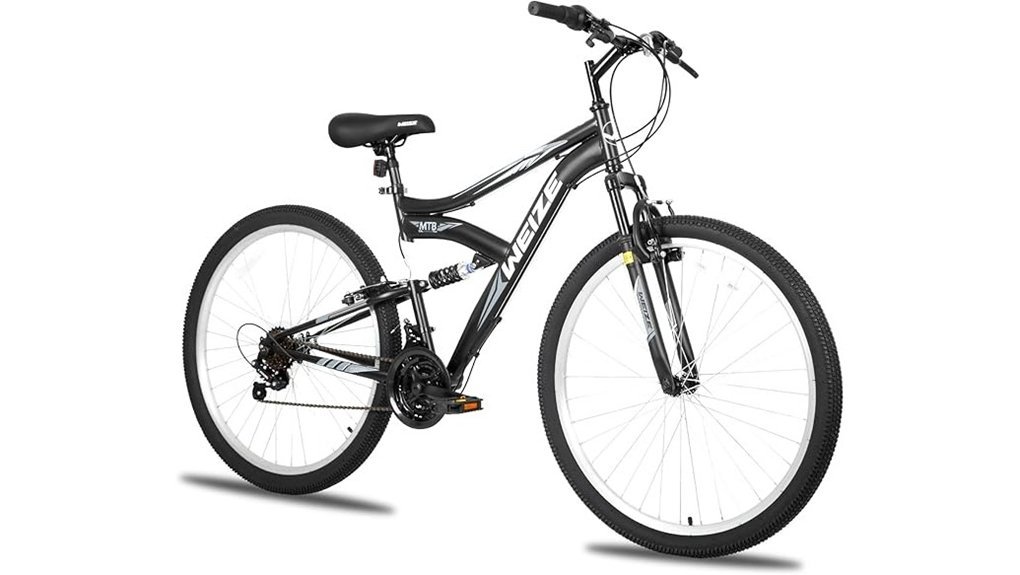
Built for budget-minded riders, the WEIZE Mountain Bike delivers comfort and control on rough trails. Its high-carbon steel frame pairs with dual suspension, a front fork, and a rear coil shock to soften impacts. An 18-speed drivetrain with twist shifters and front and rear derailleurs supports smooth cadence changes across varied terrain. Linear pull brakes add dependable stopping power. Twenty-seven point five inch all-terrain tires enhance versatility, while the bike suits riders 13 and older, starting at 54 inches tall. Partial assembly takes about 20 minutes, with tools and guidance included.
Best For: Budget-minded riders aged 13 and up who want a comfortable, versatile mountain bike for light to moderate trail riding.
Pros:
- Dual suspension with a front fork and rear coil shock helps smooth out bumps.
- 18-speed twist shifters make gear changes simple and efficient.
- 27.5-inch all-terrain tires and strong linear pull brakes improve versatility and control.
Cons:
- High-carbon steel frame may be heavier than aluminum alternatives.
- Linear pull brakes are less powerful than disc brakes on some bikes.
- Assembly is partial and still requires about 20 minutes of setup.
26″ 7-Speed Mountain Bike with Front Suspension
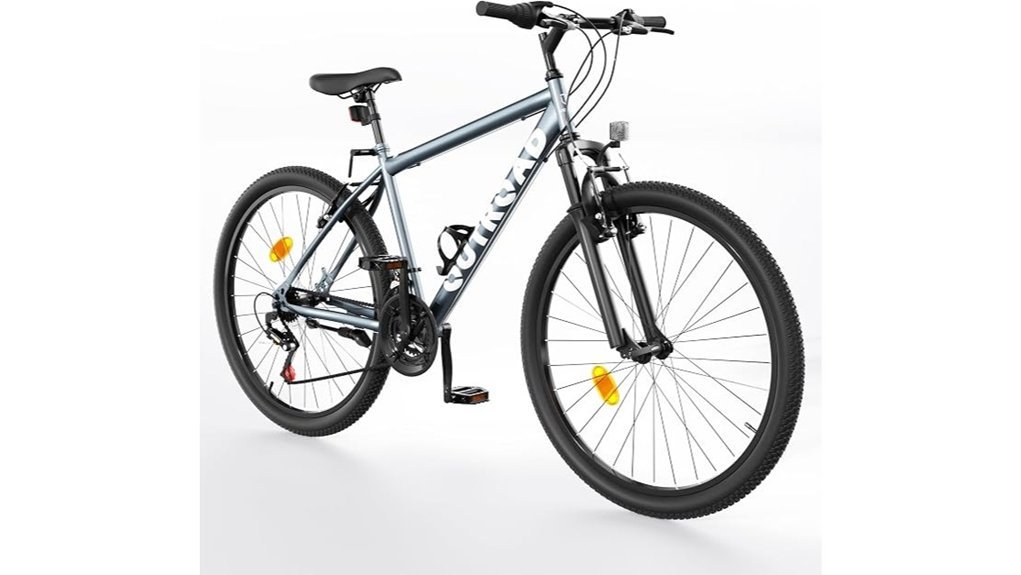
For riders needing an affordable trail-ready option, this 26-inch 7-speed mountain bike delivers practical value. Its high-carbon steel frame supports up to 330 lbs while keeping a lightweight profile, and the waterproof paint finish adds durability. A front suspension fork helps absorb trail shocks, while V-brakes provide dependable stopping control. The ergonomic seat and handlebars improve comfort, and the quick-release seat adjusts for riders 52 to 62 inches tall. With 90% pre-assembly, included tools, video guides, and 24/7 support, setup is straightforward. It suits trail riding well.
Best For: Budget-conscious riders looking for a durable 26-inch mountain bike for trail riding, with decent comfort, simple assembly, and reliable everyday performance.
Pros:
- 7-speed gearing and front suspension make it a practical choice for light trail use.
- High-carbon steel frame supports up to 330 lbs and adds durability.
- 90% pre-assembled with included tools, video guides, and 24/7 support makes setup easy.
Cons:
- V-brakes are dependable, but may not offer the same performance as higher-end braking systems.
- Best suited for riders 52–62 inches tall, so it may not fit everyone.
- Designed for basic trail riding rather than advanced off-road performance.
Huffy Stone Mountain Bike, Adjustable Saddle, Shimano Equipped
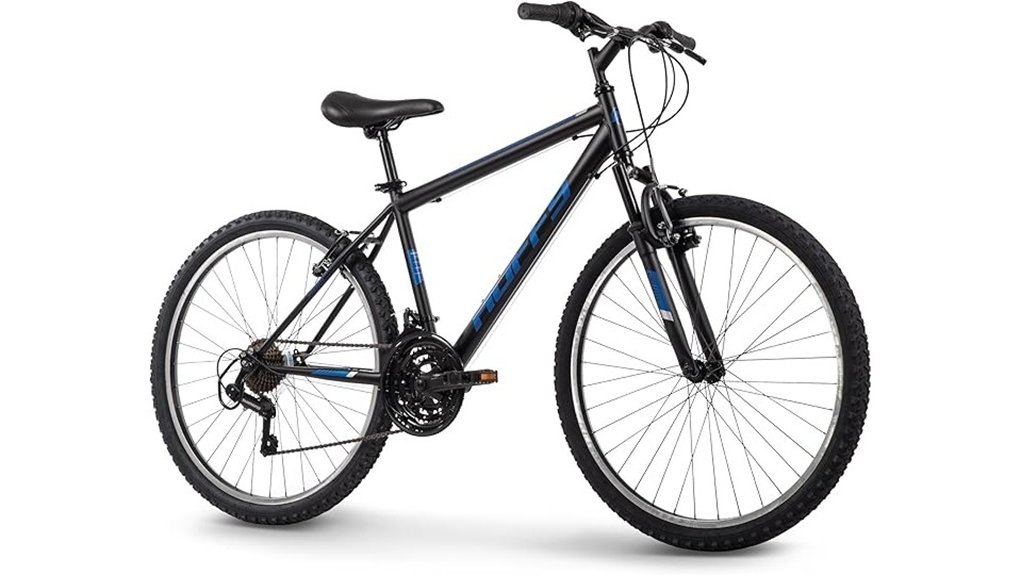
With a padded comfort saddle and adjustable sizing, the Huffy Stone Mountain Bike suits growing riders. Its matte black frame delivers a rugged look while maintaining durable construction, and size options of 20, 24, and 26 inches help match different riders. A 21-speed Shimano twist shifter provides smooth gear changes across flat roads and rough trails. The front suspension fork softens bumps for better control on uneven ground. Built for long rides, uphill climbs, and daily excursions, this model balances comfort, versatility, and trail-ready performance without unnecessary complexity.
Best For: Growing riders and casual-to-intermediate cyclists who want a versatile, trail-ready mountain bike with adjustable sizing and comfortable features.
Pros:
- 21-speed Shimano twist shifting offers smooth, easy gear changes.
- Front suspension fork helps absorb bumps on rough terrain.
- Available in multiple sizes with a padded comfort saddle for a better fit and longer rides.
Cons:
- Not ideal for riders seeking advanced trail performance or high-end components.
- Twist shifter setup may feel less precise than trigger shifters for some cyclists.
- Best suited for general riding and light trail use rather than aggressive mountain biking.
Mountain Bike with Full Suspension, 21 Speed
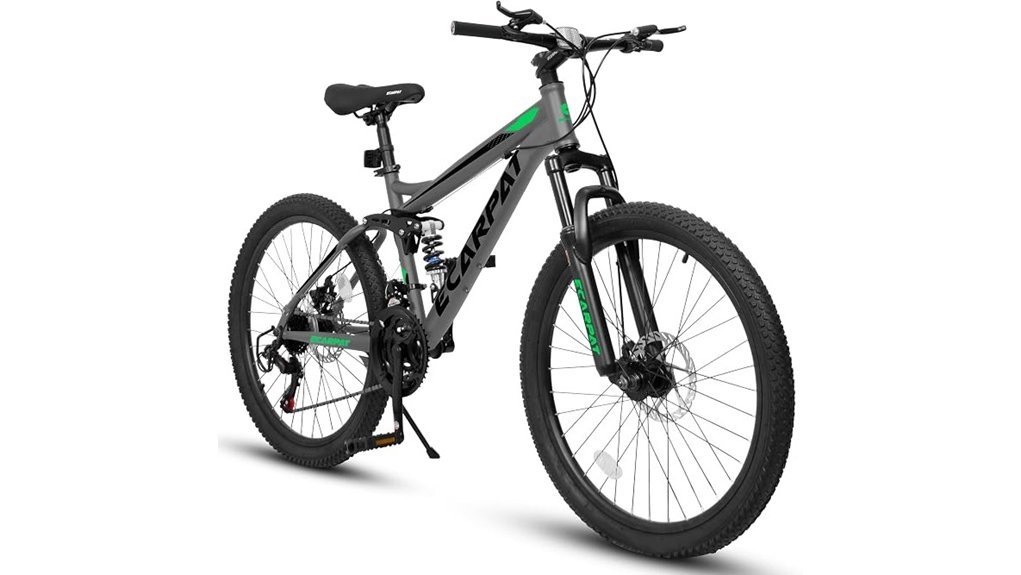
This full-suspension 21-speed mountain bike suits riders needing versatile performance on mixed terrain. Its high carbon steel frame comes in 24, 26, and 27×16-inch sizes, supporting riders from 48 to 66 inches tall and up to 250 lbs. A 21-speed shifter with gear indicator helps match effort to terrain changes. Mechanical dual disc brakes offer dependable stopping power and simple upkeep. The 24×2.125 all-terrain tires provide grip and puncture resistance on dirt, trails, gravel, and pavement. It arrives 85% assembled, with customer support available for final setup assistance.
Best For: Riders looking for a versatile, budget-friendly full-suspension mountain bike for mixed terrain, with solid gearing, braking, and stability for everyday trail and paved-path use.
Pros:
- 21-speed gearing with indicator makes shifting easier across different terrains.
- Mechanical dual disc brakes provide reliable stopping power and simple maintenance.
- All-terrain puncture-resistant tires offer good grip on dirt, trails, gravel, and pavement.
Cons:
- Requires some assembly and final brake/gear adjustments before riding.
- High carbon steel frame may be heavier than aluminum alternatives.
- Best suited for riders within the specified height and weight limits, so sizing is limited.
26/27.5″ Mountain Bike with Shimano Derailleur and Disc Brakes
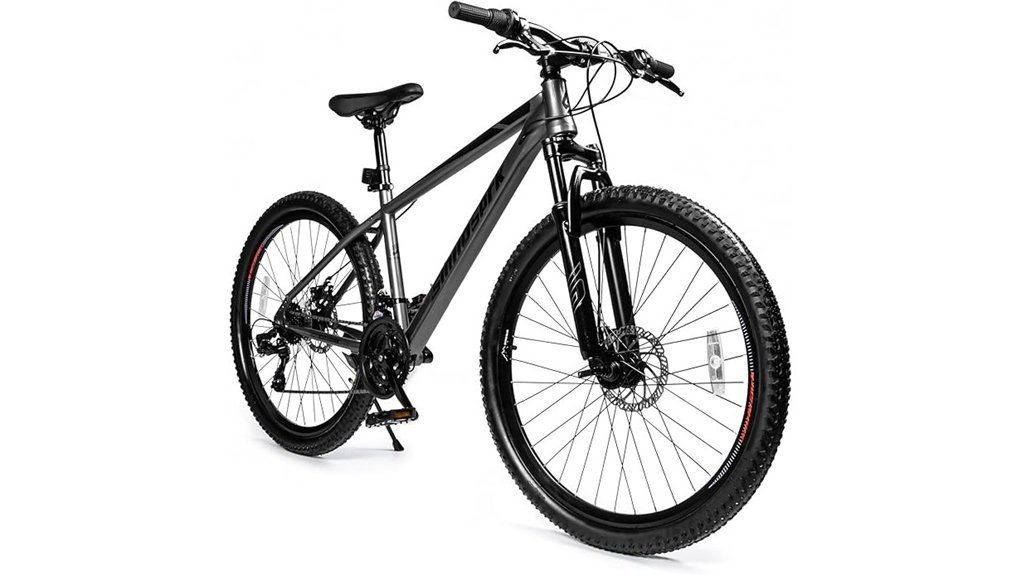
Built for budget-minded riders, it pairs Shimano shifting with dependable disc brakes. The 26/27.5-inch mountain bike uses a 21-speed drivetrain, a Shimano rear derailleur, and twist grip shifters for smooth, accurate gear changes on climbs and flats. Its high carbon steel frame adds durability, while 2.35-inch all-terrain tires improve traction. Mechanical disc brakes at both ends deliver consistent stopping power on wet ground and slopes. A lockout front suspension fork adapts to rough trails or smoother pavement. With 85% pre-assembly, included tools, and adjustable seat height, setup stays straightforward for many riders.
Best For: Budget-conscious riders, beginners, and casual trail cyclists who want a durable 21-speed mountain bike with Shimano shifting, disc brakes, and easy setup.
Pros:
- Shimano rear derailleur and twist grip shifters provide smooth, responsive gear changes.
- Mechanical disc brakes offer reliable stopping power in wet or hilly conditions.
- 85% pre-assembled with included tools, making setup easier for most riders.
Cons:
- High carbon steel frame is durable but heavier than aluminum alternatives.
- Mechanical disc brakes may require more adjustment than hydraulic systems.
- Best suited for entry-level to casual riding rather than advanced mountain biking.
Incbruce 26 Inch Fat Tire Mountain Bike
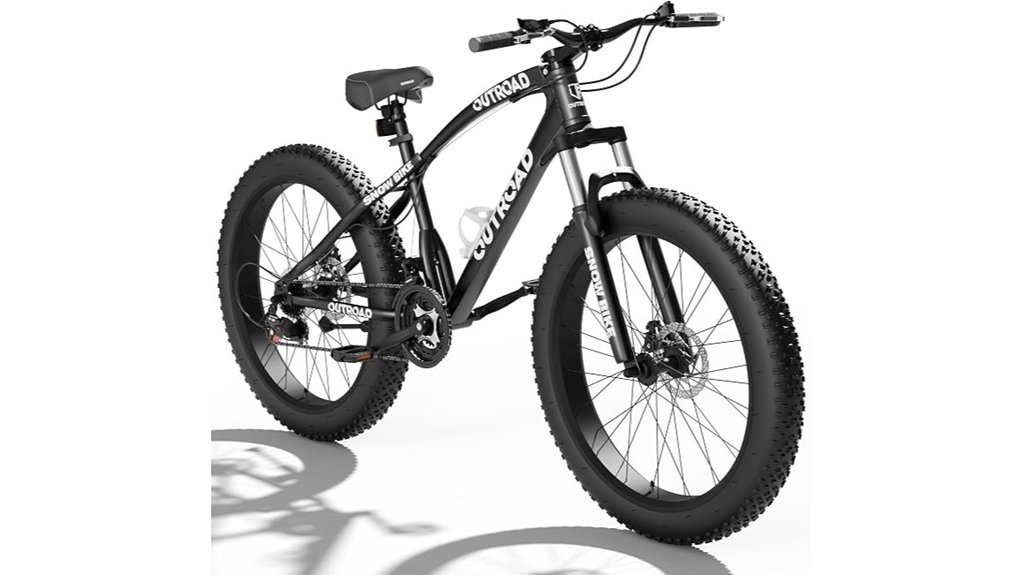
The Incbruce 26 Inch Fat Tire Mountain Bike suits riders seeking affordability, stability, and all-terrain versatility. Its high-carbon steel frame offers durability and added shock absorption, while 4-inch anti-slip tires improve traction on snow, sand, mud, and city pavement. A 21-speed gear system supports climbing, cruising, and longer rides with adaptable control. Dual mechanical disc brakes strengthen stopping power on wet or downhill sections. An ergonomic seat and adjustable handlebar improve comfort. Multiple color options, simple assembly tools, and a 400-pound weight capacity make it practical for adults, men, and women alike.
Best For: Adults, men, and women looking for an affordable, stable, all-terrain fat tire bike for commuting, fitness, and recreational riding.
Pros:
- 4-inch anti-slip fat tires provide strong traction on snow, sand, mud, and pavement.
- 21-speed gearing offers flexible control for hills, cruising, and longer rides.
- Dual mechanical disc brakes and a high-carbon steel frame add safety, durability, and comfort.
Cons:
- High-carbon steel frame can be heavier than aluminum alternatives.
- Assembly may still take time despite included tools and instructions.
- Best suited for casual to moderate riding rather than high-performance use.
CamPingSurvivals Full Suspension Mountain Bike for Adults
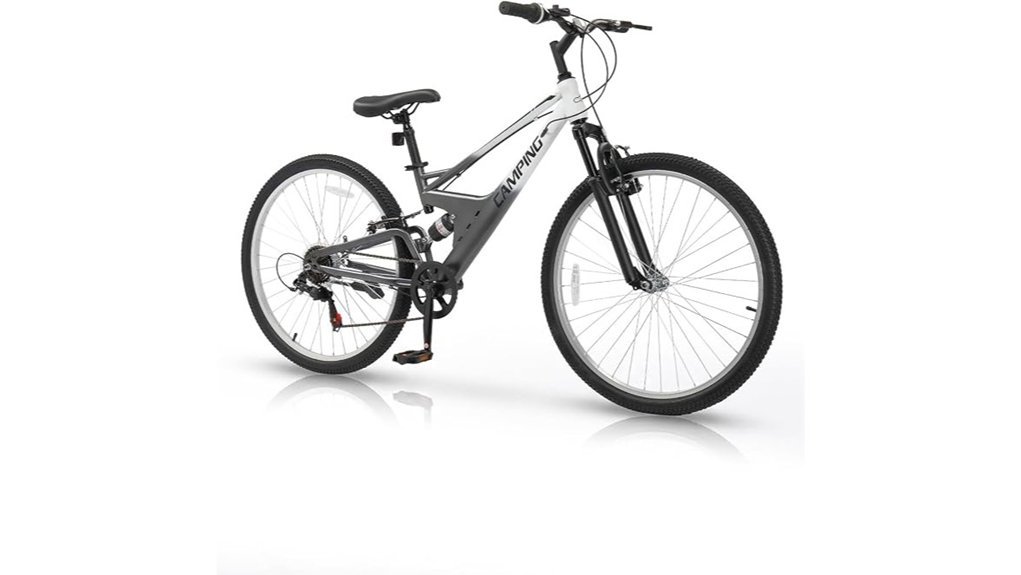
CamPingSurvivals suits riders seeking budget-friendly full suspension with better control on rough trails. Its frame design reduces lateral flex, improving cornering sharpness and rear-wheel traction on steep or loose ground. A front fork and rear shock deliver true double suspension, softening impacts for added comfort. The 7-speed drivetrain, with front and rear derailleurs, supports quick, precise shifting across changing terrain. Built from high-carbon steel, it aims for durability and resists deformation. A quick-adjust seat post clamp simplifies sizing. It arrives 85% assembled with tools included, and support is available for setup help.
Best For: Riders looking for a budget-friendly full-suspension mountain bike that offers improved control, comfort, and traction on rough trails.
Pros:
- True front-and-rear suspension helps smooth out bumps and impacts for a more comfortable ride.
- Frame design reduces lateral flex, improving cornering sharpness and rear-wheel traction on challenging terrain.
- 7-speed drivetrain with front and rear derailleurs provides quick, precise shifting across changing conditions.
Cons:
- High-carbon steel frame is durable but typically heavier than aluminum alternatives.
- 85% assembly still requires installing several key parts, which may be inconvenient for some buyers.
- 7-speed gearing is relatively limited compared with higher-end mountain bikes.
Ktaxon Mountain Bike with 21-Speed and Disc Brakes
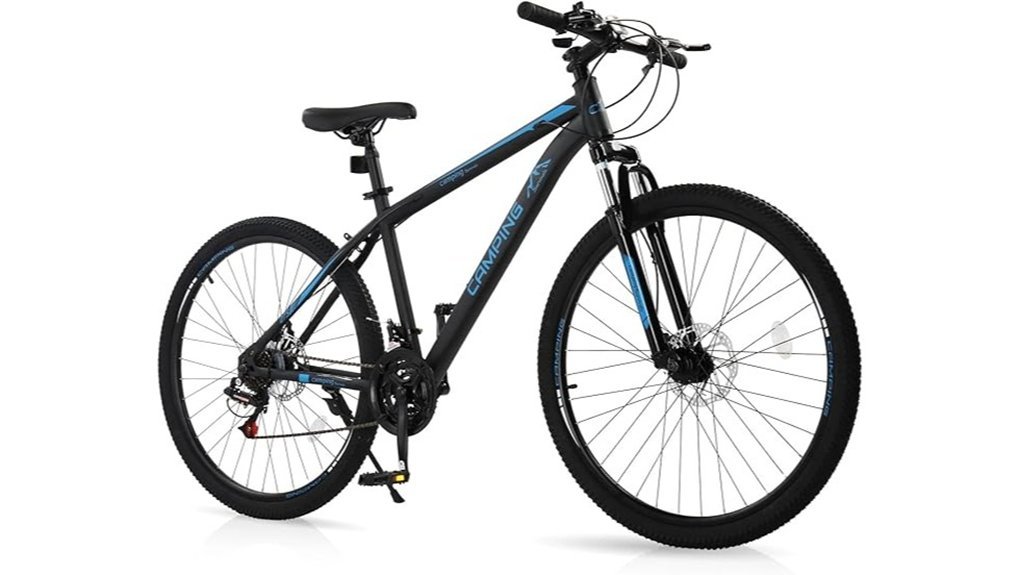
Ktaxon’s 21-speed setup suits riders who want budget-friendly control on varied terrain. The bike comes in 24, 26, and 27.5-inch sizes, with a high-carbon steel frame and lightweight aluminum alloy wheels. Its quick-shifting transmission handles gravel, dirt, and rocky roads with ease. A thickened front fork adds dual shock absorption, while the lock-out suspension fork helps on smoother stretches. Mechanical dual disc brakes provide strong, responsive stopping power. Assembly is mostly complete, and the seat post clamp allows quick height adjustments. Email support is available for unresolved issues.
Best For: Budget-conscious men and women who want a versatile mountain bike for gravel, dirt, and rocky trails with reliable braking and easy gear shifting.
Pros:
- 21-speed transmission offers quick, precise gear changes for varied terrain.
- Mechanical dual disc brakes and dual shock absorption improve control and comfort.
- 85% pre-assembled with a quick-adjust seat post clamp for easier setup and fit.
Cons:
- High-carbon steel frame may be heavier than aluminum alternatives.
- Best suited for casual to moderate riding rather than advanced trail performance.
- Assembly is mostly done, but still requires installing several key parts.
Max4out 26 Inch Dual Suspension Mountain Bike
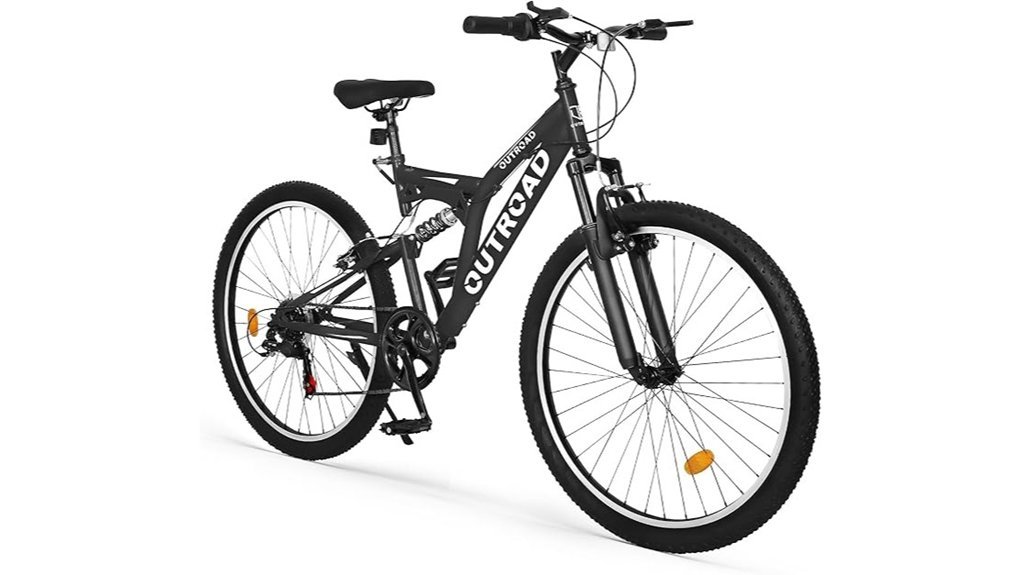
Built for riders between 52 and 62 inches tall, the Max4out 26 Inch Dual Suspension Mountain Bike suits budget-minded beginners. Its high-carbon steel frame supports up to 330 pounds while keeping construction sturdy at 39 pounds. Dual suspension, with a responsive front fork and rear coil shock, helps soften uneven trails. A 7-speed drivetrain and twist shifters provide simple control, while V-brakes deliver dependable stopping. Twenty-six-inch all-terrain tires improve traction, and frame adjustability broadens fit. It arrives pre-assembled, includes tools and a video guide, and can be ready in about 20 minutes.
Best For: Budget-minded beginner riders between 52 and 62 inches tall who want a sturdy, easy-to-assemble mountain bike for casual trail use.
Pros:
- Dual suspension with a front fork and rear coil shock helps smooth out rough terrain.
- Supports up to 330 lbs with a durable high-carbon steel frame.
- Arrives mostly pre-assembled and can be ready to ride in about 20 minutes.
Cons:
- At 39 lbs, it may feel heavy for some riders to carry or maneuver.
- V-brakes and a 7-speed drivetrain are basic compared with higher-end mountain bikes.
- Best suited for beginners and light trail riding rather than advanced off-road performance.
Factors to Consider When Choosing a Cost-Effective Mountain Bike
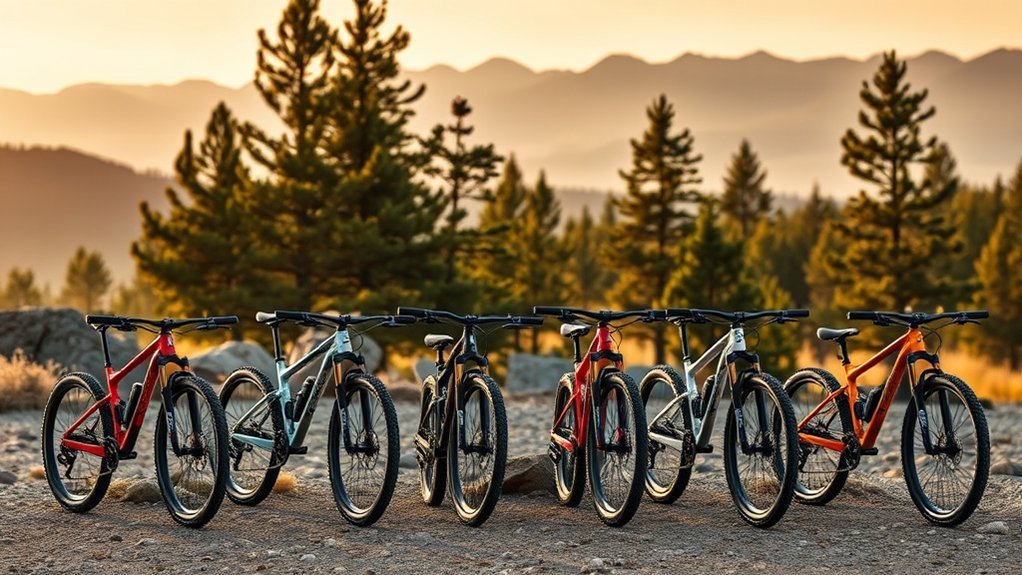
A cost-effective mountain bike should balance frame durability, suspension quality, and a gear range that suits varied terrain. Strong brake performance is equally important for control and safety on steep or technical trails. Tire versatility can further improve value by helping the bike adapt to different surfaces with less compromise.
Frame Durability
Frame durability is a key factor when choosing a cost-effective mountain bike, since the material and construction directly affect how well it holds up on rough terrain. High-carbon steel is often preferred for its strength and resistance to deformation under stress, especially on rugged trails. A lightweight frame can improve maneuverability, but it still needs enough structural integrity to endure repeated impacts and strain. Frame geometry also matters, because a stable design supports better cornering and traction on uneven surfaces. Protective coatings, such as waterproof paint, help slow rust and surface wear caused by moisture and debris. Maximum load capacity should not be overlooked, as the frame must safely support the rider’s weight and any carried gear while maintaining reliable performance over time.
Suspension Quality
Suspension quality plays a major role in how a cost-effective mountain bike handles rough terrain, since it helps absorb shocks and bumps for better comfort and control. Full suspension designs, with both front and rear shock absorbers, generally deliver greater traction and stability than hardtail models that rely on front suspension alone. Adjustable suspension settings also matter, because they let riders fine-tune performance for different surfaces, body weights, and riding preferences. Higher-end components, including air shocks and advanced coil systems, often provide smoother damping and stronger long-term reliability. Suspension weight should not be ignored, either, because lighter systems can improve handling and speed, while heavier setups may offer added toughness. The best value comes from balanced performance and durability.
Gear Range
Gear range affects how versatile a cost-effective mountain bike feels across climbs, descents, and mixed terrain. Typical setups span 7 to 21 speeds, giving riders enough choice to match changing grades and surfaces. Bikes with 18-speed or 21-speed drivetrains usually provide smoother shifts and better cadence control on steep climbs and fast descents. A wider range also helps riders keep effort efficient on rugged trails, where frequent changes in elevation can quickly expose limited gearing. Shifter style matters as well; twist shifters and trigger shifters support quick, precise changes with minimal interruption. For flatter routes, fewer gears may be adequate, but riders facing diverse terrain often benefit from more options and finer control.
Brake Performance
Brake performance is a major factor in mountain bike safety, especially when trails shift quickly between climbs, descents, and loose surfaces. Reliable stopping power helps riders respond quickly to obstacles and changing terrain. Mechanical disc brakes are often favored on cost-effective models because they deliver stronger modulation than traditional V-brakes, particularly in wet or muddy conditions. A front-and-rear braking setup further improves control, supporting steadier descents and cleaner turns on steep sections. Brake weight also matters: lighter systems can sharpen handling, while heavier ones may trade agility for durability. Regular maintenance remains essential, including pad wear checks and alignment adjustments. Well-kept brakes preserve consistency, reduce risk, and help an affordable mountain bike perform safely across demanding trails without unnecessary compromise.
Tire Versatility
Tire choice plays a major role in how a cost-effective mountain bike handles different surfaces. Versatile tread patterns improve traction on mud, gravel, and pavement, helping the bike remain dependable across changing routes. Wider tires, including 4-inch models, add grip and cushion over rocks and uneven ground, which supports off-road stability. Tire diameter also affects performance: 26-inch options usually feel quicker to turn, while 27.5-inch and larger tires roll more efficiently over obstacles and maintain momentum. All-terrain tires with anti-slip designs further broaden use by balancing safety and comfort in mixed conditions. Adjustable tire pressure adds another layer of adaptability, letting the bike perform better on hardpack, loose soil, or rough trails without sacrificing control.
Assembly Ease
Assembly can make or break the experience of buying a cost-effective mountain bike, especially for beginners. Models that arrive 85% pre-assembled often shorten setup to about 20 minutes, reducing frustration and saving time. A complete package should include the needed tools and clear instructions, since both help limit errors during installation. Video guides add another layer of support by showing each step visually, which can be especially useful when written directions seem unclear. Post-purchase customer support also matters, because assistance with assembly problems can prevent delays and confusion. Simpler bike designs with fewer parts usually require less effort and create a smoother, more manageable setup overall. When assembly is easy, the bike is more likely to be ready quickly and used with confidence.
Frequently Asked Questions
How Often Should I Service a Budget Mountain Bike?
A budget mountain bike should be serviced every 3 to 6 months, depending on use, terrain, and weather. After muddy or wet rides, a quick clean, chain check, and brake inspection help prevent wear. If ridden weekly, a more thorough tune-up every few months is wise. Cables, bearings, tires, and drivetrain parts should be checked regularly, since lower-cost components often need closer attention to stay reliable.
Are Cost-Effective Mountain Bikes Suitable for Beginner Riders?
Yes, cost-effective mountain bikes are often suitable for beginner riders. New paint, modest parts; simple frames, forgiving geometry. They usually offer enough stability, comfort, and control for learning trails without overwhelming cost. However, heavier weight, weaker brakes, and basic suspension can limit performance on rough terrain. A beginner gains value if the bike fits well, is checked regularly, and matches intended riding conditions rather than ambitious ambitions.
What Upgrades Improve Performance Most on Inexpensive Mountain Bikes?
Upgrades that most improve performance on inexpensive mountain bikes are better tires, quality brake pads, and a more reliable drivetrain. Wider, grippier tires increase traction and comfort. Upgraded pads improve stopping power, while a smoother chain, cassette, and derailleur reduce skipped shifts. A proper tune-up and correct suspension setup also help. For riders seeking the biggest gains per dollar, these changes usually outperform cosmetic upgrades and noticeably enhance control, speed, and confidence.
Can Budget Mountain Bikes Handle Rough Trails Safely?
Like a sturdy pair of boots, budget mountain bikes can handle rough trails safely, but only to a point. They usually manage moderate rocks, roots, and hardpack if ridden carefully, yet lighter frames, basic forks, and weaker brakes limit confidence on steep or technical terrain. Regular maintenance, proper tire pressure, and sensible speed improve safety. For aggressive trails, a more capable bike remains the wiser choice.
Do Cheaper Mountain Bikes Require Assembly After Delivery?
Cheaper mountain bikes often arrive partially assembled and usually require final setup after delivery. Typically, the front wheel, handlebars, pedals, seat, and sometimes the brakes or gears need adjustment before riding. Some sellers offer “95% assembled” models, but a careful check is still wise. Assembly difficulty varies by brand and retailer, so buyers may need basic tools or professional help to guarantee safety and proper performance.