Choosing a do-it-all hardtail mountain bike in [2026] means balancing frame strength, gearing, wheel size, and trail comfort. The models on this list range from simple budget builds to more adaptable setups for mixed terrain. Some favor lightweight aluminum, while others rely on steel for added durability. A few stand out for sizing flexibility and drivetrain range. The real question is which one fits the widest span of riders and routes.
Key Takeaways
- Hardtail mountain bikes suit mixed terrain, casual riding, commuting, and light trails.
- Best all-around wheel sizes are 27.5 and 29 inches for balance, speed, and rollover.
- Look for durable aluminum or steel frames, with lighter aluminum offering easier handling.
- Choose 21-, 24-, or 7-speed drivetrains based on terrain and how much gear range you need.
- Mechanical or dual disc brakes generally provide the safest, most dependable stopping power.
CYBIC 26 Inch Mountain Bike for Adults
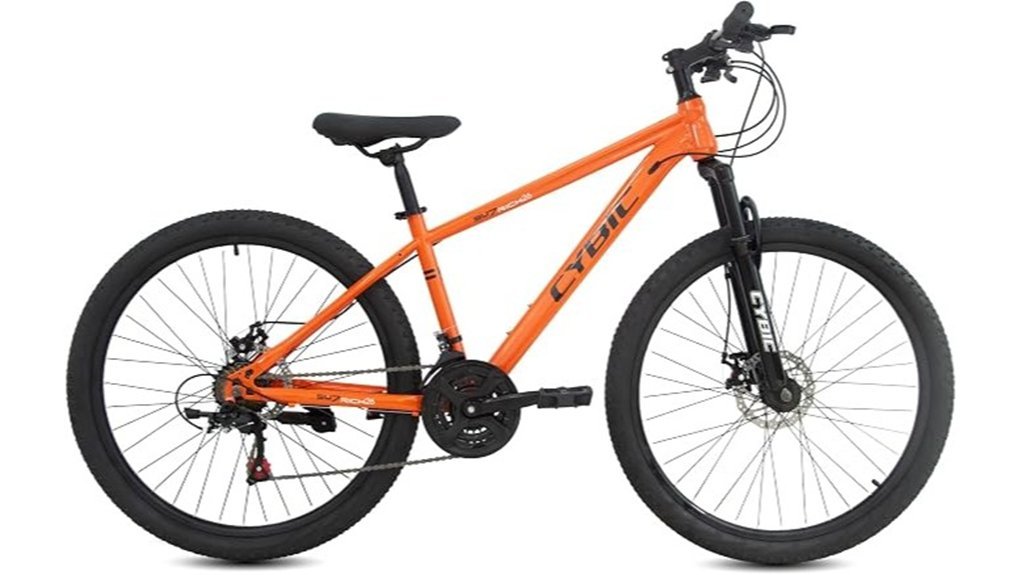
The CYBIC 26 Inch Mountain Bike for Adults stands out as a practical hardtail choice for riders who want dependable performance without unnecessary complexity. Its 21-speed drivetrain supports varied terrain, while front and rear mechanical disc brakes provide consistent stopping power in changing conditions. An 80mm suspension fork helps soften rough trails and uneven streets. Built with a high-tensile steel frame, it balances durability with CPSC compliance and tested safety. Adjustable components improve comfort for longer rides. Suitable for commuting, trail use, and off-road outings, it suits new and experienced cyclists alike.
Best For: Adults, including new and experienced cyclists, who want a dependable 26-inch hardtail mountain bike for commuting, trail riding, and light off-road use.
Pros:
- 21-speed drivetrain offers smooth shifting for varied terrain.
- Mechanical disc brakes provide reliable stopping power in different weather conditions.
- 80mm suspension fork and adjustable components improve comfort on rough rides.
Cons:
- High-tensile steel frame is durable but heavier than aluminum alternatives.
- 26-inch wheel size may feel less efficient or modern to some riders compared with larger wheels.
- Best suited for riders at least 63 inches tall, limiting fit for shorter cyclists.
Max4out 26 Inch Mountain Bike, 7/21 Speeds

Built for smaller riders, the Max4out 26 Inch Mountain Bike suits heights from 52 to 60 inches. Its 26-inch wheels, 7/21-speed drivetrain, and lightweight solid iron frame create a practical balance of control and versatility. Front suspension helps smooth out climbs and rougher terrain, while the double disc brakes add dependable stopping power. The bike’s quick-release wheels simplify upkeep, and its 330-pound capacity supports broad use. With 90% preassembly, setup takes about 15 to 20 minutes. It handles trails, streets, beaches, and snow with ease.
Best For: Riders 52 to 60 inches tall who want a versatile, easy-to-assemble 26-inch mountain bike for trails, city streets, and mixed terrain.
Pros:
- 7/21-speed drivetrain offers flexibility for different riding conditions
- Front suspension and double disc brakes improve comfort and stopping control
- 90% preassembled and quick-release wheels make setup and maintenance easy
Cons:
- 26-inch wheel size may not suit taller riders well
- Solid iron frame may feel less premium than aluminum alternatives
- Best suited for casual to moderate riding rather than advanced mountain biking
Outroad 26-Inch 7-Speed Mountain Bike
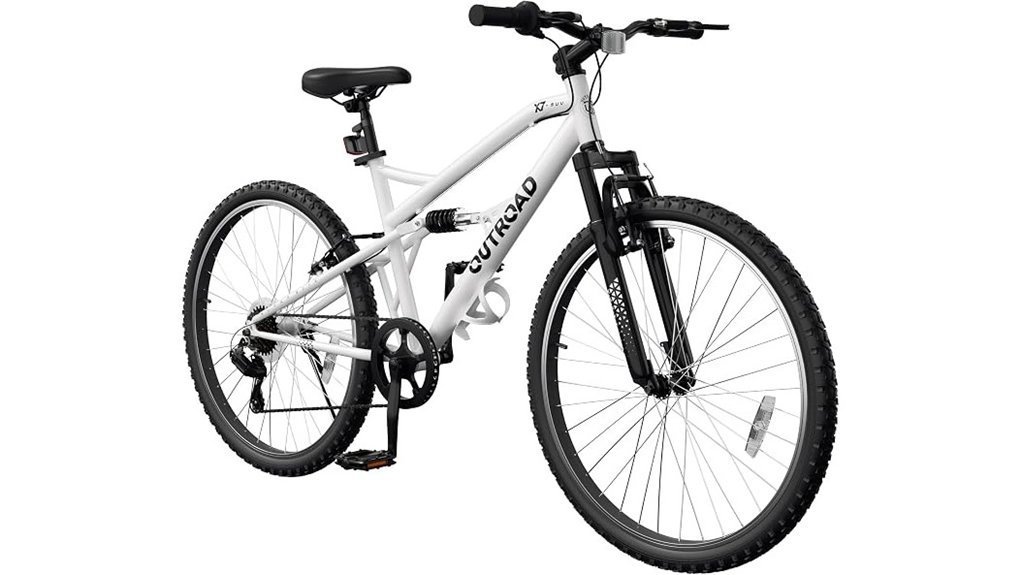
Outroad’s 26-inch hardtail suits budget riders wanting easy handling and reliable trail basics. Its high-carbon steel frame aims for durability and deformation resistance, while aluminum wheels help keep handling manageable. A 7-speed drivetrain with twist-grip shifting offers straightforward gear changes for mixed terrain. Dual suspension at the front and rear helps absorb bumps, improving grip and smoothing rough sections. V-brakes provide dependable stopping power. Adjustable handlebars and an ergonomic seat support a personalized fit. With 90% pre-assembly, plus manuals and videos, setup is relatively simple. Color options add variety for riders seeking practicality.
Best For: Budget-conscious beginner and casual trail riders who want an easy-to-handle 26-inch bike with basic off-road capability, simple shifting, and straightforward setup.
Pros:
- 7-speed twist-grip drivetrain makes gear changes simple and suitable for mixed terrain.
- Dual suspension helps absorb bumps for a smoother, more comfortable ride.
- 90% pre-assembled with manuals and videos, making setup easier.
Cons:
- High-carbon steel frame is durable but typically heavier than aluminum or carbon options.
- V-brakes are dependable, but not as powerful as disc brakes in tougher conditions.
- Best suited to light trail and casual riding rather than advanced mountain biking.
Hardtail Mountain Bike with 7-Speed Drivetrain
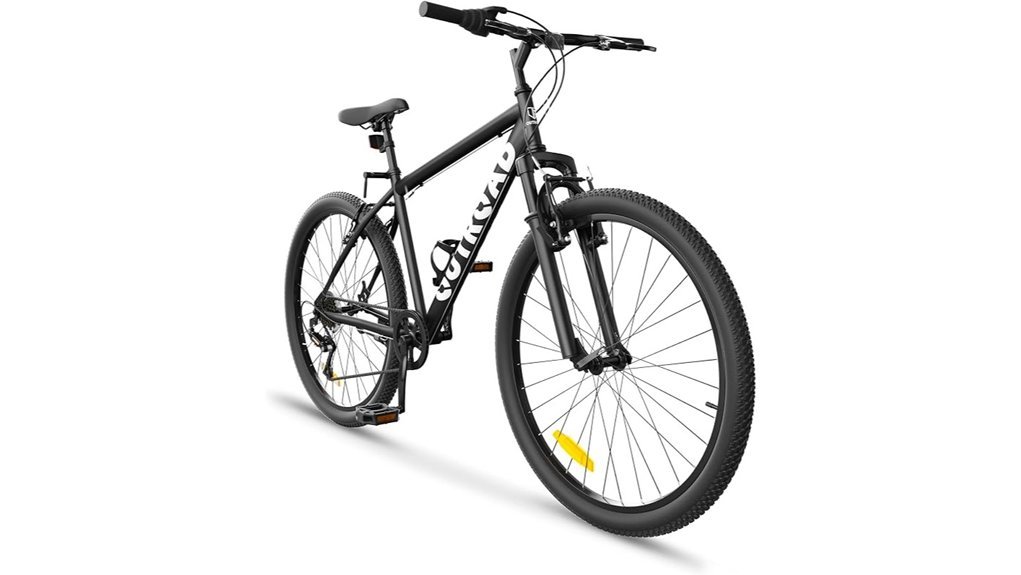
With a 7-speed drivetrain and 26-inch frame, this hardtail suits riders seeking simple versatility. Its reinforced carbon steel frame adds durability, while upgraded waterproof paint helps protect the finish over time. The 7-speed system supports varied riding, and front fork suspension improves comfort on rougher paths. V-brakes provide dependable stopping power, and non-slip, wear-resistant tires add traction and stability across different surfaces. A quick-release adjustable seat broadens fit, accommodating riders from 5’2″ to 6’0″. Available in X5 Black, it offers a practical, straightforward option for adults needing reliable everyday performance.
Best For: Adults looking for a simple, durable 26-inch hardtail mountain bike for everyday riding, light trail use, and versatile performance on a budget.
Pros:
- Reinforced carbon steel frame and upgraded waterproof paint improve durability and long-term protection.
- 7-speed drivetrain, front fork suspension, and V-brakes offer practical control and comfort.
- Quick-release adjustable seat and wide rider fit range make it accessible for different body types.
Cons:
- 7-speed drivetrain may feel limited for more advanced riders or steeper terrain.
- Carbon steel frame can be heavier than aluminum alternatives.
- Best suited for basic riding needs rather than high-performance mountain biking.
VEVOR Mountain Bike with 7/21/24 Speeds and Disc Brakes
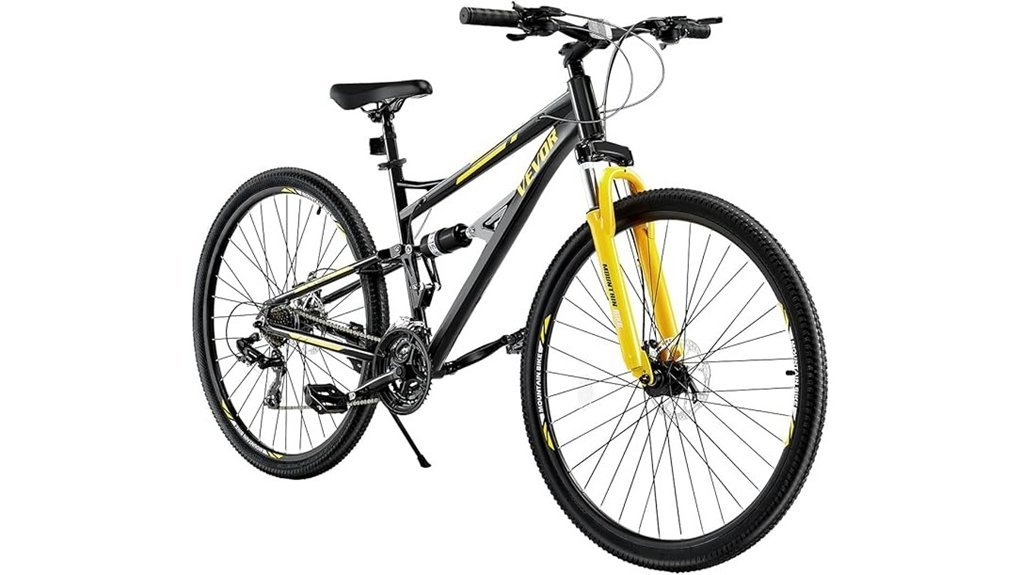
The VEVOR mountain bike suits taller adults seeking an affordable hardtail with versatile gearing. Its lightweight aluminum frame comes in 20-, 26-, and 29-inch sizes, with the 29-inch option best matching riders 5’10” and above. Twist shifting offers 7, 21, or 24 speeds, while the professional 24-speed setup delivers smoother changes across varied terrain. Front or dual suspension, all-terrain tires, and extra-wide double-layer alloy rims add control. Dual disc brakes supply responsive stopping power. A thickly padded comfort saddle helps reduce fatigue. It arrives 85% assembled with basic tools included for quick setup.
Best For: Taller adult riders 5’10” and above who want an affordable mountain bike with versatile gearing, disc brakes, and comfortable ride support.
Pros:
- 24-speed twist shifting provides smooth gear changes for varied terrain.
- Dual disc brakes and all-terrain tires improve control and stopping power.
- 85% pre-assembled with basic tools included for quick setup.
Cons:
- Best fit is geared toward taller riders, so it may not suit shorter adults well.
- Hardtail design may be less comfortable on rough trails than full suspension bikes.
- At 38.36 pounds, it may feel somewhat heavy for some riders.
26″ 7-Speed Mountain Bike with Front Suspension
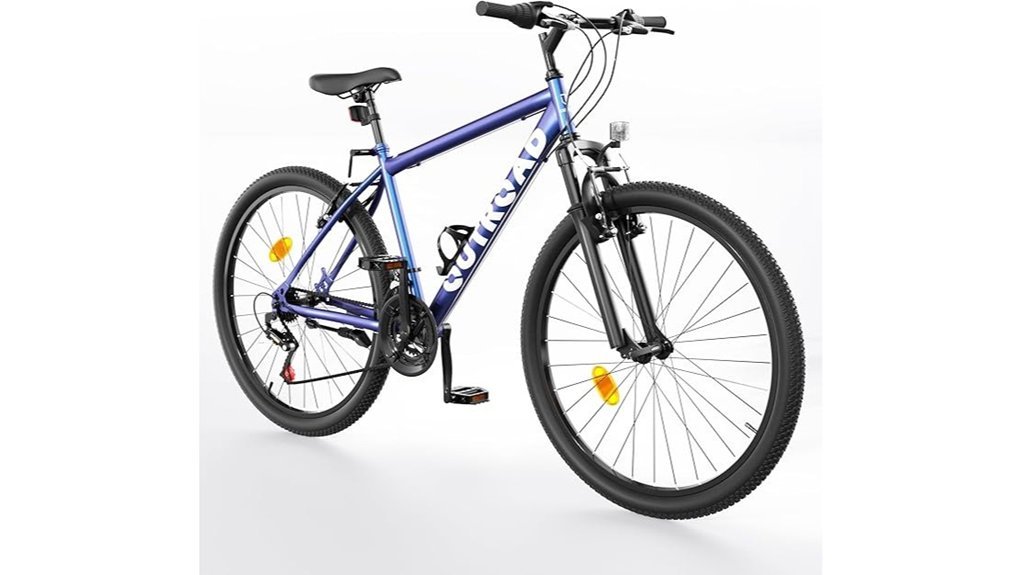
Built for riders needing a sturdy, beginner-friendly hardtail, this 26-inch 7-speed model stands out. Its aviation-grade high-carbon steel frame uses reinforced welding for durability while keeping weight manageable, and it supports riders up to 330 lbs. A waterproof paint finish helps preserve its appearance over time. The 7-speed drivetrain handles varied terrain, while V-brakes offer dependable stopping power. A suspension fork softens bumps for a smoother ride. The quick-release seat adjusts for riders 52 to 62 inches tall, and ergonomic handlebars improve comfort. With 90% pre-assembly, setup takes about 20 minutes. Multiple color options add choice.
Best For: Riders looking for a sturdy, beginner-friendly 26-inch mountain bike with simple gearing, basic trail comfort, and easy assembly.
Pros:
- Durable aviation-grade high-carbon steel frame with reinforced welding supports up to 330 lbs.
- 7-speed drivetrain, V-brakes, and suspension fork provide solid versatility and ride comfort.
- 90% pre-assembled with included tools and video guidance for quick setup.
Cons:
- Heavy steel frame may be less ideal for riders wanting a lighter bike.
- 7-speed gearing is limited compared with higher-end mountain bikes.
- Best suited for casual riding rather than aggressive off-road performance.
26/27.5 Inch Mountain Bike with 21-Speed Trigger Shifter
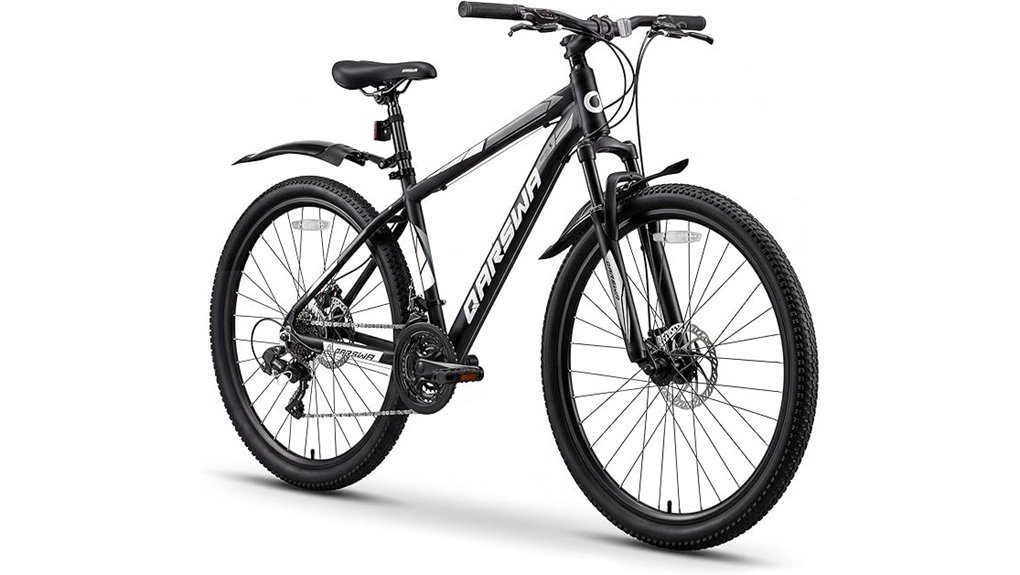
For riders wanting an affordable, versatile hardtail, the QARSWA 26/27.5-inch mountain bike stands out. Its lightweight aluminum frame supports riders up to 300 pounds while keeping handling nimble. Available in 26- or 27.5-inch wheel sizes, it suits different terrain preferences. Dual mechanical disc brakes provide dependable stopping power and quick control in changing conditions. A 21-speed drivetrain with trigger shifters delivers smooth, responsive gear changes, while the front suspension fork helps soften rough trails. An ergonomic, adjustable saddle adds comfort, and 85% pre-assembly simplifies setup for commuting, trail riding, and everyday outdoor use.
Best For: Riders looking for an affordable, versatile hardtail mountain bike for trail riding, commuting, and everyday outdoor use.
Pros:
- Lightweight aluminum frame supports up to 300 pounds while staying nimble.
- 21-speed drivetrain with trigger shifters offers smooth, responsive gear changes.
- Dual mechanical disc brakes and front suspension improve control and comfort on rough terrain.
Cons:
- 85% pre-assembled still requires some setup before riding.
- Mechanical disc brakes are solid, but not as advanced as hydraulic systems.
- May be less ideal for riders seeking a full-suspension bike for very rugged trails.
Schwinn High Timber Mountain Bike, 24-29 Inch Wheels
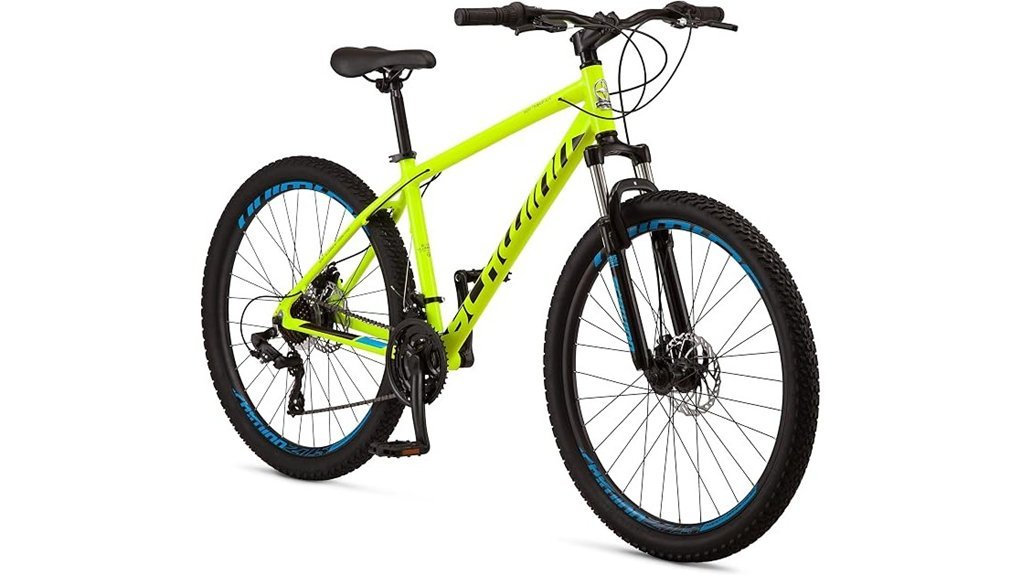
With its lightweight aluminum frame and 27.5-inch wheels, the Schwinn High Timber suits riders seeking an affordable, versatile hardtail. Built on a 17-inch aluminum frame, it targets adults across men, women, boys, and girls, fitting riders from 5’4″ to 6’2″. The 21-speed drivetrain, twist shifters, and rear derailleur provide simple gear changes, while front suspension and wide knobby tires add control on mixed terrain. Disc brakes support confident stopping. At 14.7 kg and rated to 220 lbs, it arrives 80% assembled and carries a limited lifetime warranty from Pacific Cycle, Inc.
Best For: Adults and growing riders from 5’4″ to 6’2″ who want an affordable, versatile hardtail mountain bike for mixed terrain and casual trail riding.
Pros:
- Lightweight 17-inch aluminum frame with 27.5-inch wheels for balanced handling
- 21-speed drivetrain with twist shifters makes gear changes simple and quick
- Front suspension, wide knobby tires, and disc brakes improve control and stopping confidence
Cons:
- Arrives 80% assembled, so some setup tools and time are required
- Front suspension only, so it may not be ideal for rough technical trails
- 220 lb weight limit may not suit all riders or heavier gear loads
Mongoose Switchback Comp Expert Trail Mountain Bike
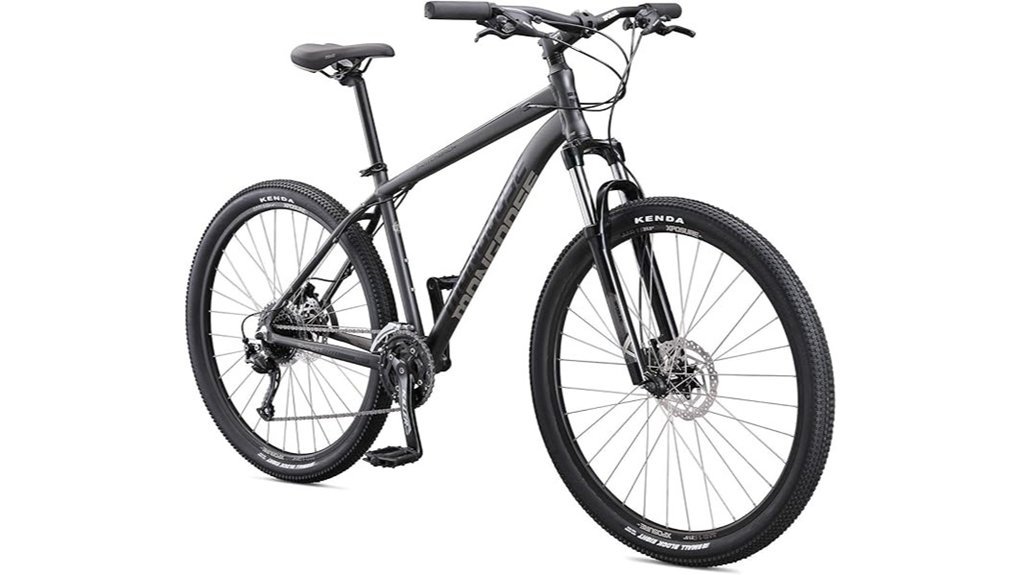
The Mongoose Switchback Comp Expert suits beginner trail riders seeking a lightweight hardtail. This 2020 aluminum model from Pacific Cycle uses a front suspension setup, 27.5-inch wheels, and mechanical disc brakes to handle rugged trails and crushed gravel paths. Nine-speed derailleur gearing with trigger shifters supports straightforward shifting, while internal cable routing adds protection and a cleaner look. A mountain bike comfort saddle improves longer rides. Sized for riders at least 53 inches tall, it includes a limited lifetime warranty and has earned 4.1 stars from 396 reviews, reflecting solid entry-level appeal.
Best For: Beginner trail riders and casual outdoor cyclists who want a lightweight, easy-to-handle hardtail mountain bike for rugged trails and gravel paths.
Pros:
- Lightweight aluminum frame with front suspension for a manageable, durable ride
- 27.5-inch wheels, mechanical disc brakes, and 9-speed trigger shifters for versatile trail use
- Internal cable routing, comfort saddle, and limited lifetime warranty add convenience and value
Cons:
- Hardtail design offers less rear suspension comfort on rough terrain
- Best suited for beginners, so advanced riders may want more performance-focused features
- Requires assembly, which may be inconvenient for some buyers
Factors to Consider When Choosing a Do It All Hardtail Mountain Bike
A do-it-all hardtail mountain bike depends on a balanced choice of frame material, wheel size, suspension travel, gear range, and brake type. Frame material affects weight and durability, while wheel size and suspension travel shape handling and comfort across varied terrain. Gear range and brake type then determine how well the bike climbs, descends, and controls speed in changing conditions.
Frame Material
Frame material shapes a hardtail’s weight, strength, ride feel, and price. Aluminum is a common choice because it keeps weight low, resists rust, and holds up well in wet or variable conditions. Its manufacturing process also tends to raise cost, but the payoff is easy handling and strong performance. High-tensile steel suits riders who value durability and a compliant feel, as its natural flex can smooth rough terrain, though it usually adds noticeable weight. High-carbon steel offers a useful middle ground, pairing resilience against deformation with a lighter profile and a more approachable price. Each material changes how the bike accelerates, climbs, and lasts, so the best option depends on whether priority rests with efficiency, comfort, or budget.
Wheel Size
Wheel size plays a major role in how a hardtail handles, feels, and performs across different trails. Common options are 26, 27.5, and 29 inches, each shaping ride character in a distinct way. Smaller 26-inch wheels are quicker to accelerate and easier to place through tight turns, which suits technical trails. A 27.5-inch setup often offers the middle ground, blending agility with decent speed for riders who want versatility. Larger 29-inch wheels roll over rocks and roots more smoothly and help preserve momentum on rough, extended climbs and descents. Wheel choice should also reflect rider height and preferred riding style, since fit and control affect confidence. The best option balances maneuverability, speed, and comfort for the intended terrain.
Suspension Travel
Suspension travel determines how much a hardtail can move vertically to absorb bumps, directly shaping comfort, control, and efficiency on the trail. Measured in millimeters, it usually falls between 80mm and 120mm on hardtail mountain bikes. Around 80mm suits cross-country riding, where quick acceleration and light feel matter most. Travel from 100mm to 120mm better supports trail riding, adding comfort and control on rougher ground. More travel can improve traction and stability over roots, rocks, and repeated impacts, but it may also add weight and slightly reduce pedaling efficiency on smoother surfaces. Choosing the right amount depends on the terrain most often ridden and the rider’s preferred balance of comfort, handling, and efficiency.
Gear Range
A bike’s gear range plays a major role in how well a do-it-all hardtail handles mixed terrain. In mountain bikes, it usually refers to the number of speeds in the drivetrain. A 21-speed setup offers a broad spread of gears, helping riders manage steep climbs, rolling trails, and faster sections with less strain. A 7-speed system is simpler and can be easier to maintain, but it provides less flexibility on demanding routes. Wider gearing also allows smoother shifts between ratios, improving comfort on long rides. Higher gear ratios support speed on flatter ground, while lower ratios make climbing easier. The best choice depends on intended use: varied terrain favors more speeds, while casual riding may not require as much range.
Brake Type
Brake type is a key factor in how confidently a do-it-all hardtail stops and controls speed across changing terrain. Mechanical disc brakes offer dependable stopping power in wet, muddy, or dusty conditions, making them a strong choice for riders who face variable weather and mixed trail surfaces. They also tend to need less upkeep and provide better modulation, which helps when managing speed on technical descents or loose corners. V-brakes remain lighter and simpler to adjust, but their performance can drop in adverse conditions, limiting safety on steep or aggressive terrain. Dual disc brakes further improve control and confidence, especially on rugged trails. For most all-purpose mountain bikes, disc brakes are generally preferred because they suit demanding off-road riding and deliver consistent performance.
Frequently Asked Questions
Can a Hardtail Handle Light Downhill Trails?
Yes—a hardtail can handle light downhill trails if the rider stays within its limits. For example, a rider on a 130 mm hardtail may descend smooth, low-grade singletrack confidently, but rough, brake-bumped chutes will feel harsher and demand more control. The rigid rear end rewards precision rather than speed. With good technique, sensible tire pressure, and a capable fork, it performs well on mellow descents.
How Much Maintenance Does a Hardtail Need?
A hardtail generally needs relatively little maintenance compared with a full-suspension bike. Routine care includes cleaning, lubricating the chain, checking tire pressure, inspecting brake pads, tightening bolts, and servicing the fork periodically. Because there is no rear suspension linkage to maintain, upkeep is simpler and cheaper. Regular attention after wet or muddy rides helps prevent wear, while occasional drivetrain and bearing checks keep it running smoothly and reliably for years.
Are Hardtails Good for Beginners?
Yes—hardtails are often excellent for beginners. Though they may seem harsher than full-suspension bikes, their simpler setup helps new riders learn balance, braking, and line choice quickly. They usually cost less, weigh less, and need less maintenance, which can reduce early frustration. A beginner concerned about rough trails may still benefit from a hardtail’s forgiving handling and straightforward design, especially on mixed terrain and smoother singletrack.
What Tire Width Works Best for Mixed Terrain?
A tire width around 2.3 to 2.5 inches usually works best for mixed terrain. It gives enough grip and comfort on loose dirt, roots, and rocks while still rolling efficiently on pavement and hardpack. Narrower tires feel faster, but offer less control. Wider tires add traction and cushioning, though they can feel slower. For most riders, 2.4 inches is a balanced choice for versatility across varied trails.
Can One Hardtail Work for Commuting Too?
Yes, one hardtail can work for commuting too, especially if it has a comfortable geometry, reliable tires, and mounts for racks or fenders. A faster rolling setup helps on pavement, while enough tread remains useful off-road. It will not match a dedicated commuter or mountain bike in every role, but it can handle both reasonably well. The tradeoff is compromise, not failure, for mixed-use riders and daily practicality.