Downhill trail riding in [2026] is shaping up to favor bikes that balance speed, control, and durability. Carbon frames, full suspension, and dependable braking systems are becoming standard in serious builds, while accessories and protective gear remain part of the equation. Some models stand out for aggressive descents, while others offer better versatility on mixed terrain. The differences may seem subtle at first, but they can change everything once the trail turns steep.
Key Takeaways
- Look for full-suspension carbon frames with dual-link designs for better stability, control, and climbing efficiency on technical descents.
- Prioritize strong hydraulic disc brakes, ideally four-piston, for reliable stopping power and heat management on steep downhill trails.
- Choose wider 2.4 to 2.6-inch tires with aggressive tread patterns to improve traction, grip, and confidence on rough terrain.
- Consider bikes like the SAVADECK Titan 612 and 2025 Gravity FSX 27.5 LTD for capable downhill trail performance in 2026.
- Check suspension adjustability, internal cable routing, and regular frame inspections to maintain durability and ride quality.
SAVADECK Titan 612 Carbon Fiber Mountain Bike

The SAVADECK Titan 612 Carbon Fiber Mountain Bike is best suited for riders who want a lightweight full-suspension downhill trail bike with strong climbing efficiency and confident control on rough terrain. Its carbon frame, reinforced rear triangle, and dual-link suspension improve stability and cornering precision at speed. A DNM air shock with hydraulic lockout helps climbing, while rebound adjustment allows tuning for trail conditions. Shimano DEORE M6100 12-speed shifting supports steep ascents and fast sections. Four-piston hydraulic disc brakes and 2.4-inch Continental tires add stopping power and grip. Internal cable routing also helps protect components from mud and debris.
Best For: Riders who want a lightweight full-suspension carbon mountain bike with strong climbing ability, reliable 12-speed shifting, and confident control on rough downhill trails.
Pros:
- Lightweight carbon frame with reinforced rear triangle and dual-link suspension for stability and precise cornering.
- Shimano DEORE M6100 12-speed drivetrain plus hydraulic lockout and rebound-adjustable DNM air shock for versatile trail performance.
- Four-piston hydraulic disc brakes and 2.4-inch Continental tires provide strong stopping power and good grip.
Cons:
- Full-suspension carbon trail bikes can be more expensive than hardtail or alloy alternatives.
- The aggressive downhill focus may be more bike than casual riders or beginners need.
- 2.4-inch tires are capable, but riders seeking maximum stability may still want to upgrade to 2.6-inch tires.
Timber Mountain Bike Bell (Bolt-On Model Yew)

For riders wanting an easy, shared-trail bell, the Timber Bolt-On Model Yew delivers instant versatility. This multi-use MTB trail bell offers two modes: a motion-activated passive cowbell ring for safer passing on shared routes, and a stealth setting for silent riding when solitude matters. Its solid brass voice is friendly enough to alert wildlife and other trail users without sounding harsh. The bolt-on design fits 35mm bars, with shims for 31.8mm and 22.2mm sizes. A new hinge pin simplifies installation, while the spring-loaded piston and modular, eco-friendly parts support smooth use and easy repairs.
Best For: Mountain bikers who ride shared trails and want a versatile, easy-to-install bell with both audible and silent modes.
Pros:
- Dual-mode design offers a motion-activated bell for shared trails and a stealth mode for quiet riding.
- Fits 35mm bars and includes shims for 31.8mm and 22.2mm handlebars.
- Modular, eco-friendly construction makes worn parts easier to replace and maintain.
Cons:
- Bolt-on installation may still be less convenient than a quick-strap option for some riders.
- The bell’s alert sound may not be ideal for riders who prefer a completely minimalist setup.
- Best suited for riders who want a bell feature, so it may feel unnecessary for those who rarely ride shared trails.
Demon United Podium X MIPS Full Face Helmet

Built for aggressive riders, the Demon United Podium X MIPS suits downhill, BMX, and hard-charging MTB use. This full face helmet features MIPS technology, which helps redirect rotational forces during oblique impacts, and it carries downhill certification for added confidence. Over 20 vents support airflow on steep climbs and fast descents, while removable padding allows a more tailored fit. The matte grey and sea foam shell uses ABS plastic and polycarbonate with foam lining. At 710 grams, it balances protection and comfort for men and women alike. Removable visor and washable pads simplify maintenance.
Best For: Aggressive downhill, BMX, and MTB riders who want a lightweight full face helmet with MIPS protection, strong ventilation, and a customizable fit.
Pros:
- MIPS technology helps reduce rotational forces in oblique impacts.
- Over 20 vents improve airflow and comfort during intense rides.
- Removable padding and visor make fit adjustment and maintenance easier.
Cons:
- Full face design may feel bulky for casual trail riding.
- At 710 grams, it may still feel heavy to riders used to half-shell helmets.
- Limited color/style options may not suit everyone’s preference.
ROCKBROS Breathable Gel Cycling Gloves for Men Women
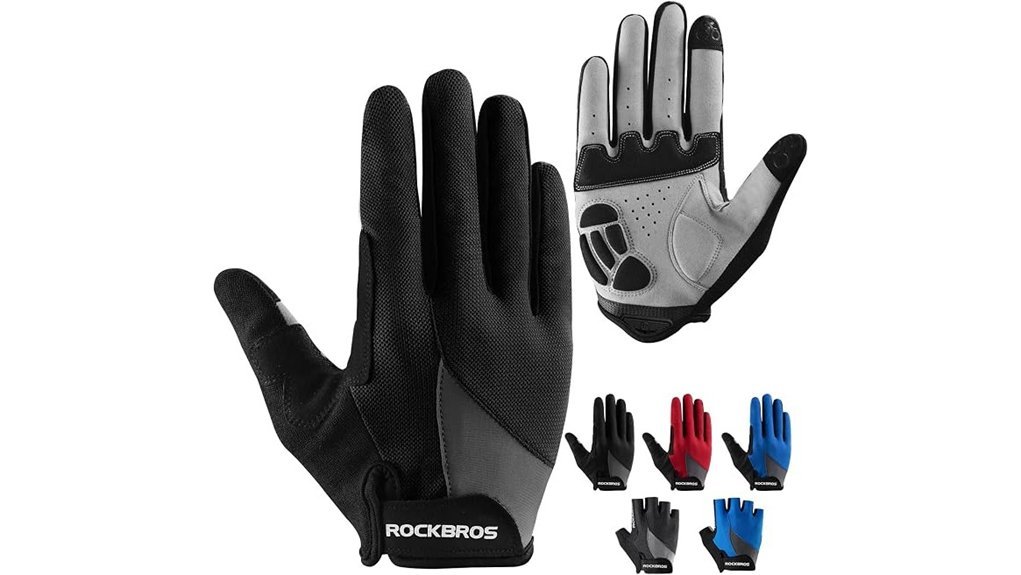
ROCKBROS Breathable Gel Cycling Gloves suit riders who want comfort and control on rough trails. These unisex gloves are built for men and women, with sizes from XS to XL, and measuring the hand before purchase is recommended. Gel padding in the palm helps absorb shock and reduce riding pain, while the lightweight polyester construction keeps them easy to wear. Breathable mesh on the back and perforations on the front improve airflow. Touchscreen-compatible fingers, quick-adjust hook-and-loop closure, and versatility for MTB, hiking, and outdoor work add practical value.
Best For: Riders of all levels who want breathable, shock-absorbing, touchscreen-friendly cycling gloves for road biking, mountain biking, hiking, or general outdoor use.
Pros:
- Gel palm padding helps absorb shocks and reduce hand fatigue on rough rides.
- Breathable mesh and perforated front improve airflow and comfort.
- Touchscreen-compatible fingers and quick-adjust closure add convenience.
Cons:
- Sizing can be tricky, so hand measurement is recommended before buying.
- Best fit may vary depending on hand shape and preference.
- More focused on comfort and versatility than heavy-duty protection.
2025 Gravity FSX 27.5 LTD Dual Suspension 21 Speed Mountain Bike
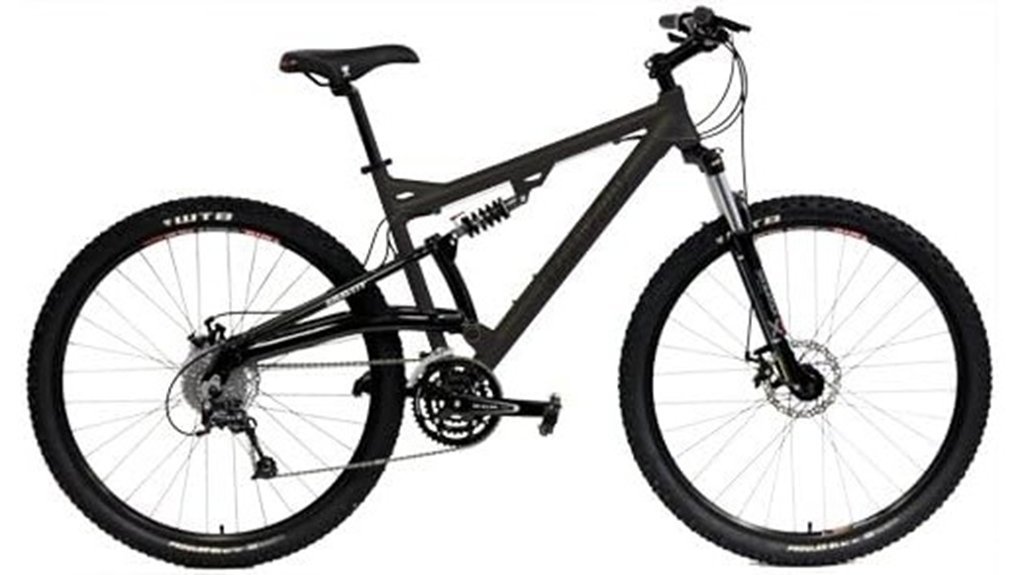
The 2025 Gravity FSX 27.5 LTD suits intermediate riders seeking affordable full-suspension trail performance. Its aluminum frame and 27.5-inch wheels support nimble handling on mountain terrain, while dual suspension, including adjustable rear travel, adds comfort and control over rough trails. The 21-speed derailleur drivetrain uses trigger shifters for straightforward gear changes, and disc brakes provide dependable stopping power. Assembly is required, and tuning is needed before riding. Designed for riders at least 185 centimeters tall, it arrives in matt black with a lock, user guide, and limited warranty for trail-focused use.
Best For: Intermediate riders 185 cm or taller who want an affordable full-suspension mountain bike for trail riding and rough terrain.
Pros:
- Dual suspension with adjustable rear travel improves comfort and control on rugged trails.
- 21-speed derailleur drivetrain with trigger shifters offers simple, reliable gear changes.
- Disc brakes provide dependable stopping power for mountain terrain.
Cons:
- Assembly and tuning are required before it’s ready to ride.
- Best suited to taller riders, with a minimum height of 185 cm.
- May be less ideal for beginners or riders wanting a lighter, simpler bike.
Garmin Edge MTB Rugged GPS Bike Computer
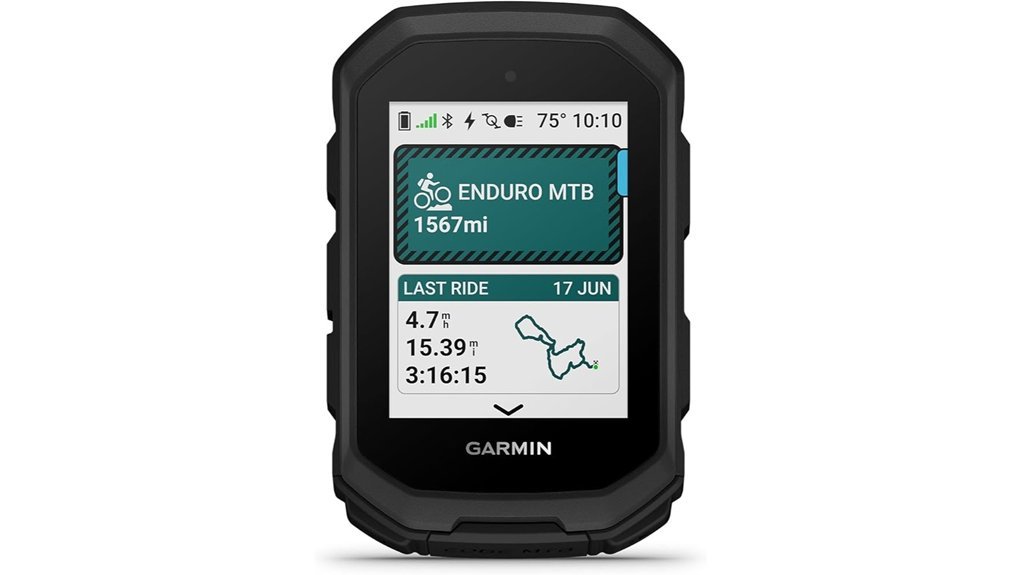
Garmin’s Edge MTB suits riders who want a rugged, trail-focused GPS computer for hard downhill use. The compact unit uses a 7-button layout, supports enduro and downhill profiles, and pairs a sunlight-readable display with scratch-resistant Gorilla Glass for muddy, gritty conditions. Multi-band GPS with 5 Hz recording improves trail precision, while preloaded Trailforks maps and Forksight reveal upcoming forks. It tracks Grit, Flow, jump speed, and hang time, and supports timing gates. Battery life reaches 14 hours, or 26 in saver mode. It also adds hazard alerts, incident detection, and ride messaging.
Best For: Mountain bikers who want a rugged, trail-focused GPS bike computer with precise navigation, ride metrics, and downhill/enduro features.
Pros:
- Rugged, compact build with a sunlight-readable display and scratch-resistant Gorilla Glass for harsh trail conditions.
- Multi-band GPS with 5 Hz recording plus Trailforks maps and Forksight for accurate trail navigation.
- Strong MTB-focused features like Grit, Flow, jump metrics, timing gates, hazard alerts, and incident detection.
Cons:
- Battery life is only moderate for long rides compared with some endurance-focused bike computers.
- Many safety and training features require a compatible smartphone, heart rate monitor, or power meter.
- The trail-specific focus may be overkill for riders who mostly do road or casual cycling.
Fox Racing Mens Ranger Mountain Bike Glove Gel
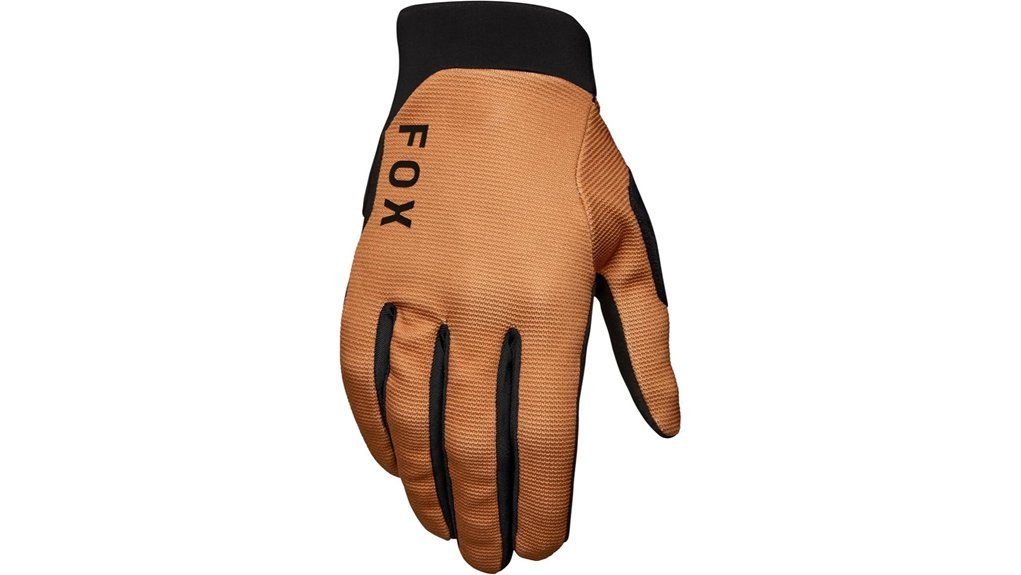
Fox Racing’s Ranger Gel glove suits riders who want extra palm cushioning without sacrificing bar feel. It uses strategically placed TruGel padding to soften trail chatter, while the low-profile neoprene cuff and hook-and-loop closure help secure a custom fit. The absorbent micro-suede thumb adds practical wipe-down utility, and conductive threads at the index finger and thumb support touchscreen use. Built for adult cycling, the ambidextrous nylon design is machine washable and weighs just 0.07 kilograms. Offered in caramel, it carries a limited warranty and has earned a 4.1-star average from 129 reviews.
Best For: Adult cyclists and mountain bikers who want a lightweight glove with added palm cushioning, touchscreen compatibility, and a secure custom fit.
Pros:
- TruGel padding helps reduce trail chatter and adds comfort without overly reducing bar feel.
- Touchscreen-compatible index finger and thumb make it easy to use devices without removing the gloves.
- Low-profile neoprene cuff with hook-and-loop closure offers a snug, adjustable fit.
Cons:
- Best suited for cyclists; not ideal for non-bike activities or heavy-duty work.
- Gel padding may feel too minimal for riders seeking maximum impact protection.
- Limited warranty and solid-color design may be less appealing to those wanting broader coverage or style options.
Factors to Consider When Choosing a Downhill Trail Mountain Bike
When choosing a downhill trail mountain bike, frame durability, suspension performance, and brake power are key factors that shape control and reliability on demanding terrain. Tire traction also matters, since it affects grip on loose or wet surfaces. Safety gear remains essential to reduce risk and support confident riding.
Frame Durability
Frame durability is a major concern in downhill trail mountain bikes, where repeated impacts can quickly expose weak points in a chassis. Material choice plays a central role: carbon fiber offers a light, strong option, while aluminum is typically heavier but often more affordable. A full-suspension design can help preserve the frame by reducing the stress transferred from rough descents. Reinforced rear triangles and reinforced junctions add resilience in the areas most likely to take abuse. Internal cable routing also supports longevity by shielding cables from mud and debris and limiting external hardware. Even a well-built frame benefits from regular inspection. Checking for cracks and confirming that all components remain secure helps maintain structural integrity and extend service life over time.
Suspension Performance
Suspension performance is a key factor in downhill trail mountain bikes, especially because a strong frame works best when paired with a system that can manage repeated impacts and rough terrain. Full-suspension designs absorb bumps and drops, helping maintain rider comfort and control on steep descents. Dual-link suspension systems add stability at higher speeds and improve cornering precision when trails become loose or uneven. Rebound adjustment also matters, since it lets the suspension respond appropriately to different trail conditions and riding styles. Lightweight materials such as carbon fiber can support efficient performance by reducing overall bike weight without sacrificing strength. Internal cable routing further improves reliability by limiting drag and shielding components from mud and debris, which helps sustain consistent suspension action in demanding environments.
Brake Power
Brake power is a critical consideration in downhill trail mountain bikes because it directly affects speed control and safety on steep, fast descents. Hydraulic disc brakes are generally preferred, and four-piston designs offer strong stopping force with better heat dissipation, helping limit fade during repeated hard braking. Brake pad size and material also matter, since larger pads typically improve bite and consistency. Bike weight and suspension setup influence how effectively braking forces are managed; a lighter frame and well-tuned suspension can improve control and reduce instability under load. Regular maintenance remains essential, including fluid checks and monitoring pad wear, so performance stays reliable when conditions demand precise braking.
Tire Traction
Tire traction plays a major role in downhill trail control because it determines how well a bike grips mud, gravel, rocks, and other changing surfaces. Wider tires, usually 2.4 to 2.6 inches, create a larger contact patch that improves stability during steep descents. Tread patterns with multidirectional grooves help the tire adapt to shifting terrain while preserving efficient rolling. Tire pressure also affects performance: lower pressures let the tire conform to rough ground for better grip, while higher pressures can reduce drag on smoother sections. Softer rubber compounds generally offer stronger traction in wet or loose conditions, though they tend to wear faster than harder compounds. Choosing the right combination helps maintain control across varied downhill terrain.
Safety Gear
Safety gear forms the backbone of downhill trail riding, where speed, rough terrain, and sudden impacts can quickly turn a mistake into an injury. A helmet with MIPS technology is important because it helps reduce rotational forces during crashes, improving head protection. For downhill trails, a full-face helmet adds coverage for the jaw and face, making it a stronger choice than a standard design. Gloves with padded palms can soften vibrations and lessen hand fatigue on long, rough descents. Protective eyewear helps block debris and maintain clear vision in changing light. Knee and elbow pads add cushioning for joints, reducing the risk of serious injury when falls occur on steep, technical sections.
Frequently Asked Questions
How Do I Choose the Right Suspension Travel for Downhill Trails?
The right suspension travel for downhill trails depends on terrain, speed, and control, not just maximum travel. Shorter travel can feel lively, but rough, steep descents usually reward more suspension for stability and forgiveness. Some riders worry extra travel always means less efficiency; however, that tradeoff matters less on downhill-focused routes. Matching travel to the roughness and steepness of the local trails gives the most confident, predictable ride.
What Wheel Size Is Best for Technical Downhill Riding?
For technical downhill riding, 27.5-inch wheels are often considered best because they turn more quickly, feel more playful, and make tight lines easier to manage. They can also reduce the feeling of catching on rough, awkward obstacles. That said, 29-inch wheels offer better rollover and stability, so some riders prefer them on steep, fast descents. The ideal choice depends on the rider’s style, terrain, and confidence.
How Often Should I Service a Downhill Mountain Bike?
A downhill mountain bike should be serviced after every few hard rides, with a full inspection after each outing and a deeper service every 20 to 30 riding hours. Suspension, brakes, bearings, and drivetrain deserve regular attention because steep, wet, and rough terrain accelerates wear. If the bike is raced or ridden aggressively, maintenance should happen more often to preserve performance, safety, and reliability.
Which Tire Tread Works Best on Muddy Downhill Trails?
For muddy downhill trails, a aggressive, widely spaced tread with tall knobs works best because it sheds mud and maintains bite. Soft-compound tires improve grip on slick roots and wet dirt, while a slightly larger front tire can add steering confidence. A rear tire with open center channels helps prevent clogging and preserves braking traction. Lower tire pressure may also increase contact, though rim protection should be considered carefully.
What Frame Material Balances Strength and Weight Best?
Aluminum generally balances strength and weight best for downhill trail frames, offering high stiffness, good durability, and a lower cost than carbon. It tends to handle hard impacts and repeated abuse well, while staying lighter than steel. Carbon can be lighter and more tunable, but it is pricier and often less forgiving to crashes. For many riders, aluminum provides the most practical mix of performance, reliability, and value.