Finding a capable dual suspension mountain bike under $1000 in [2026] is not as difficult as it once was. Several models now offer solid frames, dependable suspension, and enough versatility for trail use without pushing the budget too far. The [2026] Gravity FSX 27.5 LTD and Ecarpat 26 Inch Full Suspension stand out early, but the full list reveals a few choices that may surprise even experienced riders.
Key Takeaways
- 2025 Gravity FSX 27.5 LTD offers aluminum dual suspension, 27.5-inch wheels, disc brakes, and a 21-speed drivetrain for versatile trail riding.
- Ecarpat 26 Inch Full Suspension uses a durable steel frame, fat tires, and mechanical disc brakes for comfort and traction on rough terrain.
- Gravity FSX 1.0 is a budget-friendly aluminum full-suspension bike with adjustable shocks and reliable disc brakes for mixed trail conditions.
- Max4out 26 Inch Full Suspension delivers rugged comfort with a steel frame, 7-speed gearing, and all-terrain tires for beginner riders.
- VEVOR Mountain Bike suits taller riders with a 29-inch aluminum frame, 24-speed shifting, dual disc brakes, and quick 85% assembly.
2025 Gravity FSX 27.5 LTD Dual Suspension 21 Speed Mountain Bike
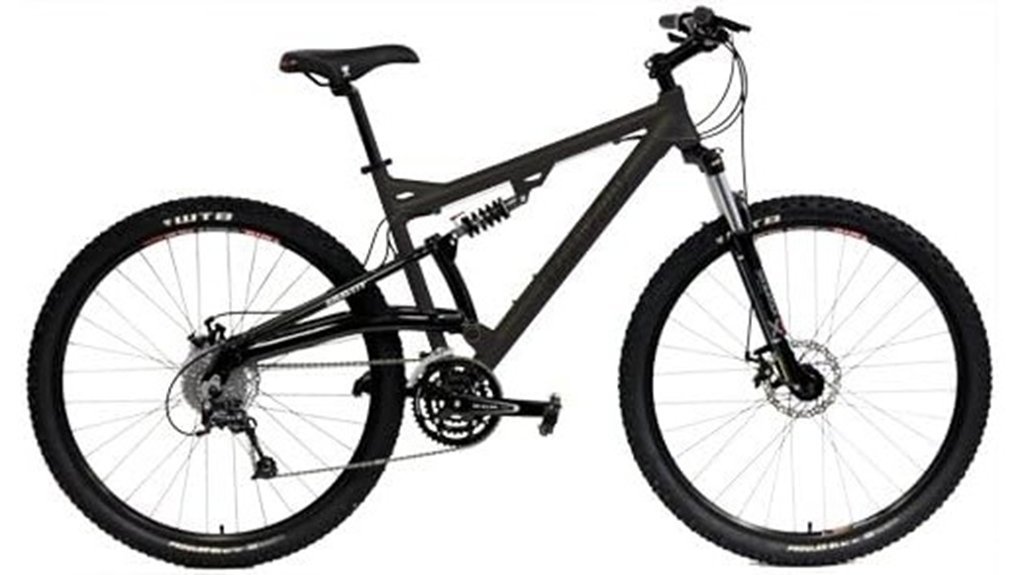
The 2025 Gravity FSX 27.5 LTD Dual Suspension 21 Speed Mountain Bike is a strong fit for intermediate trail riders who want full suspension control without moving beyond a budget-friendly price range. Its aluminum frame, 27.5-inch wheels, and dual suspension setup support steady handling on rugged mountain terrain. Adjustable rear suspension adds comfort, while disc brakes improve stopping confidence. The 21-speed drivetrain with trigger shifters offers practical gear range for varied climbs and descents. Assembly and tuning are required before riding, and the included lock, user guide, and limited warranty add useful value for budget-conscious buyers seeking trail-ready capability.
Best For: Intermediate trail riders seeking a budget-friendly full-suspension mountain bike with solid control, disc braking, and practical gearing for mountain terrain.
Pros:
- Dual suspension and adjustable rear suspension improve comfort and handling on rough trails.
- 27.5-inch wheels and an aluminum frame offer a balanced mix of agility and durability.
- Disc brakes, trigger shifters, and a 21-speed drivetrain provide dependable trail-ready performance.
Cons:
- Assembly and tuning are required before the bike is ready to ride.
- Best suited for riders who are at least 185 cm tall, which may limit fit for shorter users.
- As an entry-level/intermediate bike, it may not satisfy advanced riders looking for higher-end components.
Ecarpat 26 Inch Full Suspension Mountain Bike
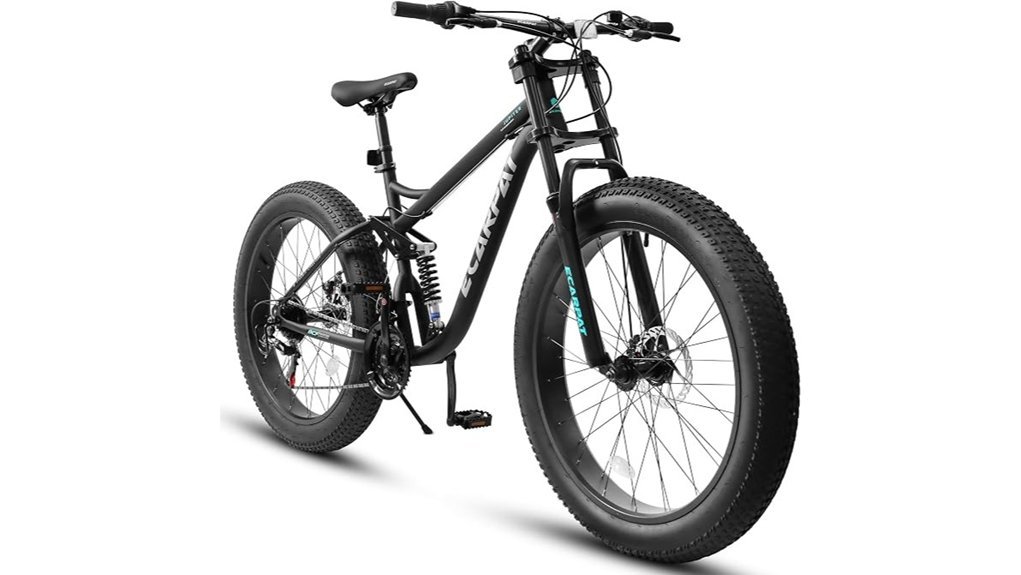
Ecarpat’s 26-inch full-suspension build suits riders needing comfort on rough terrain. Its 18.5-inch high-carbon steel frame adds durability and steadiness for mountain use, school trips, or commuting. Thickened front forks and rear shock absorbers help absorb bumps, improving control off-road. The 26 x 4.0-inch fat tires increase grip across snow, road, beach, and trail, while puncture-resistant construction and reflective strips support safety. A 21-speed drivetrain handles varied climbs and descents. Mechanical disc brakes deliver dependable stopping in wet mud or loose sand. The bike arrives 85% assembled, with support available within 24 hours.
Best For: Riders who want a comfortable, stable full-suspension mountain bike for rough terrain, commuting, or casual off-road adventures.
Pros:
- Full-suspension design with thickened front forks and rear shock absorbers helps smooth out bumps and improve control.
- 26 x 4.0-inch fat tires offer strong grip and stability across snow, beach, road, and trail conditions.
- 21-speed gearing and mechanical disc brakes provide versatile control and dependable stopping power.
Cons:
- The high-carbon steel frame may be heavier than aluminum alternatives.
- 85% assembly still requires some setup time and basic bike knowledge.
- Fat tires and full suspension may make it less efficient for fast, long-distance road riding.
Gravity FSX 1.0 Dual Suspension Mountain Bike
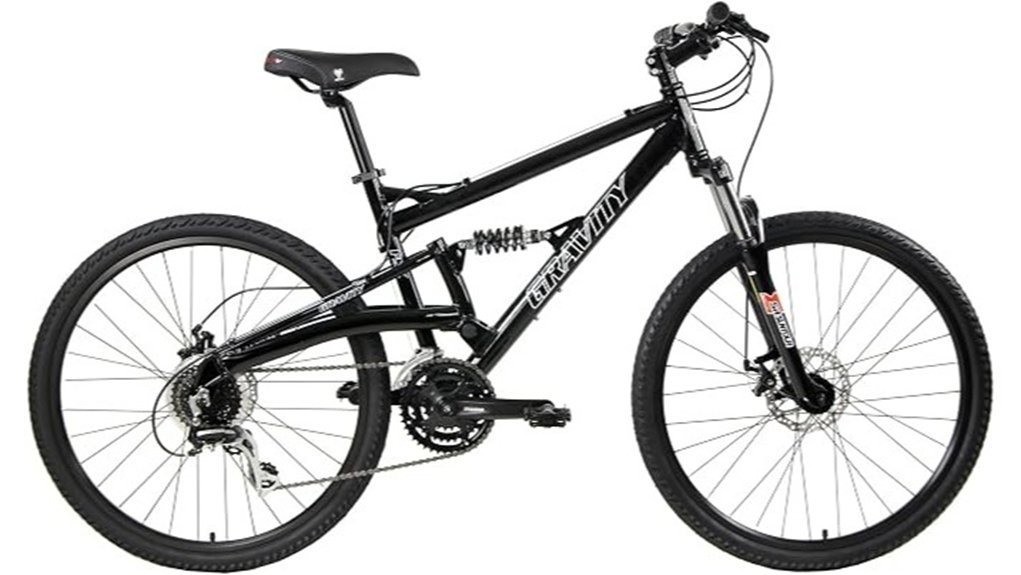
Built for trail riders seeking budget-friendly full suspension, the Gravity FSX 1.0 balances control and value. Its aluminum frame keeps weight down while maintaining a strong, durable structure, and the lightweight double wall rims add extra resilience on rough ground. The bike uses dual full suspension with adjustable front and rear settings, helping it adapt to mixed terrain. Disc brakes on both wheels provide dependable stopping power, while easy-to-use Shimano shifters simplify gear changes. Assembly and tuning are required before riding, and delivery needs a signature.
Best For: Budget-conscious trail riders who want a durable full-suspension mountain bike with adjustable suspension and reliable disc brakes.
Pros:
- Aluminum frame is strong, durable, and relatively lightweight.
- Dual full suspension with adjustable front and rear settings improves comfort and control on rough terrain.
- Disc brakes and lightweight double wall rims add dependable stopping power and resilience.
Cons:
- Requires assembly and tuning before it’s ready to ride.
- Delivery requires a signature, which can be inconvenient.
- Shimano shifters are functional, but the bike is positioned as a budget option rather than a premium build.
Max4out 26 Inch Full Suspension Mountain Bike
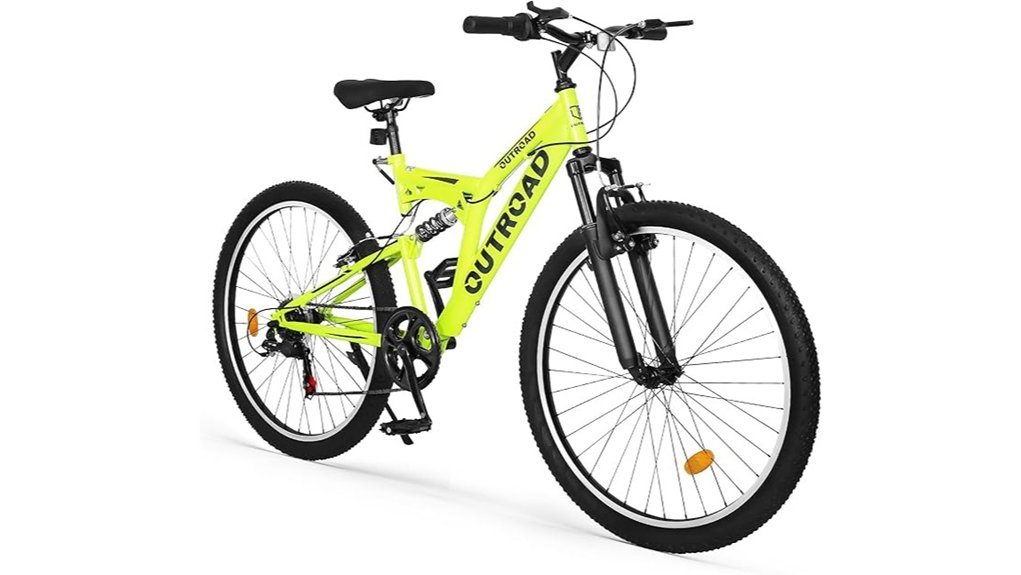
Max4out’s rugged dual suspension setup suits riders needing comfort on rough trails. This 26-inch model uses a high-carbon steel frame, front fork, and rear coil shock to soften impacts across dirt, gravel, road, and trail. Its 7-speed drivetrain with twist shifters supports simple gear changes, while all-terrain tires improve grip. High-performance V-brakes deliver dependable control. Rated for riders 52 to 62 inches tall and up to 330 lbs, it weighs 39 lbs. Assembly takes about 20 minutes, and a one-year warranty adds reassurance.
Best For: Riders who want an affordable, rugged 26-inch mountain bike with full suspension for comfortable cruising on dirt, gravel, roads, and light trails.
Pros:
- Dual suspension helps absorb bumps and improves comfort on rough terrain.
- 7-speed drivetrain with twist shifters makes gear changes simple and beginner-friendly.
- High weight capacity and quick assembly make it practical for a wide range of riders.
Cons:
- At 39 lbs, it is relatively heavy compared with many bikes.
- V-brakes are dependable but not as strong as disc brakes in wet or muddy conditions.
- Best suited to moderate off-road use rather than aggressive mountain biking.
VEVOR Mountain Bike with Twist Shifting and Disc Brakes
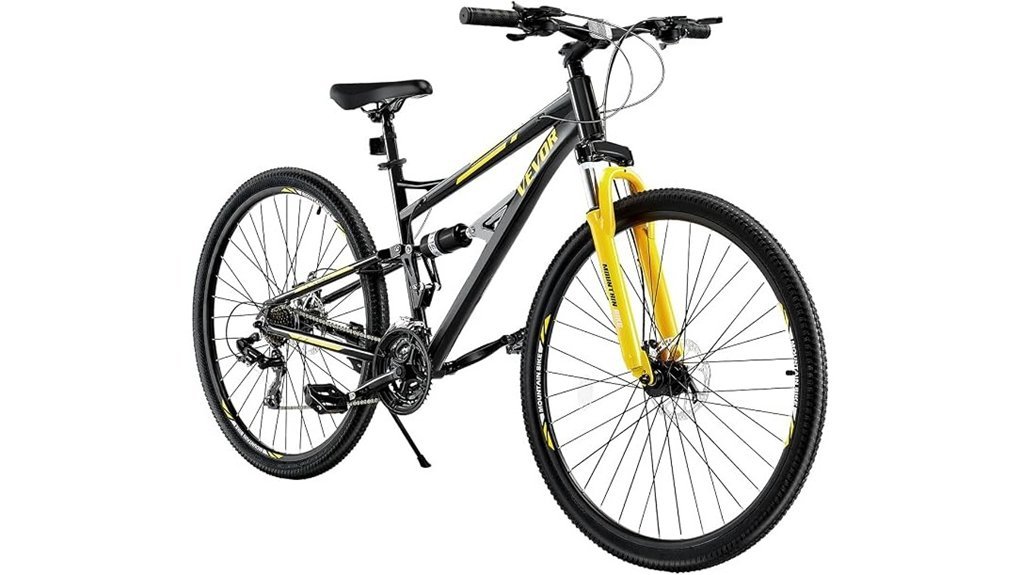
The VEVOR mountain bike suits taller riders seeking a stable, affordable dual-suspension trail option. Built with a lightweight aluminum frame and 29-inch wheels, it is designed for adults 5’10” and taller. Twist shifting is available in 7, 21, or 24 speeds, with the 24-speed setup offering smoother gear changes. Dual disc brakes provide responsive stopping, while all-terrain tires and extra-wide double-layer alloy rims add traction and durability on rough paths. An upgraded foam-padded saddle improves comfort, and the 85% preassembled package simplifies setup for immediate use.
Best For: Taller adult riders 5’10” and up who want an affordable, stable mountain bike with dual suspension, disc brakes, and easy setup for trail and all-terrain riding.
Pros:
- Lightweight aluminum frame with 29-inch wheels for stability and a smoother ride
- 24-speed twist shifting and dual disc brakes for better control and responsive stopping
- 85% preassembled with included tools, making setup quick and convenient
Cons:
- Best suited for taller riders, so it may not fit shorter users well
- At 38.36 pounds, it may feel heavy for some riders
- Twist-shift gearing may not appeal to riders who prefer trigger shifters
Factors to Consider When Choosing a Dual Suspension Mountain Bike Under 1000
Several factors shape the value of a dual suspension mountain bike under 1000, starting with frame material and suspension quality. Brake performance, gear range, and wheel size also affect control, comfort, and overall trail handling. Each feature should be weighed together to find the best balance of durability, efficiency, and ride quality.
Frame Material
Frame material plays a major role in how a dual suspension mountain bike under $1000 performs on the trail. Aluminum is often the best balance of low weight, durability, and price, so it remains a common option for budget-minded riders. Its lighter build can improve handling, make climbing easier, and support quicker direction changes on technical sections. It also resists corrosion better than steel, which helps in wet or variable weather. High-carbon steel frames are heavier, but they offer strong structural stability and a rugged feel that suits demanding terrain. Material choice also affects overall value, since aluminum usually costs less than premium carbon fiber while still delivering dependable performance. For many buyers, that combination makes it the most practical choice.
Suspension Quality
Suspension quality can make or break a dual suspension mountain bike under $1000, especially on rough trails where control and comfort matter most. A well-designed system balances front and rear shocks to smooth uneven terrain and keep the bike composed over roots, rocks, and drops. Adjustable rear suspension is especially useful because it lets the rider fine-tune support for different trail conditions and body weights. Stronger suspension components, often made from aluminum or high-carbon steel, can improve durability while keeping response predictable. Effective suspension also absorbs larger impacts, which reduces fatigue on longer rides and helps the rider stay alert. Just as important, a tuned system keeps both tires in contact with the ground, improving traction, stability, and overall confidence on technical routes.
Brake Performance
Alongside suspension, brake performance plays a major role in how confidently a dual suspension mountain bike under $1000 handles rough trails. Most models rely on disc brakes, which deliver strong stopping power in dry, wet, and muddy conditions. Mechanical disc systems are especially valued for their quick, predictable response on rugged terrain, where immediate control can improve safety. Brake pad quality also matters, since better materials can increase durability and maintain consistent responsiveness over time. Regular inspection, adjustment, and pad replacement help preserve performance on steep descents and technical sections. Brake weight should not be ignored either, as lighter systems can improve agility without reducing control. Overall, dependable brakes add confidence and precision when trail conditions become demanding.
Gear Range
A bike’s drivetrain can shape how capable it feels on varied trails, especially in the under-$1000 dual suspension category. Gear range deserves close attention because a wider spread, such as 21 speeds, helps the bike handle steep climbs, rolling sections, and faster stretches with less strain. A 21-speed setup also tends to deliver smoother gear changes, which supports steadier control when shifting under load. Shifter design matters too; trigger shifters usually offer quicker, more precise changes, while twist shifters can feel simpler for some riders. Front and rear derailleurs should both be considered, since a complete setup expands gearing choices and can improve performance. Beginners may prefer fewer speeds, while intermediate riders often benefit from broader options.
Wheel Size
Wheel size plays a major role in how a dual suspension mountain bike under $1000 feels on the trail. Larger 29-inch wheels roll over rocks, roots, and gaps more smoothly, giving added stability on rough descents. Smaller 26-inch wheels turn faster and respond more quickly, which suits tight, technical trails and riders who value agility. A 27.5-inch setup sits between these options, blending steady handling with lively acceleration for mixed terrain. Wheel size also affects tire choice; wider tires on smaller wheels can improve grip and confidence on loose surfaces. Rider height and preferred riding style matter as well, since the right wheel size can improve comfort, control, and overall confidence during rides.
Assembly Ease
Assembly can make or break the first experience with a dual suspension mountain bike under $1000, so models that arrive 85% pre-assembled are often easier to manage. This level of factory setup can cut setup time and reduce frustration, especially for buyers who want a faster path to riding. Bikes that include the needed tools add convenience and avoid extra purchases. Clear user-friendly instructions also matter, since some models still need final tuning after arrival. Video guides available online can further simplify the process by showing each step visually. It is also worth checking whether the bike’s components are designed for straightforward attachment, because simpler hardware can make assembly cleaner and less time-consuming overall.
Rider Fit
Rider fit is one of the most important factors when choosing a dual suspension mountain bike under $1000, because the right size affects comfort, control, and safety on the trail. Minimum rider height should be checked first; some models are intended for riders over 61 inches and may feel awkward for shorter users. Frame size should match height and leg length, with inseam measurement helping confirm proper pedal extension. Weight capacity also matters, since the bike must support the rider and any carried gear without reducing stability. Reach to the handlebars should feel natural, allowing steady steering and less fatigue on longer rides. Standover height should leave a few inches of clearance, making mounting and dismounting easier and safer on uneven terrain.
Frequently Asked Questions
How Much Assembly Do These Bikes Usually Require?
They usually require partial assembly, not a full build. Most arrive about 75–90% assembled, with the front wheel, handlebars, pedals, seat, and sometimes the rear derailleur or brakes needing installation or adjustment. Basic tools are often included, but final tuning may still be necessary. A careful check of bolt tightness, brake alignment, and shifting is commonly recommended before riding, especially after shipping and before any trail use.
Are Dual Suspension Bikes Heavier Than Hardtail Bikes?
Yes, dual suspension bikes are usually heavier than hardtails, because the extra rear shock, linkage, and frame hardware add weight. That difference often worries riders, but the added grip and comfort can make the tradeoff feel worthwhile on rough trails. In budget models, the weight gap may be even more noticeable, yet it rarely matters as much as stability, control, and confidence when descending or handling roots and rocks.
Can These Bikes Handle Aggressive Downhill Trails?
They can handle aggressive downhill trails only to a limited degree. Entry-level dual suspension bikes often provide more comfort and control than hardtails, but their frames, suspension, and brakes are usually not built for sustained high-speed abuse, big drops, or steep technical descents. On rough terrain, they may cope adequately with careful riding, yet they are better suited to moderate trail use than true aggressive downhill performance.
What Maintenance Do Full Suspension Bikes Need?
Full suspension bikes need regular cleaning, chain lubrication, brake checks, tire pressure monitoring, and bolt inspection. Their pivot points and bearings should be serviced periodically to prevent play and wear. Shock and fork seals need attention, while suspension air pressure and rebound settings should be checked often. After muddy rides, a thorough wash helps protect components. Occasional professional suspension service keeps performance consistent and extends the bike’s lifespan.
Are Replacement Parts Easy to Find for Budget Models?
Replacement parts for budget models are often like spare pebbles in a trailhead lot: present, but not always easy to spot. For many entry-level full suspension bikes, common items such as pads, chains, and cables are readily available. However, proprietary shocks, pivots, and hangers can be harder to source. Availability improves when the bike uses standard components and comes from a known brand with solid parts support.