Jumping on a full suspension mountain bike demands more than bold geometry and travel numbers. In [2026], a few models stand out for different reasons, from carbon refinement to durable steel builds. The TRIFOX Carbon 29er, Canyon Spectral 125 AL 5, and two budget-friendly options each bring a distinct balance of control and stability. The question is which one actually fits the rider’s style and terrain.
Key Takeaways
- TRIFOX Carbon 29er offers 140mm dual suspension, a stiff T800 carbon frame, and hydraulic disc brakes for confident jumping.
- Canyon Spectral 125 AL 5 adds progressive geometry, 140mm front and 125mm rear travel, and playful handling for aggressive trail jumps.
- Ecarpat 21-Speed full suspension suits budget riders with dual disc brakes, thumb shifters, and comfort on rough terrain.
- The 21-Speed mechanical disc brake model provides durable steel construction, puncture-resistant tires, and dependable stopping for casual jump sessions.
- For jumping, prioritize 125mm to 160mm travel, stiff frames, hydraulic brakes, and geometry that stays stable in the air.
TRIFOX Carbon Full Suspension Mountain Bike 29er
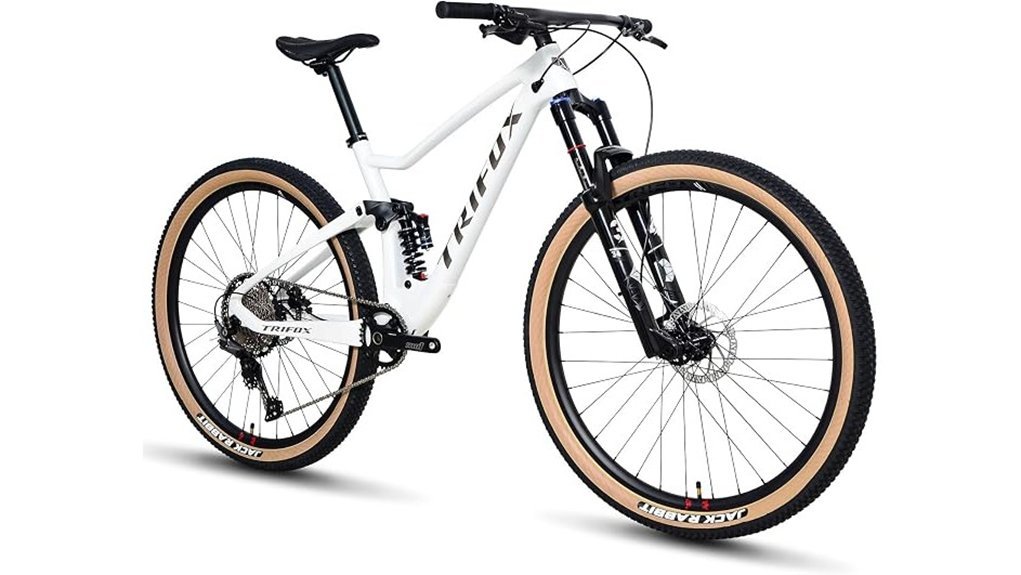
The TRIFOX Carbon Full Suspension Mountain Bike 29er is a strong choice for intermediate trail riders who want a lightweight, responsive full-suspension bike with capable all-around performance. Its T800 carbon frame and integrated bar keep weight near 12.6kg, while 140mm dual suspension, Free Floating Technology, and an Active Braking Pivot help smooth impacts and reduce brake jack. A lower shock position improves stability. Shimano M6100 Deore 12-speed gearing, hydraulic disc brakes, 29er x 2.25 tires, and three ride modes support climbing, descending, and control. It arrives 85% assembled with tools and instructions, plus a one-year labor warranty.
Best For: Intermediate trail riders who want a lightweight, full-suspension 29er with responsive handling, solid climbing and descending performance, and modern carbon-frame features.
Pros:
- Lightweight T800 carbon frame with integrated bar keeps the bike around 12.6kg.
- 140mm dual suspension with Free Floating Technology and Active Braking Pivot improves comfort and control.
- Shimano M6100 Deore 12-speed drivetrain and hydraulic disc brakes provide reliable performance.
Cons:
- May be more bike than casual riders or beginners need.
- 85% assembly still requires some setup and basic bike knowledge.
- One-year labor warranty is fairly limited compared with some competitors.
Canyon Spectral 125 AL 5
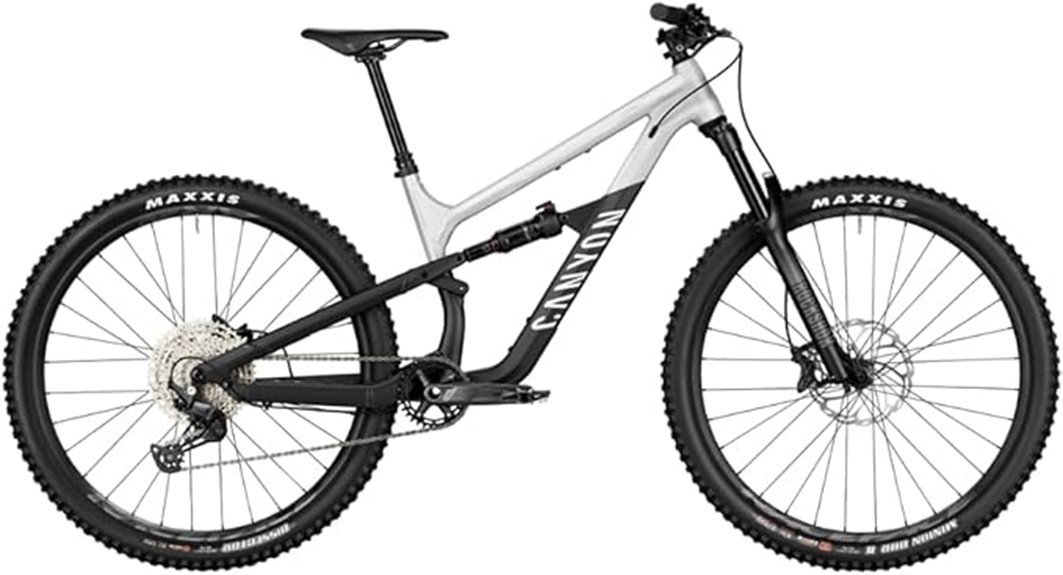
Built for intermediate trail riders, the Canyon Spectral 125 AL 5 balances playful handling with confident control. Its lightweight alloy frame and progressive geometry support durability and stable cornering, while 29-inch wheels add speed and rollover ability. RockShox suspension delivers 140mm front and 125mm rear travel through a 35 Gold RL fork and Deluxe Select+ shock, helping on jumps and rough descents. Shimano Deore M6100 12-speed drivetrain provides a wide gear range for climbs and fast runs. Dual disc brakes, a dropper post, and tubeless-ready wheels further enhance versatility for trail riding.
Best For: Intermediate trail riders who want a playful but capable 29-inch mountain bike for trail riding, jumps, and confident descents.
Pros:
- Lightweight alloy frame with progressive geometry for stable handling and durability
- RockShox 140mm/125mm suspension setup helps smooth rough trails and jumps
- Shimano Deore 12-speed drivetrain plus dual disc brakes and dropper post add versatility
Cons:
- Best suited to intermediate riders, so beginners may find it less approachable
- Not ideal for riders wanting a more aggressive enduro or downhill bike
- Alloy frame and trail-focused setup may be heavier or less efficient than a pure cross-country bike
Ecarpat Full Suspension Mountain Bike, 21-Speed MTB
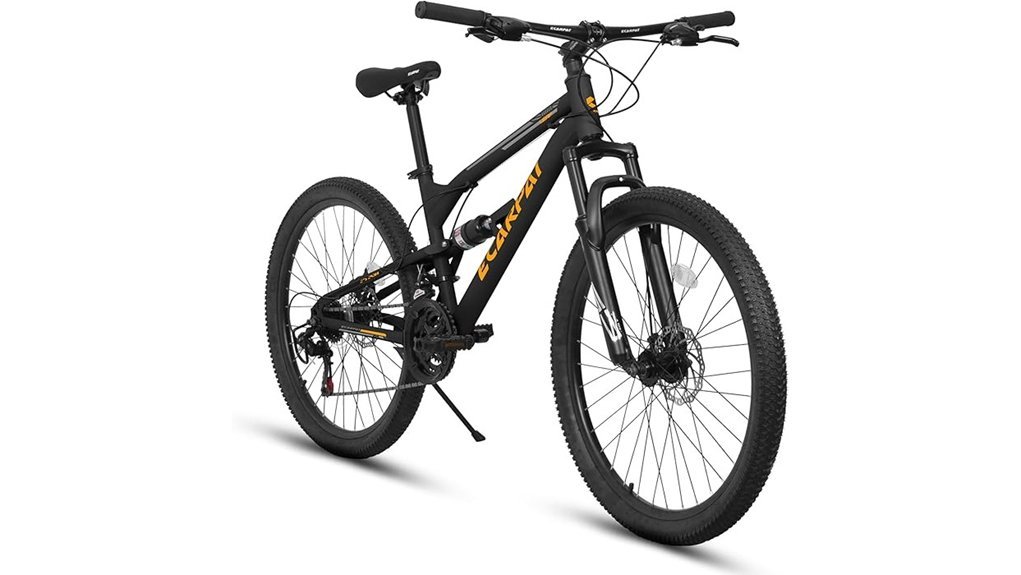
Ecarpat’s 21-speed full suspension MTB suits teens and adults seeking comfort on rough trails. Available in 24- and 26-inch sizes, it works well for trail use and commuting. Its front fork and rear shock absorb rocks and uneven ground, improving traction while reducing hand and wrist fatigue. Thumb shifters deliver quick, precise gear changes for climbs and fast flats. Mechanical dual disc brakes provide dependable stopping in wet or dry conditions. A carbon steel frame adds durability without excess weight. The bike arrives 85% assembled, with setup usually taking about 20 minutes.
Best For: Teens and adults who want a comfortable, durable full-suspension mountain bike for trail riding and commuting.
Pros:
- Full suspension helps absorb bumps and improve comfort and control on rough terrain.
- 21-speed thumb shifters provide quick, precise gear changes for climbs and fast rides.
- Mechanical dual disc brakes offer reliable stopping power in wet or dry conditions.
Cons:
- Carbon steel frame may be heavier than aluminum alternatives.
- Assembly is not fully complete and requires some setup after delivery.
- Best suited for casual trail and commuter use rather than aggressive technical riding.
Full Suspension Mountain Bike, 21-Speed, Mechanical Disc Brakes
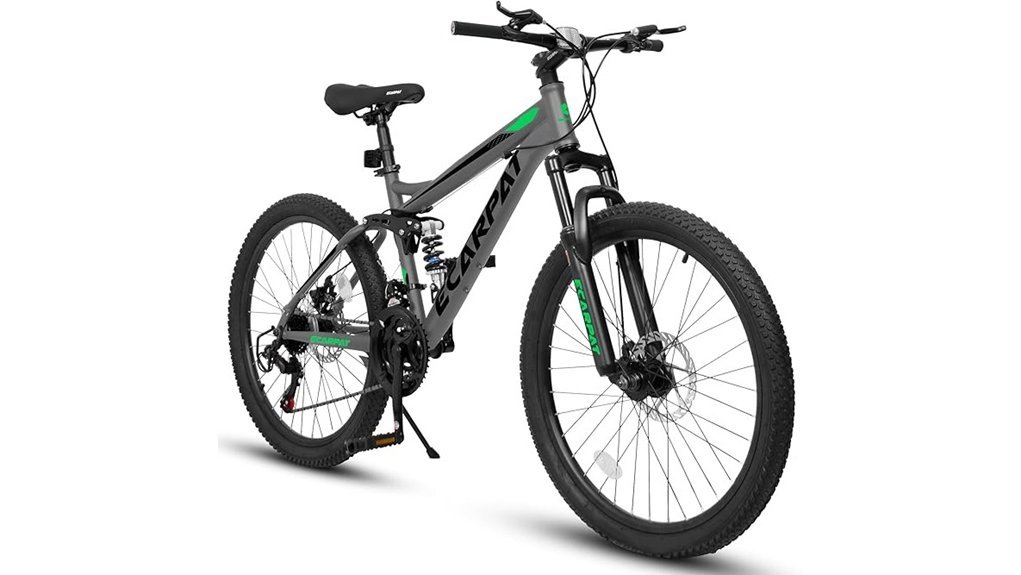
With 21-speed shifting, this full suspension mountain bike suits riders tackling changing terrain. Its high carbon steel frame offers durability, with size options of 24, 26, and 27×16 inches for riders between 48 and 66 inches tall. The bike supports up to 250 lbs. A gear indicator helps the 21-speed lever deliver smooth shifts across hills and flats. Mechanical dual disc brakes provide dependable stopping power and simpler maintenance. 24×2.125 all-terrain tires add grip and puncture resistance on dirt, gravel, trails, and pavement. Assembly is mostly complete, with customer support available for setup assistance.
Best For: Riders 48–66 inches tall who want an affordable full suspension mountain bike for mixed terrain, easy maintenance, and everyday trail or path use.
Pros:
- 21-speed shifting with a gear indicator helps provide smooth, adaptable performance on hills and flats.
- Mechanical dual disc brakes offer reliable stopping power and simpler maintenance.
- Durable high carbon steel frame with puncture-resistant 24×2.125 all-terrain tires for good grip on varied surfaces.
Cons:
- 85% pre-assembled, so some setup is still required before riding.
- High carbon steel frame can be heavier than aluminum alternatives.
- Best suited for casual and recreational riding rather than high-end performance use.
Factors to Consider When Choosing a Full Suspension Mountain Bike for Jumping
When choosing a full suspension mountain bike for jumping, suspension travel and frame stiffness are key factors because they affect impact absorption and stability on takeoff and landing. Brake control and balanced geometry also matter, since they help keep the bike predictable in the air and composed on rough shifts. Wheel size further influences agility and roll-over capability, shaping how well the bike handles jump lines.
Suspension Travel
Suspension travel is one of the most important factors in a full suspension mountain bike for jumping, since it determines how much the bike can compress and absorb impact on take-offs and landings. Suspension travel refers to the distance the suspension can move, and it directly shapes performance on jumps and rough terrain. For jumping, bikes with longer travel, typically 125mm to 160mm, usually offer better shock absorption and smoother landings. Shorter travel, around 100mm, can feel stiffer and transmit harsher impacts on touchdown. Travel also affects geometry, influencing center of gravity, stability, and handling in the air. When tuned properly, it can improve traction and control on take-offs and landings, giving riders greater confidence and consistency.
Frame Stiffness
Frame stiffness plays a major role in how a full suspension mountain bike handles jumps, because a rigid frame minimizes flex and keeps the bike stable on takeoff and landing. This stiffness also improves energy transfer, helping riders accelerate more efficiently off lips and through technical features. Frame material matters: carbon often delivers a strong blend of low weight and rigidity, while aluminum can also offer dependable support. Geometry influences stiffness as well, since tube shape and thickness determine how much the frame resists twisting under load. A well-engineered frame can absorb landing impacts more effectively, reducing stress on components and improving comfort over rough terrain. For jumping, the best choice balances rigidity, strength, and manageable weight.
Brake Control
Brake control is a key factor in jump performance, helping riders regulate speed and stay stable on the approach, takeoff, and landing. Effective braking lets a rider fine-tune trajectory and timing before leaving the lip, then make small corrections when needed. Hydraulic disc brakes are often preferred because they deliver strong stopping power and precise modulation, which improves confidence on descents and during landings. Quick, responsive brake action also supports mid-air adjustments without feeling abrupt. Lever position matters as well; a comfortable setup can improve control and reduce fatigue through repeated runs. Regular maintenance is equally important, since clean pads, fresh fluid, and tuned hardware help the system withstand the heavy forces involved in jumping and technical riding.
Geometry Balance
Beyond braking control, bike geometry plays a major role in how well a full suspension mountain bike handles jumps. A lower shock position can drop the center of gravity, improving stability in the air and on takeoff. Progressive geometry, especially a slacker head angle, generally sharpens control when landing and when a line turns rough. A longer wheelbase can add composure midair and reduce the tendency to pitch forward on impact. Suspension travel also matters; about 125mm to 140mm often gives enough room to absorb hard landings without feeling vague. Frame stiffness and suspension design further shape balance, helping the bike stay predictable under load. Together, these traits influence how confidently a rider can launch, correct, and land.
Wheel Size
Wheel size is another major factor in how a full suspension mountain bike performs on jumps. Larger options, especially 29-inch wheels, improve rollover capability and help smooth landings on rough or uneven terrain. They also add traction and stability, which can make takeoffs and landings feel more controlled. Smaller wheels, such as 24- or 26-inch sizes, usually feel quicker and easier to place, which benefits technical jumps and tight turns. That added agility can suit riders who prefer precise, aggressive movements. Wheel size also affects overall bike weight, and larger wheels may feel heavier in the air and on repeated runs. The best choice depends on rider skill and style, with bigger wheels offering forgiveness and smaller wheels favoring nimble control.
Drivetrain Range
Drivetrain range plays a key role in how a full suspension mountain bike handles jumps, because a wider system, such as a 12-speed setup, provides smoother gear shifts and helps preserve momentum through technical sections. A broad gear spread also gives riders usable ratios for steep climbs and fast descents, making it easier to set speed before takeoff and control pace after landing. Quick, precise shifting matters when terrain changes suddenly, since delayed gear changes can disrupt timing and balance. A dependable drivetrain supports efficient power transfer during launches and keeps the bike responsive on tricky landings. Its setup can also influence weight distribution and handling, which affects stability in the air and confidence on the trail.
Tire Grip
Grip determines how confidently a full suspension mountain bike leaves and meets the ground during jumps. Strong tire grip improves traction on takeoff and landing, helping reduce slips and unstable recoveries. For jumping, tire widths around 2.25 to 2.5 inches usually supply a broader contact patch, which supports steadier control. Knobby tread patterns are especially useful on softer surfaces because they bite into the ground and add stability during hard impacts. Tire compound also matters: softer rubber generally increases traction, though it may wear faster. Tire pressure should be set carefully, since lower pressure can boost grip but also increases the chance of pinch flats. Together, these tire traits help a bike handle jumps with more consistency and precision.
Weight Distribution
Beyond tire grip, weight distribution strongly affects how a full suspension mountain bike behaves in the air. Balanced mass helps maintain control on takeoff, keeps the bike stable midair, and supports safer, more accurate landings. Geometry that places the center of gravity lower can improve responsiveness and reduce unwanted pitch during jumps. The split of weight between front and rear wheels also shapes trajectory, influencing lift, rotation, and landing angle. Adjustable suspension adds another advantage, letting riders tune setup for different jump styles, terrain, and preferences. Rider body weight and technique matter as well, since they determine how force is applied during launch and touchdown. For jumping, the best bikes support consistent balance under varied conditions.
Frequently Asked Questions
How Much Maintenance Do Jump-Focused Full Suspension Bikes Need?
Jump-focused full suspension bikes usually need regular, fairly frequent maintenance because repeated hard landings stress pivots, bearings, shocks, and wheels. A rider should inspect bolts, clean and lubricate the drivetrain, and check for play after most sessions. Suspension service, brake pad replacement, and bearing or bushing attention may be needed several times per season, depending on use. Heavy jumping, mud, and poor storage increase service intervals and wear considerably.
Can I Use One Bike for Both Jumps and Long Trail Rides?
Yes, one bike can handle both jumps and long trail rides, but compromises are likely. A jump-friendly full suspension bike usually feels more playful and durable, while a trail-focused setup climbs and pedals more efficiently. Some mid-travel bikes strike a practical balance for both uses. The best choice depends on terrain, riding style, and whether it will be used more for airtime or endurance.
What Suspension Travel Is Best for Beginner Jumpers?
For beginner jumpers, 140–160 mm of suspension travel is usually the best choice. It gives enough cushioning for landings while still staying playful and easy to pump. Shorter travel can feel harsher, while much longer travel may feel sluggish and harder to control. A well-tuned fork and shock matter as much as travel length, since supportive suspension helps build confidence and improves takeoff and landing consistency.
Are Aluminum Frames Strong Enough for Regular Bike Park Jumps?
Yes, aluminum frames are generally strong enough for regular bike park jumps, and that reassurance comes first. Yet the real answer unfolds in the details: strength depends on frame design, weld quality, rider weight, and landing style. A well-built aluminum full-suspension bike can handle repeated park use, but harsh casing, poor setup, or oversized jumps can still cause failure. Careful inspection and appropriate suspension tuning remain essential.
Do Wider Tires Improve Landing Stability on Jump Lines?
Yes, wider tires can improve landing stability on jump lines by increasing contact patch, grip, and compliance, especially on loose or off-camber landings. They may also add a bit of forgiveness when a landing is slightly off line. However, they are not a cure for poor technique or suspension setup, and excessive width can feel sluggish or vague. Tire choice should match speed, terrain, and rim width carefully.