Two days in Palermo is enough to see many of the Sicilian capital’s essential sights if you keep most of your time in and around the historic center. This itinerary combines the Royal Palace and Palatine Chapel, Palermo Cathedral, Quattro Canti, the Capuchin Catacombs, historic markets, street food, and several easy stops that sit naturally along the route.
Quick Answer
Spend Day 1 exploring Palermo’s western historic center, the Royal Palace and Palatine Chapel, the Capuchin Catacombs, and Vucciria. On Day 2, walk through Quattro Canti, Piazza Pretoria, Palermo Cathedral, and nearby streets before a seafood lunch and departure. Most central stops are practical to connect on foot.
Key Takeaways
- Base yourself near the historic center so you can reach most major sights on foot.
- Reserve enough time for the Royal Palace and Palatine Chapel rather than treating them as a quick photo stop.
- Check official opening information before visiting the Palatine Chapel, Capuchin Catacombs, and Cathedral because access can change.
- Try Palermo specialties such as arancine, panelle, sfincione, pasta con le sarde, cannoli, and other local street food.
- Monreale is excellent, but fitting it into only two days usually means removing part of this central-Palermo itinerary.
Arriving in Palermo and Getting Around
Palermo Falcone Borsellino Airport is outside the city center, so allow time for the transfer when planning your first and last day. Trenitalia operates rail connections between the airport and Palermo, including services toward Palermo Centrale. Bus transfers are also available. Check the official Trenitalia Palermo Airport page shortly before your trip for the current timetable and fares.
Once you are in central Palermo, walking is usually the simplest way to follow this itinerary. The city tourism office specifically recommends exploring much of the center on foot, while buses and urban rail can help with longer sections. The Capuchin Catacombs, for example, sit outside the tight cluster around Quattro Canti and the Cathedral.
Pro Tip: Wear comfortable shoes. Palermo’s central sights look close on a map, but a full sightseeing day includes plenty of walking, standing, church interiors, markets, and uneven historic streets.
Day 1: Historic Palermo, the Royal Palace, Catacombs and Vucciria
Morning in the Historic Center
Begin your first morning in Palermo’s historic center. Instead of rushing directly from monument to monument, give yourself some time to walk along streets such as Via Maqueda and Corso Vittorio Emanuele. They connect many of the city’s best-known squares, churches, markets, and monuments.
This part of Palermo reflects centuries of political and cultural change. Norman, Byzantine, Islamic, Gothic, Baroque, and later architectural influences appear throughout the city. UNESCO recognizes nine monuments in Palermo, Cefalù, and Monreale as the World Heritage property known as Arab-Norman Palermo and the Cathedral Churches of Cefalù and Monreale.
For breakfast or a mid-morning snack, look for a neighborhood café or bakery. Espresso or cappuccino with a pastry is easy to find, while Sicilian options can include brioche, granita in warmer weather, or a savory snack such as sfincione.
Visit to the Norman Palace and Palatine Chapel
The Palazzo dei Normanni, also called the Royal Palace, is one of Palermo’s most important historic buildings. The site has much older layers, but the monument visitors associate with Arab-Norman Palermo was transformed under Sicily’s Norman rulers and became a major center of royal power.
Its highlight is the Palatine Chapel. Roger II ordered the chapel after his coronation in 1130, and it was consecrated in 1140. Its decoration brings together Latin, Byzantine, and Islamic artistic traditions. Gold mosaics cover large parts of the interior, while the painted wooden ceiling and other details show why the chapel is one of the key monuments of Palermo’s multicultural medieval history.
Do not assume every part of the complex will always be accessible. Restoration work, parliamentary activity, religious services, and special events can affect visitor access. Check the official Palazzo Reale visitor page before you go, especially if the Palatine Chapel is a priority.
Note: The Royal Palace and Palatine Chapel form part of Palermo’s UNESCO-listed Arab-Norman heritage. Give the interior enough time to appreciate the mosaics and architectural details rather than scheduling another timed attraction immediately afterward.
Lunch at a Traditional Sicilian Restaurant
After the palace, stop for lunch in or near the historic center. Palermo has plenty of dishes that are more locally specific than a generic Italian pasta meal.
| Dish | What to Know |
| Arancine | Fried stuffed rice balls and one of Palermo’s best-known street foods. |
| Panelle | Chickpea fritters, often served in bread as an inexpensive savory snack. |
| Pasta con le sarde | A Sicilian pasta associated with Palermo, traditionally combining sardines, wild fennel, raisins, and pine nuts. |
| Sfincione | Palermo-style soft, thick street bread commonly topped with tomato, onion, cheese, breadcrumbs, and seasonings. |
| Cannoli | A crisp pastry shell traditionally filled with sweetened ricotta. |
Pasta alla Norma is a famous Sicilian dish and may appear on menus, but if your goal is to try something strongly connected with Palermo, pasta con le sarde is a better fit. Seafood is another natural choice in this coastal city.
Afternoon at the Capuchin Catacombs
After lunch, head toward the Capuchin Catacombs at Piazza Cappuccini. The underground cemetery developed after the Capuchin friars needed a larger burial space near the end of the 16th century. Work began in 1597, and the first body placed in the new cemetery dates to 1599.
The corridors contain preserved human remains arranged in sections associated with groups such as clergy, professionals, women, men, and children. The site documents changing burial customs and ideas about death, remembrance, and social status. Rosalia Lombardo, who died in 1920, is among its best-known preserved individuals.
Plan this stop carefully because the Catacombs currently use separate morning and afternoon visiting periods rather than remaining continuously open all day. Verify the latest schedule on the official Catacombs website before setting out.
Warning: The Capuchin Catacombs contain openly displayed human remains, including children. The experience can be upsetting for some visitors. Treat the site as a burial place, follow staff rules, and consider skipping it if anyone in your group would find the display distressing.
Evening at the Vucciria Market Area
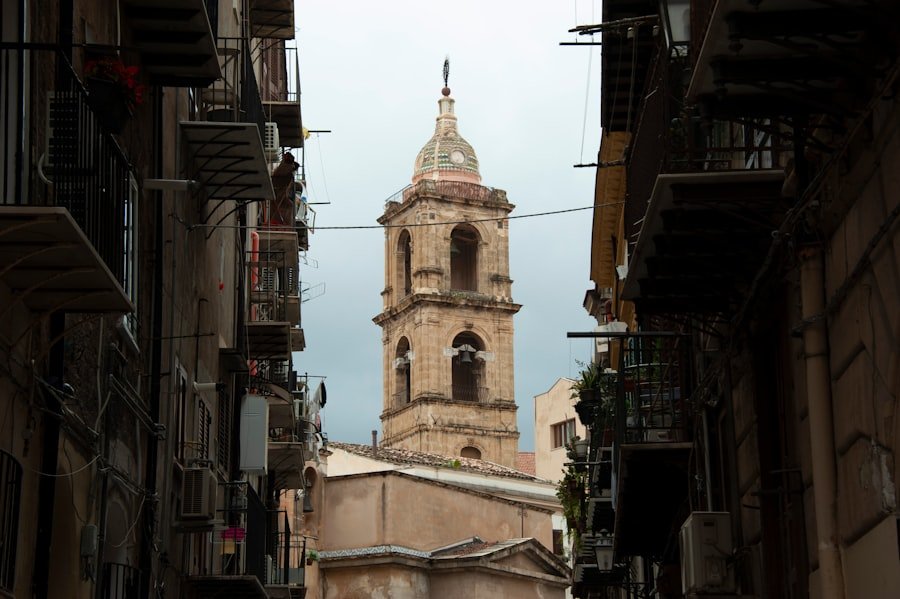
Return toward the historic center for the evening and explore Vucciria. Historically, this was one of Palermo’s major market areas. Today, its identity changes through the day, and the surrounding streets are also strongly associated with evening food, drinks, music, and nightlife.
A Sensory Stop
During active market hours you may still encounter stalls, food sellers, small shops, and the narrow lanes that have long defined the district. The scene is less useful if you approach Vucciria expecting only a traditional produce market; its modern character is broader than that.
A Taste of Local Culture
Use the evening to sample Palermo street food. Look for arancine, panelle, crocchè, sfincione, or other local specialties. Visit Sicily identifies Vucciria, Ballarò, Capo, and Borgo Vecchio among Palermo’s historic market and street-food areas.
An Evening Atmosphere
Vucciria becomes particularly social after dark. Bars, informal tables, food counters, and crowds can make it lively and noisy. Keep normal city precautions in mind, watch your belongings in busy spaces, and choose places that look clean and well attended.
Day 2: Quattro Canti, Palermo Cathedral and Central Palermo
Breakfast at a Local Cafe
Start your second morning at a local café. Espresso, cappuccino, and pastries make an easy breakfast. A cornetto may be filled with cream, jam, or other sweet fillings, while granita with brioche is another Sicilian choice when available.
Keep breakfast fairly quick if you want enough time for the Cathedral and nearby sights. Much of today’s route is concentrated in the historic center, making it easy to pause later for coffee, gelato, or a pastry.
Explore the Quattro Canti
Walk to Quattro Canti, the theatrical crossroads where Via Maqueda meets Corso Vittorio Emanuele. The official name is Piazza Vigliena. Its four curved Baroque façades mark the meeting point of Palermo’s four historic districts.
The façades incorporate fountains, seasonal allegories, Spanish kings, and patron saints. Rather than treating Quattro Canti as a long attraction, use it as a landmark from which several major stops are only a short walk away.
See Piazza Pretoria and Piazza Bellini
From Quattro Canti, take the short detour toward Piazza Pretoria. Its monumental fountain fills much of the square and makes this one of Palermo’s most striking urban spaces.
Continue to nearby Piazza Bellini, where you can see churches representing different layers of Palermo’s history. Santa Maria dell’Ammiraglio, commonly called La Martorana, and San Cataldo are especially significant. Both belong to the broader Arab-Norman story of the city, and San Cataldo is part of the UNESCO World Heritage property.
This addition takes relatively little time because the squares sit so close to Quattro Canti, yet it adds much more context to a two-day walk through central Palermo.
Visit Palermo Cathedral
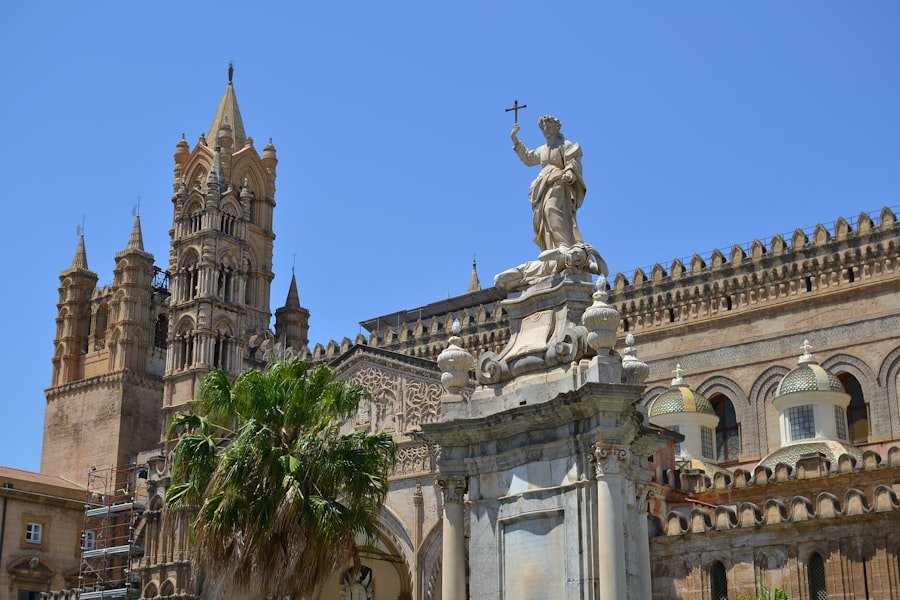
Continue west along Corso Vittorio Emanuele to Palermo Cathedral. The new Norman cathedral commissioned by Archbishop Gualtiero Offamilio was consecrated in 1185, although centuries of additions and renovations created the complex mixture of architectural forms visible today.
The Cathedral forms part of the UNESCO-listed Arab-Norman ensemble. Inside and around its monumental area, visitors can explore features connected with Sicily’s religious and royal history.
One important distinction is often missed: the royal tombs and the crypt are not the same thing. The royal-tomb area includes figures such as Roger II and Frederick II. The crypt contains tombs of Palermo’s archbishops.
Parts of the monumental complex, including roof access when available, require a ticket. Maintenance, weather, religious services, or special arrangements can affect access, so check the official Palermo Cathedral visitor information before relying on a rooftop visit.
Note: If rooftop access is unavailable, the Cathedral is still worth visiting for its architecture, royal history, and location on Palermo’s Arab-Norman route. Do not build the entire second morning around the roof alone.
Optional Stop at Teatro Massimo
If your pace is comfortable, walk toward Teatro Massimo before lunch. It is one of Palermo’s defining landmarks and helps round out the itinerary with a very different period of the city’s architectural history.
If time is short, seeing the exterior and Piazza Verdi is enough for this two-day plan. A full guided interior visit is better treated as an optional activity rather than squeezing it between fixed-entry monuments.
Lunch at a Seafood Restaurant
For your final lunch, seafood is a natural choice. Palermo’s cooking makes extensive use of sardines and other Mediterranean seafood, and menus may include grilled fish, pasta dishes, shellfish, or regional preparations that change with availability.
Pasta con le sarde is particularly useful if you did not try it on Day 1. The traditional combination includes sardines, wild fennel, raisins, and pine nuts. You can read more about Palermo’s local specialties on the official Visit Sicily street-food guide.
Choose a restaurant based on the menu and recent local conditions rather than assuming that a harbor view automatically means better seafood. A shorter lunch near the center may also be smarter if you have an afternoon flight or train.
Departure from Palermo
As departure approaches, leave enough buffer time to collect luggage and reach the airport or station. If you are flying, check the day’s rail or bus schedule before leaving central Palermo instead of relying on the timetable you saw when planning the trip.
If you have a little extra time, use it for a final coffee, granita, gelato, or pastry rather than adding another distant attraction. Palermo rewards slow observation, and even a short walk through familiar streets can be a better ending than rushing across the city for one more checklist stop.
Should You Visit Monreale During a 2-Day Palermo Trip?
Monreale Cathedral is one of Sicily’s great monuments and is part of the same UNESCO World Heritage property as Palermo’s major Arab-Norman sites. However, it sits outside central Palermo and requires additional transport and sightseeing time.
If Palermo itself is your priority and you have only two days, keep Monreale for a third day or a future trip. If its mosaics are one of your main reasons for visiting Sicily, you can include it on Day 2, but you should remove several central stops such as Teatro Massimo, Piazza Bellini, or a long lunch rather than trying to fit everything into one rushed schedule.
Best Time for This Palermo Itinerary
Palermo can be visited throughout the year, but spring and autumn are especially comfortable for a sightseeing-heavy itinerary. Sicily’s official tourism information recommends spring and fall for city, village, and cultural exploration, while the hottest part of summer can make long daytime walks more tiring.
If you visit in July or August, schedule outdoor walking earlier in the morning and later in the day, carry water, and leave indoor sights for hotter periods. Winter can also work well for cultural sightseeing, although daylight, rain, and seasonal schedules should be considered.
Sources
- UNESCO World Heritage Centre — Arab-Norman Palermo — verifies the UNESCO property and its cultural significance.
- Fondazione Federico II — Palazzo Reale visitor information — current access notices for the Royal Palace and Palatine Chapel.
- Catacombe dei Cappuccini di Palermo — official history and visitor information for the Catacombs.
- Cattedrale di Palermo — official Cathedral history and monumental-area information.
- Comune di Palermo Tourism Portal — guidance on walking and public transport in Palermo.
- Visit Sicily — Palermo Street Food — regional tourism guidance on Palermo’s markets and local foods.
Frequently Asked Questions
Can you see Palermo in 2 days?
Yes. Two days is enough for a strong introduction to Palermo if you focus on the historic center, the Royal Palace and Palatine Chapel, Palermo Cathedral, Quattro Canti, one historic-market area, and a few additional stops. You will not see everything, so avoid overloading the schedule with distant day trips.
What is the best time to visit Palermo?
Spring and autumn are especially good for a sightseeing-focused trip because temperatures are generally more comfortable for long walks. Summer works well too, but July and August can be hot, so plan outdoor sections earlier or later in the day.
What are the must-see attractions in Palermo?
For a first visit, prioritize the Royal Palace and Palatine Chapel, Palermo Cathedral, Quattro Canti, Piazza Pretoria and Piazza Bellini, at least one historic market, and Teatro Massimo if time allows. The Capuchin Catacombs are also famous but are best suited to visitors comfortable viewing human remains.
Should I visit Monreale if I only have two days?
Only if Monreale Cathedral is one of your highest priorities. It is outside central Palermo, so adding it means sacrificing some city sights. With three days, Monreale is much easier to include without rushing.
What food should I try in Palermo?
Look for arancine, panelle, crocchè, sfincione, pasta con le sarde, seafood, cannoli, and other Sicilian pastries. Palermo’s historic market districts are particularly useful for sampling several street-food specialties in a short time.
Is it necessary to rent a car in Palermo?
No. A car is unnecessary for this two-day itinerary. Much of Palermo’s historic center is practical to explore on foot, while public transport, taxis, and trains can cover longer journeys. A rental car can also be inconvenient in busy central traffic and restricted-access areas.
Are the Capuchin Catacombs suitable for children?
That depends on the child. The Catacombs contain visible preserved human remains, including children, so some families may find the experience unsuitable or distressing. Review the nature of the attraction before deciding to visit.