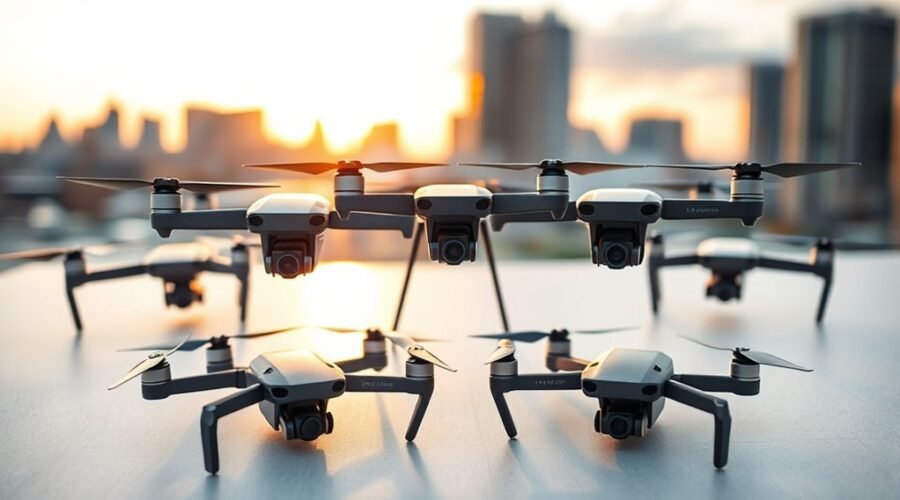
Budget camera drones in 2027 are no longer limited to basic flying toys. Models like the Potensic ATOM SE, DJI Mini 3, and DJI Flip now bring 4K video, steady handling, and useful flight range at prices that stay within reach. Some favor portability, while others focus on longer airtime or stronger image quality. The differences are subtle, but a few stand out in ways that may not be obvious at first.
Key Takeaways
- Potensic ATOM SE offers under-249g portability, 4K EIS video, 62-minute total flight time, and beginner-friendly flight modes.
- DJI Neo is ultra-light at 135g, supports palm takeoff, 4K stabilized video, subject tracking, and quick creative shooting modes.
- Potensic ATOM 2 delivers 48MP photos, 4K HDR video, 10 km range, and up to 96 minutes with three batteries.
- DJI Mini 3 provides a 3-axis gimbal, 4K HDR footage, 10 km transmission, and simple controls for travelers and beginners.
- DJI Flip adds 4K/60fps HDR, 13 km range, subject tracking, and compact under-249g design for casual creators.
Potensic ATOM SE GPS Drone with 4K Camera
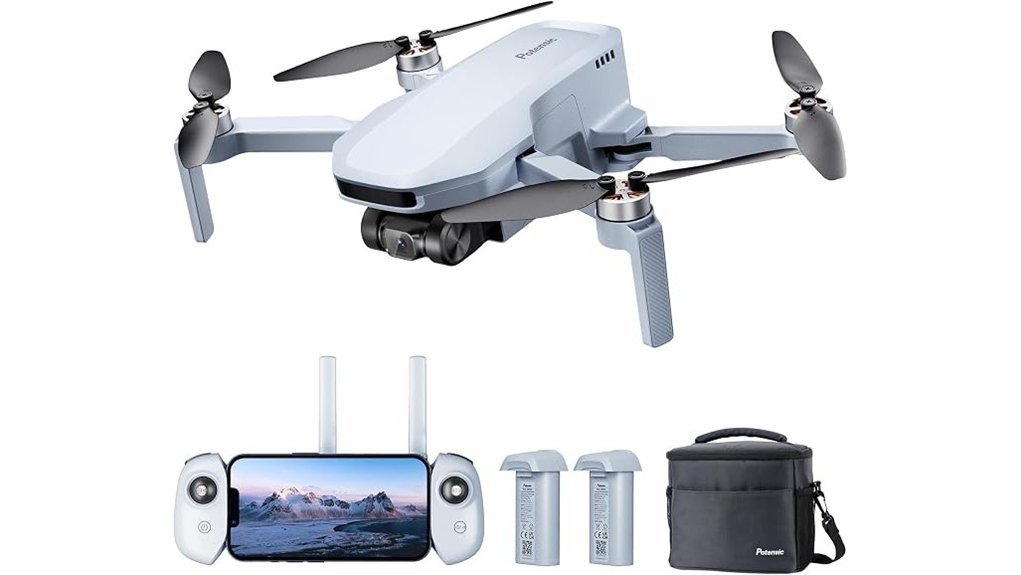
The Potensic ATOM SE GPS Drone with 4K camera is a strong budget pick for beginners and casual creators who want portable, easy-to-fly aerial footage without giving up key features. Under 249g, it folds small enough for a jacket pocket and offers up to 62 minutes of flight time with two batteries. Its 4K EIS camera uses a 1/3-inch Sony sensor, capturing 12MP photos and 4K 30fps video. PixSync 2.0 extends control to 4KM, while auto return, Follow Me, Waypoint Flight, and Circle Flight add practical safety and creative value.
Best For: Beginners and casual creators who want a lightweight, foldable GPS drone with strong battery life, easy controls, and solid 4K aerial footage.
Pros:
- Under 249g and foldable, making it highly portable and beginner-friendly
- Up to 62 minutes of flight time with two batteries
- 4K EIS camera with a Sony sensor, plus useful modes like Follow Me, Waypoint Flight, and Circle Flight
Cons:
- Wi-Fi-based control may not feel as robust as higher-end transmission systems
- 4K video is limited to 30fps
- Best suited for casual use rather than advanced cinematic or pro-level flying
DJI Neo Mini Drone with 4K UHD Camera
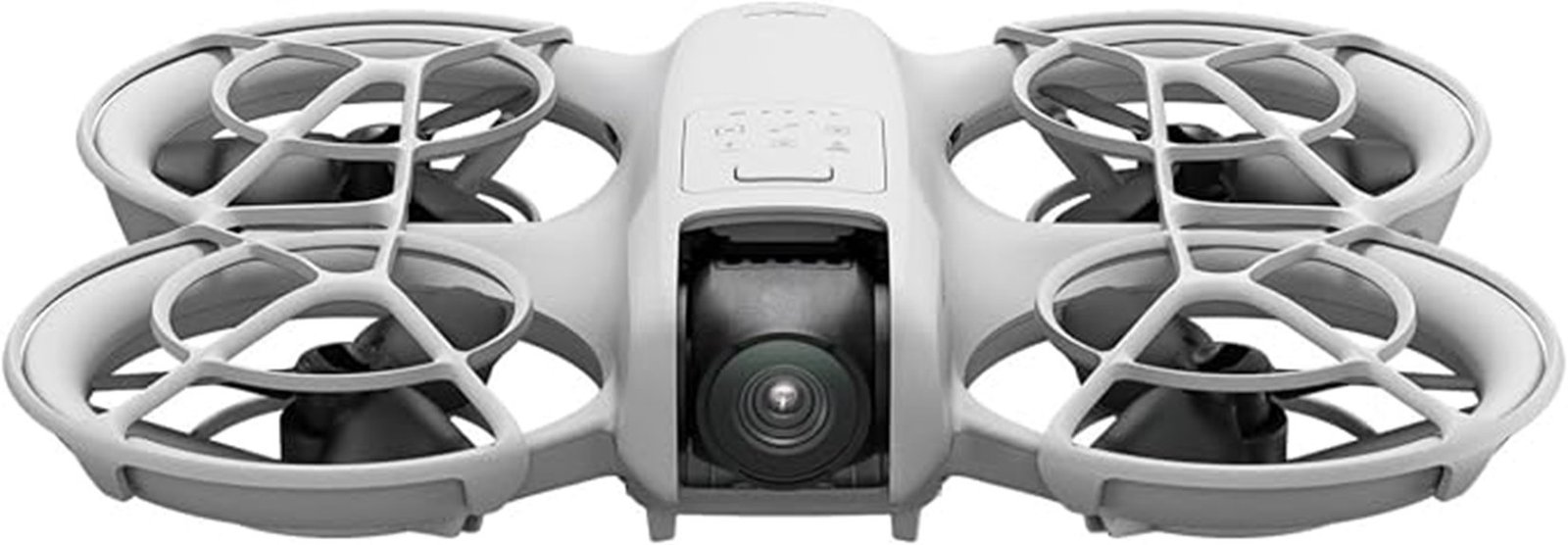
Weighing just 135g, the DJI Neo suits travelers, vloggers, and casual flyers who want 4K footage without registration hassles. Its mini frame skips FAA registration and Remote ID in many regions, while fitting easily into a backpack or pocket. The drone can launch and land from a palm, fly controller-free, and respond to voice, app, or remote inputs. DJI stabilization and level-4 wind resistance help deliver smooth 4K video. Subject tracking and eight QuickShots modes simplify creative filming. Built-in propeller guards, Bluetooth, Wi-Fi, and the DJI Fly app add convenience.
Best For: Travelers, vloggers, and casual flyers who want a lightweight, easy-to-use mini drone with 4K stabilized footage and controller-free operation.
Pros:
- Very lightweight at 135g, making it highly portable and often free from FAA registration and Remote ID requirements.
- Offers palm takeoff/landing, voice/app/remote control options, and built-in propeller guards for easy, convenient flying.
- Captures smooth 4K video with DJI stabilization, level-4 wind resistance, subject tracking, and eight QuickShots modes.
Cons:
- DJI Fly app activation is required, and setup may be less convenient due to Google Play compatibility issues.
- Compact size and mini-drone design may limit performance compared with larger drones in more demanding conditions.
- Designed for casual and creative use, so it may not satisfy users seeking advanced pro-level drone controls or camera features.
Potensic ATOM 2 Drone with Camera for Adults 4K, 10KM Range, Fly More Combo
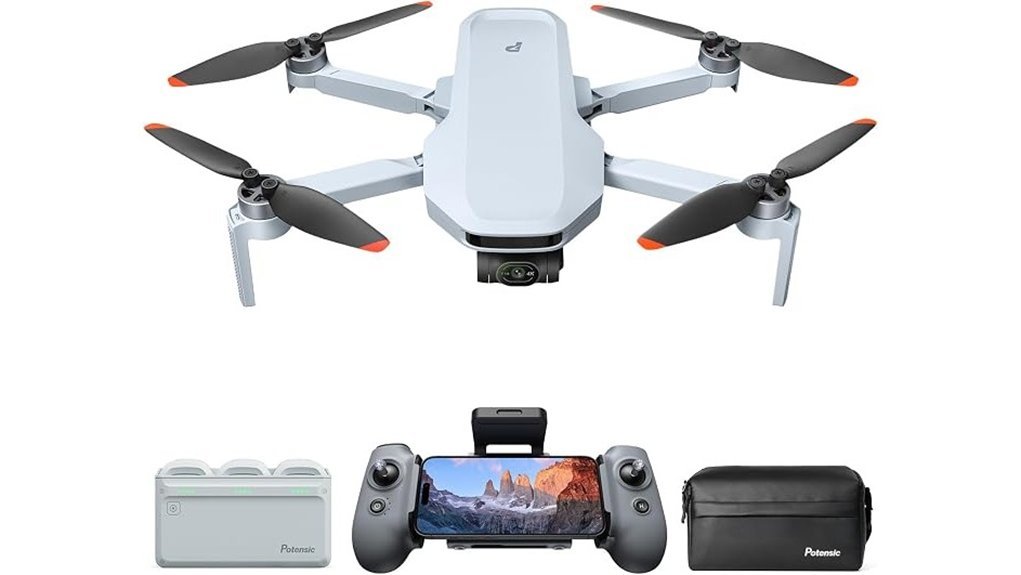
Potensic ATOM 2 suits travelers and beginner creators seeking serious imaging on a budget. Its 1/2-inch Sony CMOS sensor captures 48MP stills and 4K/30fps HDR footage through a 3-axis gimbal, while the F1.8 lens and 4-in-1 pixel tech improve low-light results. The under-249g frame avoids FAA and Remote ID registration. Three batteries deliver up to 96 minutes, and the Fly More Combo includes useful spares and a shoulder bag. A 10 km control range, 1080p live view, AI tracking, and modes like Dolly Zoom and QuickShots make it capable.
Best For: Travelers and beginner creators who want a lightweight, budget-friendly drone with strong 4K imaging, long battery life, and easy-to-use smart flight features.
Pros:
- 48MP photos and 4K/30fps HDR video with a 3-axis gimbal deliver strong image quality.
- Under 249g, so it avoids FAA and Remote ID registration requirements.
- Fly More Combo includes three batteries, up to 96 minutes of flight time, and helpful accessories.
Cons:
- 10 km range is impressive, but real-world performance can vary with interference and conditions.
- Not ideal for advanced pilots who want more premium obstacle avoidance or pro-level features.
- 1080p live view transmission is good, but not as sharp as higher-end FPV systems.
DJI Mini 3 With DJI RC, 3-Axis Mechanical Gimbal Mini Camera Drone
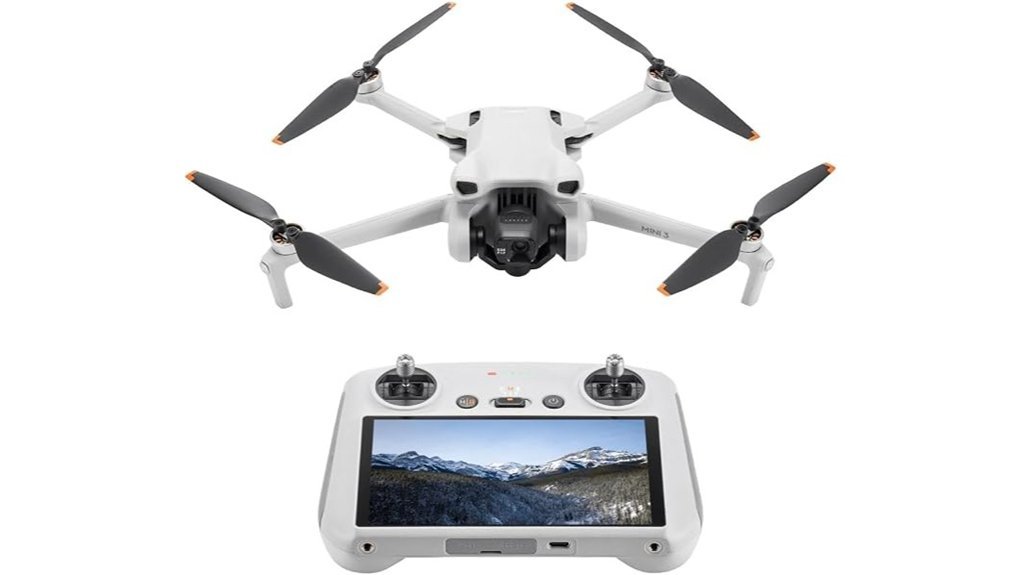
At 248 grams, the DJI Mini 3 suits travelers and beginners seeking a compact camera drone. Its 3-axis mechanical gimbal supports stable 4K HDR footage, while Dual Native ISO helps preserve detail in bright skies and shadowed scenes. Vertical shooting adds flexibility for skyscrapers and waterfalls. With the DJI RC, control feels straightforward, and video transmission reaches up to 10 km with strong interference resistance. Flight time extends to 38 minutes, or 51 with the Plus battery. GPS return-to-home, quick takeoff, and QuickShots reinforce its practical, beginner-friendly appeal.
Best For: Travelers, beginners, and casual creators who want a lightweight, easy-to-use drone for stable 4K aerial footage and simple flight control.
Pros:
- 248 g lightweight design makes it highly portable and often easier to fly recreationally without registration in many regions.
- 3-axis gimbal, 4K HDR video, and Dual Native ISO help produce smooth, detailed footage in varied lighting.
- Up to 38 minutes of flight time, 10 km transmission, and beginner-friendly features like GPS RTH and QuickShots.
Cons:
- Only one battery is included, so longer sessions may require buying extra batteries.
- More advanced users may find its feature set limited compared with larger DJI models.
- The best 51-minute flight time requires the separately sold Intelligent Flight Battery Plus.
DJI Mini 4K, Drone With 4K UHD Camera, Under 249 g
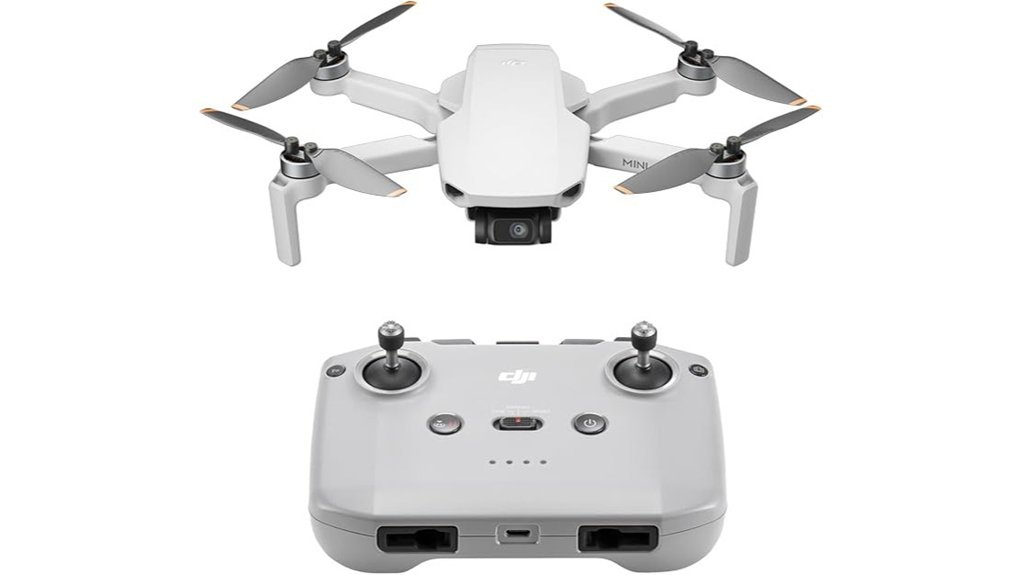
The DJI Mini 4K suits budget-minded creators who want 4K footage without heavy gear. At under 249 g, it often avoids FAA registration for recreational use in many regions, though local rules still matter. Its 4K UHD camera sits on a 3-axis gimbal for steady shots, while 31 minutes of flight time supports quick filming sessions. DJI O2 connectivity reaches up to 10 km, and level 5 wind resistance adds confidence. One-tap takeoff, GPS Return to Home, and QuickShots simplify operation. Batteries are sold in 1, 2, or 3-pack options.
Best For: Budget-minded creators and beginner drone pilots who want lightweight 4K aerial footage with easy-to-use flight features and low regulatory hassle.
Pros:
- Under 249 g, which often avoids FAA registration for recreational use in many regions
- 4K UHD camera with a 3-axis gimbal for smooth, stable video
- Up to 31 minutes of flight time with DJI O2 transmission reaching 10 km
Cons:
- Local drone laws still need to be checked and followed
- Battery life may be limiting for longer filming sessions unless you buy extra packs
- Best suited for casual and budget use rather than advanced pro-level filmmaking
DJI Flip Drone with 4K UHD Camera
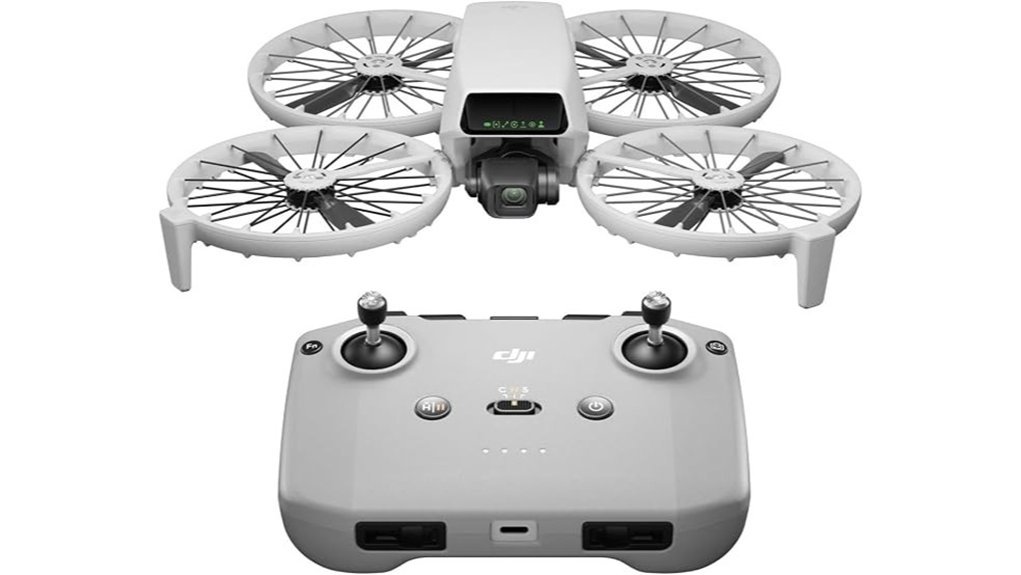
DJI Flip suits travelers and casual creators needing true 4K video in a compact body. The RC-N3 model weighs under 249 g, so registration is unnecessary in many regions. Its 1/1.3-inch CMOS sensor, 3-axis gimbal, and 4K at 60fps HDR recording support steady, detailed footage. The drone offers up to 31 minutes of flight, 13 km transmission, subject tracking, and auto flight modes. Full-coverage carbon-fiber propeller guards and palm takeoff improve safety and convenience. It also captures 48 MP stills.
Best For: Travelers and casual creators who want a lightweight, easy-to-use drone with true 4K video, strong stability, and convenient safety features.
Pros:
- Under 249 g, making it easy to carry and avoiding registration in many regions
- 4K at 60fps HDR with a 1/1.3-inch CMOS sensor and 3-axis gimbal for sharp, smooth footage
- Up to 31 minutes of flight time, 13 km transmission, and useful features like subject tracking and auto flight modes
Cons:
- RC-N3 setup may feel less convenient than fully integrated smart-controller options
- 31-minute max flight time is good, but still limited for longer shooting sessions
- Full feature use may require learning DJI’s app/manual ecosystem, which can be less straightforward for beginners
Factors to Consider When Choosing Budget Camera Drones in 2026: Top Affordable Picks Tested & Ranked
Choosing a budget camera drone in 2026 starts with camera quality, since image resolution, stabilization, and low-light performance shape the final footage. Flight time, control range, and safety features also matter because they affect how long and how securely the drone can be used in practice. Weight and local regulations should be checked as well, since lighter models often face fewer restrictions and are easier to operate.
Camera Quality
A sharp lens can make a budget drone feel far more premium than its price suggests. Camera quality should begin with 4K recording, since it delivers crisp video and enough detail for casual sharing or more serious content creation. Sensor choice matters just as much; CMOS units, especially larger 1/3” or 1/1.3” versions, usually handle low light better and preserve richer image detail. Smooth footage depends on stabilization, so a 3-axis gimbal or electronic image stabilization is valuable for reducing shake in wind or movement. Creative flexibility also improves with HDR, panoramic capture, and 4x digital zoom. Still photo performance should not be ignored, and a 48MP camera can offer greater cropping room and sharper enlargements without quickly revealing softness.
Flight Time
Flight time is one of the most important specs to weigh, because longer airborne sessions make it easier to explore farther, frame better shots, and avoid cutting a shoot short. In the budget category, typical endurance falls around 25 to 38 minutes per battery, which is usually enough for short outings but still requires careful planning. Stronger performers can reach roughly 31 to 62 minutes, especially when multiple batteries are included. That extra power can effectively double usable airtime during one trip, giving more chances to reshoot or cover a wider area. It also helps to check battery efficiency and charging speed, since both affect how quickly flying can resume. Wind resistance matters too, because unstable conditions can shorten practical flight time.
Weight And Regulations
Beyond battery life, weight is another major factor because it affects both portability and legal requirements. Budget camera drones under 250 grams are often easier to own and use, since recreational flyers in many places do not need FAA registration. That makes 249g models especially appealing for beginners seeking fewer hurdles. Their light build also helps them slip into a backpack or even a pocket, which suits travel and casual shooting. However, lighter frames usually bring lower wind resistance, so stability can suffer in gusty conditions. Local rules still matter, because registration and weight limits can differ by region. Checking the laws before buying helps guarantee compliance while preserving convenience. For many users, a sub-250g drone offers the best balance of portability, legality, and everyday practicality.
Control Range
Control range determines how far a pilot can send a drone before signal quality and safety start to decline, making it an important spec for budget camera drones in 2026. In this category, many affordable models offer about 4 km to 10 km of range, which is enough for varied flying needs. The effective distance depends on the control system; Wi‑Fi often provides stronger support for HD video transmission than Bluetooth, though both can be limited by terrain and interference. Obstacles, crowded radio environments, and other environmental factors often reduce real-world performance below the listed figure. Buyers should match range to intended use: extended distances suit aerial photography and outdoor exploration, while shorter ranges can be adequate for casual flying or indoor sessions.
Safety Features
Safety features are a major consideration when choosing a budget camera drone in 2026, especially for new pilots and casual users. Automatic return-to-home functions are among the most valuable protections, helping the drone fly back when battery power drops or the connection is lost. Wind resistance ratings also matter; many affordable models can handle level 5 conditions, or about 38 km/h, improving stability in rougher weather. Integrated propeller guards add another layer of security by reducing damage in minor crashes and limiting risk to nearby people and objects. Some drones include 3-axis gimbals, which support steadier footage and better control in wind. Beginner modes, along with auto takeoff and landing, further simplify operation and help reduce mistakes during early flights.
Frequently Asked Questions
How Do Budget Drone Cameras Perform in Low-Light Conditions?
Budget drone cameras usually perform poorly in low light, producing noisy, soft, and colorless images. Small sensors and limited apertures struggle after sunset, so detail drops quickly, though stabilization can still help video somewhat.
Are Budget Camera Drones Safe for Beginners Indoors?
Generally, no: budget camera drones can be beginner-friendly, yet indoors they are nimble and fragile, calming and hazardous. Tight spaces, prop guards, and obstacle sensing help, but cautious practice, open rooms, and supervision remain essential.
What Accessories Improve Flight Time on Affordable Drones?
Extra batteries, a balanced charger, lightweight prop guards, and efficient propellers improve flight time on affordable drones. Reduced payload, calibrated motors, and flying in calm conditions also help extend airborne endurance noticeably.
How Often Do Budget Drones Need Firmware Updates?
Budget drones usually receive firmware updates every few months, though occasional housekeeping may arrive sooner. Their upkeep is modest, but owners should check regularly, since skipped updates can quietly limit stability, features, and safety.
Can Budget Drones Handle Windy Weather Reliably?
Budget drones handle light breezes, but reliability drops in stronger wind. Their lighter frames, weaker motors, and simpler stabilization make them more easily pushed off course, so cautious flying and calm conditions are preferable.
Conclusion
In the crowded sky of budget camera drones, these six models soar like improbable bargains, delivering far more than their modest price tags suggest. The Potensic ATOM series offers stamina and sharp 4K capture, while DJI’s Mini and Neo lines make flying feel almost effortless. The DJI Flip adds a premium edge with striking HDR video and range. For beginners and casual creators, these drones are not merely affordable—they are astonishingly capable airborne storytellers.