

From Sedona you can slip into a day of contrasts—red-rock solitude one moment, historic mining towns and cool mountain forests the next. You’ll drive scenic canyons, walk ancient cliff dwellings, taste local wines, or stand where the Colorado River sweeps around a perfect bend. Each short escape feels complete, yet you’ll keep wondering which view to chase next.
Jerome: Historic Mining Town and Art Galleries
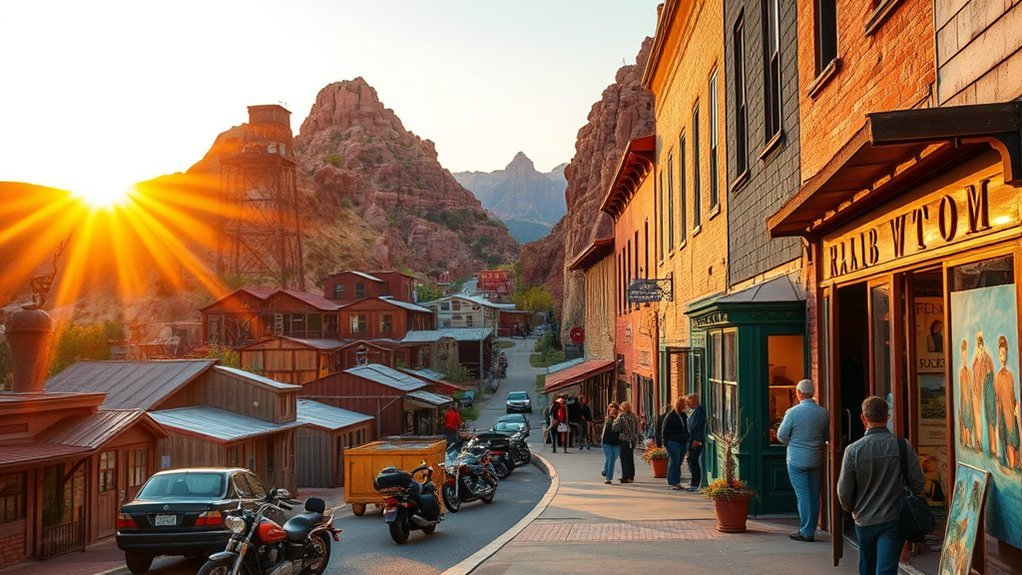
Perched on Cleopatra Hill like a storybook cliffside, Jerome feels equal parts Wild West relic and thriving artist enclave, and you’ll notice that the town’s history whispers from every brick and storefront. You wander narrow, sloping streets where converted saloons and restored mine buildings house galleries, boutiques, and cafes. Textured adobe and weathered wood meet vivid murals and glass studios, so you can watch artisans blow, bead, and paint while learning the stories behind their work. Don’t miss the mining museum and interpretive exhibits that map copper booms and busts; they frame the town’s dramatic rise and quiet reinvention. Scenic overlooks give sweeping views of the Verde Valley, perfect for photos at golden hour. Parking fills fast on weekends, so plan for weekday mornings or arrive early. Whether you’re after original art, quirky souvenirs, or a concise lesson in Arizona mining history, Jerome delivers a compact, walkable experience that rewards curiosity and slows your pace.
Montezuma Castle and Montezuma Well: Ancient Cliff Dwellings
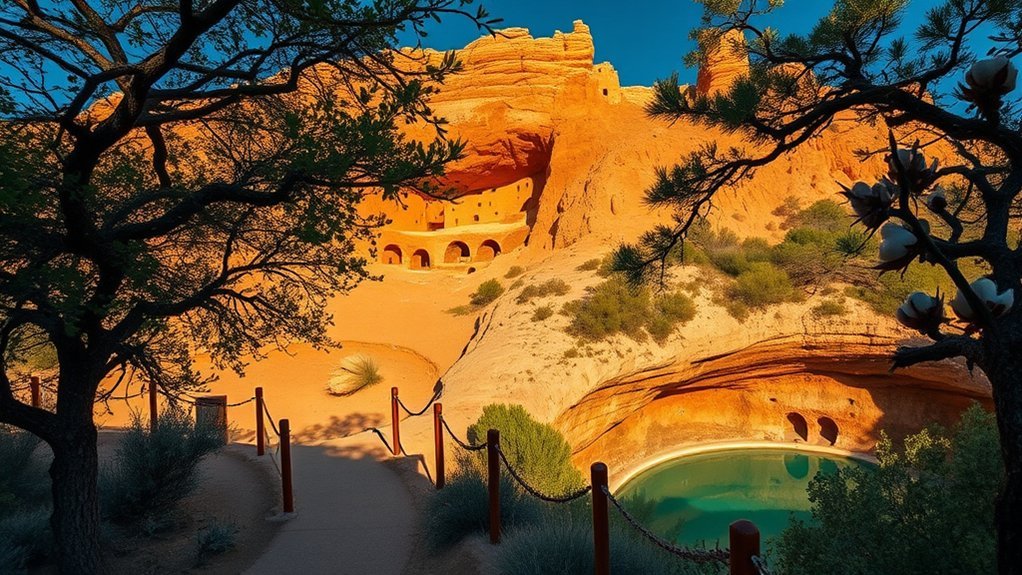
You’ll stand before Montezuma Castle’s cliff-side masonry and feel the weight of centuries in the shaded alcove where the Sinagua people once lived. Nearby, Montezuma Well offers an otherworldly oasis — spring-fed waters that support unique plants and animals and tell a different ecological story. Plan for parking limits, summer heat, and short walking trails so you can soak up the history and natural wonder without rushing.
Montezuma Castle History
Though the white limestone cliffs might look like natural scars from a distance, Montezuma Castle reveals a striking human story: towering, well-preserved rooms built by the Sinagua people nearly a thousand years ago. You’ll sense daily life in small plastered rooms, ladders, and storage niches carved into a shaded alcove. The Sinagua engineered water access, agricultural trade, and defensive placement with quiet ingenuity. As you stand below, imagine voices and footsteps that animated these heights. Interpretive signs guide you through construction techniques and cultural context without overwhelming. Respect the site’s dignity; don’t climb. The castle’s preservation helps you connect to human resilience in an arid landscape.
| Feature | Note |
|---|---|
| Builders | Sinagua people |
| Era | ~1100–1425 CE |
| Structure | Multi-room cliff dwellings |
| Water | Nearby springs, engineered access |
| Access | Viewing trail, no climbing |
Montezuma Well Ecology
While the cliff dwellings tell a human story, Montezuma Well speaks to a persistent, surprising ecosystem fed by a constant limestone spring; walk the short rim trail and you’ll see how that steady flow supports an isolated community of plants and animals found nowhere else in the region. You’ll notice emerald algae clinging to underwater rocks, and rare springsnails and a unique leech adapted to high carbon dioxide levels bubbling from the vent. Cottonwoods and willows hug the rim, creating a cool riparian ribbon against arid scrub. Dragonflies skim the water while cliff ferns and mosses exploit persistent moisture in crevices. The site feels like a living laboratory, where geology, hydrology, and evolution intersect in vivid, quiet ways.
Visiting Tips and Logistics
Because these sites sit on fragile archaeological and natural landscapes, plan your visit with care: arrive early to beat heat and crowds, bring water and sun protection, and stick to marked trails and observation areas to help preserve the cliff dwellings and sensitive habitats. You’ll find clear signage, shaded viewing platforms, and short interpretive trails that make exploration manageable without disturbing ruins. Park rangers offer orientation and can warn you about seasonal closures, guided tours, and accessibility options—ask at the visitor center. Photography is allowed from overlooks but avoid touching walls or climbing. Wear sturdy shoes for uneven paths, carry a hat and sunscreen, and respect posted rules about pets and drones. By moving thoughtfully, you help safeguard these ancient places for others.
Flagstaff: Mountains, Lowell Observatory, and Route 66
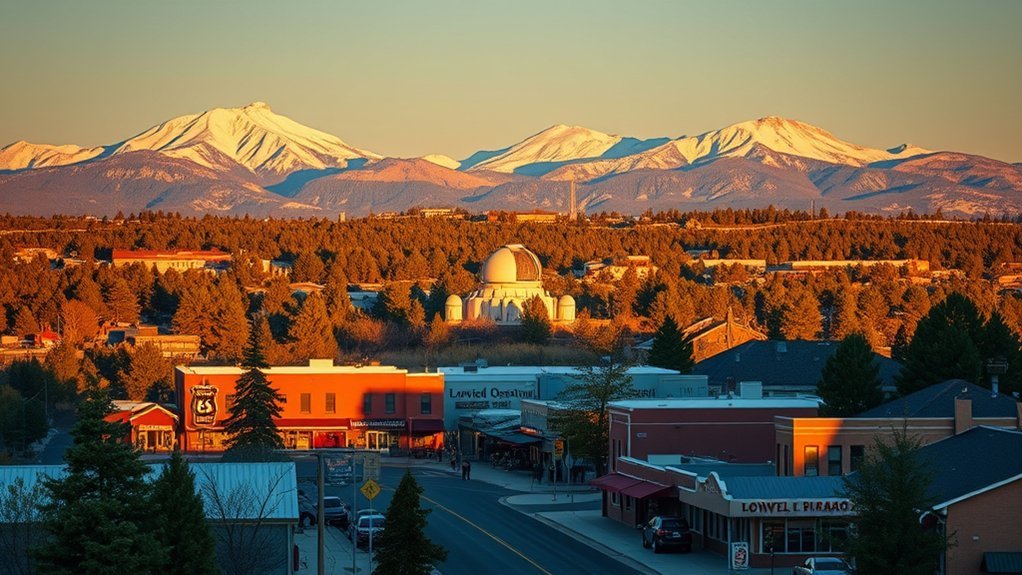
If you head north from Sedona, you’ll find Flagstaff’s cool pines, craggy peaks, and a lively downtown that feel like a different world—one where the mountains invite hiking and skiing, Lowell Observatory brings the cosmos within reach, and the historic stretch of Route 66 hums with retro diners and neon signs. You’ll breathe higher-elevation air, follow forested trails to panoramic overlooks, and swap red-rock vistas for snow-dusted summits in winter. At Lowell, peer through century-old telescopes, join an evening stargazing program, and sense how big the sky really is. Downtown beckons with craft coffee, Route 66 nostalgia, and museums that trace railroad and frontier stories.
- Hike Humphreys Peak for an alpine challenge and vivid views.
- Visit Lowell Observatory for guided tours and astronomy exhibits.
- Stroll historic Route 66 for neon signs, diners, and vintage shops.
- Drive scenic byways into Coconino National Forest for short walks.
Page: Antelope Canyon and Horseshoe Bend
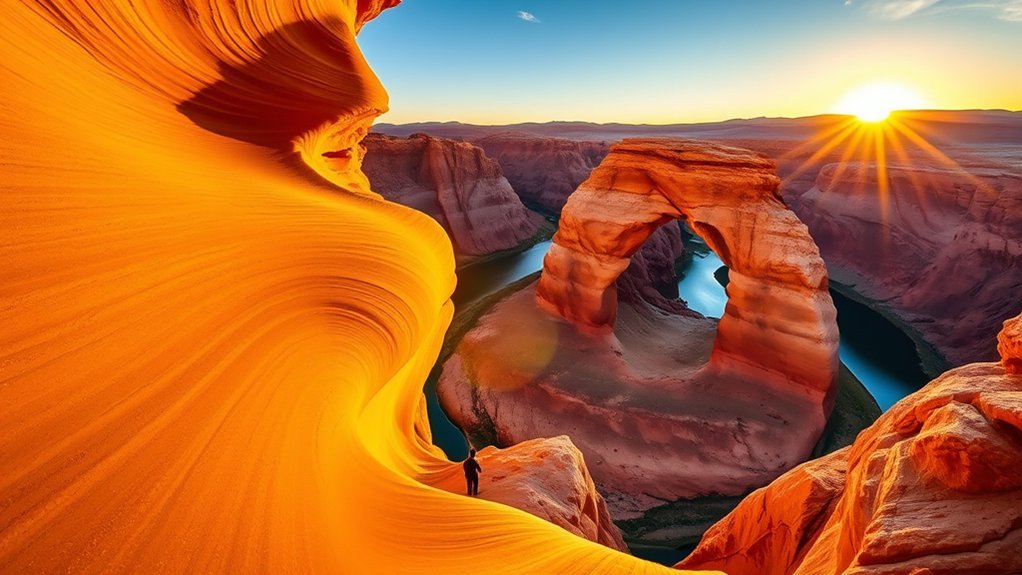
Head east from Sedona and you’ll hit two of the Colorado Plateau’s most iconic sights: Antelope Canyon‘s narrow, sculpted sandstone corridors that funnel light into surreal ribbons, and Horseshoe Bend‘s dramatic meander where the Colorado River carves a perfect horseshoe below a sheer cliff. You’ll feel the desert heat give way to cool, shadowed passageways in Antelope Canyon; guided tours lead you through sinuous walls polished by millennia of wind and water, and photographers chase shafts of light that animate the ochre and rose stone. At Horseshoe Bend, a short walk from the parking area delivers a sweeping, vertigo-inducing overlook — bring water, sun protection, and caution near the rim. Timing matters: visit at mid-morning for canyon light and at late afternoon or sunset for river glow and softer contrasts. Both spots are popular and regulated, so book Antelope Canyon tours in advance and allow extra time for travel, permits, and photo stops.
Oak Creek Canyon: Scenic Drives, Swimming Holes, and Picnics
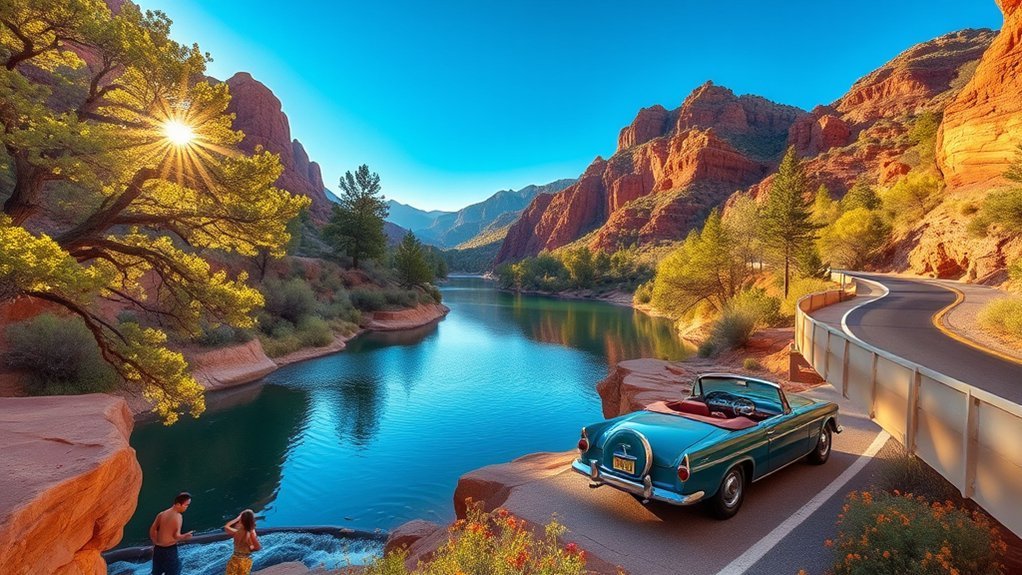
Winding just west of Sedona, Oak Creek Canyon feels like a secret highway through red-rock mesas where every bend opens onto emerald pools, shaded picnic groves, and cliff-framed vistas. You’ll drive narrow curves beneath towering walls, windows down to catch the scent of juniper and wet stone. Pull over at a turnout, and you can hop to a quiet swim spot where cool creek water laps sunlit boulders. Picnic areas beneath sycamores invite a slow lunch; pack layered clothing, water shoes, and a camera — light shifts fast here.
Winding west of Sedona, Oak Creek Canyon unfolds red-rock walls, emerald pools, shaded picnic groves, and cool creek swims.
- Choose a scenic pullout for photography and a short creek walk.
- Visit Slide Rock State Park for natural water slides and safe swimming.
- Pack a insulated cooler and a compact blanket for shaded picnics.
- Time your trip for morning or late afternoon to avoid crowds and heat.
You’ll leave refreshed, carrying river-smooth memories of a canyon that feels both wild and welcoming.
Tuzigoot National Monument and Verde Valley Wine Trail
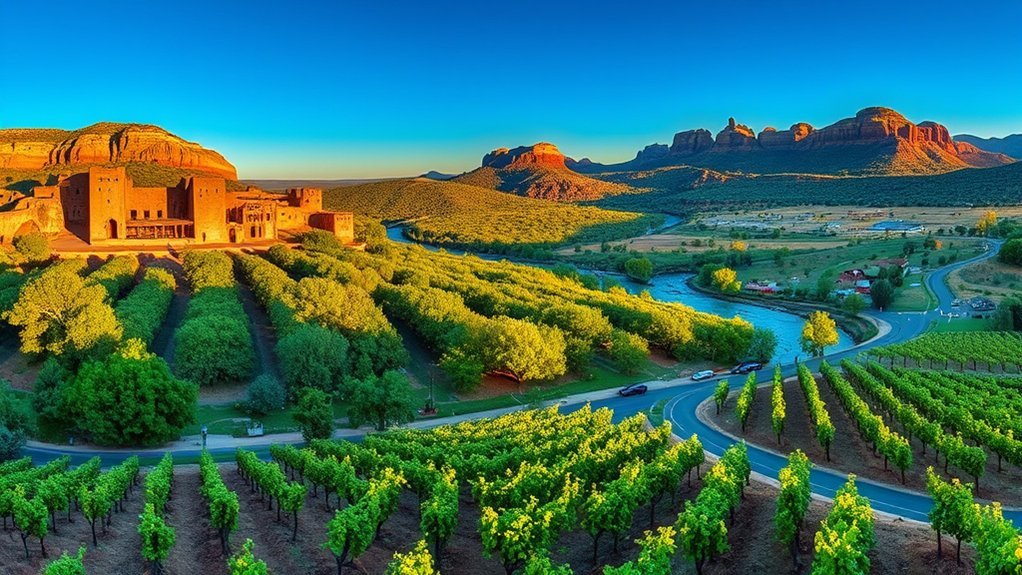
After a morning among creekside pools and red-rock shade, steer east toward rolling hills dotted with vineyards and the stone remains of ancient homes. You’ll arrive at Tuzigoot National Monument, where a terraced pueblo perches on a limestone ridge, offering panoramic views of the Verde Valley. Walk the reconstructed rooms and climb narrow passageways to sense how Sinagua families lived centuries ago; interpretive signs explain pottery styles, irrigation, and seasonal life. After exploring, head to the Verde Valley Wine Trail, a short drive through oak-studded slopes to tasting rooms producing bold reds and crisp whites shaped by high-desert soils and cool nights. You can sip on Syrah, Verde Valley Viognier, or small-batch blends while reading vineyard maps and chatting with winemakers who love sharing techniques. Time your visits so you get both archaeology and afternoon tastings, and consider reserving tours or tastings in advance during weekends. It’s a pairing of history and terroir that feels timeless and invigoratingly local.
Grand Canyon South Rim: Iconic Views Within Reach
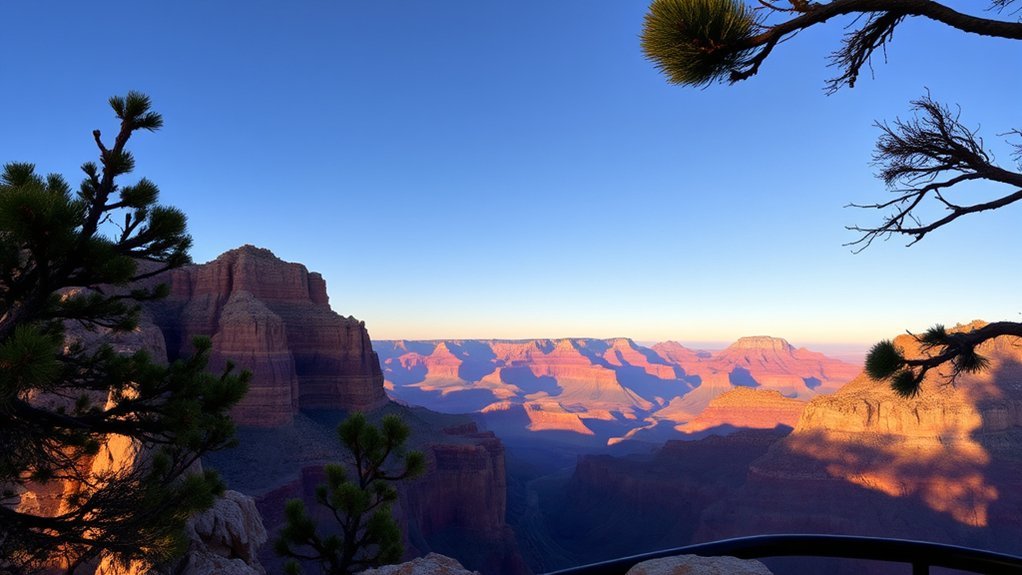
How close can you get to one of the world’s most dramatic vistas in a single day? You can reach the Grand Canyon South Rim from Sedona in about two hours, and once you arrive you’ll feel the scale—endless layered cliffs, sudden light, and the Colorado River far below. You won’t need hiking boots for the main viewpoints; the Rim Trail and Mather Point offer accessible panoramas. Pick a few highlights and move deliberately:
- Drive to Mather Point for sunrise colors and easy overlooks.
- Walk a section of the Rim Trail for sweeping, continuous views.
- Stop at the Visitor Center for orientation, ranger talks, and maps.
- Catch sunset at Hopi or Yavapai Point for dramatic shadows on the canyon walls.
Bring water, a jacket (it’s cooler up high), and your camera. Time your return to beat the late-evening traffic. A day here feels vast but totally achievable from Sedona—an unforgettable taste of the canyon’s grandeur.
Frequently Asked Questions
Are Pets Allowed on These Day-Trip Trails and Sites?
Yes — many trails and sites allow pets, but rules vary: you’ll keep dogs leashed, follow posted restrictions, avoid fragile areas, pack out waste, and double-check specific parks or attractions beforehand to guarantee your pet’s welcome and safe.
What Are Recommended Lunch Spots for Dietary Restrictions?
Looking for safe, tasty options? You’ll find The Hudson, ChocolaTree, and Sedona Memories Café offering vegan, gluten-free, and allergen-aware menus; call ahead, ask for modifications, and enjoy vibrant, locally sourced ingredients with clear labeling.
Is Cell Service Reliable Along These Routes?
Cell service’s spotty: you’ll get decent coverage near towns and major highways, but expect dead zones in remote canyons, trails, and scenic overlooks. Download maps, grab offline guides, and tell someone your route before heading out.
Which Trips Are Wheelchair or Stroller Accessible?
Some routes offer accessible highlights: you’ll find paved viewpoints, short boardwalks, and visitor centers with ramps and accessible restrooms. Check specific trail status and parking; some scenic drives and museums are fully wheelchair- or stroller-friendly.
Are Guided Tours or Rentals Available at Each Destination?
Yes — you’ll find guided tours and rentals at most destinations: outfitters run guided hikes, jeep and boat tours, and you can rent bikes, kayaks, or adaptive gear; advanced booking’s smart, especially in peak seasons and holidays.
Conclusion
You’ve got a map of daylong escapes radiating from Sedona’s red-rock heart — each one a different melody: Jerome’s history hums, ancient stones at Montezuma whisper, Flagstaff’s pines breathe, Page’s slot canyons glow, Oak Creek cools, Tuzigoot and the Verde Valley uncork flavors, and the Grand Canyon looms like a vast, open book. Pack water, patience, and curiosity; every turn unfolds a postcard moment, ready for you to step in and savor.